
CONTENTS 1 INTRODUCTION 2 NEURAL NETWORKS FOR CONTROL
- Slides: 25
CONTENTS 1. INTRODUCTION 2. NEURAL NETWORKS FOR CONTROL 3. STRUCTURE WITH AMD 4. NUMERICAL EXAMPLES 5. CONCLUSIONS 2
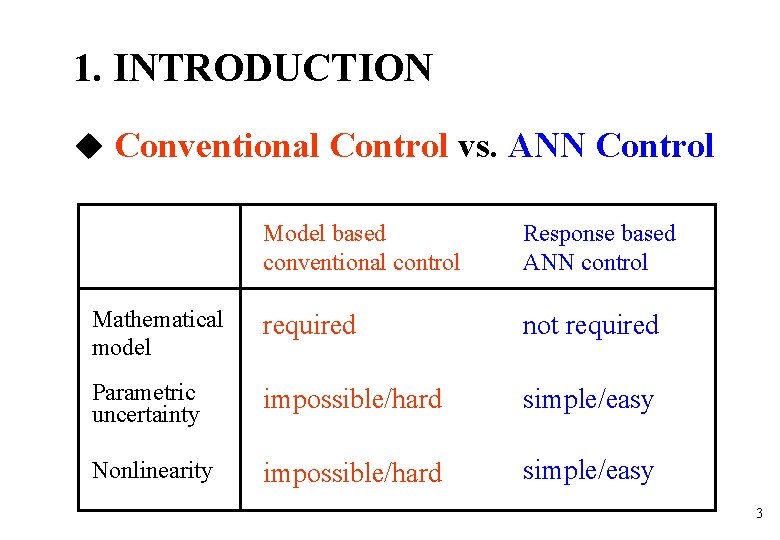
1. INTRODUCTION Conventional Control vs. ANN Control Model based conventional control Response based ANN control Mathematical model required not required Parametric uncertainty impossible/hard simple/easy Nonlinearity impossible/hard simple/easy 3
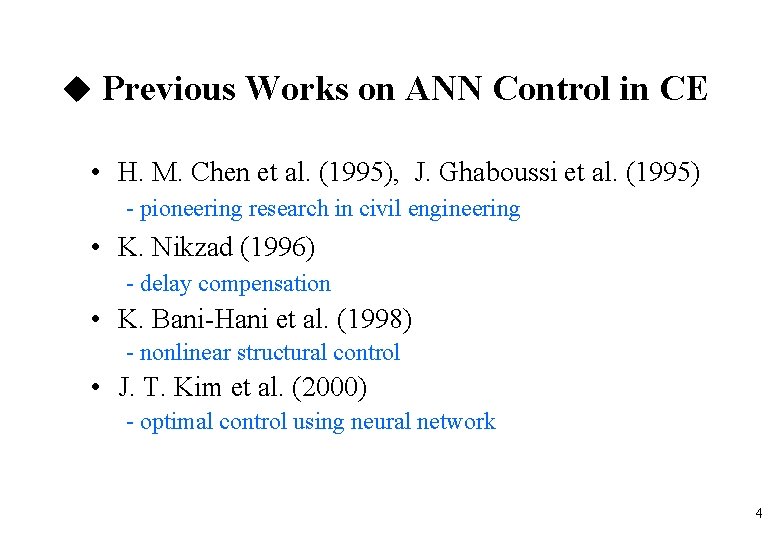
Previous Works on ANN Control in CE • H. M. Chen et al. (1995), J. Ghaboussi et al. (1995) - pioneering research in civil engineering • K. Nikzad (1996) - delay compensation • K. Bani-Hani et al. (1998) - nonlinear structural control • J. T. Kim et al. (2000) - optimal control using neural network 4
Scope • Training rule of controller neural network • MDOF linear/nonlinear structural control • Actuator dynamics and time delay effects are trained 5
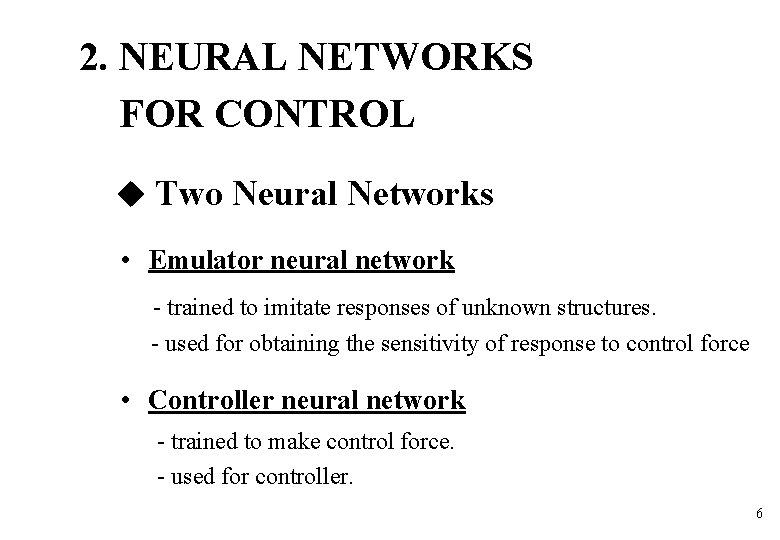
2. NEURAL NETWORKS FOR CONTROL Two Neural Networks • Emulator neural network - trained to imitate responses of unknown structures. - used for obtaining the sensitivity of response to control force • Controller neural network - trained to make control force. - used for controller. 6
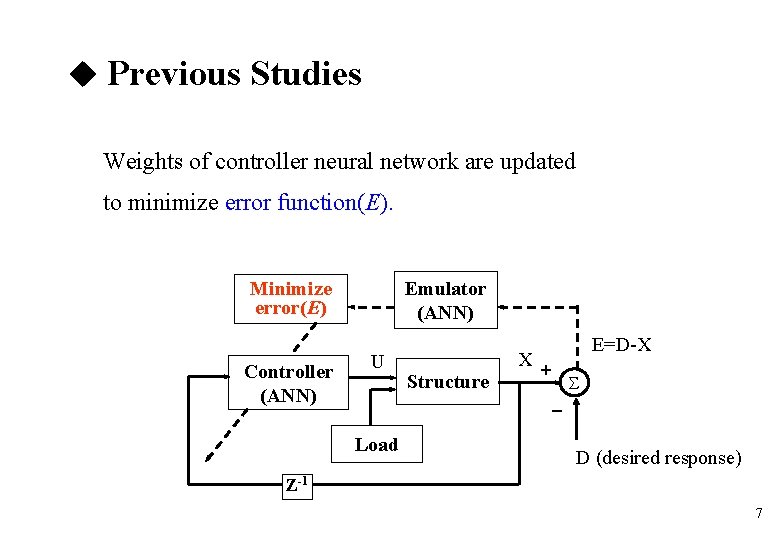
Previous Studies Weights of controller neural network are updated to minimize error function(E). Emulator (ANN) Minimize error(E) Controller (ANN) U Load Structure E=D-X X+ _ D (desired response) Z-1 7
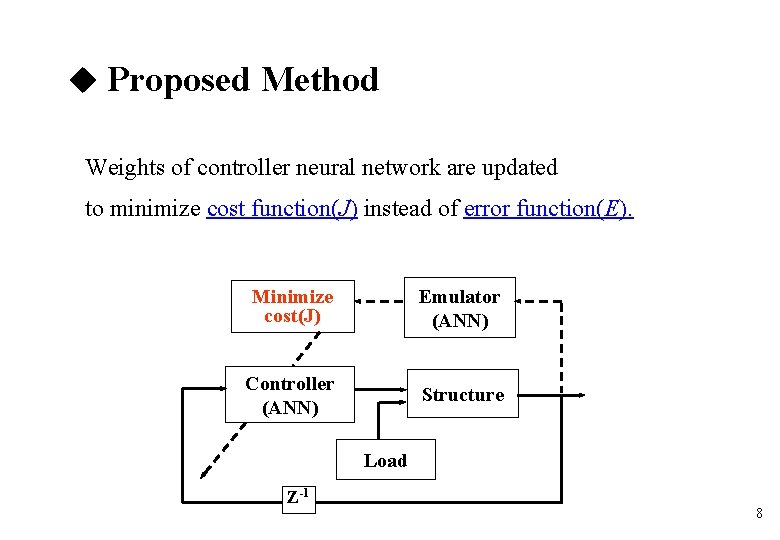
Proposed Method Weights of controller neural network are updated to minimize cost function(J) instead of error function(E). Emulator (ANN) Minimize cost(J) Controller (ANN) U Structure X Load Z-1 8
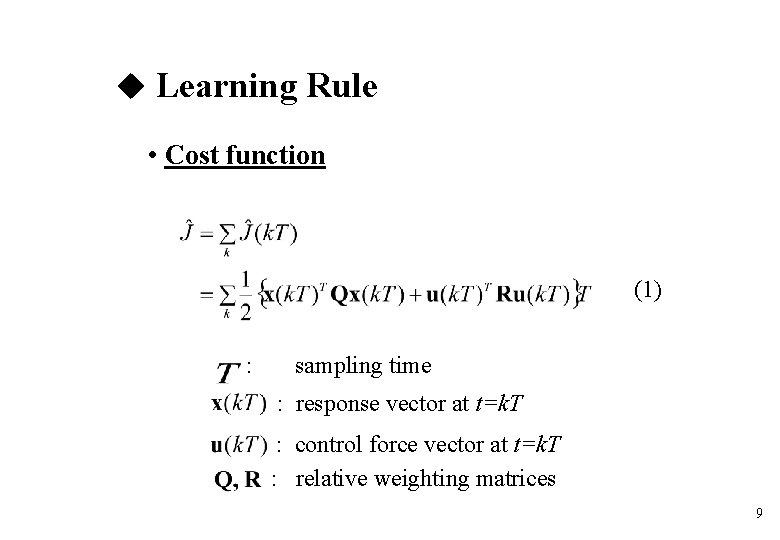
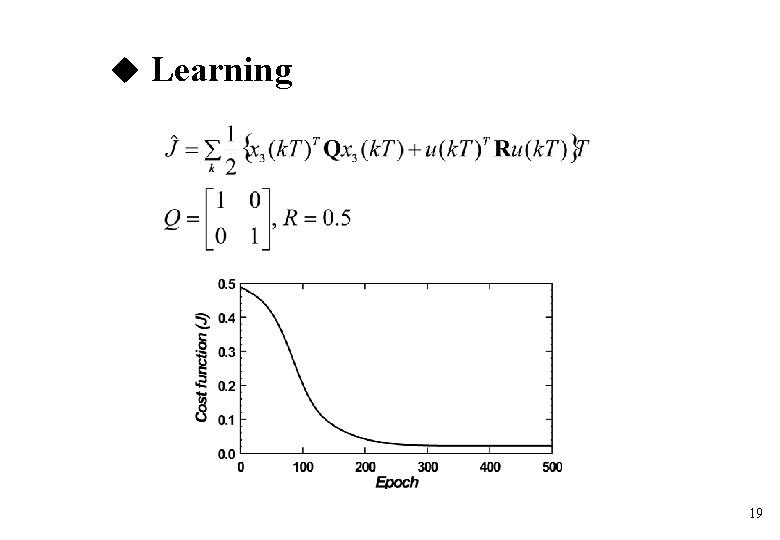
Learning Rule • Cost function (1) : sampling time : response vector at t=k. T : control force vector at t=k. T : relative weighting matrices 9
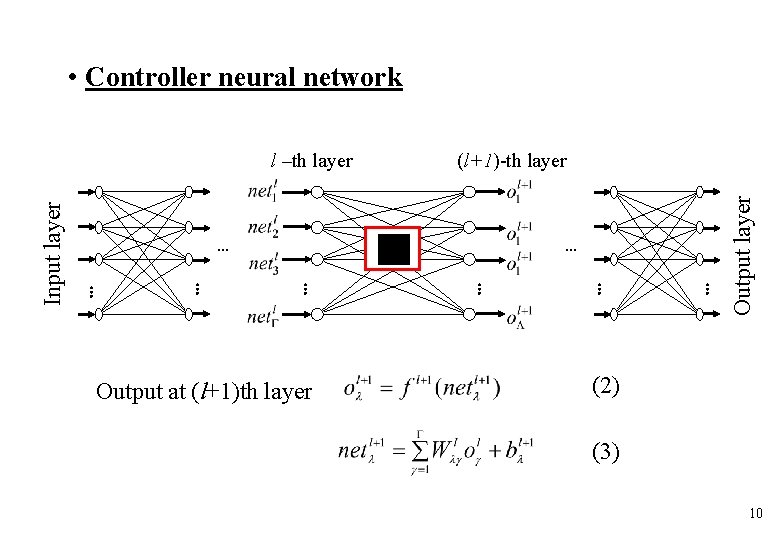
• Controller neural network …. . . . Output at (l+1)th layer Output layer (l+1)-th layer …. . . Input layer l –th layer (2) (3) 10
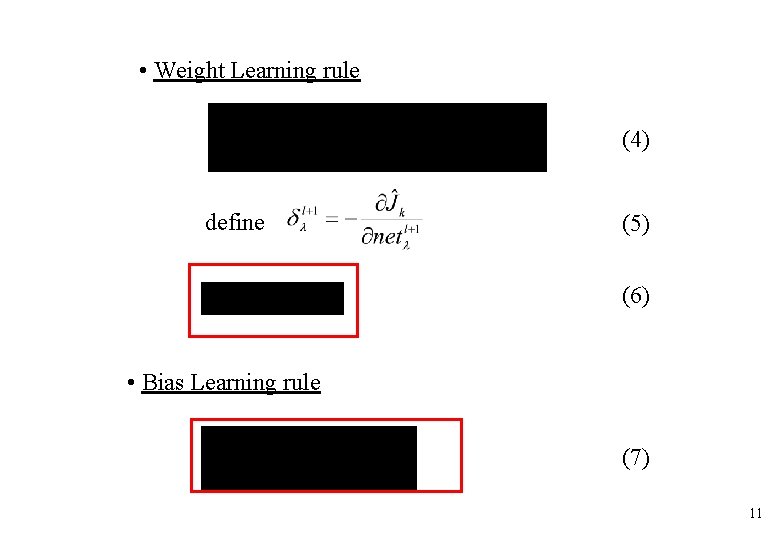
• Weight Learning rule (4) define (5) (6) • Bias Learning rule (7) 11
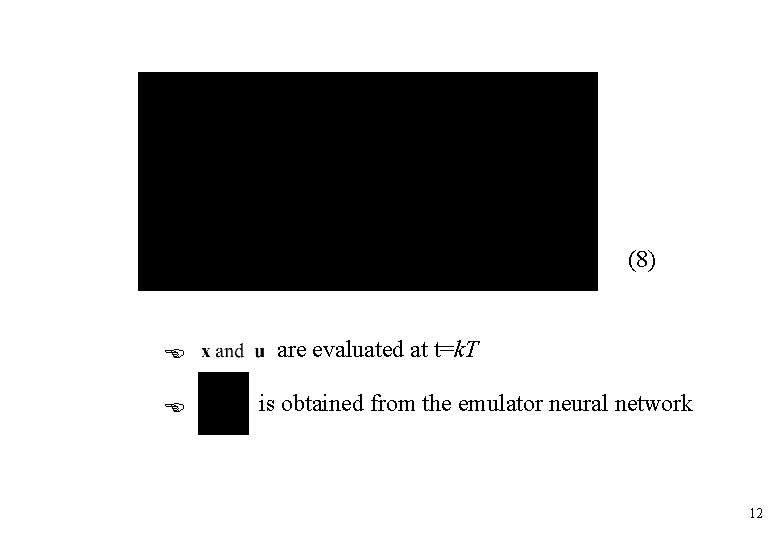
(8) are evaluated at t=k. T is obtained from the emulator neural network 12
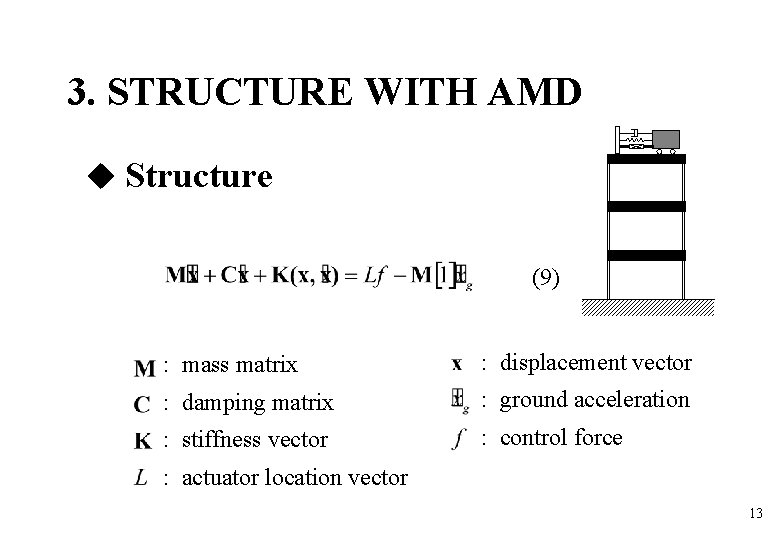
3. STRUCTURE WITH AMD Structure (9) : mass matrix : displacement vector : damping matrix : ground acceleration : stiffness vector : control force : actuator location vector 13
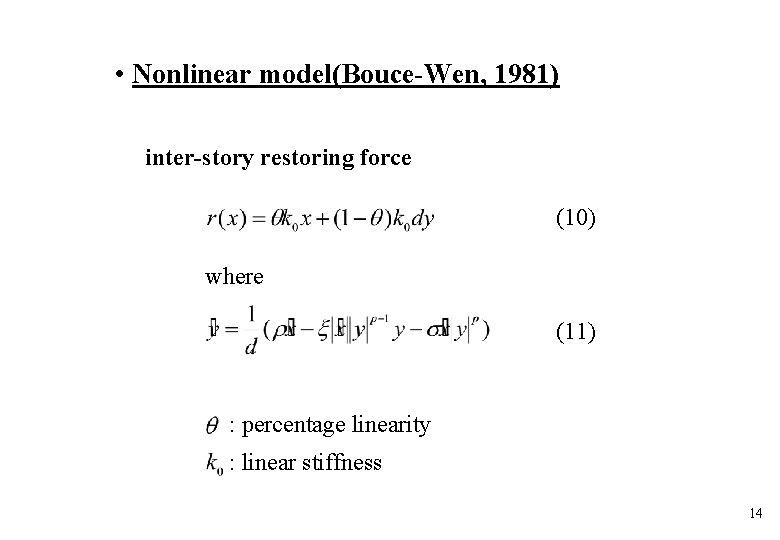
• Nonlinear model(Bouce-Wen, 1981) inter-story restoring force (10) where (11) : percentage linearity : linear stiffness 14
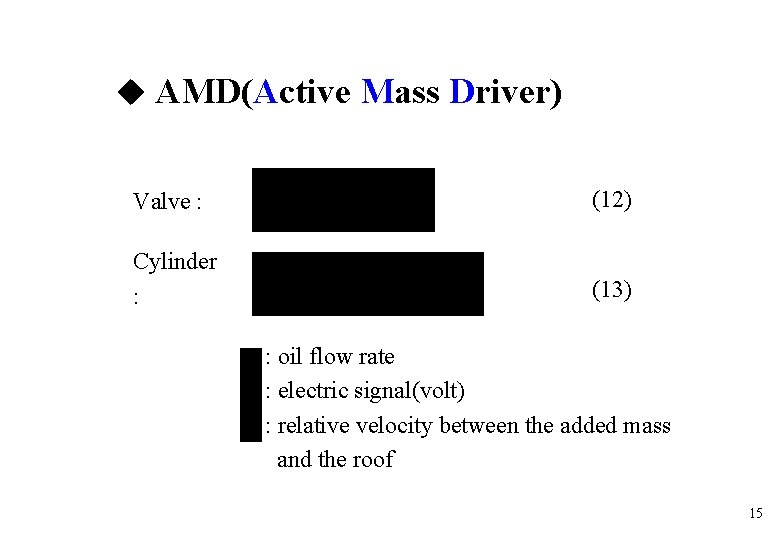
AMD(Active Mass Driver) Valve : (12) Cylinder : (13) : oil flow rate : electric signal(volt) : relative velocity between the added mass and the roof 15
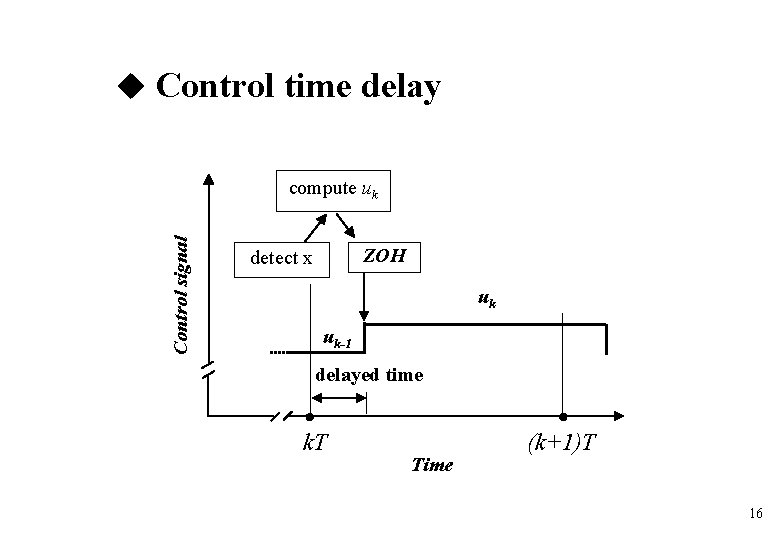
Control time delay Control signal compute uk ZOH detect x uk uk-1 delayed time k. T Time (k+1)T 16
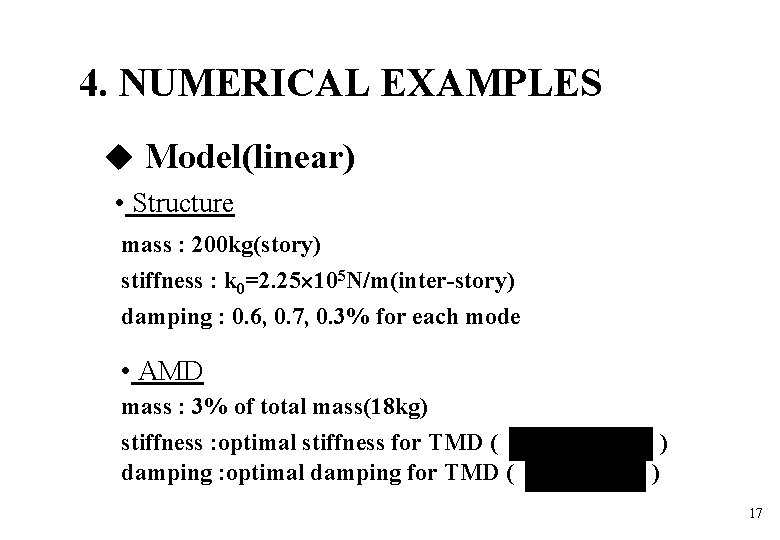
4. NUMERICAL EXAMPLES Model(linear) • Structure mass : 200 kg(story) stiffness : k 0=2. 25 105 N/m(inter-story) damping : 0. 6, 0. 7, 0. 3% for each mode • AMD mass : 3% of total mass(18 kg) stiffness : optimal stiffness for TMD ( damping : optimal damping for TMD ( ) ) 17
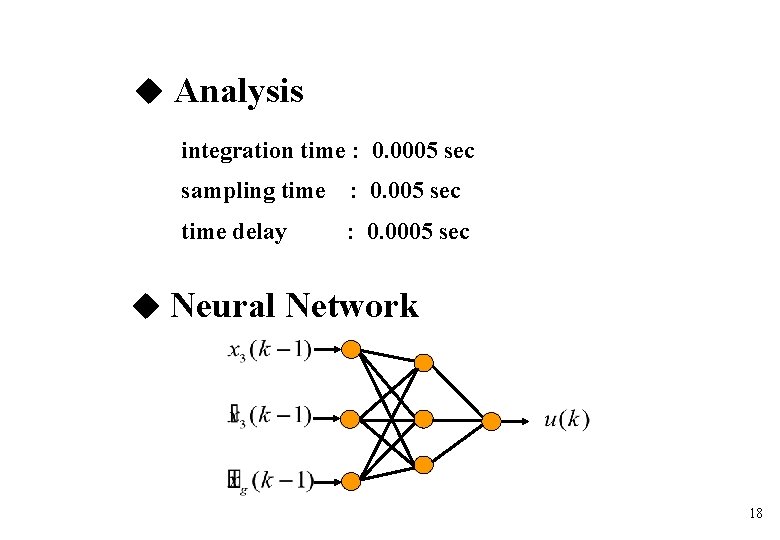
Analysis integration time : 0. 0005 sec sampling time : 0. 005 sec time delay : 0. 0005 sec Neural Network 18
Learning 19
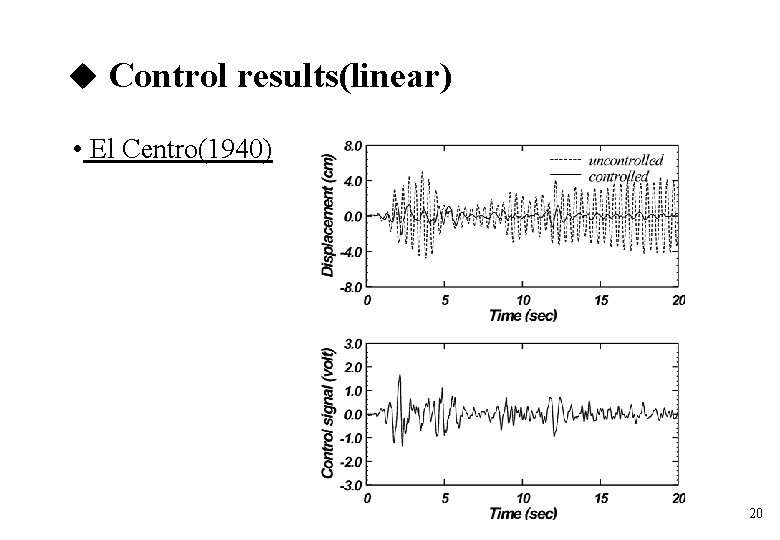
Control results(linear) • El Centro(1940) 20
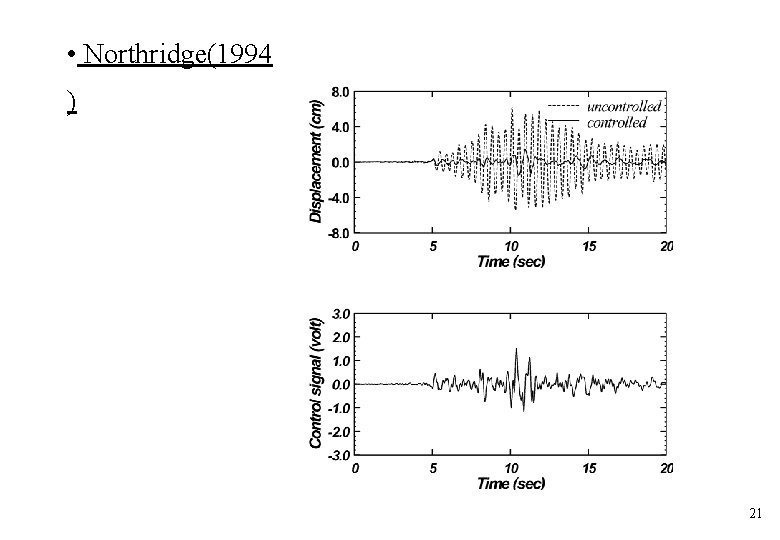
• Northridge(1994 ) 21
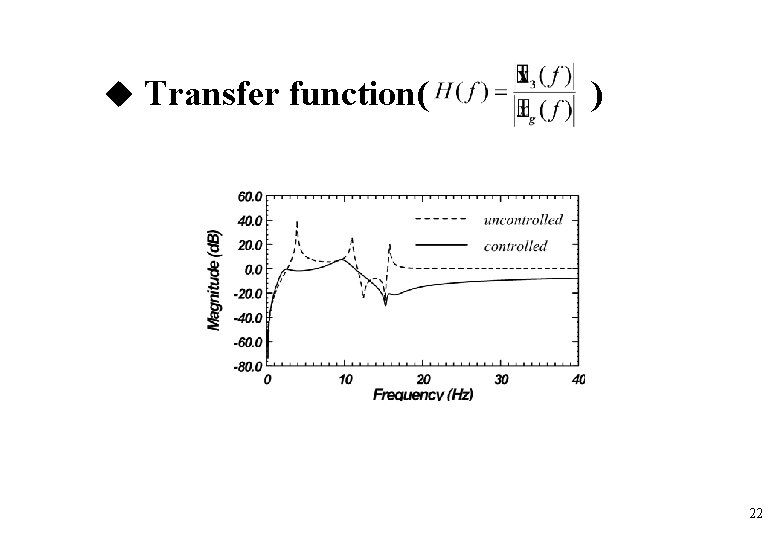
Transfer function( ) 22
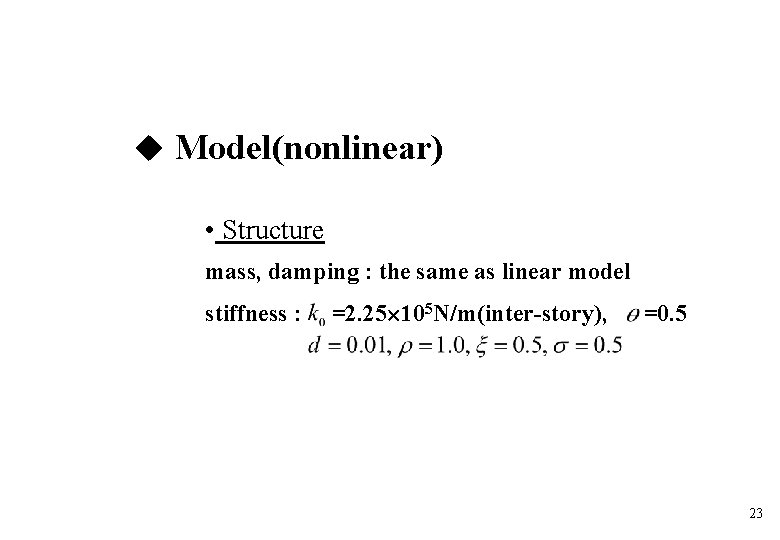
Model(nonlinear) • Structure mass, damping : the same as linear model stiffness : =2. 25 105 N/m(inter-story), =0. 5 23
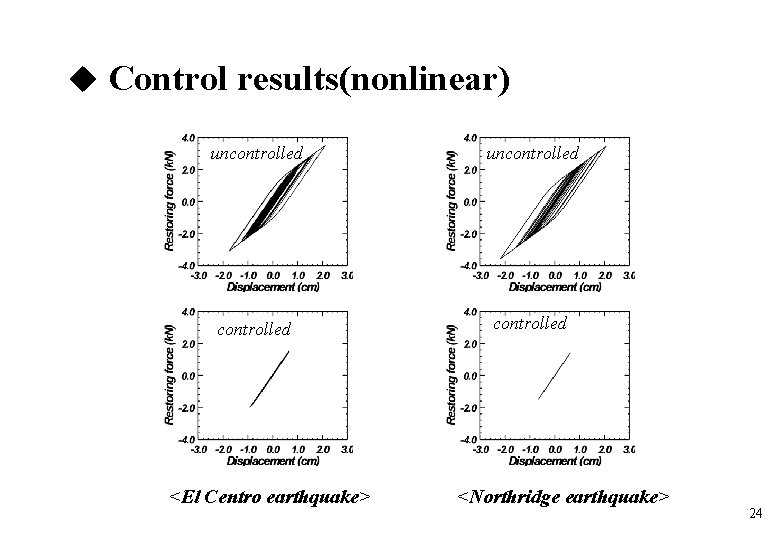
Control results(nonlinear) uncontrolled <El Centro earthquake> <Northridge earthquake> 24
4. CONCLUSIONS • Learning rule of neural network for optimal control is proposed. • Actuator dynamics and time delay effect is included in the learning • Nonlinear three-story structure is controlled successfully. 25