
ContentBased Language Teaching Lynn W Zimmerman Ph D
Content-Based Language Teaching Lynn W. Zimmerman, Ph. D
Relevance Key component for effective teaching and learning Content-based learning • Can integrate interesting content and language objectives • Affective and cognitive factors • Motivation • Quality • Quantity of interactions • Relationship between learning and development
Content-Based Instruction � Integration of content learning with language teaching aims (Brinton, Snow, and Wesche, 1989) � Used for gaining knowledge of: ◦ a particular topic for academic purpose ◦ topics that are of particular relevance and interest for the students
Adapting Content � Goodman-Smith Hypothesis (1982, 1994) ◦ language acquisition and literacy development occur when reader encounters new aspects in text and is developmentally ready � Authentic materials
Pedagogy of Engagement � Participatory Learning Experience 1. Identifying students’ wants/needs 2. Negotiating curriculum to meet wants/needs 3. Developing a dialectical relationship among learners and teachers ◦ Skills development ◦ Exploration of issues ◦ Collaborative learning ◦ Critical analysis

What about grammar? � Direct instruction of grammar - not beneficial (Van Patten, 1986; Lightbrown, 1983; Pienemann, 1984; Ellis, 1997). � Implicit instruction of grammar (Winitz, 1996) ◦ contextualized ◦ communicative activities which incorporate grammar practice (Larsen-Freeman, 2002)
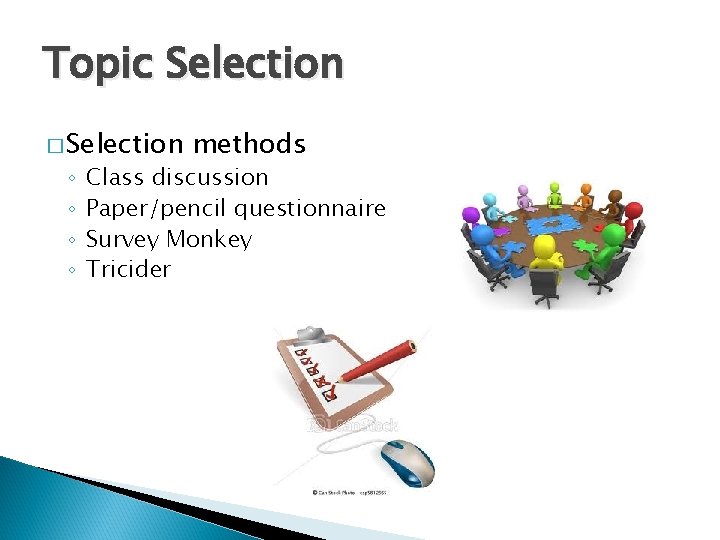
Topic Selection � Selection ◦ ◦ methods Class discussion Paper/pencil questionnaire Survey Monkey Tricider

Online Discussions and Blogs � Link students to the world outside the classroom � Moodle discussion ◦ Taiwan – US university students ◦ Civil Rights Movement
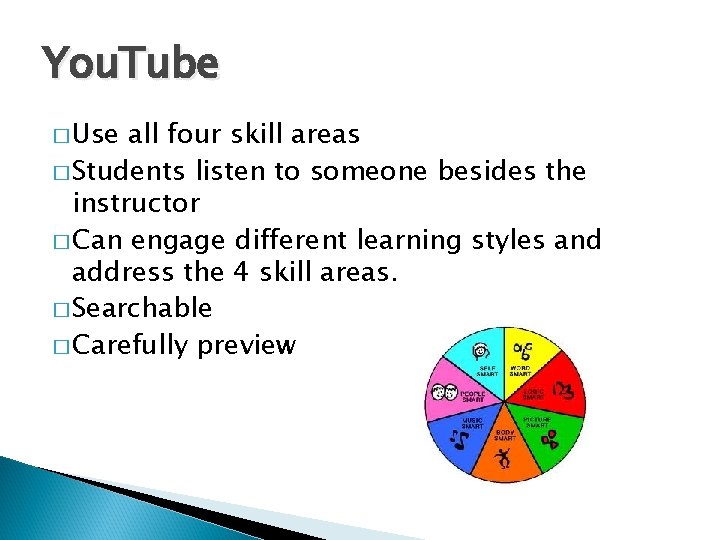
You. Tube � Use all four skill areas � Students listen to someone besides the instructor � Can engage different learning styles and address the 4 skill areas. � Searchable � Carefully preview
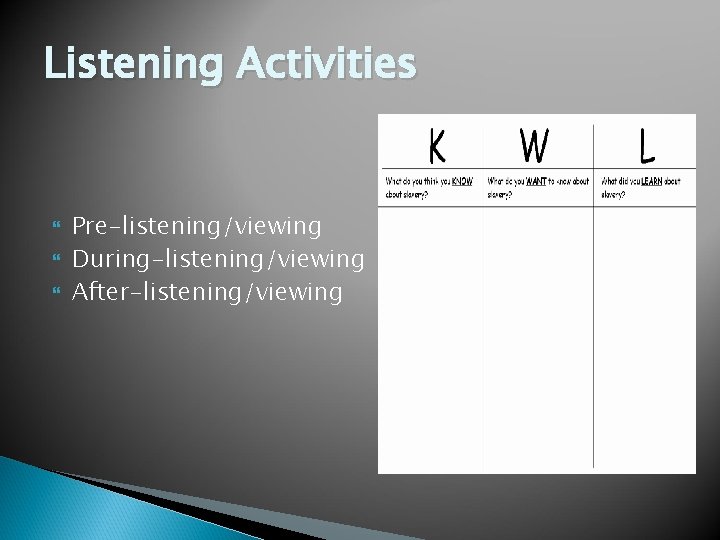
Listening Activities Pre-listening/viewing During-listening/viewing After-listening/viewing
SIOP Model �Eight ◦ ◦ ◦ ◦ interrelated components Lesson Preparation Building Background Comprehensible Input Strategies Interaction Practice/Application Lesson Delivery Review & Assessment
CALLA � Cognitive Academic Language Learning Approach ◦ Integrates instruction in topics from content curriculum, development of language skills needed for learning in school, and explicit instruction in using learning strategies for academic tasks. � Goals of CALLA ◦ for students to learn essential academic content and language ◦ to become independent and self-regulated learners through their increasing command over a variety of strategies for learning in school
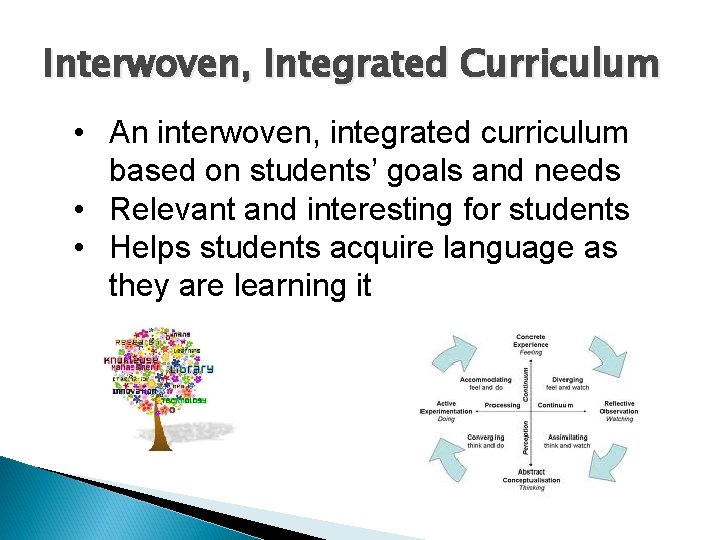
Interwoven, Integrated Curriculum • An interwoven, integrated curriculum based on students’ goals and needs • Relevant and interesting for students • Helps students acquire language as they are learning it
- Slides: 13