
Content Ch 1 Excitedstate double proton transfer reaction

Content Ch 1. Excited-state double proton transfer reaction of 7 hydroxyquinoline-8 -carboxylic acid Ch 2. Theoretical study on the ground- and excited-state proton transfer reactions of 2 -(2’-hydroxylphenyl)thiazole (HPT) 2
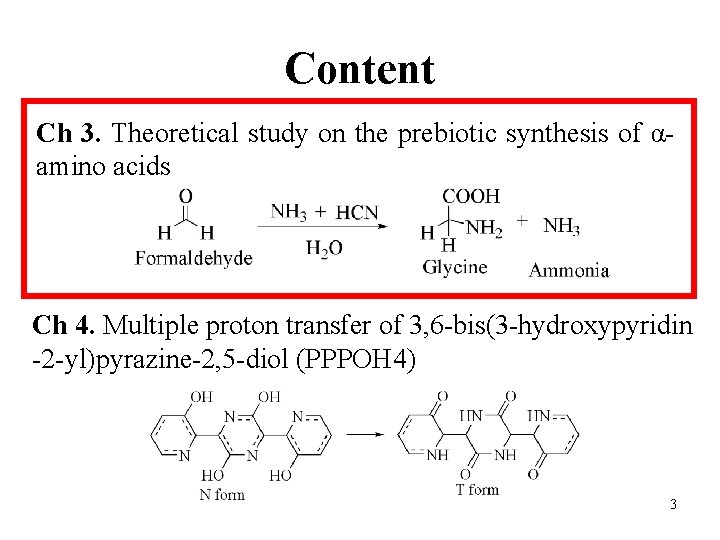
Content Ch 3. Theoretical study on the prebiotic synthesis of αamino acids Ch 4. Multiple proton transfer of 3, 6 -bis(3 -hydroxypyridin -2 -yl)pyrazine-2, 5 -diol (PPPOH 4) 3
Theoretical Study on the Prebiotic Synthesis of Glycine 4

Biosynthesis of Glycine l. Precursor of Glycine 3 -Phosphoglycerate Three types of enzyme Serine (Intermediate of glycolysis) l. Formation of Glycine 5 Garrett, R. H. ; Grishman, C. M. ; Biochemistry; 4 rd Ed. ; Thomsom Learning: Singapore, 2005; pp 837
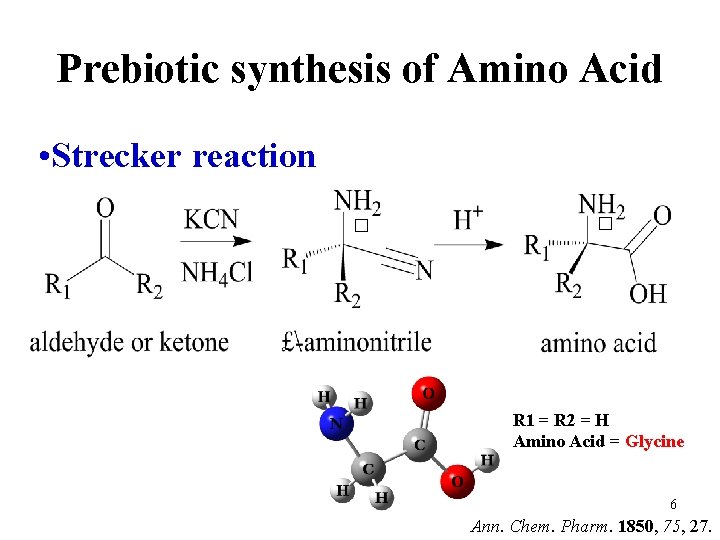
Prebiotic synthesis of Amino Acid • Strecker reaction � � R 1 = R 2 = H Amino Acid = Glycine 6 Ann. Chem. Pharm. 1850, 75, 27.
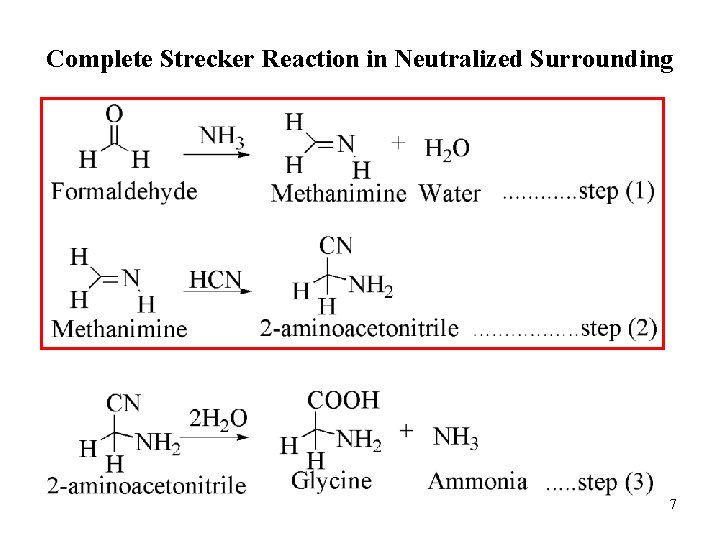
Complete Strecker Reaction in Neutralized Surrounding 7
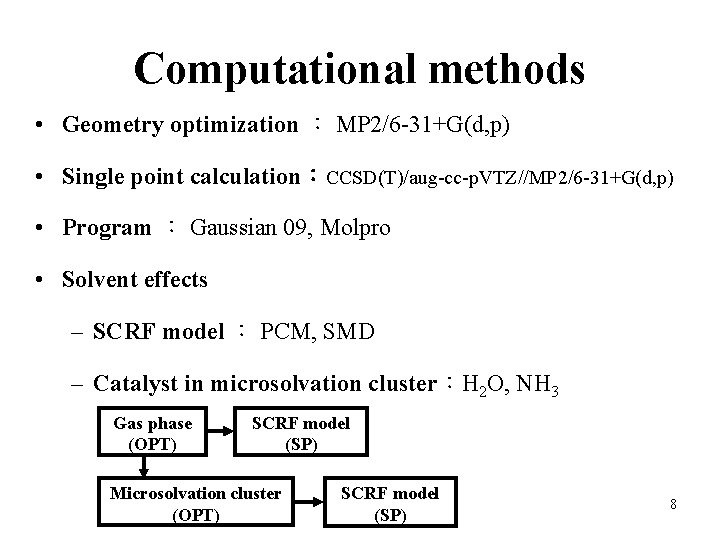
Computational methods • Geometry optimization : MP 2/6 -31+G(d, p) • Single point calculation:CCSD(T)/aug-cc-p. VTZ//MP 2/6 -31+G(d, p) • Program : Gaussian 09, Molpro • Solvent effects – SCRF model : PCM, SMD – Catalyst in microsolvation cluster:H 2 O, NH 3 Gas phase (OPT) SCRF model (SP) Microsolvation cluster (OPT) SCRF model (SP) 8
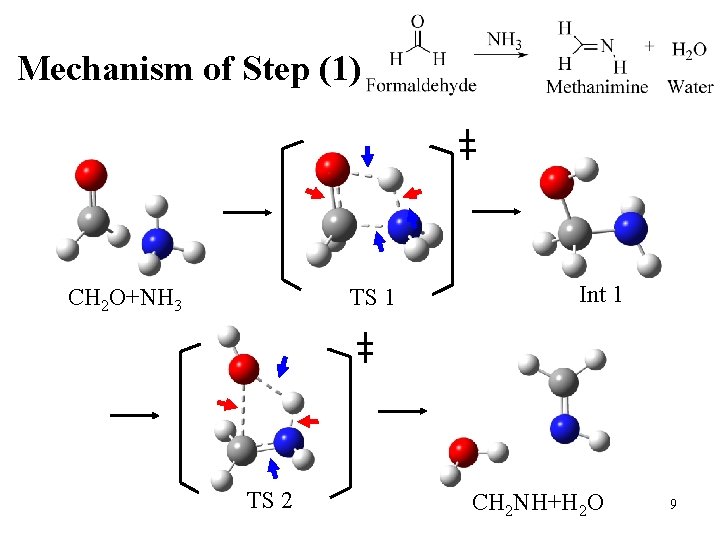
Mechanism of Step (1) TS 1 CH 2 O+NH 3 TS 2 Int 1 CH 2 NH+H 2 O 9
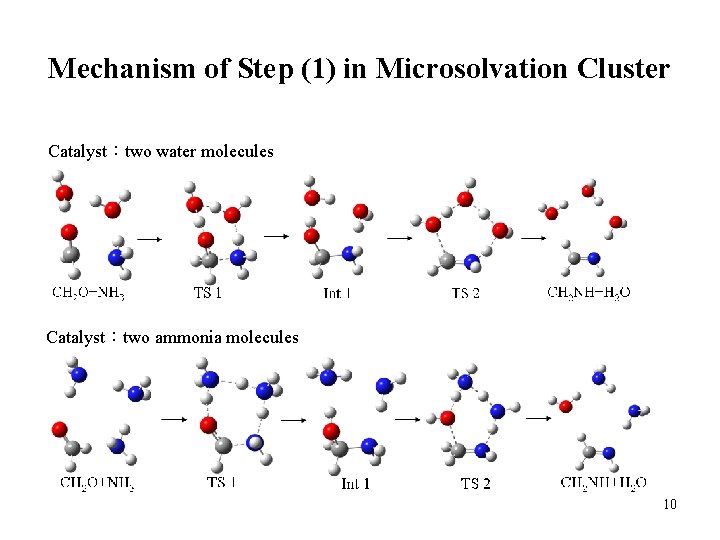
Mechanism of Step (1) in Microsolvation Cluster Catalyst:two water molecules Catalyst:two ammonia molecules 10
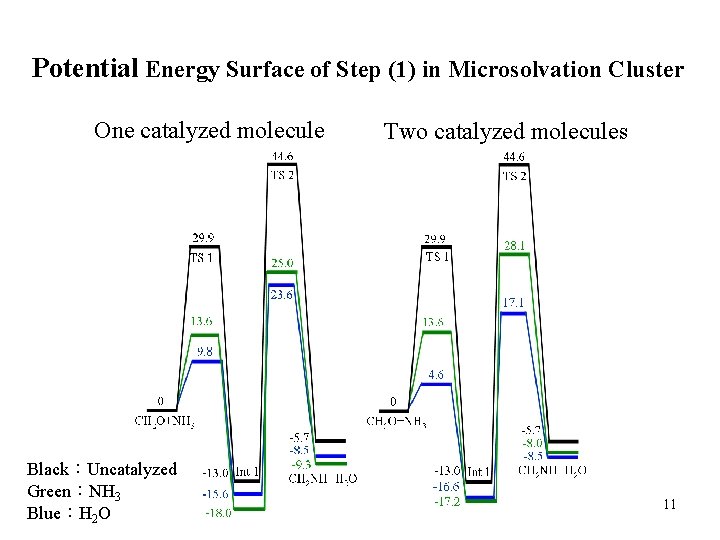
Potential Energy Surface of Step (1) in Microsolvation Cluster One catalyzed molecule Black:Uncatalyzed Green:NH 3 Blue:H 2 O Two catalyzed molecules 11

Proton Relay Mechanism • Uncatalyzed reaction 0 kcal/mol 29. 9 kcal/mol • Reaction with two water molecules as catalyst 0 kcal/mol 4. 6 kcal/mol -13. 0 kcal/mol -8. 5 kcal/mol 12

Potential Energy Surface of Step (1) with two water molecules in SCRF Model Black:Gas phase Purple:PCM Red:SMD 13
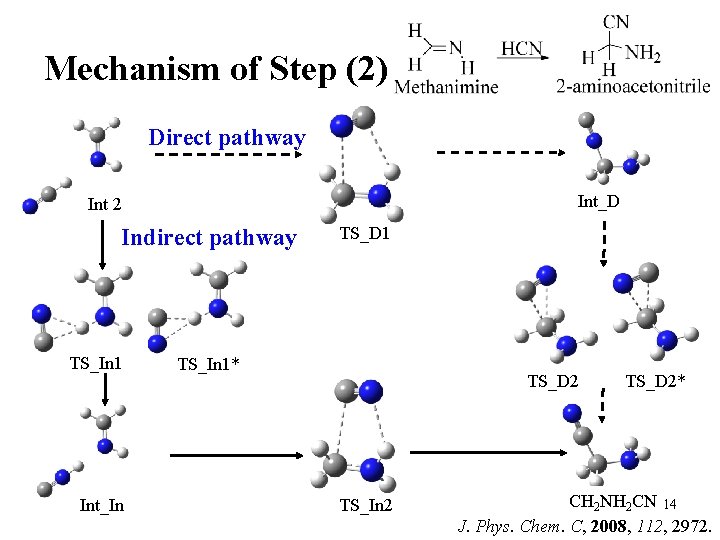
Mechanism of Step (2) Direct pathway Int_D Int 2 Indirect pathway TS_In 1 Int_In TS_D 1 TS_In 1* TS_D 2 TS_In 2 TS_D 2* CH 2 NH 2 CN 14 J. Phys. Chem. C, 2008, 112, 2972.
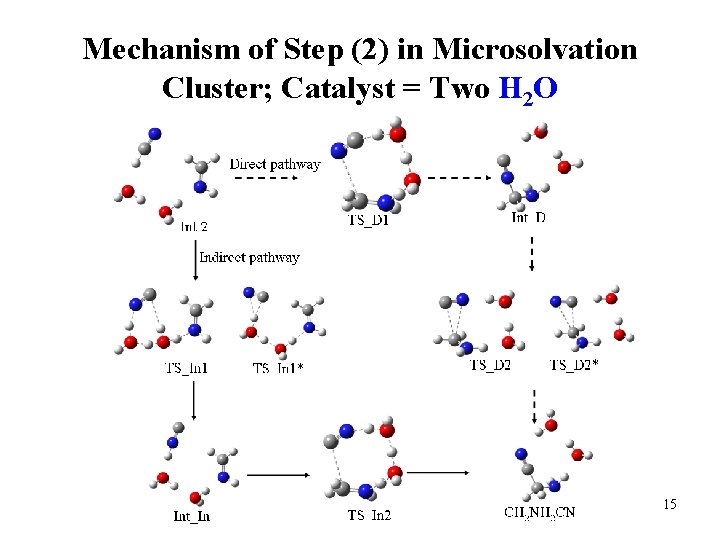
Mechanism of Step (2) in Microsolvation Cluster; Catalyst = Two H 2 O 15
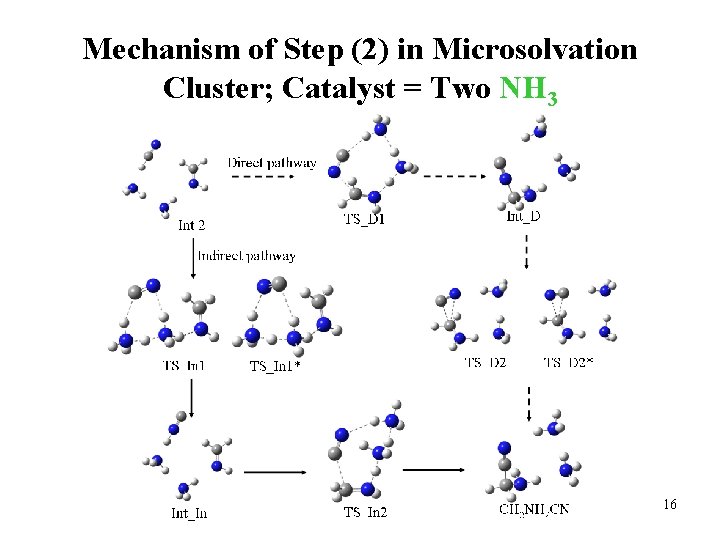
Mechanism of Step (2) in Microsolvation Cluster; Catalyst = Two NH 3 16
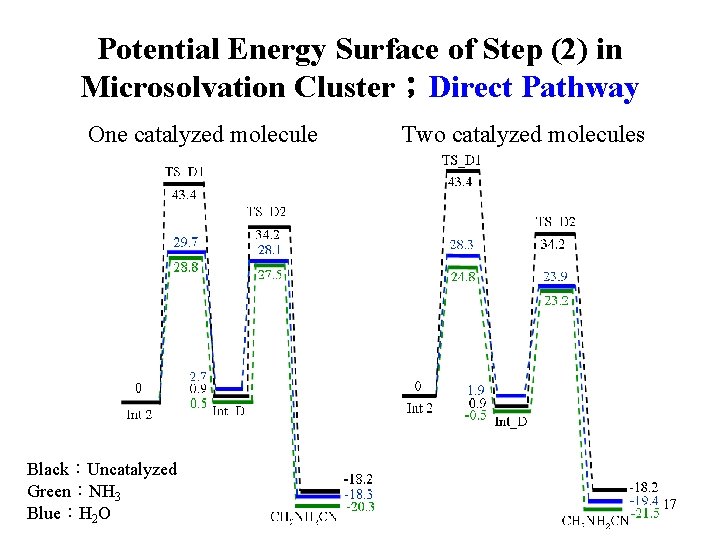
Potential Energy Surface of Step (2) in Microsolvation Cluster;Direct Pathway One catalyzed molecule Black:Uncatalyzed Green:NH 3 Blue:H 2 O Two catalyzed molecules 17
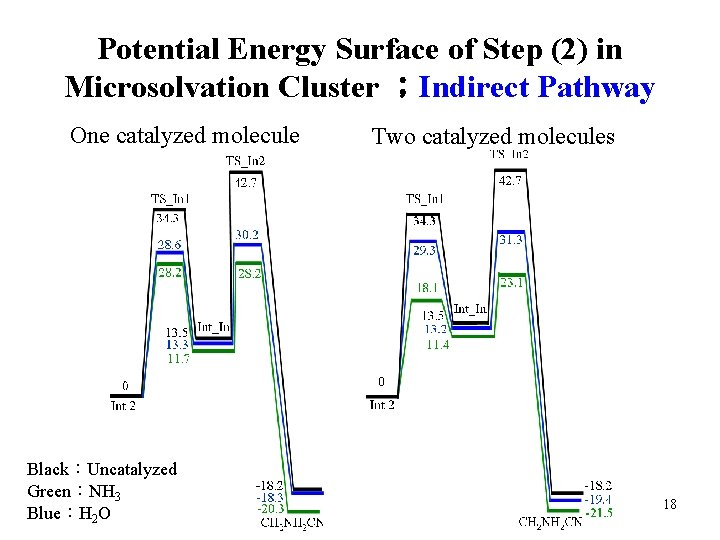
Potential Energy Surface of Step (2) in Microsolvation Cluster ;Indirect Pathway One catalyzed molecule Black:Uncatalyzed Green:NH 3 Blue:H 2 O Two catalyzed molecules 18
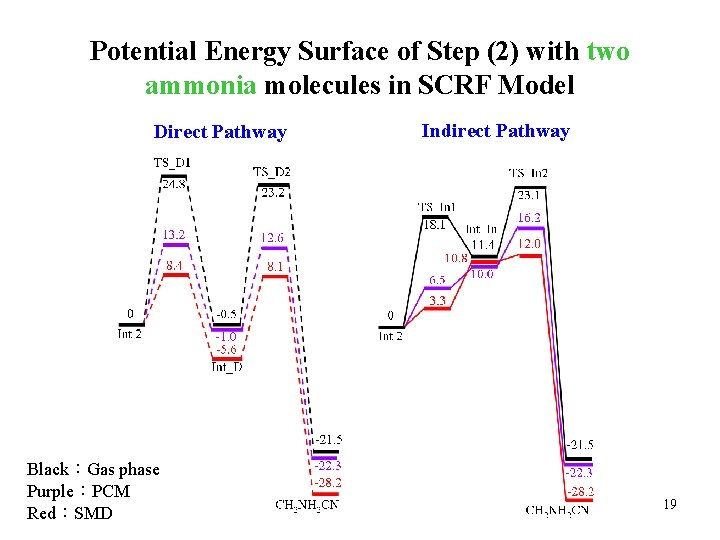
Potential Energy Surface of Step (2) with two ammonia molecules in SCRF Model Direct Pathway Black:Gas phase Purple:PCM Red:SMD Indirect Pathway 19
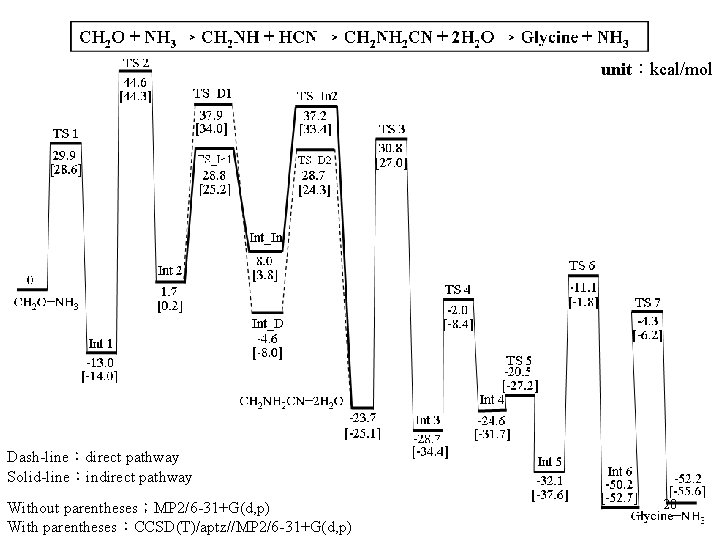
unit:kcal/mol Dash-line:direct pathway Solid-line:indirect pathway Without parentheses;MP 2/6 -31+G(d, p) With parentheses:CCSD(T)/aptz//MP 2/6 -31+G(d, p) 20
Conclusions 1. We investigated the prebiotic synthesis of glycine from CH 2 O, NH 3 and HCN, and simulated the solvent effect by microsolvation cluster and SCRF model (PCM and SMD). 2. Microsolvation cluster played an important role in proton relay mechanism. 3. In most cases, SCRF model predicted lower energy barriers. 4. In step one, we used two water molecules as the most effective catalyst. The result showed that it left an energy barrier about 45 kcal/mol in uncatalyzed reaction and 17 kcal/mol in two water molecules catalyzed reaction. In SMD model the energy barrier was 11 kcal/mol in two water molecules catalyzed reaction. 5. In step two, we used two ammonia molecules as the most effective catalyst. The result showed that it left an energy barrier about 43 kcal/mol in uncatalyzed reaction and 23 kcal/mol in two ammonia molecules catalyzed reaction. In SMD model the energy barrier was 12 kcal/mol in two ammonia molecules catalyzed reaction. 6. In the overall Strecker reaction, the reaction energy was exoergic about 56 kcal/mol. 21
Thank you for your attention 22
Supplement 1. Solvent effects 1. 2. 3. 2. Proton relay mechanism in step (2) 1. 2. 3. 4. 3. Microsolvation cluster SCRF model Hybrid model Proton relay mechanism HCN tautomerization HCN Tautomerization in step (2) HCN Tautomerization with water molecules Biosynthesis of Protein 1. 2. Structure of DNA Biosynthesis of Protein 23
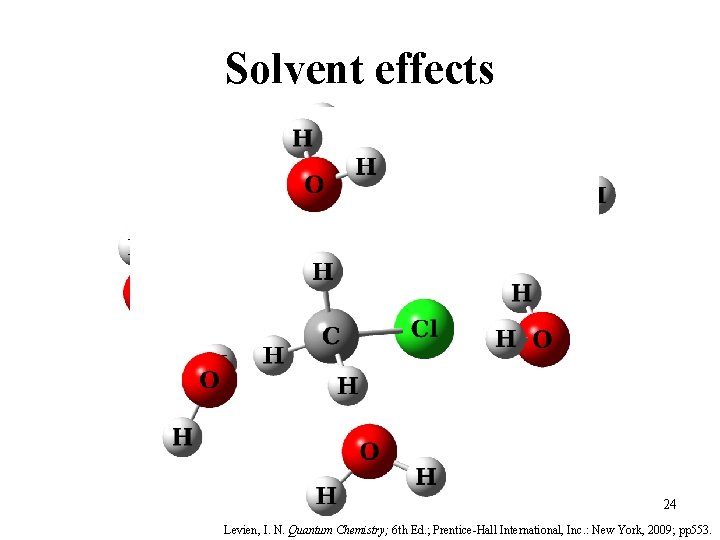
Solvent effects δ+ δ� δ+ δ+ 24 Levien, I. N. Quantum Chemistry; 6 th Ed. ; Prentice-Hall International, Inc. : New York, 2009; pp 553.
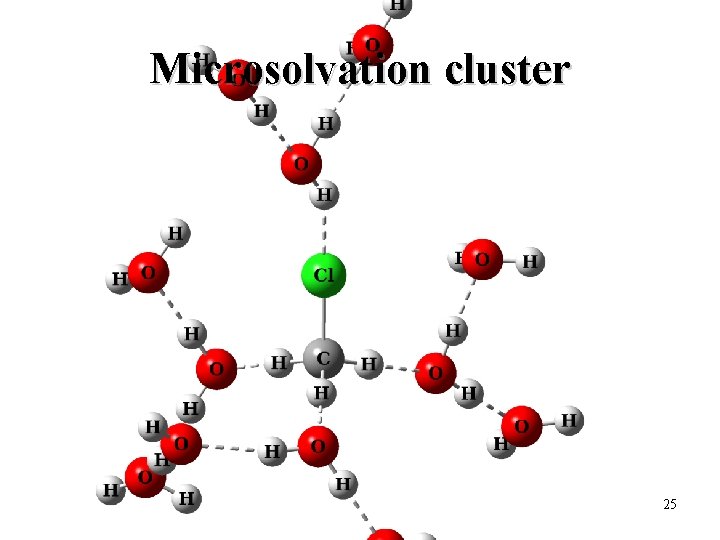
Microsolvation cluster 25
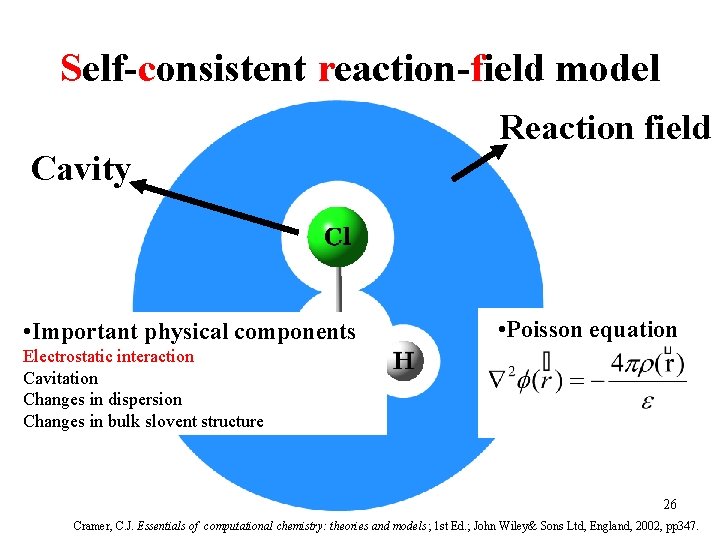
Self-consistent reaction-field model Reaction field Cavity • Important physical components • Poisson equation Electrostatic interaction Cavitation Changes in dispersion Changes in bulk slovent structure 26 Cramer, C. J. Essentials of computational chemistry: theories and models; 1 st Ed. ; John Wiley& Sons Ltd, England, 2002, pp 347.
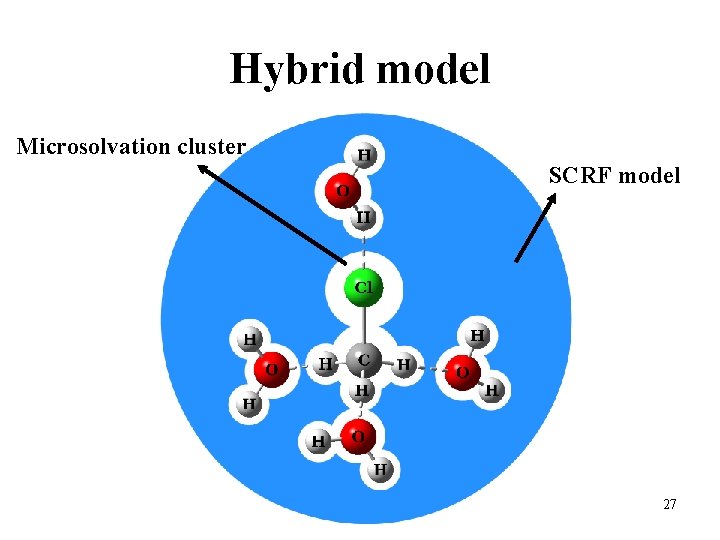
Hybrid model Microsolvation cluster SCRF model 27
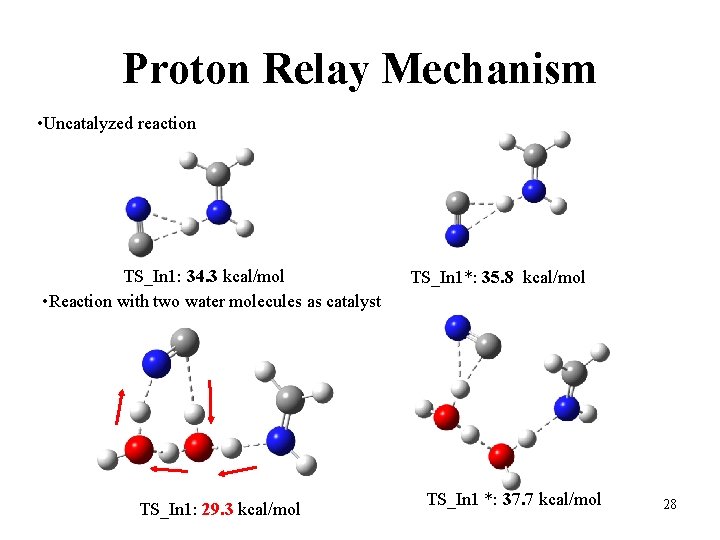
Proton Relay Mechanism • Uncatalyzed reaction TS_In 1: 34. 3 kcal/mol • Reaction with two water molecules as catalyst TS_In 1: 29. 3 kcal/mol TS_In 1*: 35. 8 kcal/mol TS_In 1 *: 37. 7 kcal/mol 28
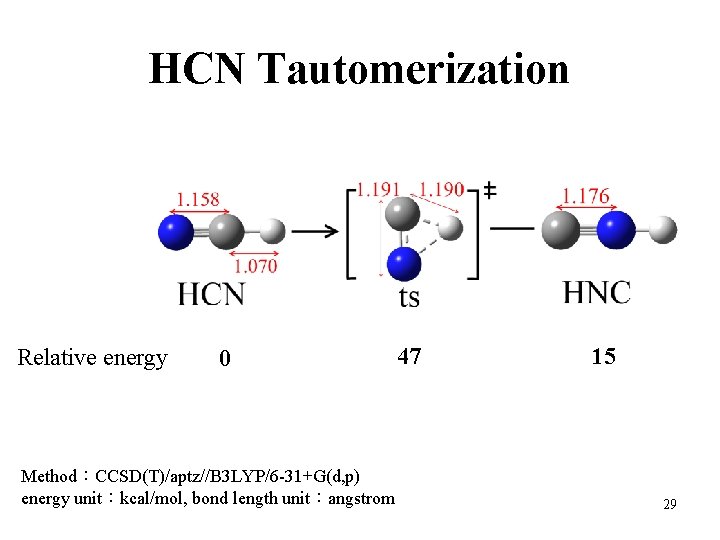
HCN Tautomerization Relative energy 0 Method:CCSD(T)/aptz//B 3 LYP/6 -31+G(d, p) energy unit:kcal/mol, bond length unit:angstrom 47 15 29
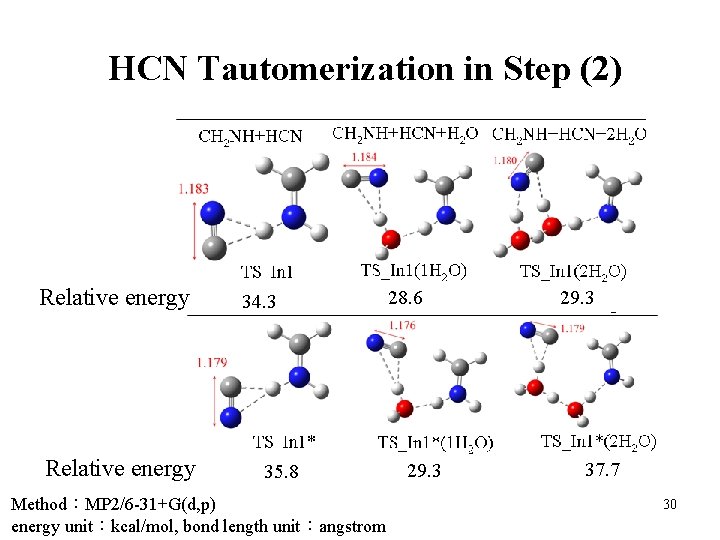
HCN Tautomerization in Step (2) Relative energy 34. 3 35. 8 Method:MP 2/6 -31+G(d, p) energy unit:kcal/mol, bond length unit:angstrom 28. 6 29. 3 37. 7 30
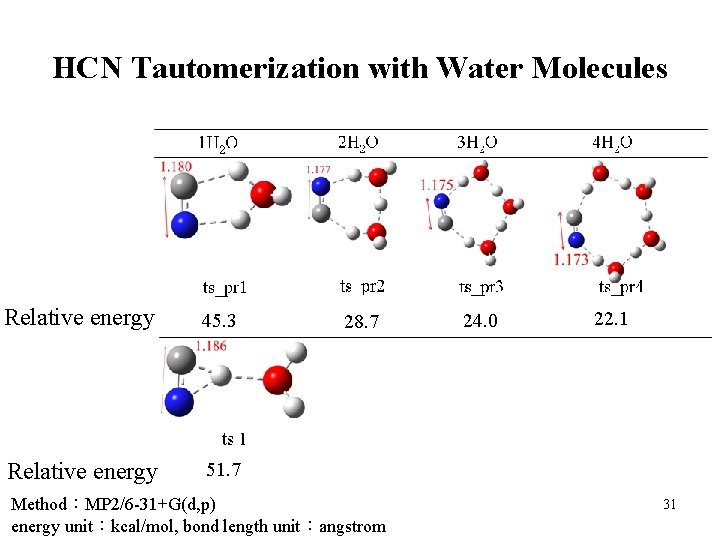
HCN Tautomerization with Water Molecules Relative energy 45. 3 Relative energy 51. 7 28. 7 Method:MP 2/6 -31+G(d, p) energy unit:kcal/mol, bond length unit:angstrom 24. 0 22. 1 31
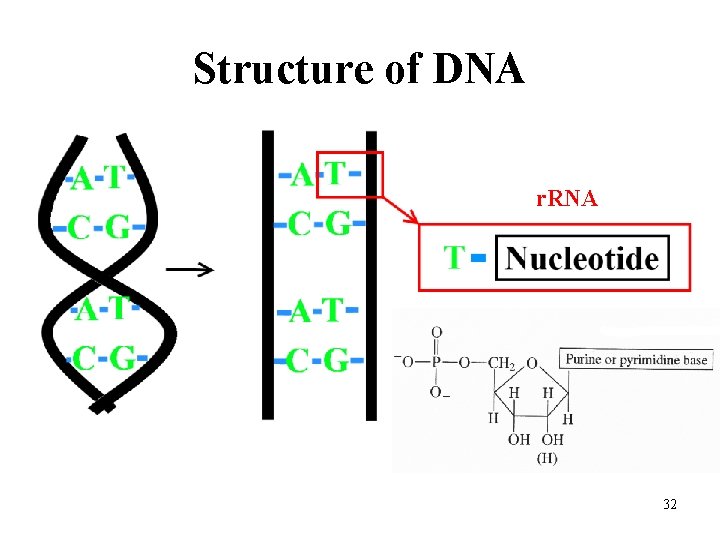
Structure of DNA r. RNA 32
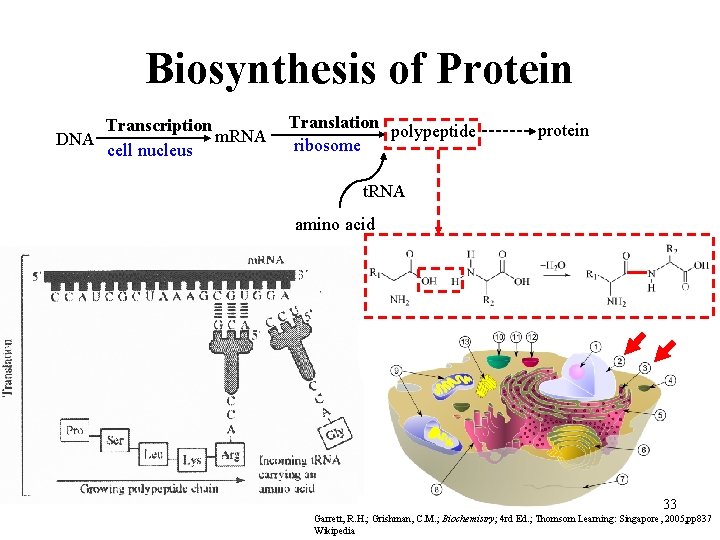
Biosynthesis of Protein Transcription m. RNA DNA cell nucleus Translation polypeptide ribosome protein t. RNA amino acid 33 Garrett, R. H. ; Grishman, C. M. ; Biochemistry; 4 rd Ed. ; Thomsom Learning: Singapore, 2005; pp 837 Wikipedia
- Slides: 33