
Content 1 Introduction to Cryocoolers 2 Commercially available
Content 1 Introduction to Cryocoolers 2 Commercially available versions 3 Reliquefaction of Helium vapor => zero boil off 4 Integration into cryostats – options and limitations 2
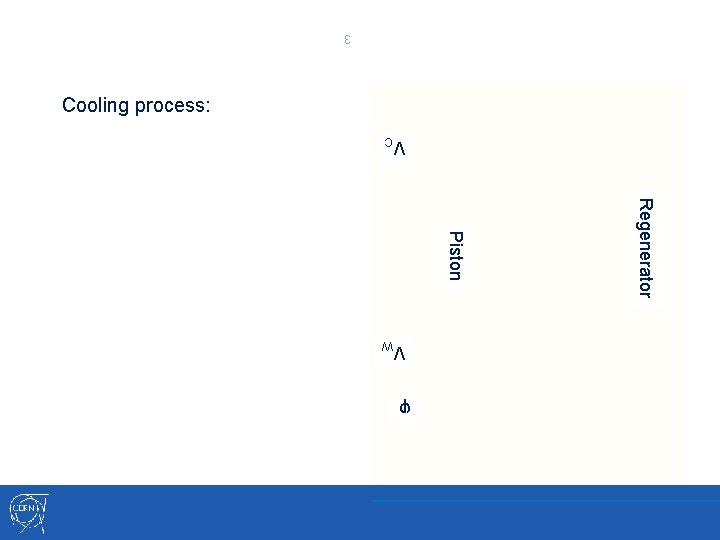
Cooling process: Regenerator Piston 3 VC VW φ

Types of Cryocoolers Stirling-Cooler GM-Cooler Basic Pulse Tube Common types of low temperature cryocoolers v Orifice Pulse Tube Double inlet PT Four Valve PT 4

Cooling power map C ling C & Stir 5
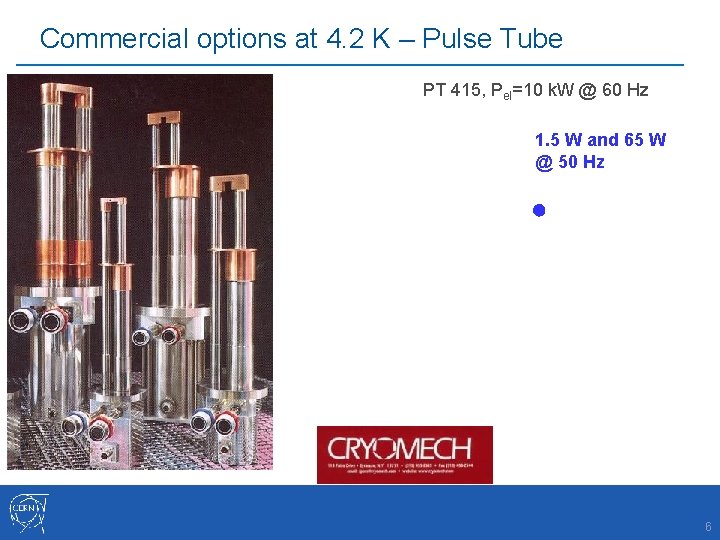
Commercial options at 4. 2 K – Pulse Tube PT 415, Pel=10 k. W @ 60 Hz 1. 5 W and 65 W @ 50 Hz 6

Commercial options at 4. 2 K – Pulse Tube SHI – Sumitomo Heavy Industries Pel= 7 k. W 7
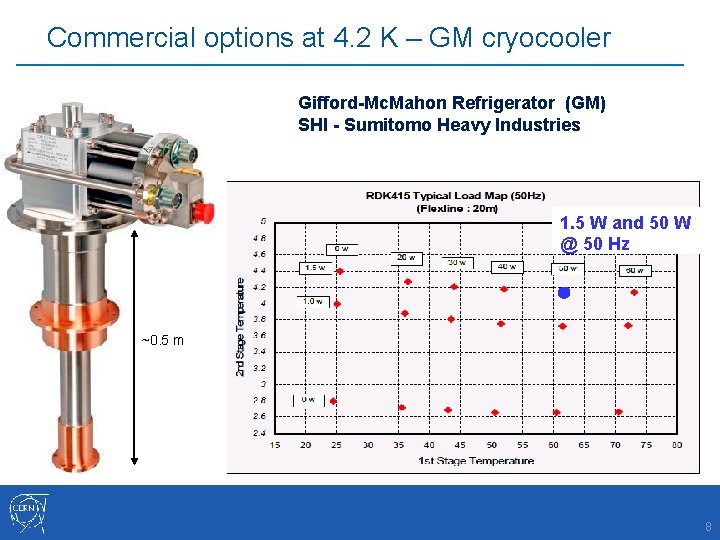
Commercial options at 4. 2 K – GM cryocooler Gifford-Mc. Mahon Refrigerator (GM) SHI - Sumitomo Heavy Industries 1. 5 W and 50 W @ 50 Hz ~0. 5 m 8
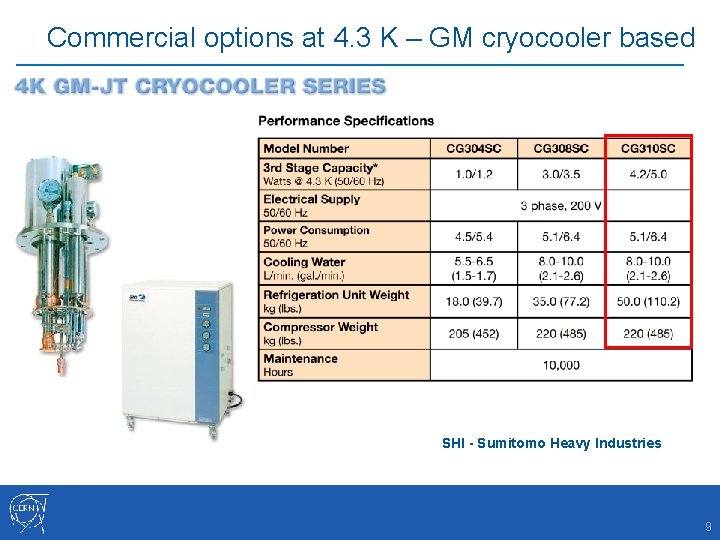
Commercial options at 4. 3 K – GM cryocooler based SHI - Sumitomo Heavy Industries 9
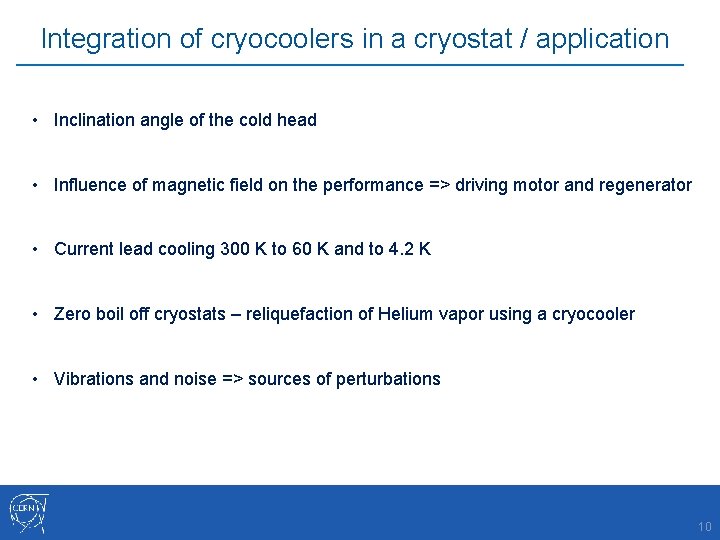
Integration of cryocoolers in a cryostat / application • Inclination angle of the cold head • Influence of magnetic field on the performance => driving motor and regenerator • Current lead cooling 300 K to 60 K and to 4. 2 K • Zero boil off cryostats – reliquefaction of Helium vapor using a cryocooler • Vibrations and noise => sources of perturbations 10
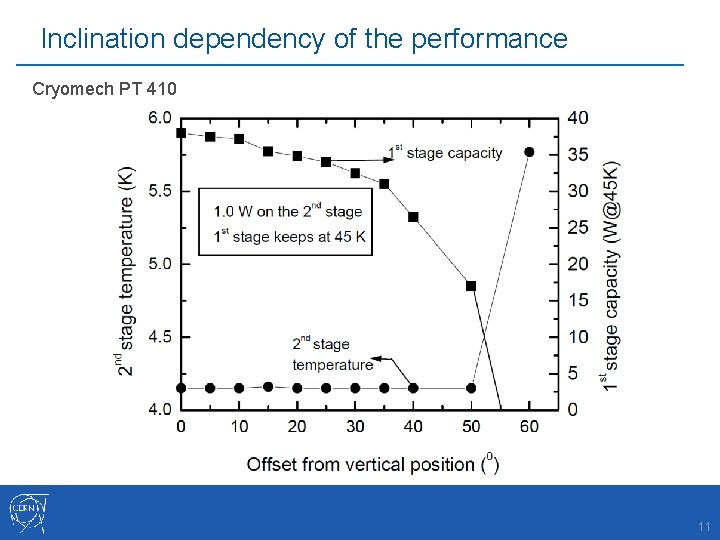
Inclination dependency of the performance Cryomech PT 410 11
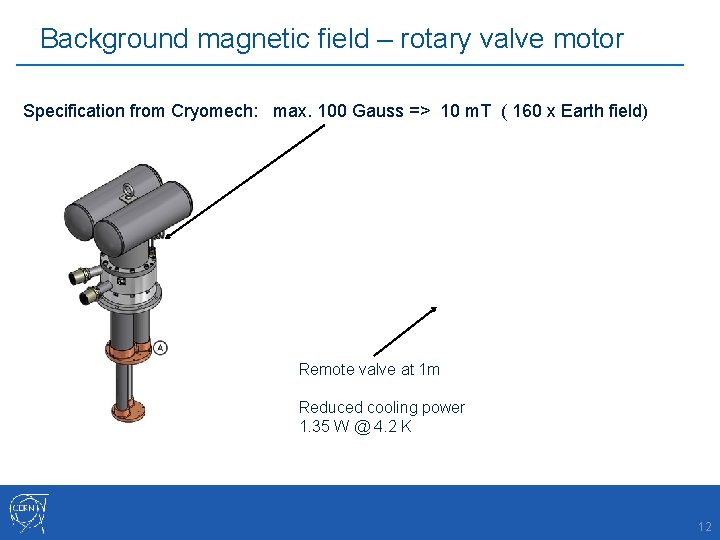
Background magnetic field – rotary valve motor Specification from Cryomech: max. 100 Gauss => 10 m. T ( 160 x Earth field) Remote valve at 1 m Reduced cooling power 1. 35 W @ 4. 2 K 12
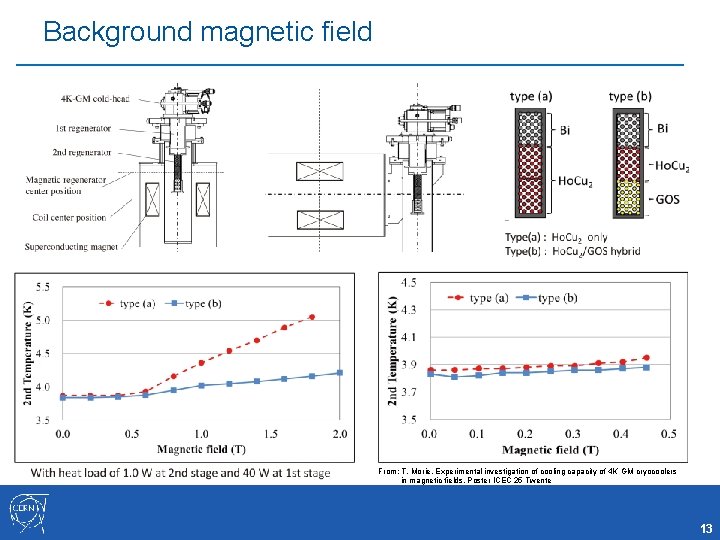
Background magnetic field From: T. Morie, Experimental investigation of cooling capacity of 4 K GM cryocoolers in magnetic fields, Poster ICEC 25 Twente 13

Current leads – current dry cooling Application – Dry leads Two stage Cryocooler 300 K flange T<62 K for HTS leads Heat load to the 1 st stage Copper rods RRR=10 2 nd stage at 4. 2 K 14
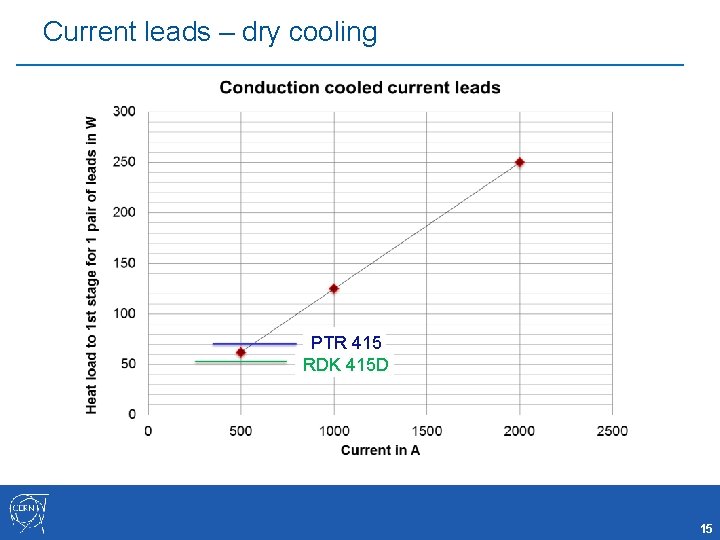
Current leads – dry cooling PTR 415 RDK 415 D 15
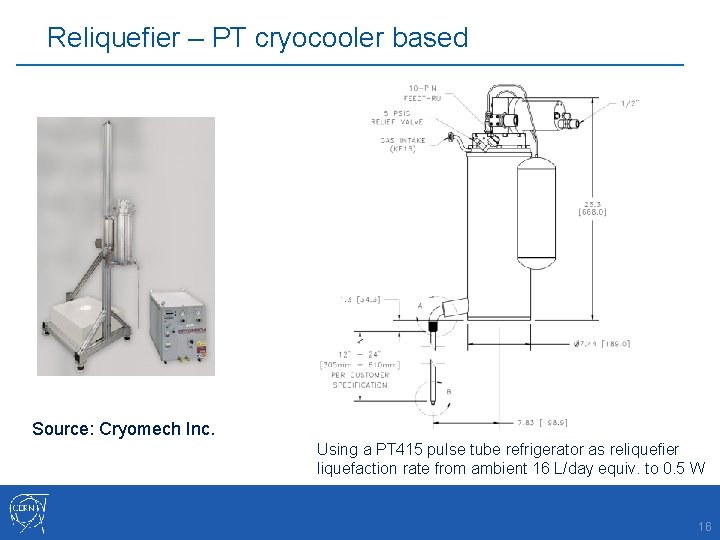
Reliquefier – PT cryocooler based Source: Cryomech Inc. Using a PT 415 pulse tube refrigerator as reliquefier liquefaction rate from ambient 16 L/day equiv. to 0. 5 W 16
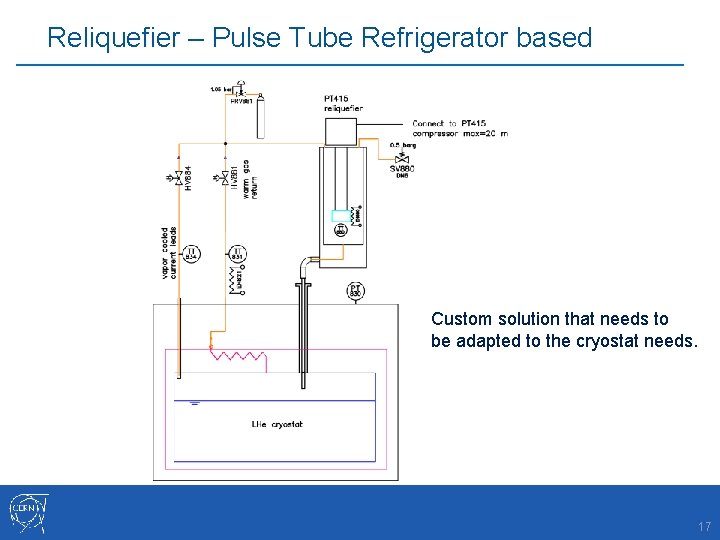
Reliquefier – Pulse Tube Refrigerator based Custom solution that needs to be adapted to the cryostat needs. 17
Sources of perturbation Vibrations and noise level: • Mechanical vibrations at the cold head • Temperature oscillations • Electromagnetic noise 18
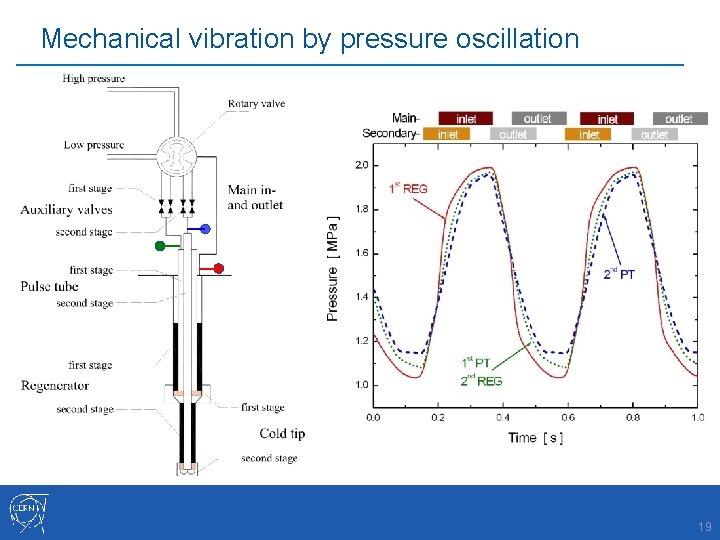
Mechanical vibration by pressure oscillation 19
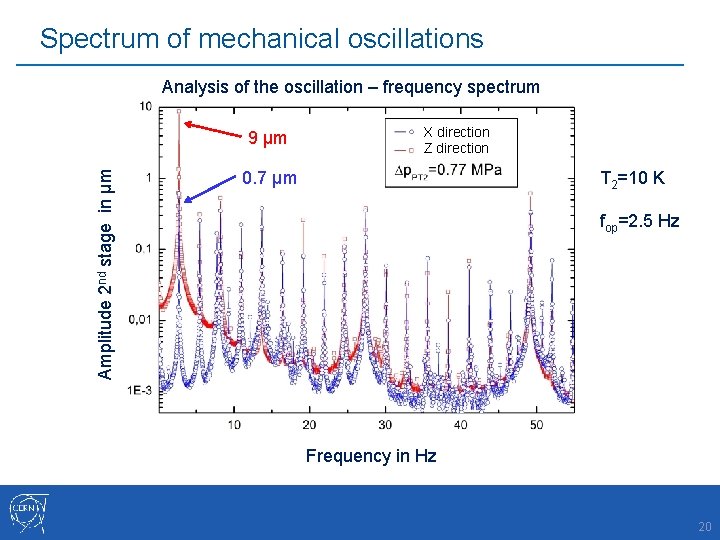
Two stage, coaxial PTC Spectrum of mechanical oscillations Analysis of the oscillation – frequency spectrum Amplitude 2 nd stage in µm 9 µm X direction Z direction 0. 7 µm T 2=10 K fop=2. 5 Hz Frequency in Hz 20
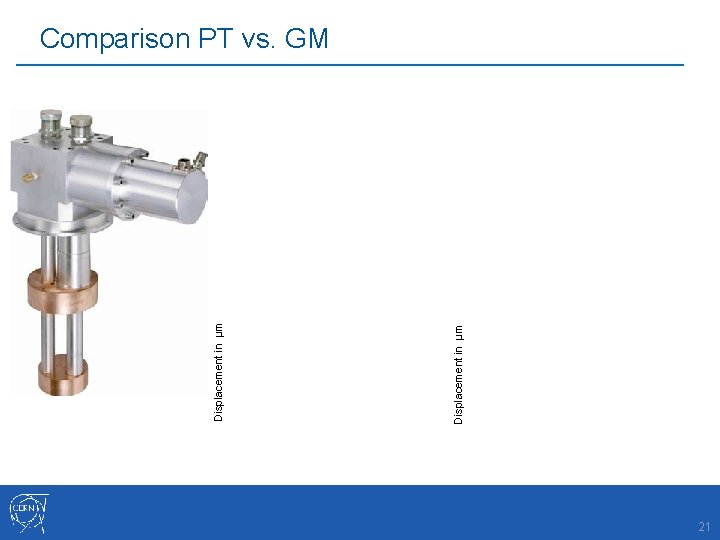
Displacement in μm Typical vibration at the. GM cold tip of a PTC Comparison PT vs. 21
Sources of pertubation Vibrations and noise level: • Mechanical vibrations at the cold head • Temperature oscillations • Electromagnetic noise 22
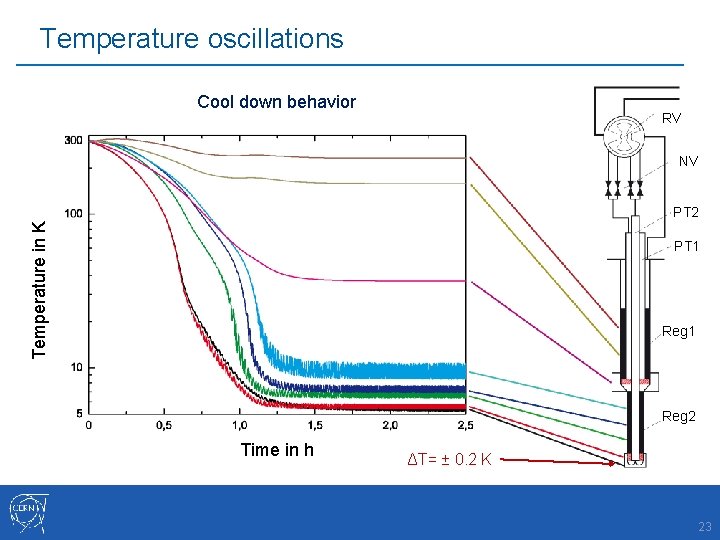
Two stage, coaxial PTC Temperature oscillations Cool down behavior RV NV Temperature in K PT 2 PT 1 Reg 2 Time in h ΔT= ± 0. 2 K 23
Temperature changes in K Temperature oscillations in Helium Frequency in Hz 24
Sources of purtubation Vibrations and noise level: • Mechanical vibrations at the cold head • Temperature oscillations • Electromagnetic noise 25
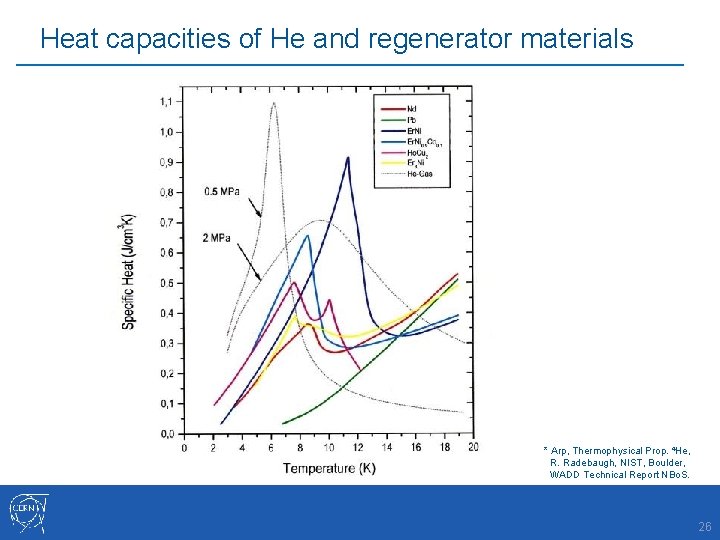
Heat capacities of He and regenerator materials * Arp, Thermophysical Prop. 4 He, R. Radebaugh, NIST, Boulder, WADD Technical Report NBo. S. 26
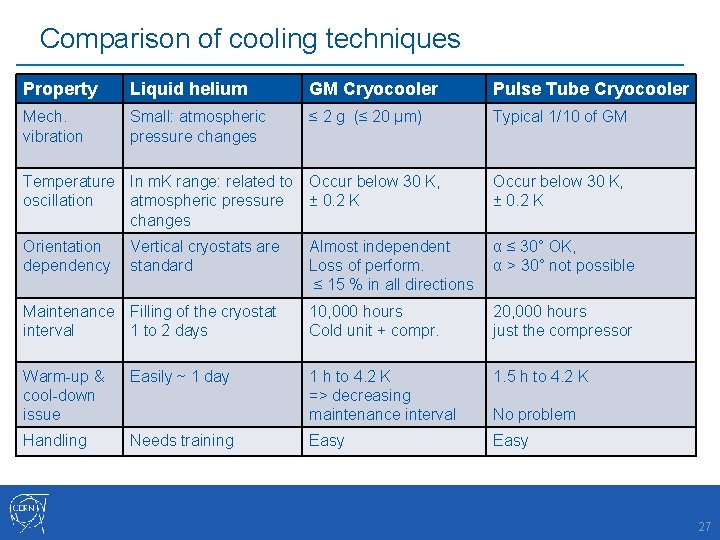
Comparison of cooling techniques Property Liquid helium GM Cryocooler Pulse Tube Cryocooler Mech. vibration Small: atmospheric pressure changes ≤ 2 g (≤ 20 μm) Typical 1/10 of GM Temperature In m. K range: related to oscillation atmospheric pressure changes Occur below 30 K, ± 0. 2 K Orientation dependency Almost independent Loss of perform. ≤ 15 % in all directions α ≤ 30° OK, α > 30° not possible Maintenance Filling of the cryostat interval 1 to 2 days 10, 000 hours Cold unit + compr. 20, 000 hours just the compressor Warm-up & cool-down issue Easily ~ 1 day 1 h to 4. 2 K => decreasing maintenance interval 1. 5 h to 4. 2 K Handling Needs training Easy Vertical cryostats are standard No problem 27
Thank you for your attention. 28

- Slides: 29