
Contamination Control Study BSC Chamber LIGO Observatory 4
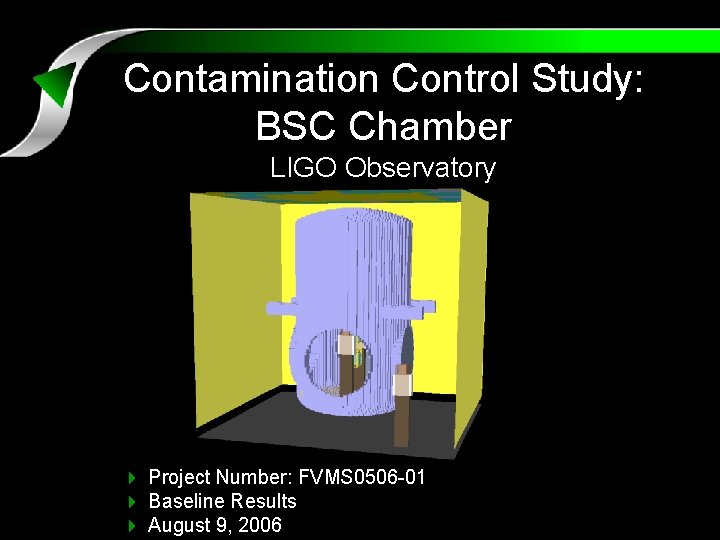
Contamination Control Study: BSC Chamber LIGO Observatory 4 Project Number: FVMS 0506 -01 4 Baseline Results 4 August 9, 2006
Objectives 4 Create a thermal/airflow FLOVENT model of the BSC Chamber and surrounding Cleanroom to determine airflow patterns and contamination concentration with respect to the following scenarios: – Scenario 1: – BSC Chamber Air Supply/Extract: OFF – Surrounding Clean Room Space Air Supply: ON – Scenario 2: – BSC Chamber Air Supply: ON – Surrounding Clean Room Space Air Supply: ON
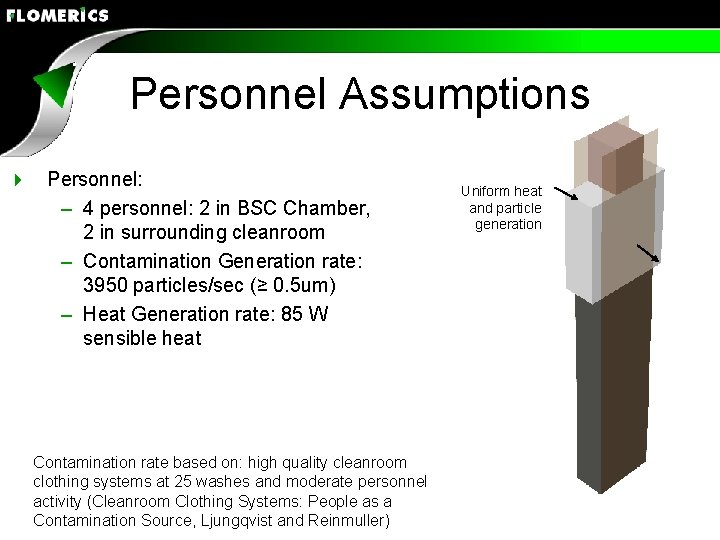
Personnel Assumptions 4 Personnel: – 4 personnel: 2 in BSC Chamber, 2 in surrounding cleanroom – Contamination Generation rate: 3950 particles/sec (≥ 0. 5 um) – Heat Generation rate: 85 W sensible heat Contamination rate based on: high quality cleanroom clothing systems at 25 washes and moderate personnel activity (Cleanroom Clothing Systems: People as a Contamination Source, Ljungqvist and Reinmuller) Uniform heat and particle generation
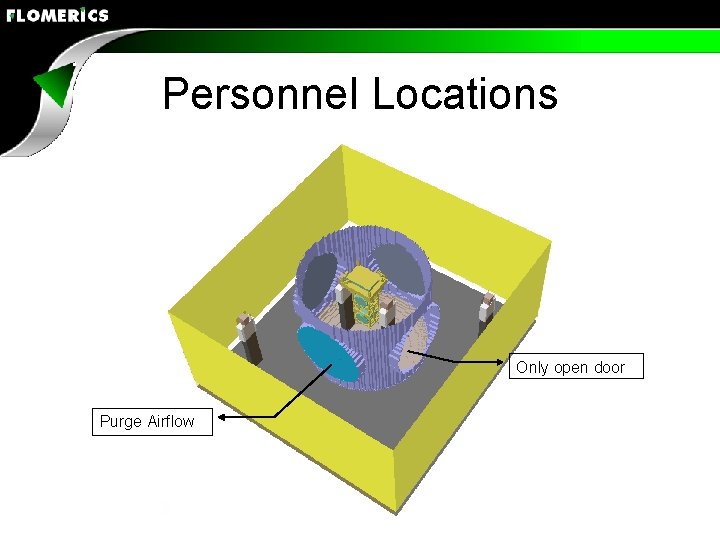
Personnel Locations Only open door Purge Airflow
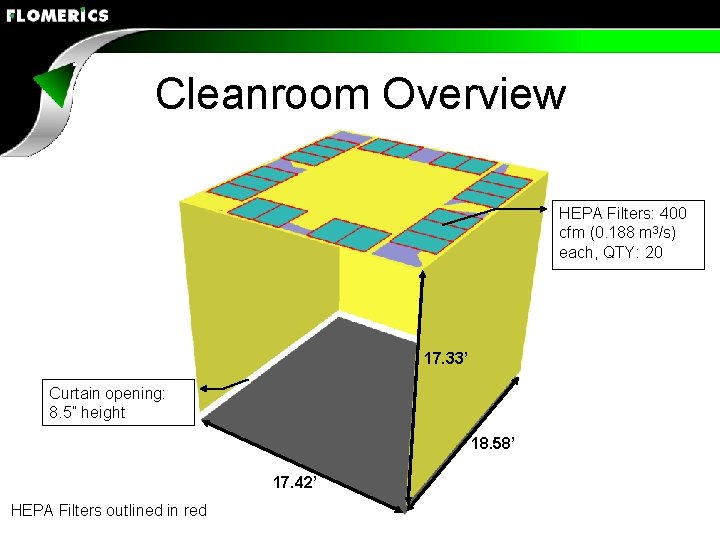
Cleanroom Overview HEPA Filters: 400 cfm (0. 188 m 3/s) each, QTY: 20 17. 33’ Curtain opening: 8. 5” height 18. 58’ 17. 42’ HEPA Filters outlined in red

BSC Airflow Overview Purge Airflow: 0. 012 m 3/s (25 cfm) Flow direction Extract Flow: 2. 8 m 3/s (scenario 2) Flow direction Perforated Floor: 20% Open
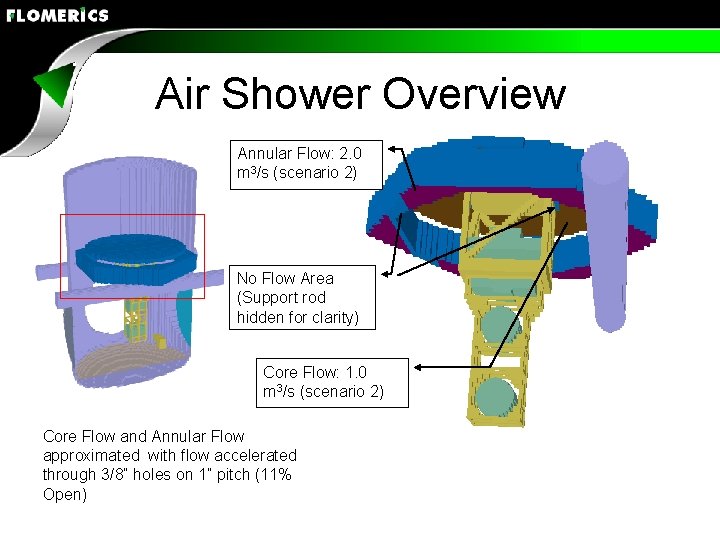
Air Shower Overview Annular Flow: 2. 0 m 3/s (scenario 2) No Flow Area (Support rod hidden for clarity) Core Flow: 1. 0 m 3/s (scenario 2) Core Flow and Annular Flow approximated with flow accelerated through 3/8” holes on 1” pitch (11% Open)
Simulation Results BSC Chamber Air Supply and Extract Off

Speed Profile through the Chamber Door Maximum Outward Flow z y x Maximum Inward Flow The above table show a net airflow through the chamber of 0. 0118 m 3/sec. However there is also an extra 0. 0353 m 3/sec air exchange at the open door. Plane taken at the cross-section of the chamber door
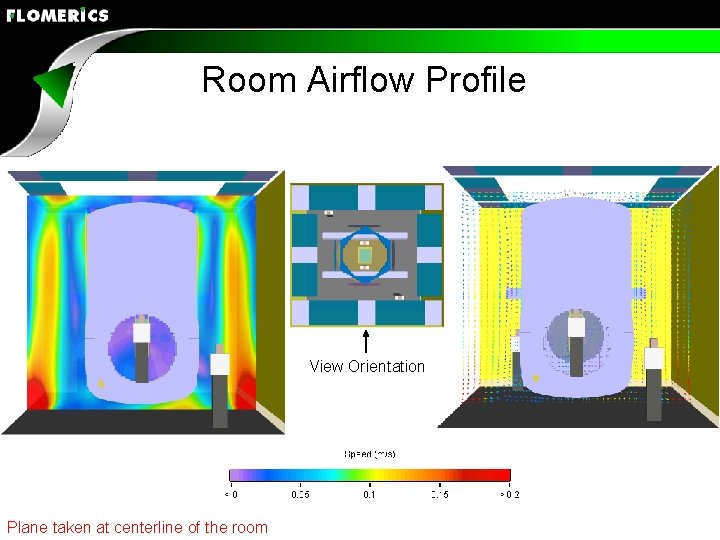
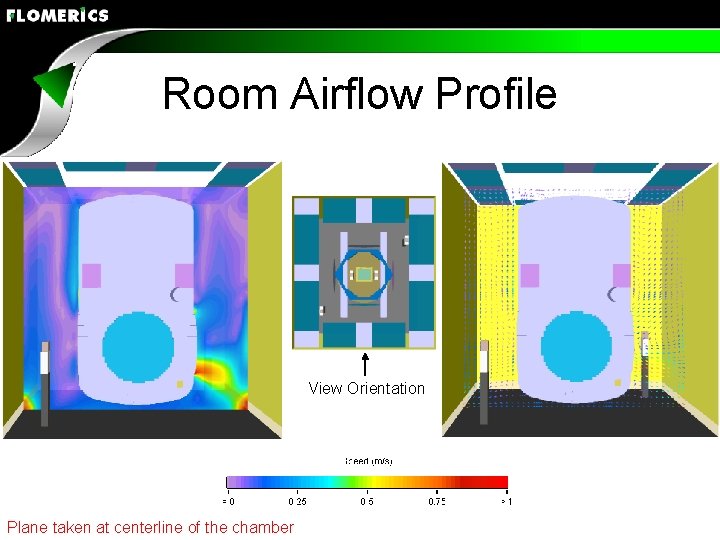
Room Airflow Profile View Orientation Plane taken at centerline of the room
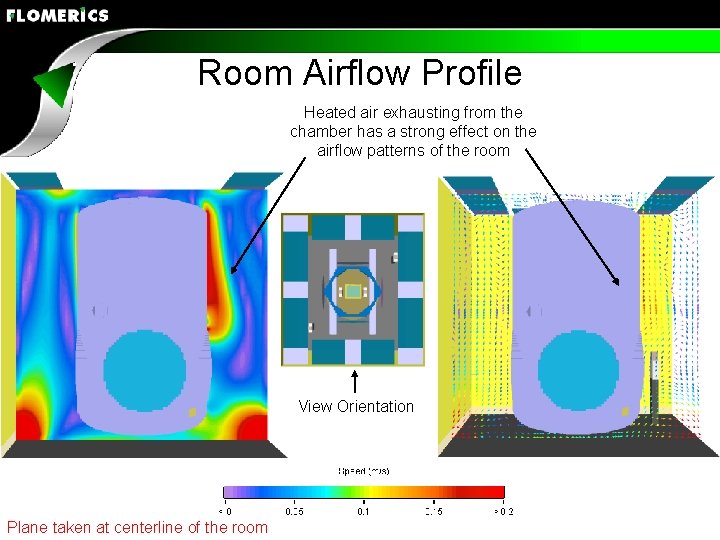
Room Airflow Profile Heated air exhausting from the chamber has a strong effect on the airflow patterns of the room View Orientation Plane taken at centerline of the room
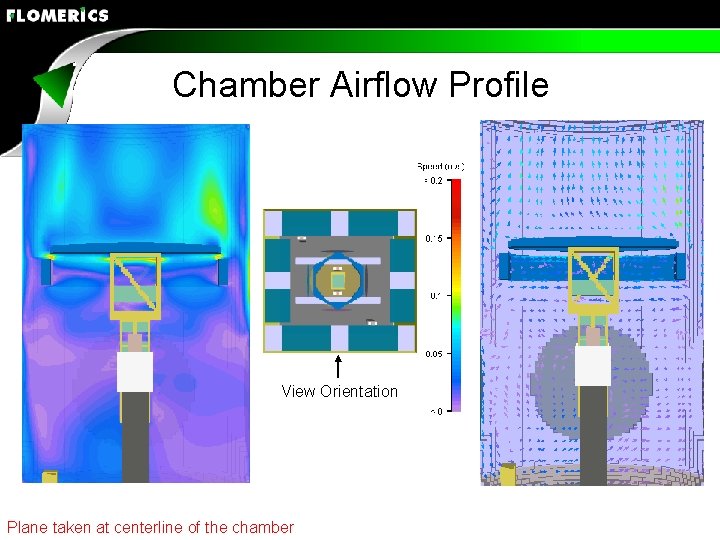
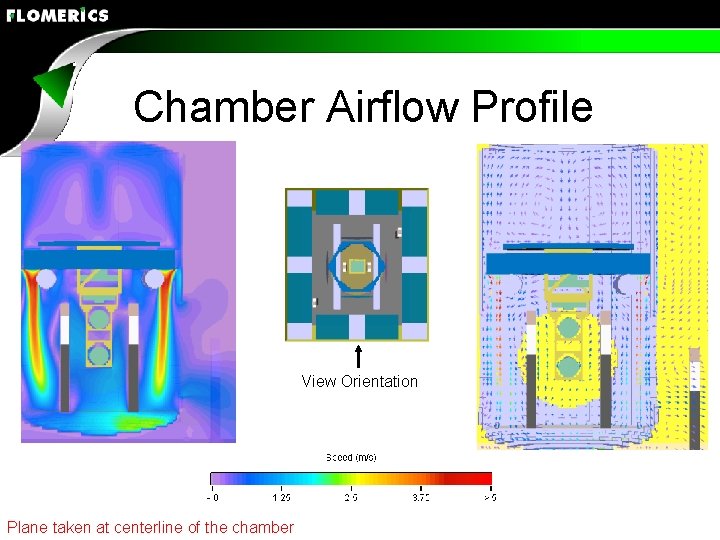
Chamber Airflow Profile View Orientation Plane taken at centerline of the chamber
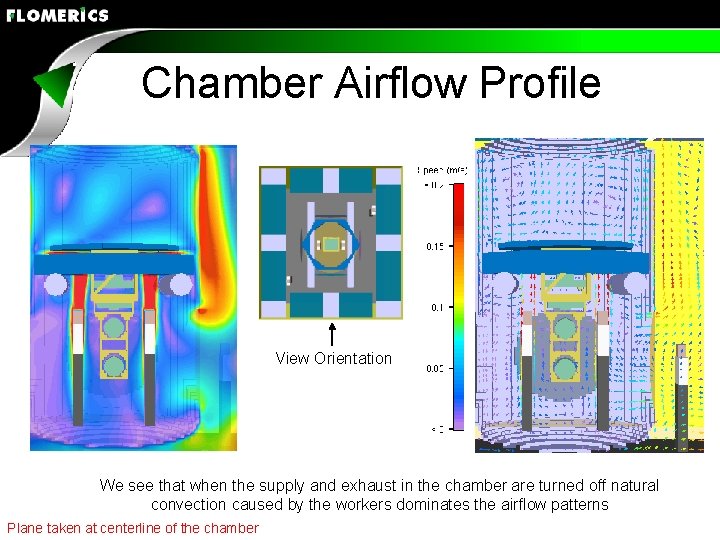
Chamber Airflow Profile View Orientation We see that when the supply and exhaust in the chamber are turned off natural convection caused by the workers dominates the airflow patterns Plane taken at centerline of the chamber
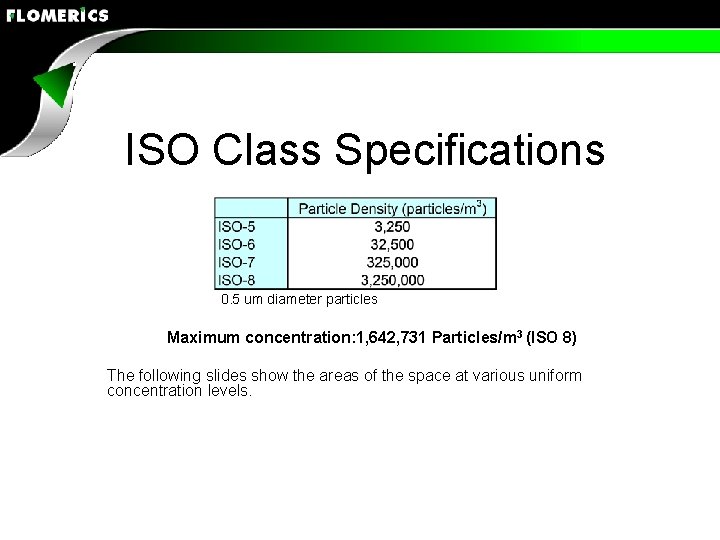
ISO Class Specifications 0. 5 um diameter particles Maximum concentration: 1, 642, 731 Particles/m 3 (ISO 8) The following slides show the areas of the space at various uniform concentration levels.
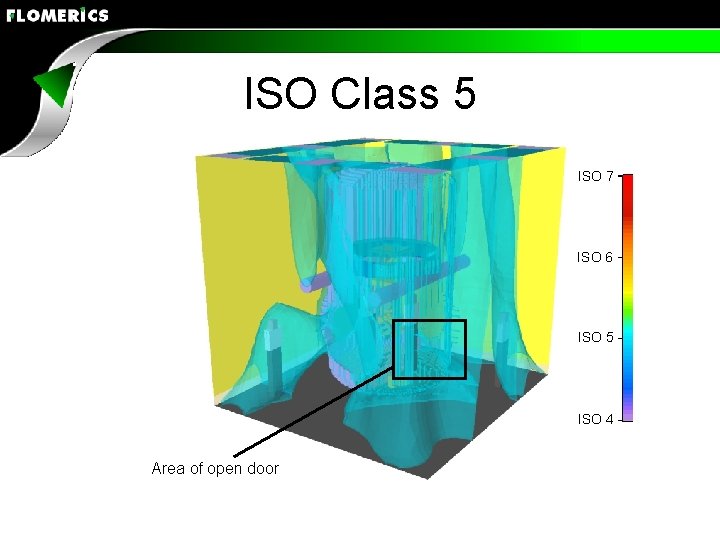
ISO Class 5 ISO 7 ISO 6 ISO 5 ISO 4 Area of open door
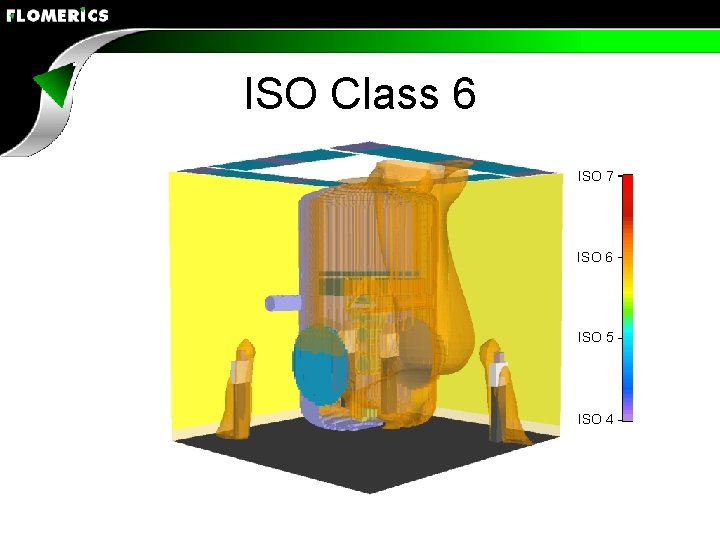
ISO Class 6 ISO 7 ISO 6 ISO 5 ISO 4
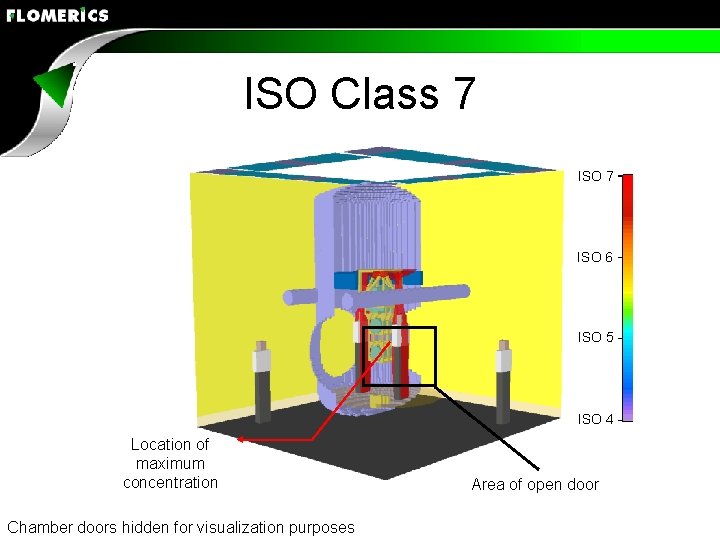
ISO Class 7 ISO 6 ISO 5 ISO 4 Location of maximum concentration Chamber doors hidden for visualization purposes Area of open door
Simulation Results BSC Chamber Air Supply and Extract On
Chamber Airflow Profile View Orientation Plane taken at centerline of the chamber
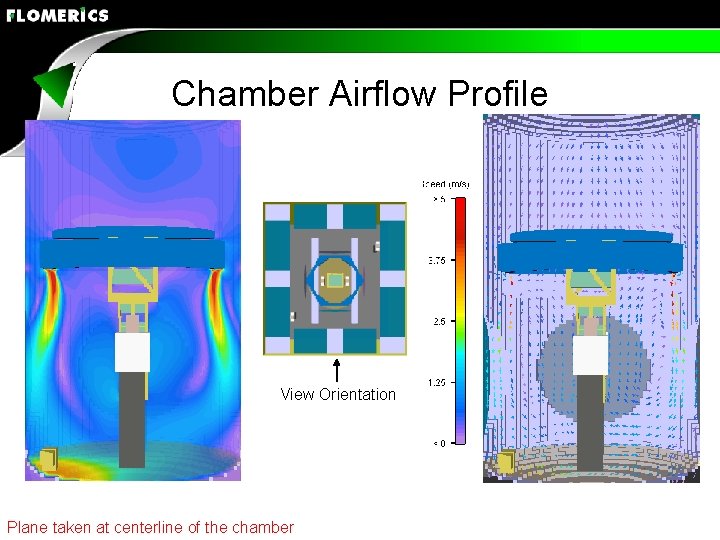
Chamber Airflow Profile View Orientation Plane taken at centerline of the chamber
Room Airflow Profile View Orientation Plane taken at centerline of the chamber
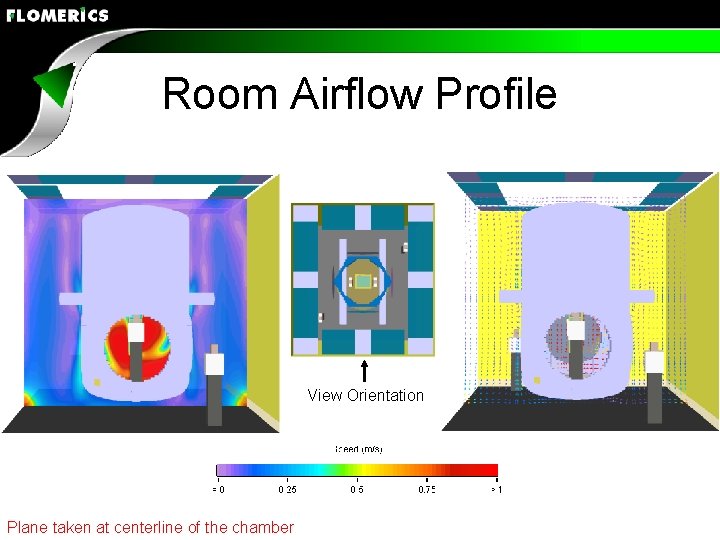
Room Airflow Profile View Orientation Plane taken at centerline of the chamber
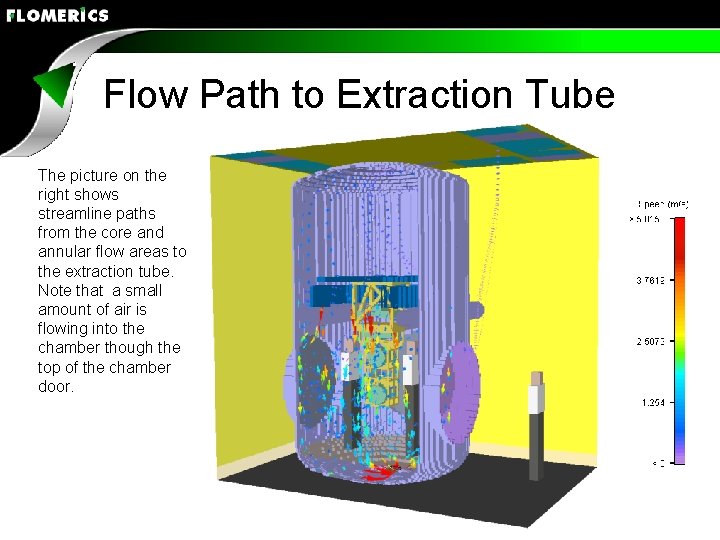
Flow Path to Extraction Tube The picture on the right shows streamline paths from the core and annular flow areas to the extraction tube. Note that a small amount of air is flowing into the chamber though the top of the chamber door.
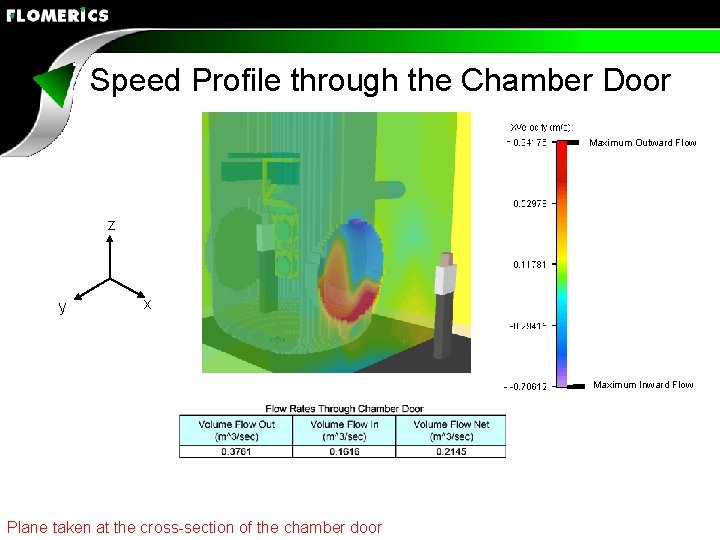
Speed Profile through the Chamber Door Maximum Outward Flow z y x Maximum Inward Flow Plane taken at the cross-section of the chamber door
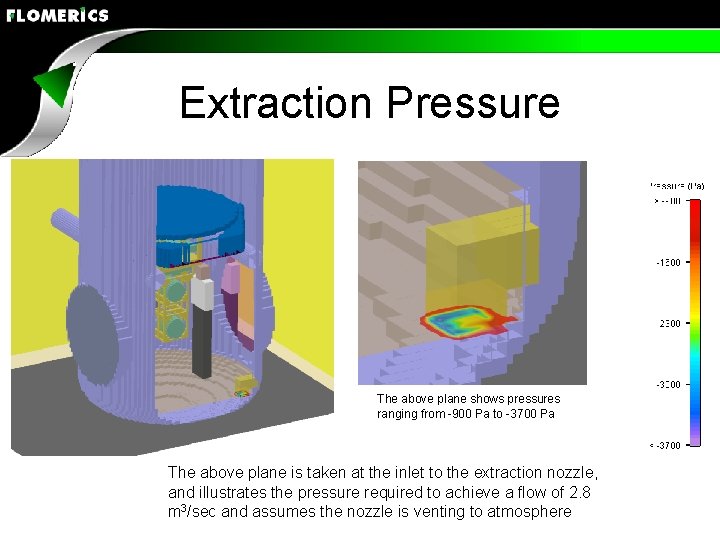
Extraction Pressure The above plane shows pressures ranging from -900 Pa to -3700 Pa The above plane is taken at the inlet to the extraction nozzle, and illustrates the pressure required to achieve a flow of 2. 8 m 3/sec and assumes the nozzle is venting to atmosphere
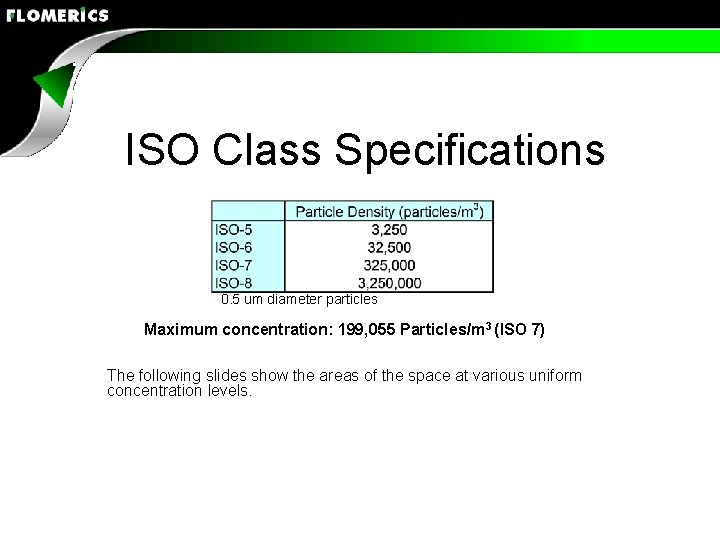
ISO Class Specifications 0. 5 um diameter particles Maximum concentration: 199, 055 Particles/m 3 (ISO 7) The following slides show the areas of the space at various uniform concentration levels.
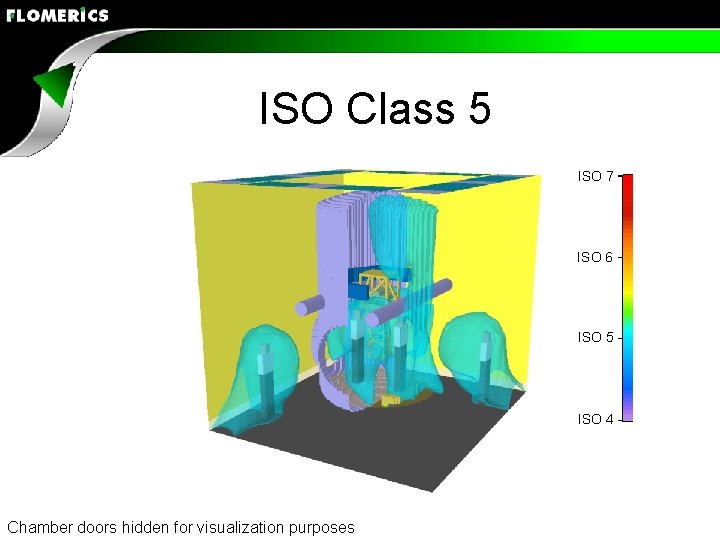
ISO Class 5 ISO 7 ISO 6 ISO 5 ISO 4 Chamber doors hidden for visualization purposes

ISO Class 6 ISO 7 ISO 6 ISO 5 ISO 4 Location of maximum concentration
Summary 4 A thermal/airflow FLOVENT model of the BSC Chamber and surrounding Cleanroom has been created and simulated to determine airflow patterns and contamination concentration with respect to the following scenarios: – Scenario 1: – BSC Chamber Air Supply/Extract: OFF – Surrounding Clean Room Space Air Supply: ON – Maximum Concentration: 1, 642, 731 particles/m 3 – BSC Chamber open door in-flow: 0. 04 m 3/sec – Scenario 2: – BSC Chamber Air Supply: ON – Surrounding Clean Room Space Air Supply: ON – Maximum Concentration: 199, 055 particles/m 3 – BSC Chamber open door in-flow: 0. 16 m 3/sec
- Slides: 29