
Contact Voltage in the Urban Landscape A Public
Contact Voltage in the Urban Landscape: A Public Safety Hazard Presentation to NASUCA November 15, 2010 Atlanta, GA Connie O. Hughes Former NJBPU President & Commissioner VP, Regulatory Affairs, Power Survey Company David Kalokitis Senior Member IEEE Section Coordinator IEEE Stray Voltage Working Group CTO, Power Survey Company
What is Contact Voltage? Contact Voltage - Elevated voltage on a publicly accessible structure or surface due to faults in buried or internal wiring. Public safety concern with contact voltage is the possibility of exposure up to line voltage, typically 120 V or higher. • Contact Voltage exposure is NOT adequately gauged by a simple voltage test • Line faults are a serious shock hazard regardless of voltage present. Detection and investigation is necessary for safety.
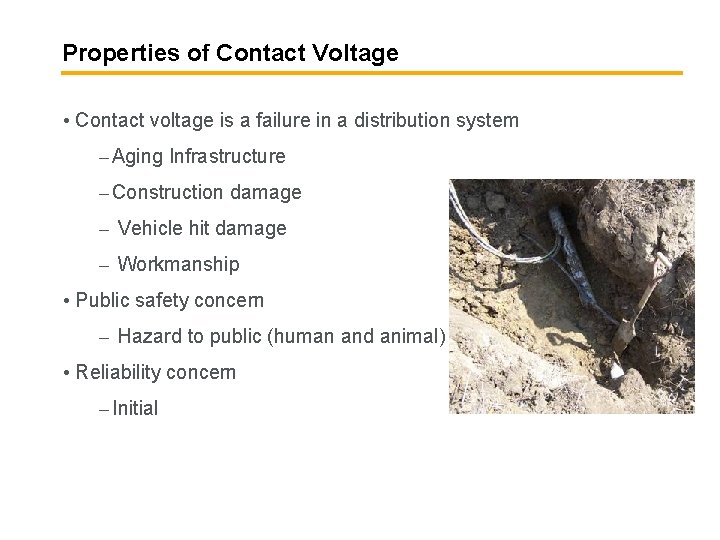
Properties of Contact Voltage • Contact voltage is a failure in a distribution system – Aging Infrastructure – Construction damage – Vehicle hit damage – Workmanship • Public safety concern – Hazard to public (human and animal) • Reliability concern – Initial
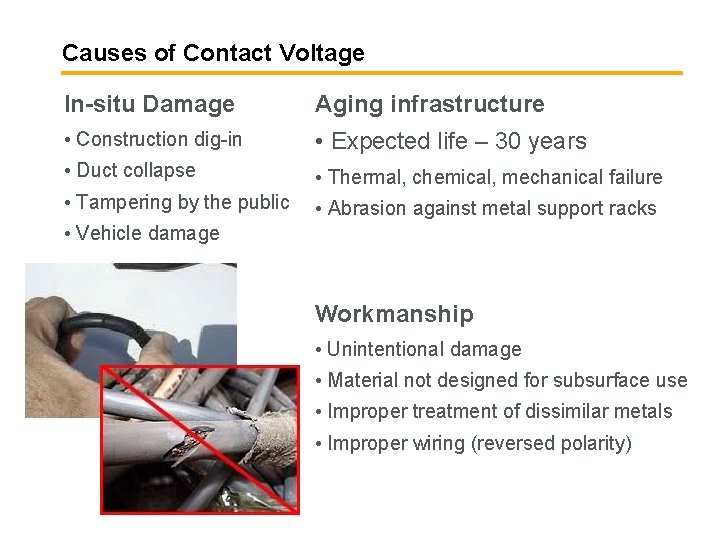
Causes of Contact Voltage In-situ Damage Aging infrastructure • Construction dig-in • Expected life – 30 years • Duct collapse • Thermal, chemical, mechanical failure • Tampering by the public • Abrasion against metal support racks • Vehicle damage Workmanship • Unintentional damage • Material not designed for subsurface use • Improper treatment of dissimilar metals • Improper wiring (reversed polarity)
Where is Contact Voltage Found? • Contact voltage occurs in underground electric distribution systems – Extensive buried infrastructure in public spaces • Urban, populous areas most at risk – Heavy foot traffic – Public recreation areas with pets and children – Numerous unmetered underground services • Rural and suburban distribution is low risk – Mostly overhead or short underground runs – Less susceptible to damage from heavy vehicle traffic, tampering – Fewer busy public spaces
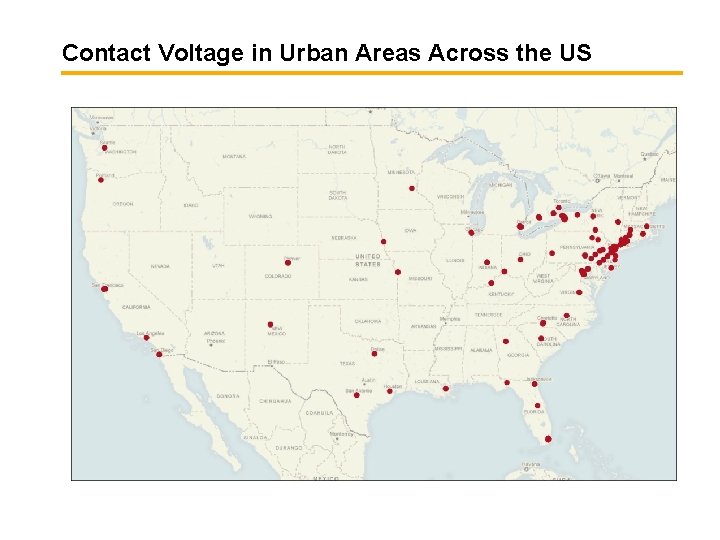
Contact Voltage in Urban Areas Across the US
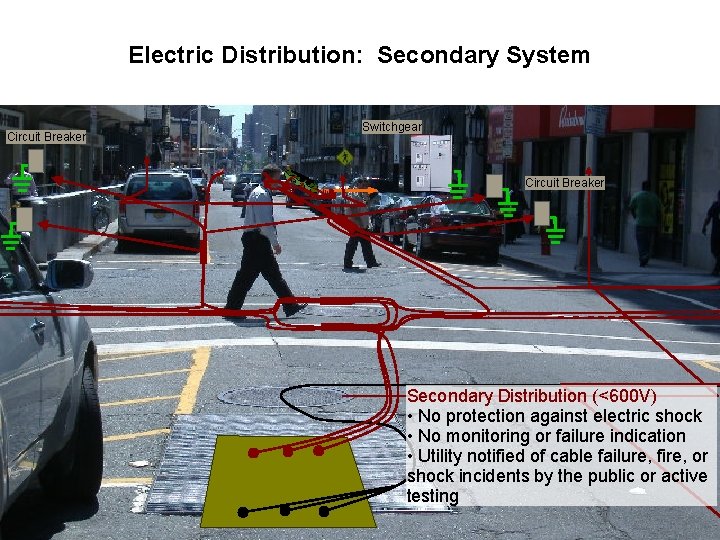
Electric Distribution: Secondary System Circuit Breaker Switchgear Circuit Breaker Secondary Distribution (<600 V) • No protection against electric shock • No monitoring or failure indication • Utility notified of cable failure, fire, or shock incidents by the public or active testing
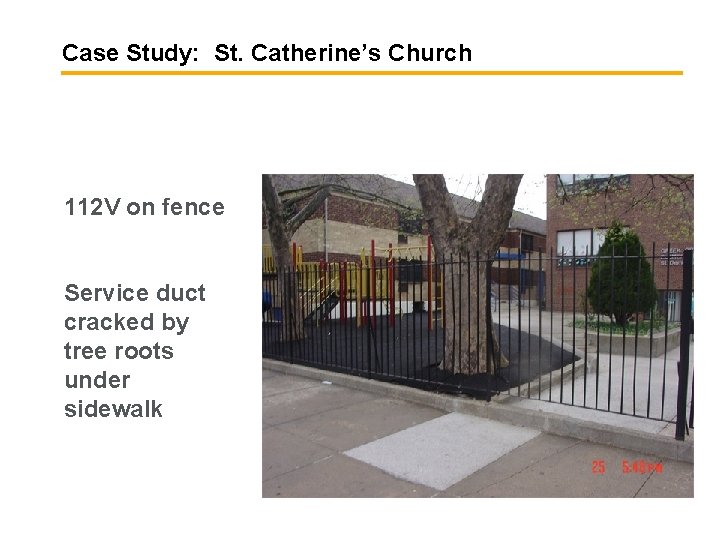
Case Study: St. Catherine’s Church 112 V on fence Service duct cracked by tree roots under sidewalk
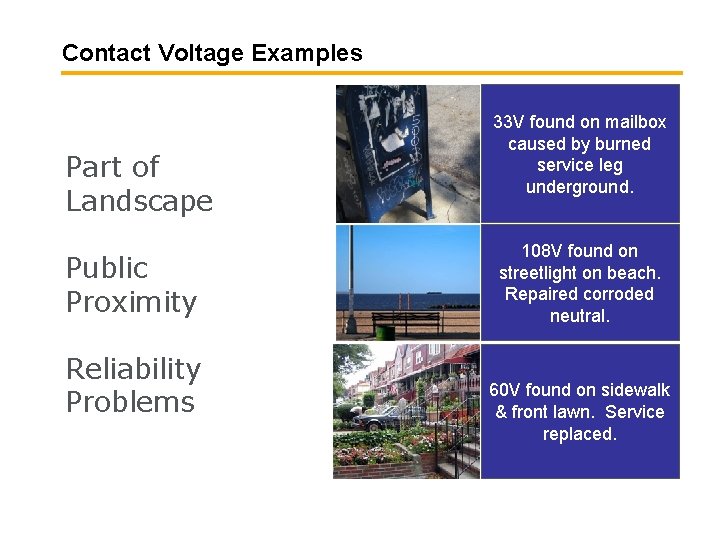
Contact Voltage Examples Part of Landscape Public Proximity Reliability Problems 33 V found on mailbox caused by burned service leg underground. 108 V found on streetlight on beach. Repaired corroded neutral. 60 V found on sidewalk & front lawn. Service replaced.
Common Energized Structures Underground infrastructure can fail or sustain damage at any time and energize objects in the public landscape • Manholes • Fences • Sidewalks • Roadways • Street Lights • Bus Shelters • Traffic Signals • Access Hatches • Parking meters • Phone Kiosk • Street signs
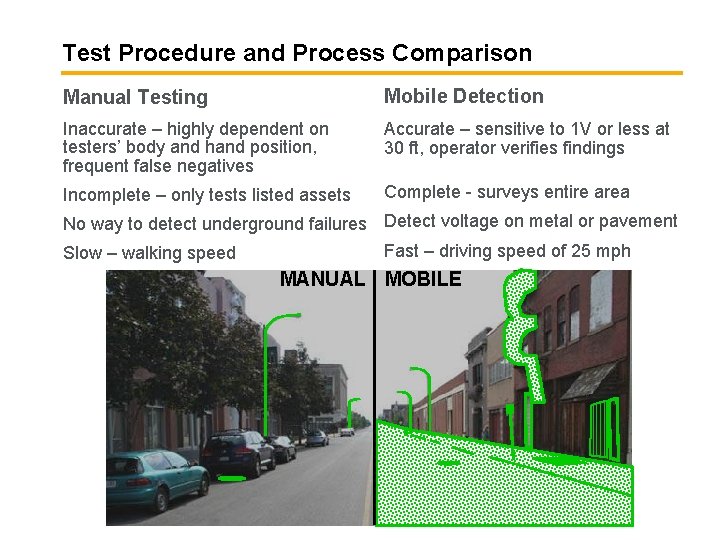
Test Procedure and Process Comparison Manual Testing Mobile Detection Inaccurate – highly dependent on testers’ body and hand position, frequent false negatives Accurate – sensitive to 1 V or less at 30 ft, operator verifies findings Incomplete – only tests listed assets Complete - surveys entire area No way to detect underground failures Detect voltage on metal or pavement Slow – walking speed Fast – driving speed of 25 mph MANUAL MOBILE
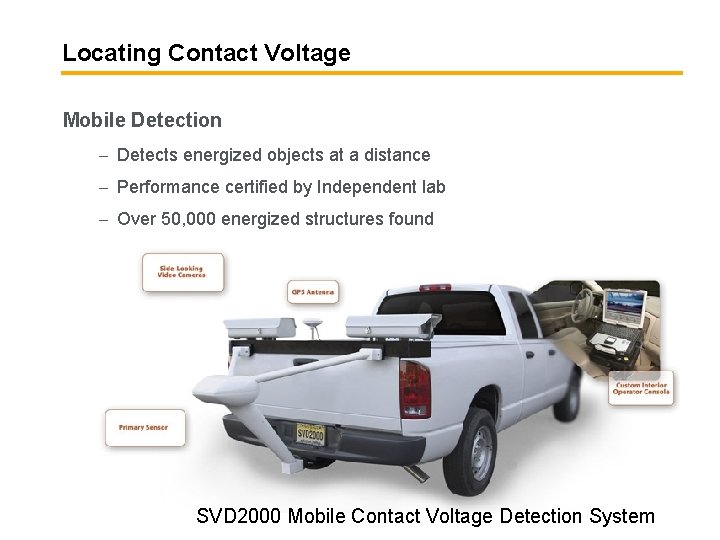
Locating Contact Voltage Mobile Detection – Detects energized objects at a distance – Performance certified by Independent lab – Over 50, 000 energized structures found SVD 2000 Mobile Contact Voltage Detection System
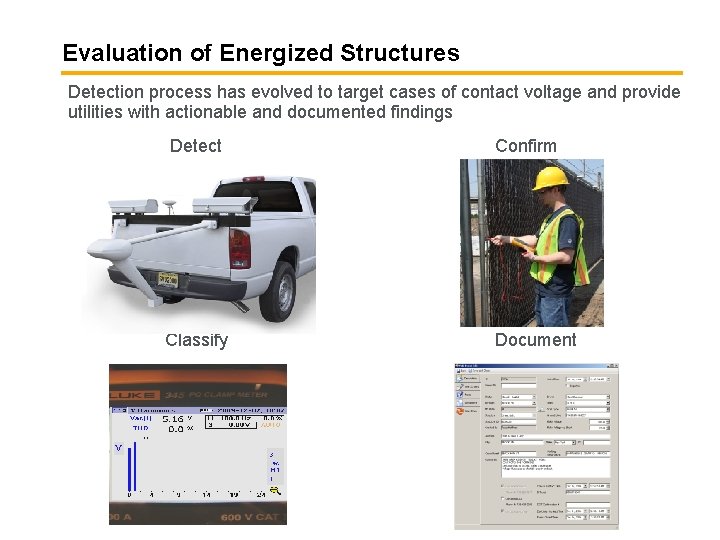
Evaluation of Energized Structures Detection process has evolved to target cases of contact voltage and provide utilities with actionable and documented findings Detect Confirm Classify Document
Key Concepts Contact voltage is often sourced by line voltage Low voltage findings are often indicators of a fault Specific tests help confirm source Know the source and know the hazard Detection methods work in all seasons People and pets more susceptible to shock in wet/snow/salt conditions
Summary of Concerns Contact voltage exists in all distribution systems CV is the product of a fault or failure Protection devices largely non-existent Voltage can change suddenly Where detection is performed, density of CV findings is high Electric distribution systems should be swept for leaks much like gas and other distribution systems
Regulatory Activity Related to Contact/Stray Voltage (not farm-related) Massachusetts: regulation New York: regulation; regularly reviewed and modified New Jersey: docketed and deferred pending additional information
- Slides: 16