
Contact Mechanics ME 6260EECE 7244 1 SEM Image






- Slides: 51
Contact Mechanics ME 6260/EECE 7244 1
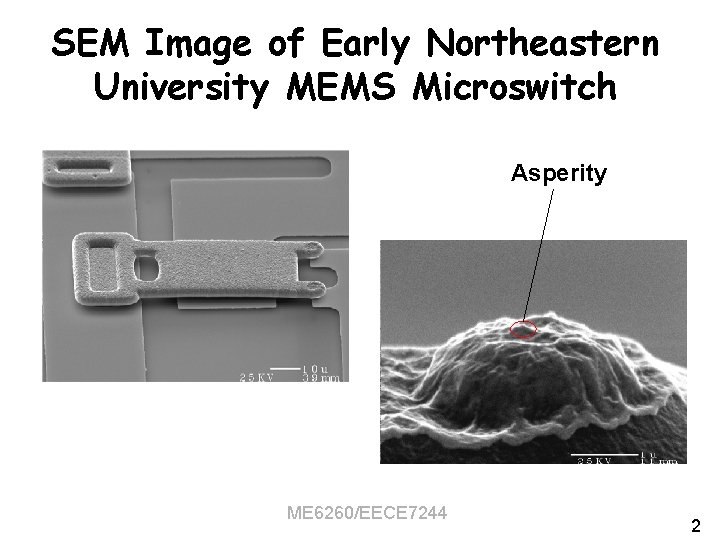
SEM Image of Early Northeastern University MEMS Microswitch Asperity ME 6260/EECE 7244 2
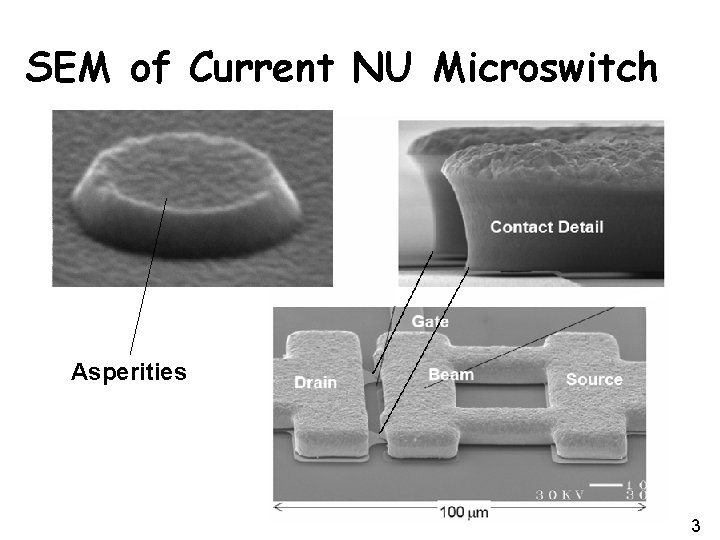
SEM of Current NU Microswitch Asperities ME 6260/EECE 7244 3
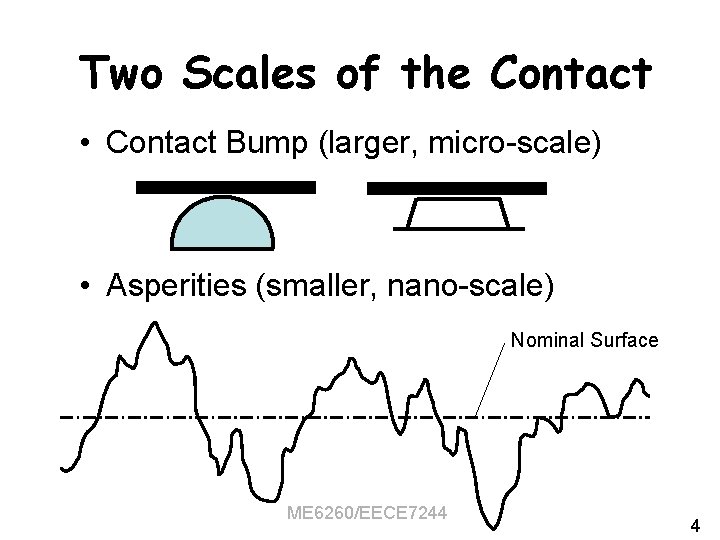
Two Scales of the Contact • Contact Bump (larger, micro-scale) • Asperities (smaller, nano-scale) Nominal Surface ME 6260/EECE 7244 4
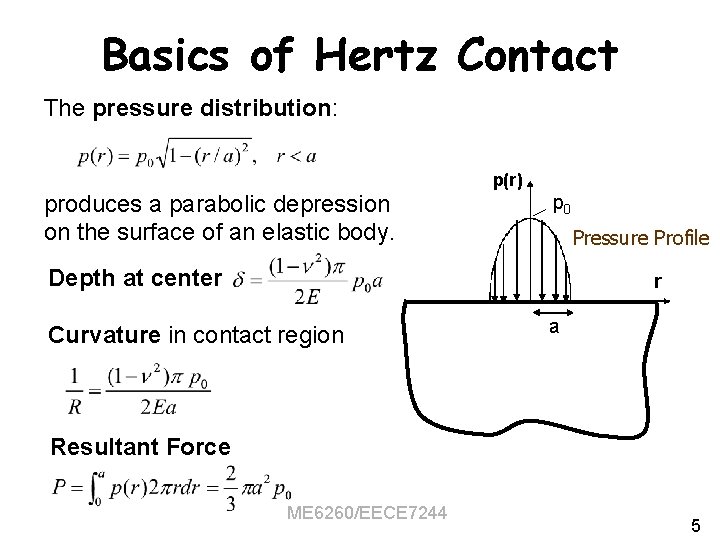
Basics of Hertz Contact The pressure distribution: p(r) produces a parabolic depression on the surface of an elastic body. p 0 Pressure Profile Depth at center r Curvature in contact region a Resultant Force ME 6260/EECE 7244 5
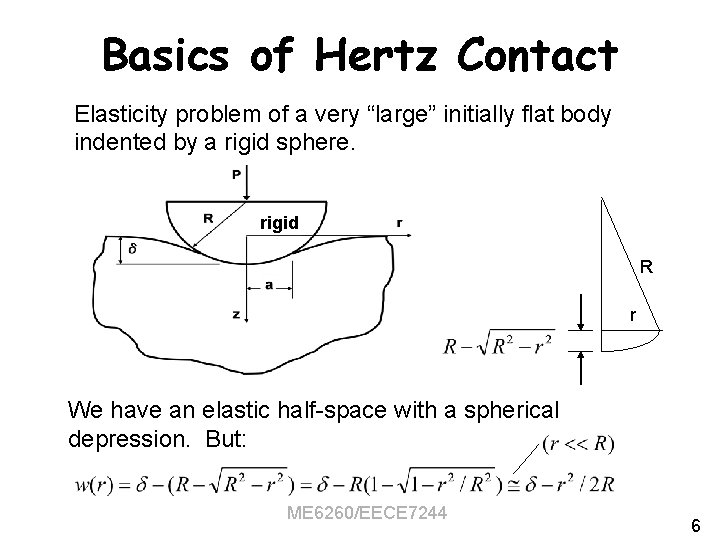
Basics of Hertz Contact Elasticity problem of a very “large” initially flat body indented by a rigid sphere. rigid R r We have an elastic half-space with a spherical depression. But: ME 6260/EECE 7244 6
Basics of Hertz Contact Ø So the pressure distribution given by: gives a spherical depression and hence is the pressure for Hertz contact, i. e. for the indentation of a flat elastic body by a rigid sphere with Ø But wait – that’s not all ! Ø Same pressure on a small circular region of a locally spherical body will produce same change in curvature. ME 6260/EECE 7244 7
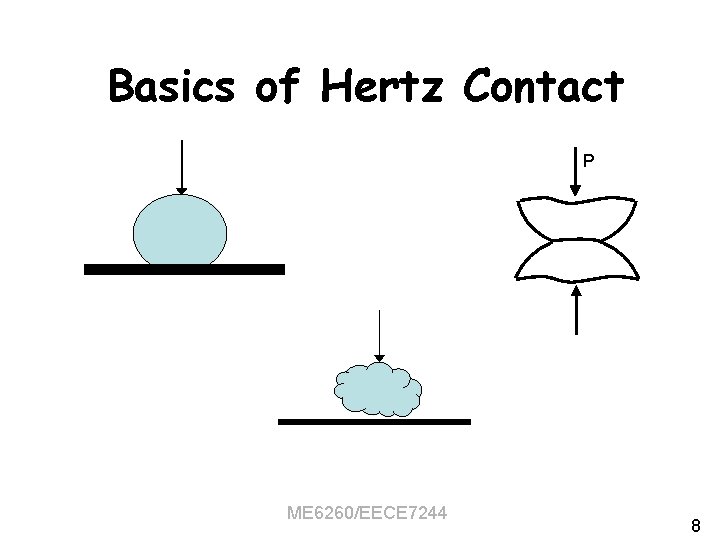
Basics of Hertz Contact P ME 6260/EECE 7244 8
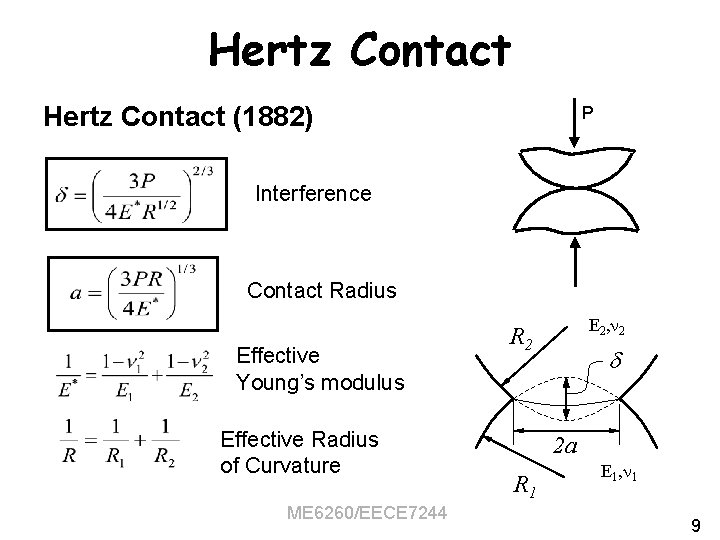
Hertz Contact (1882) P Interference Contact Radius Effective Young’s modulus Effective Radius of Curvature ME 6260/EECE 7244 E 2, 2 R 2 2 a R 1 E 1, 1 9
Assumptions of Hertz Ø Contacting bodies are locally spherical Ø Contact radius << dimensions of the body Ø Linear elastic and isotropic material properties Ø Neglect friction Ø Neglect adhesion Ø Hertz developed this theory as a graduate student during his 1881 Christmas vacation Ø What will you do during your Christmas vacation ? ? ? ME 6260/EECE 7244 10
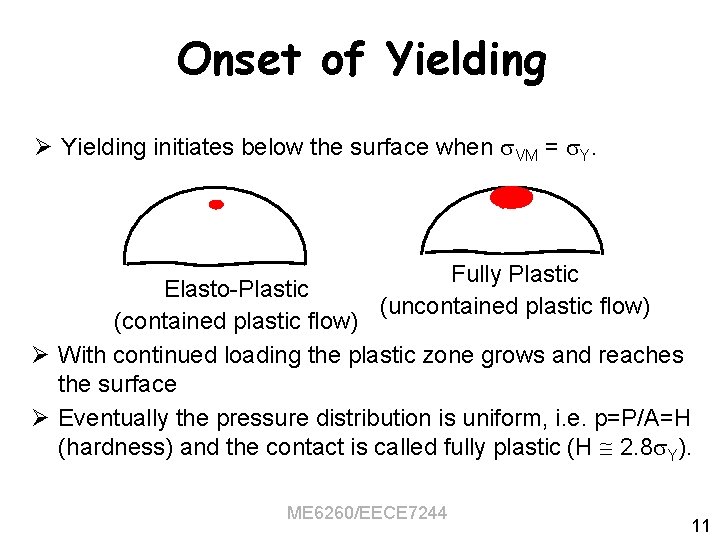
Onset of Yielding Ø Yielding initiates below the surface when VM = Y. Fully Plastic (uncontained plastic flow) Elasto-Plastic (contained plastic flow) Ø With continued loading the plastic zone grows and reaches the surface Ø Eventually the pressure distribution is uniform, i. e. p=P/A=H (hardness) and the contact is called fully plastic (H 2. 8 Y). ME 6260/EECE 7244 11
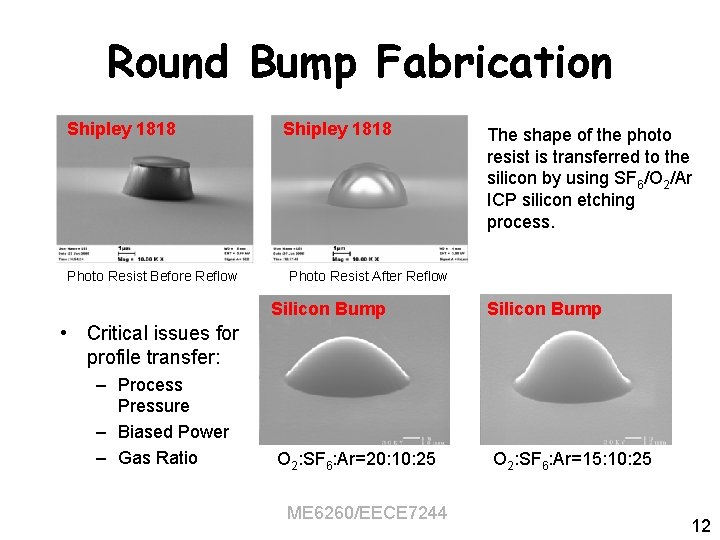
Round Bump Fabrication Shipley 1818 Photo Resist Before Reflow Shipley 1818 The shape of the photo resist is transferred to the silicon by using SF 6/O 2/Ar ICP silicon etching process. Photo Resist After Reflow Silicon Bump • Critical issues for profile transfer: – Process Pressure – Biased Power – Gas Ratio O 2: SF 6: Ar=20: 10: 25 ME 6260/EECE 7244 O 2: SF 6: Ar=15: 10: 25 12
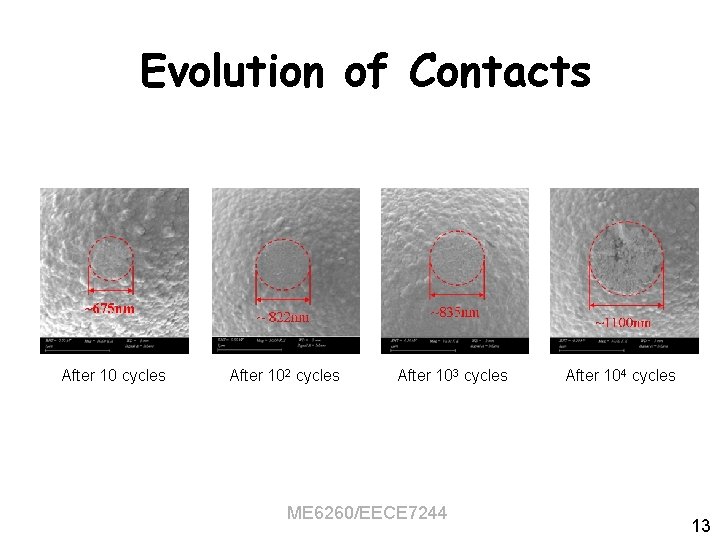
Evolution of Contacts After 10 cycles After 102 cycles After 103 cycles ME 6260/EECE 7244 After 104 cycles 13
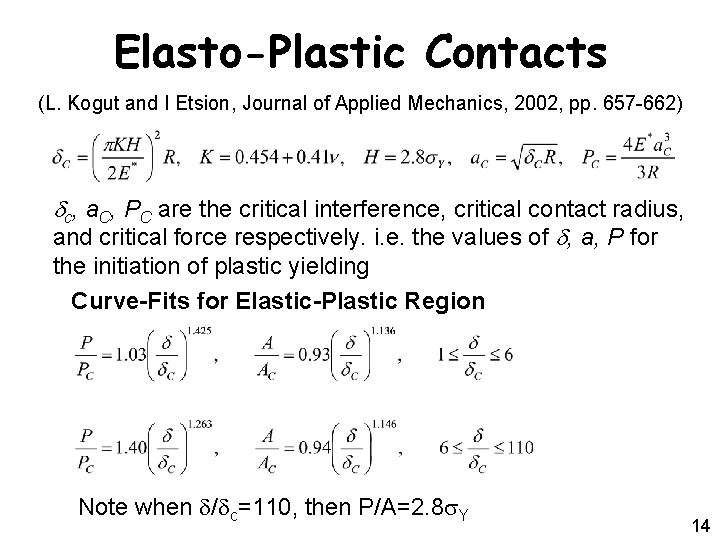
Elasto-Plastic Contacts (L. Kogut and I Etsion, Journal of Applied Mechanics, 2002, pp. 657 -662) c, a. C, PC are the critical interference, critical contact radius, and critical force respectively. i. e. the values of , a, P for the initiation of plastic yielding Curve-Fits for Elastic-Plastic Region Note when / c=110, ME 6260/EECE 7244 then P/A=2. 8 Y 14
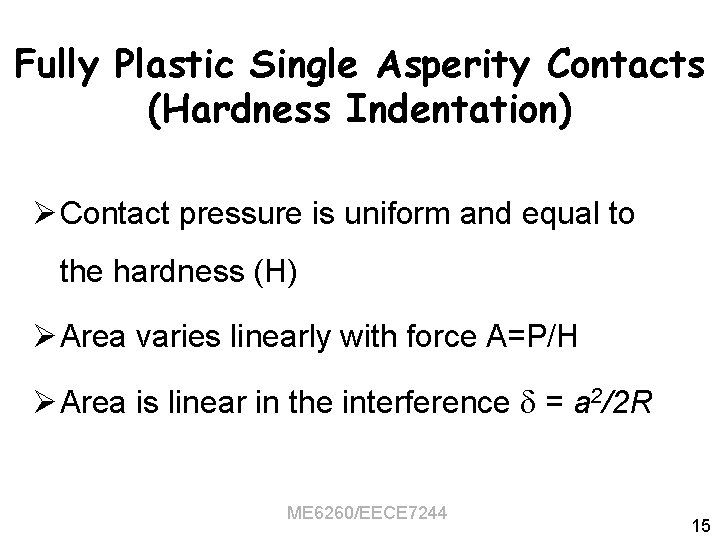
Fully Plastic Single Asperity Contacts (Hardness Indentation) Ø Contact pressure is uniform and equal to the hardness (H) Ø Area varies linearly with force A=P/H Ø Area is linear in the interference = a 2/2 R ME 6260/EECE 7244 15
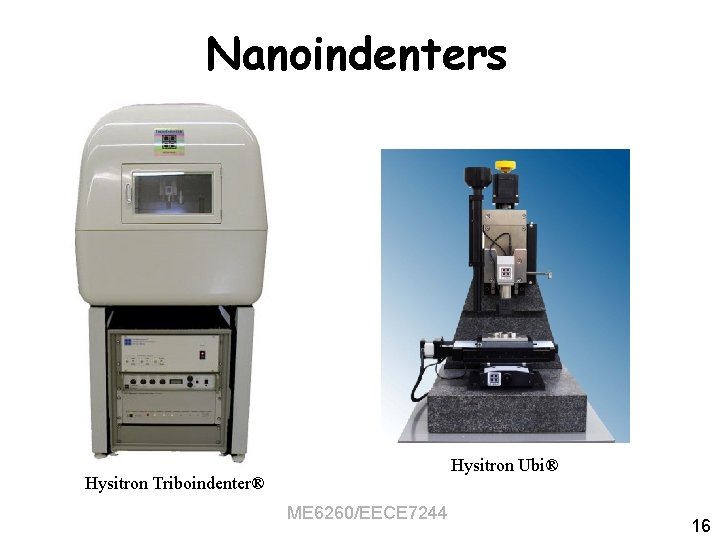
Nanoindenters Hysitron Ubi® Hysitron Triboindenter® ME 6260/EECE 7244 16
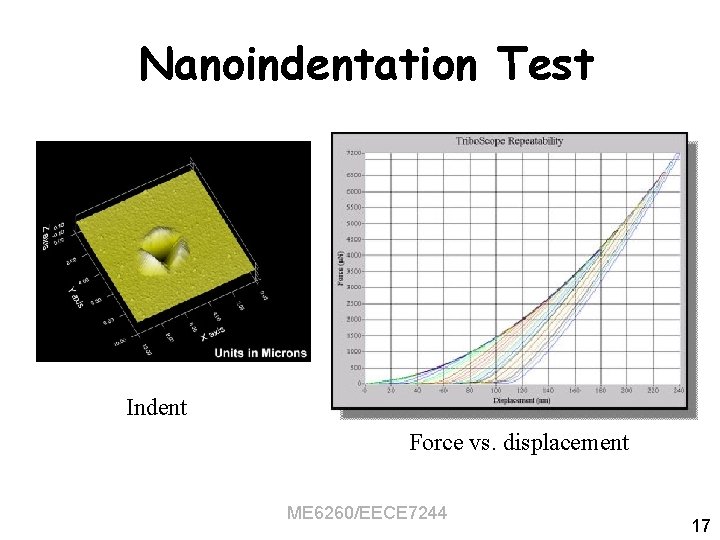
Nanoindentation Test Indent Force vs. displacement ME 6260/EECE 7244 17
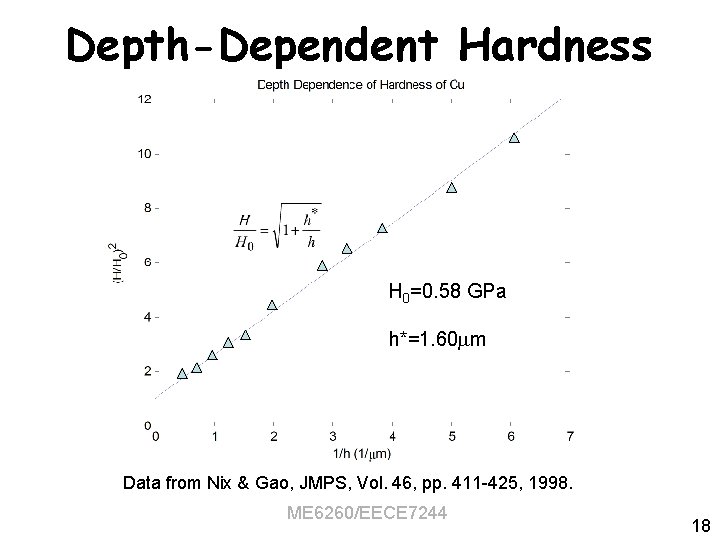
Depth-Dependent Hardness H 0=0. 58 GPa h*=1. 60 m Data from Nix & Gao, JMPS, Vol. 46, pp. 411 -425, 1998. ME 6260/EECE 7244 18
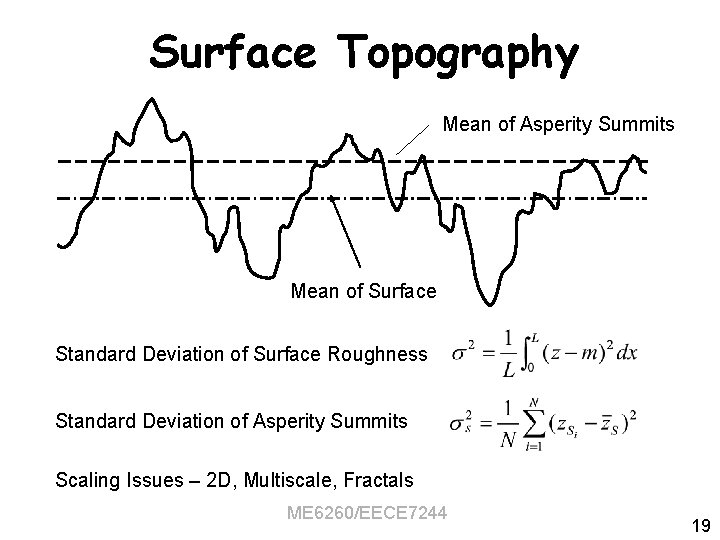
Surface Topography Mean of Asperity Summits Mean of Surface Standard Deviation of Surface Roughness Standard Deviation of Asperity Summits Scaling Issues – 2 D, Multiscale, Fractals ME 6260/EECE 7244 19
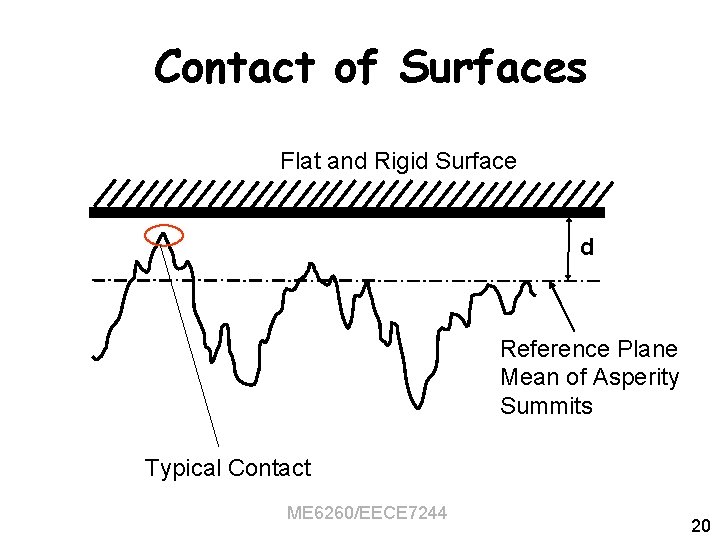
Contact of Surfaces Flat and Rigid Surface d Reference Plane Mean of Asperity Summits Typical Contact ME 6260/EECE 7244 20
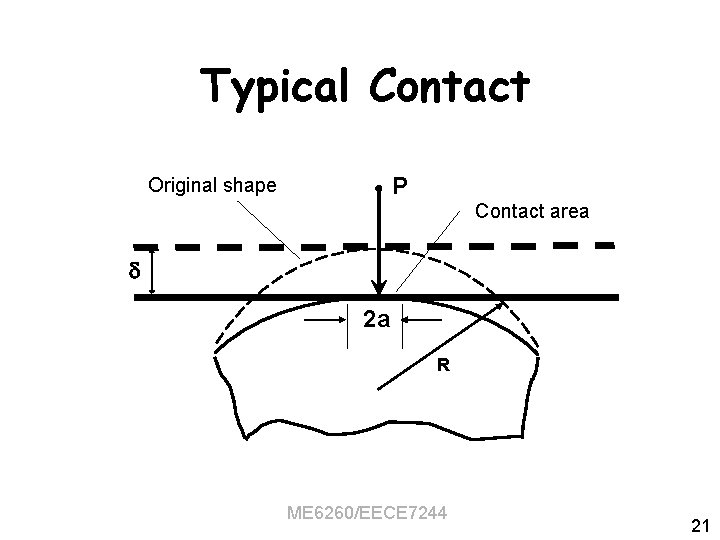
Typical Contact P Original shape Contact area 2 a R ME 6260/EECE 7244 21
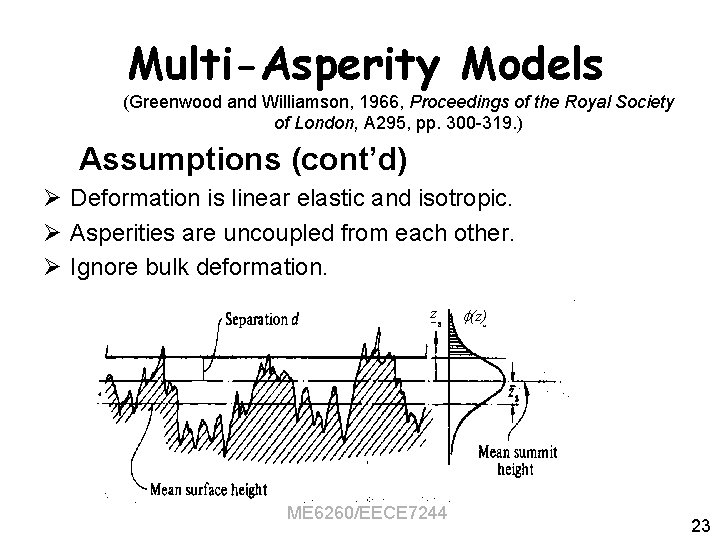
Multi-Asperity Models (Greenwood and Williamson, 1966, Proceedings of the Royal Society of London, A 295, pp. 300 -319. ) Assumptions Ø All asperities are spherical and have the same summit curvature. Ø The asperities have a statistical distribution of heights (Gaussian). z ME 6260/EECE 7244 (z) 22
Multi-Asperity Models (Greenwood and Williamson, 1966, Proceedings of the Royal Society of London, A 295, pp. 300 -319. ) Assumptions (cont’d) Ø Deformation is linear elastic and isotropic. Ø Asperities are uncoupled from each other. Ø Ignore bulk deformation. z ME 6260/EECE 7244 (z) 23
Greenwood and Williamson ME 6260/EECE 7244 24
Greenwood & Williamson Model Ø For a Gaussian distribution of asperity heights the contact area is almost linear in the normal force. Ø Elastic deformation is consistent with Coulomb friction i. e. A P, F A, hence F P, i. e. F = N Ø Many modifications have been made to the GW theory to include more effects for many effects not important. Ø Especially important is plastic deformation and adhesion. ME 6260/EECE 7244 25
Contacts With Adhesion (van der Waals Forces) Ø Surface forces important in MEMS due to scaling Ø Surface forces ~L 2 or L; weight as L 3 Ø Surface Forces/Weight ~ 1/L or 1/L 2 Ø Consider going from cm to m Ø MEMS Switches can stick shut Ø Friction cause “moving” parts to stick, i. e. “stiction” Ø Dry adhesion only at this point; meniscus forces later ME 6260/EECE 7244 26
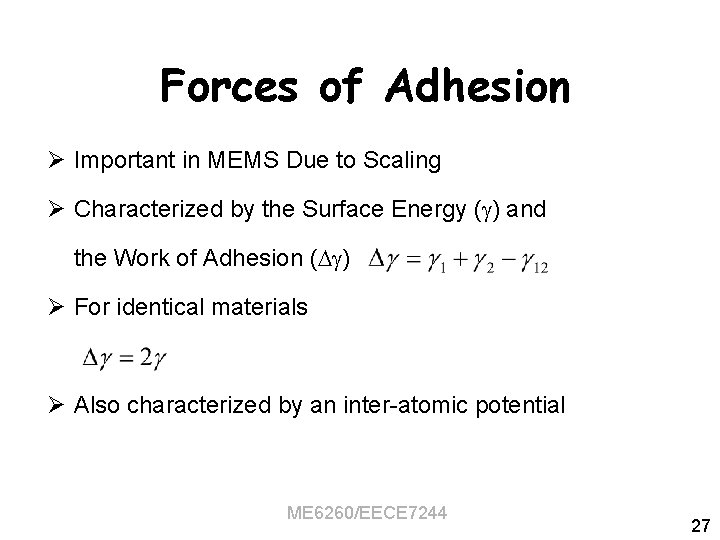
Forces of Adhesion Ø Important in MEMS Due to Scaling Ø Characterized by the Surface Energy ( ) and the Work of Adhesion ( ) Ø For identical materials Ø Also characterized by an inter-atomic potential ME 6260/EECE 7244 27
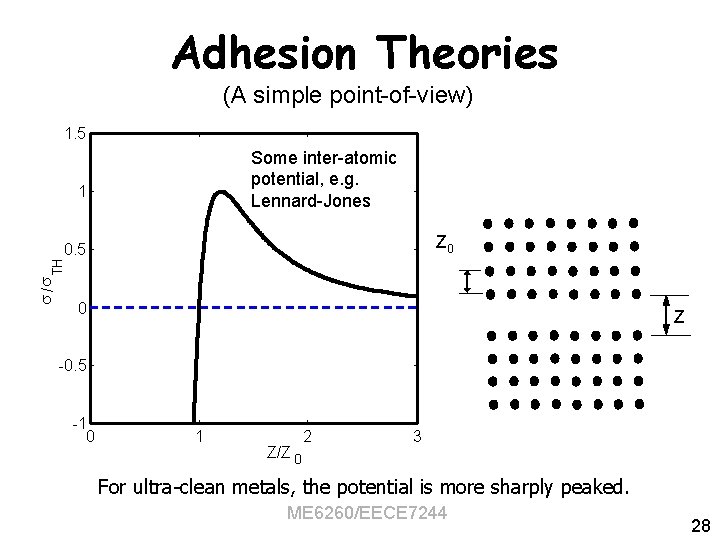
Adhesion Theories (A simple point-of-view) 1. 5 Some inter-atomic potential, e. g. Lennard-Jones 1 Z 0 / TH 0. 5 0 Z -0. 5 -1 0 1 Z/Z 0 2 3 For ultra-clean metals, the potential is more sharply peaked. ME 6260/EECE 7244 28
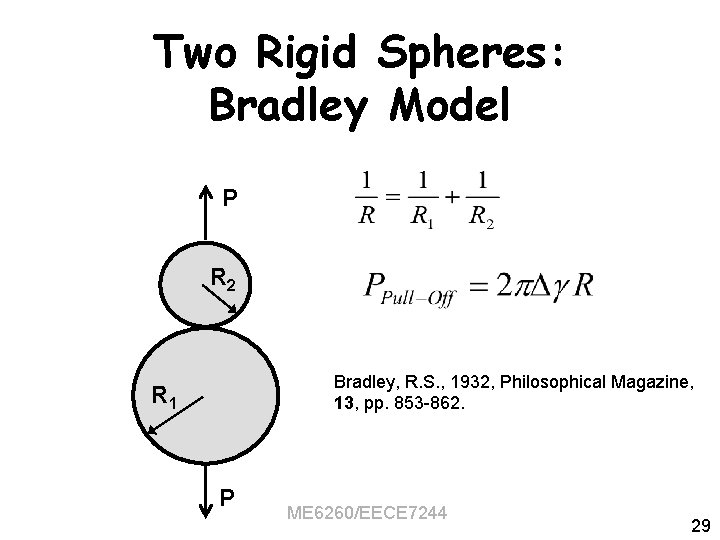
Two Rigid Spheres: Bradley Model P R 2 Bradley, R. S. , 1932, Philosophical Magazine, 13, pp. 853 -862. R 1 P ME 6260/EECE 7244 29
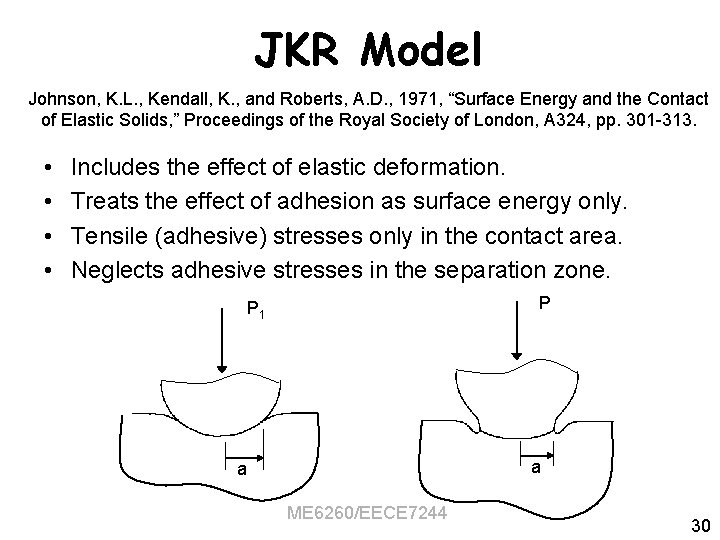
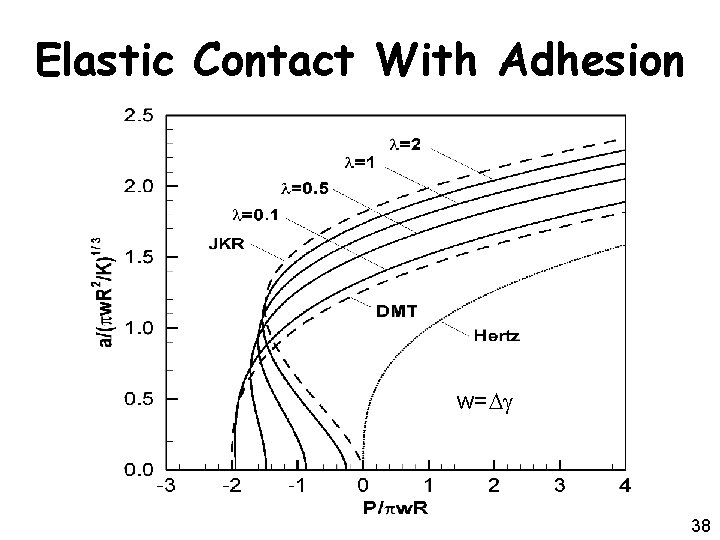
JKR Model Johnson, K. L. , Kendall, K. , and Roberts, A. D. , 1971, “Surface Energy and the Contact of Elastic Solids, ” Proceedings of the Royal Society of London, A 324, pp. 301 -313. • • Includes the effect of elastic deformation. Treats the effect of adhesion as surface energy only. Tensile (adhesive) stresses only in the contact area. Neglects adhesive stresses in the separation zone. P P 1 a a ME 6260/EECE 7244 30
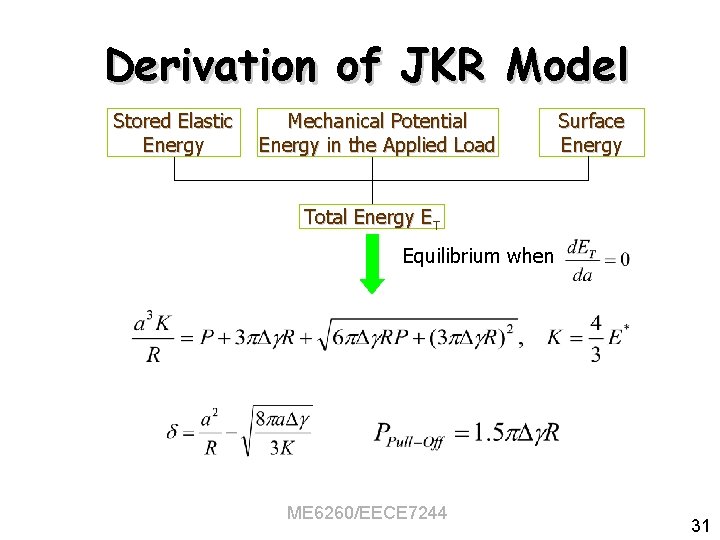
Derivation of JKR Model Stored Elastic Energy Mechanical Potential Energy in the Applied Load Surface Energy Total Energy ET Equilibrium when ME 6260/EECE 7244 31
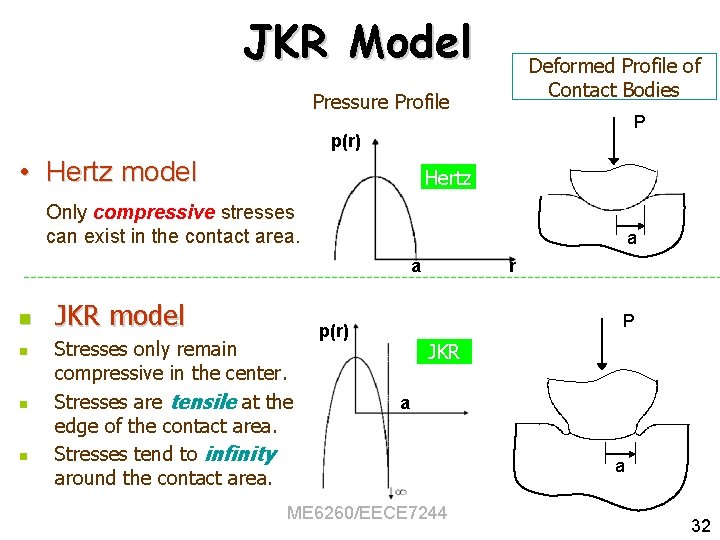
JKR Model Deformed Profile of Contact Bodies Pressure Profile P p(r) • Hertz model Hertz Only compressive stresses can exist in the contact area. a a n n JKR model Stresses only remain compressive in the center. Stresses are tensile at the edge of the contact area. Stresses tend to infinity around the contact area. r P p(r) JKR a ME 6260/EECE 7244 r a 32
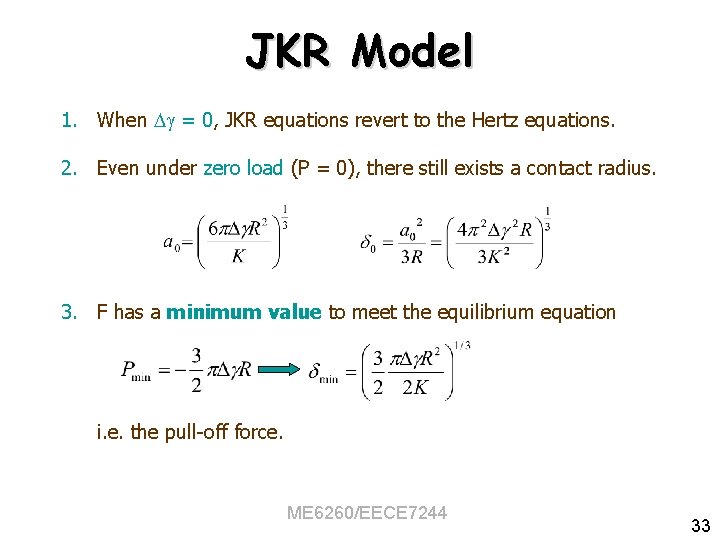
JKR Model 1. When = 0, JKR equations revert to the Hertz equations. 2. Even under zero load (P = 0), there still exists a contact radius. 3. F has a minimum value to meet the equilibrium equation i. e. the pull-off force. ME 6260/EECE 7244 33
DMT Model Derjaguin, B. V. , Muller, V. M. , Toporov, Y. P. , 1975, J. Coll. Interf. Sci. , 53, pp. 314 -326. Muller, V. M. , Derjaguin, B. V. , Toporov, Y. P. , 1983, Coll. and Surf. , 7, pp. 251 -259. DMT model n n p(r) Tensile stresses exist outside the contact area. Stress profile remains Hertzian inside the contact area. a r Applied Force, Contact Radius & Vertical Approach ME 6260/EECE 7244 34
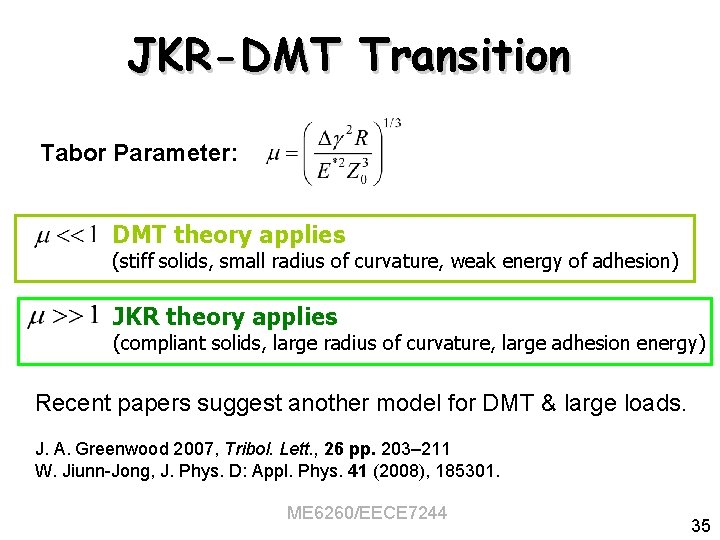
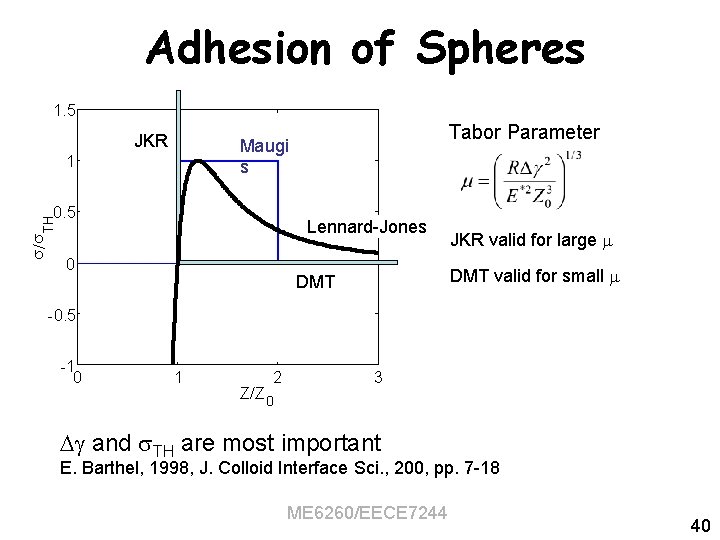
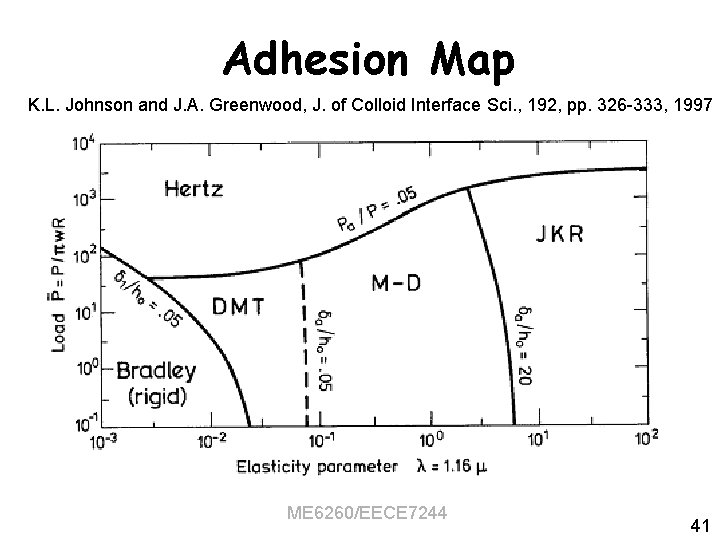
JKR-DMT Transition Tabor Parameter: DMT theory applies (stiff solids, small radius of curvature, weak energy of adhesion) JKR theory applies (compliant solids, large radius of curvature, large adhesion energy) Recent papers suggest another model for DMT & large loads. J. A. Greenwood 2007, Tribol. Lett. , 26 pp. 203– 211 W. Jiunn-Jong, J. Phys. D: Appl. Phys. 41 (2008), 185301. ME 6260/EECE 7244 35
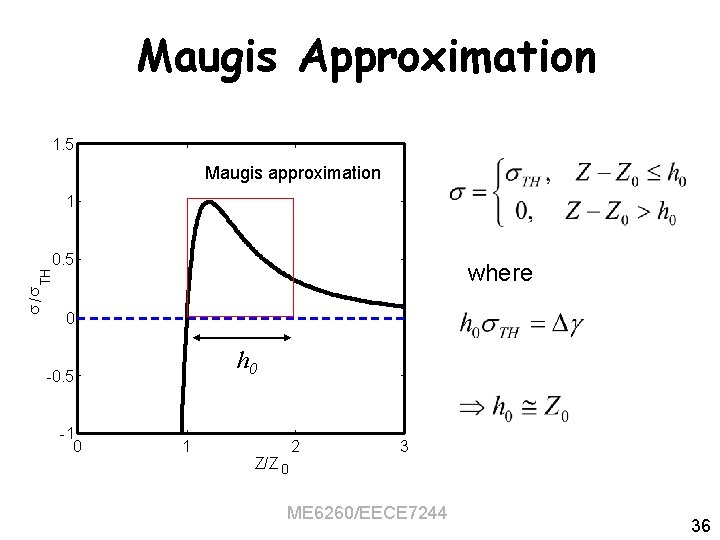
Maugis Approximation 1. 5 Maugis approximation 1 0. 5 / TH where 0 h 0 -0. 5 -1 0 1 Z/Z 0 2 3 ME 6260/EECE 7244 36
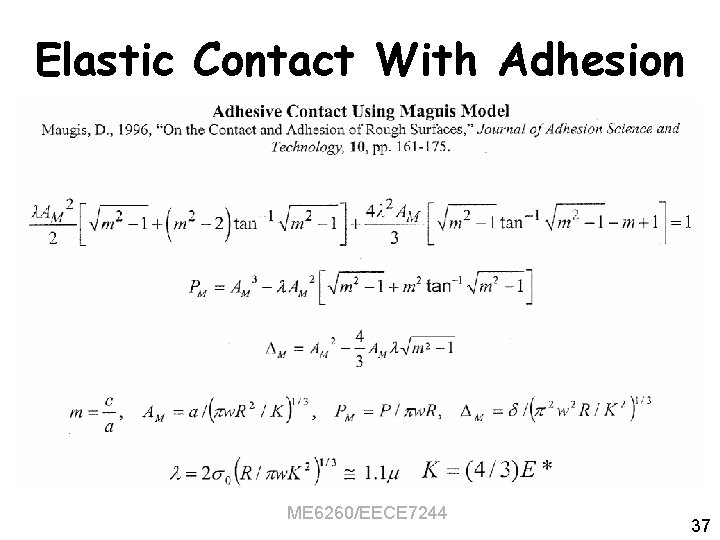
Elastic Contact With Adhesion ME 6260/EECE 7244 37
Elastic Contact With Adhesion w= ME 6260/EECE 7244 38
Elastic Contact With Adhesion ME 6260/EECE 7244 39
Adhesion of Spheres 1. 5 JKR 1 TH 0. 5 / Tabor Parameter Maugi s Lennard-Jones 0 JKR valid for large DMT valid for small DMT -0. 5 -1 0 1 2 Z/Z 0 3 and TH are most important E. Barthel, 1998, J. Colloid Interface Sci. , 200, pp. 7 -18 ME 6260/EECE 7244 40
Adhesion Map K. L. Johnson and J. A. Greenwood, J. of Colloid Interface Sci. , 192, pp. 326 -333, 1997 ME 6260/EECE 7244 41
Multi-Asperity Models With Adhesion • Replace Hertz Contacts of GW Model with JKR Adhesive Contacts: Fuller, K. N. G. , and Tabor, D. , 1975, Proc. Royal Society of London, A 345, pp. 327 -342. • Replace Hertz Contacts of GW Model with DMT Adhesive Contacts: Maugis, D. , 1996, J. Adhesion Science and Technology, 10, pp. 161 -175. • Replace Hertz Contacts of GW Model with Maugis Adhesive Contacts: Morrow, C. , Lovell, M. , and Ning, X. , 2003, J. of Physics D: Applied Physics, 36, pp. 534 -540. ME 6260/EECE 7244 42
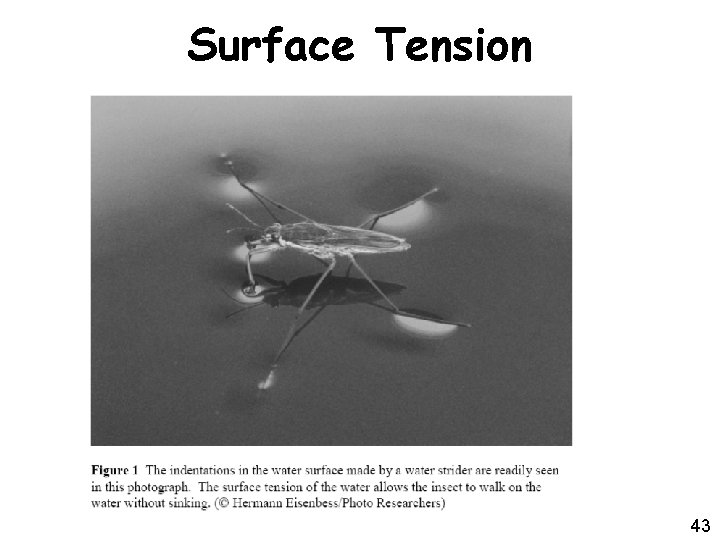
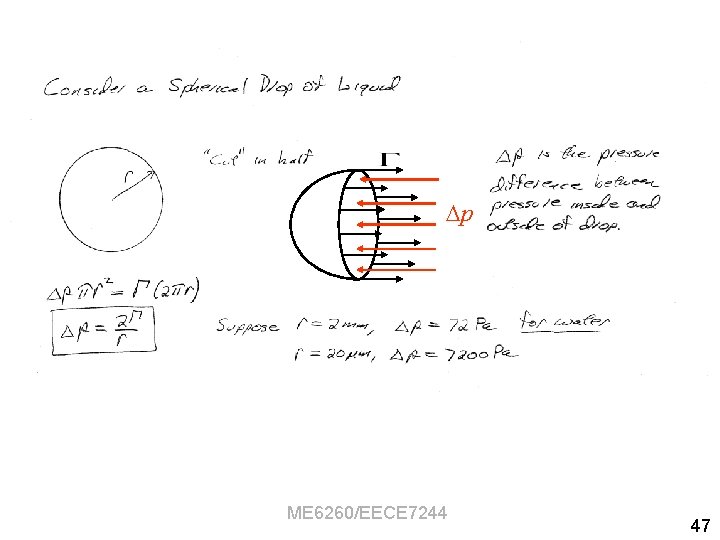
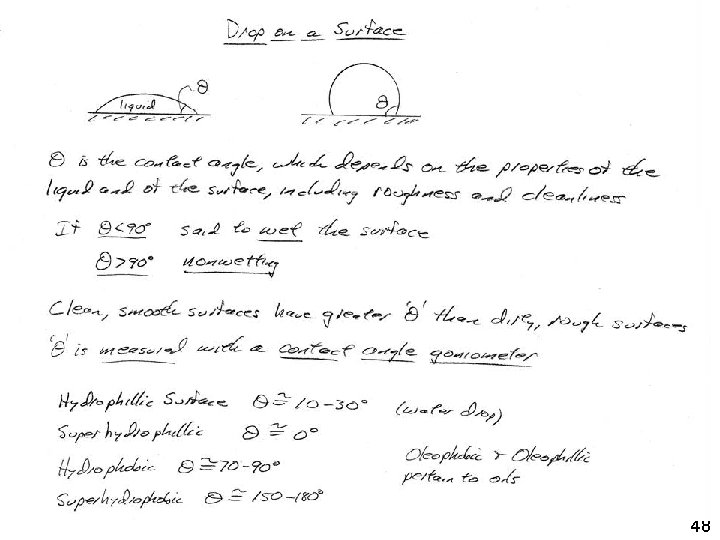
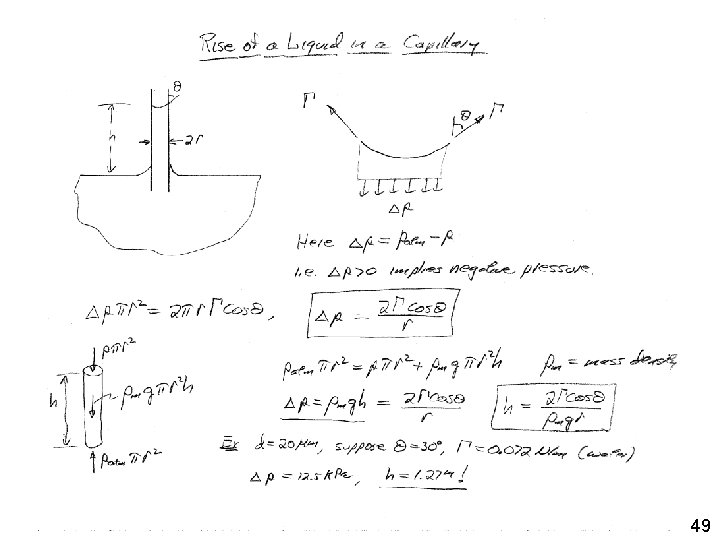
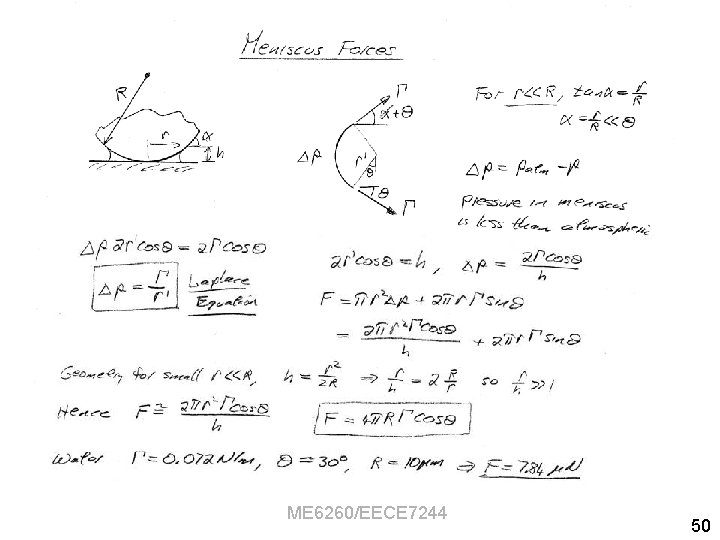
Surface Tension ME 6260/EECE 7244 43
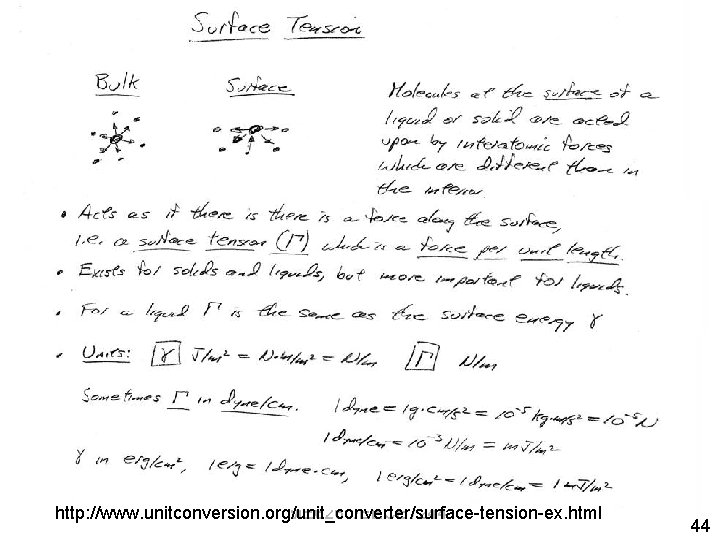
ME 6260/EECE 7244 http: //www. unitconversion. org/unit_converter/surface-tension-ex. html 44
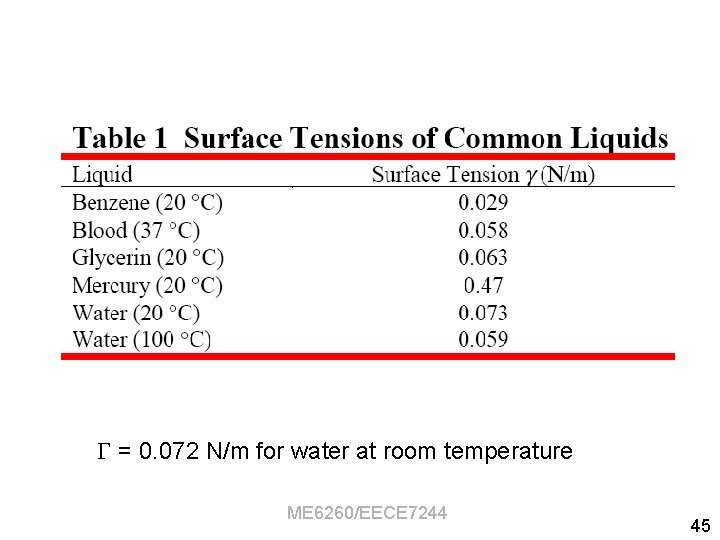
= 0. 072 N/m for water at room temperature ME 6260/EECE 7244 45
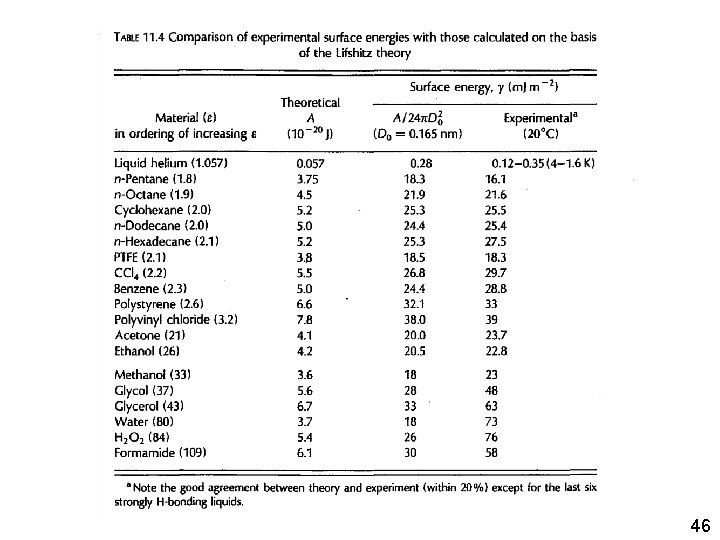
ME 6260/EECE 7244 46
p ME 6260/EECE 7244 47
ME 6260/EECE 7244 48
ME 6260/EECE 7244 49
ME 6260/EECE 7244 50
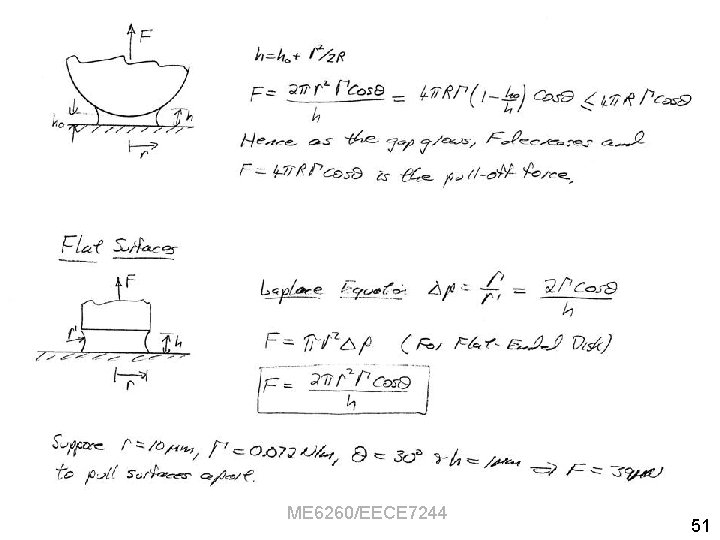
ME 6260/EECE 7244 51