
CONTACT EUROPEANS AMERINDIANS AP US HISTORY OVERVIEW BIG
CONTACT: EUROPEANS & AMERINDIANS AP US HISTORY
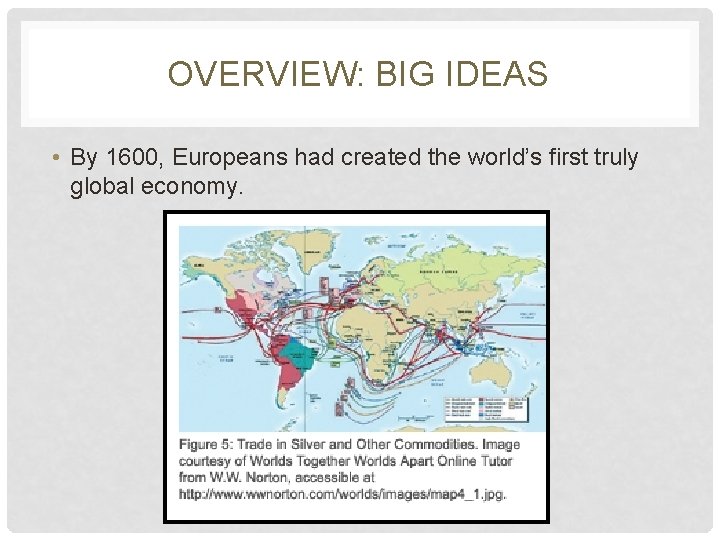
OVERVIEW: BIG IDEAS • By 1600, Europeans had created the world’s first truly global economy.
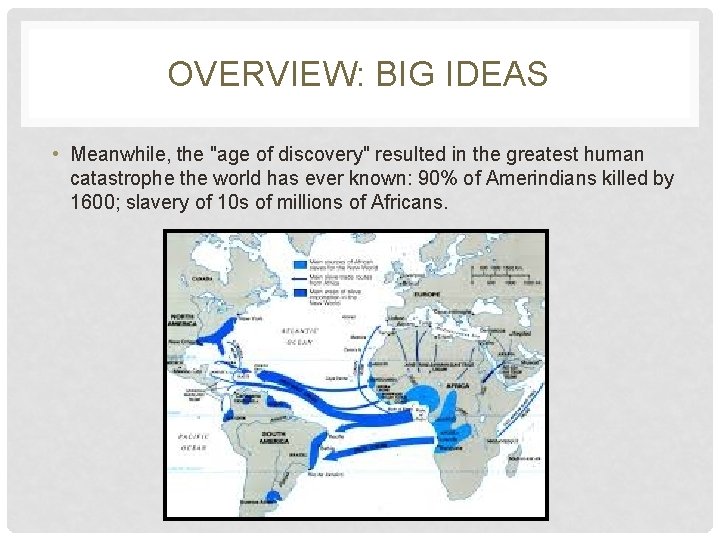
OVERVIEW: BIG IDEAS • Meanwhile, the "age of discovery" resulted in the greatest human catastrophe the world has ever known: 90% of Amerindians killed by 1600; slavery of 10 s of millions of Africans.
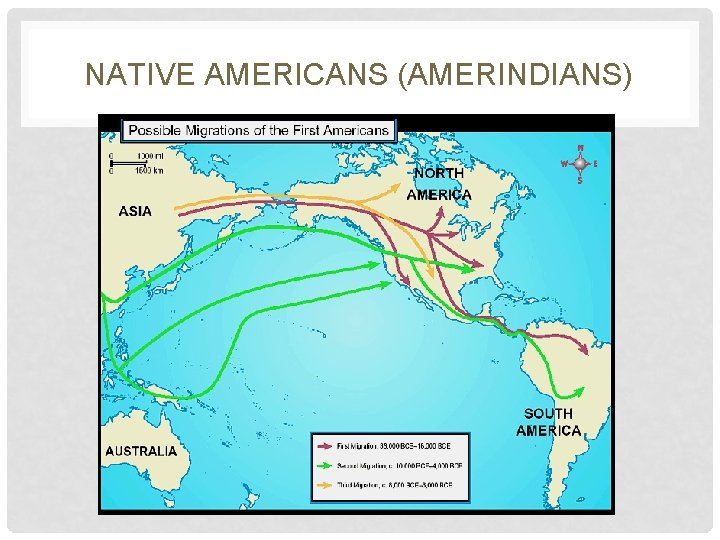
NATIVE AMERICANS (AMERINDIANS)
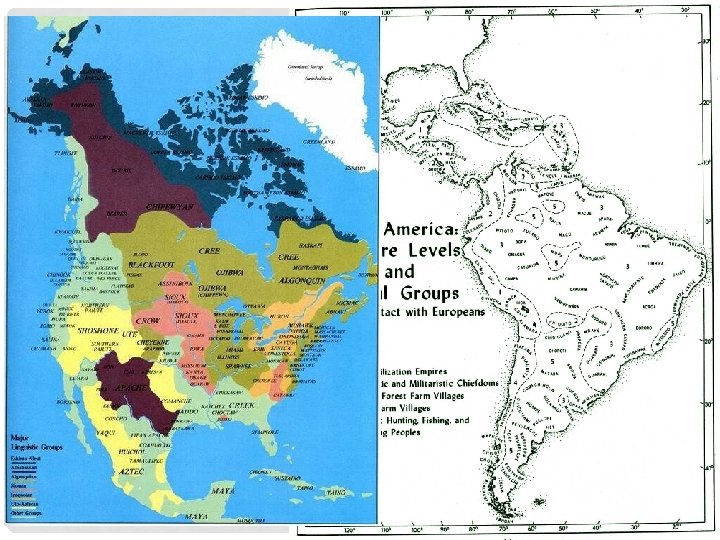
NATIVE AMERICANS (AMERINDIANS)

NATIVE AMERICANS (AMERINDIANS) • Differences between Amerindians and Europeans • Societal • Economic • Religious • Military
WHAT WERE SOME PREDOMINANT NATIVE AMERICAN SOCIETIES IN NORTH AMERICA?
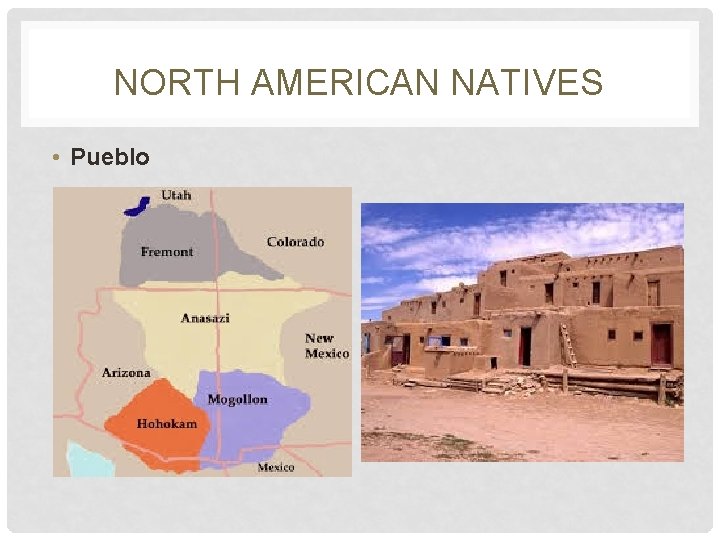
NORTH AMERICAN NATIVES • Pueblo
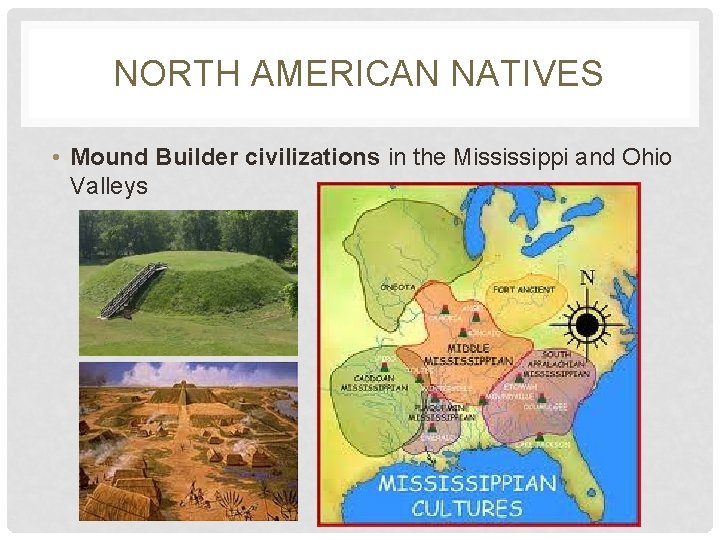
NORTH AMERICAN NATIVES • Mound Builder civilizations in the Mississippi and Ohio Valleys
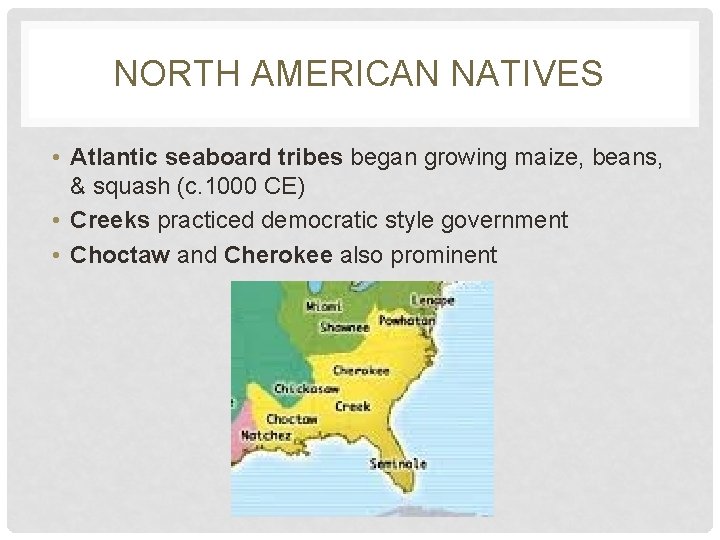
NORTH AMERICAN NATIVES • Atlantic seaboard tribes began growing maize, beans, & squash (c. 1000 CE) • Creeks practiced democratic style government • Choctaw and Cherokee also prominent
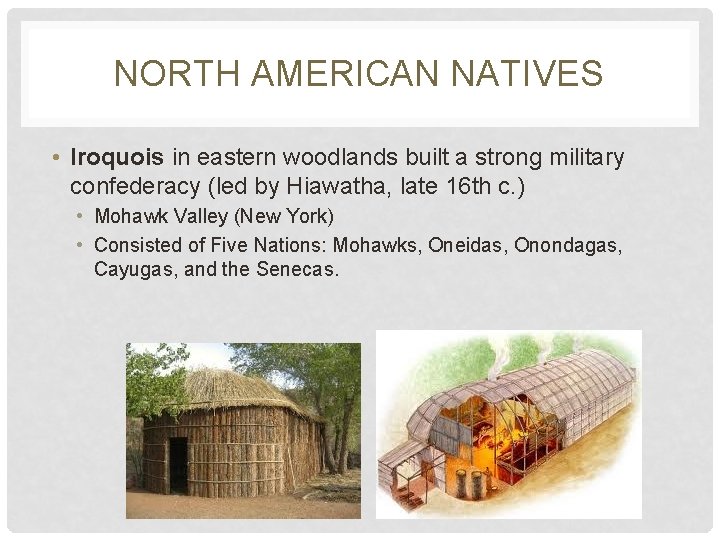
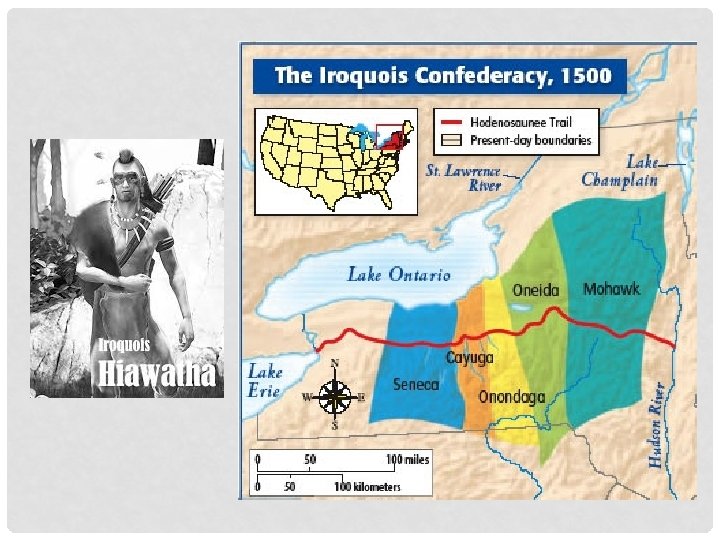
NORTH AMERICAN NATIVES • Iroquois in eastern woodlands built a strong military confederacy (led by Hiawatha, late 16 th c. ) • Mohawk Valley (New York) • Consisted of Five Nations: Mohawks, Oneidas, Onondagas, Cayugas, and the Senecas.
NON-EUROPEAN EXPLORATION • Non-Europeans came prior to Columbus but did not stay. • Afro-Phoenicians c. 1000 BCE-300 AD may have reached Central America • West Africa (Mali) c. 1311 -1460 sailed to Haiti, Panama, possibly Brazil • Who were the first Europeans in the New World?
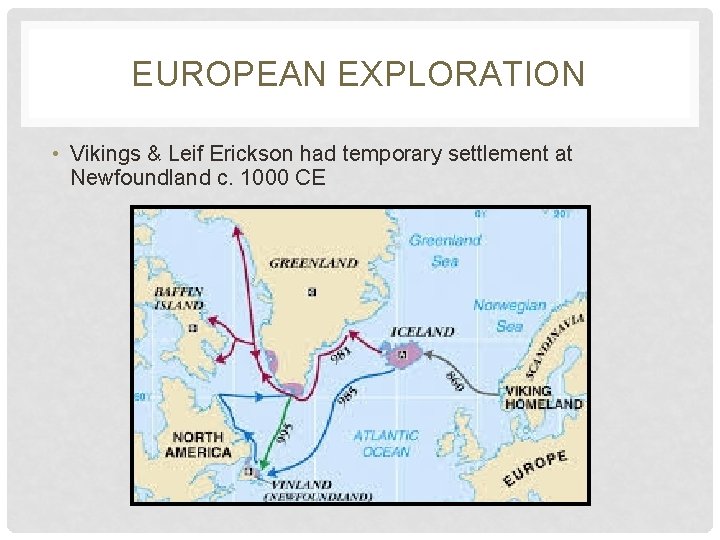
EUROPEAN EXPLORATION • Vikings & Leif Erickson had temporary settlement at Newfoundland c. 1000 CE
EUROPEAN MOTIVES FOR EXPLORATION DURING AGE OF DISCOVERY • Power • Economics • Spread Christianity • Enabled by new ideas/technology of the Renaissance
PORTUGUESE EXPLORATION LED OTHERS • • • Prince Henry the Navigator Bartholomeu Dias Vasco de Gama Pietro Cabral Amerigo Vespucci

PORTUGUESE EXPLORATION
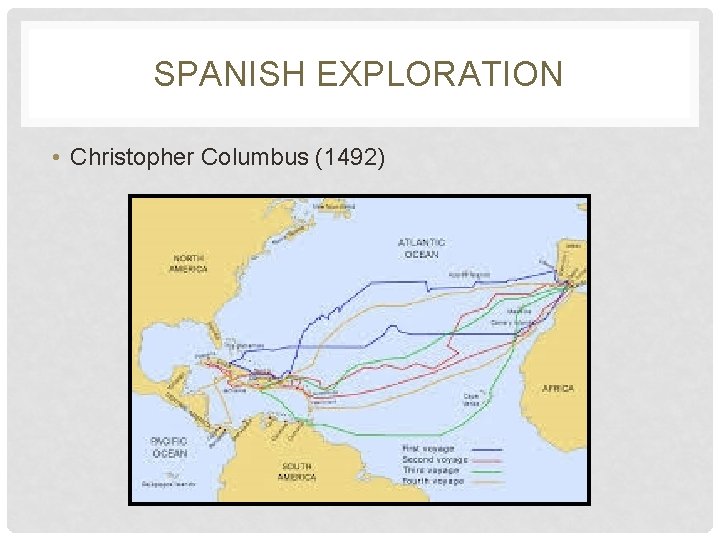
SPANISH EXPLORATION • Christopher Columbus (1492)
SPANISH DISCOVERERS • • • Vasco Nunez Balboa Ferdinand Magellan Ponce de Leon Francisco Coronado Juan Cabrillo • By 1519, Spain had gained little economically from Exploration (gold & silver mines not developed until 1540 s)
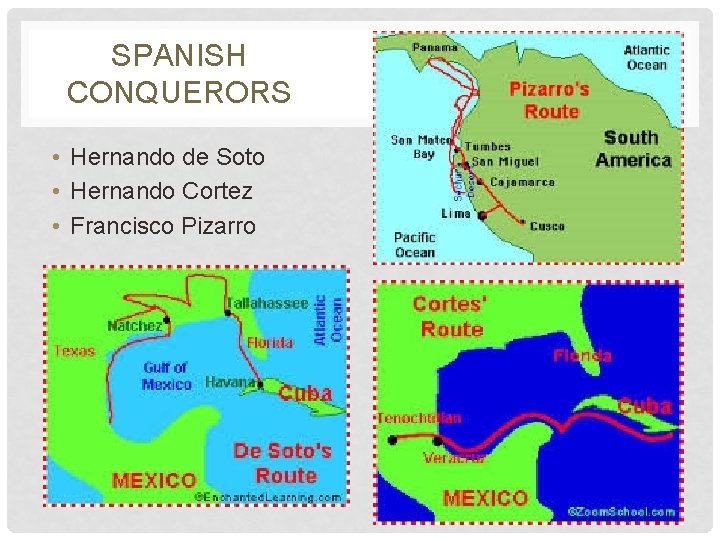
SPANISH CONQUERORS • Hernando de Soto • Hernando Cortez • Francisco Pizarro
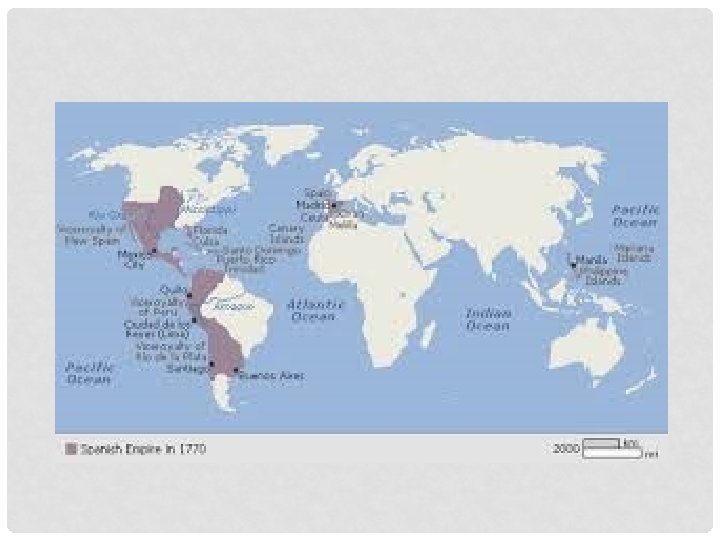
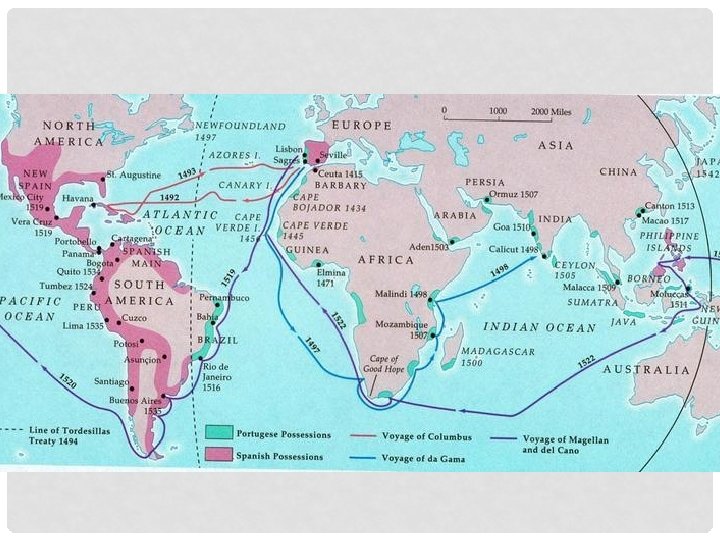
LONG-TERM IMPACT OF SPANISH CONQUEST IN THE NEW WORLD • Intermarriage created distinctive Latin American culture of mestizos: Amerindian & Spanish • Empire stretched from California and Florida to the tip of South America. • St. Augustine fortress erected (1565): oldest European settlement in U. S. • New Mexico (1609) • Texas (1716) • California (1763)
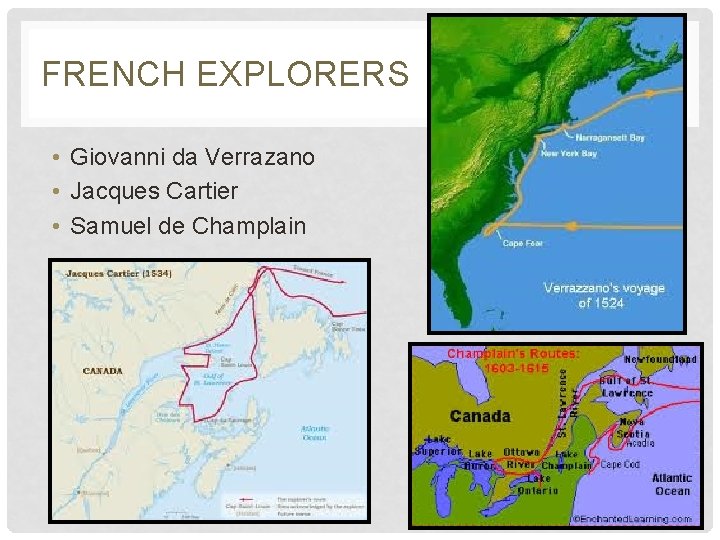
FRENCH EXPLORERS • Giovanni da Verrazano • Jacques Cartier • Samuel de Champlain
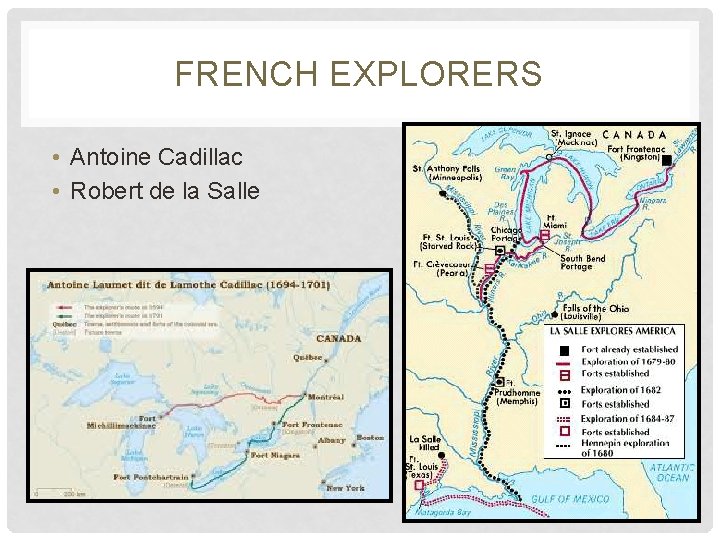
FRENCH EXPLORERS • Antoine Cadillac • Robert de la Salle
THE FRENCH & TRADE • The beaver trade led to exploration of much of North America; (heavy demand for fur in European fashion) • Coureurs de bois (“runners of the woods”) – Rough frontiersmen who sought to tap the lucrative fur trade. • French seamen - voyageurs -- recruited Indians into the fur trade
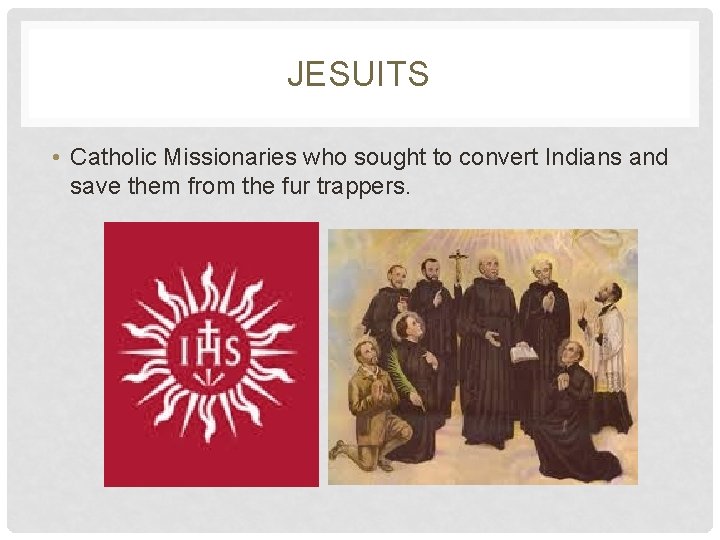
JESUITS • Catholic Missionaries who sought to convert Indians and save them from the fur trappers.
IMPACT OF FRENCH EXPLORATION • Diseases • Gun warfare • alcoholism
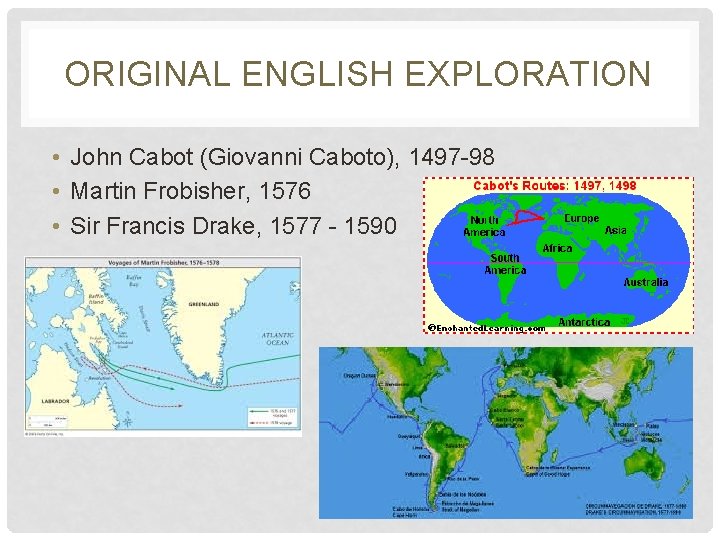
ORIGINAL ENGLISH EXPLORATION • John Cabot (Giovanni Caboto), 1497 -98 • Martin Frobisher, 1576 • Sir Francis Drake, 1577 - 1590
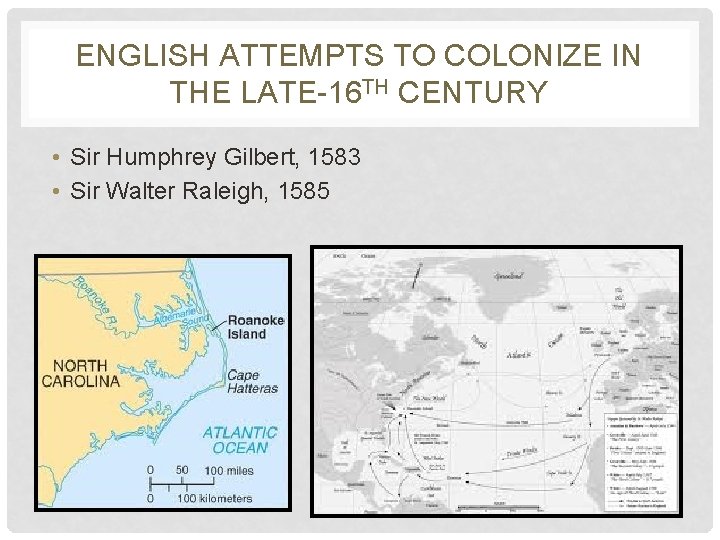
ENGLISH ATTEMPTS TO COLONIZE IN THE LATE-16 TH CENTURY • Sir Humphrey Gilbert, 1583 • Sir Walter Raleigh, 1585
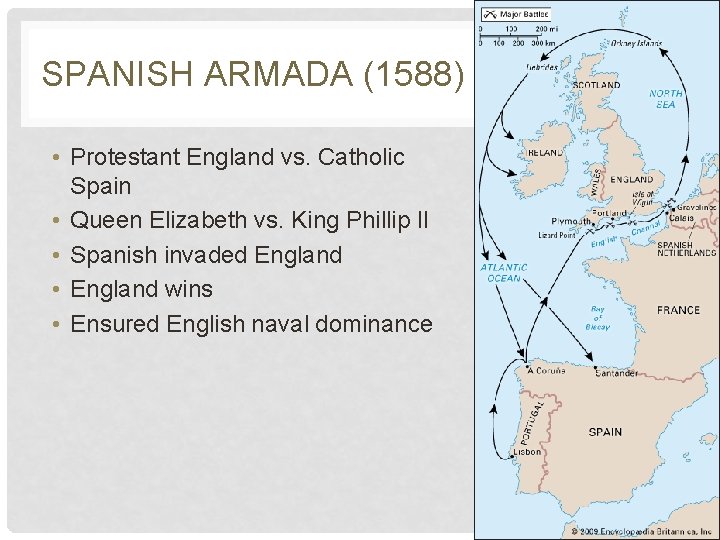
SPANISH ARMADA (1588) • Protestant England vs. Catholic Spain • Queen Elizabeth vs. King Phillip II • Spanish invaded England • England wins • Ensured English naval dominance
ENGLAND’S SEARCH FOR EMPIRE • Eventual peace with Spain provided opportunities overseas without harassment • Population growth provided workers/ potential colonists • Unemployment (economic opportunity), farm land, adventure, markets, political freedom, religious freedom, social change. • Joint-stock companies provided financial means: investors pooled resources for sea expeditions.
RESULTS OF CONTACT BETWEEN NATIVE -AMERICANS AND EUROPEANS • For Native Americans • Mass death and genocide: By 1600, nearly 90% of Native American population perished • European impact on culture: cattle, swine and horses, firearms.
RESULTS OF CONTACT BETWEEN NATIVE -AMERICANS AND EUROPEANS • For Europeans • Global empires for 1 st time in human history. • Explosion of capitalism (Commercial Revolution) • Revolution in diet
CONTRIBUTIONS OF MOTHER COUNTRIES TO NORTH AMERICA • England: Democratic forms of local gov’t; tradition of hard-working, zealous individuals, English language • France: Language, culture, and religion introduced to Canada and Louisiana and to many Amerindians west of Appalachians; large-scale trade with Amerindians • Spain: Schools, hospitals, and printing presses established by missionaries; Spanish language in the Southwest; teaching of Christianity and handicrafts to Amerindians
OF THE EUROPEAN POWERS, THE FRENCH WERE THE MOST SUCCESSFUL IN CREATING AN EFFECTIVE TRADING RELATIONSHIP WITH THE INDIANS • English settlers sought to remove or exterminate Amerindians • Spanish sought to Christianize Indians and use them forced labor. • Utilized the encomienda system (forced labor in towns), hacienda system (forced labor farming), and later, the mission system (forced conversion). • The French became great gift givers (the key to getting on with Amerindians who based inter-tribal relationships on gift giving)
- Slides: 36