
Consumer surplus increases when the price increases A
- Slides: 13
Consumer surplus increases when the price increases. A. True B. False
The market equilibrium maximizes the sum of the producer and consumer surplus. A. True B. False
Producer surplus is the difference between willingness to pay and price paid for a good. A. True B. False
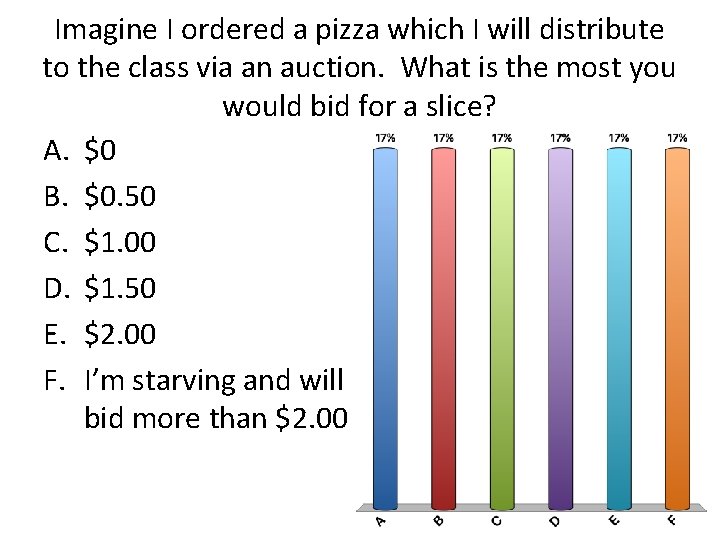
Imagine I ordered a pizza which I will distribute to the class via an auction. What is the most you would bid for a slice? A. $0 B. $0. 50 C. $1. 00 D. $1. 50 E. $2. 00 F. I’m starving and will bid more than $2. 00
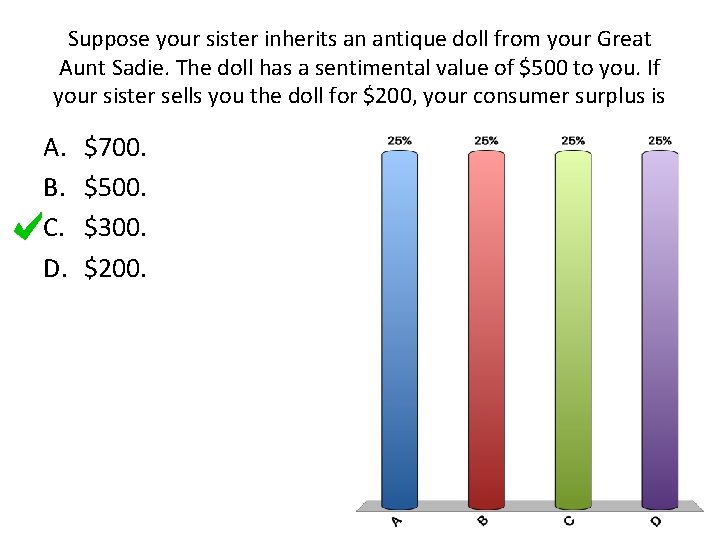
Suppose your sister inherits an antique doll from your Great Aunt Sadie. The doll has a sentimental value of $500 to you. If your sister sells you the doll for $200, your consumer surplus is A. B. C. D. $700. $500. $300. $200.
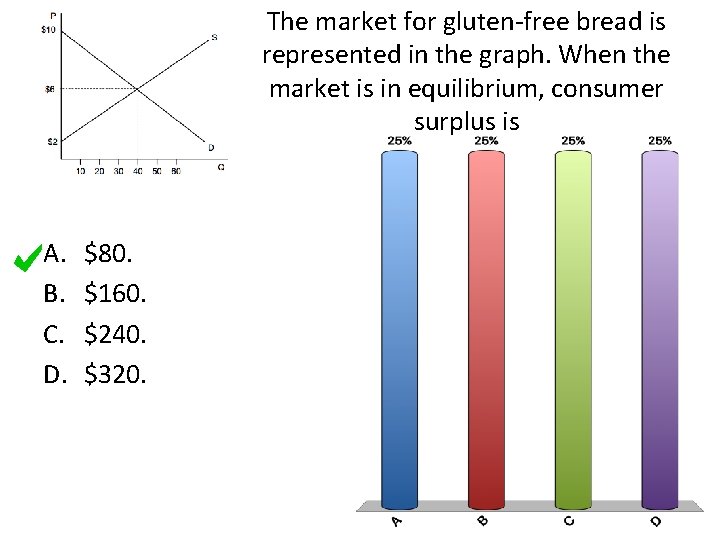
The market for gluten-free bread is represented in the graph. When the market is in equilibrium, consumer surplus is A. B. C. D. $80. $160. $240. $320.
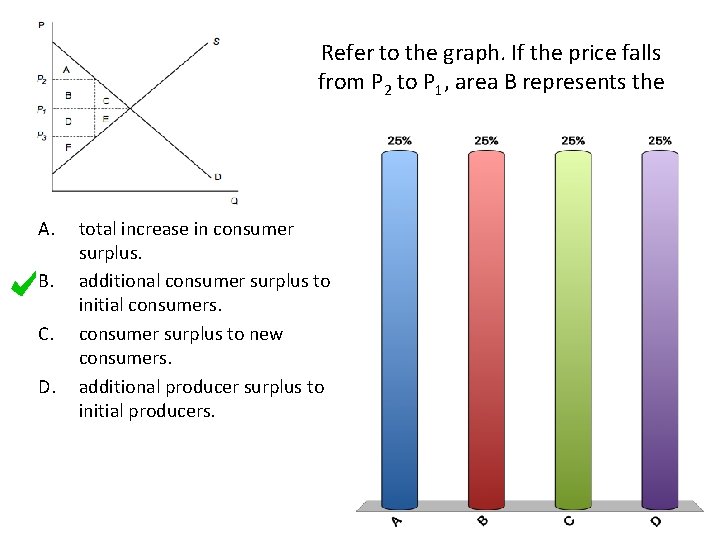
Refer to the graph. If the price falls from P 2 to P 1, area B represents the A. B. C. D. total increase in consumer surplus. additional consumer surplus to initial consumers. consumer surplus to new consumers. additional producer surplus to initial producers.
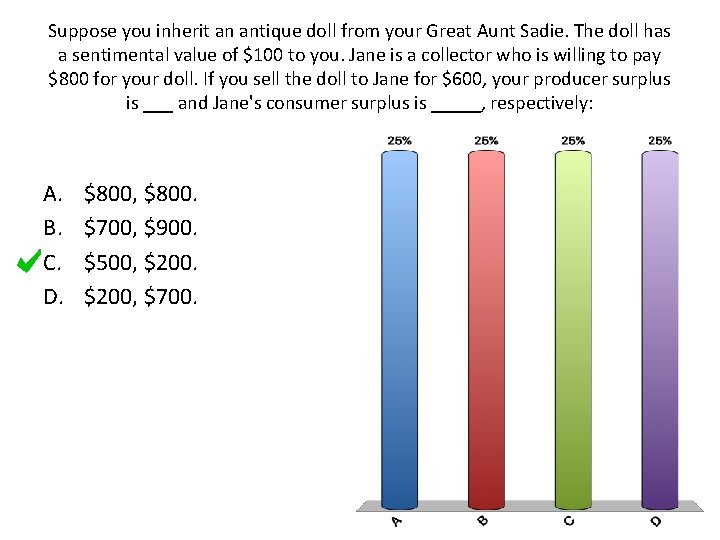
Suppose you inherit an antique doll from your Great Aunt Sadie. The doll has a sentimental value of $100 to you. Jane is a collector who is willing to pay $800 for your doll. If you sell the doll to Jane for $600, your producer surplus is ___ and Jane's consumer surplus is _____, respectively: A. B. C. D. $800, $800. $700, $900. $500, $200, $700.
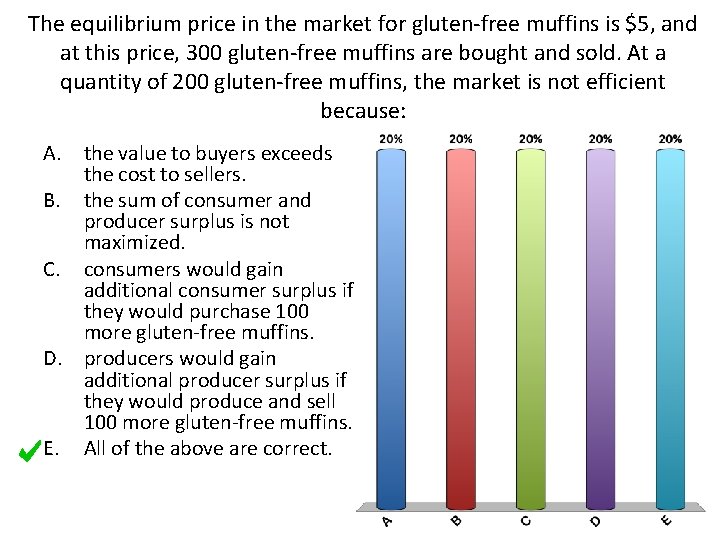
The equilibrium price in the market for gluten-free muffins is $5, and at this price, 300 gluten-free muffins are bought and sold. At a quantity of 200 gluten-free muffins, the market is not efficient because: A. the value to buyers exceeds the cost to sellers. B. the sum of consumer and producer surplus is not maximized. C. consumers would gain additional consumer surplus if they would purchase 100 more gluten-free muffins. D. producers would gain additional producer surplus if they would produce and sell 100 more gluten-free muffins. E. All of the above are correct.
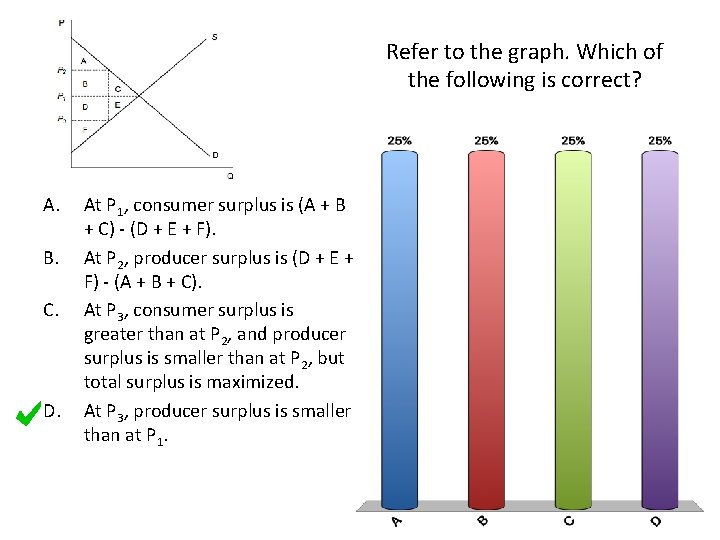
Refer to the graph. Which of the following is correct? A. B. C. D. At P 1, consumer surplus is (A + B + C) - (D + E + F). At P 2, producer surplus is (D + E + F) - (A + B + C). At P 3, consumer surplus is greater than at P 2, and producer surplus is smaller than at P 2, but total surplus is maximized. At P 3, producer surplus is smaller than at P 1.
Think of some “real-world” example where you have purchased something for less than you were willing to pay. How does this relate to consumer surplus? Have you ever sold anything for more than you were willing to accept? How does this relate to producer surplus? Rank 1 2 3 4 5 6 Responses Other
“A market that allows payment for human kidneys should be established on a trial basis to help extend the lives of patients with kidney disease. ” A. agree B. disagree C. uncertain