
Consumer protection healthcare and digital health an aspect






- Slides: 20
Consumer protection, healthcare and digital health an aspect of a pharmacist Brussels, 13 th November 2019 Attila Horvath-Sziklai, director Hungarian Chamber of Pharmacists
Instead of Motto the consumer in the pharmacy is the „patient”, their rights are the patient rights, „Salus aegroti suprema lex esto” duty of the pharmacist is regulated legally, professionally and ethically
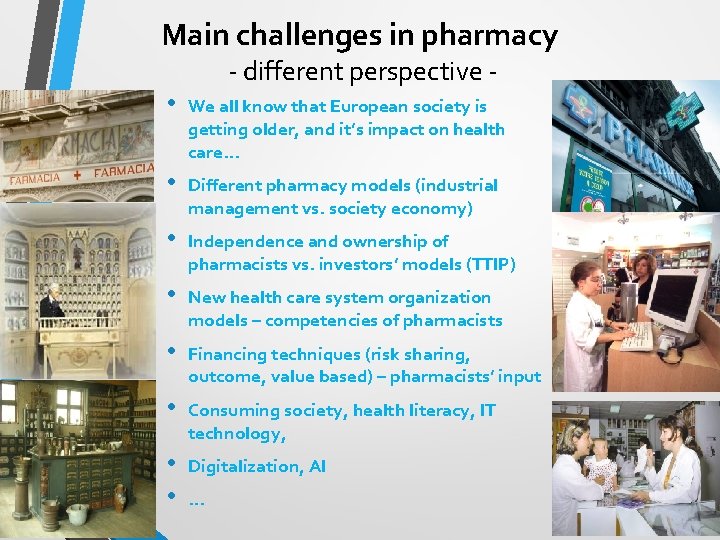
Main challenges in pharmacy - different perspective - • We all know that European society is getting older, and it’s impact on health care… • Different pharmacy models (industrial management vs. society economy) • Independence and ownership of pharmacists vs. investors’ models (TTIP) • New health care system organization models – competencies of pharmacists • Financing techniques (risk sharing, outcome, value based) – pharmacists’ input • Consuming society, health literacy, IT technology, • • Digitalization, AI …
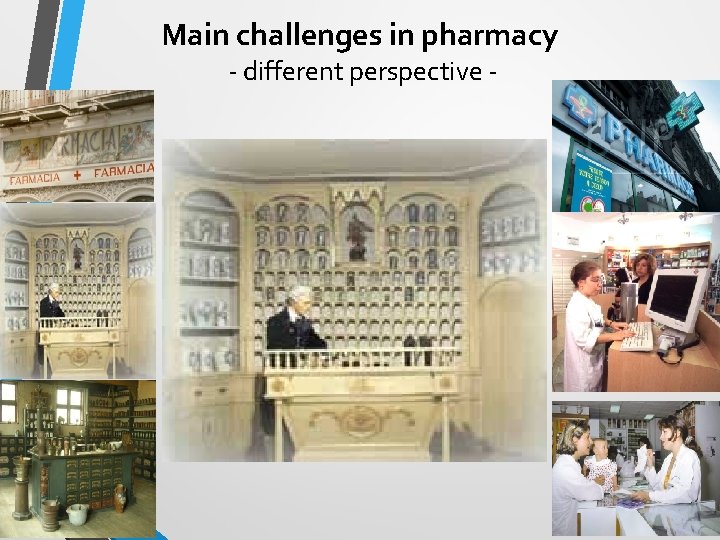
Main challenges in pharmacy - different perspective -
Main challenges in pharmacy - different perspective -
Permanency of pharmacy pharmacist = unlimited professional + financial liability
Permanency of pharmacy pharmacist = unlimited professional + financial liability The patient sees us as we show ourselves
Main changes is pharmacy Medicine centered Patient centered
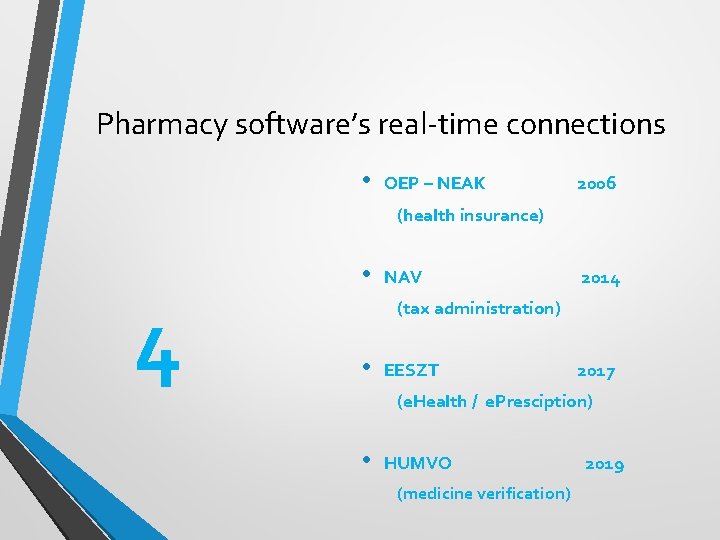
Pharmacy software’s real-time connections ?
Pharmacy software’s real-time connections • OEP – NEAK 2006 (health insurance) 4 • NAV 2014 (tax administration) • EESZT 2017 (e. Health / e. Presciption) • HUMVO (medicine verification) 2019
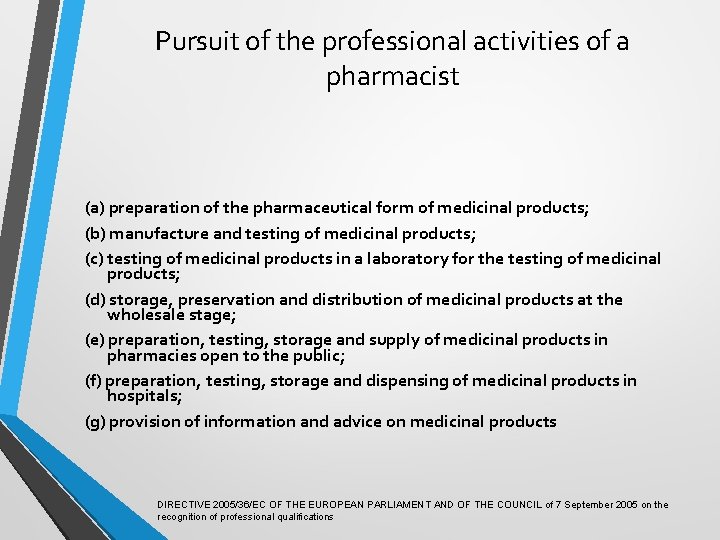
Pursuit of the professional activities of a pharmacist (a) preparation of the pharmaceutical form of medicinal products; (b) manufacture and testing of medicinal products; (c) testing of medicinal products in a laboratory for the testing of medicinal products; (d) storage, preservation and distribution of medicinal products at the wholesale stage; (e) preparation, testing, storage and supply of medicinal products in pharmacies open to the public; (f) preparation, testing, storage and dispensing of medicinal products in hospitals; (g) provision of information and advice on medicinal products DIRECTIVE 2005/36/EC OF THE EUROPEAN PARLIAMENT AND OF THE COUNCIL of 7 September 2005 on the recognition of professional qualifications
Pursuit of the professional activities of a pharmacist - Cognitive - Distributive (a) preparation of the pharmaceutical form of medicinal products; (b) manufacture and testing of medicinal products; (c) testing of medicinal products in a laboratory for the testing of medicinal products; (d) storage, preservation and distribution of medicinal products at the wholesale stage; (e) preparation, testing, storage and supply of medicinal products in pharmacies open to the public; (f) preparation, testing, storage and dispensing of medicinal products in hospitals; (g) provision of information and advice on medicinal products DIRECTIVE 2005/36/EC OF THE EUROPEAN PARLIAMENT AND OF THE COUNCIL of 7 September 2005 on the recognition of professional qualifications
Pursuit of the professional activities of a pharmacist - Cognitive - Distributive (a) preparation of the pharmaceutical form of medicinal products; (b) manufacture and testing of medicinal products; (c) testing of medicinal products in a laboratory for the testing of medicinal products; (d) storage, preservation and distribution of medicinal products at the wholesale stage; (e) preparation, testing, storage and supply of medicinal products in pharmacies open to the public; (f) preparation, testing, storage and dispensing of medicinal products in hospitals; (g) provision of information and advice on medicinal products DIRECTIVE 2005/36/EC OF THE EUROPEAN PARLIAMENT AND OF THE COUNCIL of 7 September 2005 on the recognition of professional qualifications
Pursuit of the professional activities of a pharmacist - Cognitive - Distributive Enhanced by digitalization and Artificial Intelligence (a) preparation of the pharmaceutical form of medicinal products; (b) manufacture and testing of medicinal products; (c) testing of medicinal products in a laboratory for the testing of medicinal products; (d) storage, preservation and distribution of medicinal products at the wholesale stage; (e) preparation, testing, storage and supply of medicinal products in pharmacies open to the public; (f) preparation, testing, storage and dispensing of medicinal products in hospitals; (g) provision of information and advice on medicinal products DIRECTIVE 2005/36/EC OF THE EUROPEAN PARLIAMENT AND OF THE COUNCIL of 7 September 2005 on the recognition of professional qualifications
Challenges ü To keep patients’ trust in health systems unchanged, it will be essential that the collection of patient data and information will be done in compliance to GDPR (General Data Protection Regulation). As the closest and most accessible point of access to care in Europe, community pharmacists are key to bridge patients and health systems and ensure patients are well informed on how their healthcare data is used to improve the safety and quality of their treatment.
Opportunites üBeing the most accessible and affordable point of access in health systems, community pharmacists can use AI and new digital technologies to dedicate more working time to the provision of healthcare services and to direct patient care. ü 2. Big Data and AI in pharmacy, if adopted within interoperable information systems, can use patient data and clinical history to support the pharmacists in providing more personalized healthcare services and expert advice. ü 3. The potential of e. Health and m. Health tools can be used to provide realtime capture of data which can enable community pharmacists to follow up with at-risk patients on their conditions and to monitor their progress during therapy
Opportunites üIn addition, pharmacists already have an early form of AI in place: it is the pharmacy software which provides housing for data concerning medication history of the patient, patient use of medication, clinical rules (clinical decision support) and adherence data, gathered in compliance with GDPR. The next generation of pharmacy software using AI to implement a technology-based information expert system to identify timely adverse drug-reaction or medicines interaction problems based on patient data captured from the pharmacy system and other external data systems. üIn this way, pharmacists would need to spend less working time on identifying serious drug-related problems. These time savings coupled with potential automation of dispensing process could free a significant amount of time for the pharmacists to provide a broader range of patientcentered healthcare services.
Conclusions ü 1. Involve community pharmacists as experienced users of digital health tools in the formulation of digital policies at local, national and European level as well as in the development of guidelines and methods on the sharing of Big data and deployment of AI in healthcare. ü 2. Reward with reimbursement community pharmacy services involving recommending, monitoring and advising patients via m. Health and e. Health tools. ü 3. Facilitate the production of Big Data in healthcare, via linking electronic health records with e. Prescribing systems, allowing health professionals involved in patient care to access the necessary patient’s information, subject to the patient’s consent. Promote interoperability of information systems in Europe to foster exchange of data across community pharmacies.
Conclusions ü 4. Enable community pharmacists to update electronic health records, if needed, to identify and address potential medication and patient safety -related issues. ü 5. Harness the potential of AI in healthcare and use it to promote more collaboration across many different health professionals serving the same patients as well as to promote integration of primary care systems.
Thank you for your attention