
CONSUMER PROTECTION ACT COPRA CPA Lesson Plan Date






- Slides: 21
CONSUMER PROTECTION ACT (COPRA / CPA)
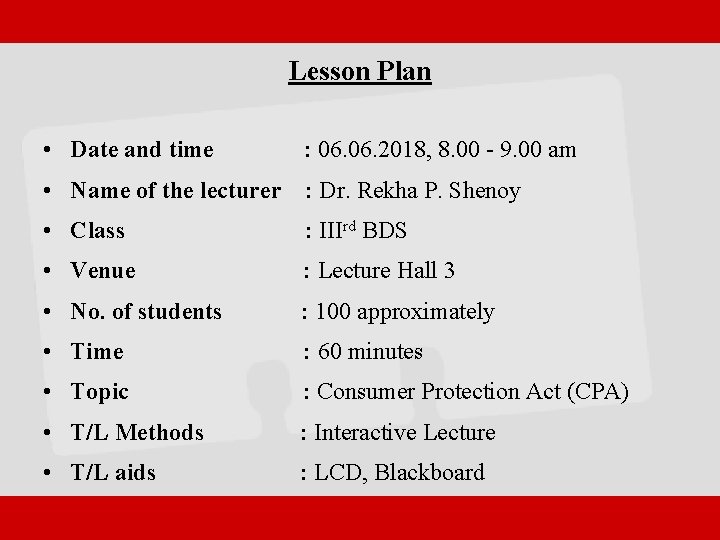
Lesson Plan • Date and time : 06. 2018, 8. 00 - 9. 00 am • Name of the lecturer : Dr. Rekha P. Shenoy • Class : IIIrd BDS • Venue : Lecture Hall 3 • No. of students : 100 approximately • Time : 60 minutes • Topic : Consumer Protection Act (CPA) • T/L Methods : Interactive Lecture • T/L aids : LCD, Blackboard
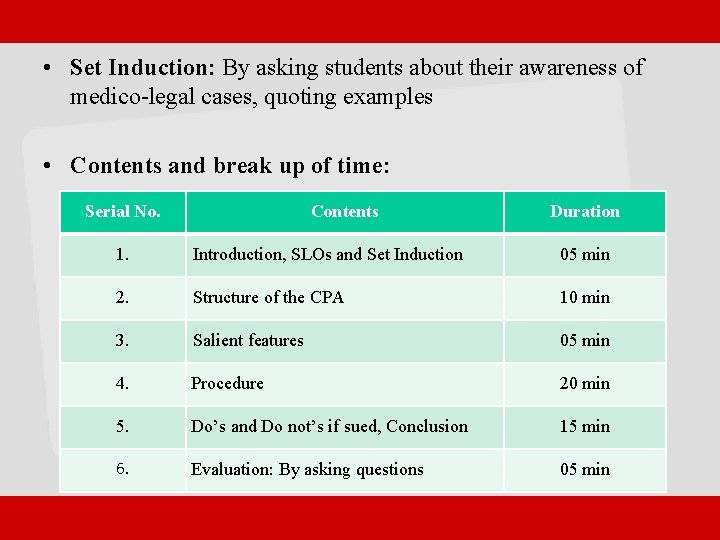
• Set Induction: By asking students about their awareness of medico-legal cases, quoting examples • Contents and break up of time: Serial No. Contents Duration 1. Introduction, SLOs and Set Induction 05 min 2. Structure of the CPA 10 min 3. Salient features 05 min 4. Procedure 20 min 5. Do’s and Do not’s if sued, Conclusion 15 min 6. Evaluation: By asking questions 05 min
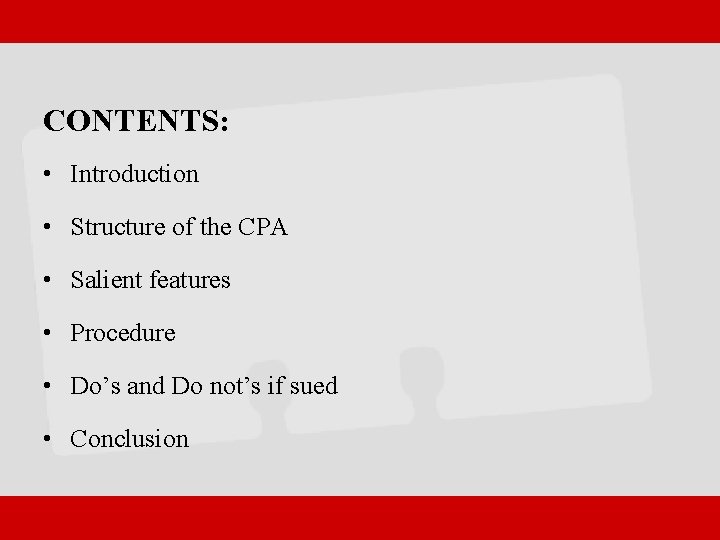
CONTENTS: • Introduction • Structure of the CPA • Salient features • Procedure • Do’s and Do not’s if sued • Conclusion
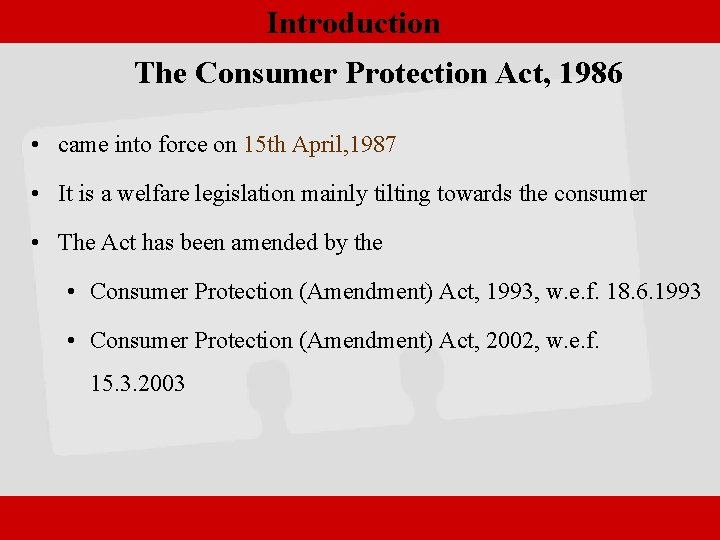
Introduction The Consumer Protection Act, 1986 • came into force on 15 th April, 1987 • It is a welfare legislation mainly tilting towards the consumer • The Act has been amended by the • Consumer Protection (Amendment) Act, 1993, w. e. f. 18. 6. 1993 • Consumer Protection (Amendment) Act, 2002, w. e. f. 15. 3. 2003
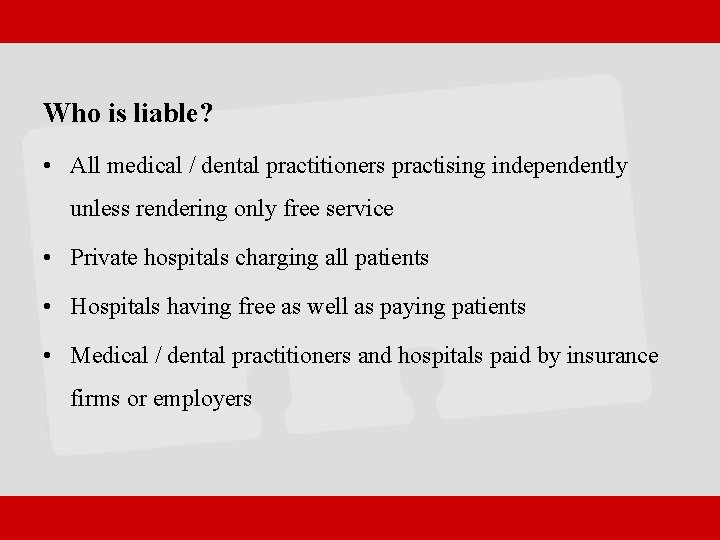
Who is liable? • All medical / dental practitioners practising independently unless rendering only free service • Private hospitals charging all patients • Hospitals having free as well as paying patients • Medical / dental practitioners and hospitals paid by insurance firms or employers
Who is not liable? • Only hospitals and the medical / dental practitioners of those hospitals offering free service to all patients
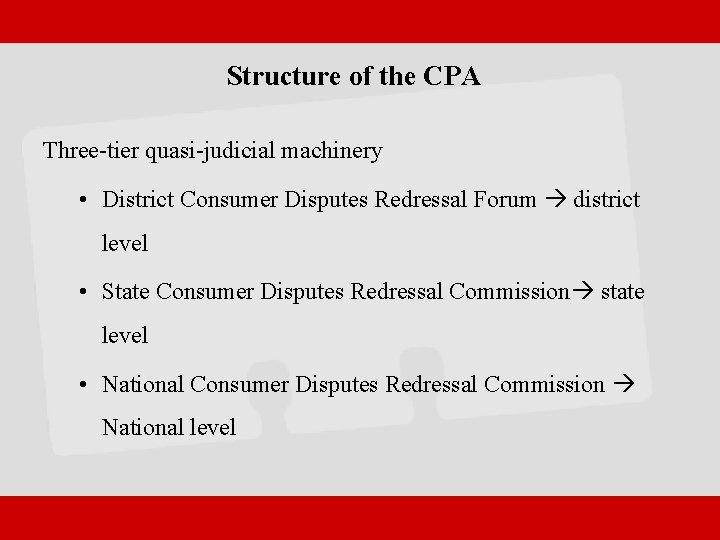
Structure of the CPA Three-tier quasi-judicial machinery • District Consumer Disputes Redressal Forum district level • State Consumer Disputes Redressal Commission state level • National Consumer Disputes Redressal Commission National level
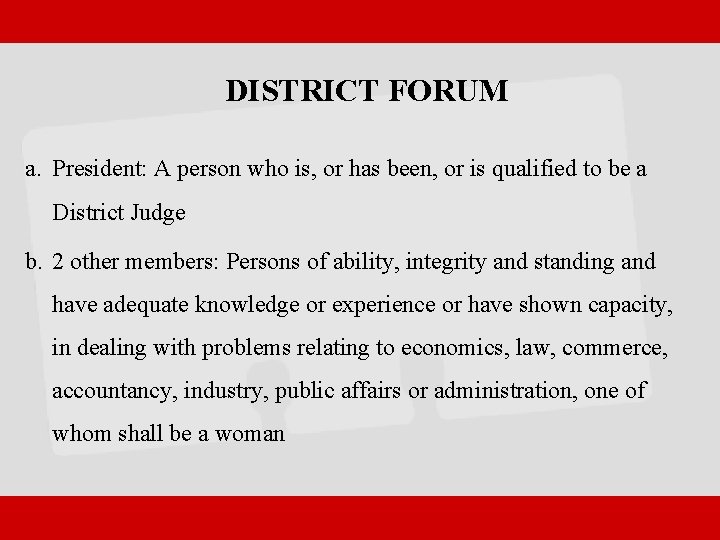
DISTRICT FORUM a. President: A person who is, or has been, or is qualified to be a District Judge b. 2 other members: Persons of ability, integrity and standing and have adequate knowledge or experience or have shown capacity, in dealing with problems relating to economics, law, commerce, accountancy, industry, public affairs or administration, one of whom shall be a woman
STATE COMMISSION a. President: A person who is, or has been, or is qualified to be a High Court Judge, appointed by the State Government b. 2 other members: Persons of ability, integrity and standing and have adequate knowledge or experience or have shown capacity, in dealing with problems relating to economics, law, commerce, accountancy, industry, public affairs or administration, one of whom shall be a woman.
NATIONAL COMMISSION a. President: A person who is, or has been, or is qualified to be a Supreme Court Judge, appointed by the Central Government b. 4 other members: Persons of ability, integrity and standing and have adequate knowledge or experience or have shown capacity, in dealing with problems relating to economics, law, commerce, accountancy, industry, public affairs or administration, one of whom shall be a woman.
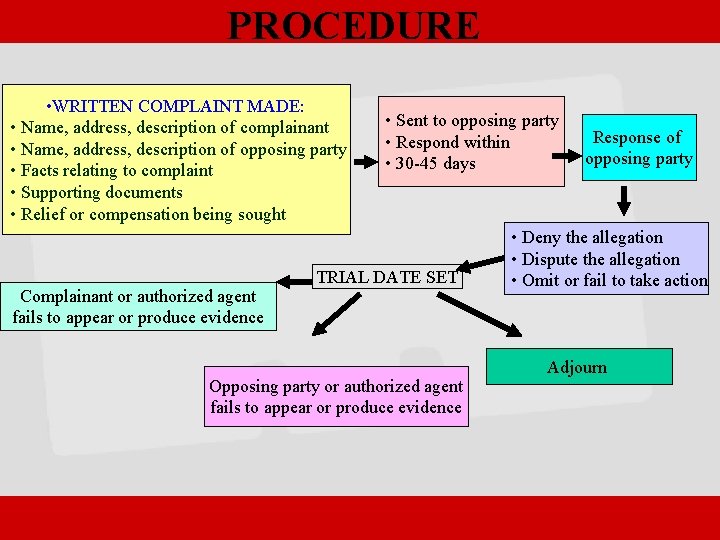
PROCEDURE • WRITTEN COMPLAINT MADE: • Name, address, description of complainant • Name, address, description of opposing party • Facts relating to complaint • Supporting documents • Relief or compensation being sought Complainant or authorized agent fails to appear or produce evidence • Sent to opposing party • Respond within • 30 -45 days TRIAL DATE SET Opposing party or authorized agent fails to appear or produce evidence Response of opposing party • Deny the allegation • Dispute the allegation • Omit or fail to take action Adjourn
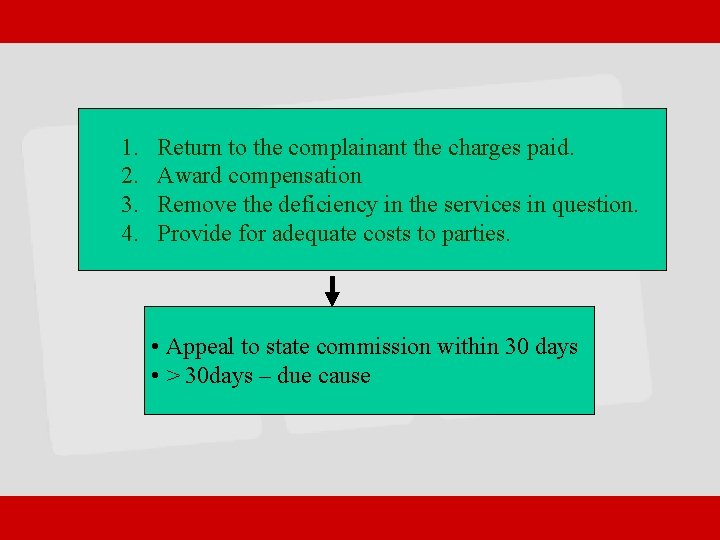
1. 2. 3. 4. Return to the complainant the charges paid. Award compensation Remove the deficiency in the services in question. Provide for adequate costs to parties. Not satisfied • Appeal to state commission within 30 days • > 30 days – due cause
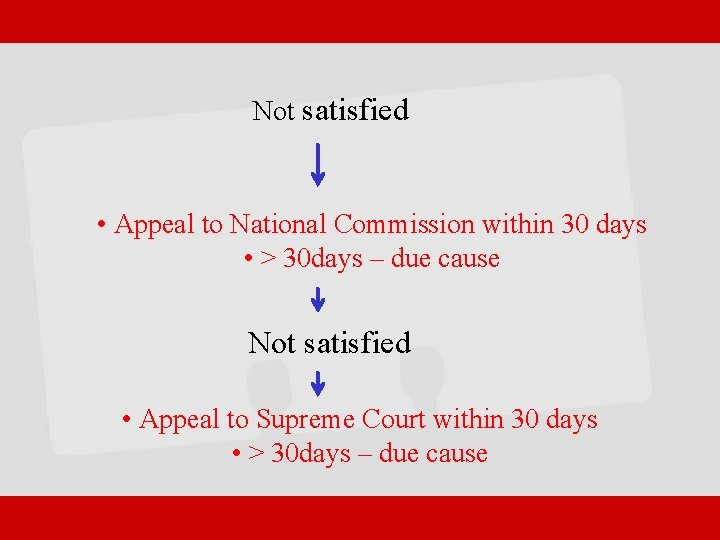
Not satisfied • Appeal to National Commission within 30 days • > 30 days – due cause Not satisfied • Appeal to Supreme Court within 30 days • > 30 days – due cause
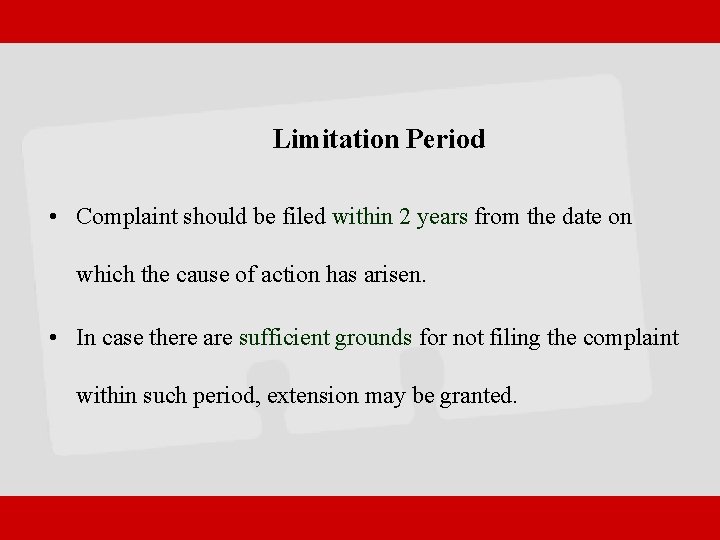
Limitation Period • Complaint should be filed within 2 years from the date on which the cause of action has arisen. • In case there are sufficient grounds for not filing the complaint within such period, extension may be granted.
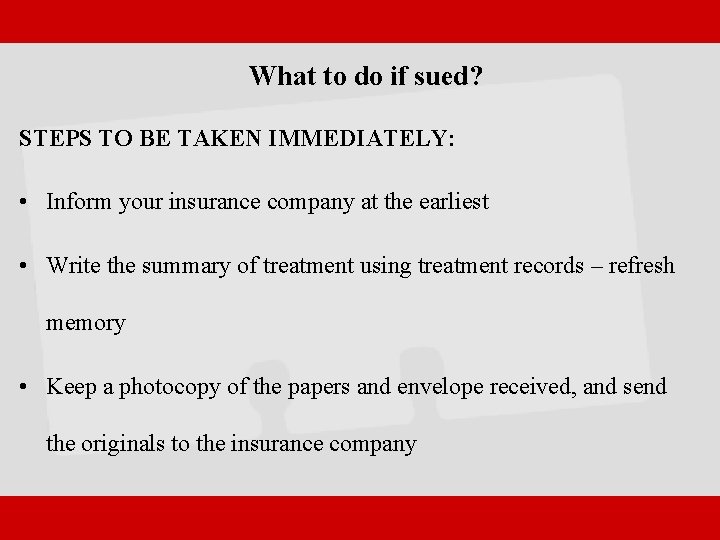
What to do if sued? STEPS TO BE TAKEN IMMEDIATELY: • Inform your insurance company at the earliest • Write the summary of treatment using treatment records – refresh memory • Keep a photocopy of the papers and envelope received, and send the originals to the insurance company
• Make a photocopy of complete records & lock the originals at a safe place • Tell your staff about suit and instruct them not to talk about case to anyone with out permission • Cooperate with your insurance company
DO NOT • Get upset • Tell patient that you are insured • Agree to or offer a settlement without consulting insurance company / lawyer • Agree to or offer specialist treatment without consulting insurance company / lawyer
• Alter your patient records • Give the original treatment records to the patient or anyone except court if required • Discuss about the patient’s treatment with anyone • Admit fault or guilt to anyone • Contact any other practitioner about the case
Conclusion • Even the most renowned specialist can make a mistake in detecting and diagnosing the true nature of a disease • Liability for negligence is only if it can be proved that he/she is guilty of a failure that no doctor with ordinary skills would be guilty of, if acting with reasonable care
Thank you