
Consumer Motivation Ch 4 Chapter Outline Model of
- Slides: 20
Consumer Motivation Ch. 4
Chapter Outline • • • Model of the Motivation Process Goals Motives Needs Motivational Research
Needs and Motivation • Needs are the essence of the marketing concept. Marketers do not create needs but can make consumers aware of needs. • Motivation is the driving force within individuals that impels them to action.
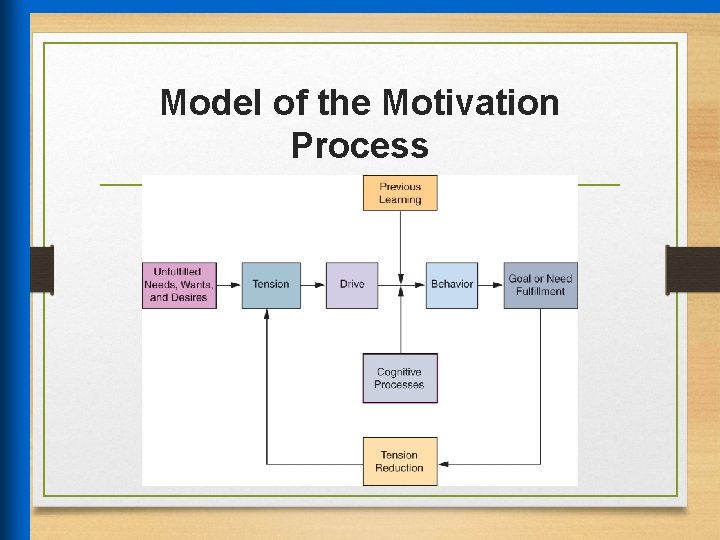
Model of the Motivation Process
Types of Needs • Innate Needs • Physiological (or biogenic) needs that are considered primary needs or motives (food, water, air) • Acquired Needs • Learned in response to our culture or environment. Are generally psychological and considered secondary needs (need for selfesteem, prestige, affection, power, achievement)
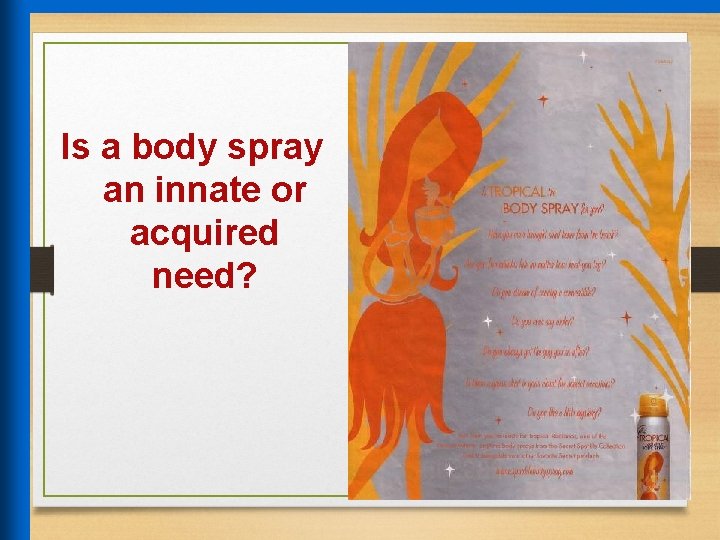
Is a body spray an innate or acquired need?
Goals • The sought-after results of motivated behavior • Generic goals are general categories of goals that consumers see as a way to fulfill their needs • Product-specific goals are specifically branded products or services consumers select as their goals that
The Selection of Goals • The goals selected by an individual depend on their: • Personal experiences • Physical capacity • Prevailing cultural norms and values • Goal’s accessibility in the physical and social environment
Discussion Question • What are three generic goals you have set for yourself in the past year? • What are three product-specific goals you have set in the past year? • How were these goals selected? Was it personal experiences, physical capacity, or prevailing cultural norms and values?
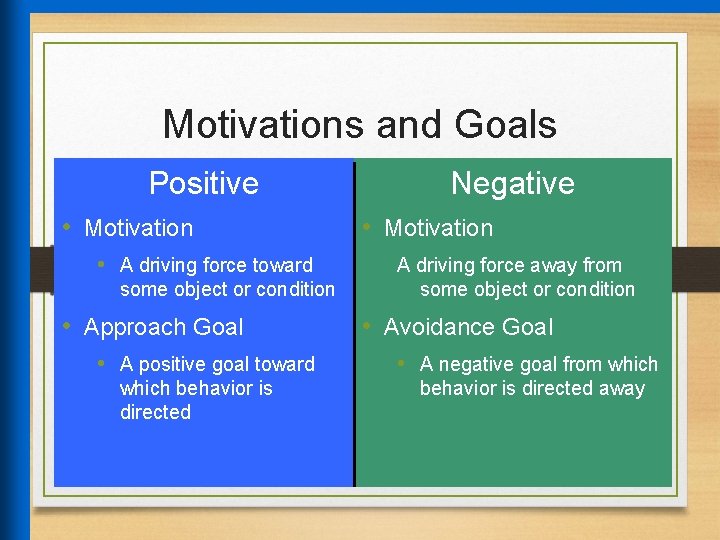
Motivations and Goals Positive • Motivation • A driving force toward some object or condition • Approach Goal • A positive goal toward which behavior is directed Negative • Motivation A driving force away from some object or condition • Avoidance Goal • A negative goal from which behavior is directed away
Rational versus Emotional Motives • Rationality implies that consumers select goals based on totally objective criteria such as size, weight, price, or miles per gallon • Emotional motives imply the selection of goals according to personal or subjective criteria
The Dynamic Nature of Motivation • Needs are never fully satisfied • New needs emerge as old needs are satisfied • People who achieve their goals set new and higher goals for themselves
Substitute Goals • Are used when a consumer cannot attain a specific goal he/she anticipates will satisfy a need • The substitute goal will dispel tension • Substitute goals may actually replace the primary goal over time
Frustration • Failure to achieve a goal may result in frustration. • Some adapt; others adopt defense mechanisms to protect their ego.
Defense Mechanism • Methods by which people mentally redefine frustrating situations to protect their selfimages and their self-esteem
Defense Mechanisms • • Aggression Rationalization Regression Withdrawal • Projection • Identification • Repression
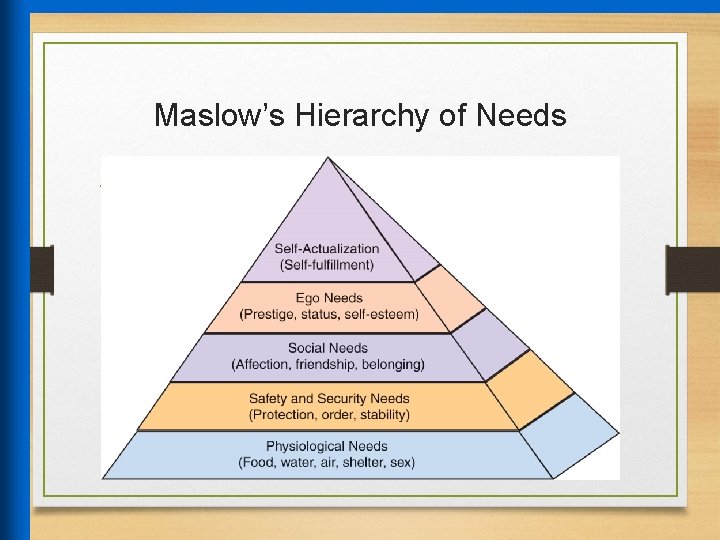
Maslow’s Hierarchy of Needs
Discussion Question • What are three types of products related to more then one level of Maslow’s Hierarchy of Needs. • For each type of product – consider two brands. How do marketers attempt to differentiate their product from the competition?
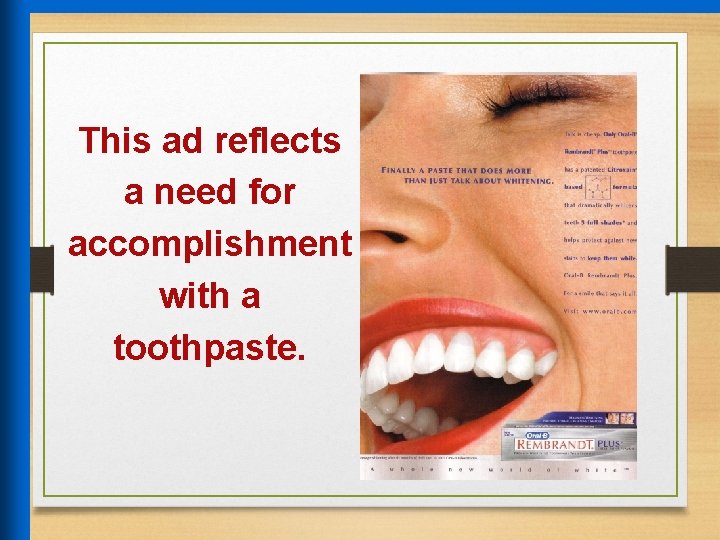
This ad reflects a need for accomplishment with a toothpaste.
A Trio of Needs • Power • individual’s desire to control environment • Affiliation • need for friendship, acceptance, and belonging • Achievement • need for personal accomplishment • closely related to egoistic and self-actualization needs