
Consumer Behavior Research Methods Quantitative vs Qualitative Quantitative
Consumer Behavior Research Methods Quantitative vs. Qualitative Quantitative: • Based on “numbers” • More “closed ended” • Quantify differences • Larger sample sizes
Qualitative: • Based on “intuition and experience” • More “open ended” • Interpretation by researcher • Smaller sample sizes

Correlational vs. Experimental Correlational: • naturally occurring relationships • Difficulty with cause & effect
Advantages • Some things can’t be manipulated • More “natural” look at behavior • New phenomenon • Several variables Disadvantages • Cause & Effect? • Confounds ?
Experimental: • cause & effect • manipulate variables • control extraneous variables
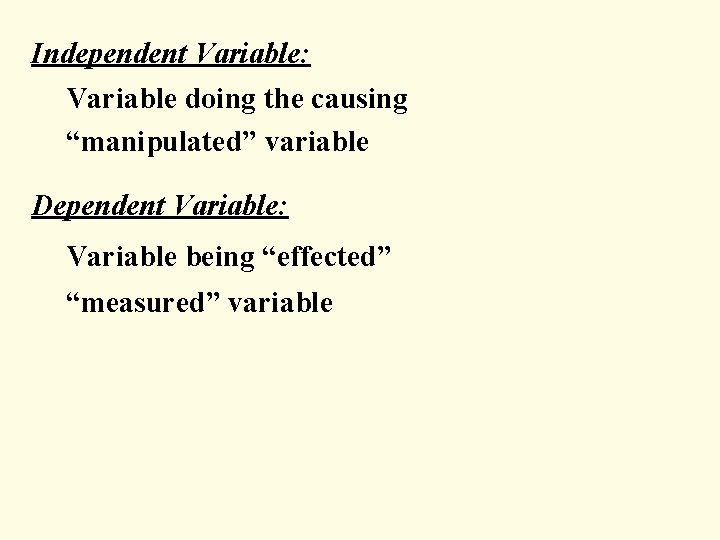
Independent Variable: v v Variable doing the causing “manipulated” variable Dependent Variable: v Variable being “effected” v “measured” variable
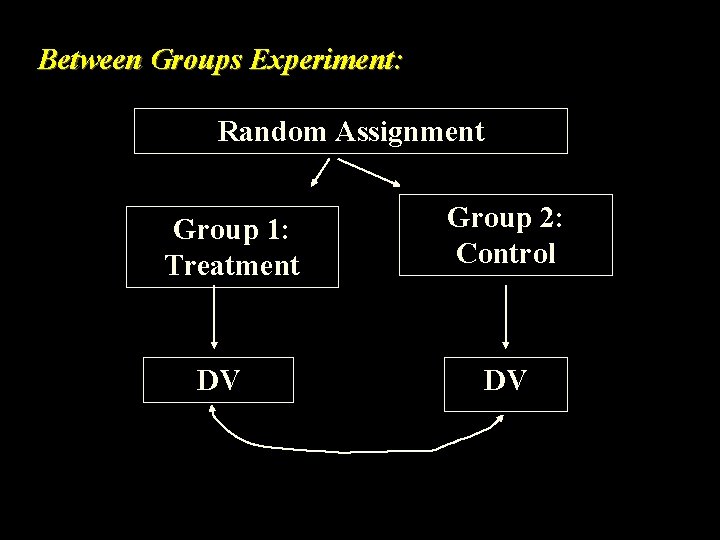
Between Groups Experiment: Random Assignment Group 1: Treatment DV Group 2: Control DV
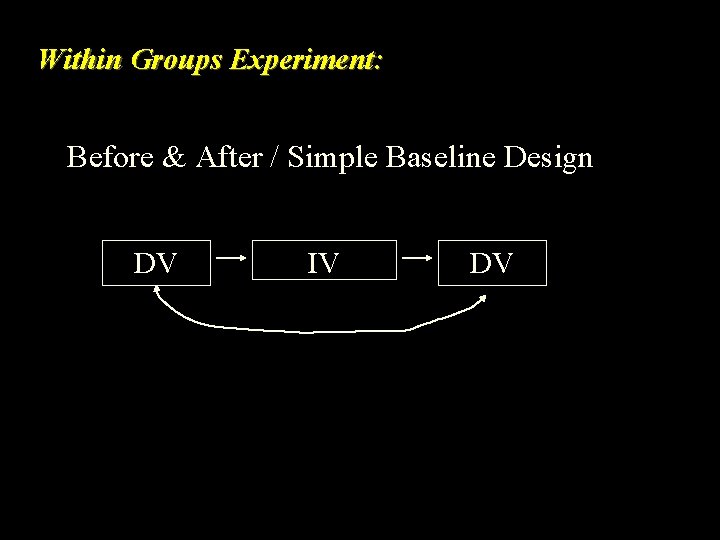
Within Groups Experiment: Before & After / Simple Baseline Design DV IV DV
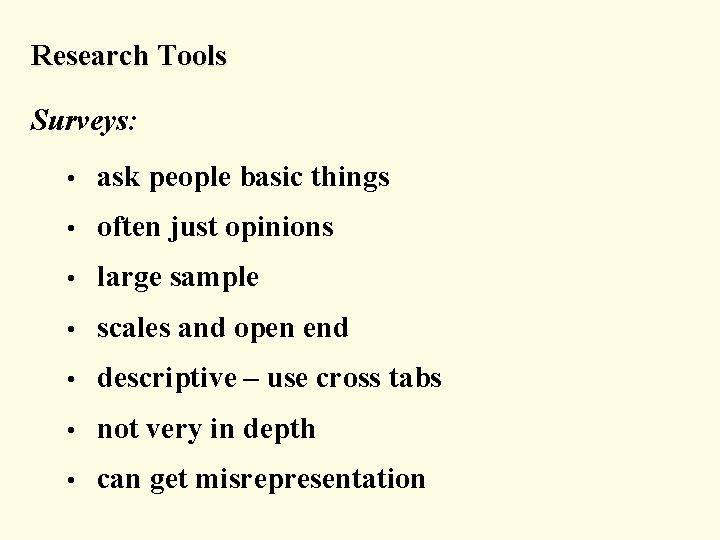
Research Tools Surveys: • ask people basic things • often just opinions • large sample • scales and open end • descriptive – use cross tabs • not very in depth • can get misrepresentation
Questionnaires / Tests: • more detailed • variety of methods to collect data • typically quantitative • convenient • validity and reliability issues • accuracy?
Focus Groups: v Small v In groups depth discussions v Trained Ø Leads moderator leads as the group dictates v Qualitative
v BUT: Ø Social desirability Ø Misrepresentation Ø Memory Ø Leading questions Ø Misinterpretation Ø Interpretation Ø See by moderator biases what they want to see?
Interviews: • one-on-one, diads, triads • more open ended • similar in some respects to focus groups • can be long term • more intimate questions than focus groups • verbal and nonverbal important • qualitative • similar problems as with focus groups
Storytelling: • consumers tell stories Ø about product Ø about similar products Ø about hypothetical products/situations • features, use, experiences etc. • qualitative • insight from researcher • focus on tangible and intangible
Ethnographics: • extended time with consumer • similar to storytelling • but their life is the “story” • direct observation • relates consumer attitudes and actual usage • context!
Ethnographics: • Lifestyle • Actual product usage • Interviews: • bonding is crucial • subject leads • observe environment (photo/video) • observe non-verbal
Purchase Panels: • group consumption examined • individuals represent segments of pop. • typically tracked electronically • Neilson ratings • TOPPS Club • can see what sells • track if ads are working • see if patterns change after promotions
Correspondence Analysis: • Perceptual Maps • find out how many people say they think a factor is important for different brands • shows factors that “cluster” with a certain brand • graphical
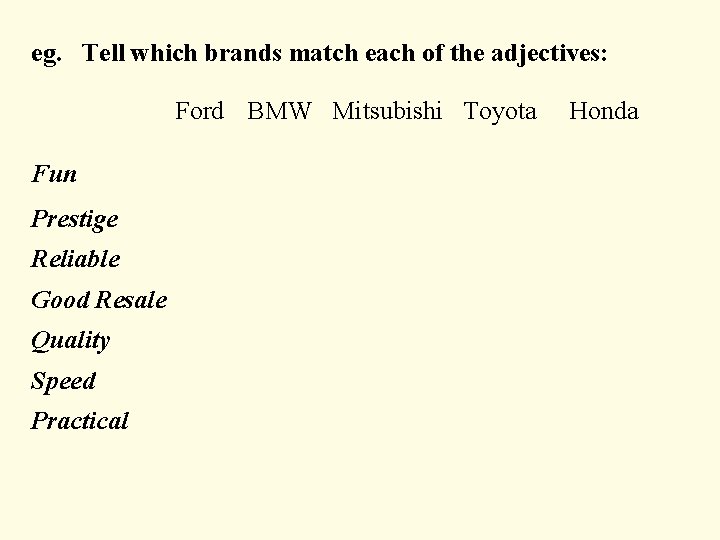
eg. Tell which brands match each of the adjectives: Ford BMW Mitsubishi Toyota Fun Prestige Reliable Good Resale Quality Speed Practical Honda
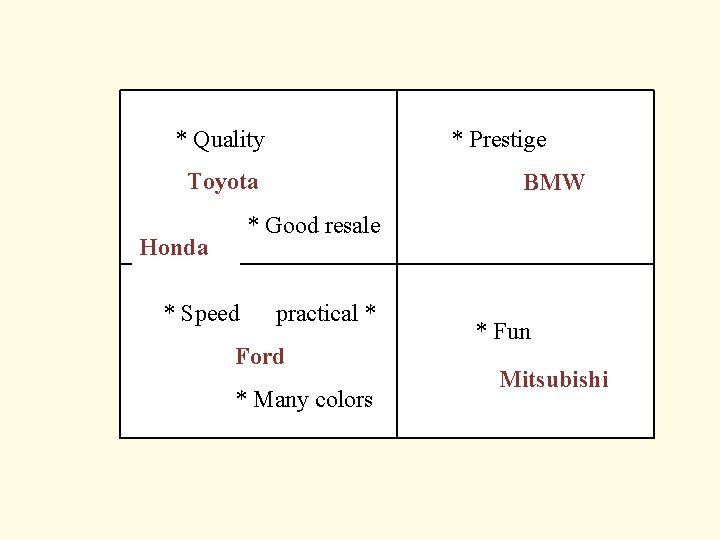
* Quality * Prestige Toyota * Reliable BMW * Good resale Honda * Speed practical * Ford * Many colors * Fun Mitsubishi
Derived Importance: • “underlying” reasons • STATED IMPORTANCE • compared to DERIVED IMPORTANCE Ø rate preference of different brands Ø rate how much attribute fits each brand Ø • features that drive consumption should be rated higher for more preferred brands graphical representation Ø “quadrants” of opportunity
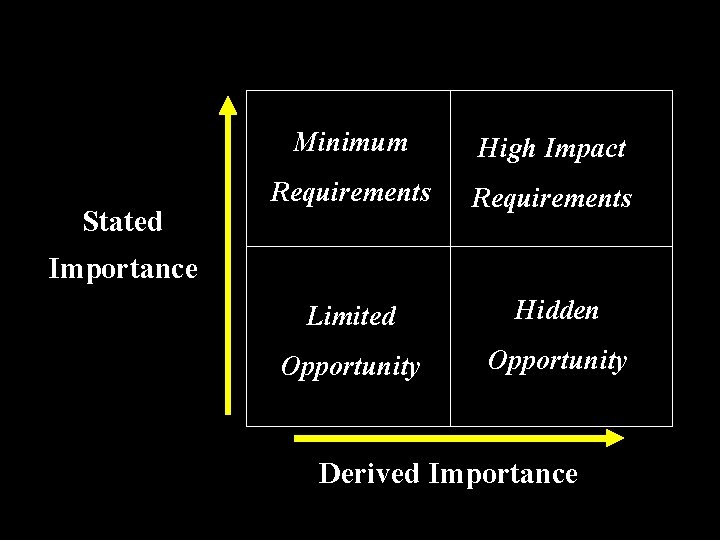
Stated Minimum High Impact Requirements Limited Hidden Opportunity Importance Derived Importance
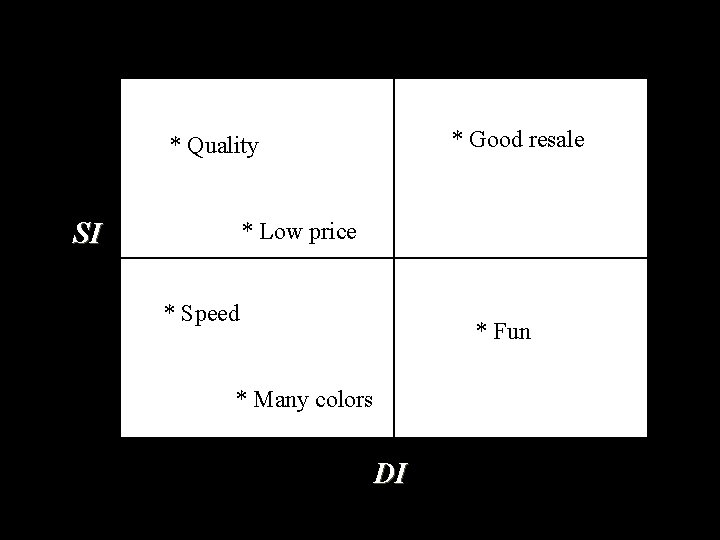
* Good resale * Quality SI * Low price * Speed * Fun * Many colors DI
- Slides: 23