
Consultation on Accelerating Implementation of 25 A RTE
- Slides: 23
Consultation on Accelerating Implementation of 25 A /RTE The Punjab Free & Compulsory Education Act, 2014 an orphaned law!
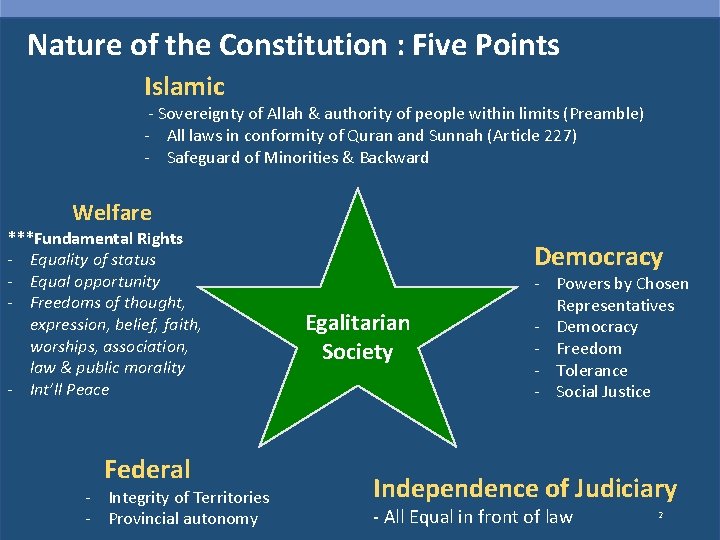
Nature of the Constitution : Five Points Islamic - Sovereignty of Allah & authority of people within limits (Preamble) - All laws in conformity of Quran and Sunnah (Article 227) - Safeguard of Minorities & Backward Welfare ***Fundamental Rights - Equality of status - Equal opportunity - Freedoms of thought, expression, belief, faith, worships, association, law & public morality - Int’ll Peace Federal - Integrity of Territories - Provincial autonomy Democracy Egalitarian Society - Powers by Chosen Representatives - Democracy - Freedom - Tolerance - Social Justice Independence of Judiciary - All Equal in front of law 2
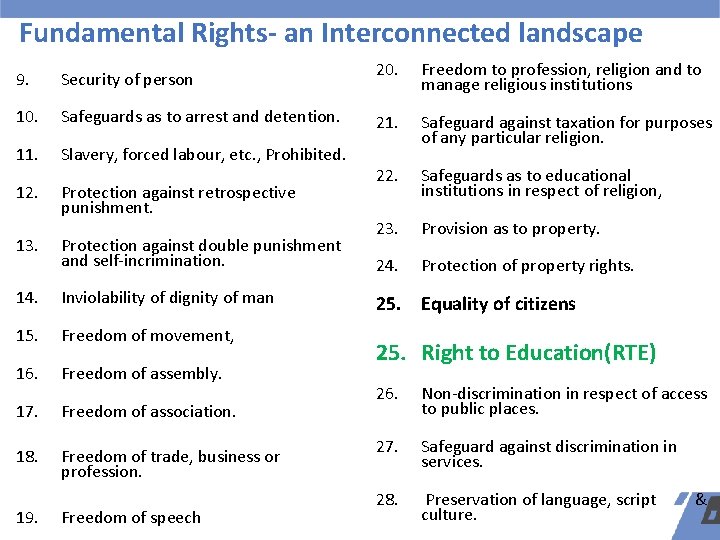
Fundamental Rights- an Interconnected landscape 9. Security of person 10. Safeguards as to arrest and detention. 11. Slavery, forced labour, etc. , Prohibited. 12. Protection against retrospective punishment. 13. Protection against double punishment and self-incrimination. 14. Inviolability of dignity of man 15. Freedom of movement, 16. Freedom of assembly. 17. Freedom of association. 18. Freedom of trade, business or profession. 19. Freedom of speech 20. Freedom to profession, religion and to manage religious institutions 21. Safeguard against taxation for purposes of any particular religion. 22. Safeguards as to educational institutions in respect of religion, 23. Provision as to property. 24. Protection of property rights. 25. Equality of citizens 25. Right to Education(RTE) 26. Non-discrimination in respect of access to public places. 27. Safeguard against discrimination in services. 28. Preservation of language, script culture. &
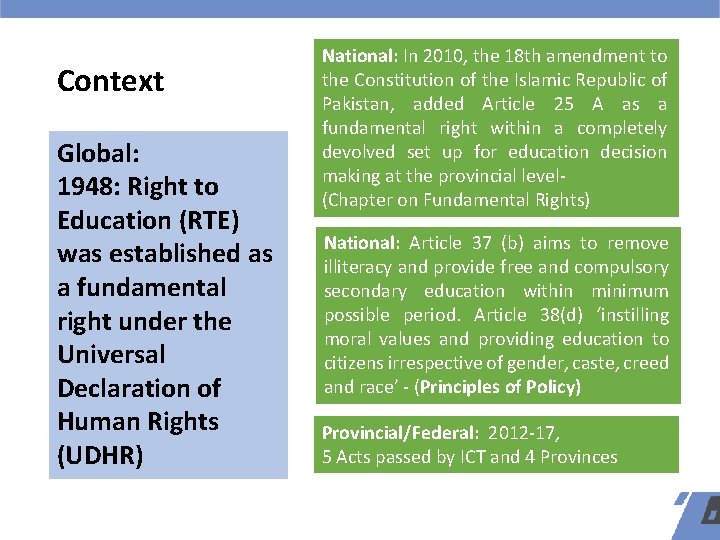
Context Global: 1948: Right to Education (RTE) was established as a fundamental right under the Universal Declaration of Human Rights (UDHR) National: In 2010, the 18 th amendment to the Constitution of the Islamic Republic of Pakistan, added Article 25 A as a fundamental right within a completely devolved set up for education decision making at the provincial level(Chapter on Fundamental Rights) National: Article 37 (b) aims to remove illiteracy and provide free and compulsory secondary education within minimum possible period. Article 38(d) ‘instilling moral values and providing education to citizens irrespective of gender, caste, creed and race’ - (Principles of Policy) Provincial/Federal: 2012 -17, 5 Acts passed by ICT and 4 Provinces
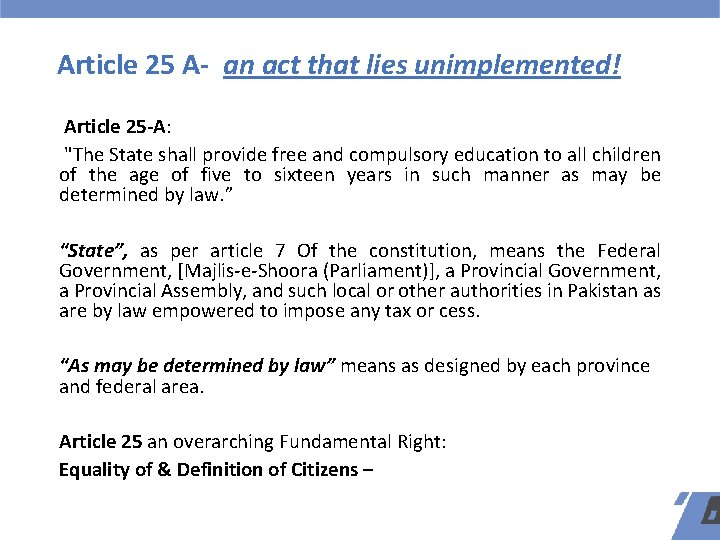
Article 25 A- an act that lies unimplemented! Article 25 -A: "The State shall provide free and compulsory education to all children of the age of five to sixteen years in such manner as may be determined by law. ” “State”, as per article 7 Of the constitution, means the Federal Government, [Majlis-e-Shoora (Parliament)], a Provincial Government, a Provincial Assembly, and such local or other authorities in Pakistan as are by law empowered to impose any tax or cess. “As may be determined by law” means as designed by each province and federal area. Article 25 an overarching Fundamental Right: Equality of & Definition of Citizens –
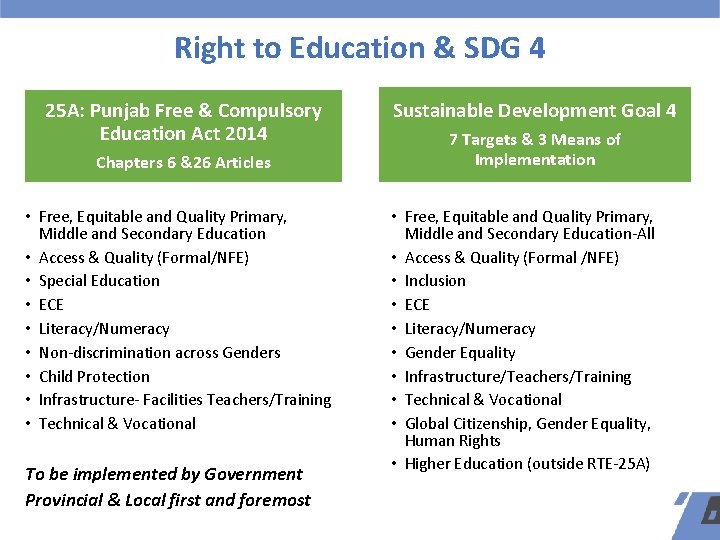
Right to Education & SDG 4 25 A: Punjab Free & Compulsory Education Act 2014 Chapters 6 &26 Articles • Free, Equitable and Quality Primary, Middle and Secondary Education • Access & Quality (Formal/NFE) • Special Education • ECE • Literacy/Numeracy • Non-discrimination across Genders • Child Protection • Infrastructure- Facilities Teachers/Training • Technical & Vocational To be implemented by Government Provincial & Local first and foremost Sustainable Development Goal 4 7 Targets & 3 Means of Implementation • Free, Equitable and Quality Primary, Middle and Secondary Education-All • Access & Quality (Formal /NFE) • Inclusion • ECE • Literacy/Numeracy • Gender Equality • Infrastructure/Teachers/Training • Technical & Vocational • Global Citizenship, Gender Equality, Human Rights • Higher Education (outside RTE-25 A)
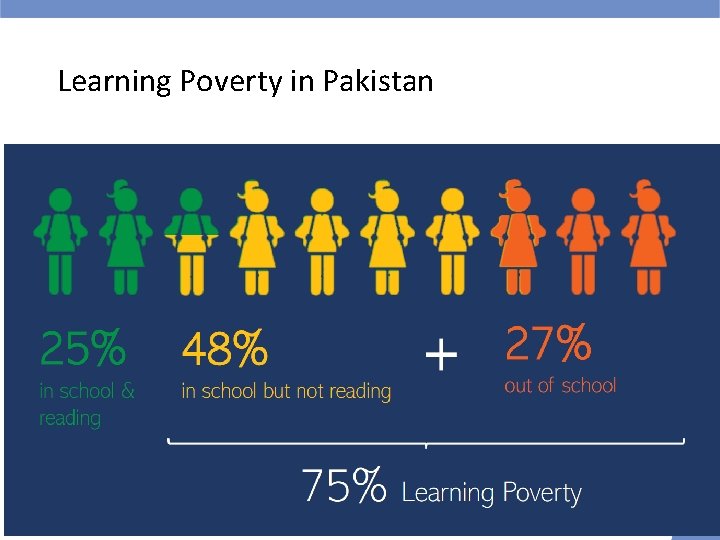
Learning Poverty in Pakistan
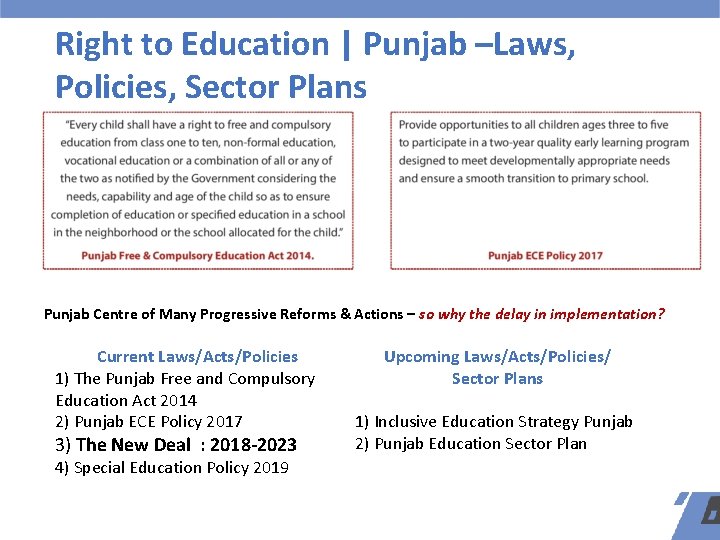
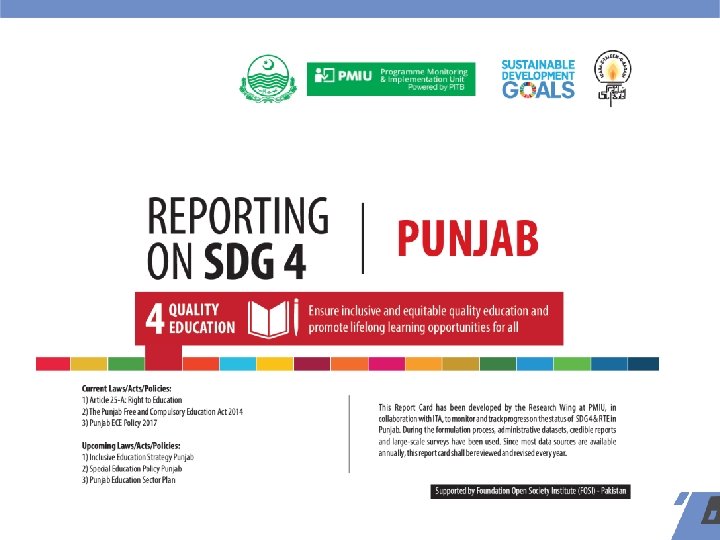
Right to Education | Punjab –Laws, Policies, Sector Plans Punjab Centre of Many Progressive Reforms & Actions – so why the delay in implementation? Current Laws/Acts/Policies 1) The Punjab Free and Compulsory Education Act 2014 2) Punjab ECE Policy 2017 3) The New Deal : 2018 -2023 4) Special Education Policy 2019 Upcoming Laws/Acts/Policies/ Sector Plans 1) Inclusive Education Strategy Punjab 2) Punjab Education Sector Plan
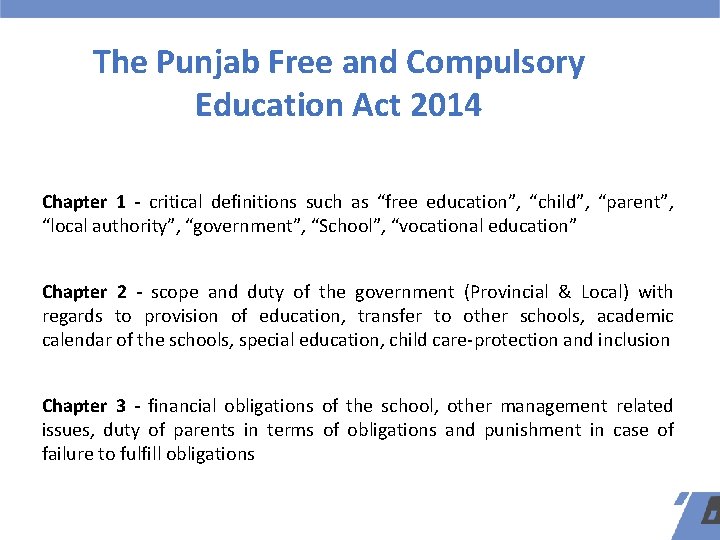
The Punjab Free and Compulsory Education Act 2014 Chapter 1 - critical definitions such as “free education”, “child”, “parent”, “local authority”, “government”, “School”, “vocational education” Chapter 2 - scope and duty of the government (Provincial & Local) with regards to provision of education, transfer to other schools, academic calendar of the schools, special education, child care-protection and inclusion Chapter 3 - financial obligations of the school, other management related issues, duty of parents in terms of obligations and punishment in case of failure to fulfill obligations
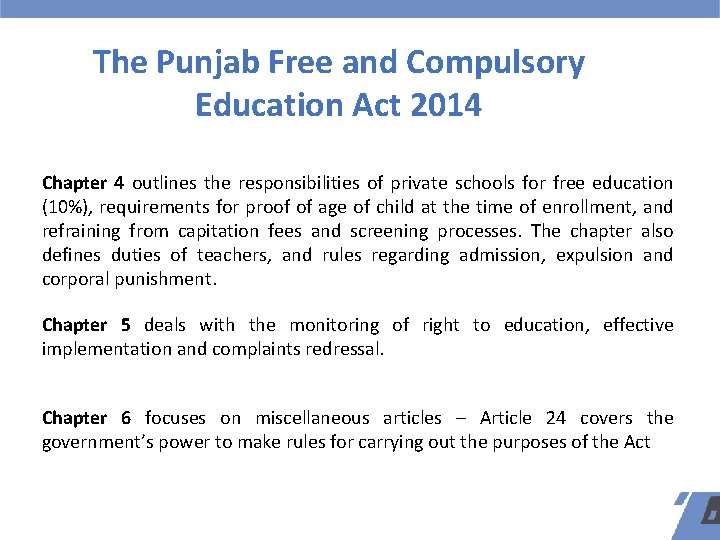
The Punjab Free and Compulsory Education Act 2014 Chapter 4 outlines the responsibilities of private schools for free education (10%), requirements for proof of age of child at the time of enrollment, and refraining from capitation fees and screening processes. The chapter also defines duties of teachers, and rules regarding admission, expulsion and corporal punishment. Chapter 5 deals with the monitoring of right to education, effective implementation and complaints redressal. Chapter 6 focuses on miscellaneous articles – Article 24 covers the government’s power to make rules for carrying out the purposes of the Act
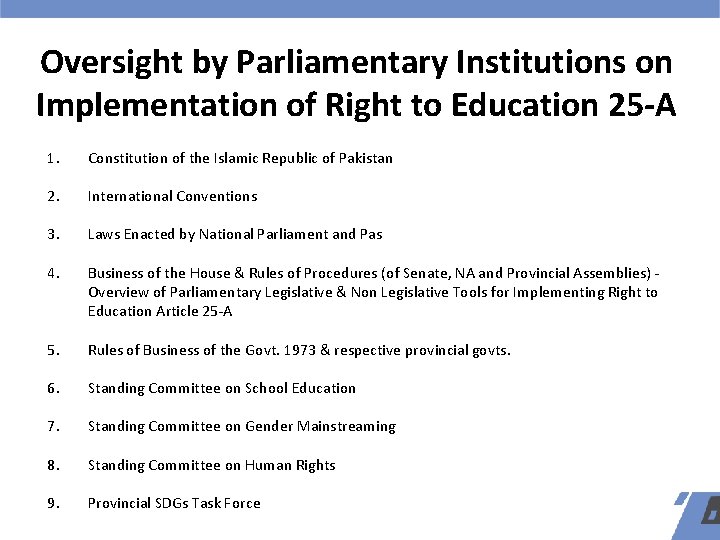
Oversight by Parliamentary Institutions on Implementation of Right to Education 25 -A 1. Constitution of the Islamic Republic of Pakistan 2. International Conventions 3. Laws Enacted by National Parliament and Pas 4. Business of the House & Rules of Procedures (of Senate, NA and Provincial Assemblies) Overview of Parliamentary Legislative & Non Legislative Tools for Implementing Right to Education Article 25 -A 5. Rules of Business of the Govt. 1973 & respective provincial govts. 6. Standing Committee on School Education 7. Standing Committee on Gender Mainstreaming 8. Standing Committee on Human Rights 9. Provincial SDGs Task Force
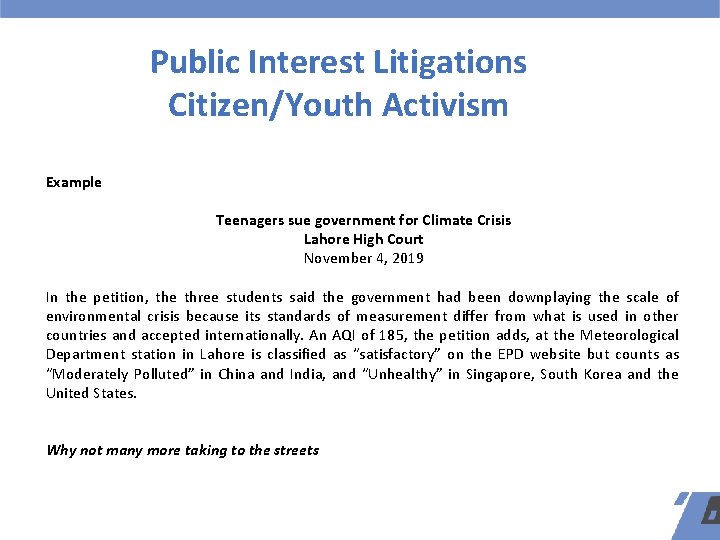
Public Interest Litigations Citizen/Youth Activism Example Teenagers sue government for Climate Crisis Lahore High Court November 4, 2019 In the petition, the three students said the government had been downplaying the scale of environmental crisis because its standards of measurement differ from what is used in other countries and accepted internationally. An AQI of 185, the petition adds, at the Meteorological Department station in Lahore is classified as “satisfactory” on the EPD website but counts as “Moderately Polluted” in China and India, and “Unhealthy” in Singapore, South Korea and the United States. Why not many more taking to the streets
Evidence on RTE and SDG 4 in Punjab
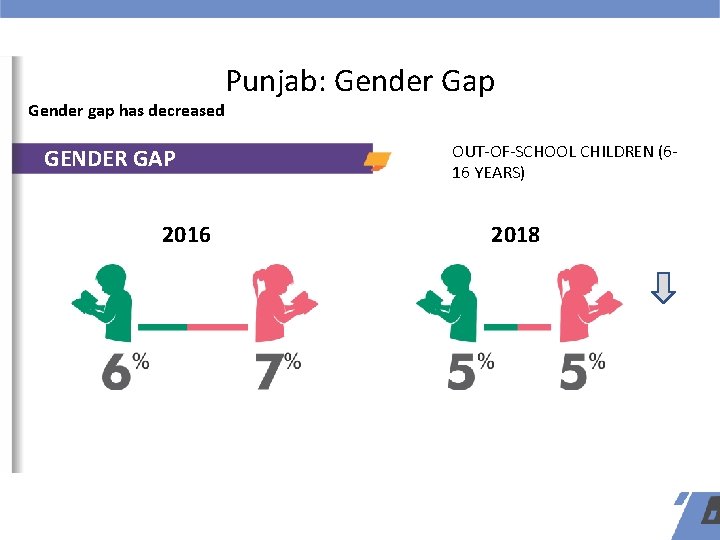
Punjab: Gender Gap Gender gap has decreased GENDER GAP 2016 OUT-OF-SCHOOL CHILDREN (616 YEARS) 2018
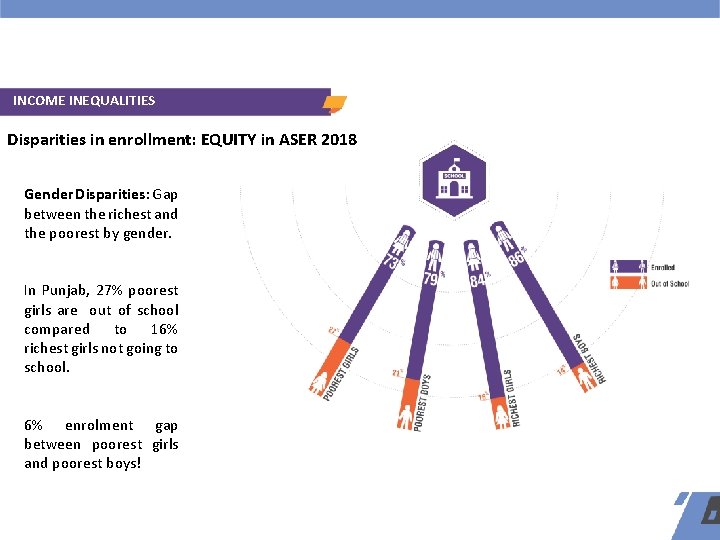
INCOME INEQUALITIES Disparities in enrollment: EQUITY in ASER 2018 Gender Disparities: Gap between the richest and the poorest by gender. In Punjab, 27% poorest girls are out of school compared to 16% richest girls not going to school. 6% enrolment gap between poorest girls and poorest boys!
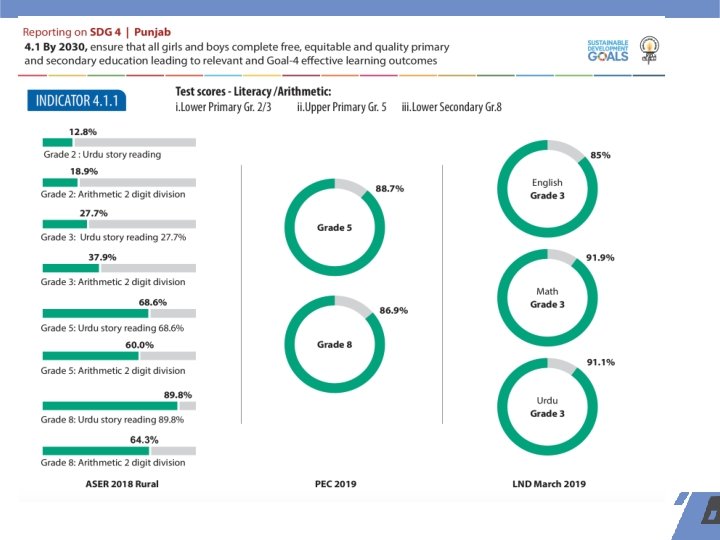
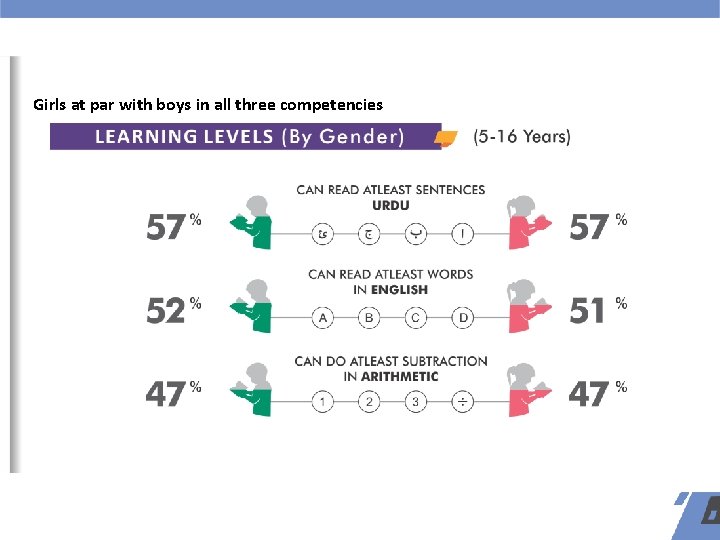
Girls at par with boys in all three competencies
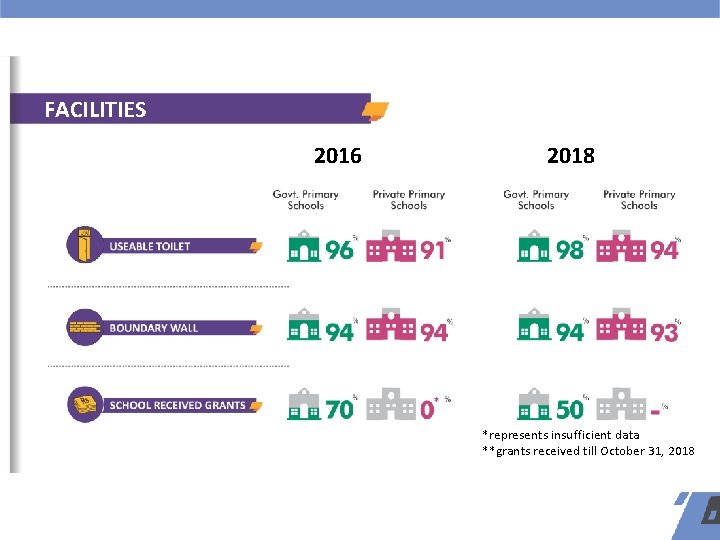
FACILITIES 2016 2018 *represents insufficient data **grants received till October 31, 2018
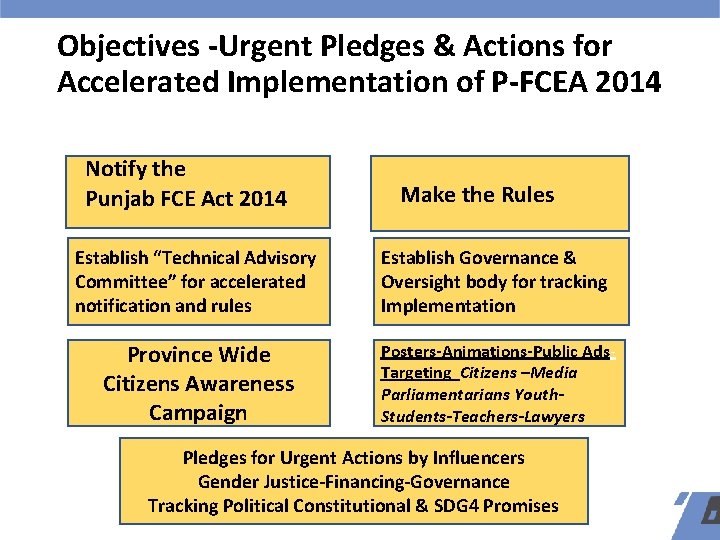
Objectives -Urgent Pledges & Actions for Accelerated Implementation of P-FCEA 2014 Notify the Punjab FCE Act 2014 Make the Rules Establish “Technical Advisory Committee” for accelerated notification and rules Establish Governance & Oversight body for tracking Implementation Province Wide Citizens Awareness Campaign Posters-Animations-Public Ads. Targeting Citizens –Media Parliamentarians Youth. Students-Teachers-Lawyers Pledges for Urgent Actions by Influencers Gender Justice-Financing-Governance Tracking Political Constitutional & SDG 4 Promises
Thank You!