
Constructive plate boundary At a constructive plate boundary
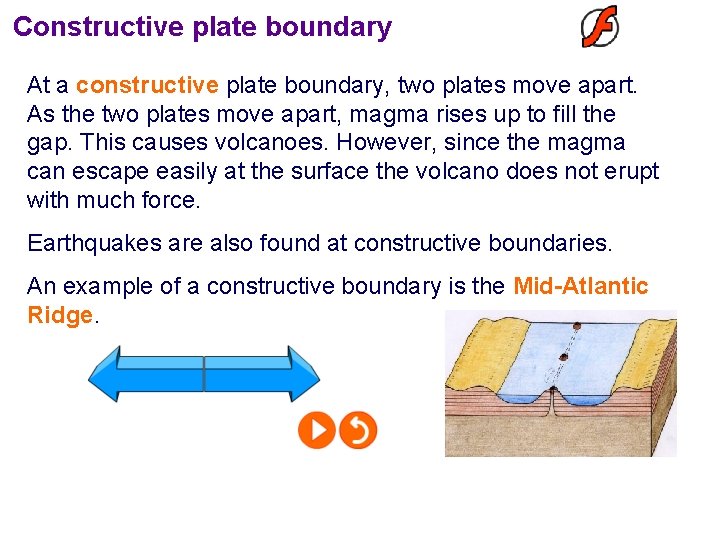
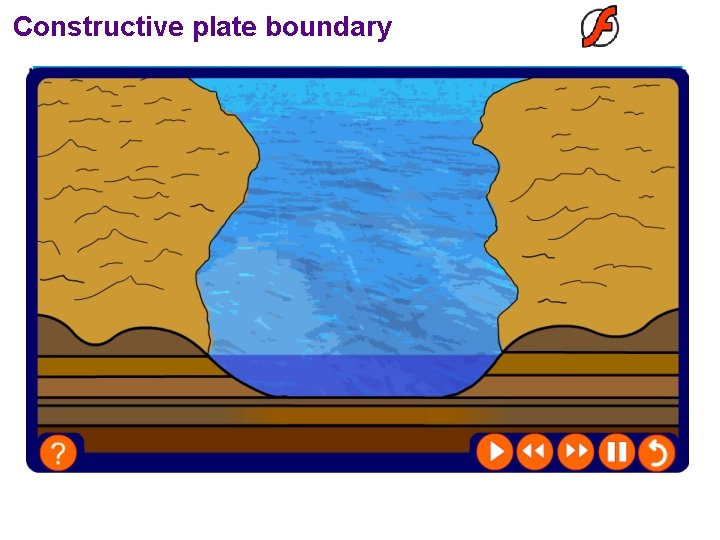
Constructive plate boundary At a constructive plate boundary, two plates move apart. As the two plates move apart, magma rises up to fill the gap. This causes volcanoes. However, since the magma can escape easily at the surface the volcano does not erupt with much force. Earthquakes are also found at constructive boundaries. An example of a constructive boundary is the Mid-Atlantic Ridge.
Constructive plate boundary
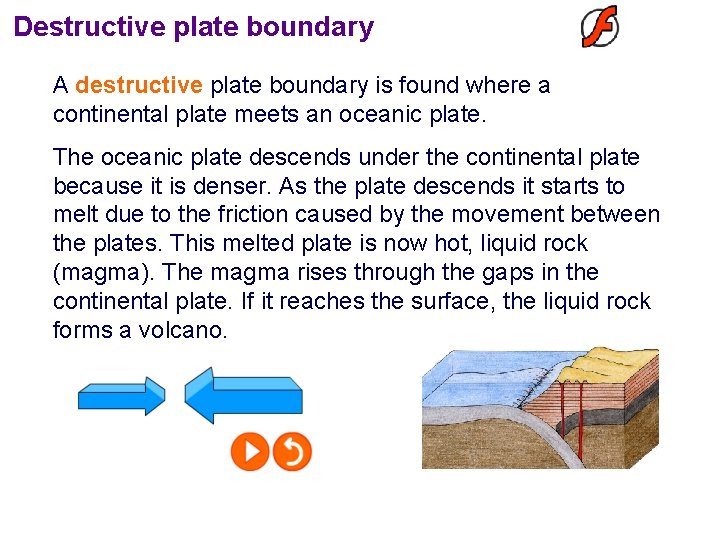
Destructive plate boundary A destructive plate boundary is found where a continental plate meets an oceanic plate. The oceanic plate descends under the continental plate because it is denser. As the plate descends it starts to melt due to the friction caused by the movement between the plates. This melted plate is now hot, liquid rock (magma). The magma rises through the gaps in the continental plate. If it reaches the surface, the liquid rock forms a volcano.
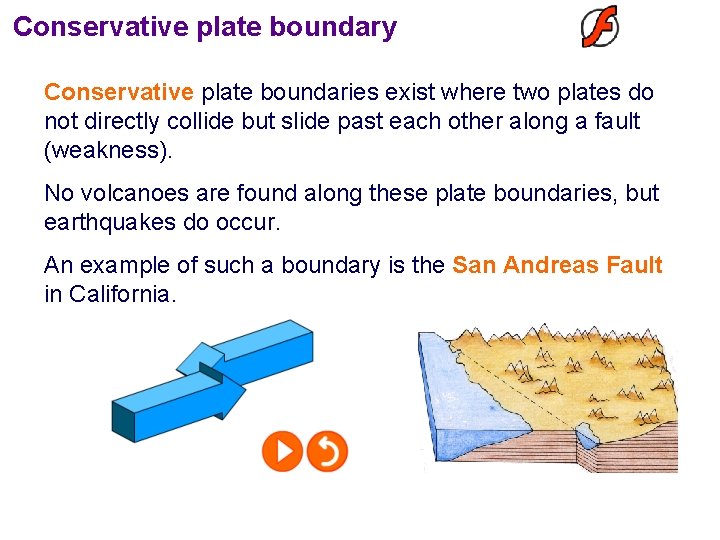
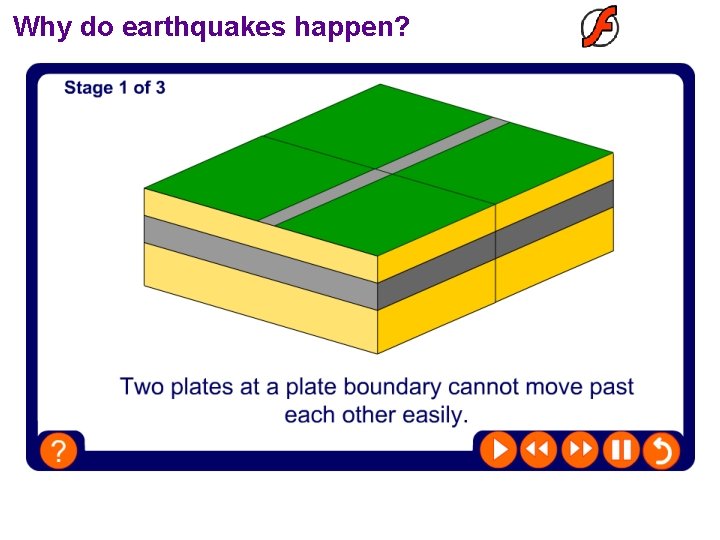
Conservative plate boundary Conservative plate boundaries exist where two plates do not directly collide but slide past each other along a fault (weakness). No volcanoes are found along these plate boundaries, but earthquakes do occur. An example of such a boundary is the San Andreas Fault in California.
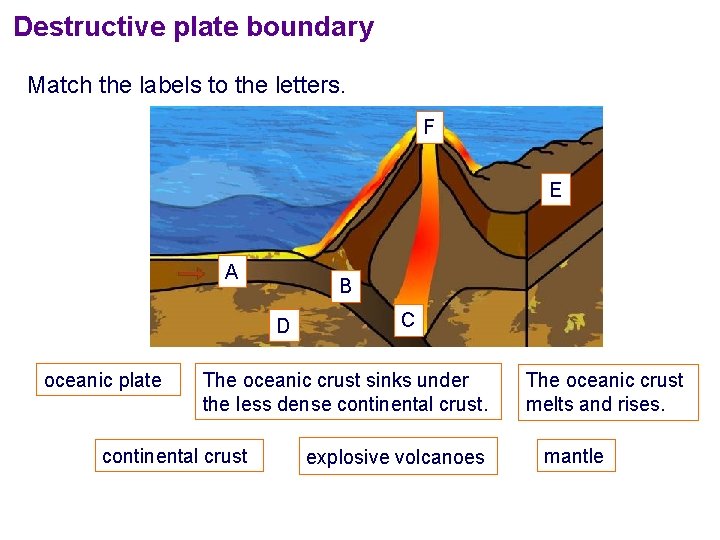
Destructive plate boundary Match the labels to the letters. F E A B D oceanic plate C The oceanic crust sinks under the less dense continental crust explosive volcanoes The oceanic crust melts and rises. mantle
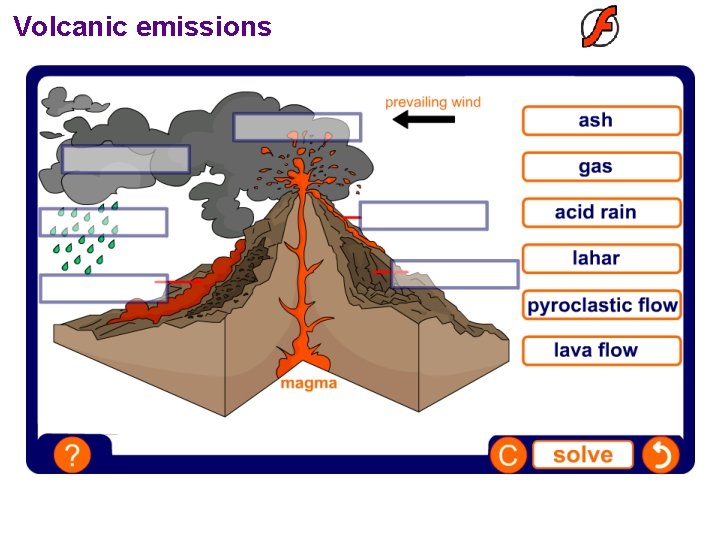
Volcanic emissions
Why do they happen? A destructive plate boundary is found where a continental plate meets an oceanic plate. The oceanic plate descends under the continental plate because it is denser. As the plate descends it starts to melt due to the friction caused by the movement between the plates. This melted plate is now hot, liquid rock (magma). The magma rises through the gaps in the continental plate. If it reaches the surface, the liquid rock forms a volcano.
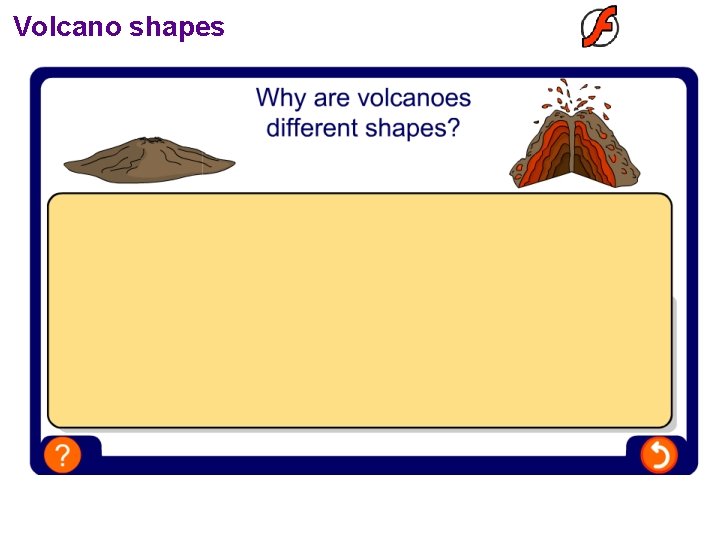
Volcano shapes
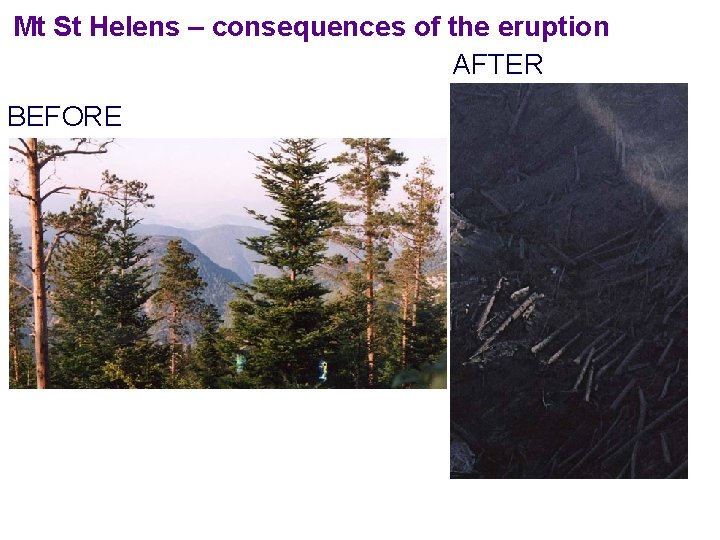
Mt St Helens – consequences of the eruption AFTER BEFORE
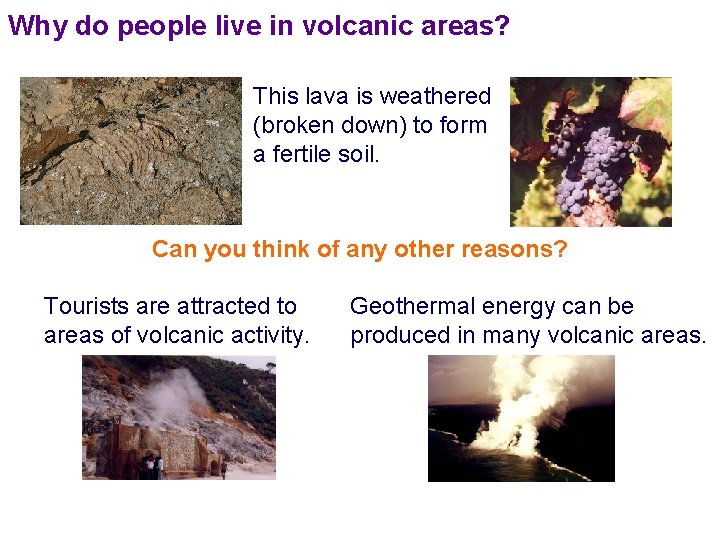
Why do people live in volcanic areas? This lava is weathered (broken down) to form a fertile soil. Can you think of any other reasons? Tourists are attracted to areas of volcanic activity. Geothermal energy can be produced in many volcanic areas.
Internet links Volcano World - a fun and informative web site http: //volcano. und. nodak. edu/ Virtual field visits http: //educeth. ethz. ch/stromboli/ The Michigan Technological University Volcanoes Page http: //www. geo. mtu. edu/volcanoes/ Global Volcanism Program http: //www. volcano. si. edu/gvp/ Fallout: Eye on the Volcano http: //www. nationalgeographic. com/features/98/volcanoes/ Savage earth http: //www. pbs. org/wnet/savageearth/
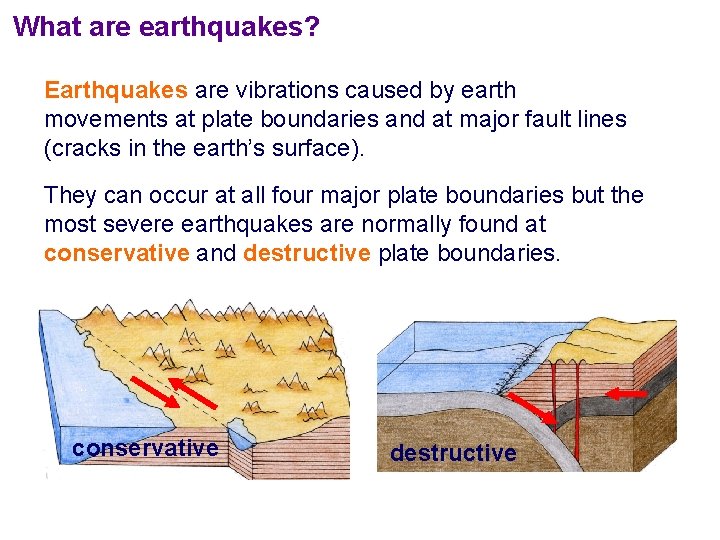
What are earthquakes? Earthquakes are vibrations caused by earth movements at plate boundaries and at major fault lines (cracks in the earth’s surface). They can occur at all four major plate boundaries but the most severe earthquakes are normally found at conservative and destructive plate boundaries. conservative destructive
Why do earthquakes happen?
How can we limit earthquake damage? Plan and protect
- Slides: 14