
CONSTRUCTIVE ALIGNMENT 16 JULY 2019 ROHAYA TALIB SCHOOL

CONSTRUCTIVE ALIGNMENT 16 JULY 2019 ROHAYA TALIB SCHOOL OF EDUCATION UNIVERSITI TEKNOLOGI MALAYSIA JOHOR BAHRU BBA (ACCOUNTING) M. ED (MEASUREMENT & EVALUATION) Ph. D (MEASUREMENT & EVALUATION)
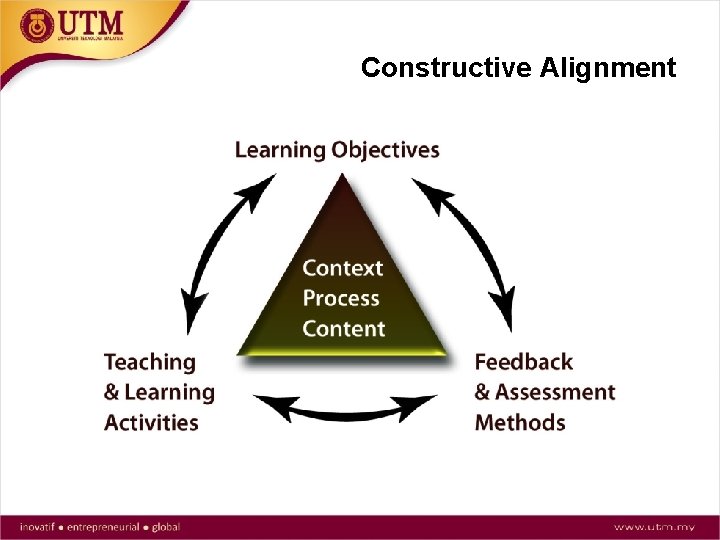
Constructive Alignment
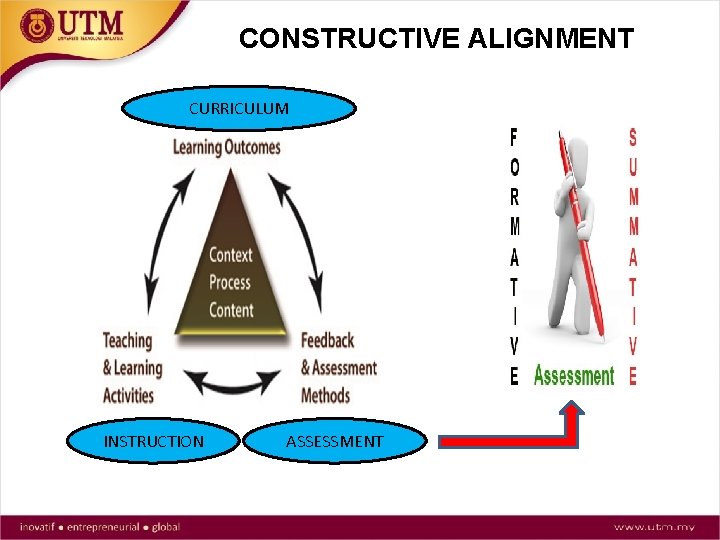
CONSTRUCTIVE ALIGNMENT CURRICULUM INSTRUCTION ASSESSMENT
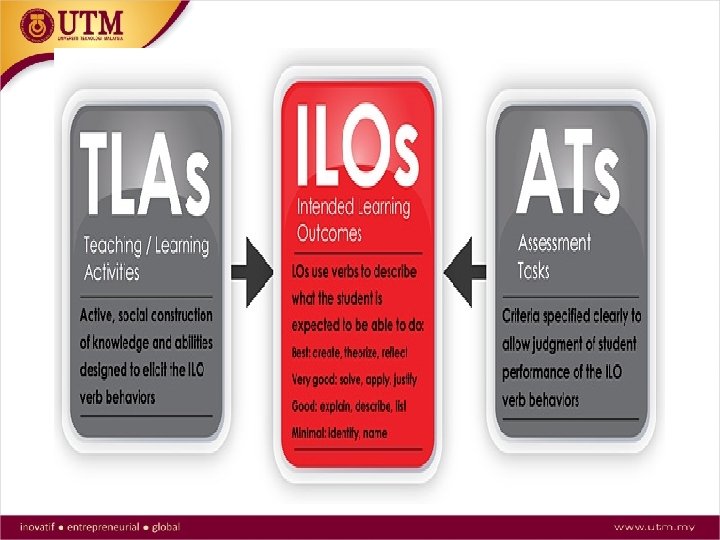
Constructive Alignment • CA was devised by John B. Biggs (2003, 1999) and represents a marriage between a constructivist understanding of the nature of learning, and an aligned design for outcomes-based teaching education. • the underpinning concept behind the current requirements for programme specification, declarations of Learning Outcomes (LOs) and assessment criteria, and the use of criterion based assessment.
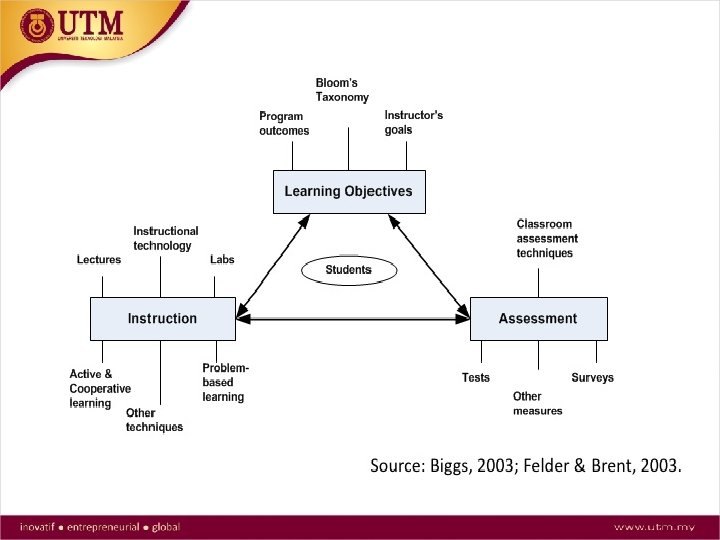
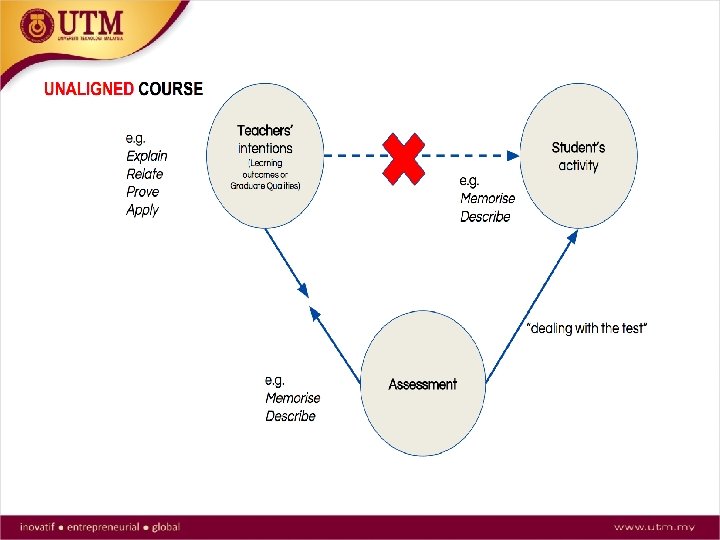
Biggs’s Model of CA • The main theoretical underpinning of the outcomesbased curriculum is provided by Biggs (2003). He calls the model CONSTRUCTIVE ALIGNMENT which he defines as: • …coherence between assessment, teaching strategies and intended learning outcomes in an educational programme. (Mc. Mahon & Thakore 2006)

Constructive Alignment
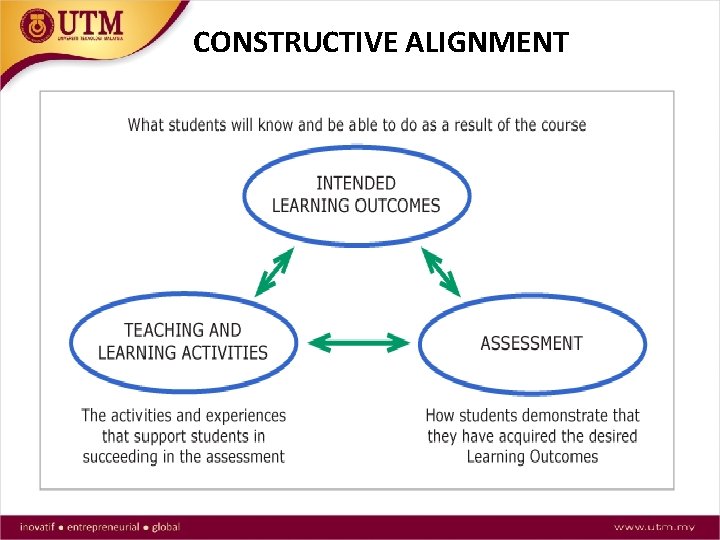
CONSTRUCTIVE ALIGNMENT
Constructive Alignment • There are two basic concepts behind constructive alignment: ❶ • Learners construct meaning from what they do to learn. This concept derives from cognitive psychology and constructivist theory, and recognizes the importance of linking new material to concepts and experiences in the learner's memory, and extrapolation to possible future scenarios via the abstraction of basic principles through reflection.
Constructive Alignment ❷ The teacher makes a deliberate alignment between the planned learning activities and the learning outcomes. This is a conscious effort to provide the learner with a clearly specified goal, a well designed learning activity or activities that are appropriate for the task, and well designed assessment criteria for giving feedback to the learner.

IN THE COURSE OUTLINE
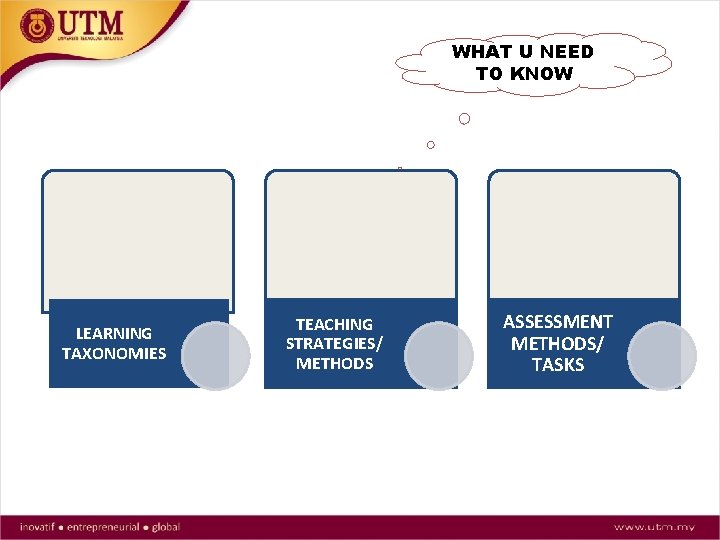
WHAT U NEED TO KNOW LEARNING TAXONOMIES TEACHING STRATEGIES/ METHODS ASSESSMENT METHODS/ TASKS
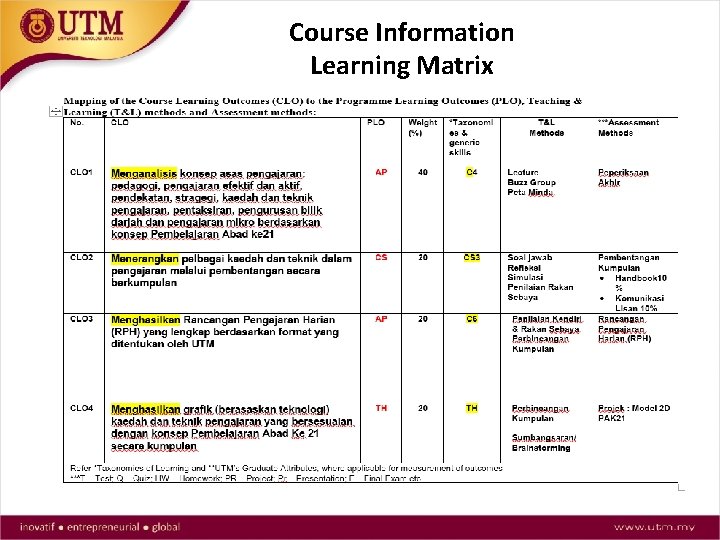
Course Information Learning Matrix
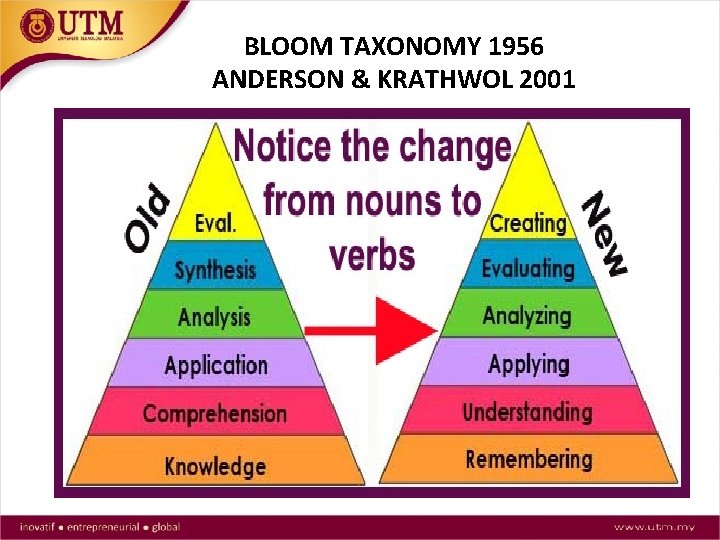
BLOOM TAXONOMY 1956 ANDERSON & KRATHWOL 2001

Relating the Constructive Alignment Model to Learning Taxonomies Bloom’s Taxonomy (As revised by Anderson et al 2001) Biggs’ Proposed Levels of Attainment Synthesis / Creation design, organise, formulate, propose. Evaluation judge, appraise, evaluate, compare, assess. HOTS Analysis distinguish, analyse, calculate, test, inspect. Application apply, use, demonstrate, illustrate, practice. Comprehension explain, describe, discuss, recognise. Knowledge define, list, name, recall, record LOTS A: The very best understanding B: Highly Satisfactory C: Quite Satisfactory D: Just a Pass E: Fail
![KRATHWOLL TAXONOMY [AFFECTIVE]](http://slidetodoc.com/presentation_image_h/2e933cb67de6a4c4369a17530a5285bd/image-18.jpg "KRATHWOLL TAXONOMY [AFFECTIVE]")
KRATHWOLL TAXONOMY [AFFECTIVE]
![SIMPSON TAXONOMY [PSYCHOMOTOR] The psychomotor domain (Simpson, 1972) includes physical movement, coordination, and use](http://slidetodoc.com/presentation_image_h/2e933cb67de6a4c4369a17530a5285bd/image-19.jpg "SIMPSON TAXONOMY [PSYCHOMOTOR] The psychomotor domain (Simpson, 1972) includes physical movement, coordination, and use")
SIMPSON TAXONOMY [PSYCHOMOTOR] The psychomotor domain (Simpson, 1972) includes physical movement, coordination, and use of the motor-skill areas. Development of these skills requires practice and is measured in terms of speed, precision, distance, procedures, or techniques in execution.

SOFT SKILLS/GENERIC SKILLS/GRADUATE ATTRIBUTS CS AD TH GC SC ES TW
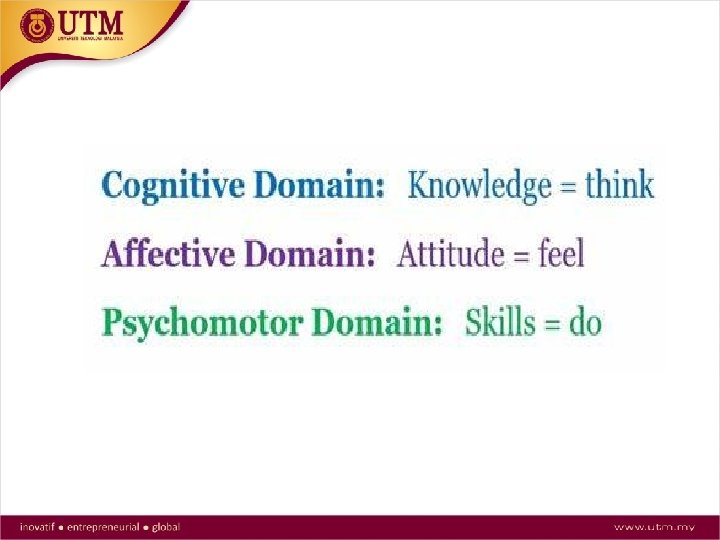

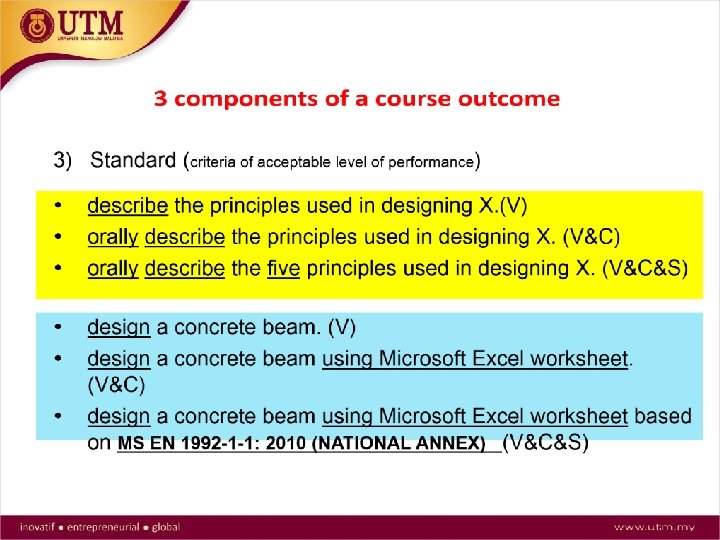
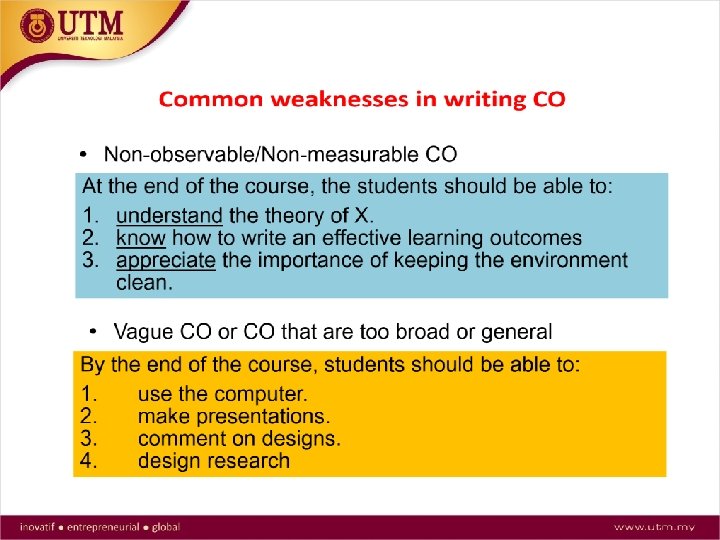
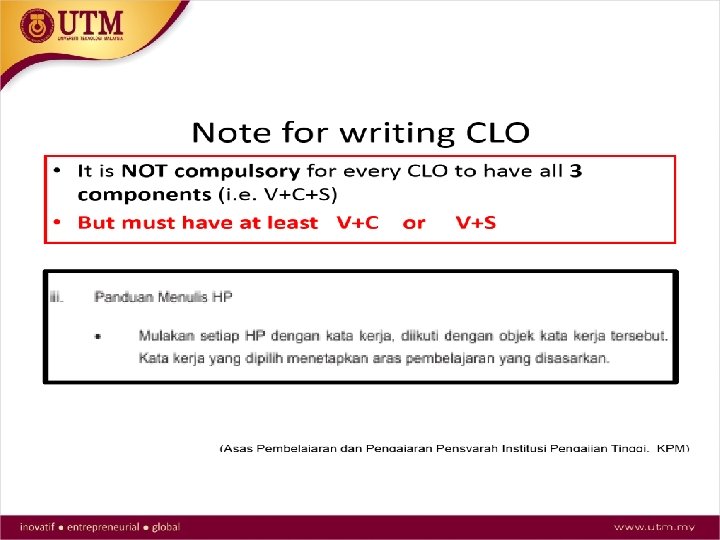
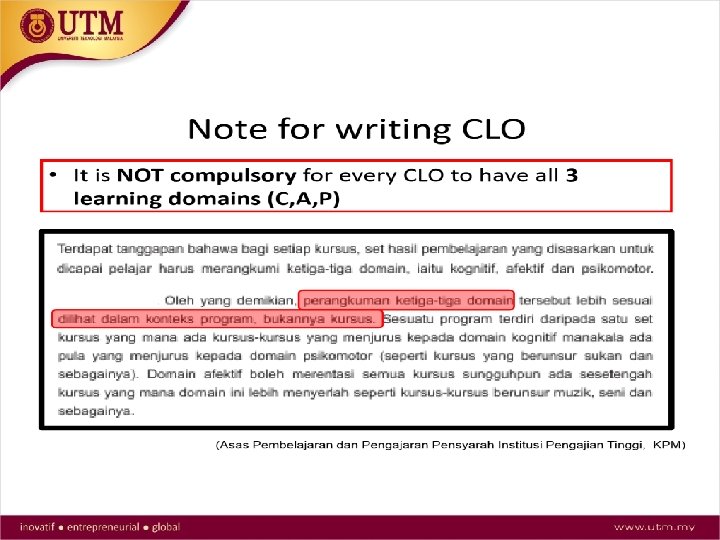
GUIDELINES FOR WRITING COURSE LEARNING OUTCOMES


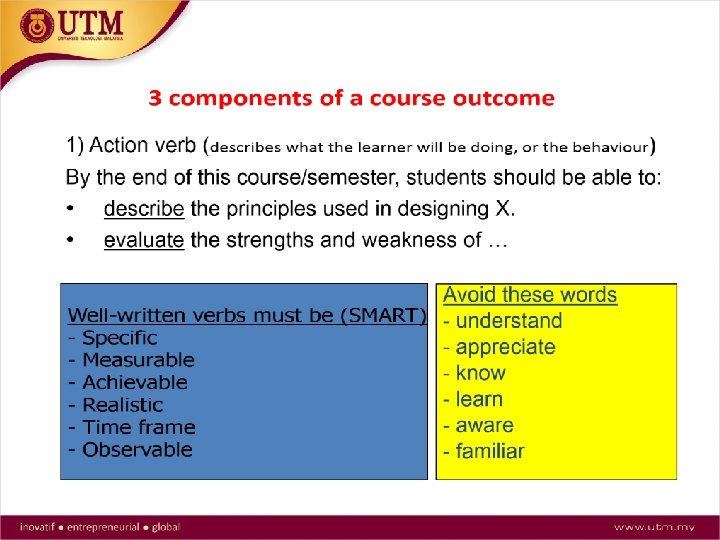
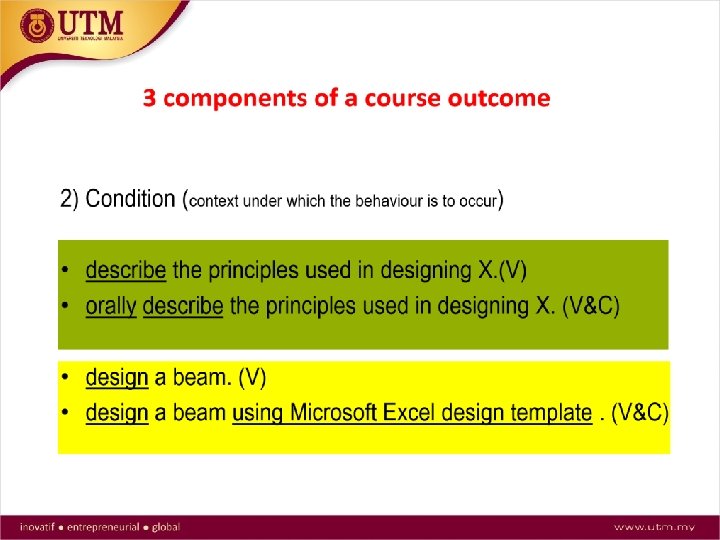


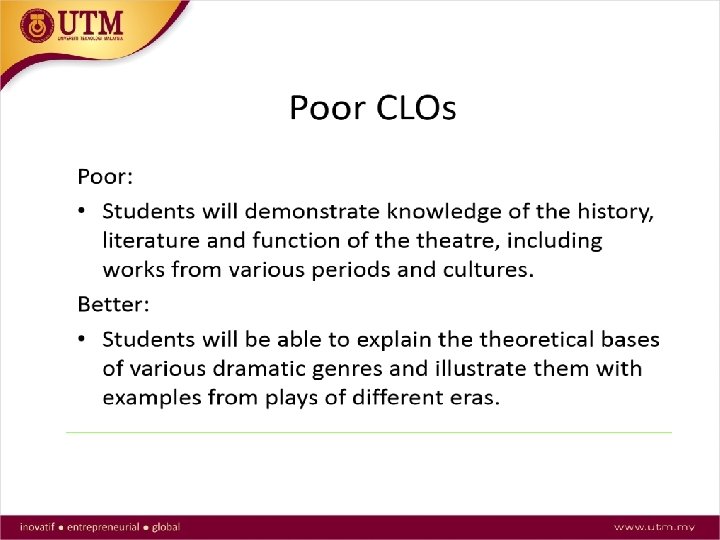

TL ACTIVITIES BRAINSTORMING THINK PAIR SHARE ROUND ROBIN
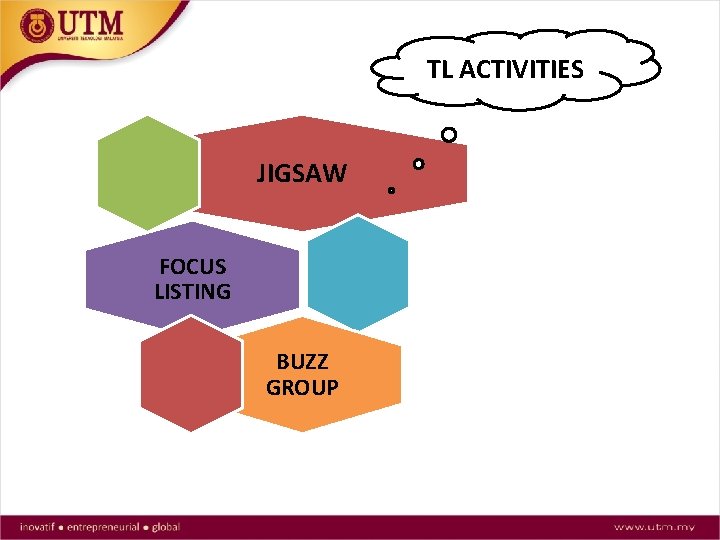
TL ACTIVITIES JIGSAW FOCUS LISTING BUZZ GROUP
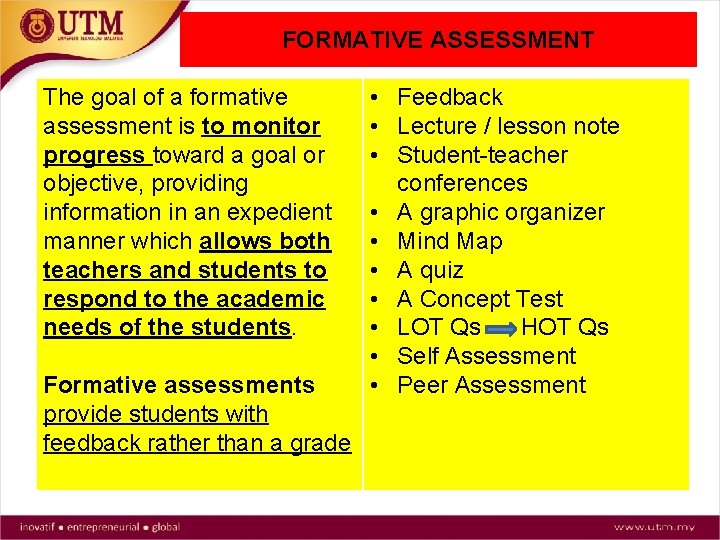
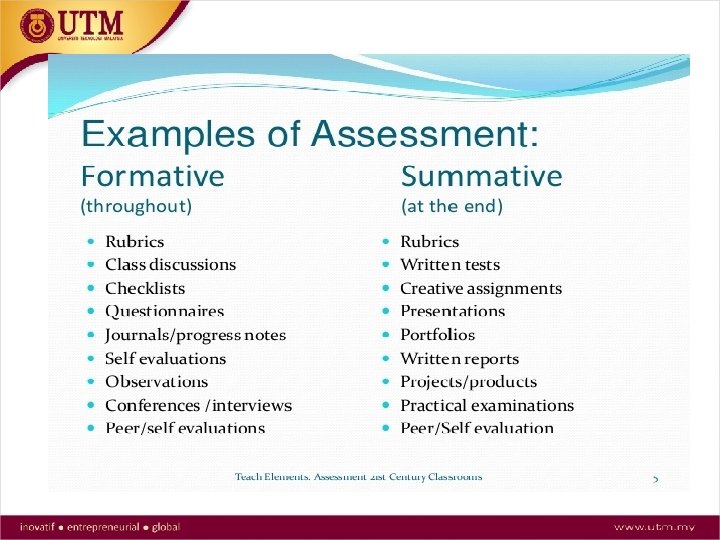
FORMATIVE ASSESSMENT The goal of a formative assessment is to monitor progress toward a goal or objective, providing information in an expedient manner which allows both teachers and students to respond to the academic needs of the students. Formative assessments provide students with feedback rather than a grade • Feedback • Lecture / lesson note • Student-teacher conferences • A graphic organizer • Mind Map • A quiz • A Concept Test • LOT Qs HOT Qs • Self Assessment • Peer Assessment
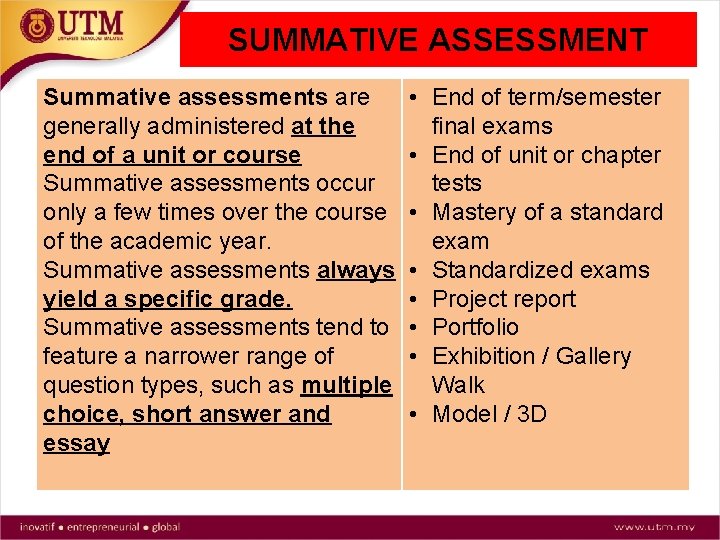
SUMMATIVE ASSESSMENT Summative assessments are generally administered at the end of a unit or course Summative assessments occur only a few times over the course of the academic year. Summative assessments always yield a specific grade. Summative assessments tend to feature a narrower range of question types, such as multiple choice, short answer and essay • End of term/semester final exams • End of unit or chapter tests • Mastery of a standard exam • Standardized exams • Project report • Portfolio • Exhibition / Gallery Walk • Model / 3 D
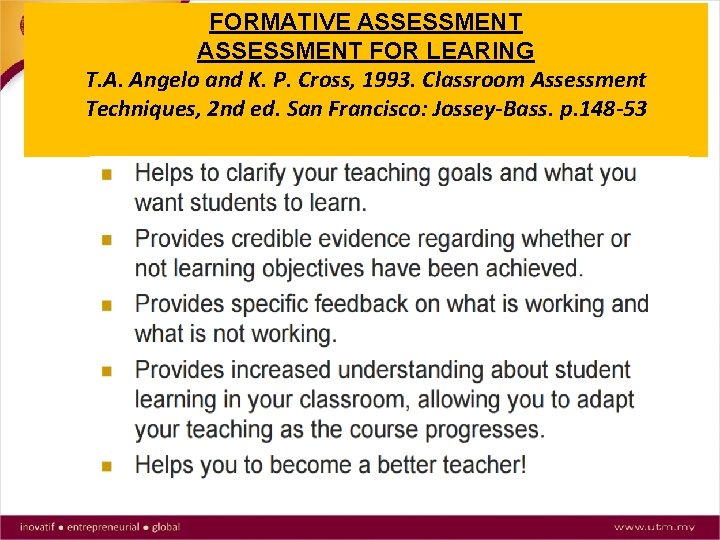
FORMATIVE ASSESSMENT FOR LEARING T. A. Angelo and K. P. Cross, 1993. Classroom Assessment Techniques, 2 nd ed. San Francisco: Jossey-Bass. p. 148 -53
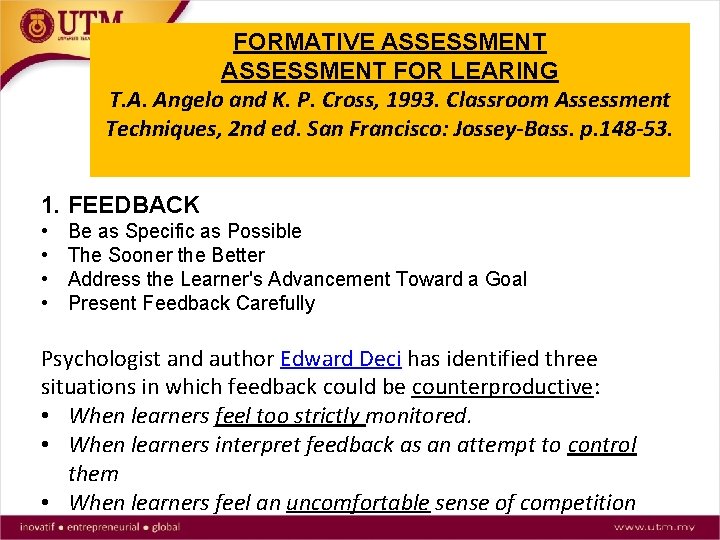
FORMATIVE ASSESSMENT FOR LEARING T. A. Angelo and K. P. Cross, 1993. Classroom Assessment Techniques, 2 nd ed. San Francisco: Jossey-Bass. p. 148 -53. 1. FEEDBACK • • Be as Specific as Possible The Sooner the Better Address the Learner's Advancement Toward a Goal Present Feedback Carefully Psychologist and author Edward Deci has identified three situations in which feedback could be counterproductive: • When learners feel too strictly monitored. • When learners interpret feedback as an attempt to control them • When learners feel an uncomfortable sense of competition
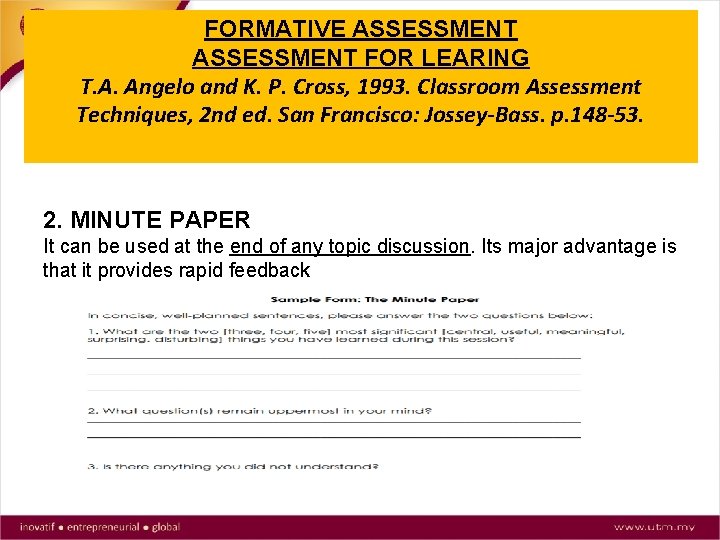
FORMATIVE ASSESSMENT FOR LEARING T. A. Angelo and K. P. Cross, 1993. Classroom Assessment Techniques, 2 nd ed. San Francisco: Jossey-Bass. p. 148 -53. 2. MINUTE PAPER It can be used at the end of any topic discussion. Its major advantage is that it provides rapid feedback
FORMATIVE ASSESSMENT FOR LEARING T. A. Angelo and K. P. Cross, 1993. Classroom Assessment Techniques, 2 nd ed. San Francisco: Jossey-Bass. p. 148 -53. 3. CONCEPT TEST • Ask a multiple-choice question about a course-related concept, with distractors (incorrect responses) that reflect common student misconceptions. • Have the students respond using personal response systems (“clickers”) and display a histogram of the responses. (Applications available online enable students to use their smartphones as clickers: for example, see https: //www. polleverywhere. com). • Then have the students get into pairs and try to reconcile their responses and vote again.
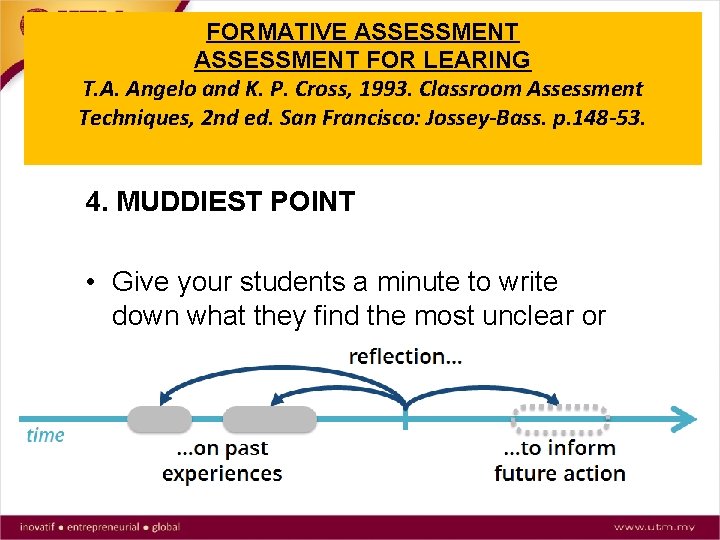
FORMATIVE ASSESSMENT FOR LEARING T. A. Angelo and K. P. Cross, 1993. Classroom Assessment Techniques, 2 nd ed. San Francisco: Jossey-Bass. p. 148 -53. 4. MUDDIEST POINT • Give your students a minute to write down what they find the most unclear or confusing—the “muddiest point. ”
FORMATIVE ASSESSMENT FOR LEARING T. A. Angelo and K. P. Cross, 1993. Classroom Assessment Techniques, 2 nd ed. San Francisco: Jossey-Bass. p. 148 -53. 6. ONE SENTENCE SUMMARY • Learners view a videotape clip from a movie xxx • In a sentence - describe what you discover from movie XXX
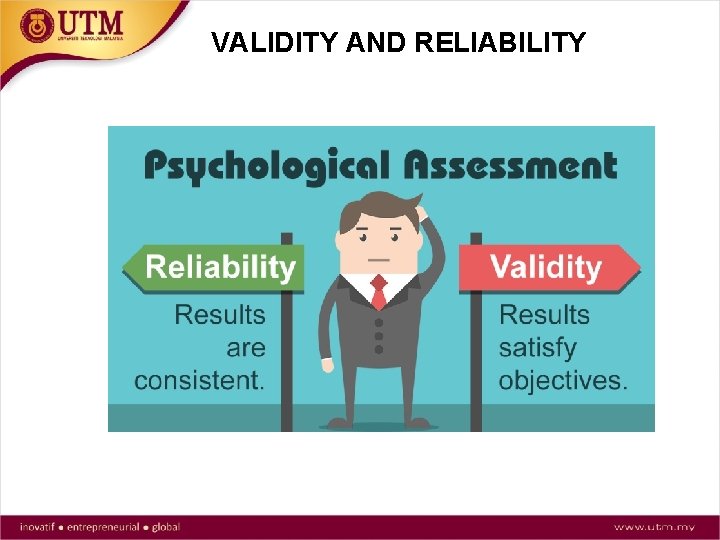
VALIDITY AND RELIABILITY
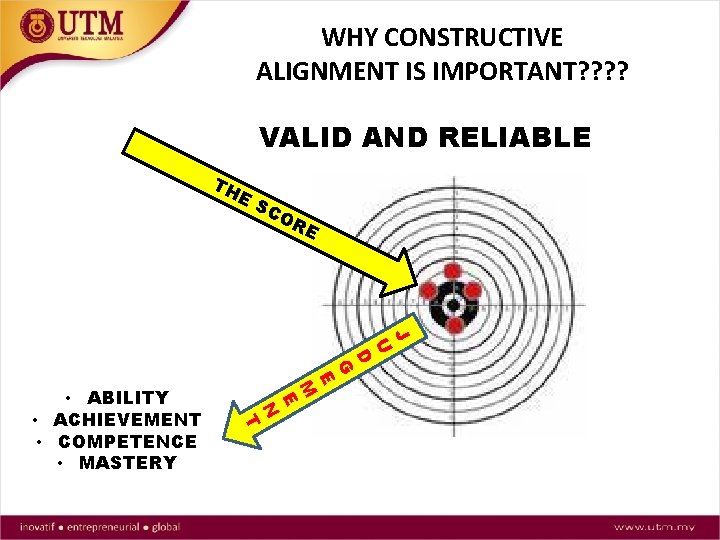
WHY CONSTRUCTIVE ALIGNMENT IS IMPORTANT? ? VALID AND RELIABLE TH ES RE J U D G E M E N T • ABILITY • ACHIEVEMENT • COMPETENCE • MASTERY CO

- Slides: 47