
Construction Plan Review Construction plans will require approval


- Slides: 26
Construction Plan Review Construction plans will require approval by the local regulatory authority. Benefits of a regulatory review: l l l 11 -2 Ensures design meets regulatory requirements Ensures safe flow of food May save time and money Ensures contractors are constructing the facility correctly Ensures approved equipment is being used
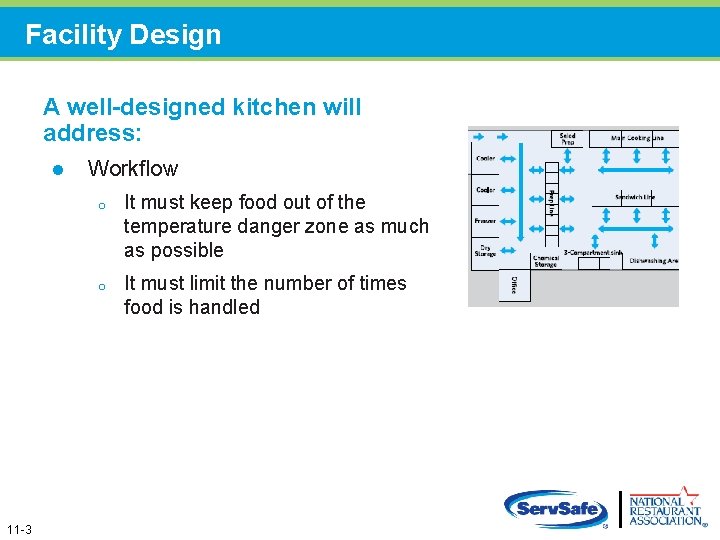
Facility Design A well-designed kitchen will address: l 11 -3 Workflow o It must keep food out of the temperature danger zone as much as possible o It must limit the number of times food is handled
Facility Design A well-designed kitchen will address: l l Contamination o The risk of cross-contamination must be minimized o Place equipment to prevent splashing or spillage from one piece of equipment to another Equipment accessibility o 11 -4 Place equipment so staff can easily clean the facility and all equipment
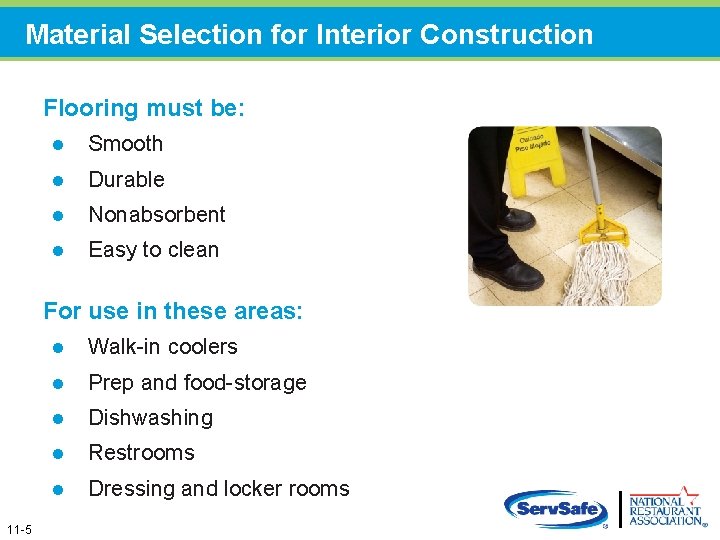
Material Selection for Interior Construction Flooring must be: l Smooth l Durable l Nonabsorbent l Easy to clean For use in these areas: 11 -5 l Walk-in coolers l Prep and food-storage l Dishwashing l Restrooms l Dressing and locker rooms
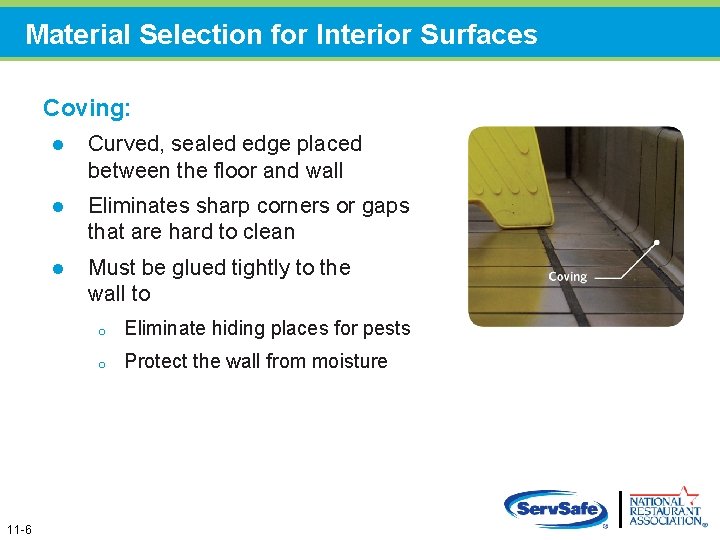
Material Selection for Interior Surfaces Coving: 11 -6 l Curved, sealed edge placed between the floor and wall l Eliminates sharp corners or gaps that are hard to clean l Must be glued tightly to the wall to o Eliminate hiding places for pests o Protect the wall from moisture
Interior Walls and Ceilings Materials must be: 11 -7 l Smooth l Nonabsorbent l Durable l Easy to clean
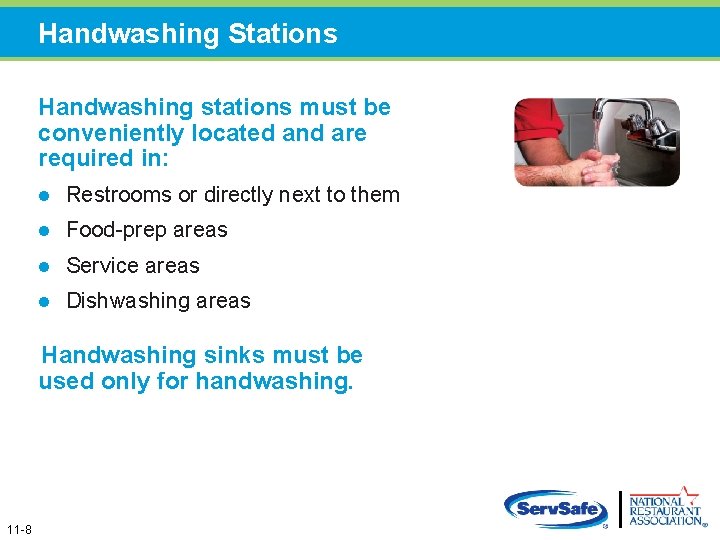
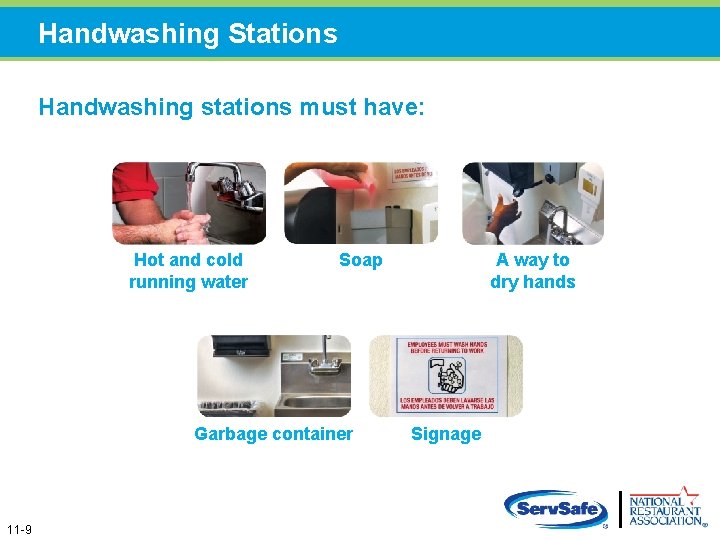
Handwashing Stations Handwashing stations must be conveniently located and are required in: l Restrooms or directly next to them l Food-prep areas l Service areas l Dishwashing areas Handwashing sinks must be used only for handwashing. 11 -8
Handwashing Stations Handwashing stations must have: Hot and cold running water Soap Garbage container 11 -9 A way to dry hands Signage
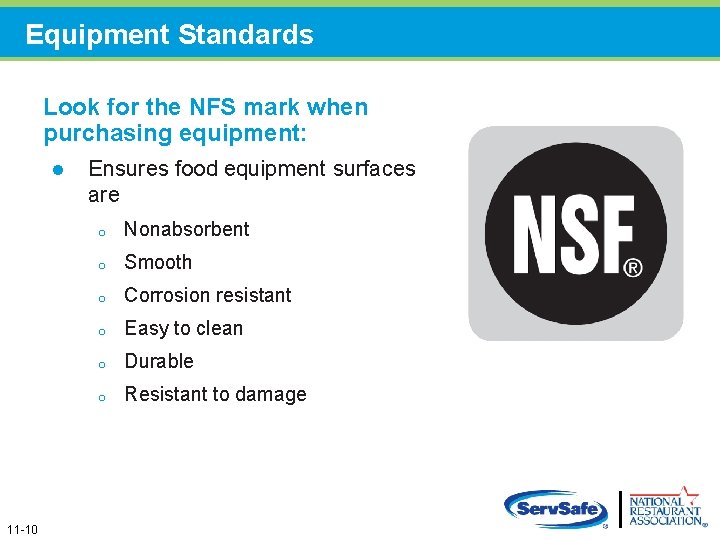
Equipment Standards Look for the NFS mark when purchasing equipment: l 11 -10 Ensures food equipment surfaces are o Nonabsorbent o Smooth o Corrosion resistant o Easy to clean o Durable o Resistant to damage
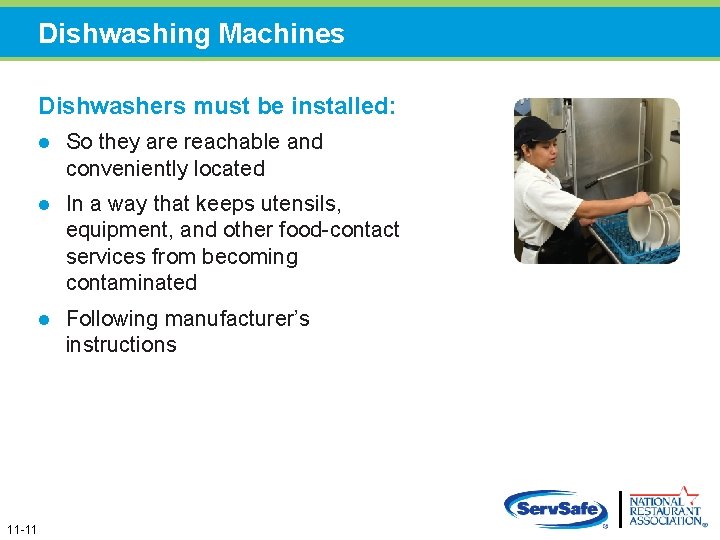
Dishwashing Machines Dishwashers must be installed: 11 -11 l So they are reachable and conveniently located l In a way that keeps utensils, equipment, and other food-contact services from becoming contaminated l Following manufacturer’s instructions
Dishwashing Machines When selecting dishwashers make sure: 11 -12 l The detergents and sanitizers used are approved by the local regulatory authority l They have the ability to measure water temperature, water pressure, and cleaning and sanitizing chemical concentration l Information about the correct settings is posted on the machine
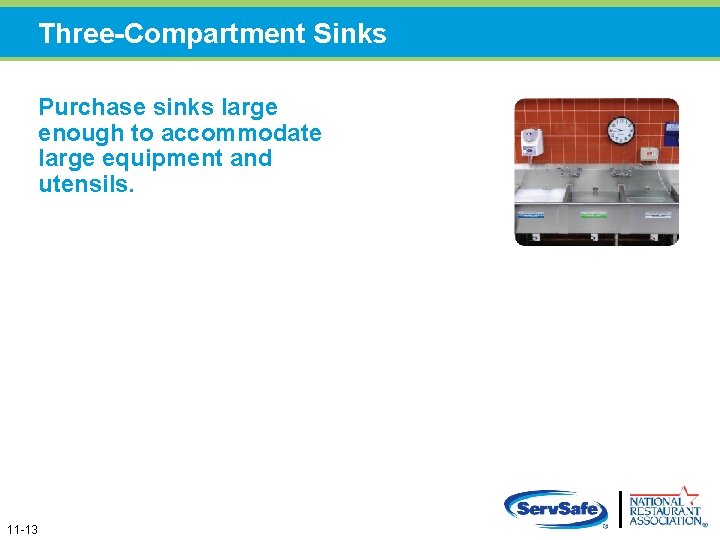
Three-Compartment Sinks Purchase sinks large enough to accommodate large equipment and utensils. 11 -13
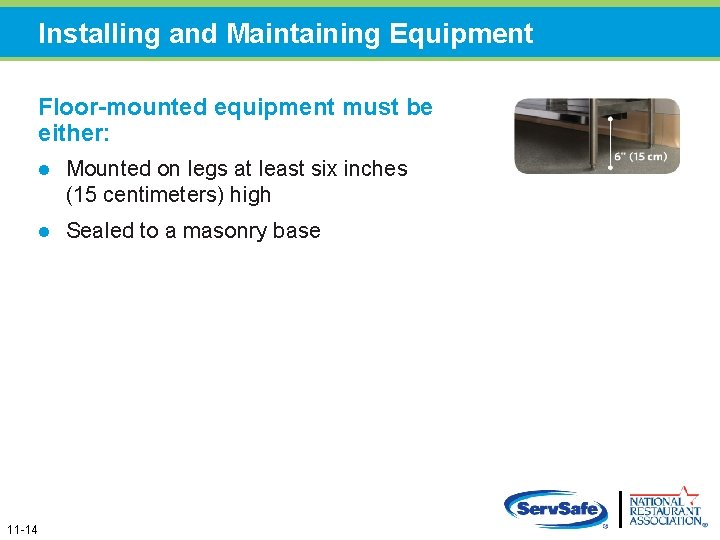
Installing and Maintaining Equipment Floor-mounted equipment must be either: 11 -14 l Mounted on legs at least six inches (15 centimeters) high l Sealed to a masonry base
Installing and Maintaining Equipment Tabletop equipment should be either: l l 11 -15 Mounted on legs at least four inches (10 centimeters) high Sealed to the countertop
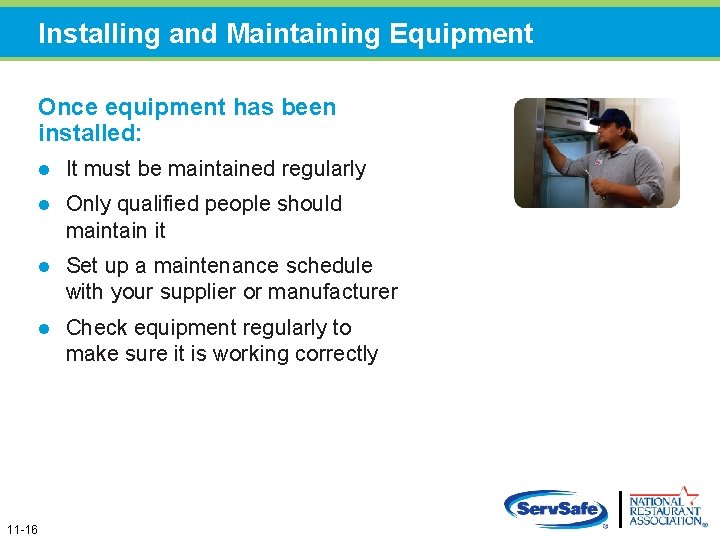
Installing and Maintaining Equipment Once equipment has been installed: 11 -16 l It must be maintained regularly l Only qualified people should maintain it l Set up a maintenance schedule with your supplier or manufacturer l Check equipment regularly to make sure it is working correctly
Water Supply Acceptable sources of drinkable water: 11 -17 l Approved public water mains l Regularly tested and maintained private sources l Closed, portable water containers l Water transport vehicles
Plumbing Cross-connection: l 11 -18 Physical link between safe water and dirty water from o Drains o Sewers o Other wastewater sources
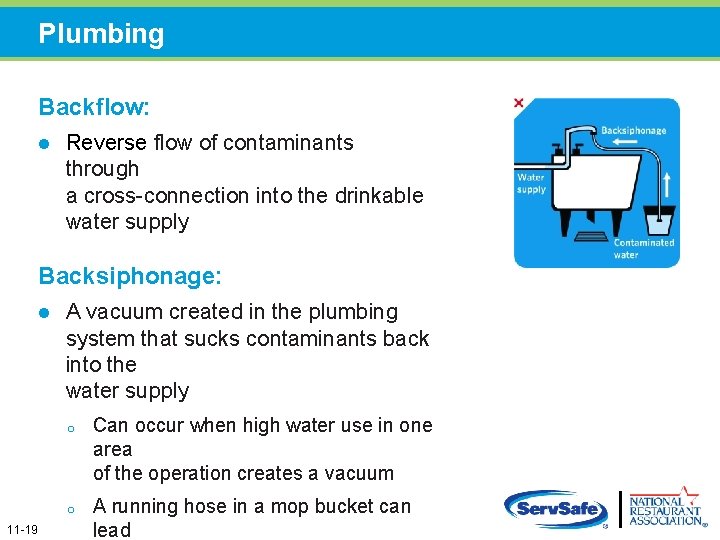
Plumbing Backflow: l Reverse flow of contaminants through a cross-connection into the drinkable water supply Backsiphonage: l 11 -19 A vacuum created in the plumbing system that sucks contaminants back into the water supply o Can occur when high water use in one area of the operation creates a vacuum o A running hose in a mop bucket can lead
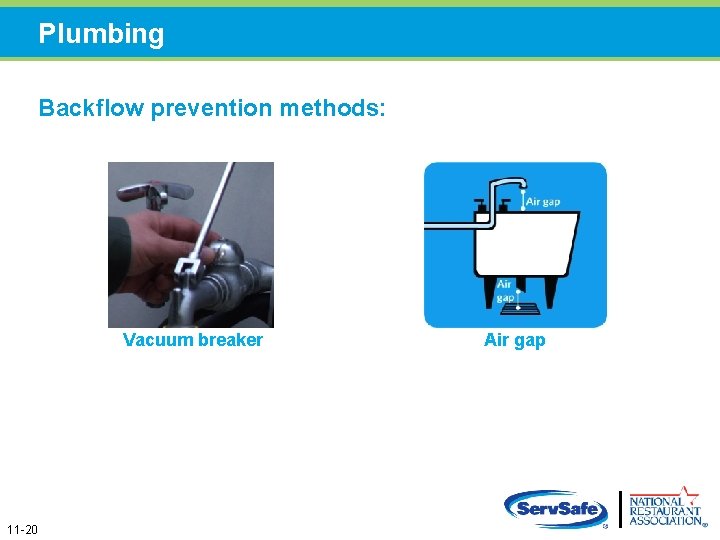
Plumbing Backflow prevention methods: Vacuum breaker 11 -20 Air gap
Sewage If there is a backup of sewage in the operation: l The affected area should be closed right away l The problem must be corrected l The area must be thoroughly cleaned If the backup is a significant risk to food safety: 11 -21 l Service must be stopped l The local regulatory authority must be notified
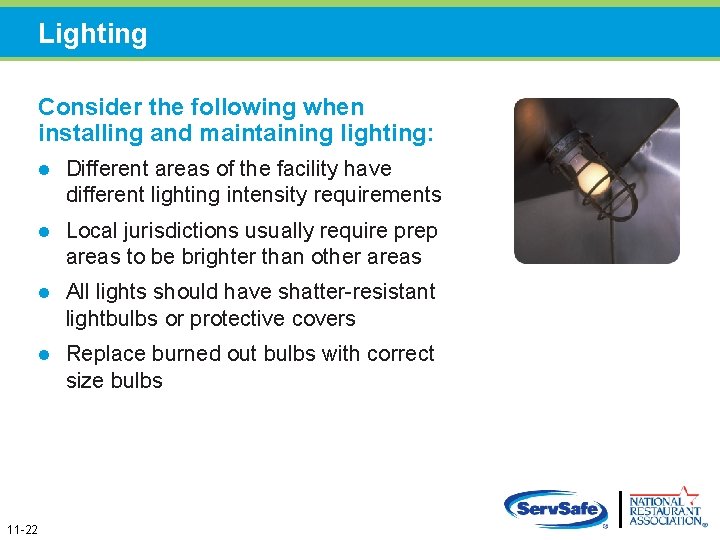
Lighting Consider the following when installing and maintaining lighting: 11 -22 l Different areas of the facility have different lighting intensity requirements l Local jurisdictions usually require prep areas to be brighter than other areas l All lights should have shatter-resistant lightbulbs or protective covers l Replace burned out bulbs with correct size bulbs
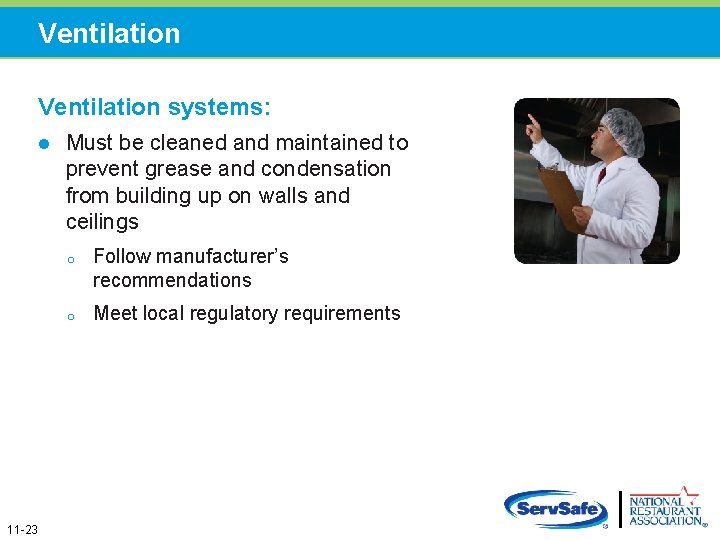
Ventilation systems: l 11 -23 Must be cleaned and maintained to prevent grease and condensation from building up on walls and ceilings o Follow manufacturer’s recommendations o Meet local regulatory requirements
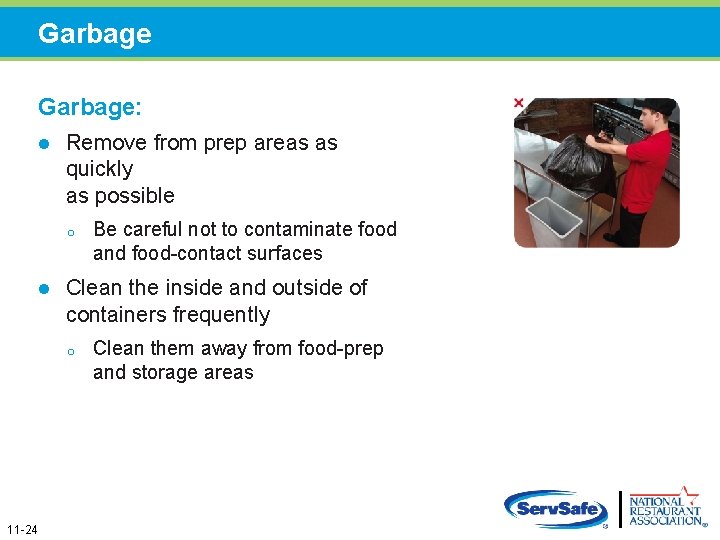
Garbage: l Remove from prep areas as quickly as possible o l Clean the inside and outside of containers frequently o 11 -24 Be careful not to contaminate food and food-contact surfaces Clean them away from food-prep and storage areas
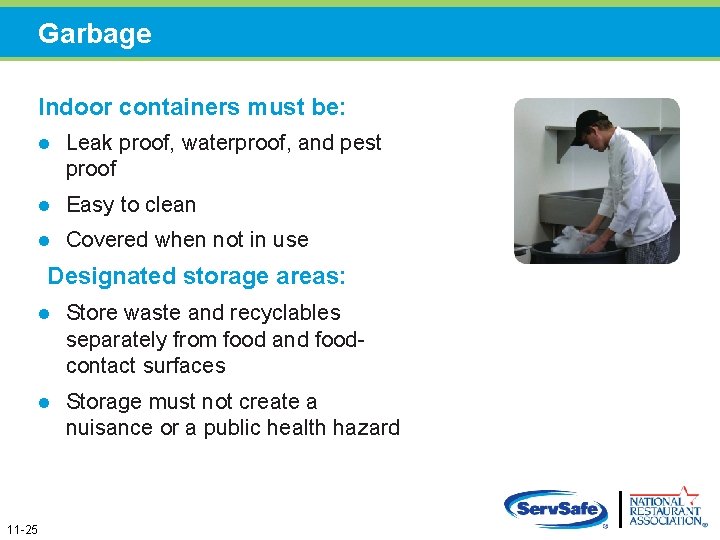
Garbage Indoor containers must be: l Leak proof, waterproof, and pest proof l Easy to clean l Covered when not in use Designated storage areas: 11 -25 l Store waste and recyclables separately from food and foodcontact surfaces l Storage must not create a nuisance or a public health hazard
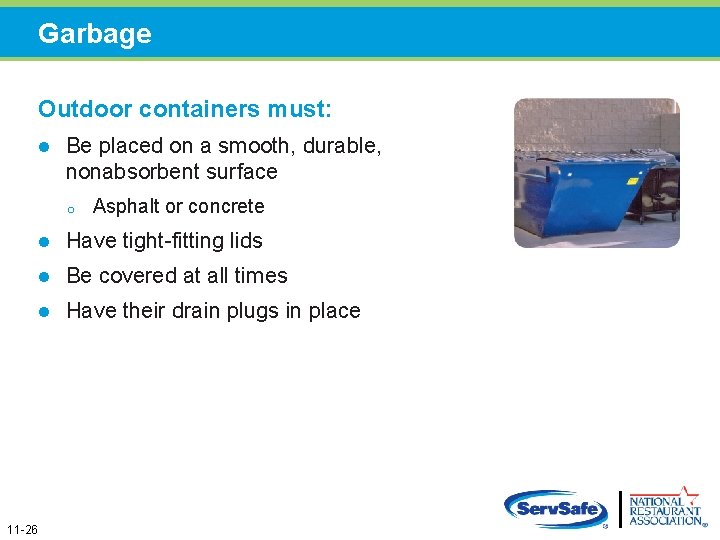
Garbage Outdoor containers must: l Be placed on a smooth, durable, nonabsorbent surface o 11 -26 Asphalt or concrete l Have tight-fitting lids l Be covered at all times l Have their drain plugs in place