
Construction of Longitudinal Joints 2014 VDOTVAA Regional Asphalt

- Slides: 25
Construction of Longitudinal Joints 2014 VDOT/VAA Regional Asphalt Seminars Ken Arthur Quality Control Manager Templeton Paving
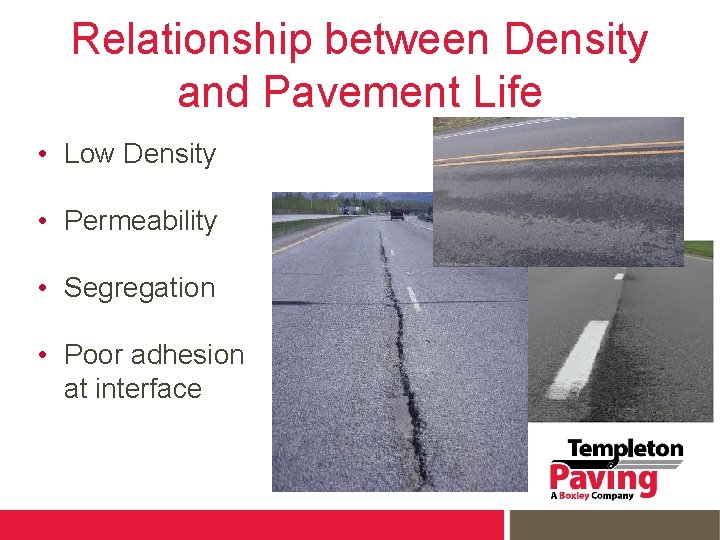
Relationship between Density and Pavement Life • Low Density • Permeability • Segregation • Poor adhesion at interface
“You must plan for the longitudinal joint, it cannot be an afterthought”. . Final Draft Report Best Practices for Constructing and Specifying HMA Longitudinal Joints Buncher and Rosenberger, Asphalt Institute 2012
Longitudinal Joint Density • Layout of the Site • Proper Overlap • Tack Application • Handwork • Paver Practices • Compaction • Proper Depth • Quality Control
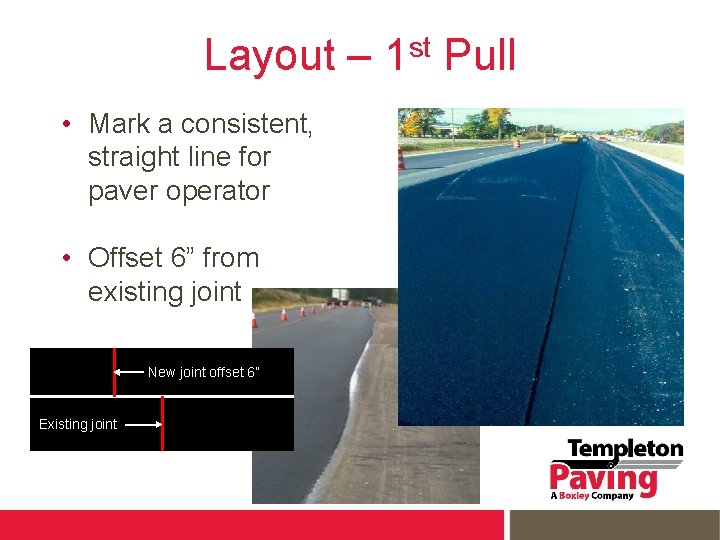
Layout – 1 st Pull • Mark a consistent, straight line for paver operator • Offset 6” from existing joint New joint offset 6” Existing joint
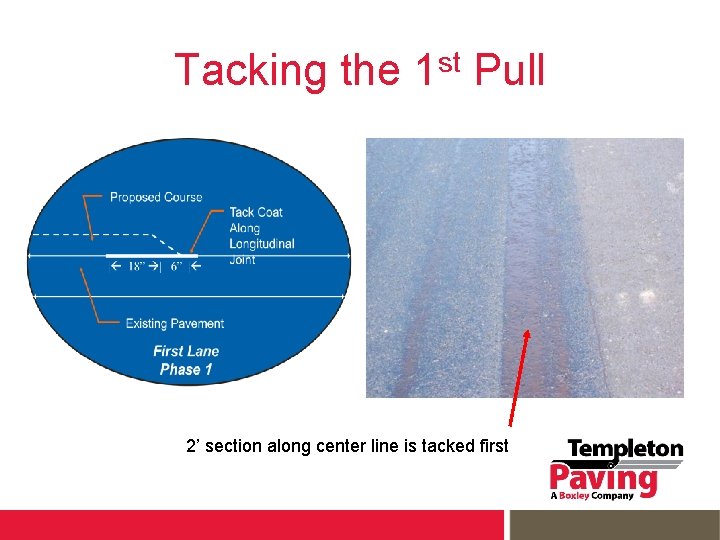
Tacking the 1 st Pull 2’ section along center line is tacked first
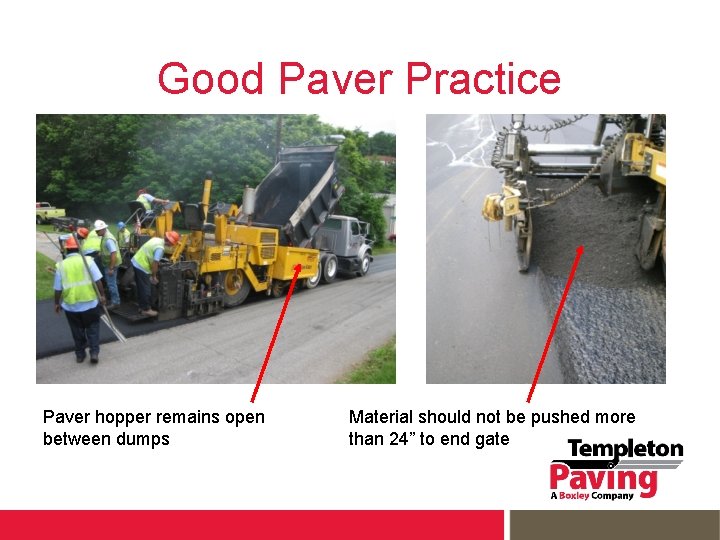
Good Paver Practice Paver hopper remains open between dumps Material should not be pushed more than 24” to end gate
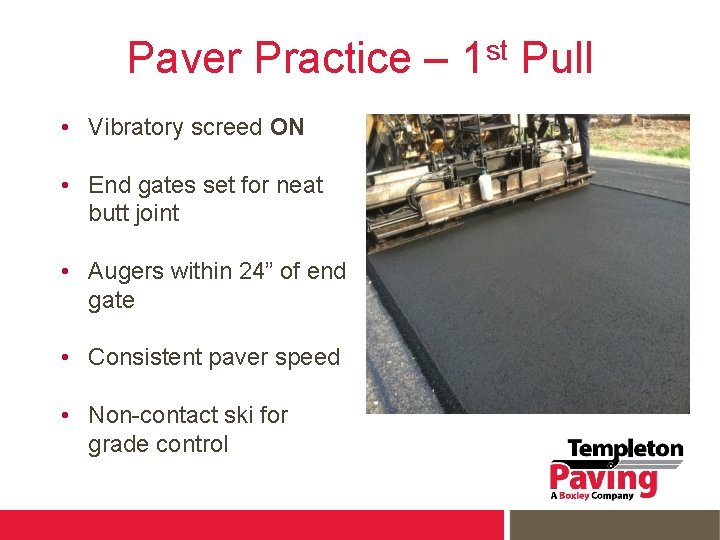
Paver Practice – 1 st Pull • Vibratory screed ON • End gates set for neat butt joint • Augers within 24” of end gate • Consistent paver speed • Non-contact ski for grade control
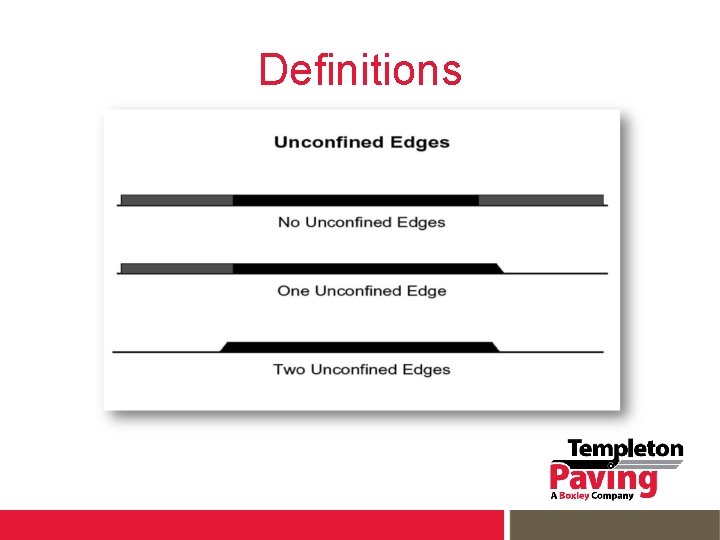
Definitions
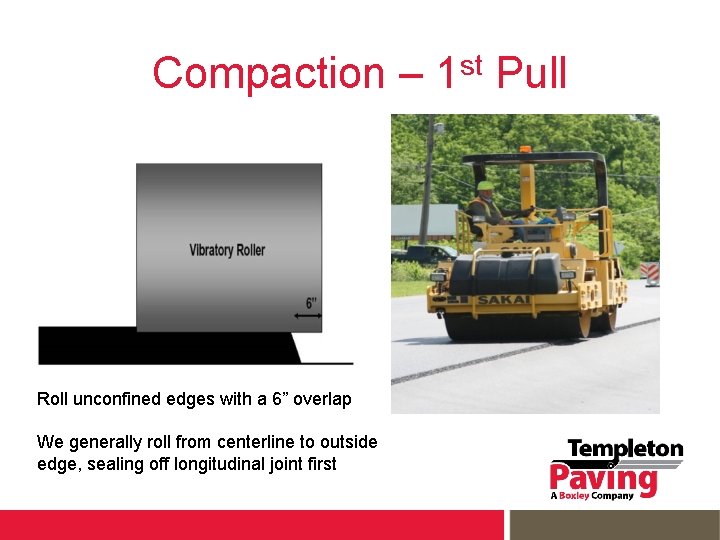
Compaction – Roll unconfined edges with a 6” overlap We generally roll from centerline to outside edge, sealing off longitudinal joint first st 1 Pull
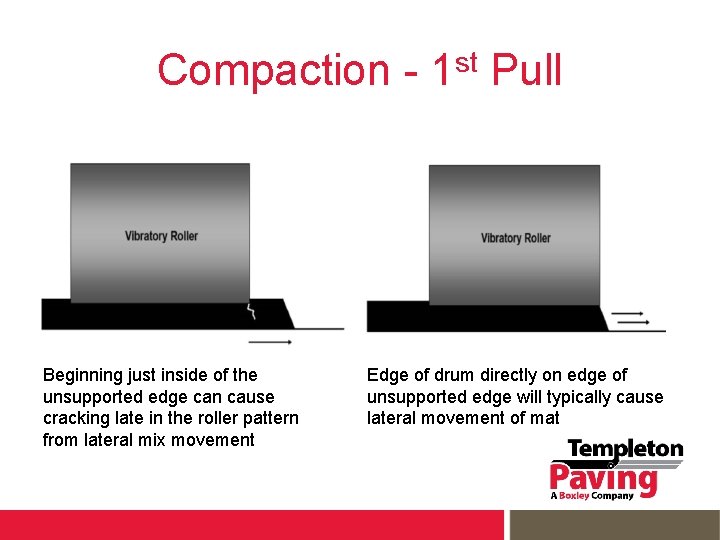
Compaction - 1 st Pull Beginning just inside of the unsupported edge can cause cracking late in the roller pattern from lateral mix movement Edge of drum directly on edge of unsupported edge will typically cause lateral movement of mat
Longitudinal Joint Density 2 nd Pull • Proper tack application • Paving practices • Correct depth and overlap of material • Compaction
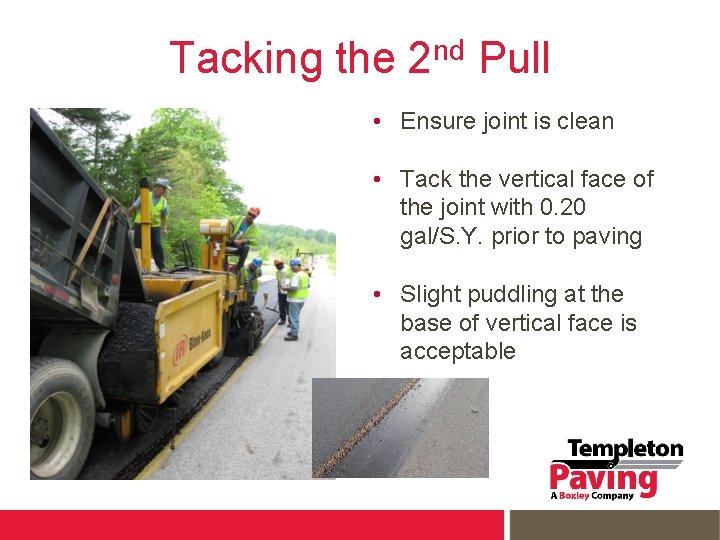
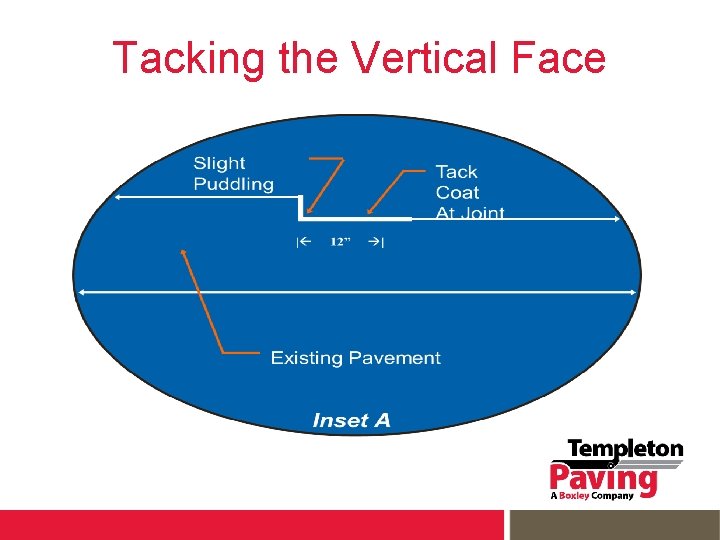
Tacking the 2 nd Pull • Ensure joint is clean • Tack the vertical face of the joint with 0. 20 gal/S. Y. prior to paving • Slight puddling at the base of vertical face is acceptable
Tacking the Vertical Face
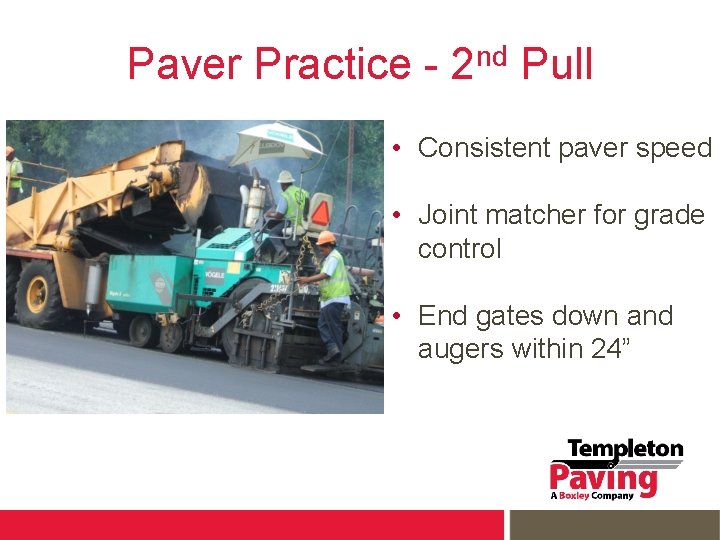
Paver Practice - 2 nd Pull • Consistent paver speed • Joint matcher for grade control • End gates down and augers within 24”
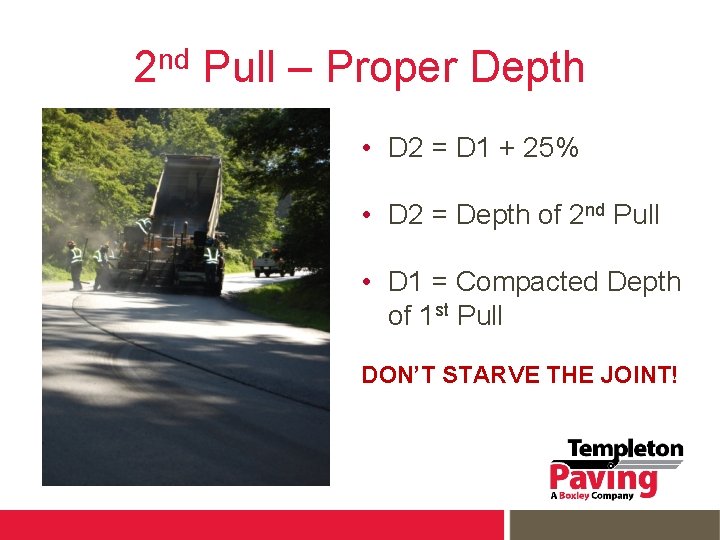
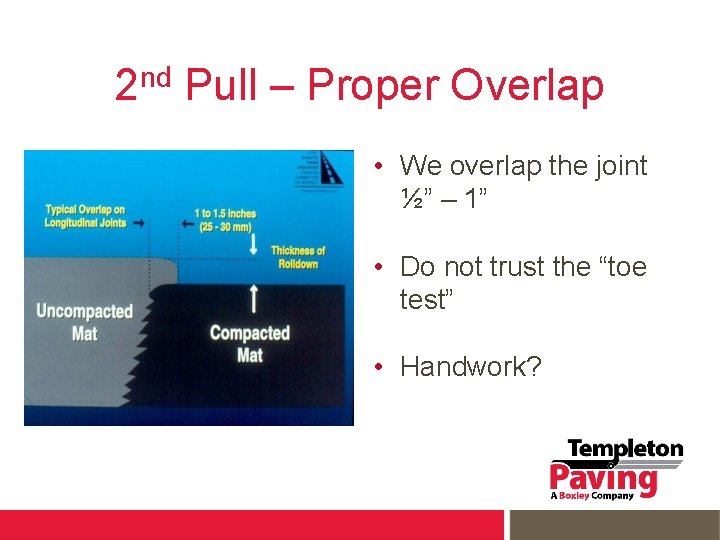
2 nd Pull – Proper Depth • D 2 = D 1 + 25% • D 2 = Depth of 2 nd Pull • D 1 = Compacted Depth of 1 st Pull DON’T STARVE THE JOINT!
nd 2 Pull – Proper Overlap • We overlap the joint ½” – 1” • Do not trust the “toe test” • Handwork?
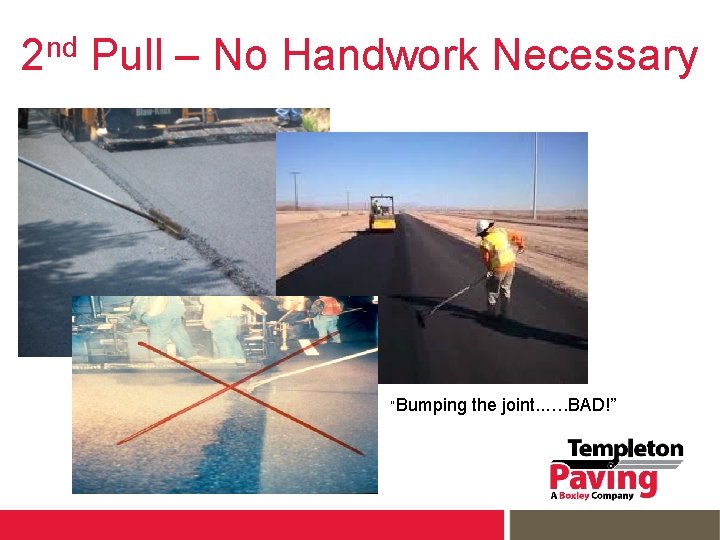
2 nd Pull – No Handwork Necessary “Bumping the joint. . …. BAD!”
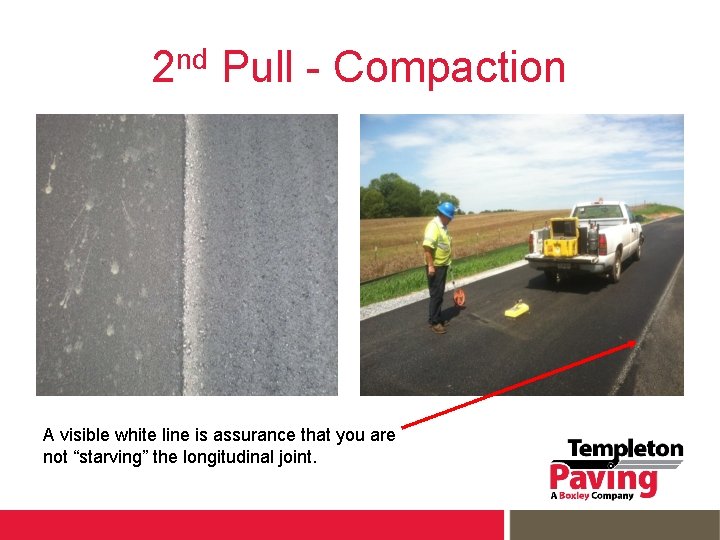
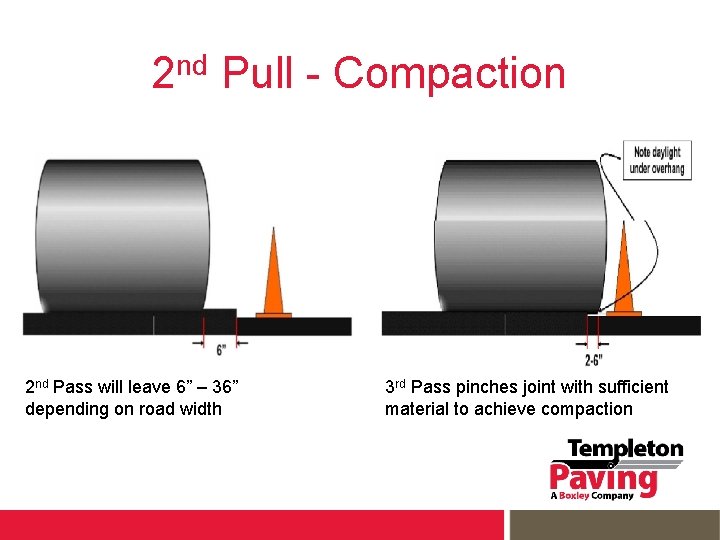
2 nd Pull - Compaction A visible white line is assurance that you are not “starving” the longitudinal joint.
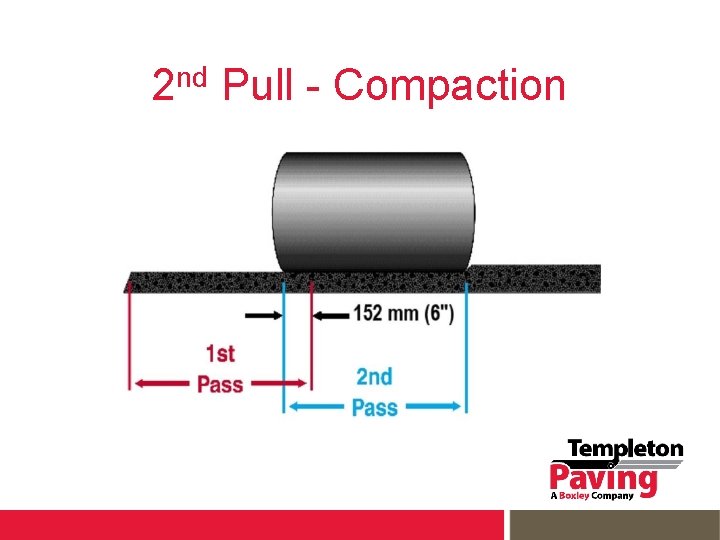
nd 2 Pull - Compaction
nd 2 Pull - Compaction 2 nd Pass will leave 6” – 36” depending on road width 3 rd Pass pinches joint with sufficient material to achieve compaction
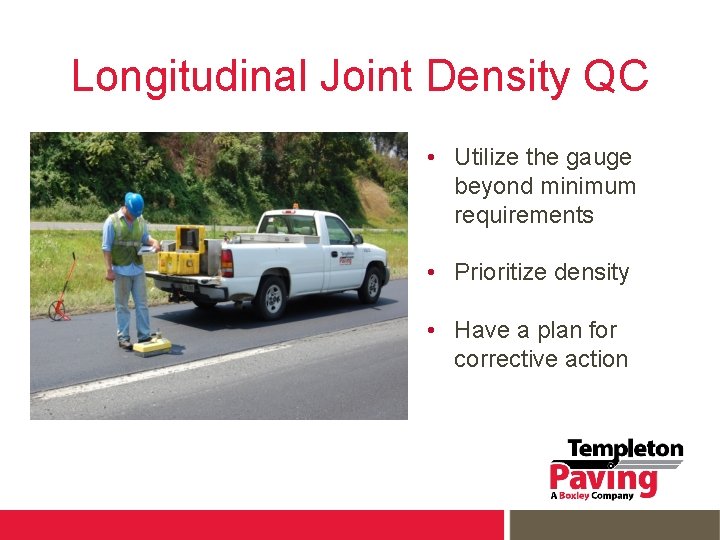
Longitudinal Joint Density QC • Utilize the gauge beyond minimum requirements • Prioritize density • Have a plan for corrective action
Common Longitudinal Joint Density Issues • Starving the joint, or “bridging” • Excessive grade changes • Paver speed • Rollers unable to keep up with paving operation • Electronics affected by inconsistent speed • Communication between operators and technicians
Longitudinal Joint Density Summary • Layout for straight lines and offset joints • Quality paving practice with the machine • Tack the clean joint location and vertical face • Proper depth and overlap • Compaction with joint density in mind • Diligent quality control
Questions?