
Construction materials Testing and grading materials The strength
- Slides: 9
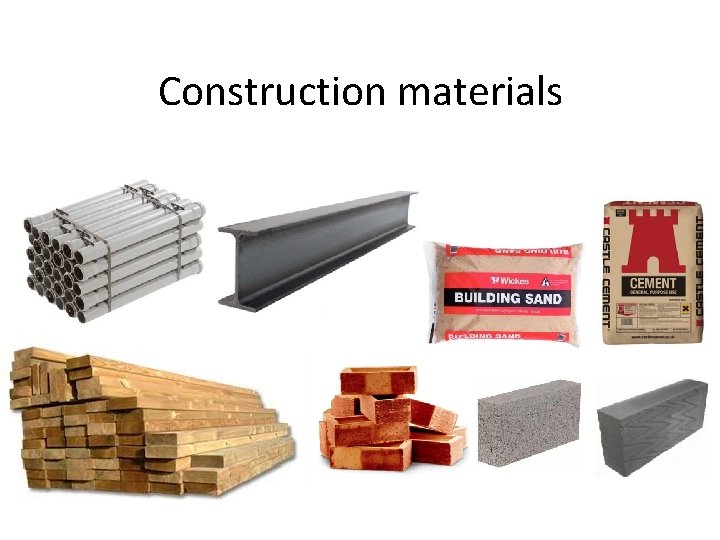
Construction materials
Testing and grading materials The strength and stability of a building depends on the materials used to construct it. Construction materials are tested to make sure they are strong enough The strength of a material is calculated by working out how much pressure it can take. The pressure is measured in Newtons per square millimetre (N/mm²)
Concrete is commonly used in foundations and floors. Its strength is crucial. Two tests are carried out to make sure the concrete is strong enough: • Slump testing • Compression testing
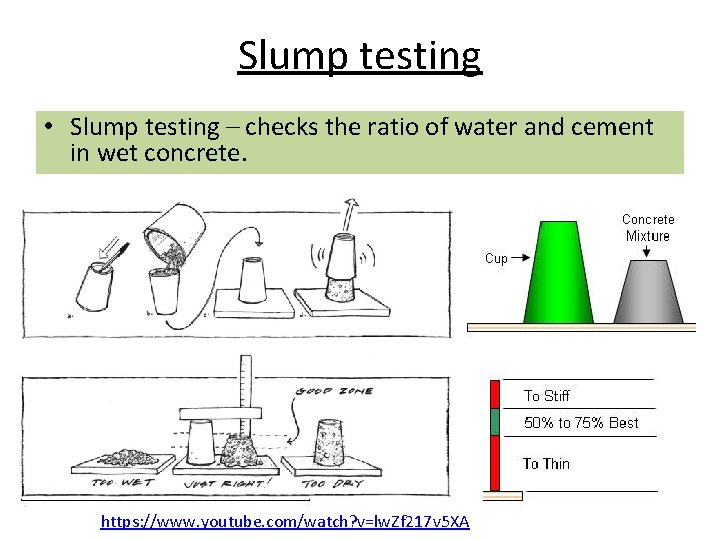
Slump testing • Slump testing – checks the ratio of water and cement in wet concrete. https: //www. youtube. com/watch? v=lw. Zf 217 v 5 XA
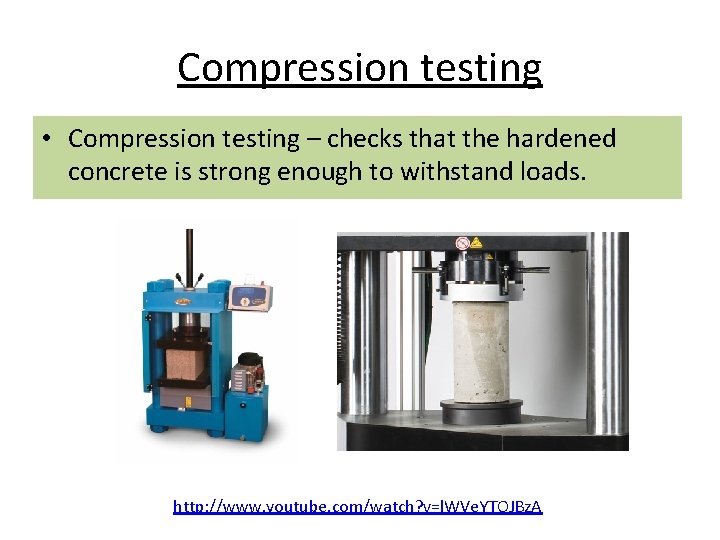
Compression testing • Compression testing – checks that the hardened concrete is strong enough to withstand loads. http: //www. youtube. com/watch? v=l. WVe. YTOJBz. A
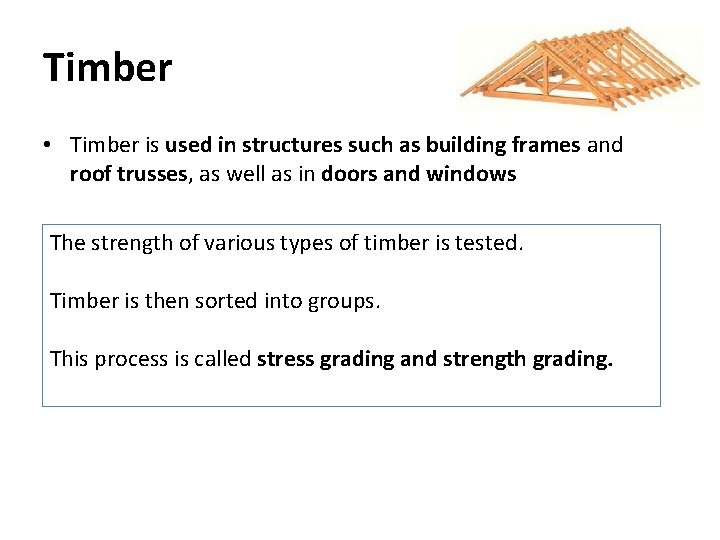
Timber • Timber is used in structures such as building frames and roof trusses, as well as in doors and windows The strength of various types of timber is tested. Timber is then sorted into groups. This process is called stress grading and strength grading.
Timber When being specified, the letter C (coniferous) means softwood and the letter D (deciduous) means hardwood. This means timber is classified from C 14 to C 50 and D 30 to D 70. A C 25 timber is a softwood with a strength of 25 Newtons. A D 30 timber is a hardwood with a strength of 30 Newtons.
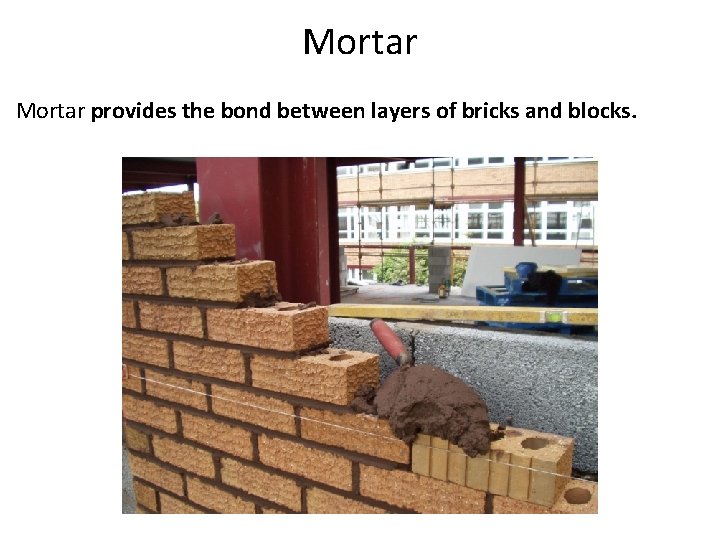
Mortar provides the bond between layers of bricks and blocks.
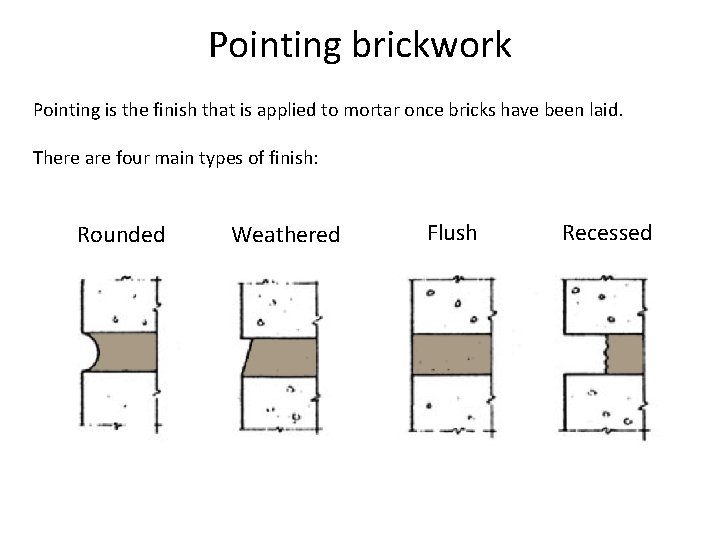
Pointing brickwork Pointing is the finish that is applied to mortar once bricks have been laid. There are four main types of finish: Rounded Weathered Flush Recessed