
Constructing Behavioral Goals and Objectives General Behavior Learning
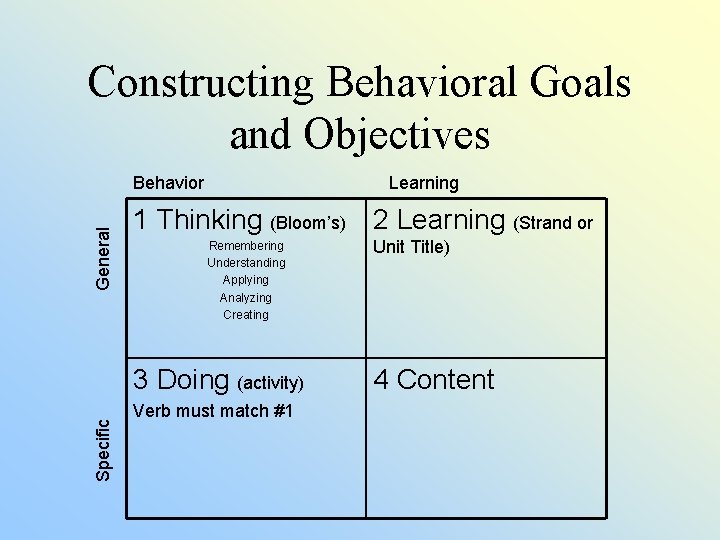
Constructing Behavioral Goals and Objectives General Behavior Learning 1 Thinking (Bloom’s) 2 Learning (Strand or Remembering Understanding Applying Analyzing Creating Specific 3 Doing (activity) Verb must match #1 Unit Title) 4 Content
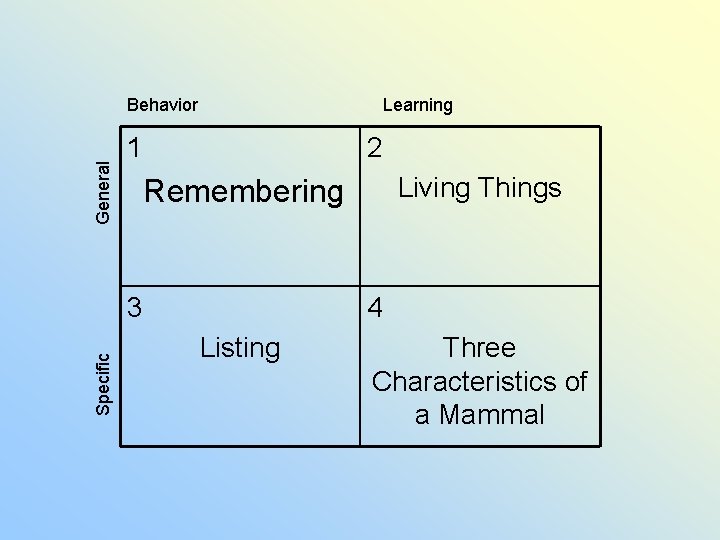
General Behavior Learning 1 2 3 Specific Living Things Remembering 4 Listing Three Characteristics of a Mammal
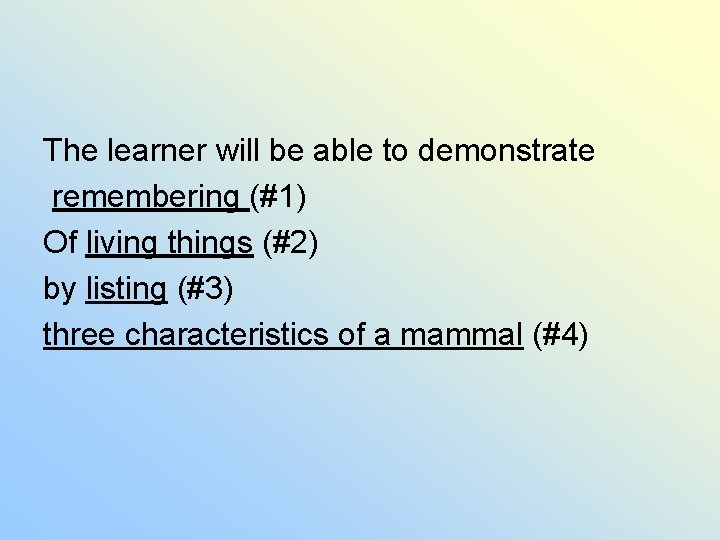
The learner will be able to demonstrate remembering (#1) Of living things (#2) by listing (#3) three characteristics of a mammal (#4)
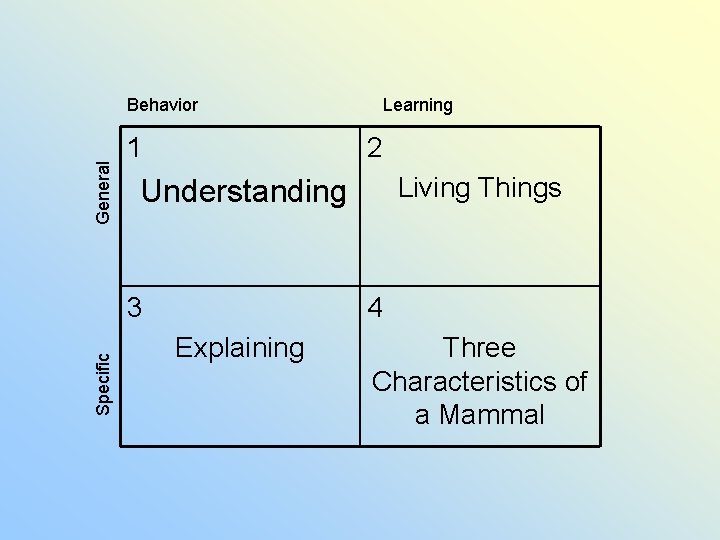
General Behavior 1 2 Living Things Understanding 3 Specific Learning 4 Explaining Three Characteristics of a Mammal
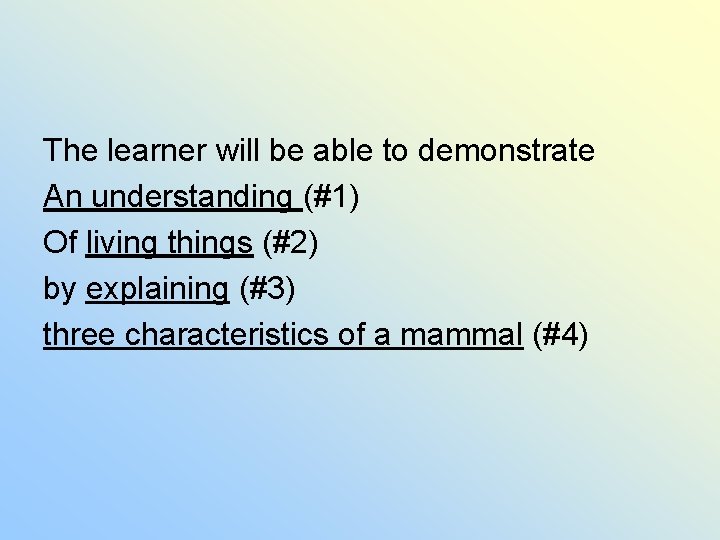
The learner will be able to demonstrate An understanding (#1) Of living things (#2) by explaining (#3) three characteristics of a mammal (#4)
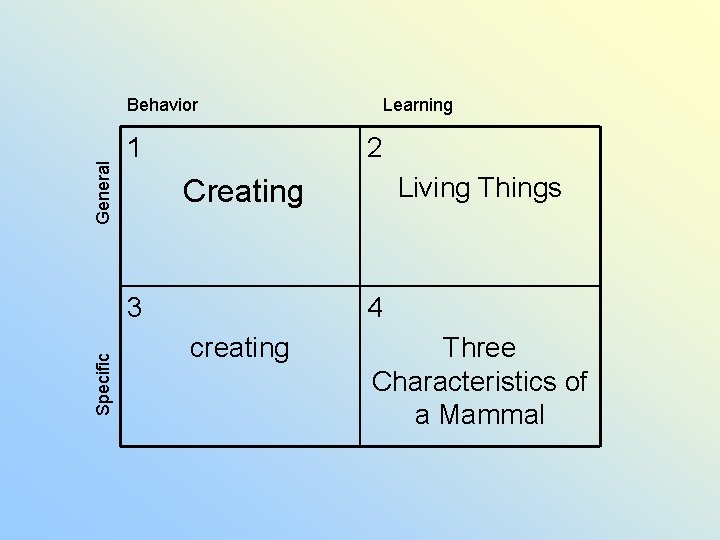
General Behavior 1 2 Living Things Creating 3 Specific Learning 4 creating Three Characteristics of a Mammal
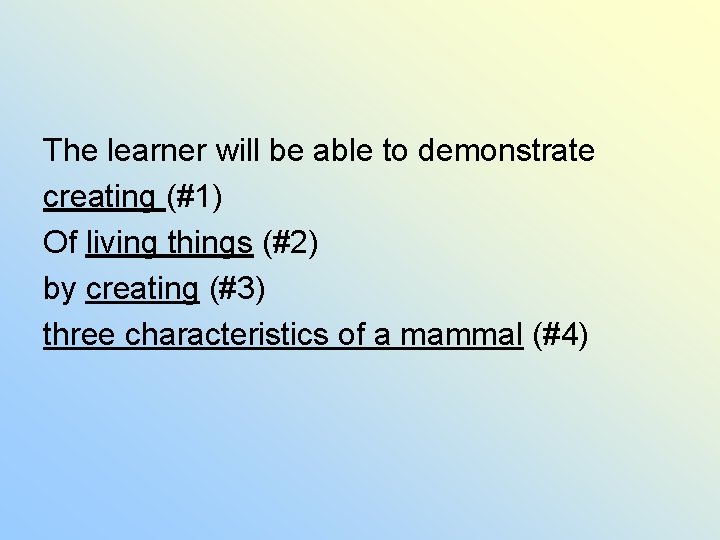
The learner will be able to demonstrate creating (#1) Of living things (#2) by creating (#3) three characteristics of a mammal (#4)
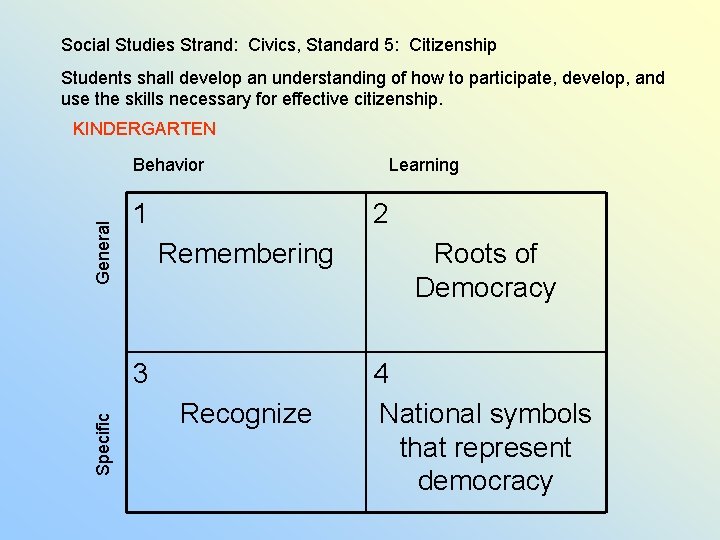
Social Studies Strand: Civics, Standard 5: Citizenship Students shall develop an understanding of how to participate, develop, and use the skills necessary for effective citizenship. KINDERGARTEN General Behavior 1 2 Remembering 3 Specific Learning Recognize Roots of Democracy 4 National symbols that represent democracy
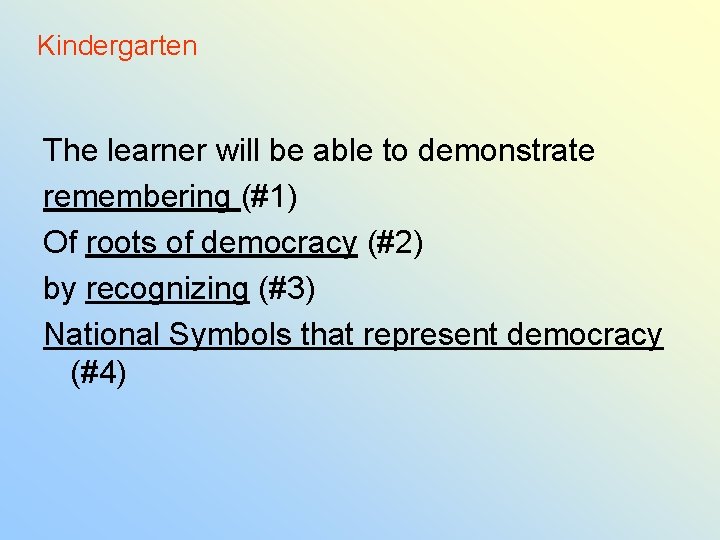
Kindergarten The learner will be able to demonstrate remembering (#1) Of roots of democracy (#2) by recognizing (#3) National Symbols that represent democracy (#4)
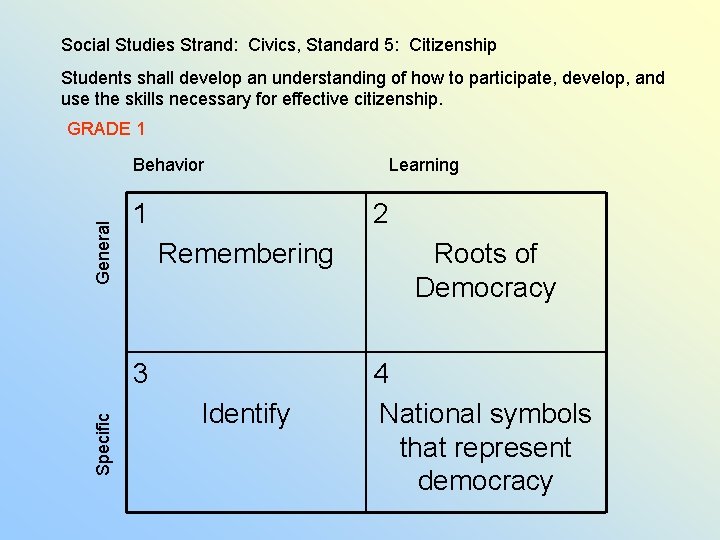
Social Studies Strand: Civics, Standard 5: Citizenship Students shall develop an understanding of how to participate, develop, and use the skills necessary for effective citizenship. GRADE 1 General Behavior 1 2 Remembering 3 Specific Learning Identify Roots of Democracy 4 National symbols that represent democracy
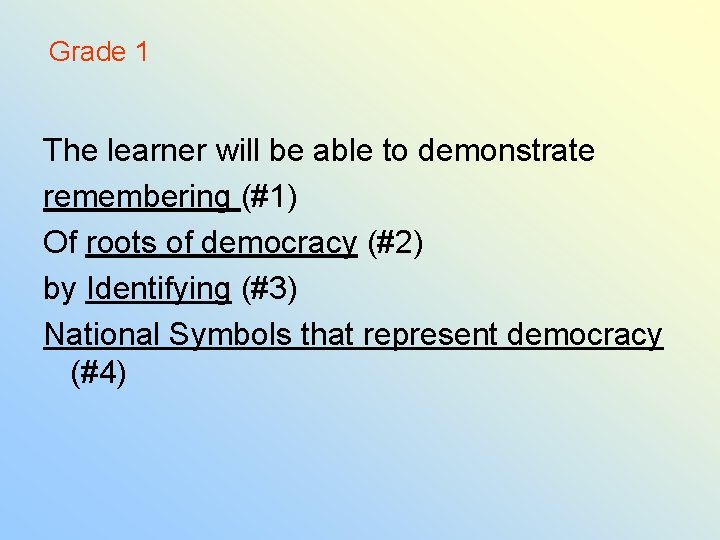
Grade 1 The learner will be able to demonstrate remembering (#1) Of roots of democracy (#2) by Identifying (#3) National Symbols that represent democracy (#4)
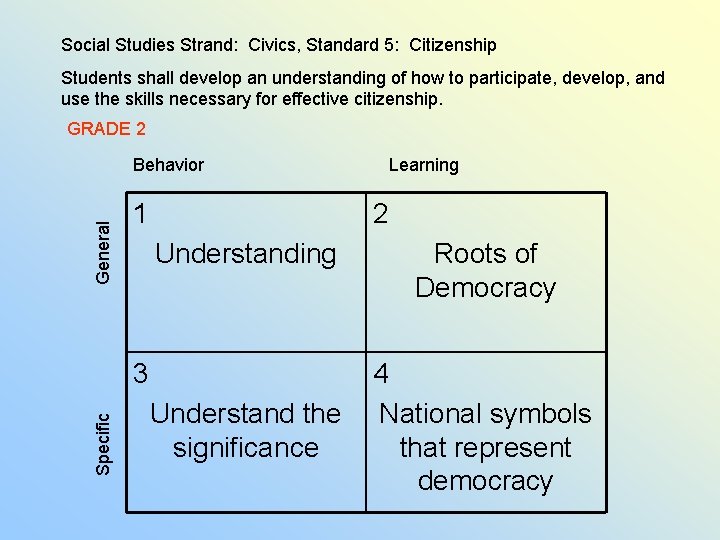
Social Studies Strand: Civics, Standard 5: Citizenship Students shall develop an understanding of how to participate, develop, and use the skills necessary for effective citizenship. GRADE 2 General Behavior 1 2 Understanding 3 Specific Learning Understand the significance Roots of Democracy 4 National symbols that represent democracy
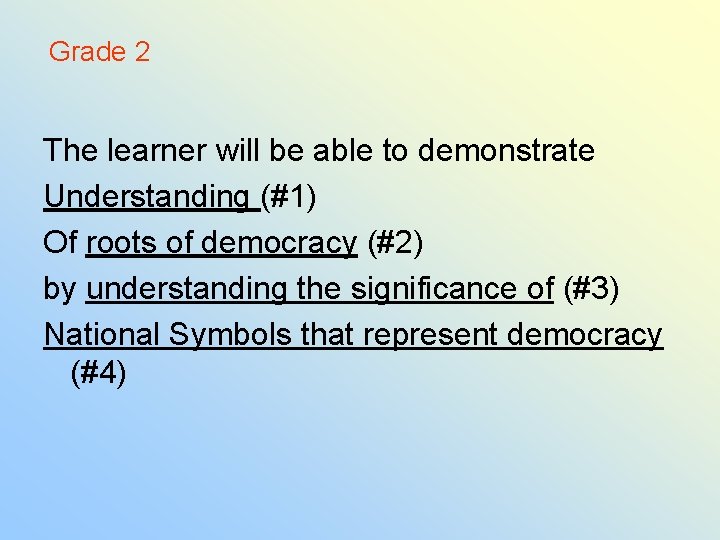
Grade 2 The learner will be able to demonstrate Understanding (#1) Of roots of democracy (#2) by understanding the significance of (#3) National Symbols that represent democracy (#4)
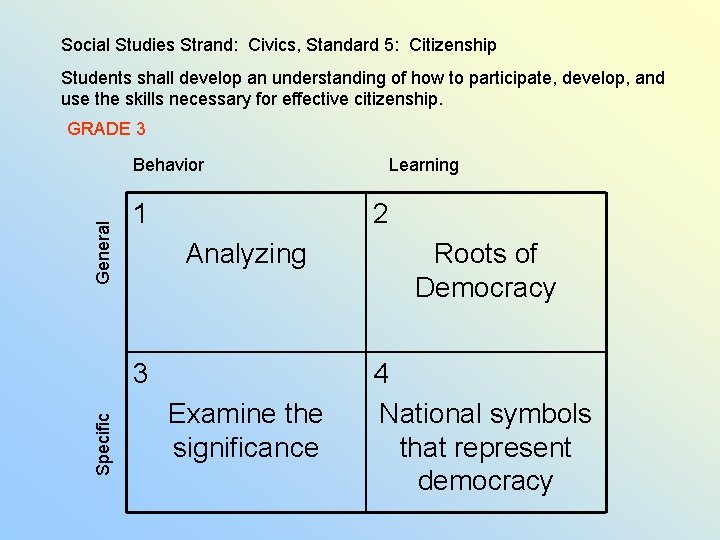
Social Studies Strand: Civics, Standard 5: Citizenship Students shall develop an understanding of how to participate, develop, and use the skills necessary for effective citizenship. GRADE 3 General Behavior 1 2 Analyzing 3 Specific Learning Examine the significance Roots of Democracy 4 National symbols that represent democracy
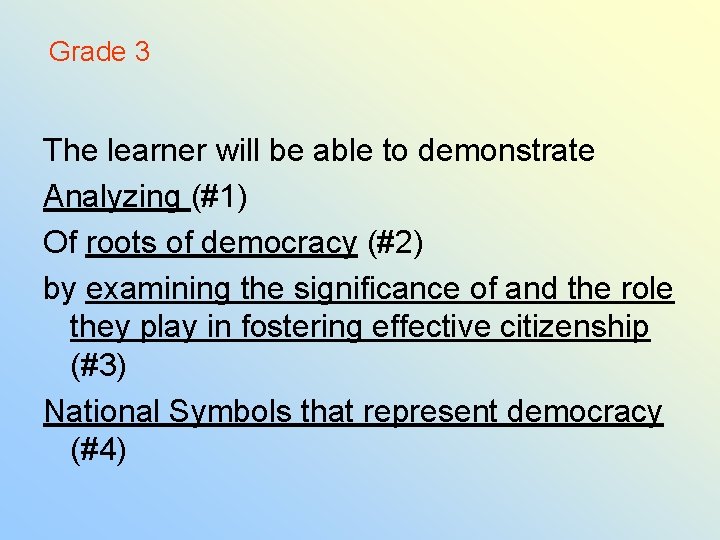
Grade 3 The learner will be able to demonstrate Analyzing (#1) Of roots of democracy (#2) by examining the significance of and the role they play in fostering effective citizenship (#3) National Symbols that represent democracy (#4)
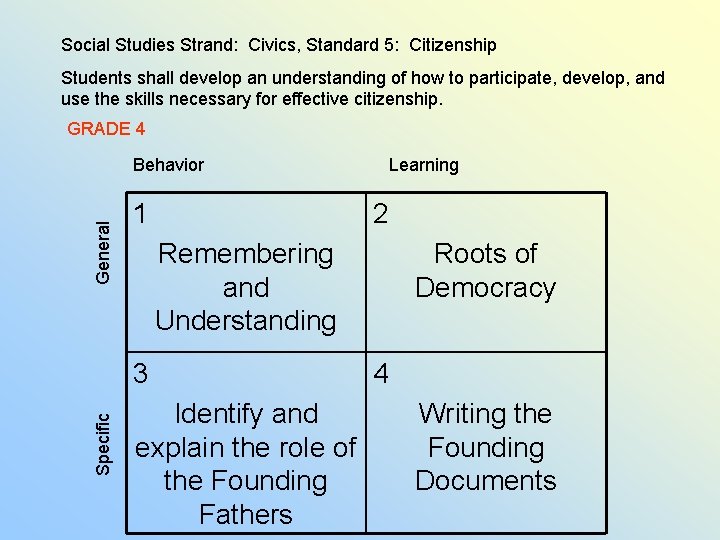
Social Studies Strand: Civics, Standard 5: Citizenship Students shall develop an understanding of how to participate, develop, and use the skills necessary for effective citizenship. GRADE 4 General Behavior 1 2 Remembering and Understanding 3 Specific Learning Identify and explain the role of the Founding Fathers Roots of Democracy 4 Writing the Founding Documents
Grade 4 The learner will be able to demonstrate Remembering and Understanding (#1) Of roots of democracy (#2) by Identifying and explaining the role of the Founding Fathers (#3) Writing The Founding Documents (#4)
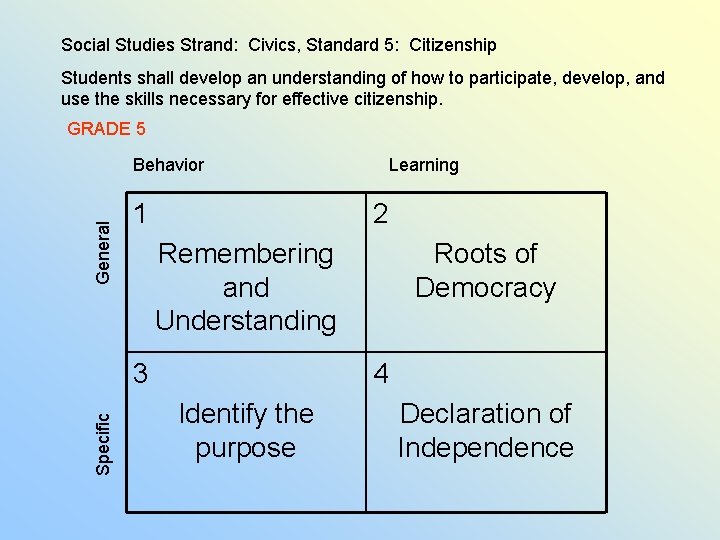
Social Studies Strand: Civics, Standard 5: Citizenship Students shall develop an understanding of how to participate, develop, and use the skills necessary for effective citizenship. GRADE 5 General Behavior 1 2 Remembering and Understanding 3 Specific Learning Roots of Democracy 4 Identify the purpose Declaration of Independence
Grade 5 The learner will be able to demonstrate Remembering and Understanding (#1) Of roots of democracy (#2) by Identifying the purpose of (#3) The Declaration of Independence (#4)
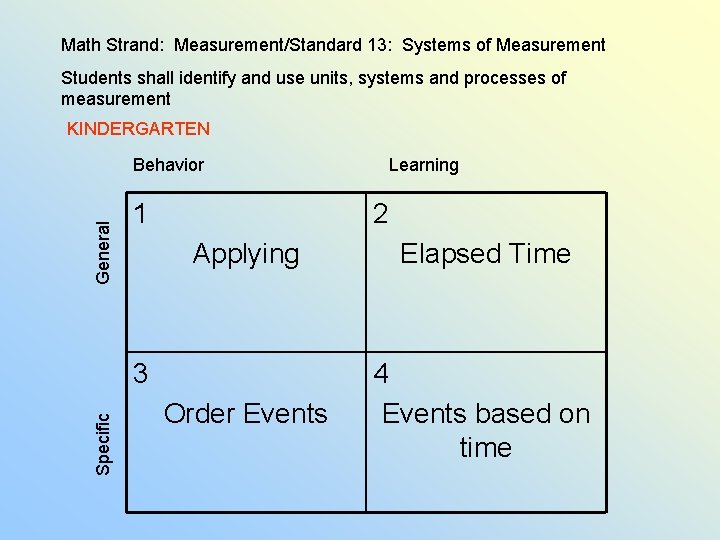
Math Strand: Measurement/Standard 13: Systems of Measurement Students shall identify and use units, systems and processes of measurement KINDERGARTEN General Behavior 1 2 Applying Elapsed Time Order Events 4 Events based on time 3 Specific Learning
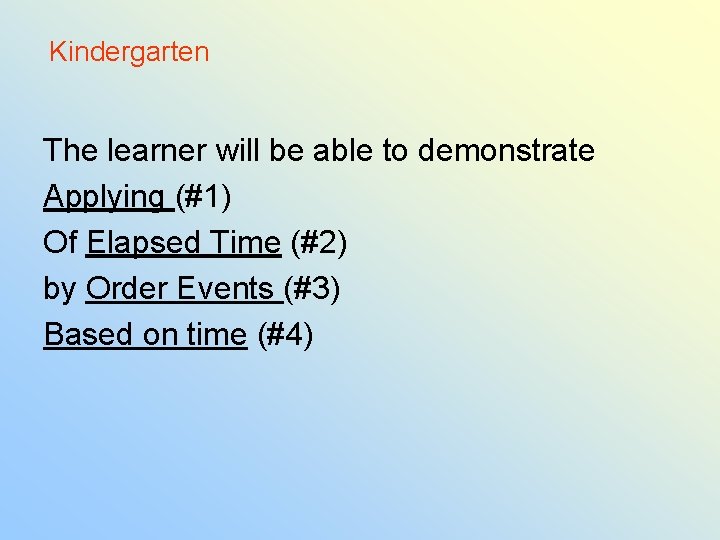
Kindergarten The learner will be able to demonstrate Applying (#1) Of Elapsed Time (#2) by Order Events (#3) Based on time (#4)
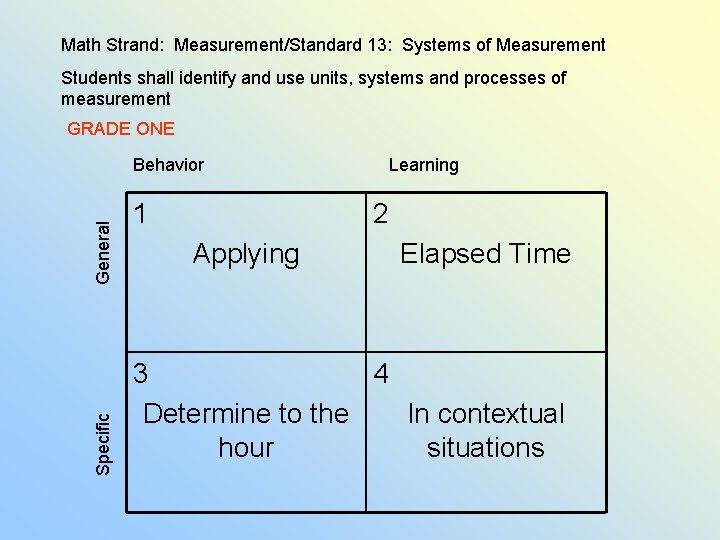
Math Strand: Measurement/Standard 13: Systems of Measurement Students shall identify and use units, systems and processes of measurement GRADE ONE Specific General Behavior 1 Learning 2 Applying Elapsed Time 3 4 Determine to the In contextual hour situations
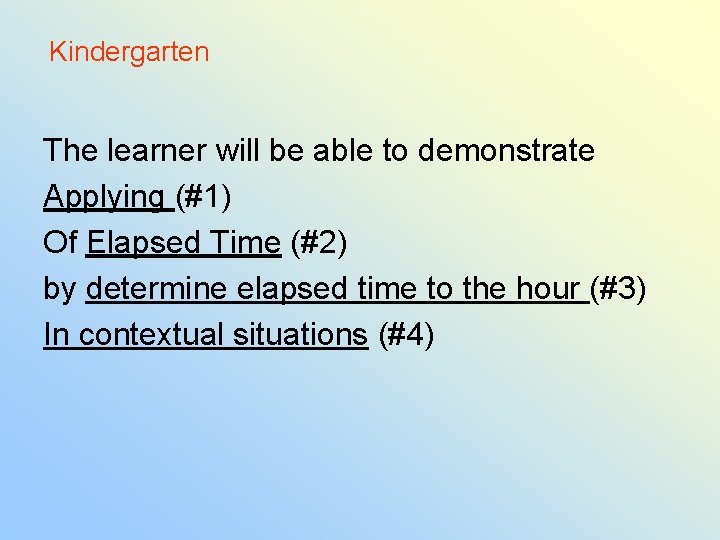
Kindergarten The learner will be able to demonstrate Applying (#1) Of Elapsed Time (#2) by determine elapsed time to the hour (#3) In contextual situations (#4)
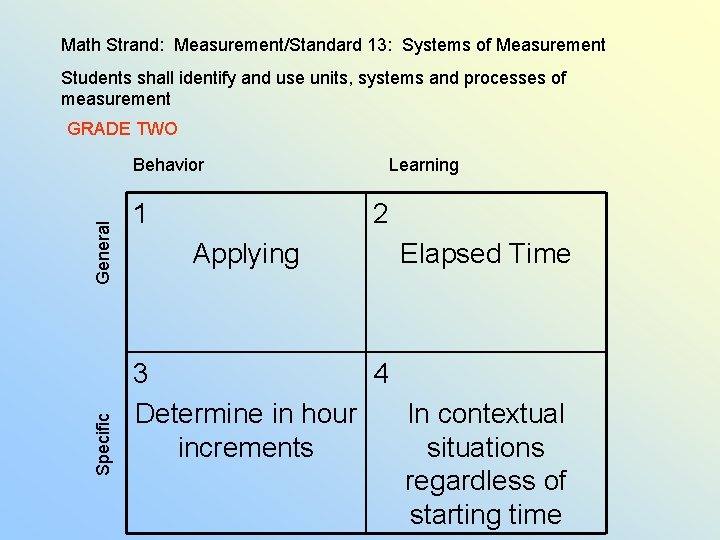
Math Strand: Measurement/Standard 13: Systems of Measurement Students shall identify and use units, systems and processes of measurement GRADE TWO Specific General Behavior 1 Learning 2 Applying Elapsed Time 3 4 Determine in hour In contextual increments situations regardless of starting time
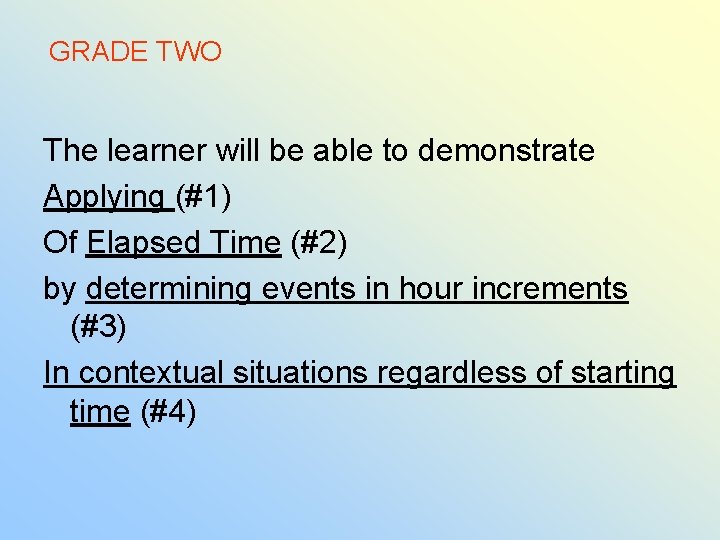
GRADE TWO The learner will be able to demonstrate Applying (#1) Of Elapsed Time (#2) by determining events in hour increments (#3) In contextual situations regardless of starting time (#4)
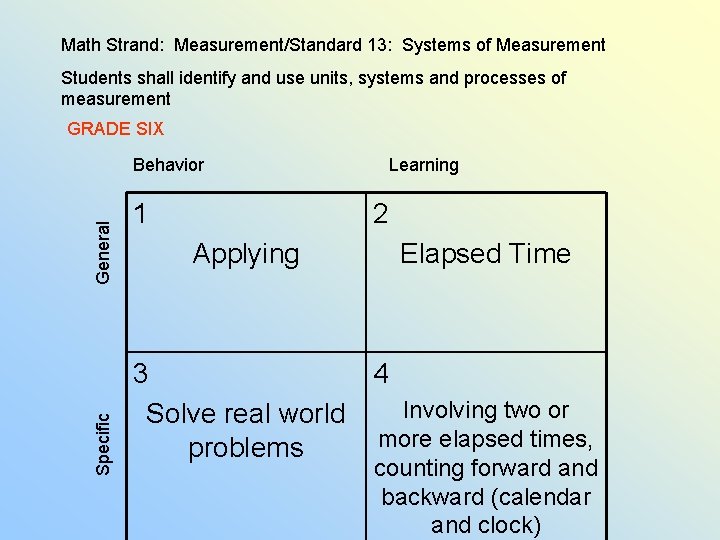
Math Strand: Measurement/Standard 13: Systems of Measurement Students shall identify and use units, systems and processes of measurement GRADE SIX Specific General Behavior 1 Learning 2 Applying Elapsed Time 3 4 Involving two or Solve real world more elapsed times, problems counting forward and backward (calendar and clock)
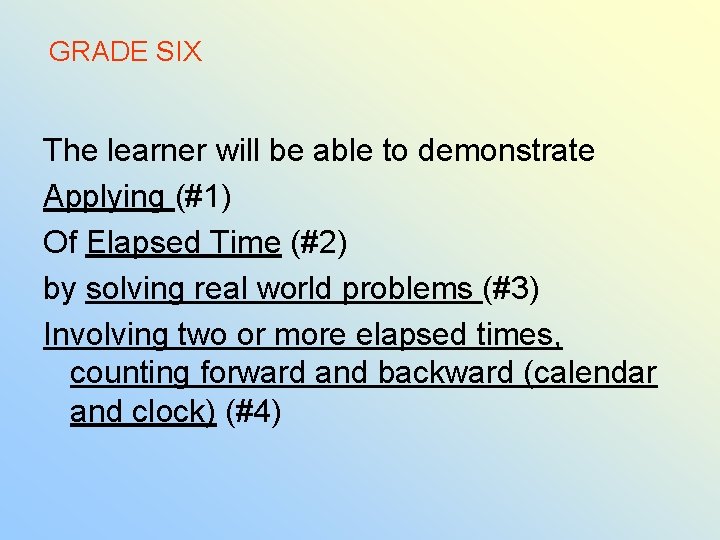
GRADE SIX The learner will be able to demonstrate Applying (#1) Of Elapsed Time (#2) by solving real world problems (#3) Involving two or more elapsed times, counting forward and backward (calendar and clock) (#4)
- Slides: 27