
Constructing and Analyzing the Project Network Diagram PERT

- Slides: 20
Constructing and Analyzing the Project Network Diagram PERT Chart CSSE 372 Week 6 Day 2 PERT was invented for the Nautilus submarine project. Ok, maybe not this Nautilus…
Outline �Definitions �Starts �Critical path �Slack �MR �Activity 2
What is a network diagram? �“A pictorial representation of the sequence in which the project work can be done. ” �What is needed to construct diagram? �Tasks �Task Duration �Earliest time to start task �Earliest expected completion date for the project 3
Uses �Planning �Implementation & Control 4
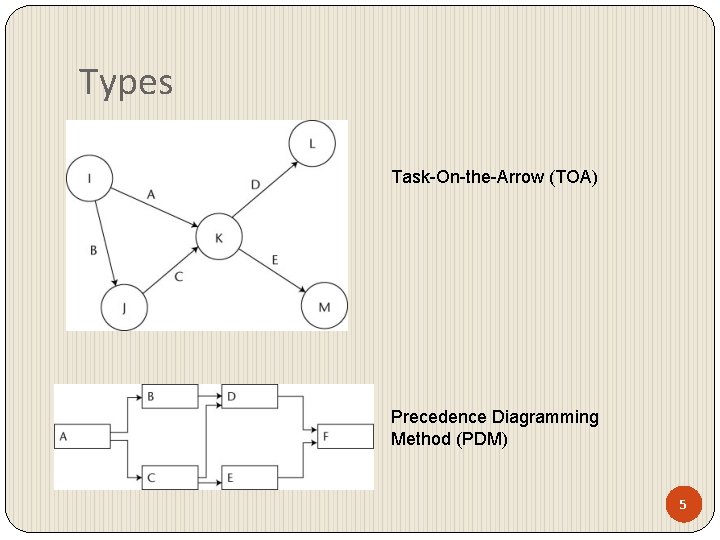
Types Task-On-the-Arrow (TOA) Precedence Diagramming Method (PDM) 5
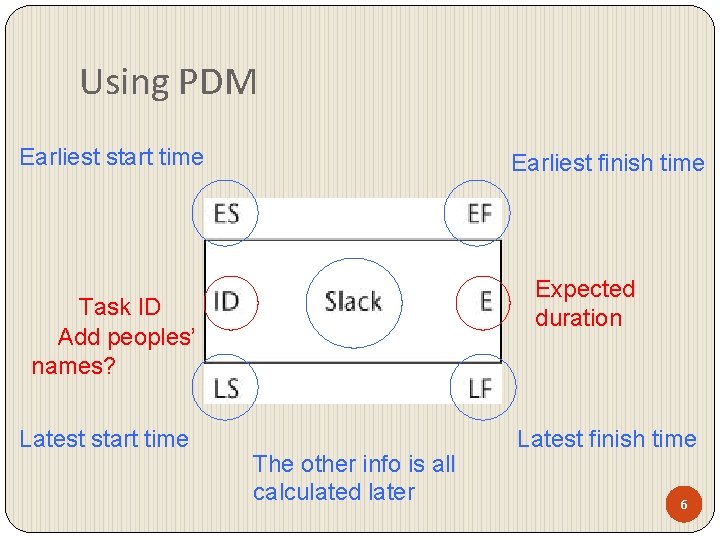
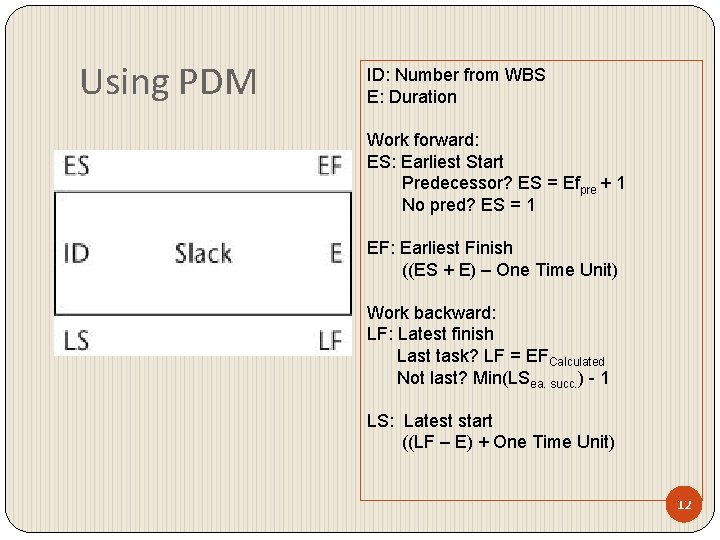
Using PDM Earliest start time Earliest finish time Expected duration Task ID Add peoples’ names? Latest start time The other info is all calculated later Latest finish time 6
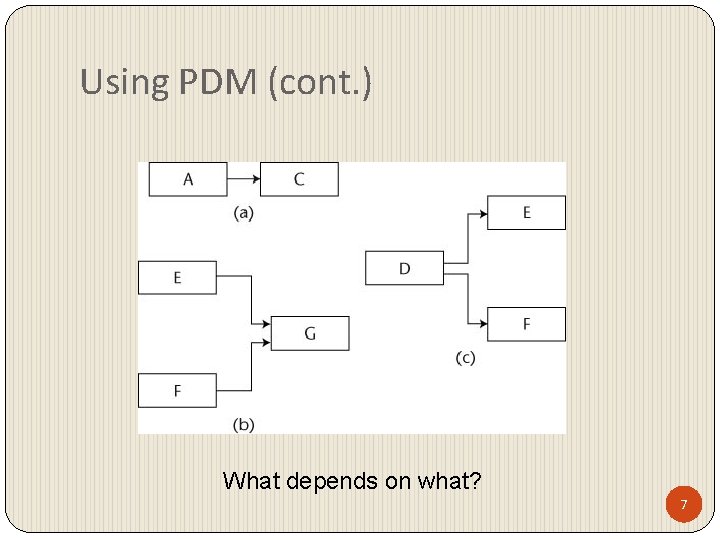
Using PDM (cont. ) What depends on what? 7
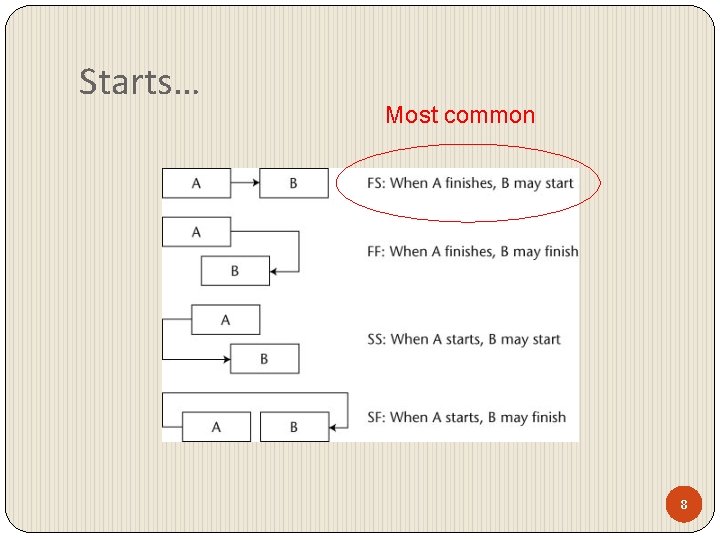
Starts… Most common 8
Cot. D 9
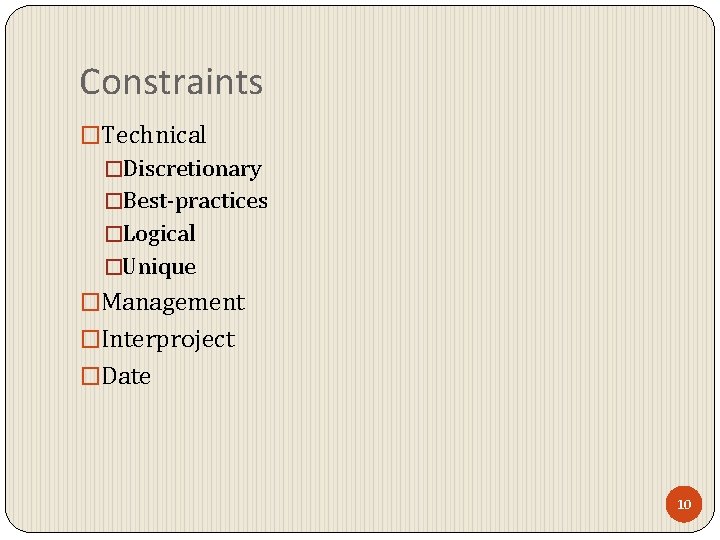
Constraints �Technical �Discretionary �Best-practices �Logical �Unique �Management �Interproject �Date 10
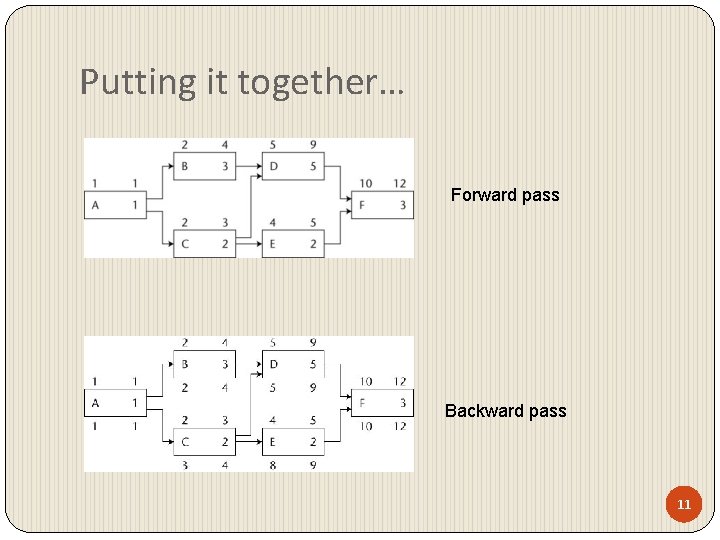
Putting it together… Forward pass Backward pass 11
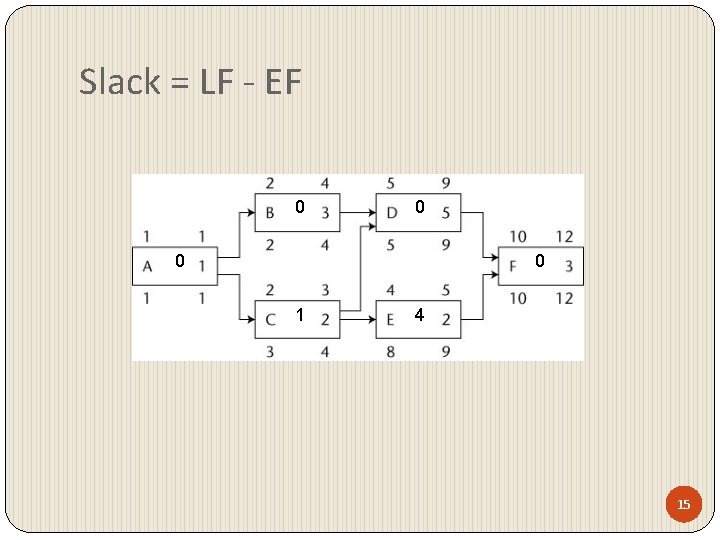
Using PDM ID: Number from WBS E: Duration Work forward: ES: Earliest Start Predecessor? ES = Efpre + 1 No pred? ES = 1 EF: Earliest Finish ((ES + E) – One Time Unit) Work backward: LF: Latest finish Last task? LF = EFCalculated Not last? Min(LSea. succ. ) - 1 LS: Latest start ((LF – E) + One Time Unit) 12
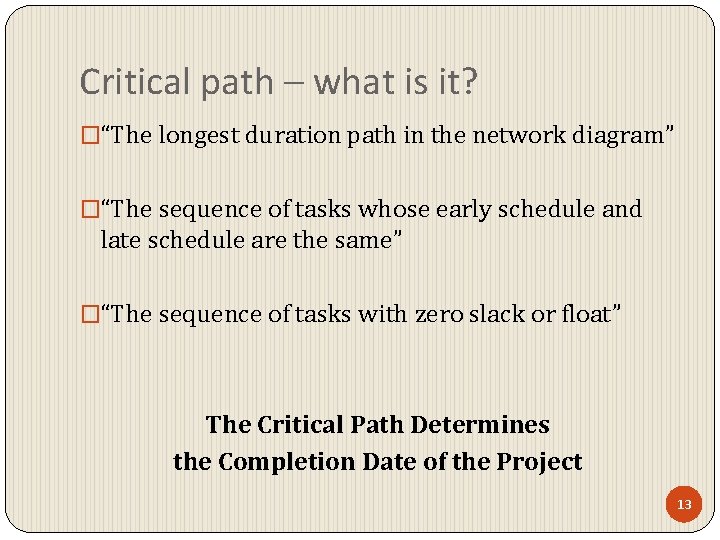
Critical path – what is it? �“The longest duration path in the network diagram” �“The sequence of tasks whose early schedule and late schedule are the same” �“The sequence of tasks with zero slack or float” The Critical Path Determines the Completion Date of the Project 13
How do you calculate it? �Add up all of the path’s durations �The longest one is the critical path �Compute slack 14
Slack = LF - EF 0 0 1 4 15
How do you calculate Critical Path? �Compute slack �Two types of slack �Free slack – amount of delay for a task without causing a delay in the early start of immediate successor task(s) �Total slack – amount of delay for a task without delaying the project completion date 16
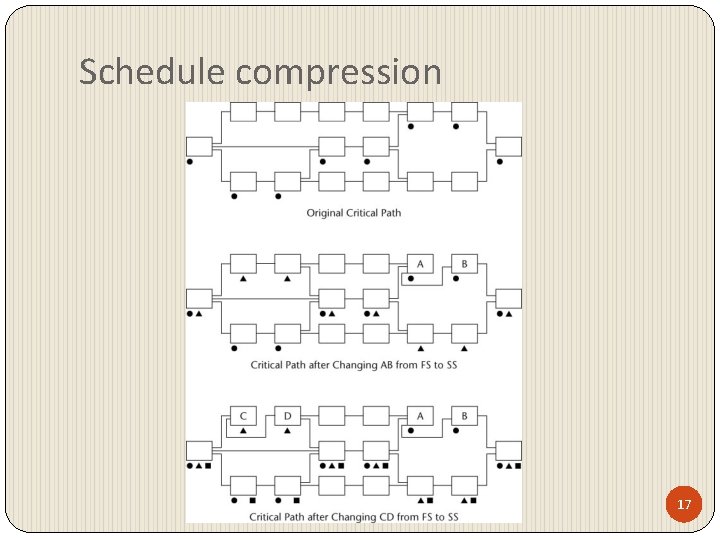
Schedule compression 17
Management reserve �Padding task duration �Individual task level �Project level �Bad at the task level �BUT, good at the project level �Accounts for risk �Incentive (management reserve time not used can be the basis for bonus) �PERT = “Program Evaluation Review Technique” �Uses these methods, with �The critical path calculation as the basis 18
Activity (in class, rest of the hour) Working with teammates from your junior project: �Look at the WBS and estimates for this project �Start with an activity that looks like it starts on day 1 �See how far you can build the PDM from there, putting in reasonable dependencies �Try to make them all FS dependencies, to begin with �Record the ES, EF, LS, LF, and slack for each task �Reexamine the tasks to see what’s really appropriate as an FS, FF, SS, or SF dependency relationship �Find and indicate the critical path �If there’s time left, re-evaluate your dependency relationships to see if you can compress the schedule 19
Questions?