
Constraining the Physics of Star Formation in Galaxies

- Slides: 28
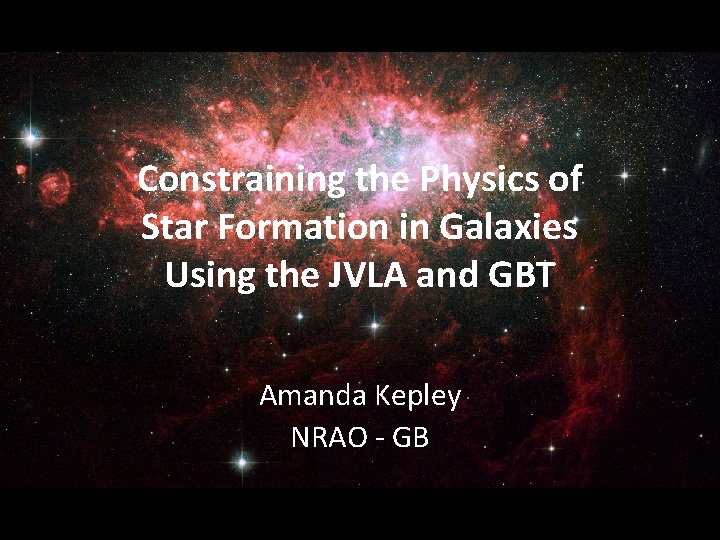
Constraining the Physics of Star Formation in Galaxies Using the JVLA and GBT Amanda Kepley NRAO - GB
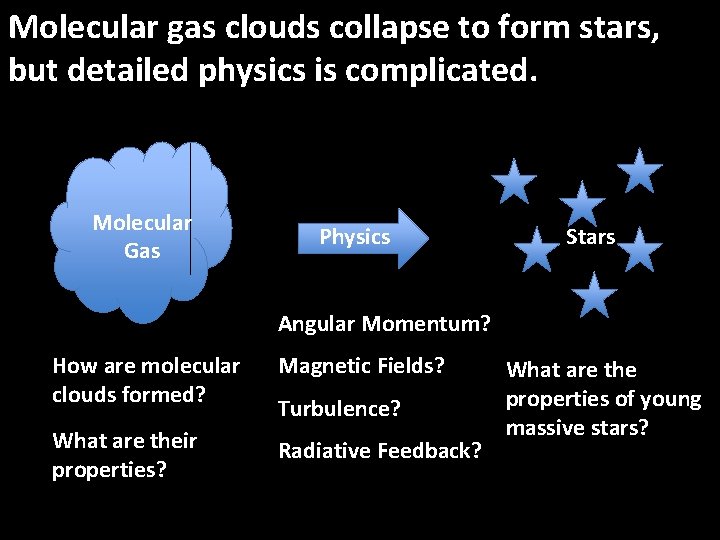
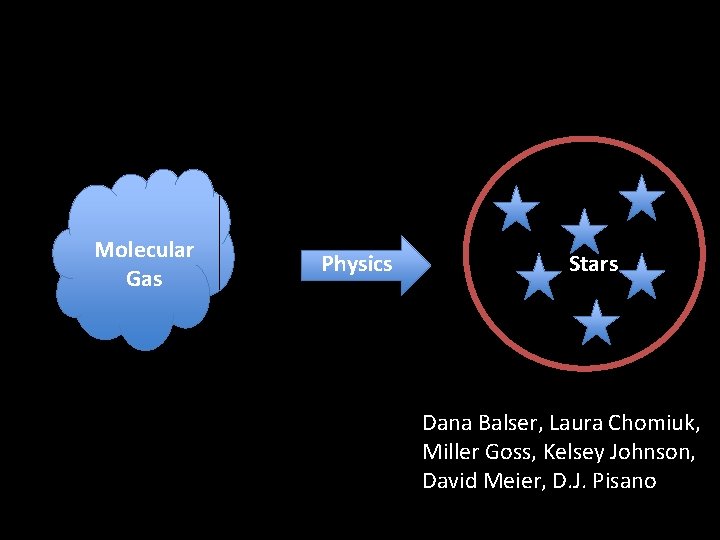
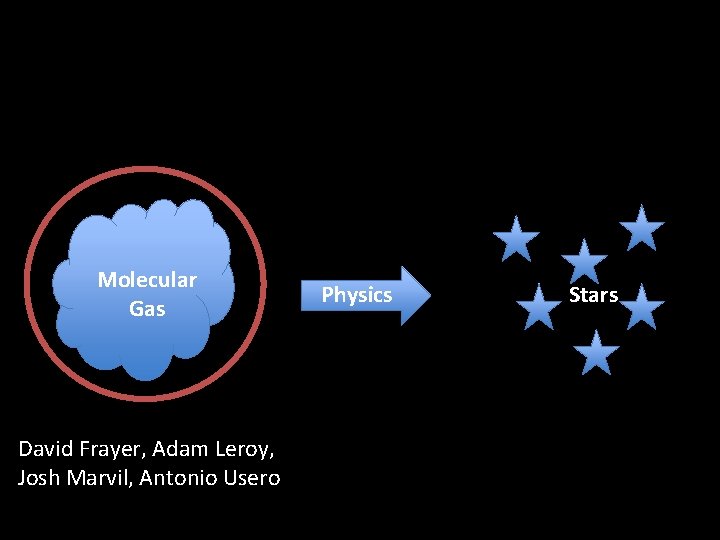
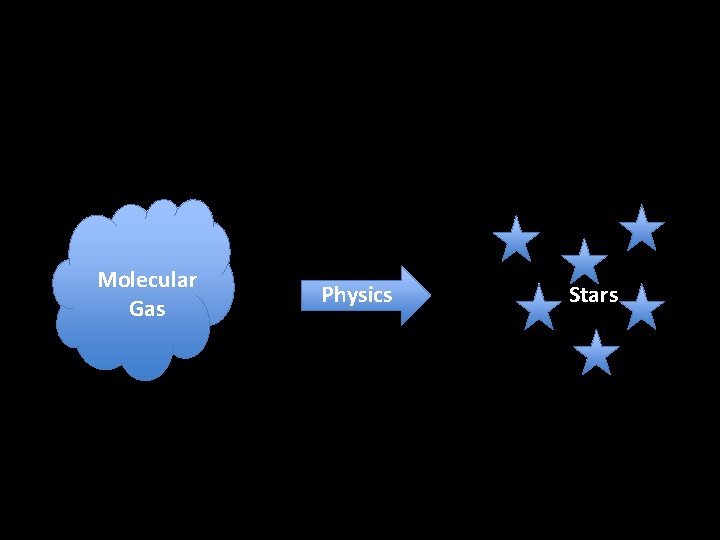
Molecular gas clouds collapse to form stars, but detailed physics is complicated. Molecular Gas Physics Stars Angular Momentum? How are molecular clouds formed? Magnetic Fields? What are their properties? Radiative Feedback? Turbulence? What are the properties of young massive stars?
Different physical processes may dominate star formation in different galaxies.
Molecular Gas Physics Stars Dana Balser, Laura Chomiuk, Miller Goss, Kelsey Johnson, David Meier, D. J. Pisano
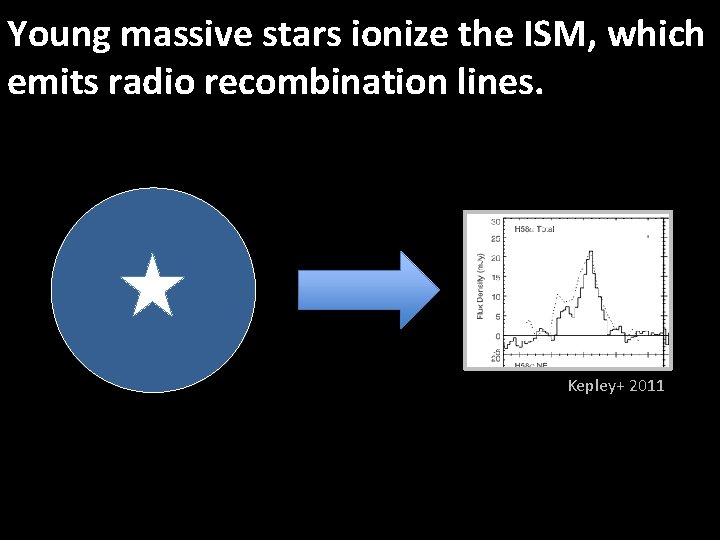
Young massive stars ionize the ISM, which emits radio recombination lines. Kepley+ 2011
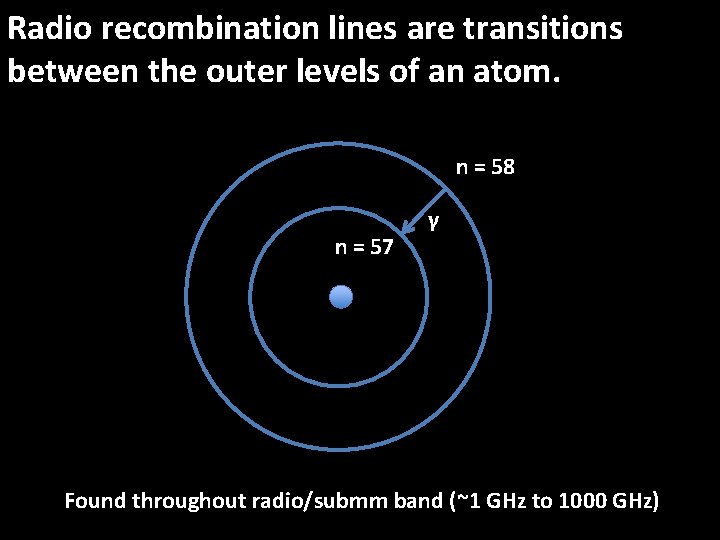
Radio recombination lines are transitions between the outer levels of an atom. n = 58 n = 57 γ Found throughout radio/submm band (~1 GHz to 1000 GHz)
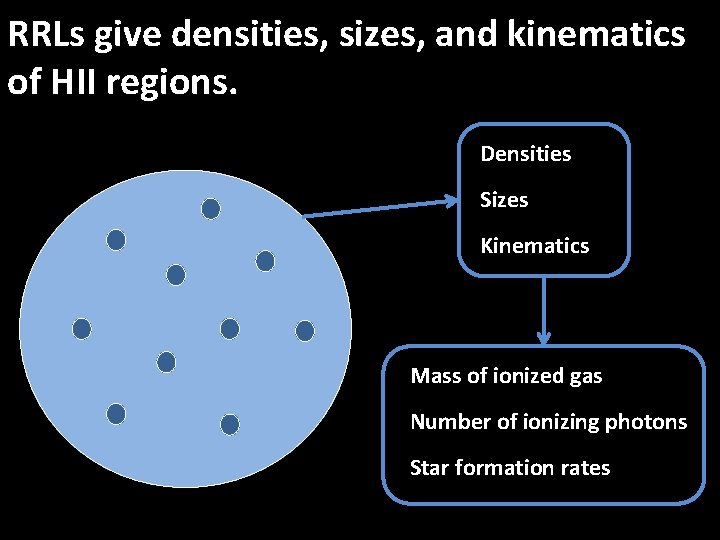
RRLs give densities, sizes, and kinematics of HII regions. Densities Sizes Kinematics Mass of ionized gas Number of ionizing photons Star formation rates
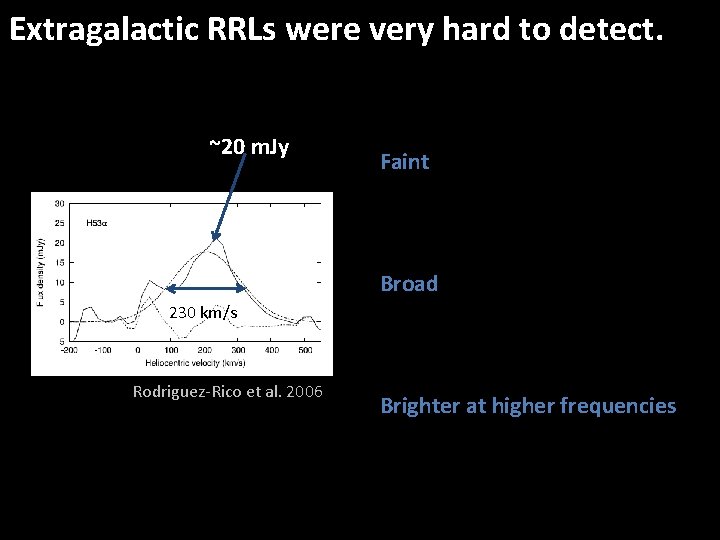
Extragalactic RRLs were very hard to detect. ~20 m. Jy Faint Broad 230 km/s Rodriguez-Rico et al. 2006 Brighter at higher frequencies
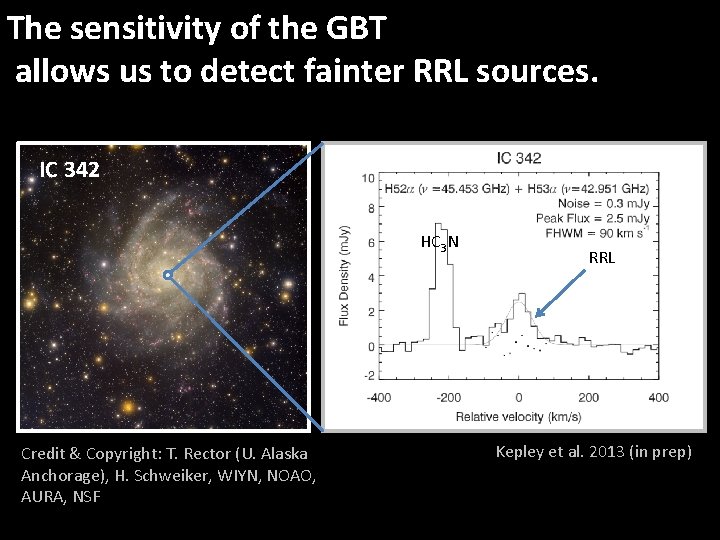
The sensitivity of the GBT allows us to detect fainter RRL sources. IC 342 HC 3 N Credit & Copyright: T. Rector (U. Alaska Anchorage), H. Schweiker, WIYN, NOAO, AURA, NSF RRL Kepley et al. 2013 (in prep)
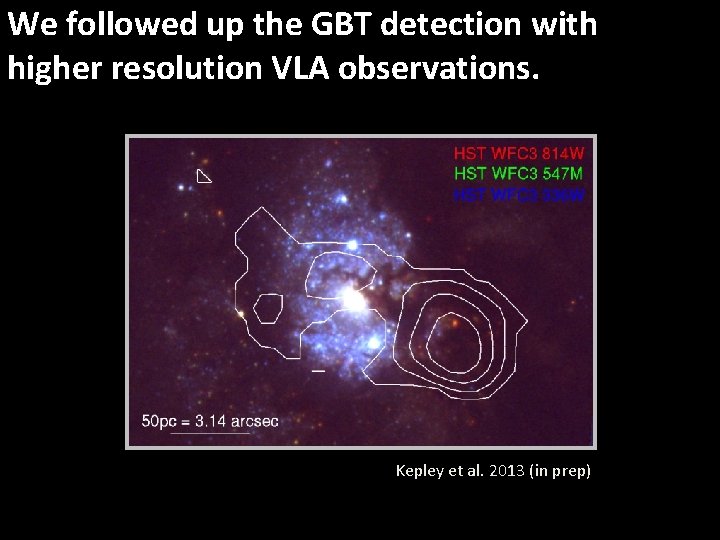
We followed up the GBT detection with higher resolution VLA observations. Kepley et al. 2013 (in prep)
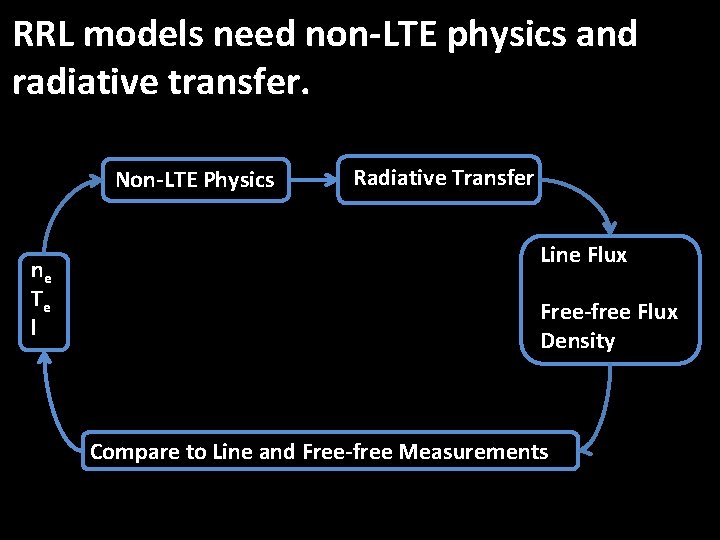
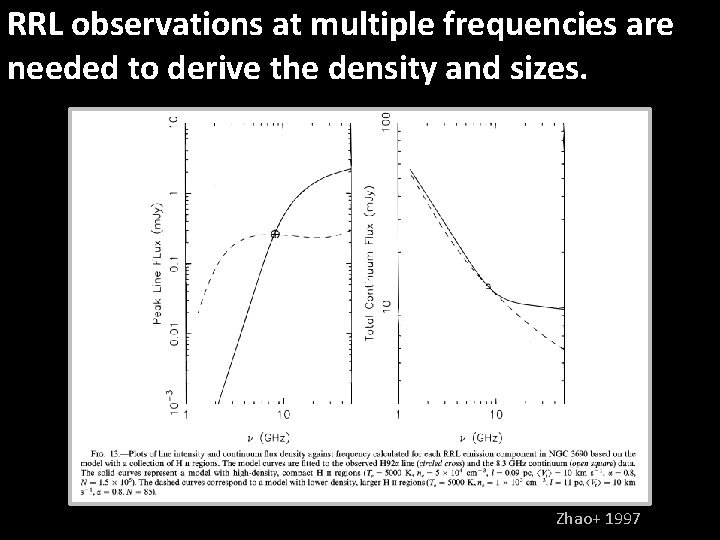
RRL models need non-LTE physics and radiative transfer. Non-LTE Physics ne Te l Radiative Transfer Line Flux Free-free Flux Density Compare to Line and Free-free Measurements
RRL observations at multiple frequencies are needed to derive the density and sizes. Zhao+ 1997
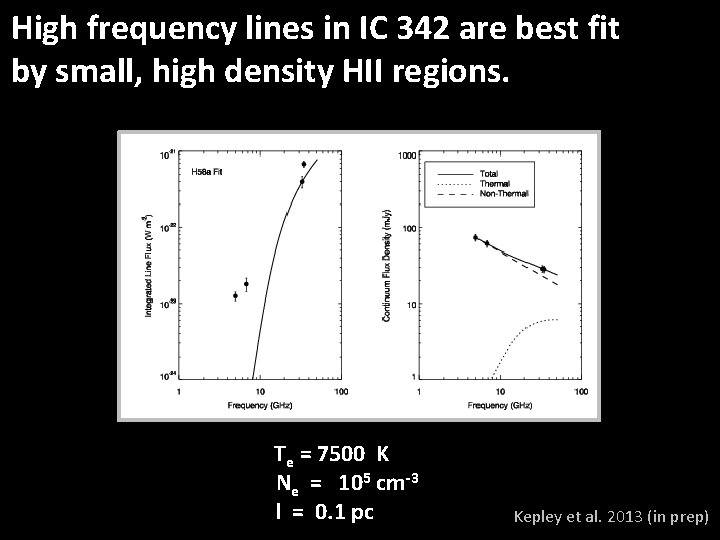
High frequency lines in IC 342 are best fit by small, high density HII regions. Te = 7500 K Ne = 105 cm-3 l = 0. 1 pc Kepley et al. 2013 (in prep)
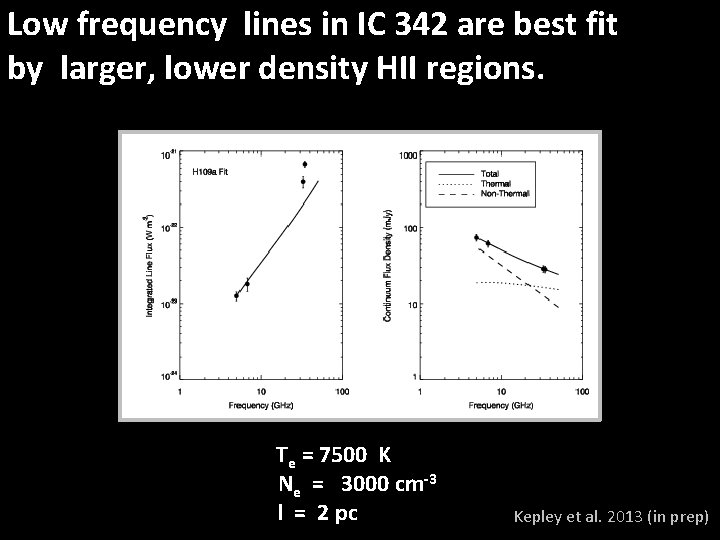
Low frequency lines in IC 342 are best fit by larger, lower density HII regions. Te = 7500 K Ne = 3000 cm-3 l = 2 pc Kepley et al. 2013 (in prep)
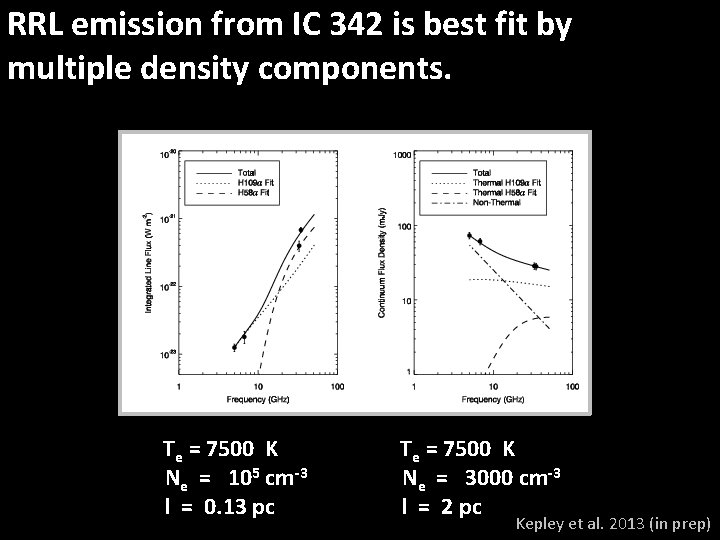
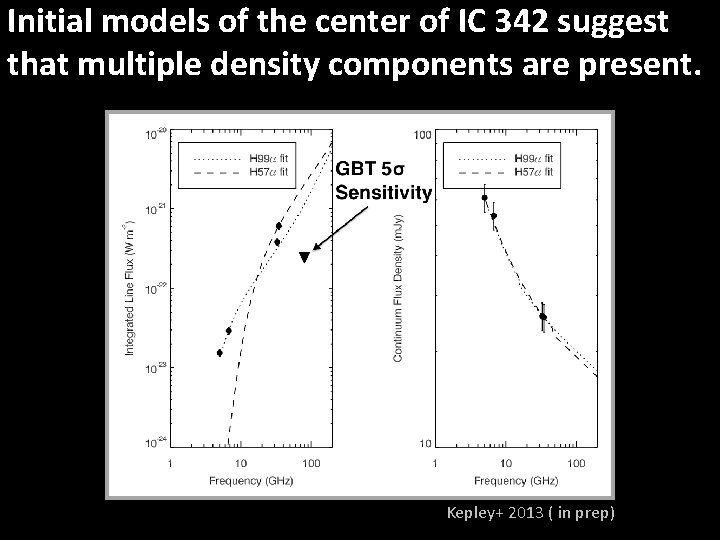
RRL emission from IC 342 is best fit by multiple density components. Te = 7500 K Ne = 105 cm-3 l = 0. 13 pc Te = 7500 K Ne = 3000 cm-3 l = 2 pc Kepley et al. 2013 (in prep)
Molecular Gas David Frayer, Adam Leroy, Josh Marvil, Antonio Usero Physics Stars
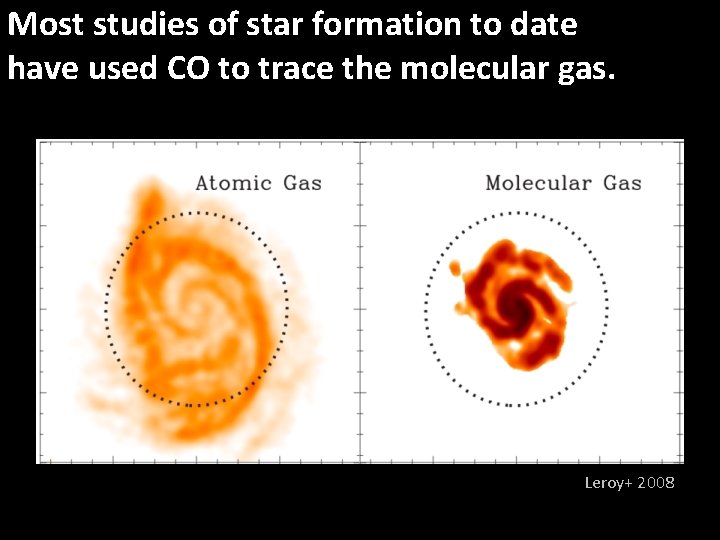
Most studies of star formation to date have used CO to trace the molecular gas. Leroy+ 2008
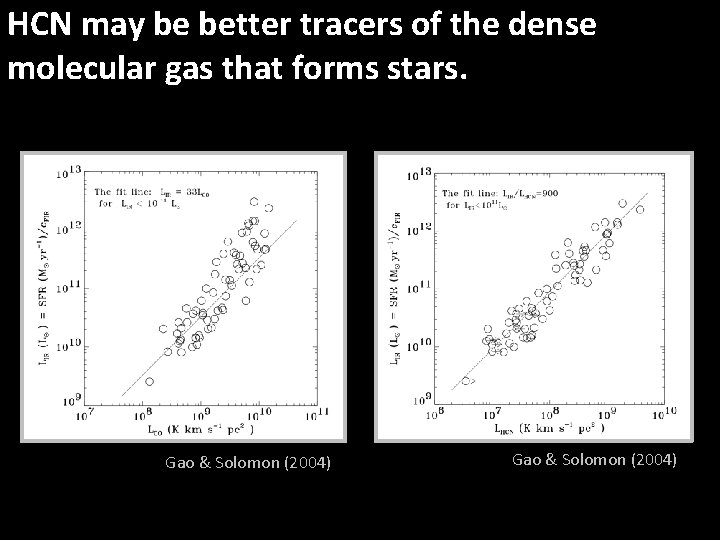
HCN may be better tracers of the dense molecular gas that forms stars. Gao & Solomon (2004)
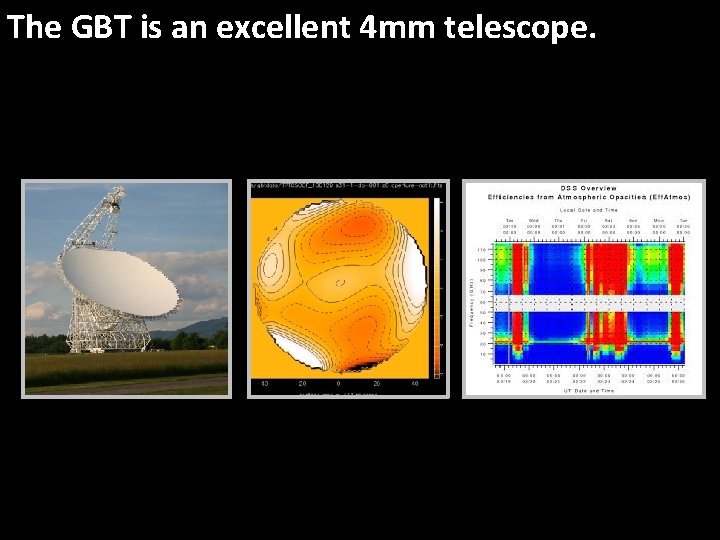
The GBT is an excellent 4 mm telescope.
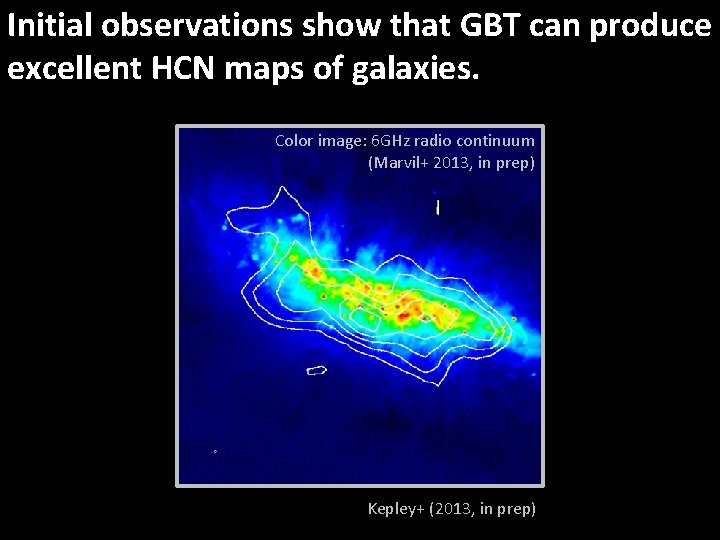
Initial observations show that GBT can produce excellent HCN maps of galaxies. Color image: 6 GHz radio continuum (Marvil+ 2013, in prep) Kepley+ (2013, in prep)
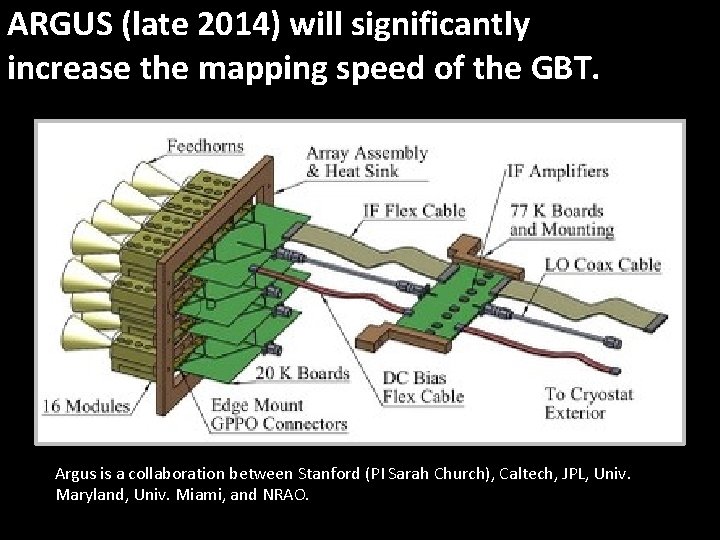
ARGUS (late 2014) will significantly increase the mapping speed of the GBT. Argus is a collaboration between Stanford (PI Sarah Church), Caltech, JPL, Univ. Maryland, Univ. Miami, and NRAO.
Molecular Gas Physics Stars
Lastest generation of radio telescope are driving studies of star formation in extreme galactic environments. The ionized gas in the center of IC 342 has multiple density components including a significant component with a density comparable to ultracompact HII regions. The capabilities of the GBT make resolved studies of the very dense, star-forming gas in galaxies possible.
akepley@nrao. edu
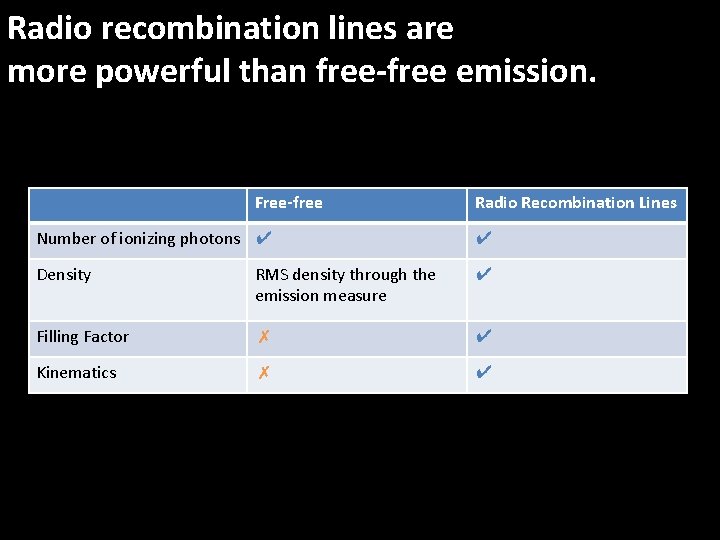
Radio recombination lines are more powerful than free-free emission. Free-free Radio Recombination Lines Number of ionizing photons ✔ ✔ Density RMS density through the emission measure ✔ Filling Factor ✗ ✔ Kinematics ✗ ✔
Initial models of the center of IC 342 suggest that multiple density components are present. Kepley+ 2013 ( in prep)