
Constitution Division Delegates met at the Constitutional Convention
- Slides: 26
Constitution
Division • Delegates met at the Constitutional Convention in the same place the Declaration of Independence was written. Several Issues divided the Convention, which are… • Delegates are people from each colony who have been chosen by the people in the delegates colony. • The Delegates are meeting because the new government has serious problems! • Rewrite or start over? • Representation? • Slavery?
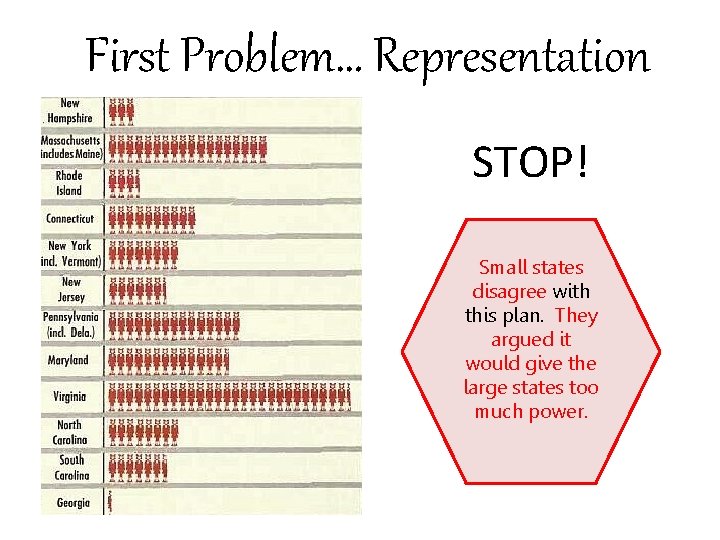
First Problem… Representation Virginia Plan • Written by James Madison • Nicknamed Large State Plan • Representatives would be chosen based on population • Population- how many people live in your state. STOP! Small states disagree with this plan. They argued it would give the large states too much power.
First Problem… Representation New Jersey Plan • Under this plan, each state would have equal number of votes. • This would give the smaller states an equal voice in national government. STOP! Large states didn’t like this plan because it thought it gave the small states more influence than they really should have.
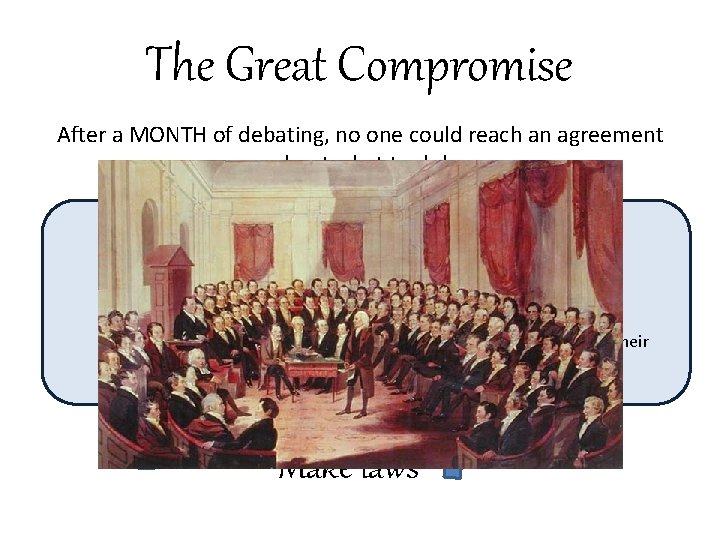
The Great Compromise After a MONTH of debating, no one could reach an agreement about what to do! House of Representatives Senate Every state, regardless of its size, would have an equal vote Make laws Each state would have representatives based on their population.
More Compromises Southern delegates wanted slaves to be counted in their population WHY? They would get more representatives in the House. VS . Northern delegates disagreed. The slaves got no rights of citizenship, so why should they be counted in the total number of citizens? Plus it made them less powerful!
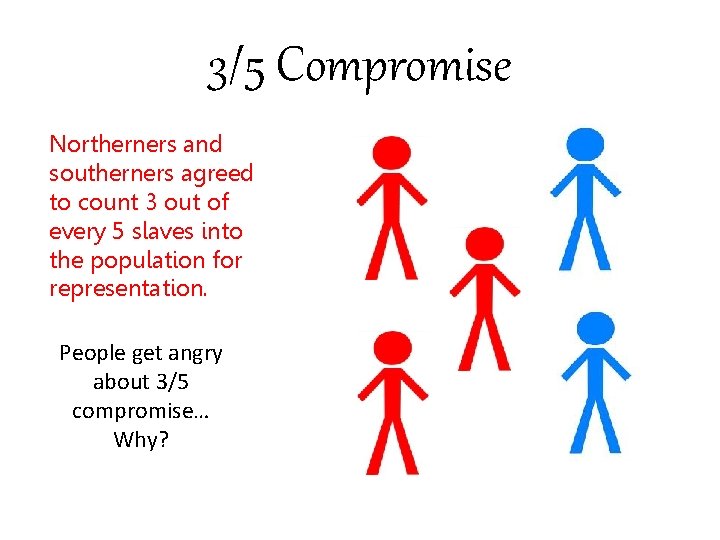
3/5 Compromise Northerners and southerners agreed to count 3 out of every 5 slaves into the population for representation. People get angry about 3/5 compromise… Why?
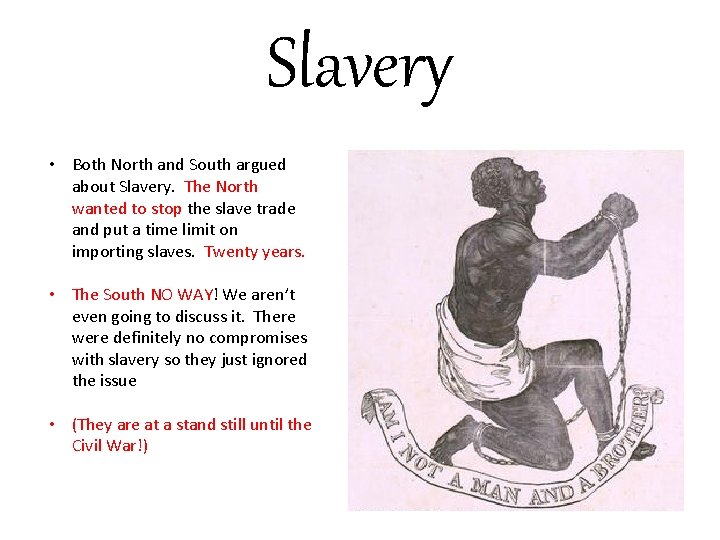
Slavery • Both North and South argued about Slavery. The North wanted to stop the slave trade and put a time limit on importing slaves. Twenty years. • The South NO WAY! We aren’t even going to discuss it. There were definitely no compromises with slavery so they just ignored the issue • (They are at a stand still until the Civil War!)
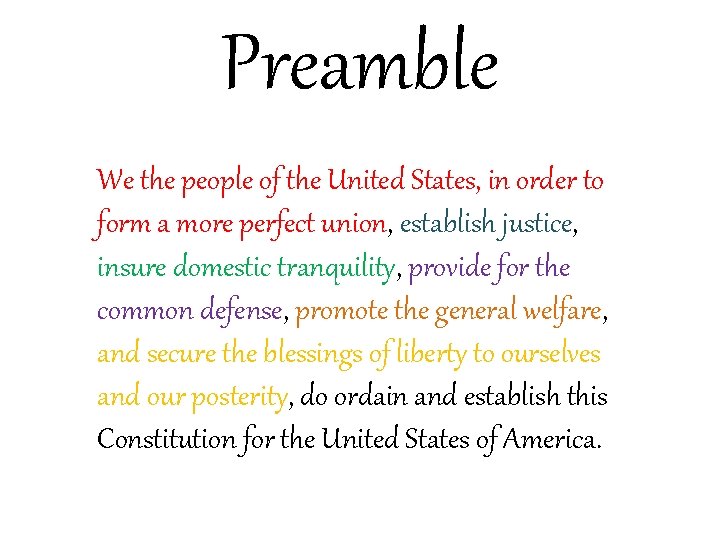
Preamble We the people of the United States, in order to form a more perfect union, establish justice, insure domestic tranquility, provide for the common defense, promote the general welfare, and secure the blessings of liberty to ourselves and our posterity, do ordain and establish this Constitution for the United States of America.
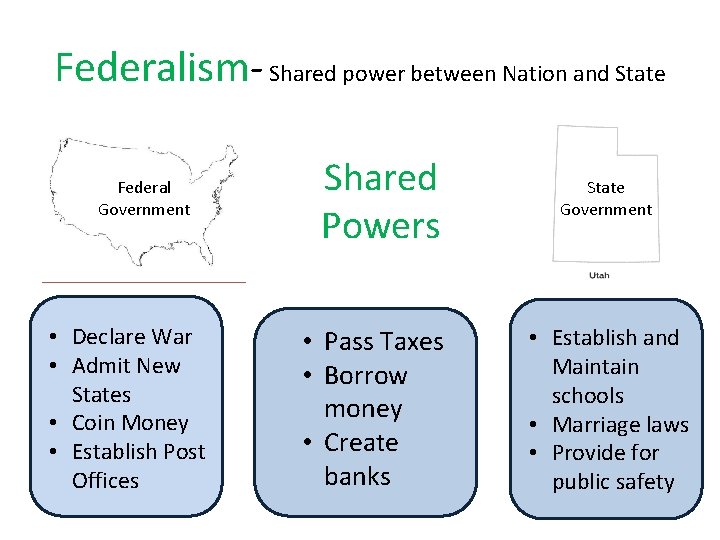
Federalism- Shared power between Nation and State Federal Government • Declare War • Admit New States • Coin Money • Establish Post Offices Shared Powers • Pass Taxes • Borrow money • Create banks State Government • Establish and Maintain schools • Marriage laws • Provide for public safety
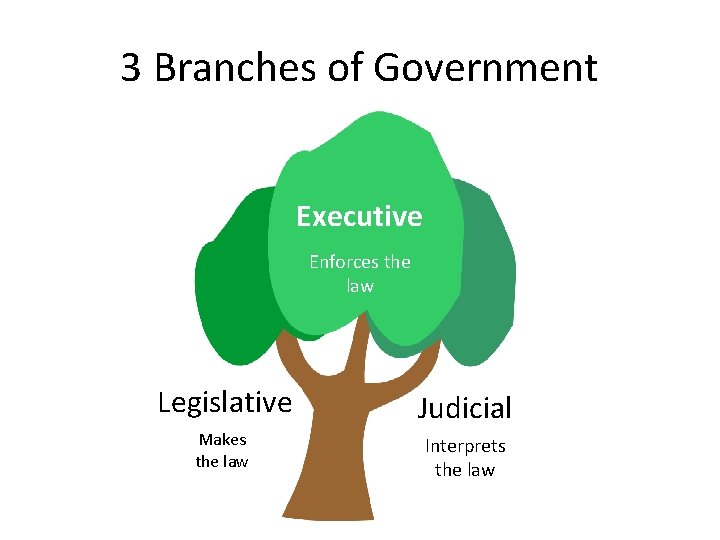
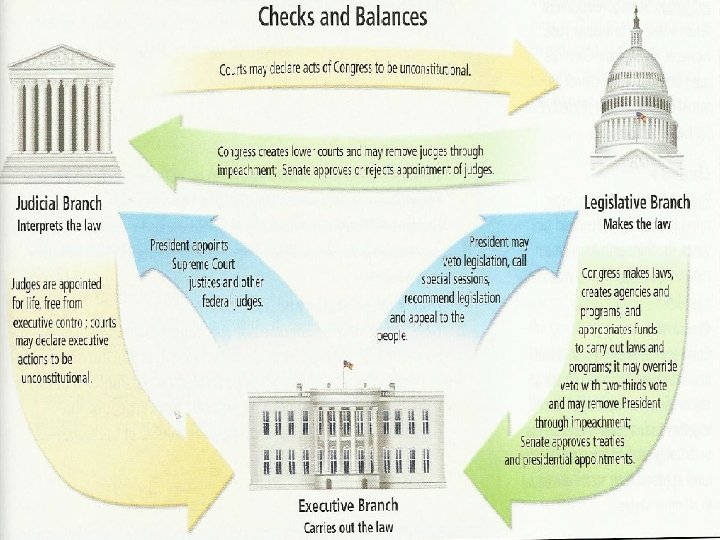
3 Branches of Government Executive Enforces the law Legislative Judicial Makes the law Interprets the law
Checks and balances Keeps one branch from being too powerful.
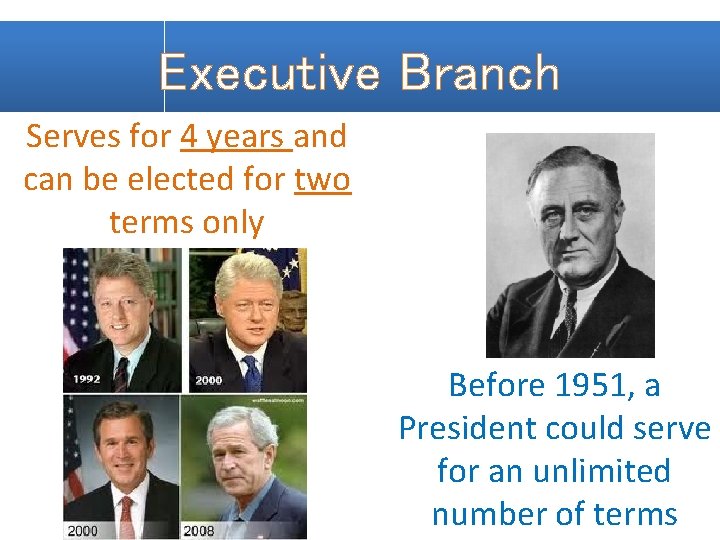
Executive Branch Serves for 4 years and can be elected for two terms only Before 1951, a President could serve for an unlimited number of terms
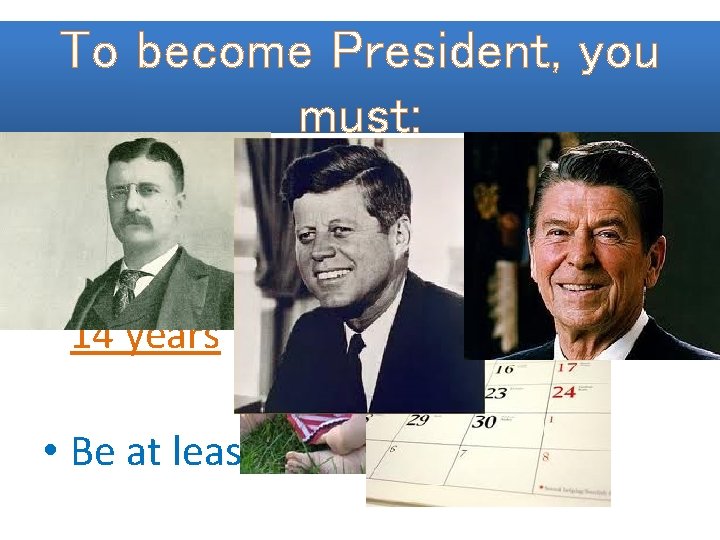
To become President, you must: • Have been born in the U. S. • Have lived in the U. S. for the last 14 years • Be at least 35 years old
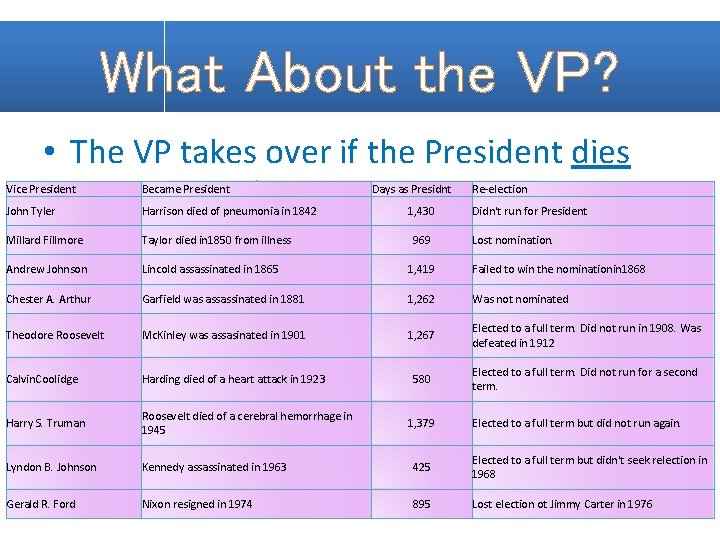
What About the VP? • The VP takes over if the President dies Vice President Became President Days as Presidnt John Tyler Harrison died of pneumonia in 1842 Millard Fillmore Taylor died in 1850 from illness Andrew Johnson Lincold assassinated in 1865 1, 419 Failed to win the nominationin 1868 Chester A. Arthur Garfield was assassinated in 1881 1, 262 Was not nominated Theodore Roosevelt Mc. Kinley was assasinated in 1901 1, 267 Elected to a full term. Did not run in 1908. Was defeated in 1912 Calvin. Coolidge Harding died of a heart attack in 1923 580 Elected to a full term. Did not run for a second term. Harry S. Truman Roosevelt died of a cerebral hemorrhage in 1945 Lyndon B. Johnson Kennedy assassinated in 1963 425 Elected to a full term but didn't seek relection in 1968 Gerald R. Ford Nixon resigned in 1974 895 Lost election ot Jimmy Carter in 1976 1, 430 969 1, 379 Re-election Didn't run for President Lost nomination. Elected to a full term but did not run again.
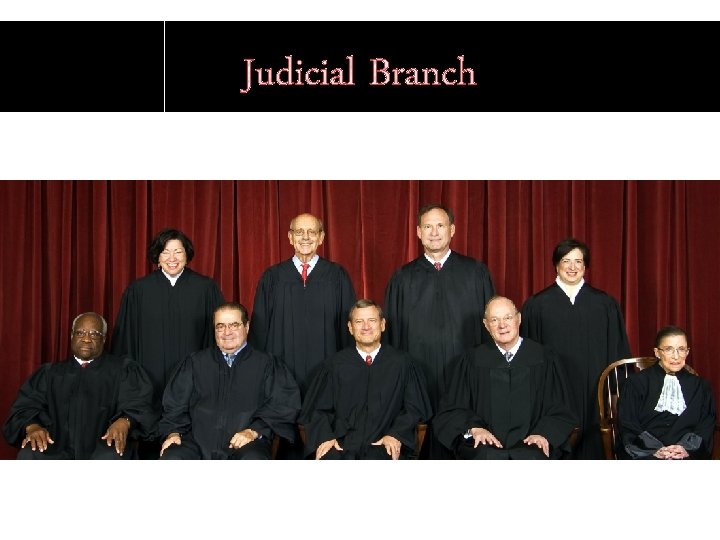
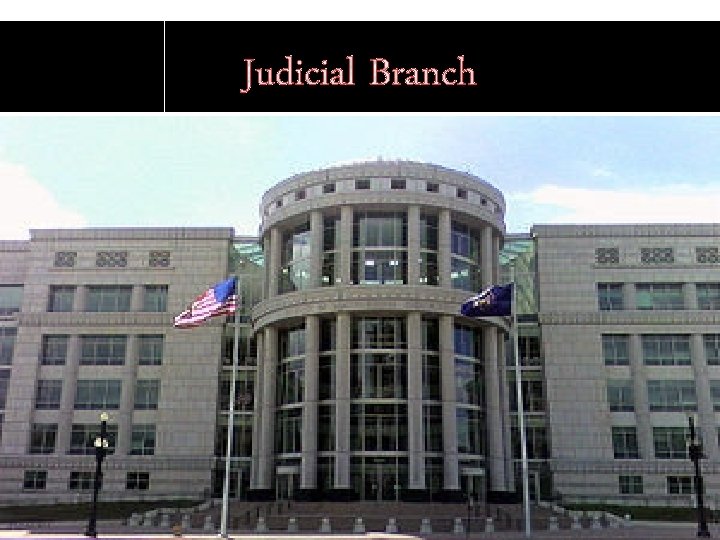
Judicial Branch
What do they do? • Interpret the Constitution • Judge federal crimes (like forging money or spying on other countries) • They don’t make laws or enforce them, they analyze them and make sure they are constitutional.
Judicial Branch • Supreme Court justices serve until they die or retire • In addition to the federal courts, each state has a state court, including a state Supreme Court – Most cases are decided within the state system because most crimes are not federal crimes.
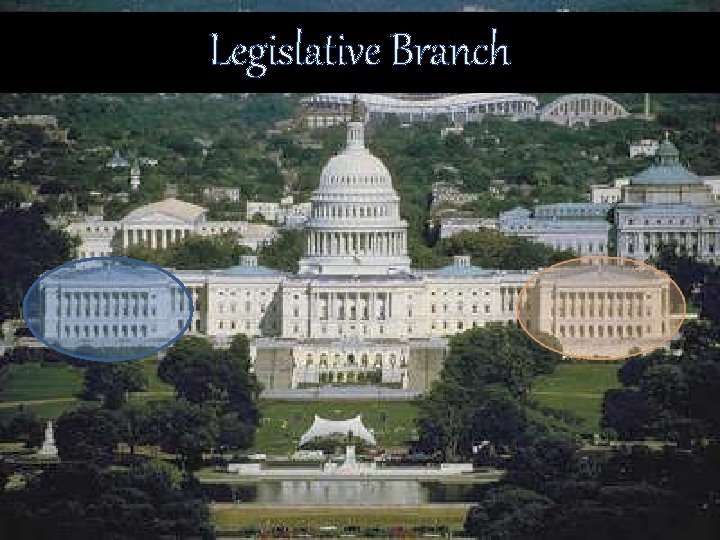
Legislative Branch
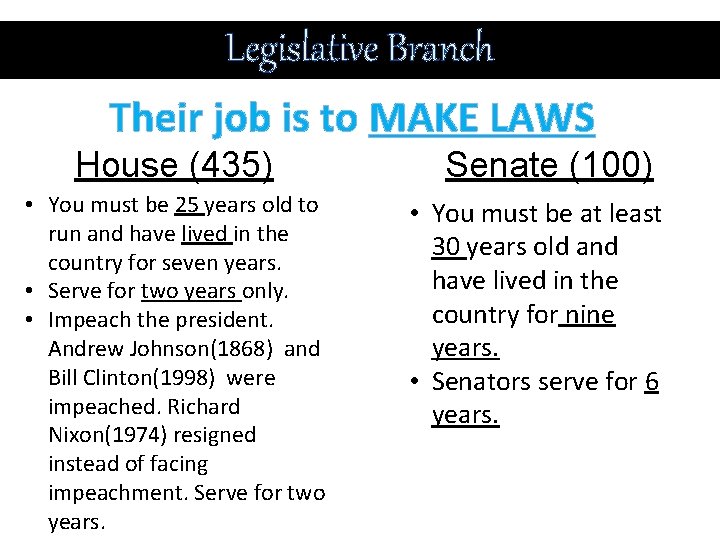
Legislative Branch Their job is to MAKE LAWS House (435) • You must be 25 years old to run and have lived in the country for seven years. • Serve for two years only. • Impeach the president. Andrew Johnson(1868) and Bill Clinton(1998) were impeached. Richard Nixon(1974) resigned instead of facing impeachment. Serve for two years. Senate (100) • You must be at least 30 years old and have lived in the country for nine years. • Senators serve for 6 years.
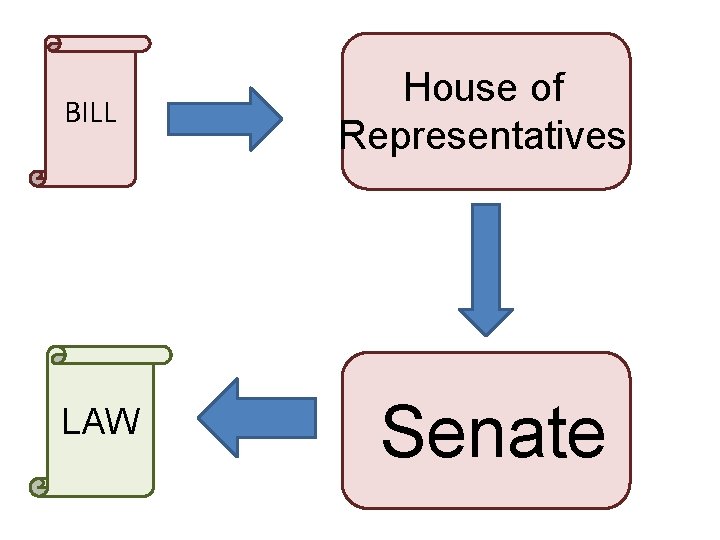
BILL LAW House of Representatives Senate
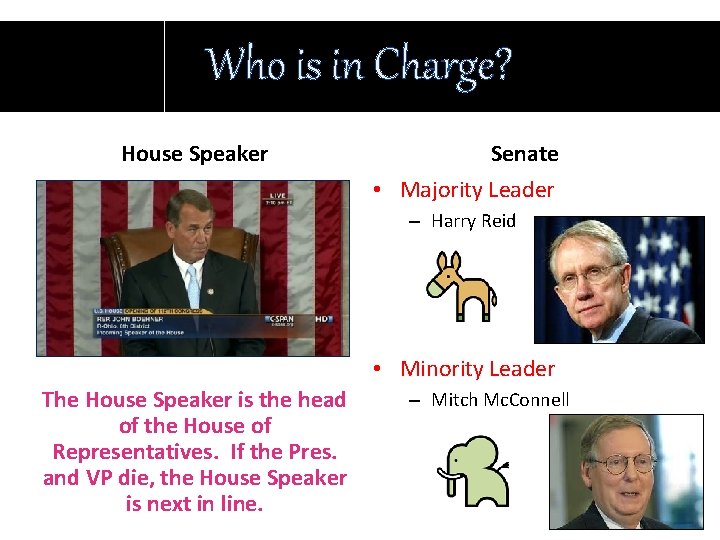
Who is in Charge? House Speaker Senate • Majority Leader – Harry Reid • Minority Leader The House Speaker is the head of the House of Representatives. If the Pres. and VP die, the House Speaker is next in line. – Mitch Mc. Connell
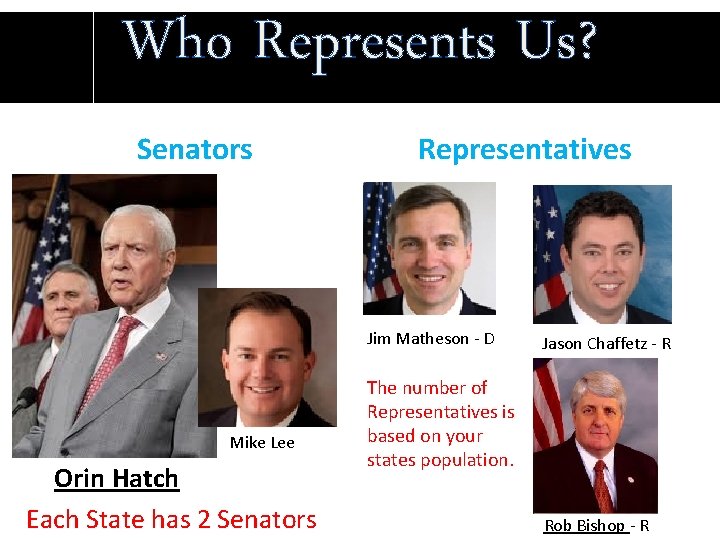
Who Represents Us? Senators Representatives Jim Matheson - D Mike Lee Orin Hatch Each State has 2 Senators Jason Chaffetz - R The number of Representatives is based on your states population. Rob Bishop - R
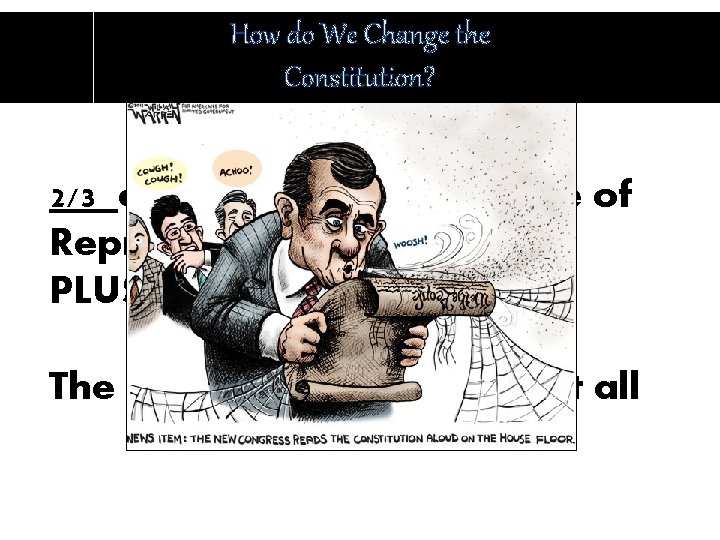
How do We Change the Constitution? 2/3 of the Senate and House of Representatives PLUS ¾ of all states The President has NO say at all
President and Congress • President and Congress must work together! • This is difficult when Congress and the President are of different parties. • Although Congress passes laws, the president can ask members of Congress to pass or reject certain bills. • The President also has the power to veto, or cancel, certain laws that Congress passes. • Congress can override a veto, but that is difficult. “What a president says and thinks is not worth five cents unless he has the people and Congress behind him. Without the Congress I’m just a six feet four Texan. With Congress, I am the President of the United States in the fullest sense. ”