
Constipation in Infants and Children Definition of Constipation

- Slides: 28
Constipation in Infants and Children
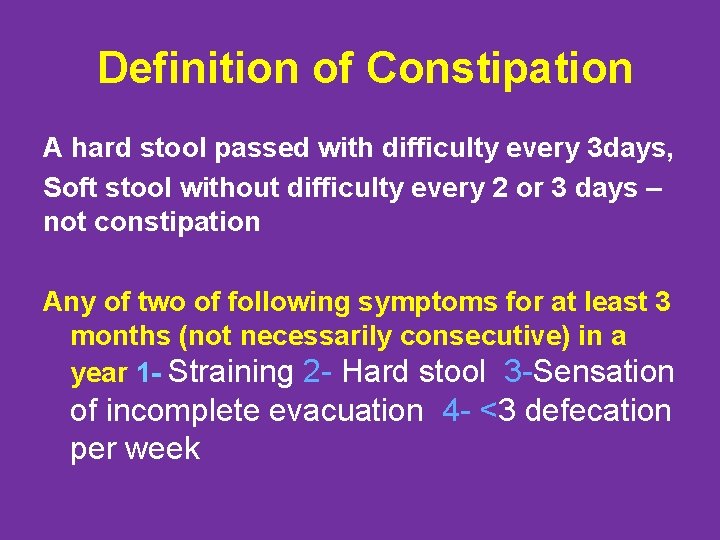
Definition of Constipation A hard stool passed with difficulty every 3 days, Soft stool without difficulty every 2 or 3 days – not constipation Any of two of following symptoms for at least 3 months (not necessarily consecutive) in a year 1 - Straining 2 - Hard stool 3 -Sensation of incomplete evacuation 4 - <3 defecation per week
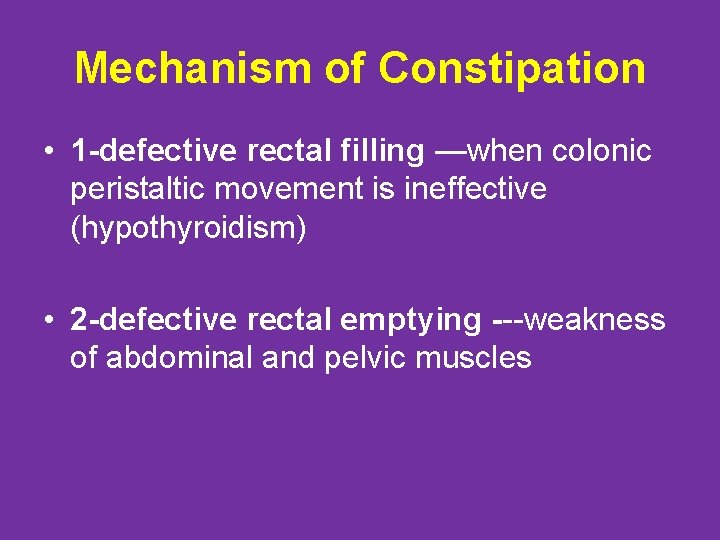
Mechanism of Constipation • 1 -defective rectal filling —when colonic peristaltic movement is ineffective (hypothyroidism) • 2 -defective rectal emptying ---weakness of abdominal and pelvic muscles
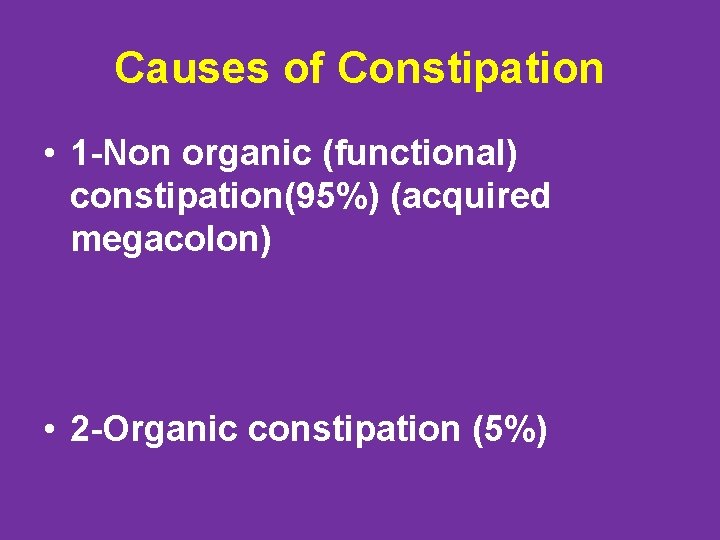
Causes of Constipation • 1 -Non organic (functional) constipation(95%) (acquired megacolon) • 2 -Organic constipation (5%)
Organic Constipation 1 -Anatomic Anal stenosis, imperforate anus, anterior displaced anus 2 -Abnormal musculature — gastroschisis and down syndrome 3 -Intestinal nerve abnormalities (Hirsch sprung disease) 4 -Spinal cord defects---spina bifida
Organic Constipation • • 5 -Metabolics disorders Hypokalemia Hypercalcemia Hypothyroidism DM 6 -Drugs Anticholinergic antidepressants
Functional Constipation • Constipation is defined by a delay or difficulty in defecation of hard stool with significant to cause distress to the patient , without evidence of underlying structural or metabolic defect • Functional constipation, also known as idiopathic constipation or fecal withholding or (acquired megacolon)
Functional Constipation • 1 -The child develops constipation due to fever or inadequate diet • 2 -Poor management due to absence of laxative and fluids • 3 -Passage of hard stool –- rectal mucosal abrasion or fissure –-- painful defecation • 4 -Fear of defecation—voluntary contraction of gluteal muscles and stiffening of the legs with voluntary withholding • 5 - When the rectum distended—defecate of hard stool and vicious circle
Functional Constipation Clinical picture • Age (3 -6 years) • 1 -Longstanding constipation with palpable fecal mass • 2 -Abdominal pain but distension is minimal • 3 -Rectal exam—distended loaded rectum • 4 -Sioling—passage of loose stool in clothes
Functional Constipation Diagnosis (exclude organic cause) • 1 -Metabolic testing — to exclude hypercalcemia and hypothyrodism • 2 -MRI of spine ---to exclude spinal cord disorders • 3 -Barium enema –to exclude structural abnormalities
Functional Constipation Treatment • 1 -Patient education — regular bowel training and sitting on the toilet for 5 -10 min after each meal • 2 -Relief of impaction—by enema • 3 -Softening of stool –by lactulose and other laxatives
Newborns • First meconium stool usually passed within the first 36 hours of birth in normal newborns – 90% pass meconium within 24 hour – Breastfed infants can stool with each feeding – Formula fed infants tend to stool more regularly than breastfed infants
Delayed Passage of Meconium • Anatomical (Anal stenosis, imperforate anus, anterior displaced anus • Hirschsprung’s Disease • Meconium Ileus and plug • Small left colon • Maternal Drugs • Hypothyroidism
Hirschsprung disease • Hirschsprung disease, or congenital megacolon, characterized by the absence of ganglion cells in the submucosal and myenteric plexus. It is the most common cause of lower intestinal obstruction in neonates, with an overall incidence of 1 in 5, 000 live births. The male: female ratio is 4 : 1
Hirschsprung disease • There is an increased familial incidence (AR, AD) and may be associated with other congenital defects, including Down, Smith-Lemli-Opitz, cartilage-hair hypoplasia, and congenital hypoventilation (Ondine's curse) syndromes
Hirschsprung disease Pathogenesis • Hirschsprung disease is the result of an absence of ganglion cells in the bowel wall • The aganglionic segment is limited to the rectosigmoid in 80% of patients. Approximately 10% to 15% of patients have long-segment disease, defined as disease proximal to the sigmoid colon
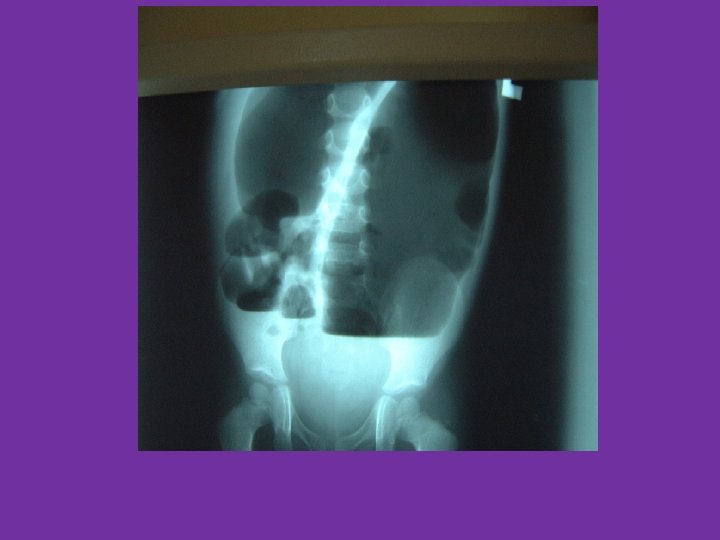
Hirschsprung disease Clinical picture 1 -Delayed passage of meconium 90% of neonates pass meconium in the first 24 hours of age. . Any newborn who fails to pass meconium after 36 hours of life should be evaluated for Hirschsprung's disease. 2 -Stasis allow proliferation of bacteria colstridium difficile, staphylococcus aureus 3 -Recurrent Enterocolitis (toxic megacolon) Fever. sever Abdominal distension. Bile stained vomiting Dehydration. Shock.
Hirschsprung disease 4 -Spontanous perforation occurs in 3% 5 -Growth retardation and failure to thrive From protein losing enteropathy 6 -Large fecal mass is palpaple in the left lower abdomen 7 -Rectal exam — empty and the examination followed by explosive discharge of foul odor of feces and gases
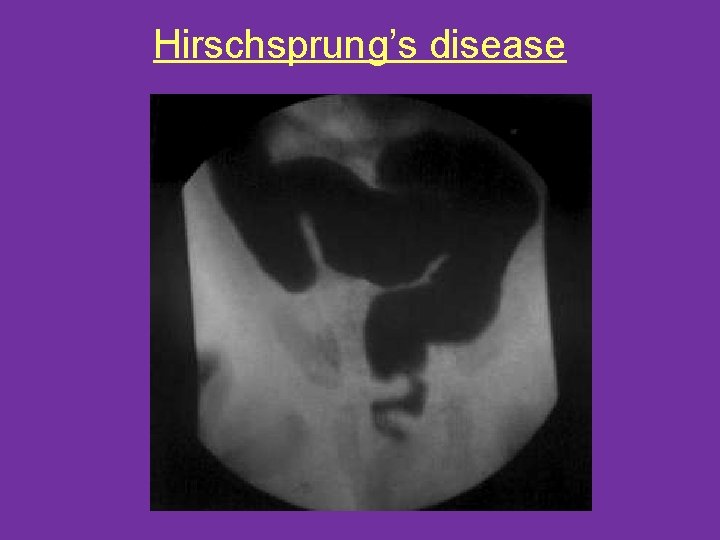
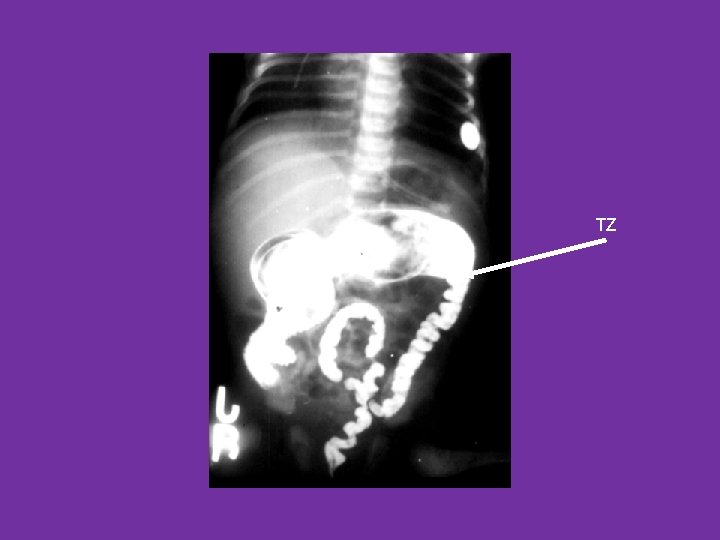
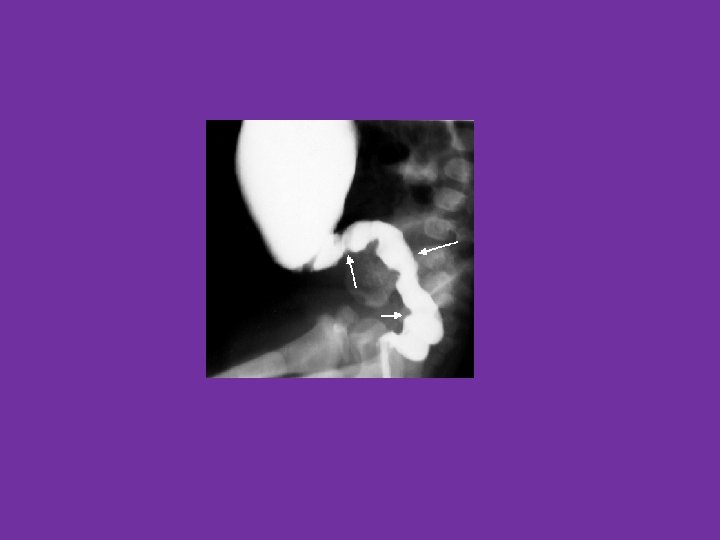
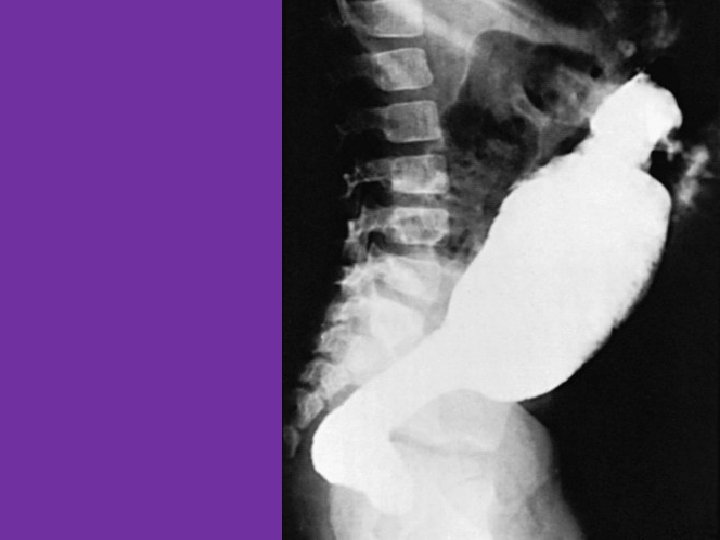
Diagnosis of Hirschsprung disease • 1 -Barium enema — presence of transition zone between normal dilated proximal colon and small obstructed distal colon and delayed emptying of barium • 2 -Anorectal manometry — normal balloon dilatation of rectum leads to relaxation of internal anal sphinicter(not in Hirschsprung disease) • 3 -Rectal biopsy —absence of ganglions from rectosigmoid segment with acetylcholineestase staining
Treatment of Hirschsprung disease Treatment Surgical 1 -Temporary colostomy 2 -Definitive repair after(6 -12 months) resection with end to end anastomoses
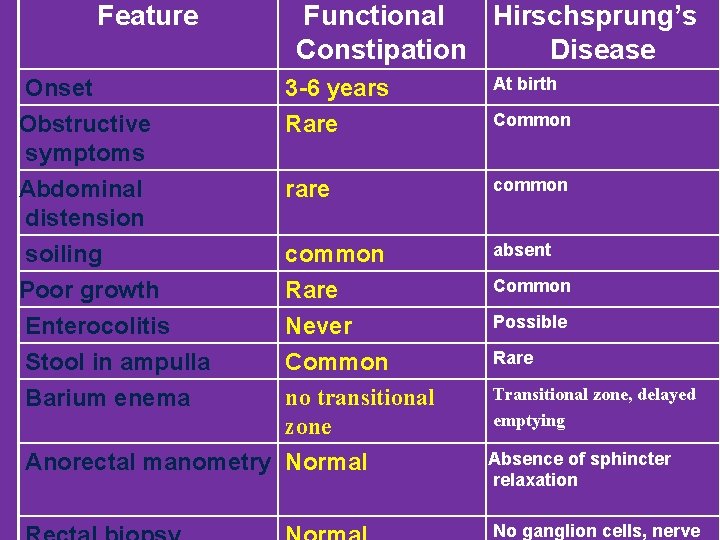
Feature Functional Hirschsprung’s Constipation Disease Onset 3 -6 years At birth Obstructive symptoms Rare Common Abdominal distension rare common soiling common absent Poor growth Rare Common Enterocolitis Never Possible Stool in ampulla Common no transitional zone Rare Barium enema Anorectal manometry Normal Transitional zone, delayed emptying Absence of sphincter relaxation No ganglion cells, nerve
Hirschsprung’s disease
back TZ
Anorectal Manometry
THANK YOU