
Constipation in children and young people Implementing NICE
- Slides: 19
Constipation in children and young people Implementing NICE guidance May 2010 NICE clinical guideline 99
What this presentation covers Background Scope Key priorities for implementation Discussion Find out more
Background • Prevalence of constipation: around 5– 30% of children • Exact cause not fully understood, signs and symptoms may not be recognised • Common reason for referral to secondary care • Families may be given conflicting advice • Early identification and effective treatment improves outcomes
Scope Diagnosis and management of idiopathic childhood constipation in primary and secondary care Covers newborns, infants and children and young people up to their 18 th birthday who have idiopathic constipation Does not cover constipation with a known cause
Definitions • Idiopathic constipation • Encopresis • Disimpaction • Faecal impaction • Hirschsprung’s disease • Intractable constipation • Rome (II & III) criteria
Key priorities for implementation • History-taking and physical examination • Digital rectal examination • Disimpaction • Maintenance therapy • Diet and lifestyle • Information and support
History-taking and physical examination: 1 • Establish whether the child or young person has constipation • Establish a positive diagnosis of idiopathic constipation by excluding underlying causes
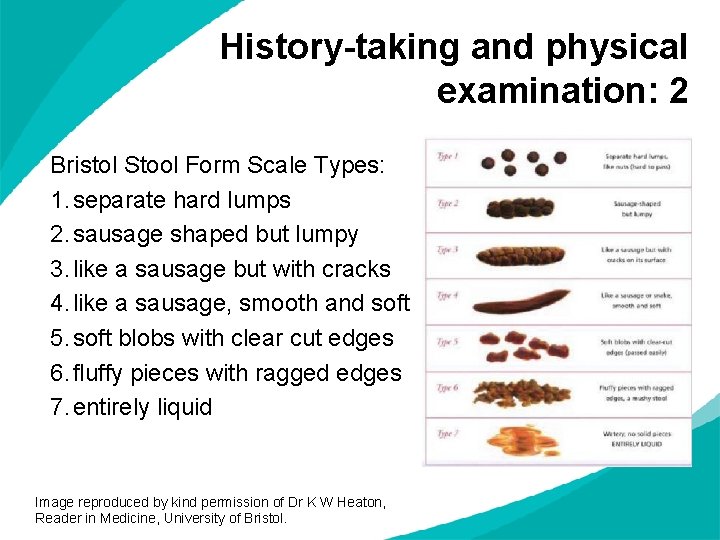
History-taking and physical examination: 2 Bristol Stool Form Scale Types: 1. separate hard lumps 2. sausage shaped but lumpy 3. like a sausage but with cracks 4. like a sausage, smooth and soft 5. soft blobs with clear cut edges 6. fluffy pieces with ragged edges 7. entirely liquid Image reproduced by kind permission of Dr K W Heaton, Reader in Medicine, University of Bristol.
History-taking and physical examination: 3 • Offer a physical examination to establish idiopathic constipation • Inform the child or young person and their parents of a diagnosis • Reassure them that there is a suitable treatment
Digital rectal examination Children older than 1 year with a possible underlying disorder • Do not perform a digital rectal examination • Refer urgently to a healthcare professional competent to perform the examination and interpret features of anatomical abnormalities or Hirschsprung’s disease
Clinical investigations Recommendations on not using: • endoscopy • manometry • radiography • ultrasound • transit studies • rectal biopsy
Disimpaction: 1 • Assess for faecal impaction • Use history taking and physical examination to diagnose faecal impaction • Look for overflow soiling and/or faecal mass palpable abdominally and/or rectally
Disimpaction: 2 • Offer oral medication for disimpaction • Inform families that disimpaction can initially increase: – symptoms of soiling – abdominal pain
Maintenance therapy • Offer oral medication for ongoing treatment • Continue maintenance dose after regular bowel habit is established • Reduce the dose over a period of months in response to stool consistency and frequency
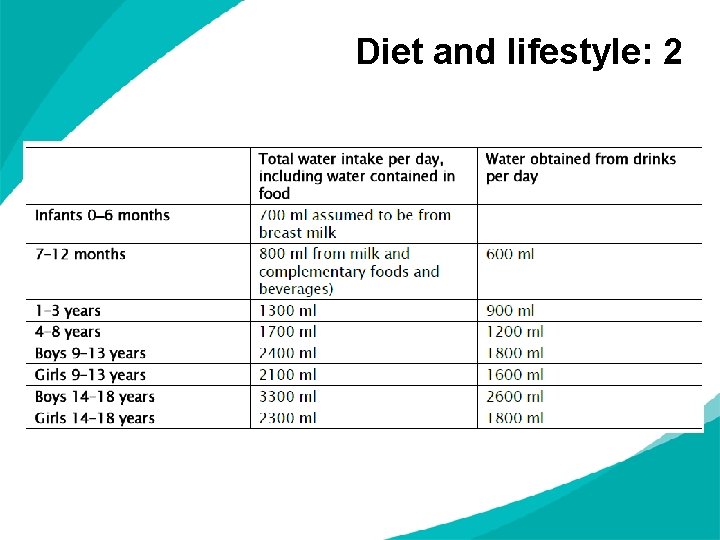
Diet and lifestyle: 1 • Do not use dietary interventions alone as first-line treatment • Treat constipation with: – laxatives – negotiated non-punitive behavioural interventions – dietary modifications and sufficient fluid consumption
Diet and lifestyle: 2
Information and support Provide tailored follow-up, including: • telephoning or face-to-face talks • detailed evidence-based information • verbal information • contact with specialist healthcare professionals, including school nurses • referral to an expert practitioner if treatment does not work within 3 months
Discussion • What support, for example training, will team members need? • How do we provide information for children and young people with constipation and their parents? • How do we involve school nurses in the care of these children and young people with constipation? • How can commissioning positively impact on early identification and management? • How can pharmacists support medicines adherence?
Find out more Visit www. nice. org. uk/CG 99 for: • • the guideline the quick reference guide ‘Understanding NICE guidance’ Costing report and statement audit support factsheet discharge advice template for history taking