
Constellations in the sky 2 The winter spring
- Slides: 21
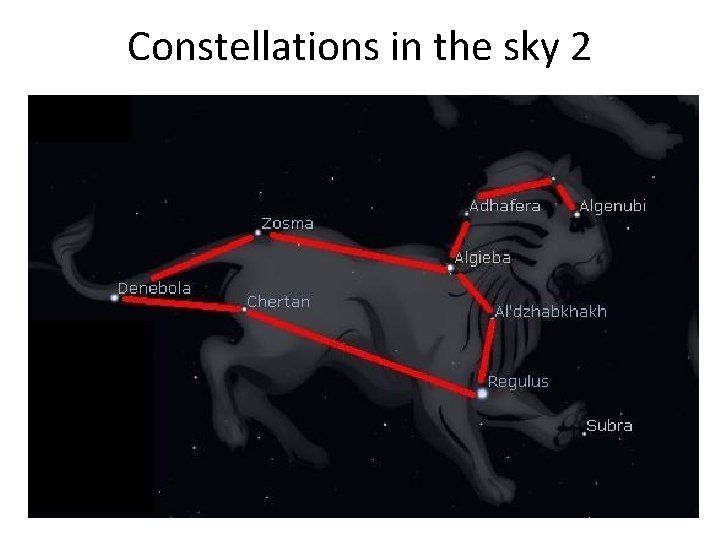
Constellations in the sky 2
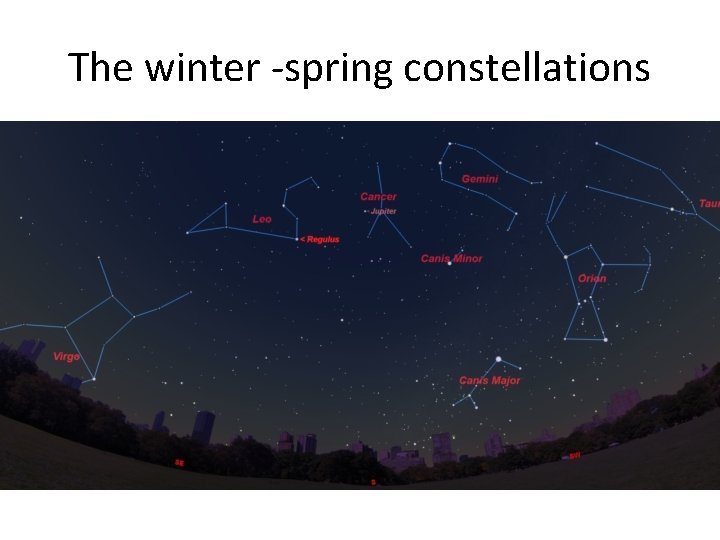
The winter -spring constellations
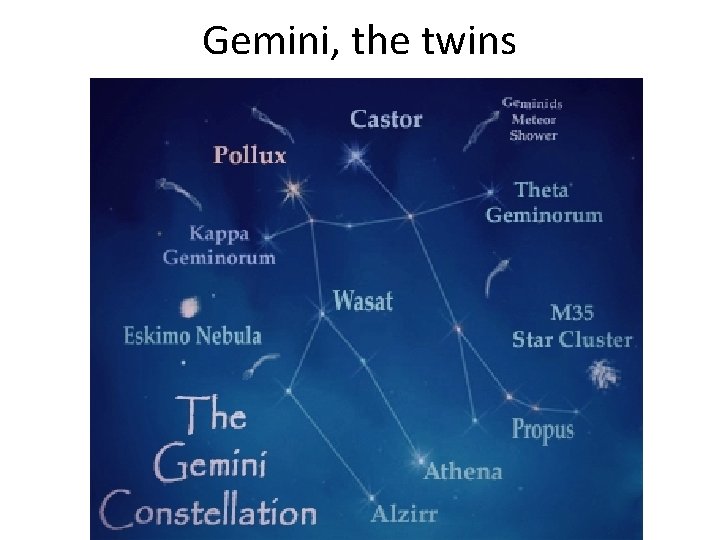
Gemini, the twins
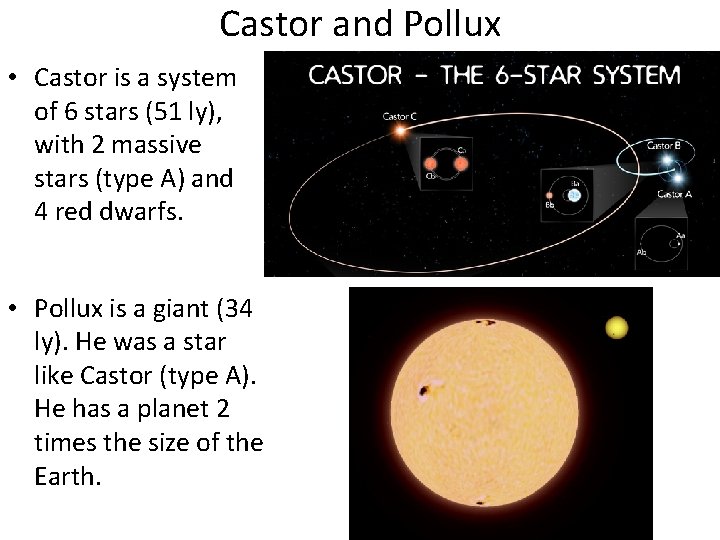
Castor and Pollux • Castor is a system of 6 stars (51 ly), with 2 massive stars (type A) and 4 red dwarfs. • Pollux is a giant (34 ly). He was a star like Castor (type A). He has a planet 2 times the size of the Earth.
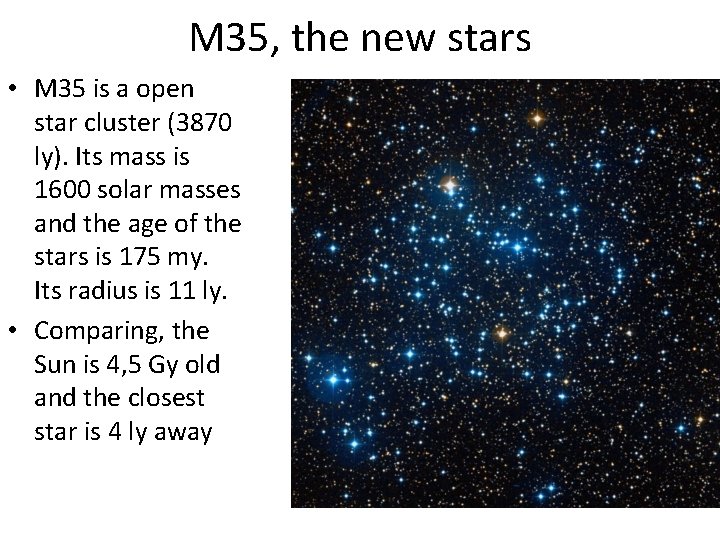
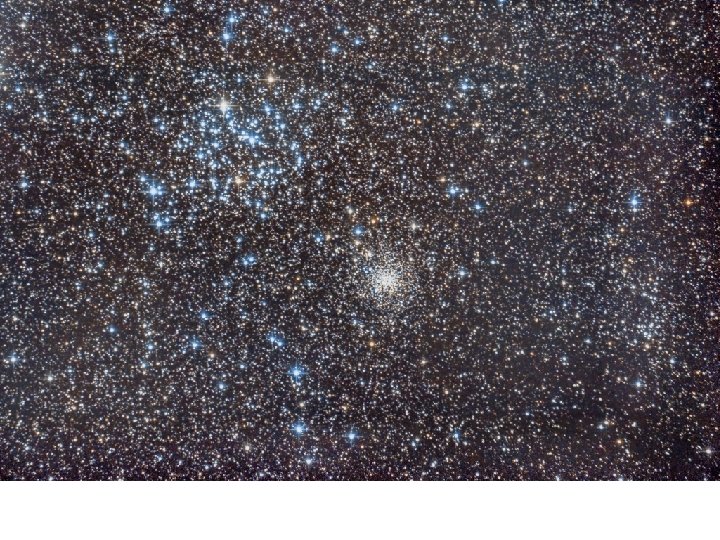
M 35, the new stars • M 35 is a open star cluster (3870 ly). Its mass is 1600 solar masses and the age of the stars is 175 my. Its radius is 11 ly. • Comparing, the Sun is 4, 5 Gy old and the closest star is 4 ly away
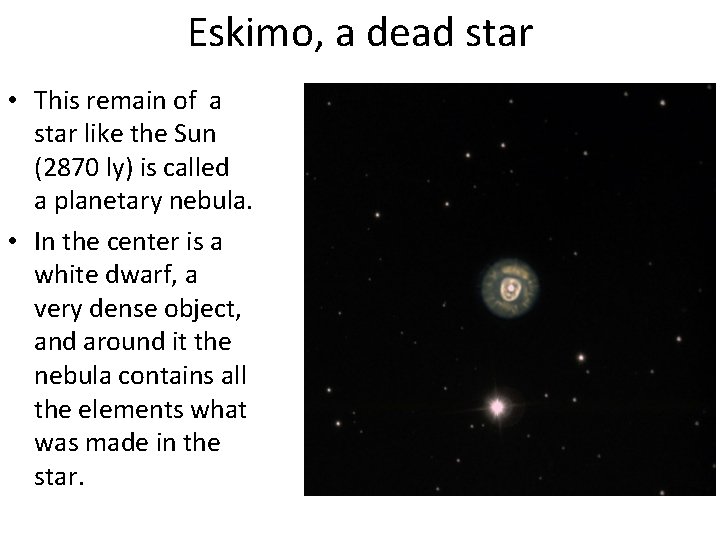
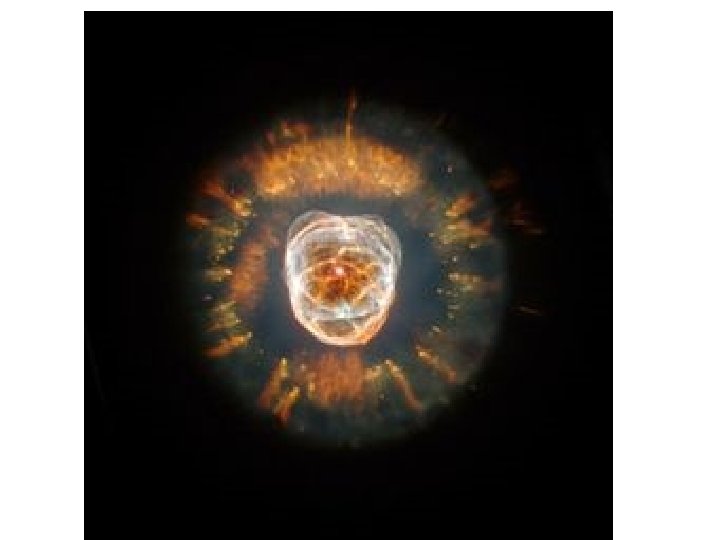
Eskimo, a dead star • This remain of a star like the Sun (2870 ly) is called a planetary nebula. • In the center is a white dwarf, a very dense object, and around it the nebula contains all the elements what was made in the star.
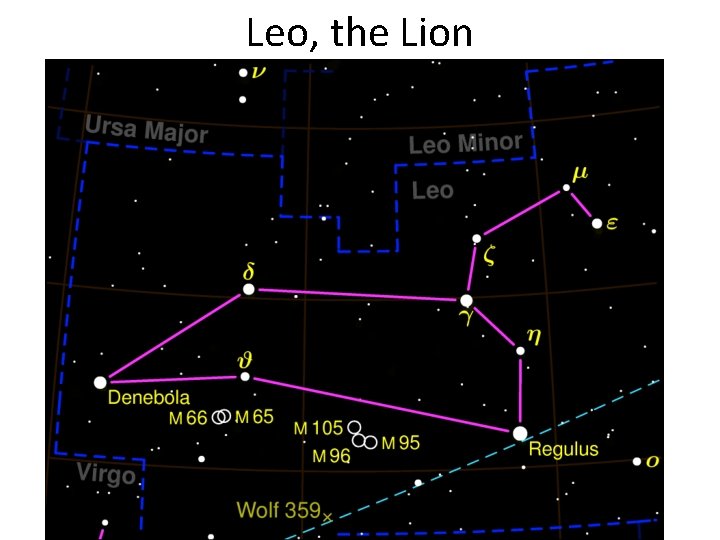
Leo, the Lion
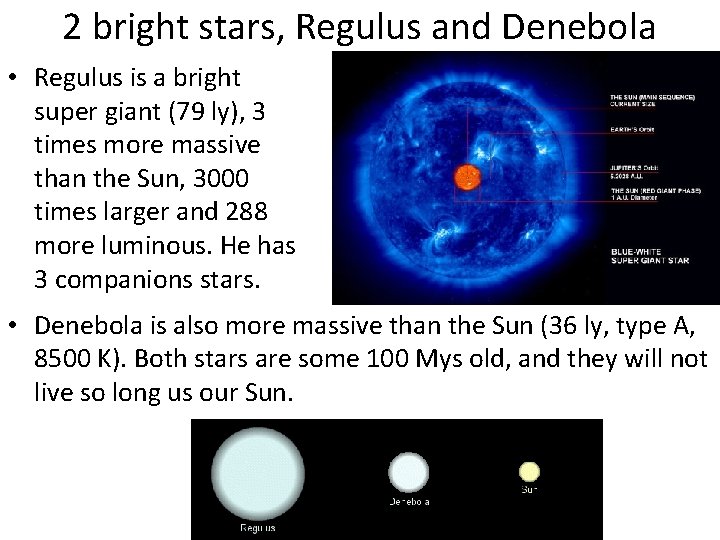
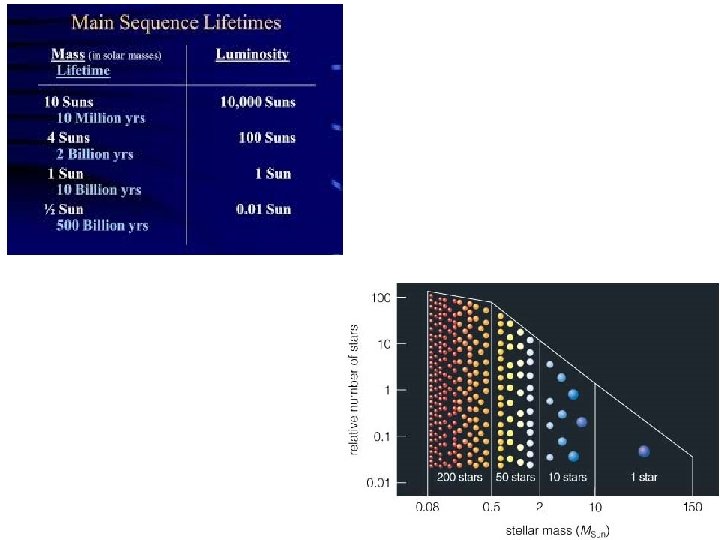
2 bright stars, Regulus and Denebola • Regulus is a bright super giant (79 ly), 3 times more massive than the Sun, 3000 times larger and 288 more luminous. He has 3 companions stars. • Denebola is also more massive than the Sun (36 ly, type A, 8500 K). Both stars are some 100 Mys old, and they will not live so long us our Sun.
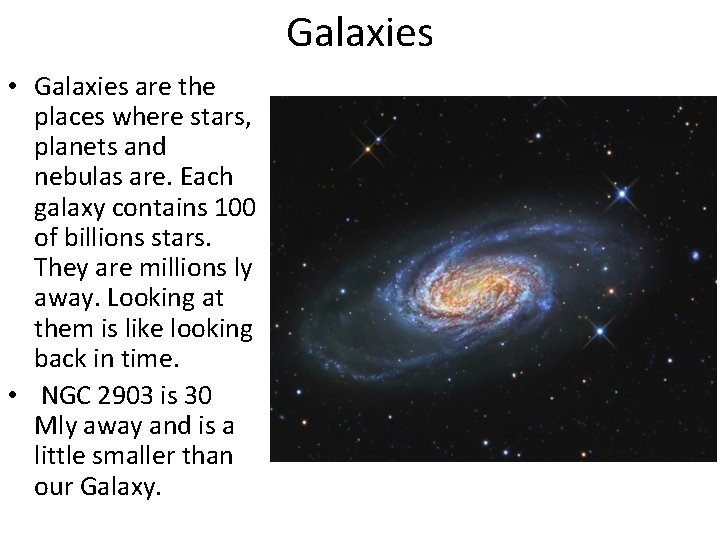
Galaxies • Galaxies are the places where stars, planets and nebulas are. Each galaxy contains 100 of billions stars. They are millions ly away. Looking at them is like looking back in time. • NGC 2903 is 30 Mly away and is a little smaller than our Galaxy.
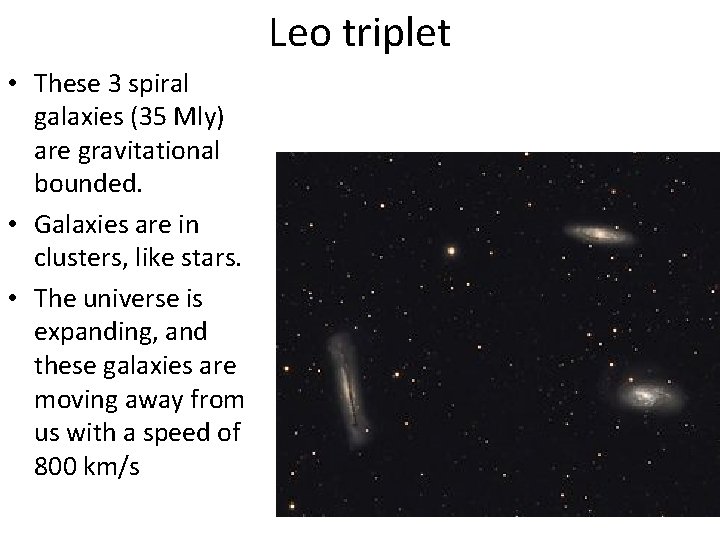
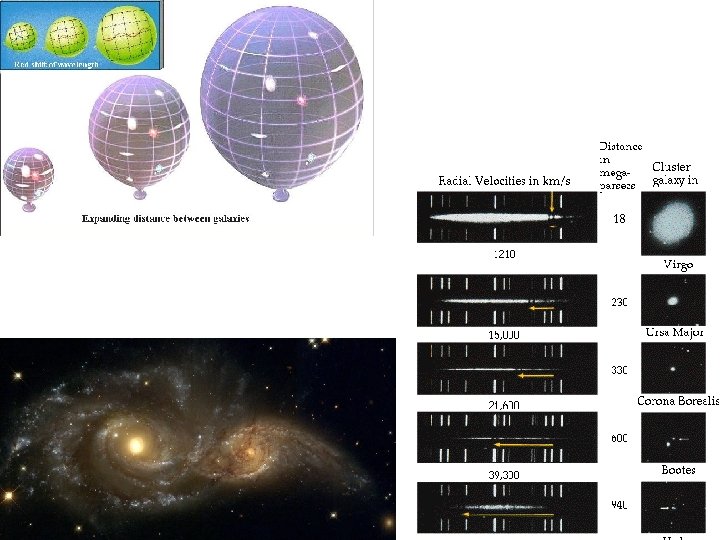
Leo triplet • These 3 spiral galaxies (35 Mly) are gravitational bounded. • Galaxies are in clusters, like stars. • The universe is expanding, and these galaxies are moving away from us with a speed of 800 km/s
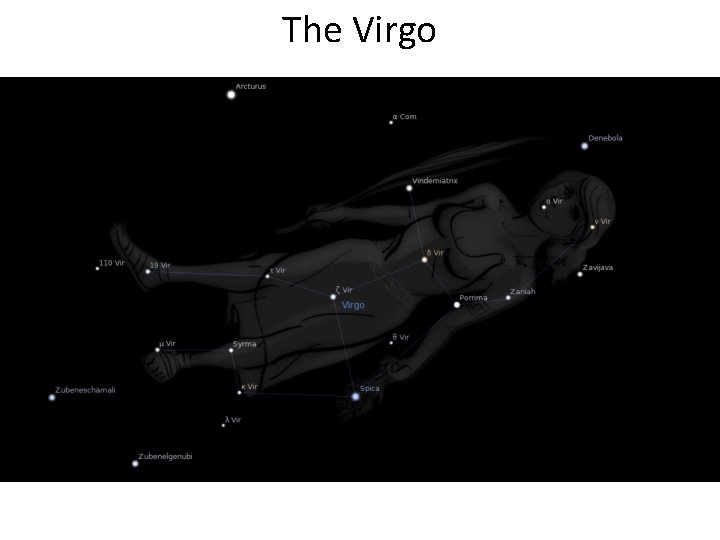
The Virgo
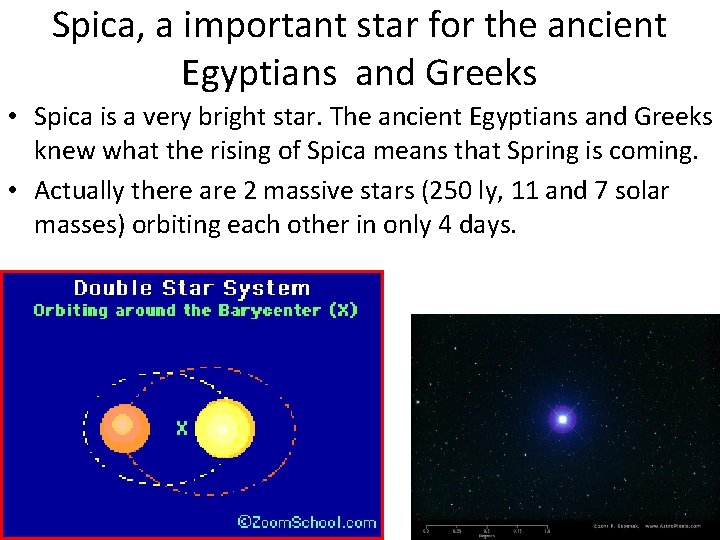
Spica, a important star for the ancient Egyptians and Greeks • Spica is a very bright star. The ancient Egyptians and Greeks knew what the rising of Spica means that Spring is coming. • Actually there are 2 massive stars (250 ly, 11 and 7 solar masses) orbiting each other in only 4 days.
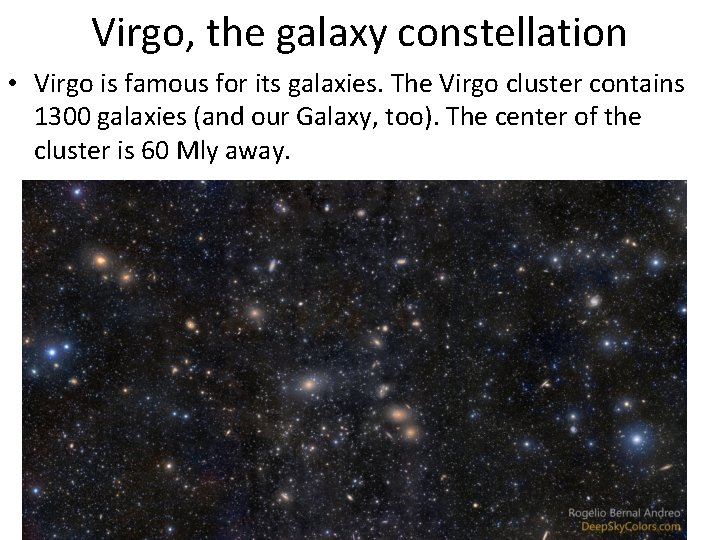
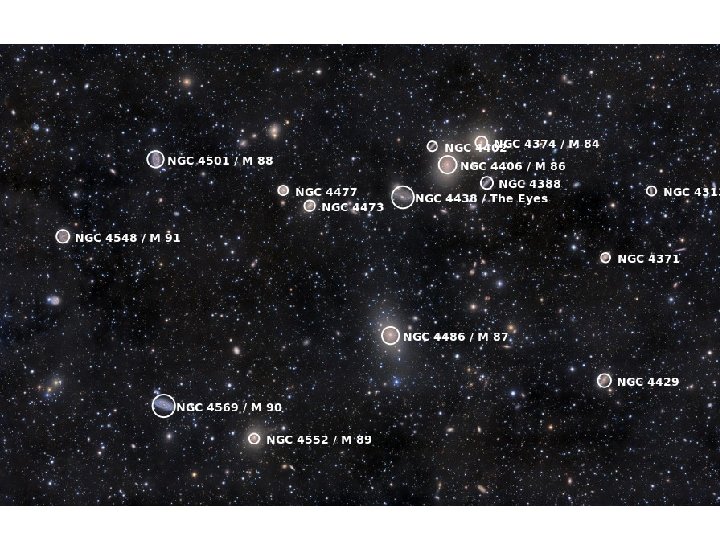
Virgo, the galaxy constellation • Virgo is famous for its galaxies. The Virgo cluster contains 1300 galaxies (and our Galaxy, too). The center of the cluster is 60 Mly away.
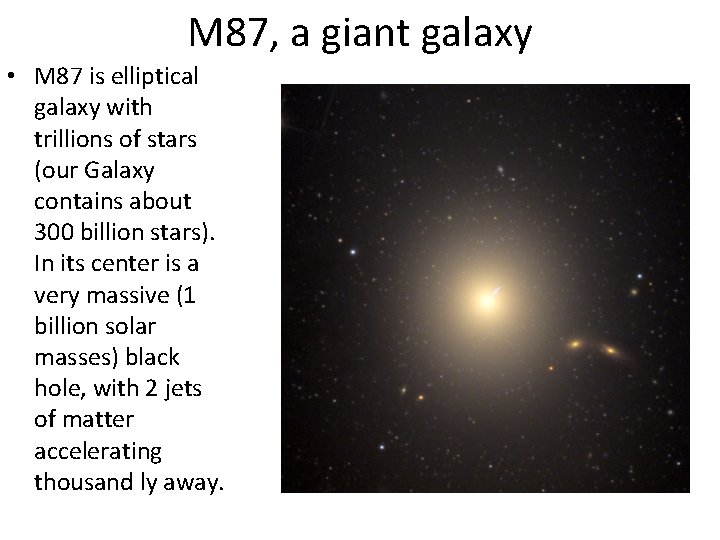
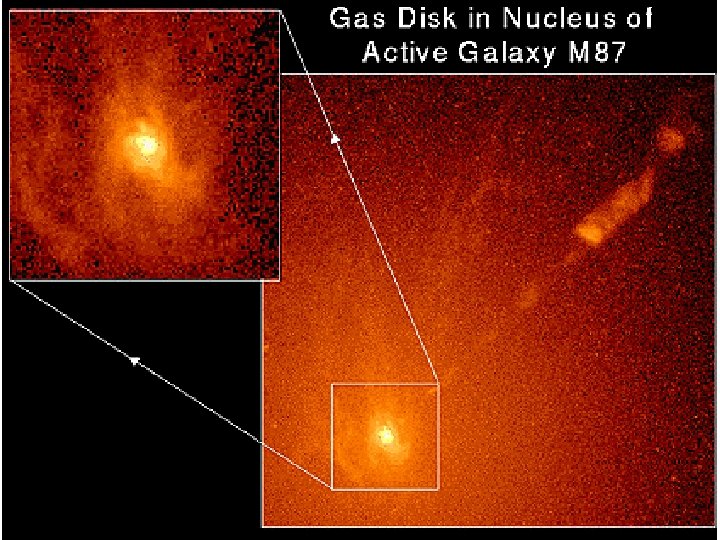
M 87, a giant galaxy • M 87 is elliptical galaxy with trillions of stars (our Galaxy contains about 300 billion stars). In its center is a very massive (1 billion solar masses) black hole, with 2 jets of matter accelerating thousand ly away.
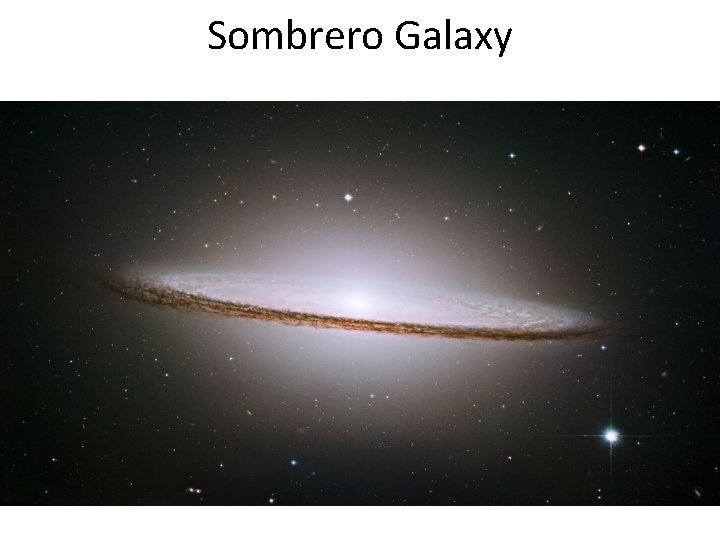
Sombrero Galaxy