
CONSTANZE DIETRICH Beuth Hochschule fr Technik Technische Universitt
CONSTANZE DIETRICH Beuth Hochschule für Technik & Technische Universität Berlin [constanze. die@gmail. com] Caught between Security and Time Pressure? An Empirical Investigation of Operator's Perspective on Security Misconfigurations
2 Outline 1 Security Misconfigurations 2 Empirical Approach 3 Preliminary Findings 4 Conclusion
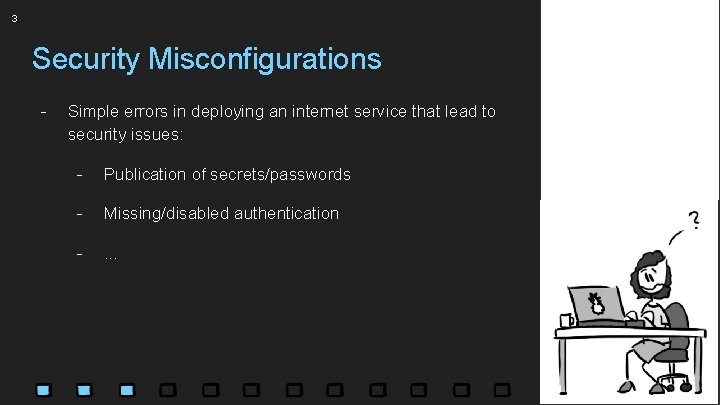
3 Security Misconfigurations - Simple errors in deploying an internet service that lead to security issues: - Publication of secrets/passwords - Missing/disabled authentication - . . .
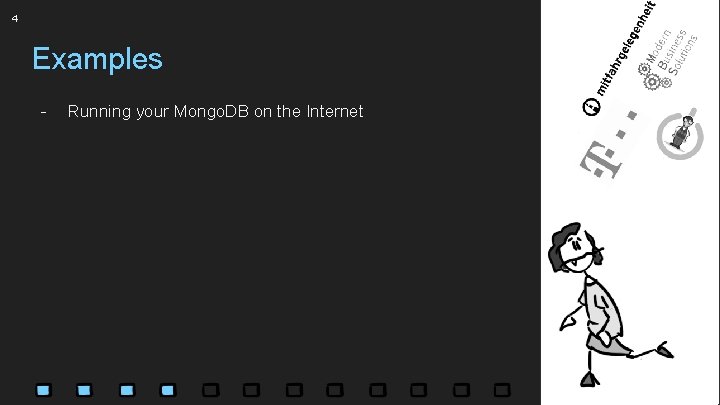
4 Examples - Running your Mongo. DB on the Internet
4 Examples - Running your Mongo. DB on the Internet - Having your TR-069 publicly reachable
4 Examples - Running your Mongo. DB on the Internet - Having your TR-069 publicly reachable - Storing your AES key next to your encrypted backups
5 Who, what, why? - Who misconfigures? - What gets misconfigured (easily)? - Why does it get misconfigured?
5 Who, what, why? - Who misconfigures? - What gets misconfigured (easily)? - Why does it get misconfigured? How to prevent misconfigurations?
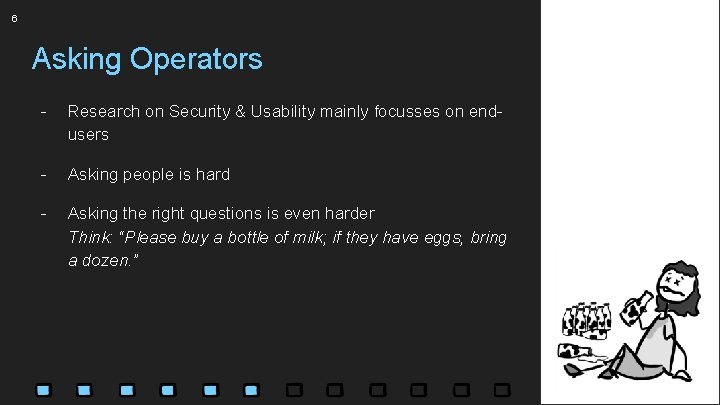
6 Asking Operators - Research on Security & Usability mainly focusses on endusers - Asking people is hard - Asking the right questions is even harder Think: “Please buy a bottle of milk; if they have eggs, bring a dozen. ”
7 The Usual Approach 1 Explore the issue 2 Do small focus groups with target audience 3 Do structured interviews with target audience 4 Build a questionnaire to get quantitative insights
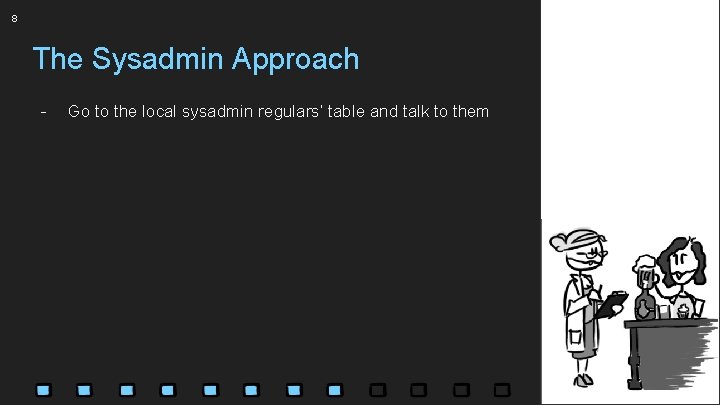
8 The Sysadmin Approach - Go to the local sysadmin regulars’ table and talk to them
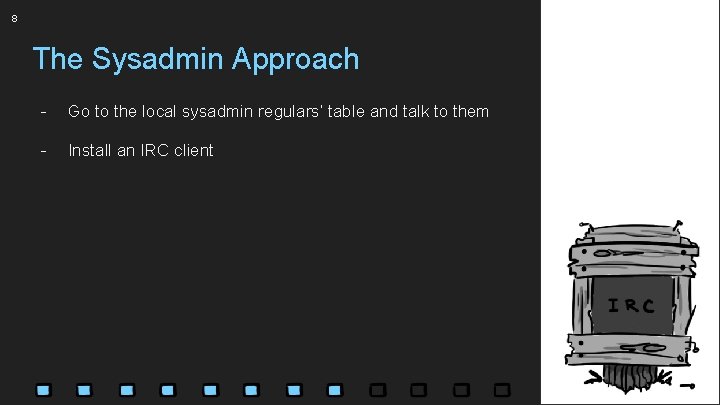
8 The Sysadmin Approach - Go to the local sysadmin regulars’ table and talk to them - Install an IRC client
8 The Sysadmin Approach - Go to the local sysadmin regulars’ table and talk to them - Install an IRC client - 5 Interviews and 1 focus group with 5 participants. . . - Did you ever encounter security misconfigurations? - What do you think: Why do they occur? - Did a security misconfiguration incident change anything about this?
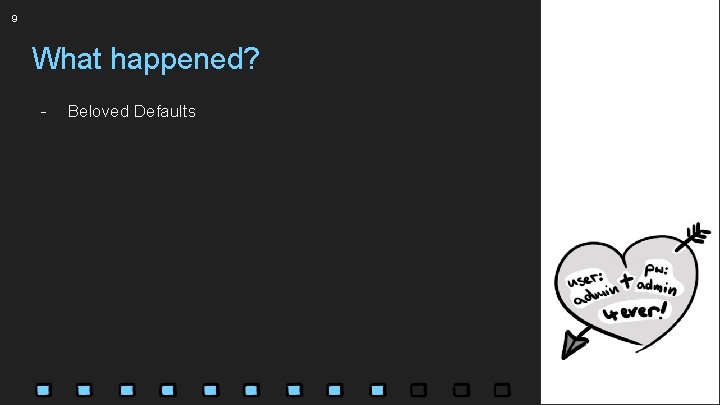
9 What happened? - Beloved Defaults
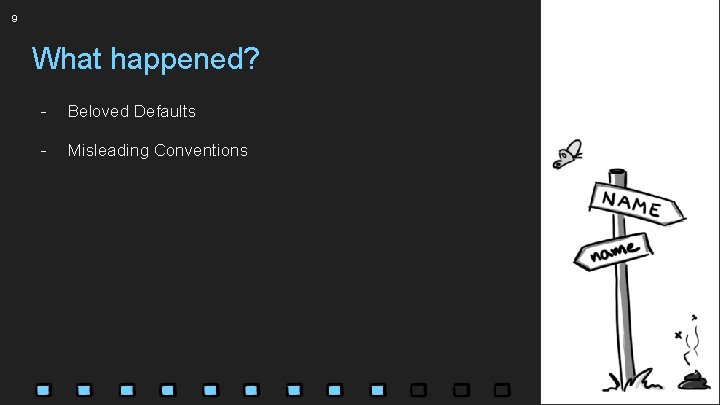
9 What happened? - Beloved Defaults - Misleading Conventions
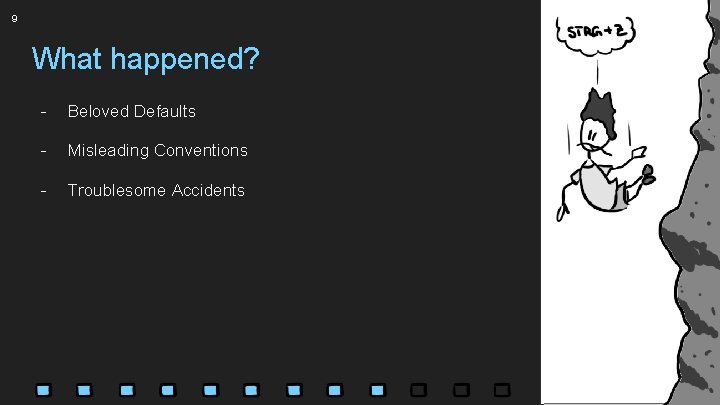
9 What happened? - Beloved Defaults - Misleading Conventions - Troublesome Accidents
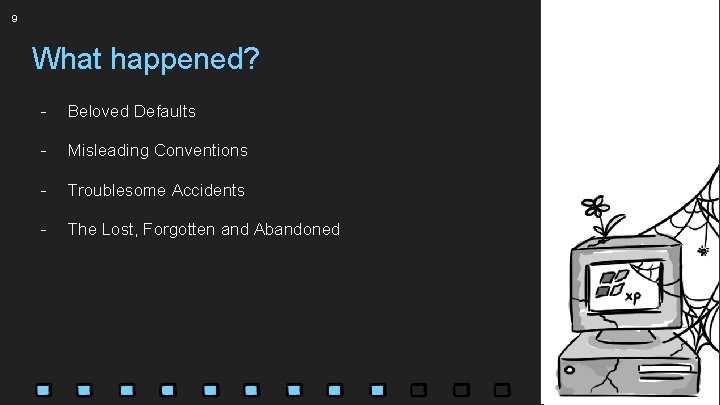
9 What happened? - Beloved Defaults - Misleading Conventions - Troublesome Accidents - The Lost, Forgotten and Abandoned

10 Why did it happen? - Lack of Experience
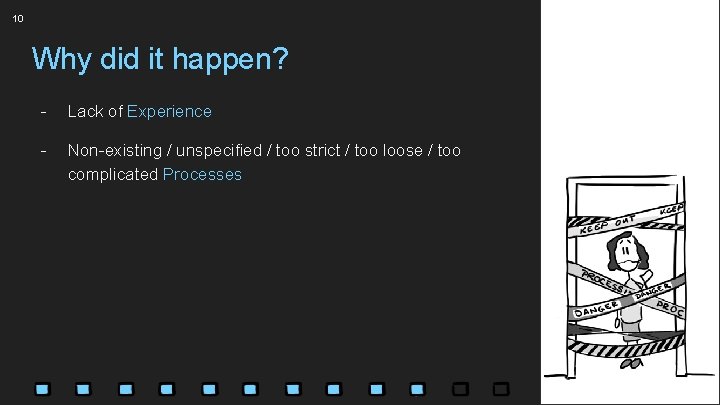
10 Why did it happen? - Lack of Experience - Non-existing / unspecified / too strict / too loose / too complicated Processes
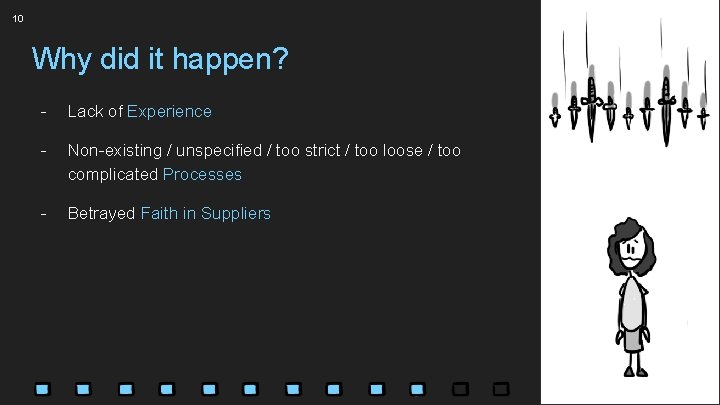
10 Why did it happen? - Lack of Experience - Non-existing / unspecified / too strict / too loose / too complicated Processes - Betrayed Faith in Suppliers
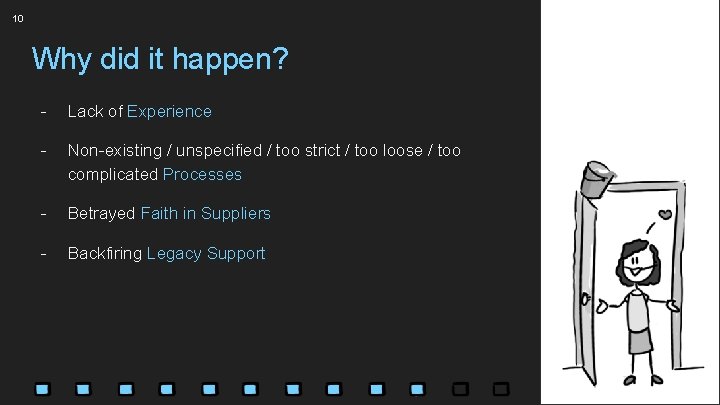
10 Why did it happen? - Lack of Experience - Non-existing / unspecified / too strict / too loose / too complicated Processes - Betrayed Faith in Suppliers - Backfiring Legacy Support
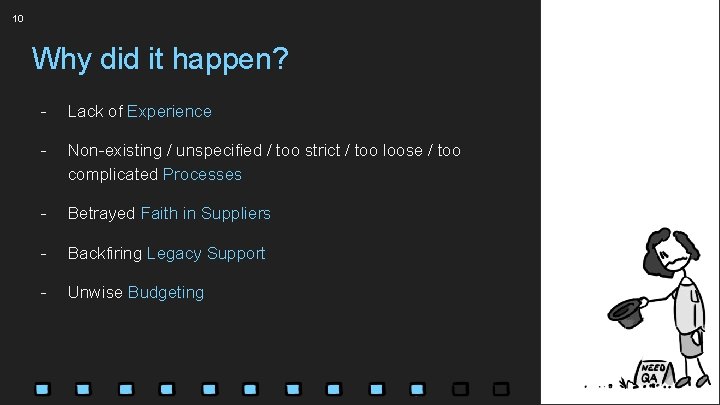
10 Why did it happen? - Lack of Experience - Non-existing / unspecified / too strict / too loose / too complicated Processes - Betrayed Faith in Suppliers - Backfiring Legacy Support - Unwise Budgeting
11 How to prevent this? - Provide for Experience - Voice to management in case of deficient Processes - Challenge Faith in Suppliers (Make them listen to you, OPS!) - Ditch Legacy Support - Budget wisely
12 Conclusion - Misconfigurations happen. - Knowing how allows for detecting measures to prevent security incidents. - We’re not ready… Questionnaire coming soon to an operations mailing list near you!
12 Conclusion - Misconfigurations happen. - Knowing how allows for detecting measures to prevent security incidents. - We’re not ready… Questionnaire coming soon to an operations mailing list near you!
12 Conclusion - Misconfigurations happen. - Knowing how allows for detecting measures to prevent security incidents. - We’re not ready… Questionnaire coming soon to an operations mailing list near you!
- Slides: 27