
Consortia Helping small organisations to win contracts Why
- Slides: 25
Consortia Helping small organisations to win contracts
Why consortia? Barriers Facing Small Organisations • The procurement process (long, complex, expensive) • Unable to find out about opportunities • Contracts are too big • Frameworks (if too complex and too large)
Barriers…cont • Pre-qualification • Understanding the requirements (anachronisms used, poorly worded specifications) • Lack of feedback • Cashflow (Smaller Supplier. . Better Value? , OGC & Small Business Service, 2002)
Consortia – overcoming barriers • Scale • Development of specialist tendering and contract management infrastructure • Greater bargaining power • Adding value at the frontline
‘Best of both worlds’ Combining the benefits of large and smallscale approaches: Rationalised area-wide structure dovetailing with independent delivery units responsive to local or specific client group needs
Different Contracting Forms • • Provider Managing Agent Managing Provider ‘Super Provider’
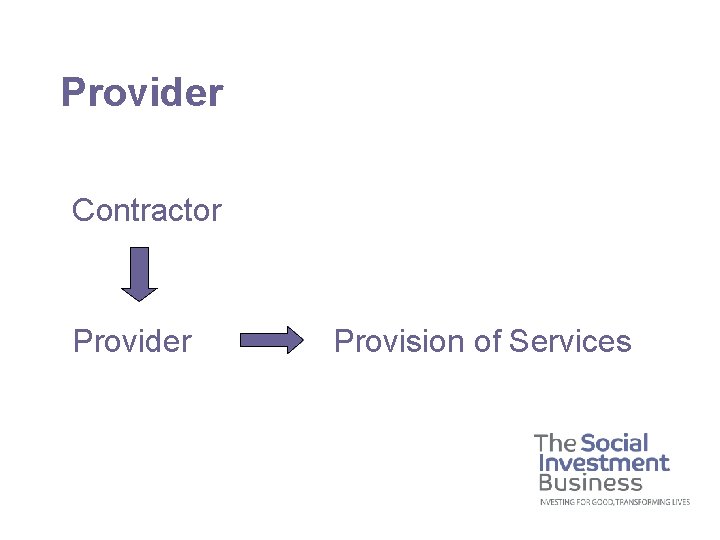
Provider Contractor Provider Provision of Services
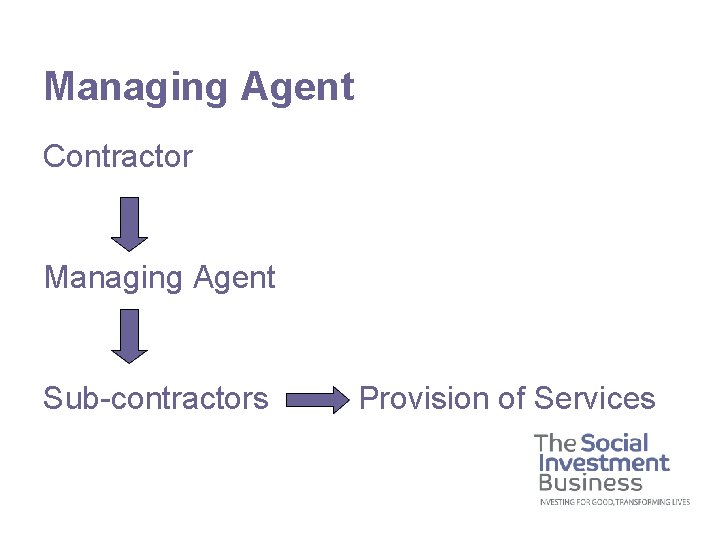
Managing Agent Contractor Managing Agent Sub-contractors Provision of Services
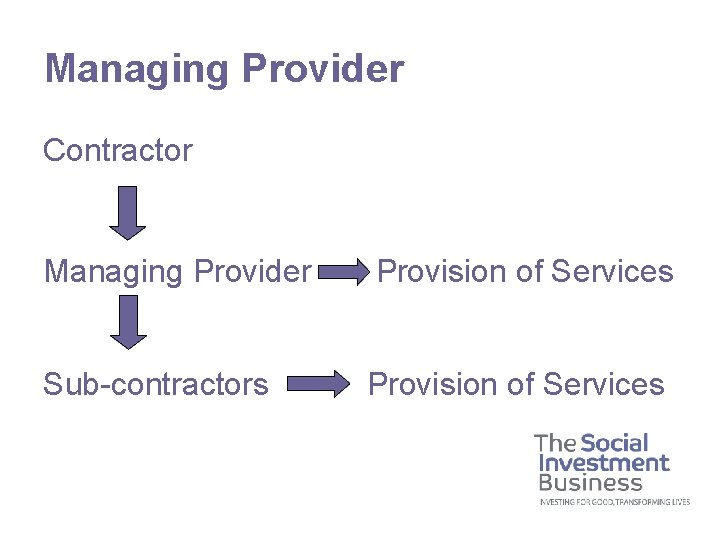
Managing Provider Contractor Managing Provider Provision of Services Sub-contractors Provision of Services
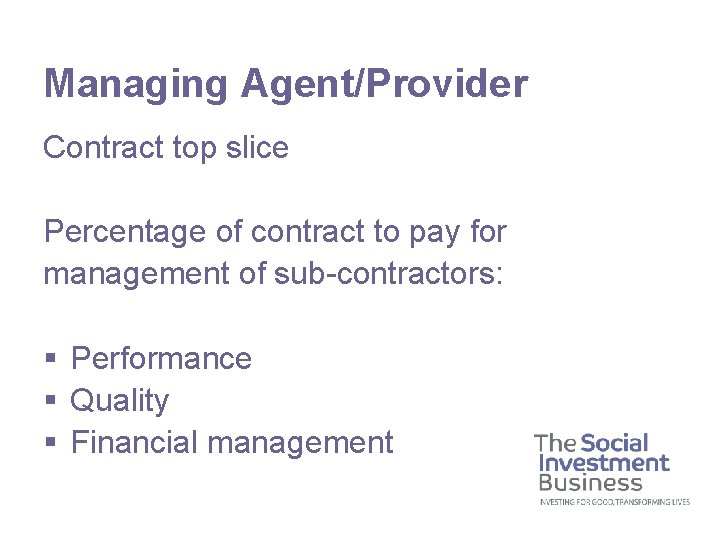
Managing Agent/Provider Contract top slice Percentage of contract to pay for management of sub-contractors: § Performance § Quality § Financial management
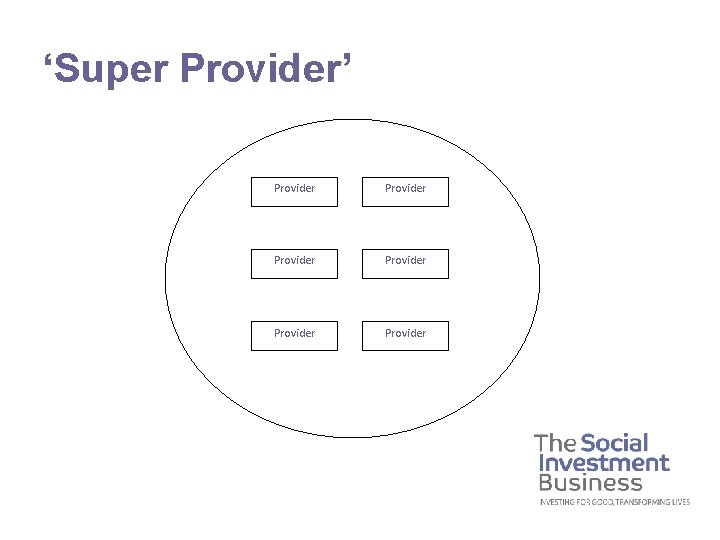
‘Super Provider’ Provider Provider
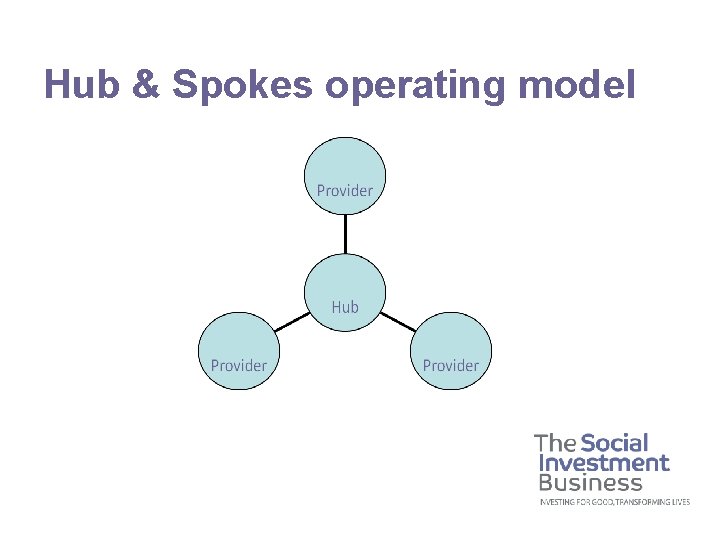
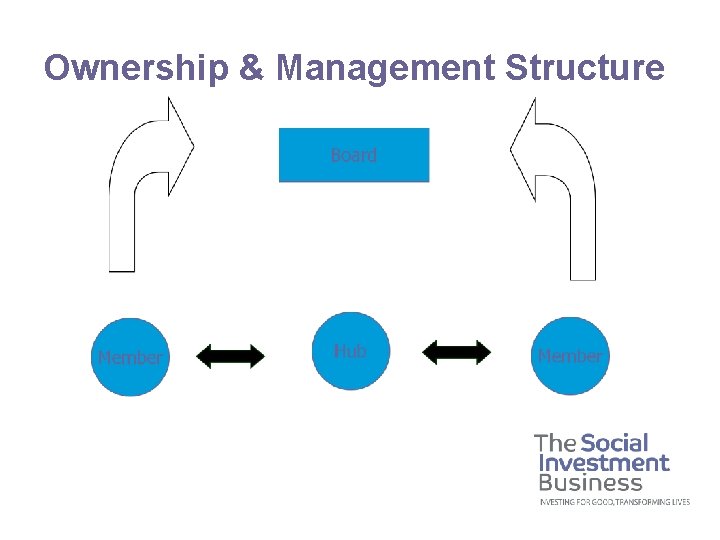
How does it work? • Incorporation to form new legal entity • Providers become members of this company • Hub and spokes operating model
Examples • VC Train • Sheffield Well-Being Consortium
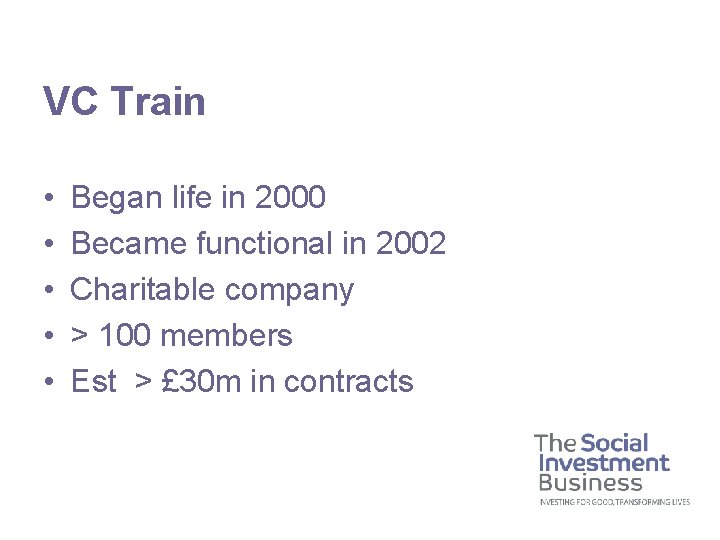
VC Train • • • Began life in 2000 Became functional in 2002 Charitable company > 100 members Est > £ 30 m in contracts
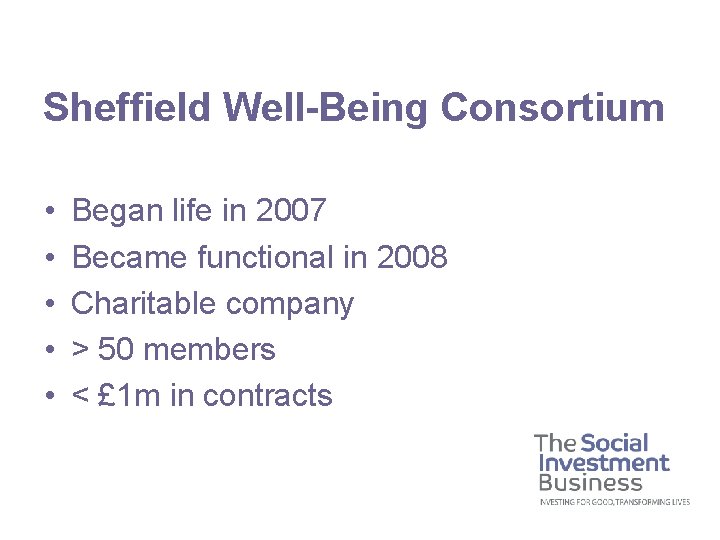
Sheffield Well-Being Consortium • • • Began life in 2007 Became functional in 2008 Charitable company > 50 members < £ 1 m in contracts
Hub & Spokes operating model
Ownership & Management Structure
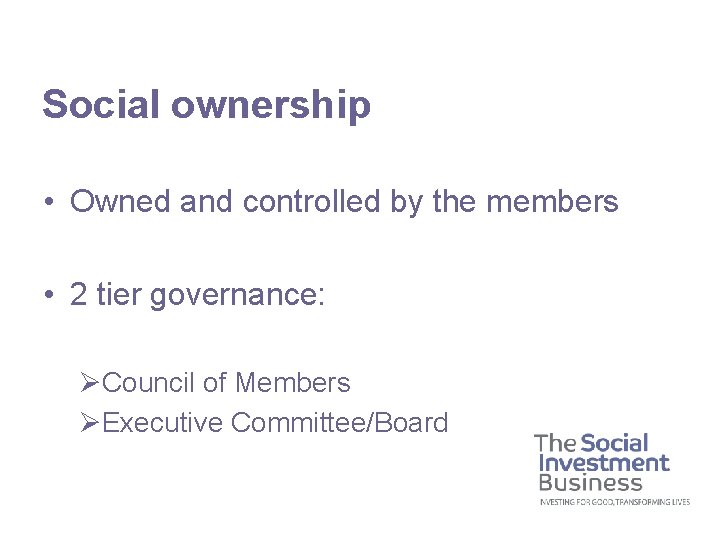
Social ownership • Owned and controlled by the members • 2 tier governance: ØCouncil of Members ØExecutive Committee/Board
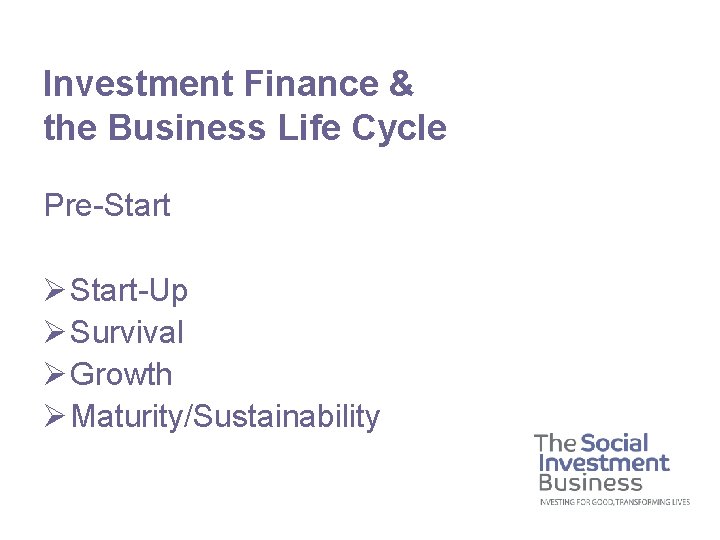
Investment Finance & the Business Life Cycle Pre-Start Ø Start-Up Ø Survival Ø Growth Ø Maturity/Sustainability
Social Enterprise Investment Fund Supports third sector health and social care providers to build consortia
Issues & Challenges • From ‘culture of entitlement’ to social enterprise - change management • Democratic principles versus business focus/pragmatism • Need for investment finance – breaking down the barriers to debt finance/‘patient capital’
Issues & Challenges…cont • • Conflicts of interest/internal competition Inconsistencies in quality ‘Ensuring contestability’ Accommodating micro providers, i. e. t/o of < £ 50 k • Full and associate membership
Micro providers • Support with improving ‘procurement readiness’, e. g. support with QA development • Growth strategies (merger? ) • More proactive hub (load-banding of contract top slice levels) • Defining roles: Host, Promoter, Provider
Role of Support Provider • Bringing groups together initially to explore opportunities – honest broker • Defining key issues • Supporting working group to form consortium • Providing targeted support after start-up
What any consortium needs at startup stage • • • A business model/operating structure A business strategy/business plan A financial strategy – cash flow forecast A legal identity A membership document (prospectus) Access to start-up capital