
Considering some of the methodological dimensions of prison




- Slides: 15
Considering some of the methodological dimensions of prison health research Professor Rosie Meek r. meek@royalholloway. ac. uk @Dr. Rosie. Meek
Methodological issue 1: Consider your populations
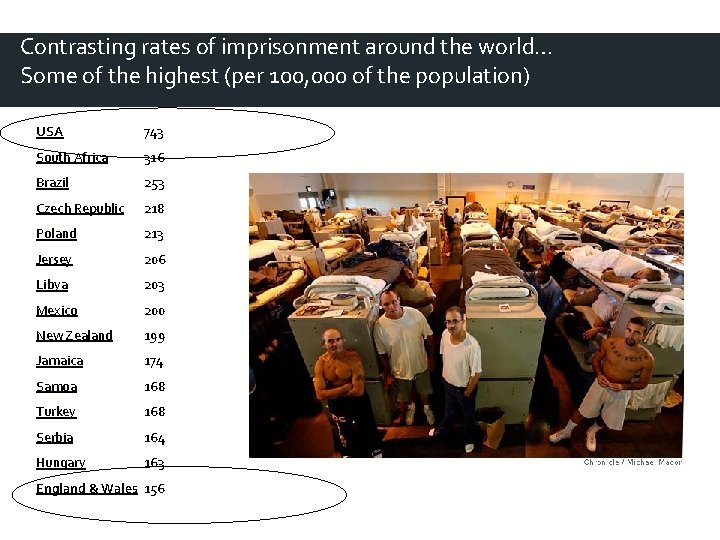
Contrasting rates of imprisonment around the world… Some of the highest (per 100, 000 of the population) USA 743 South Africa 316 Brazil 253 Czech Republic 218 Poland 213 Jersey 206 Libya 203 Mexico 200 New Zealand 199 Jamaica 174 Samoa 168 Turkey 168 Serbia 164 Hungary 163 England & Wales 156
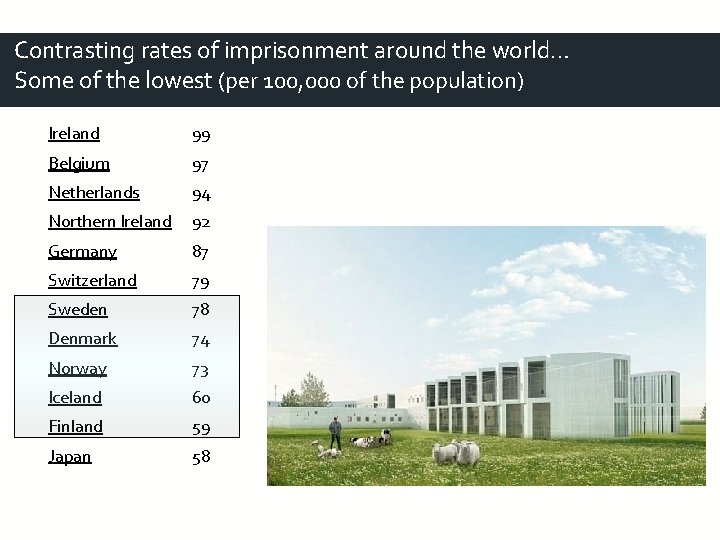
Contrasting rates of imprisonment around the world… Some of the lowest (per 100, 000 of the population) Ireland 99 Belgium 97 Netherlands 94 Northern Ireland 92 Germany 87 Switzerland 79 Sweden 78 Denmark 74 Norway 73 Iceland 60 Finland 59 Japan 58
Young Adult Prisoners • 18 -24 year olds account for 1/10 of the UK population but 1/3 of prison and probation populations • 58% reoffend within a year of release from custody • Need for innovative and effective ways of engaging with young prisoners, particularly those who are not engaging with or responding to other prison-based interventions 5
Methodological issue 2: Consider your policy context
Reducing Re-offending National Action Plan (Home Office, 2004) Reducing re-offending ‘pathways’: 1. Health 2. Drugs and alcohol 3. Accommodation 4. Education, employment and training 5. Finance, debt and benefit 6. Children and families 7. Attitudes, thinking and behaviour
Desistance (Maruna, 2000) • In order to maintain a successful abstinence from crime, exprisoners need to ‘make sense’ of their lives as non-offenders • The acquisition of something valued which promotes a reevaluation of the sense of self • A way of living that is inconsistent with continued offending • Marks a shift to strength based approaches • Q: How can we best promote ‘shifts of identity’ away from that of being an offender?
Methodological issue 3: Consider your ‘hook’ for change
Methodological issue 4: Critique levels of access
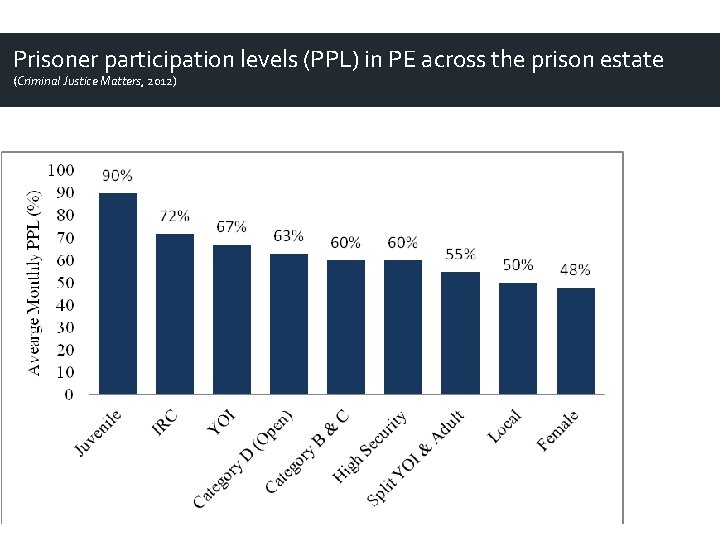
Prisoner participation levels (PPL) in PE across the prison estate (Criminal Justice Matters, 2012)
Sociology & Criminology Open Day Talk BSc Criminology and Sociology & BSc Criminology and Psychology LLB Law MSc Forensic Psychology @Dr. Rosie. Meek www. royalholloway. ac. uk/law