
CONSIDERATIONS FOR NEXT GENERATION ARTIFICIAL LIFT BELLOWS Tyler
CONSIDERATIONS FOR NEXT GENERATION ARTIFICIAL LIFT BELLOWS Tyler Mc. Connell Adam Murray
About Alloy Bellows • Founded in 1935 • Customized solutions for bellows and bellows assemblies in a variety of industries • Provide both 1” and 1. 5” gas lift bellows • Our bellows are custom engineered and manufactured to achieve a high level of performance and reliability at a cost-effective price. • We are a primary source for precision metal joining (welding, soldering and brazing) of valves, fittings and other components. • Alloy Bellows is AS 9100 Rev. D, ISO 9001: 2015 certified
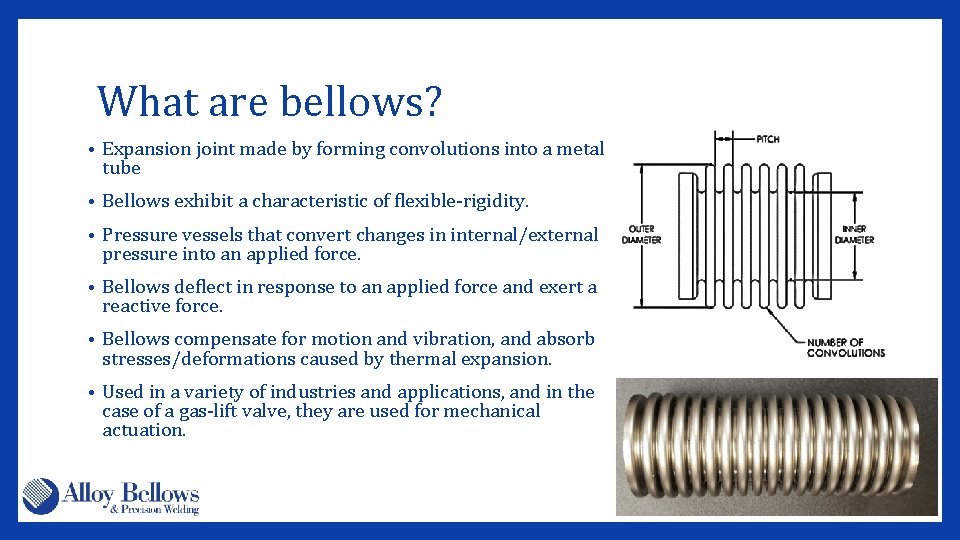
What are bellows? • Expansion joint made by forming convolutions into a metal tube • Bellows exhibit a characteristic of flexible-rigidity. • Pressure vessels that convert changes in internal/external pressure into an applied force. • Bellows deflect in response to an applied force and exert a reactive force. • Bellows compensate for motion and vibration, and absorb stresses/deformations caused by thermal expansion. • Used in a variety of industries and applications, and in the case of a gas-lift valve, they are used for mechanical actuation.
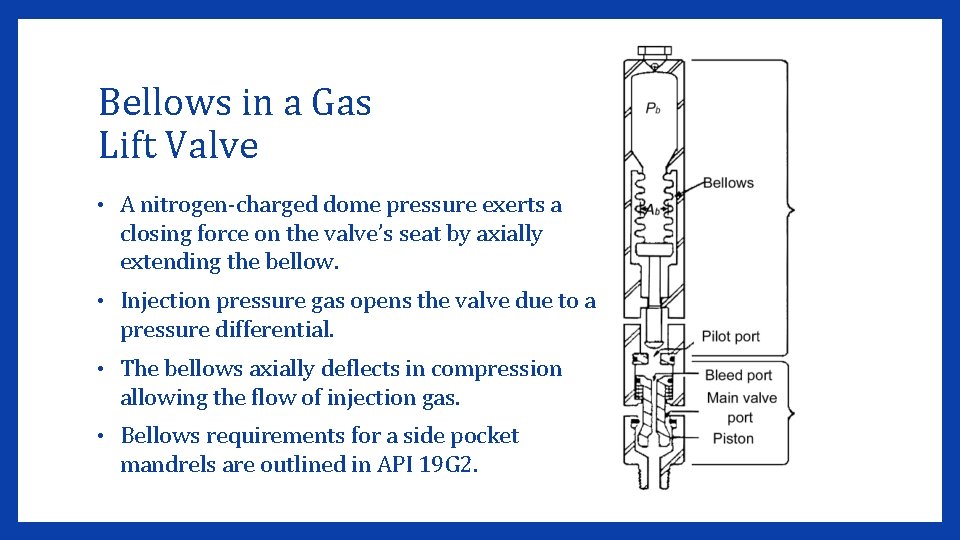
Bellows in a Gas Lift Valve • A nitrogen-charged dome pressure exerts a closing force on the valve’s seat by axially extending the bellow. • Injection pressure gas opens the valve due to a pressure differential. • The bellows axially deflects in compression allowing the flow of injection gas. • Bellows requirements for a side pocket mandrels are outlined in API 19 G 2.
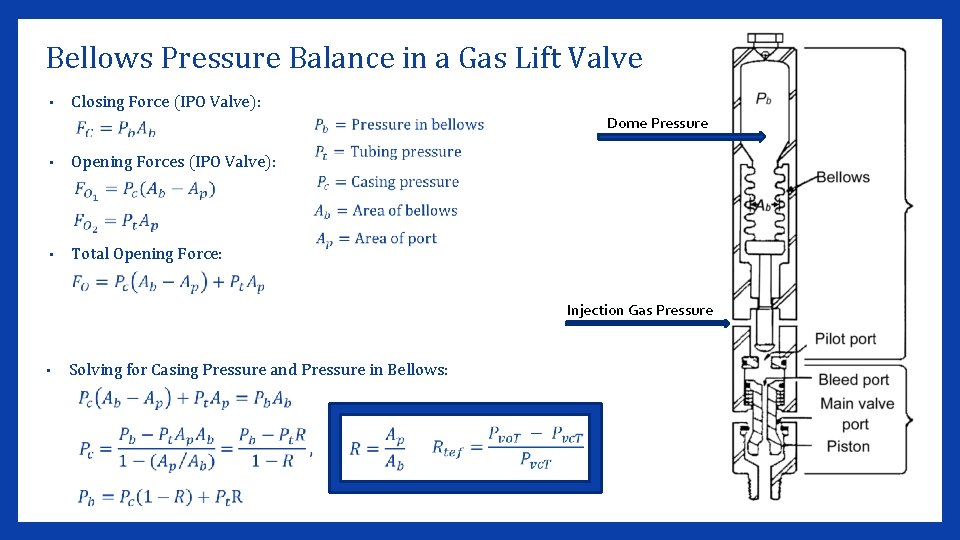
Bellows Pressure Balance in a Gas Lift Valve • Closing Force (IPO Valve): Dome Pressure • Opening Forces (IPO Valve): • Total Opening Force: Injection Gas Pressure • Solving for Casing Pressure and Pressure in Bellows:
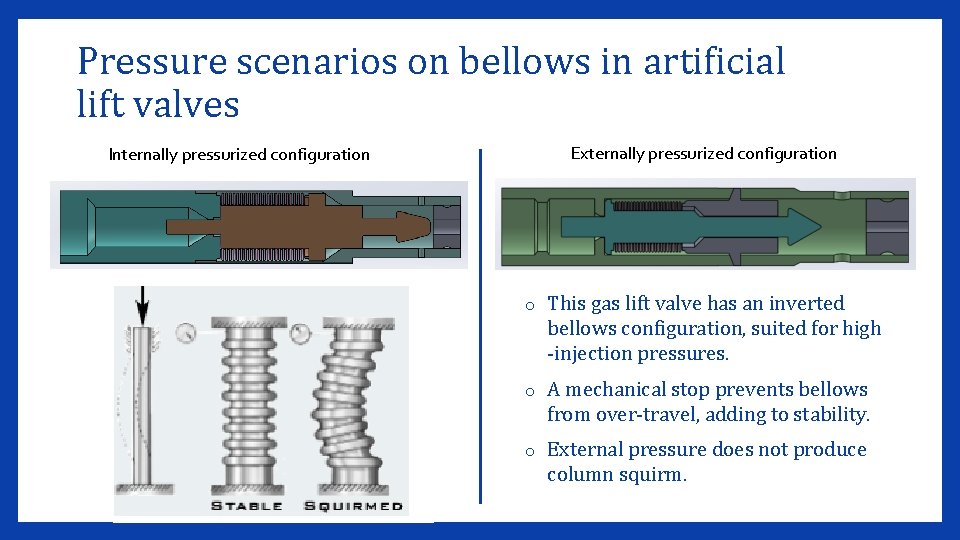
Pressure scenarios on bellows in artificial lift valves Externally pressurized configuration Internally pressurized configuration o This gas lift valve has an inverted bellows configuration, suited for high -injection pressures. o A mechanical stop prevents bellows from over-travel, adding to stability. o External pressure does not produce column squirm.
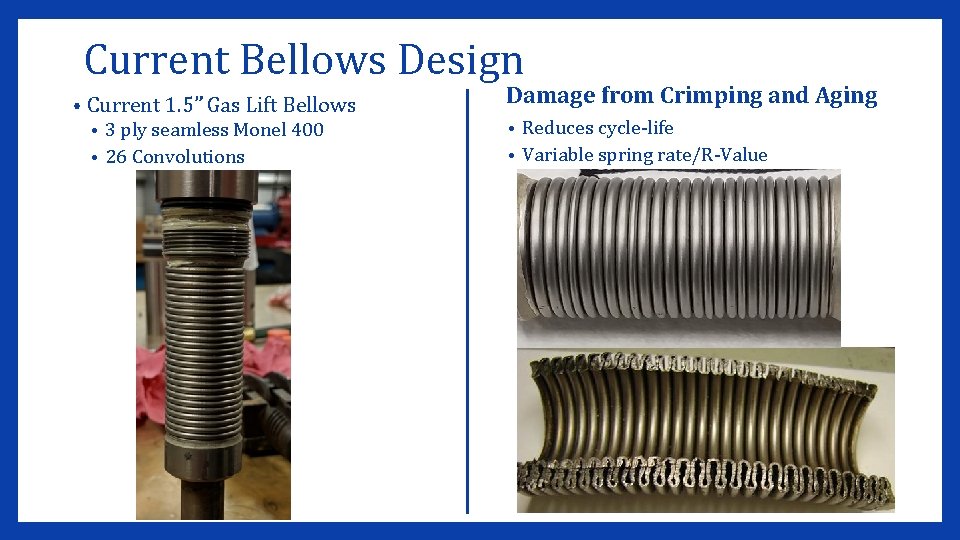
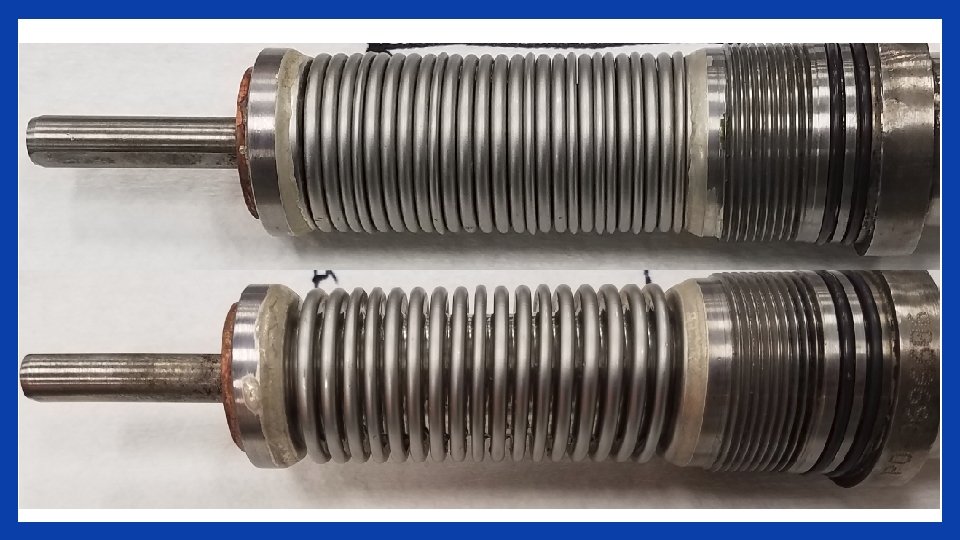
Current Bellows Design • Current 1. 5” Gas Lift Bellows 3 ply seamless Monel 400 • 26 Convolutions • Damage from Crimping and Aging Reduces cycle-life • Variable spring rate/R-Value •
Incorporating Customer Input ‘Next Gen’ Bellows Design • Further optimized bellows design Enhance GL operation / performance − Improved reliability, cycle-life and stability − Competitive product costs − • Improved manufacturability and supply solutions • Application trends Deeper wells – greater operating temperature and pressure − Chemical injection – highly corrosive environments −
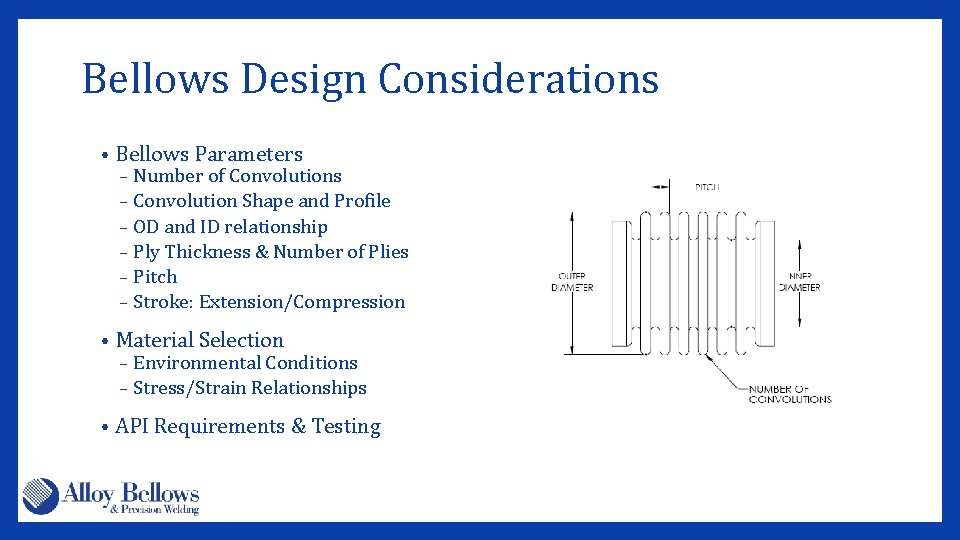
Bellows Design Considerations • Bellows Parameters Number of Convolutions − Convolution Shape and Profile − OD and ID relationship − Ply Thickness & Number of Plies − Pitch − Stroke: Extension/Compression − • Material Selection Environmental Conditions − Stress/Strain Relationships − • API Requirements & Testing
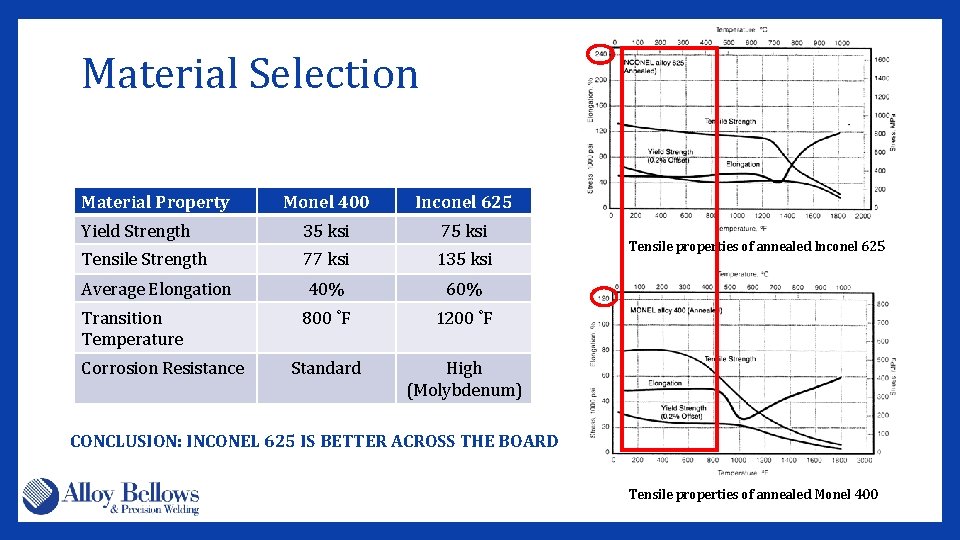
Material Selection Material Property Monel 400 Inconel 625 Yield Strength 35 ksi 75 ksi Tensile Strength 77 ksi 135 ksi Average Elongation 40% 60% 800 ˚F 1200 ˚F Standard High (Molybdenum) Transition Temperature Corrosion Resistance Tensile properties of annealed Inconel 625 CONCLUSION: INCONEL 625 IS BETTER ACROSS THE BOARD Tensile properties of annealed Monel 400
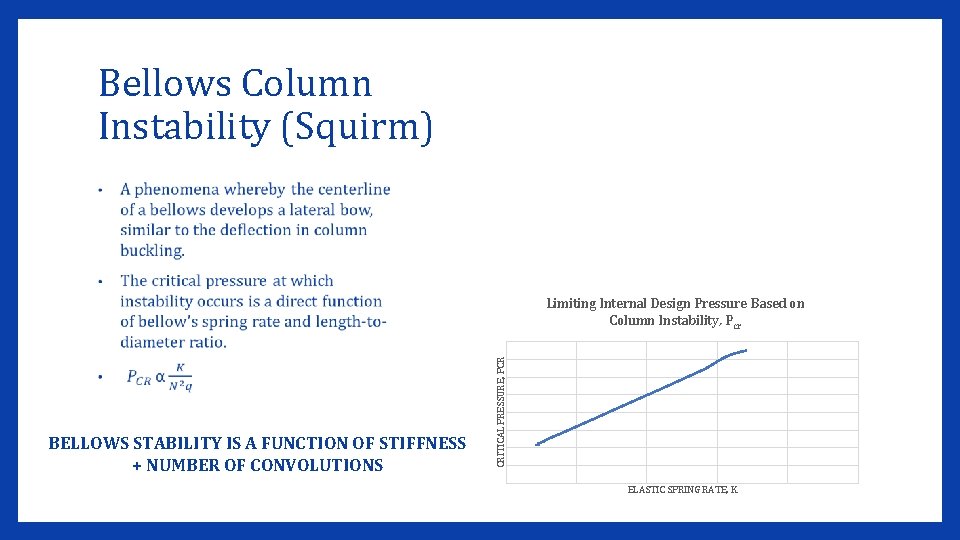
Bellows Column Instability (Squirm) BELLOWS STABILITY IS A FUNCTION OF STIFFNESS + NUMBER OF CONVOLUTIONS CRITICAL PRESSURE, PCR Limiting Internal Design Pressure Based on Column Instability, Pcr ELASTIC SPRING RATE, K
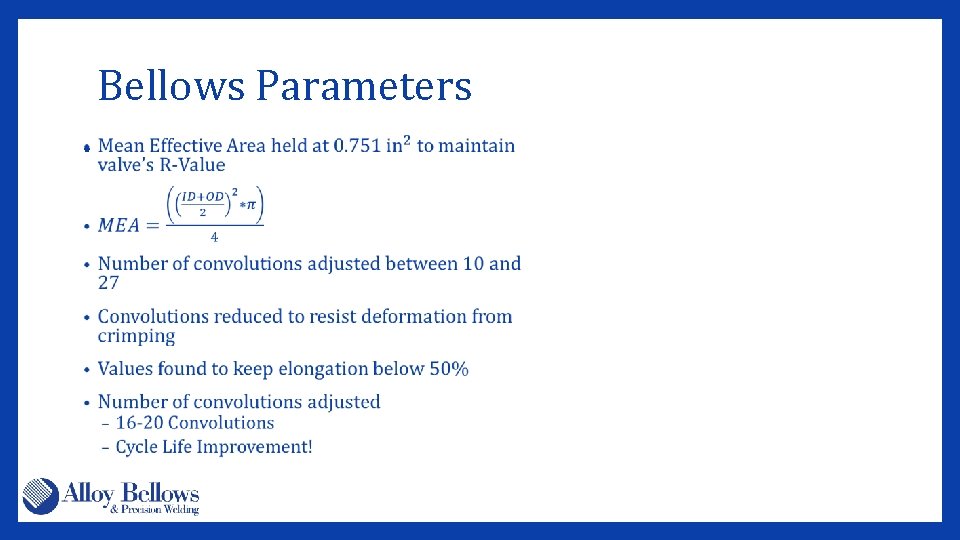
Bellows Parameters •
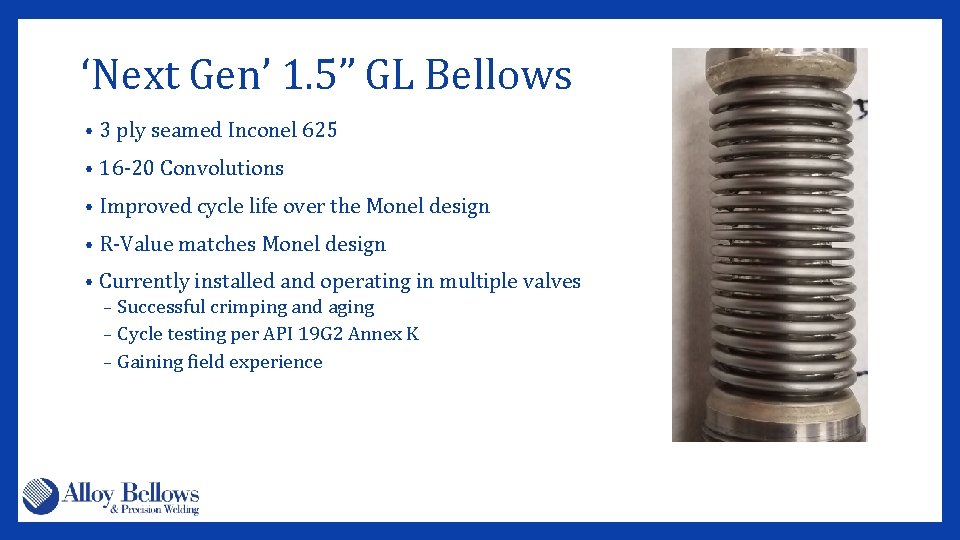
‘Next Gen’ 1. 5” GL Bellows • 3 ply seamed Inconel 625 • 16 -20 Convolutions • Improved cycle life over the Monel design • R-Value matches Monel design • Currently installed and operating in multiple valves Successful crimping and aging − Cycle testing per API 19 G 2 Annex K − Gaining field experience −
Conclusions • Alloy Bellows has proven GLB designs operating successfully in numerous applications. • On going development for bellows in GLV applications that meet API requirements. • Optimization of 1. 5” GLB with Inconel 625 material o Enhanced bellows performance over the current Monel 400. o Field evaluations and cycle testing are underway. • Teaming with our customers on their unique GLV applications to improve performance and their product life-cycle costs.

QUESTIONS?
- Slides: 16