
CONSERVING AND PROTECTING BIODIVERSITY CONSERVING BIODIVERSITY Natural Resources
CONSERVING AND PROTECTING BIODIVERSITY
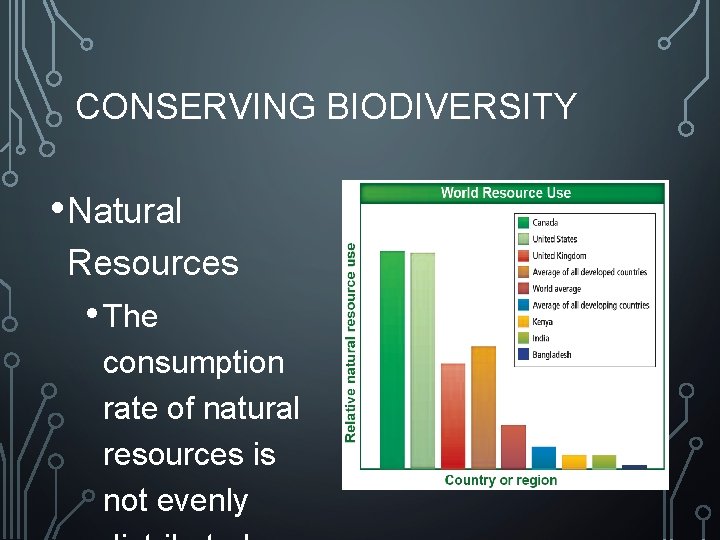
CONSERVING BIODIVERSITY • Natural Resources • The consumption rate of natural resources is not evenly
CONSERVING BIODIVERSITY • Renewable Resources • Resources that are replaced by natural processes faster than they are consumed • Nonrenewable Resources • Resources that are found on Earth in limited amounts or those that are replaced by natural processes over extremely long periods of time
CONSERVING BIODIVERSITY • Sustainable Use • Means using resources at a rate in which they can be replaced or recycled while preserving the longterm environmental health of the biosphere
PROTECTING BIODIVERSITY • Currently, about seven percent of the world’s land is set aside as some type of reserve • The United Nations supports a system of Biosphere Reserves and World Heritage sites
BIODIVERSITY HOTSPOTS • At least 1500 species of vascular plants are endemic • The region must have lost at least 70 percent of its original habitat • These hot spots originally covered 15. 7 percent of Earth’s surface, however, only about a tenth of that
CORRIDORS BETWEEN HABITAT FRAGMENTS • Improve the survival of biodiversity by providing corridors, or passageways, between habitat fragments • Creates a larger piece of land that can sustain a wider variety of species and a wider variety of genetic variation
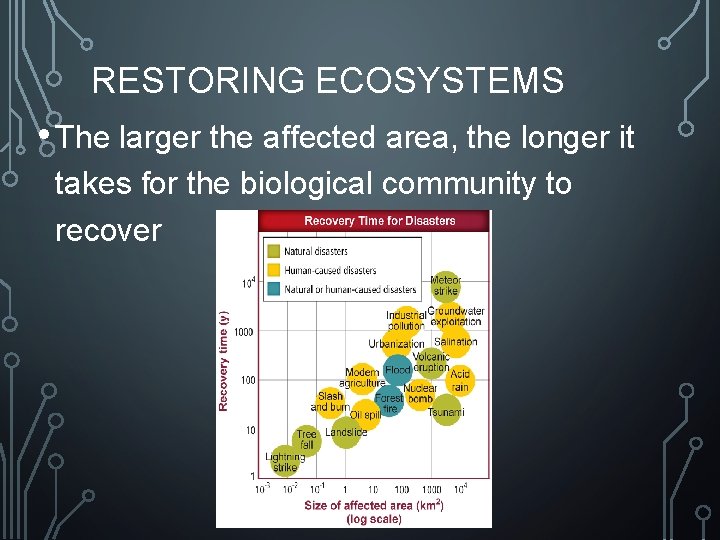
RESTORING ECOSYSTEMS • The larger the affected area, the longer it takes for the biological community to recover
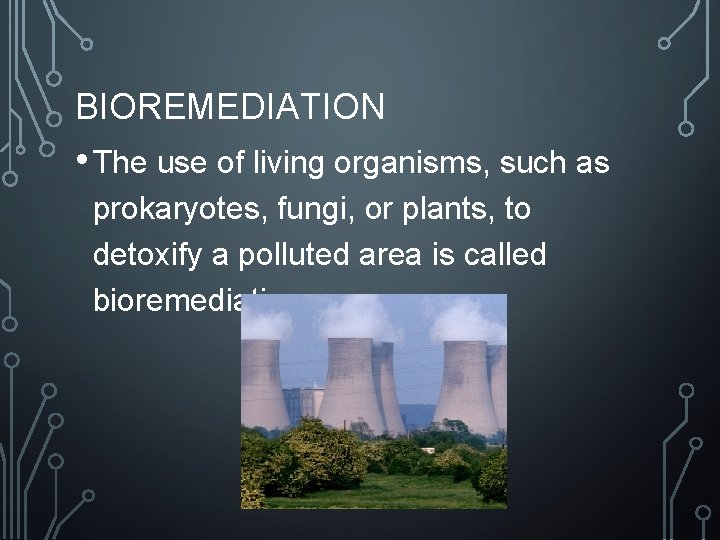
BIOREMEDIATION • The use of living organisms, such as prokaryotes, fungi, or plants, to detoxify a polluted area is called bioremediation

BIOLOGICAL AUGMENTATION • Adding natural predators to a degraded ecosystem is called biological augmentation Ladybugs help control aphid populations. Photo courtesy of Nature’s Control
- Slides: 10