
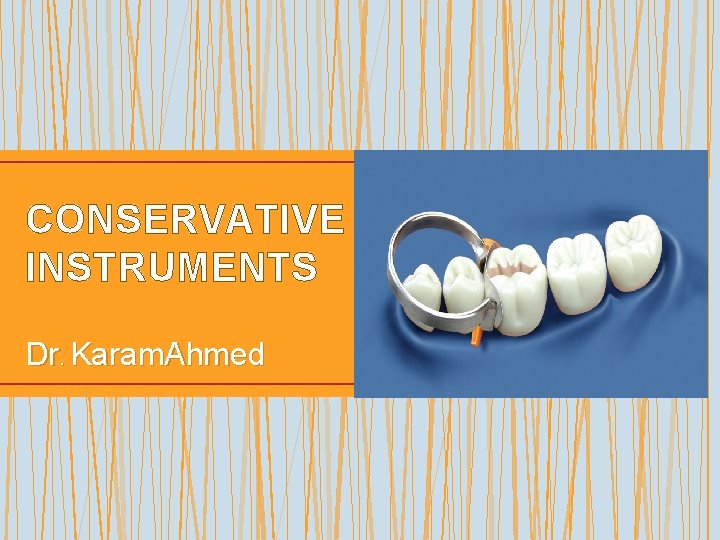
CONSERVATIVE INSTRUMENTS Dr Karam Ahmed Operative Dentistry Conservative




- Slides: 58
CONSERVATIVE INSTRUMENTS Dr. Karam. Ahmed
Operative Dentistry Conservative Dentistry It’s the art and science of diagnosis, • treatment and prognosis of defects of teeth. Such treatment should result in: Goals Restoration of proper tooth form. Function. Esthetic. Maintain physiological integrity and harmonious relation with surrounding tissues.
History Previously was a just a practice not based on scientific knowledge. Louis Pasteur (France) disease. G. V Black (USA, 19 th) Role of MO in related the clinical practice to scientific bases.
Indications are numerous, but can be categorized into the following primary needs: v Caries. v Malformed teeth. v Discolored teeth. v Fractured teeth. v Replacement or repair of previous restorations.
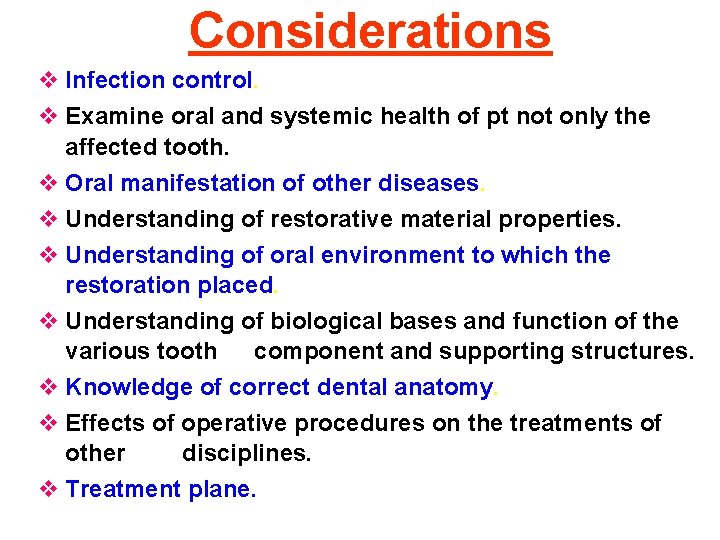
Considerations v Infection control. v Examine oral and systemic health of pt not only the affected tooth. v Oral manifestation of other diseases. v Understanding of restorative material properties. v Understanding of oral environment to which the restoration placed. v Understanding of biological bases and function of the various tooth component and supporting structures. v Knowledge of correct dental anatomy. v Effects of operative procedures on the treatments of other disciplines. v Treatment plane.
CLASSIFICATIONS. .
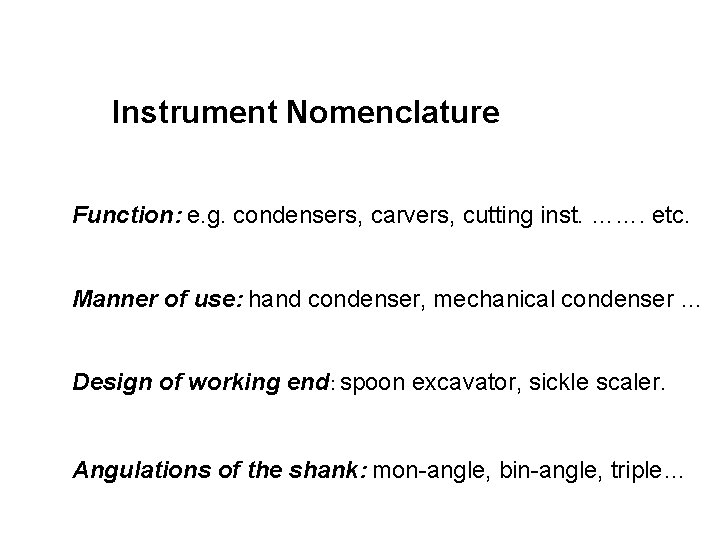
Instrument Nomenclature Function: e. g. condensers, carvers, cutting inst. ……. etc. Manner of use: hand condenser, mechanical condenser … Design of working end: spoon excavator, sickle scaler. Angulations of the shank: mon-angle, bin-angle, triple…
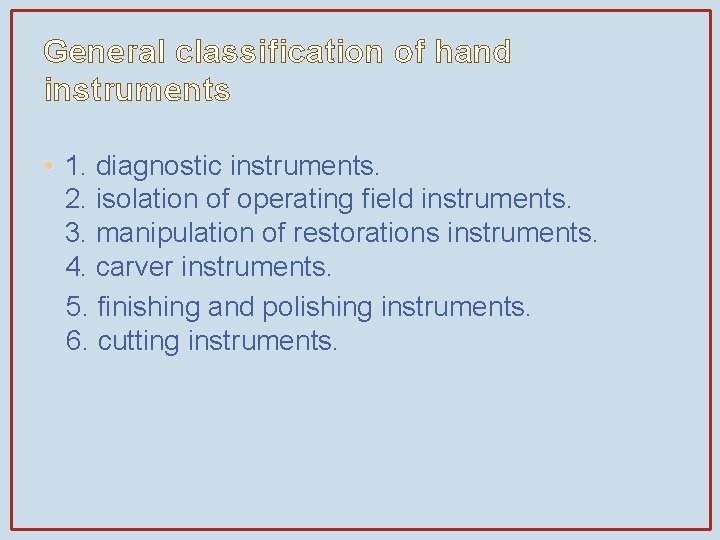
General classification of hand instruments • 1. diagnostic instruments. 2. isolation of operating field instruments. 3. manipulation of restorations instruments. 4. carver instruments. 5. finishing and polishing instruments. 6. cutting instruments.
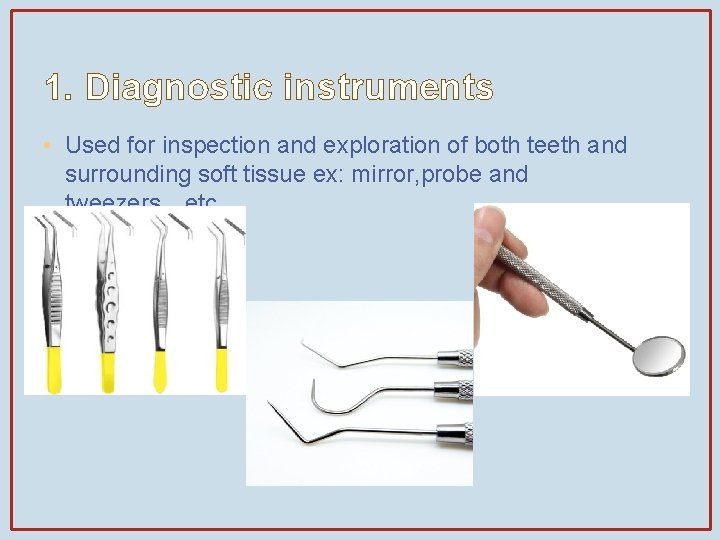
1. Diagnostic instruments • Used for inspection and exploration of both teeth and surrounding soft tissue ex: mirror, probe and tweezers…etc
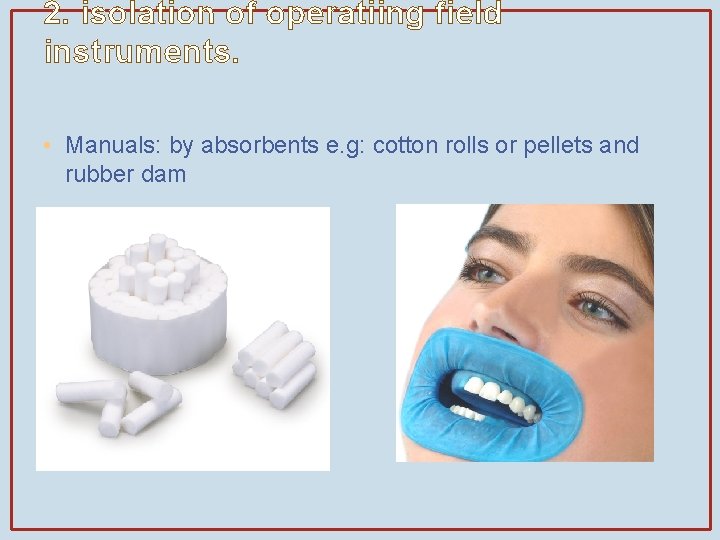
2. isolation of operatiing field instruments. • Manuals: by absorbents e. g: cotton rolls or pellets and rubber dam
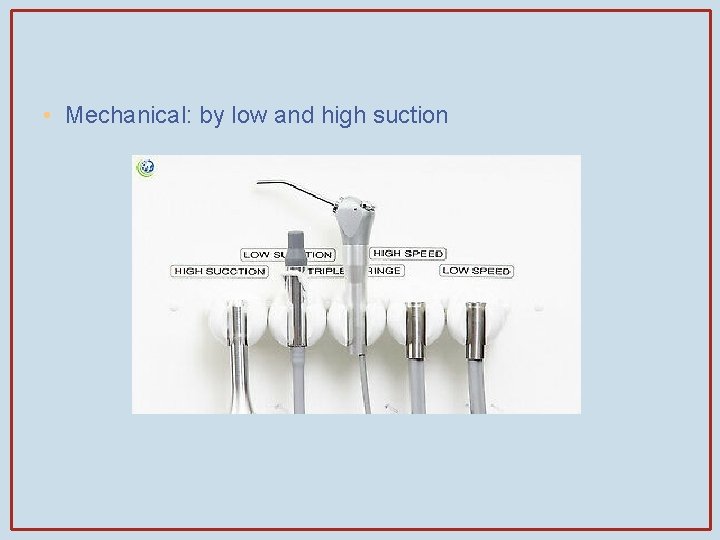
• Mechanical: by low and high suction
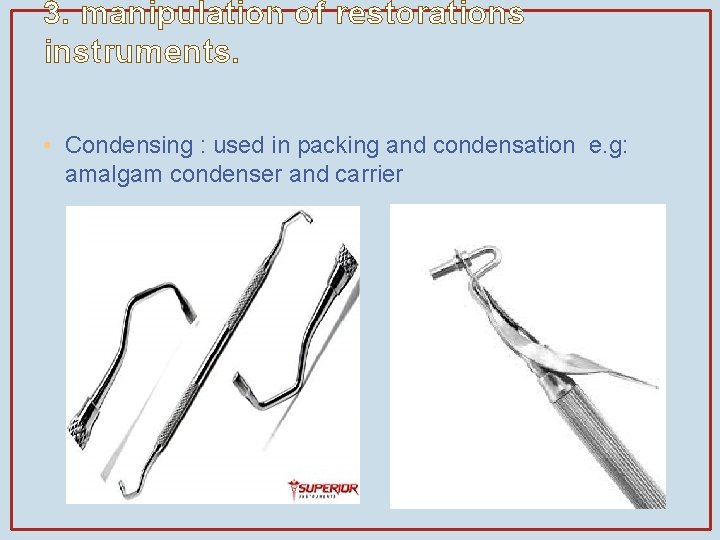
3. manipulation of restorations instruments. • Condensing : used in packing and condensation e. g: amalgam condenser and carrier
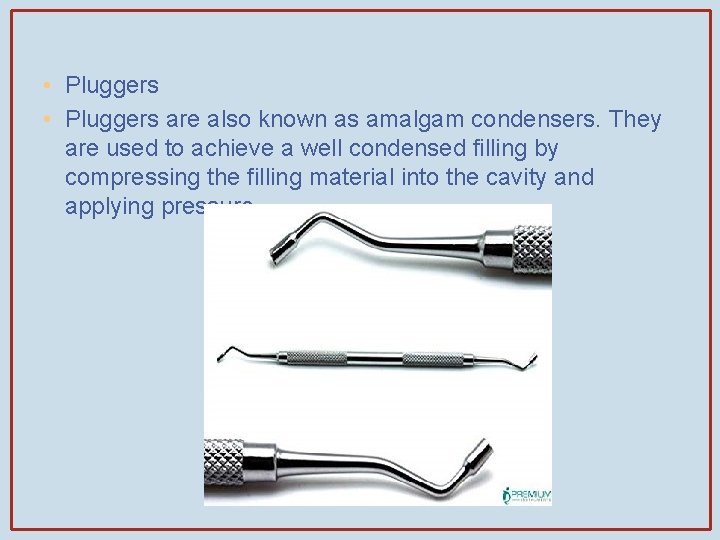
• Pluggers are also known as amalgam condensers. They are used to achieve a well condensed filling by compressing the filling material into the cavity and applying pressure.
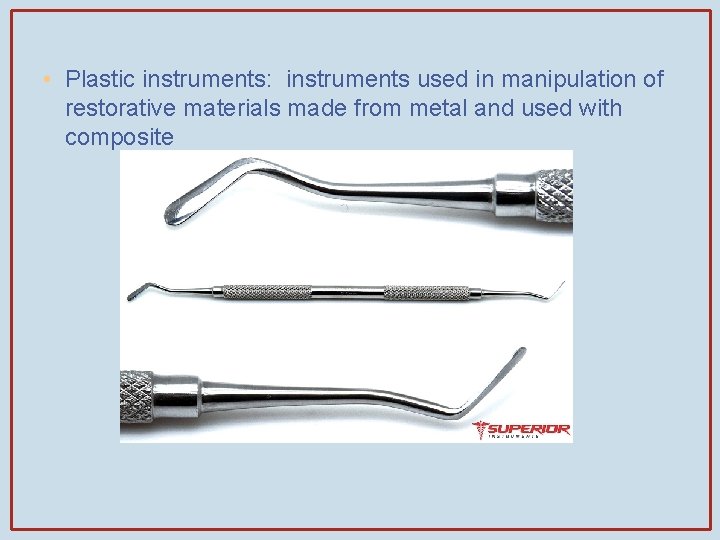
• Plastic instruments: instruments used in manipulation of restorative materials made from metal and used with composite
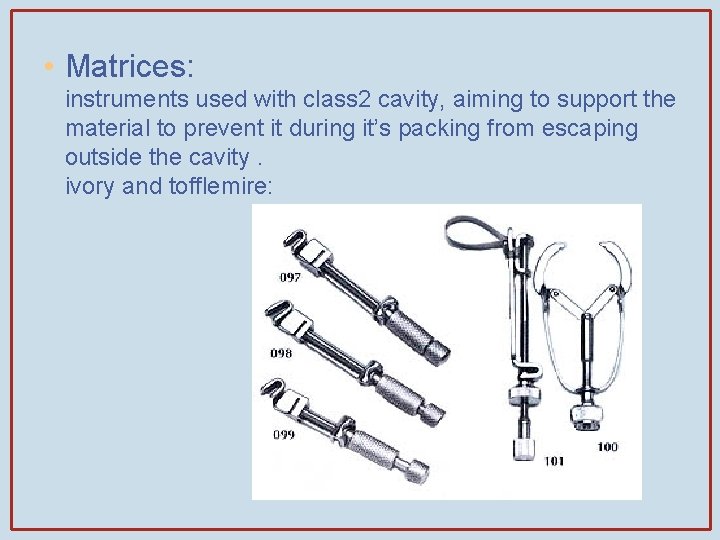
• Matrices: instruments used with class 2 cavity, aiming to support the material to prevent it during it’s packing from escaping outside the cavity. ivory and tofflemire:
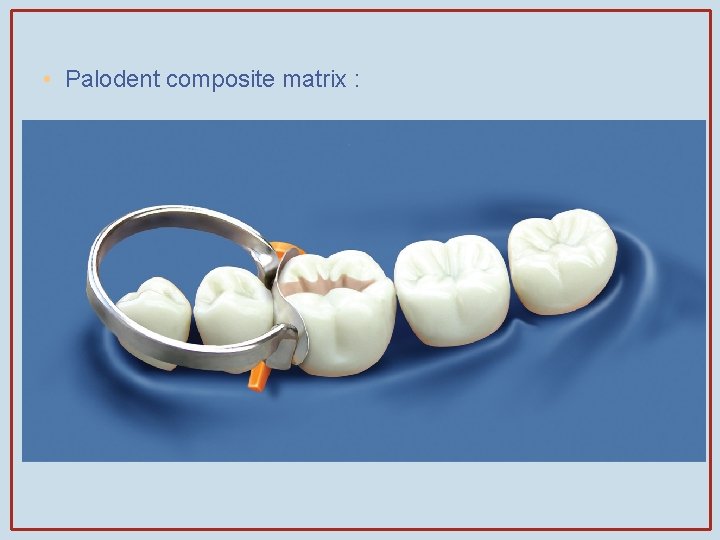
• Palodent composite matrix :
• bitine rings:
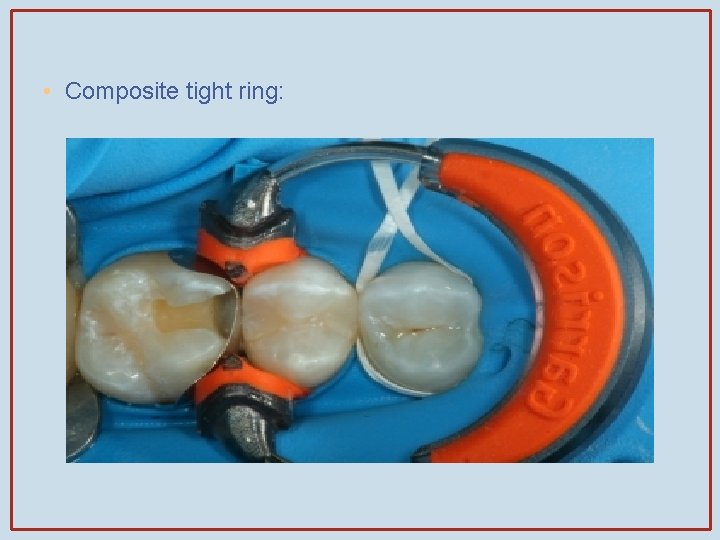
• Composite tight ring:
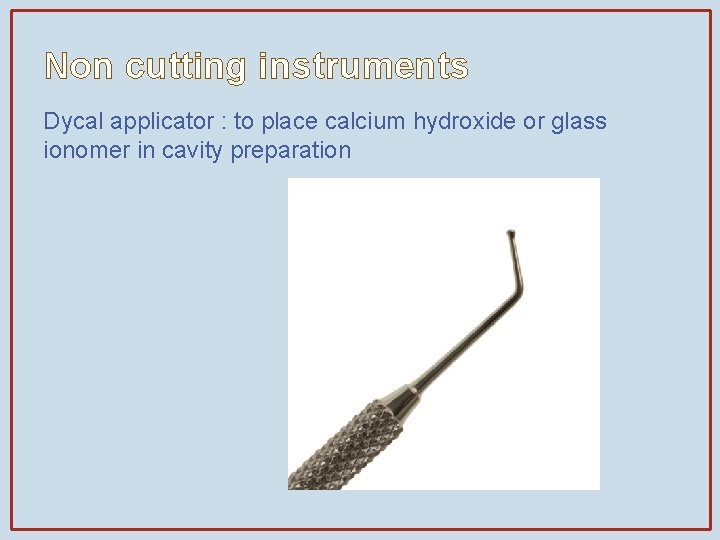
Non cutting instruments Dycal applicator : to place calcium hydroxide or glass ionomer in cavity preparation
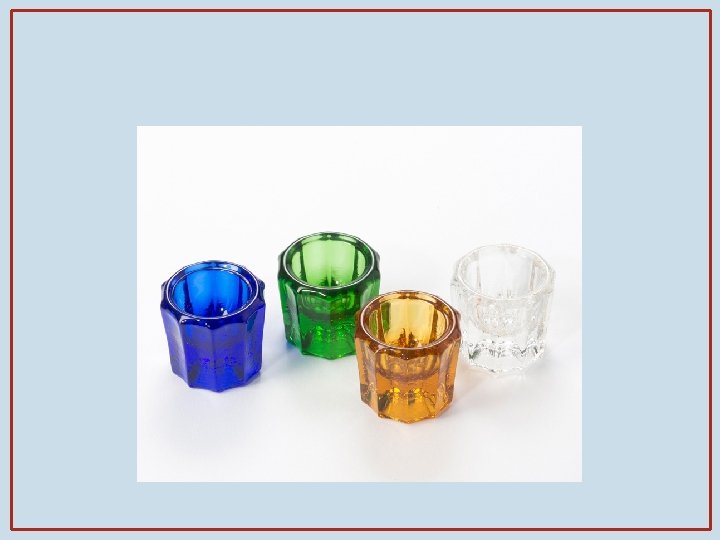
• A dappen glass (also called Dappen Dish) is a small, dense glass or ceramic vessel which has each end ground or hollowed out to provide a bowl for mixing substances. Generally these dishes have ten equal walls (decagon) with a large bowl on one side and a smaller bowl ground out on the other.
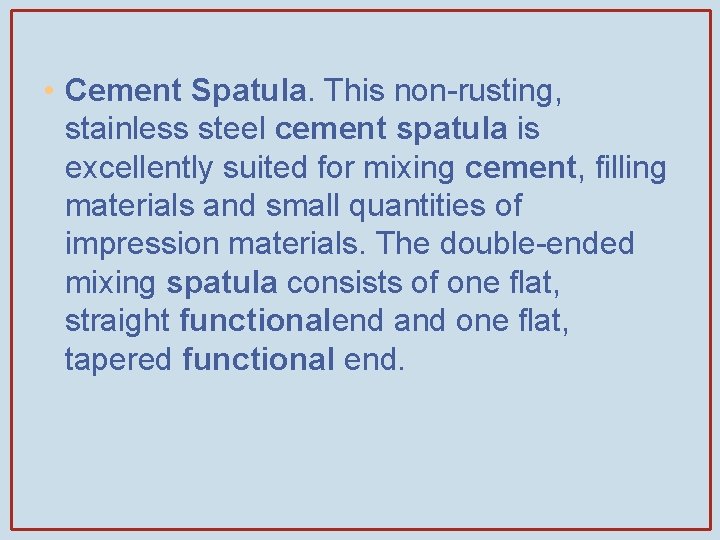
• Cement Spatula. This non-rusting, stainless steel cement spatula is excellently suited for mixing cement, filling materials and small quantities of impression materials. The double-ended mixing spatula consists of one flat, straight functionalend and one flat, tapered functional end.
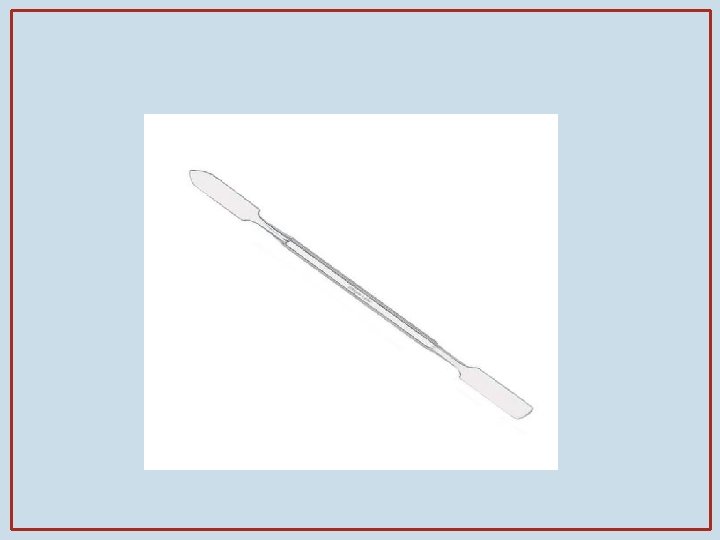
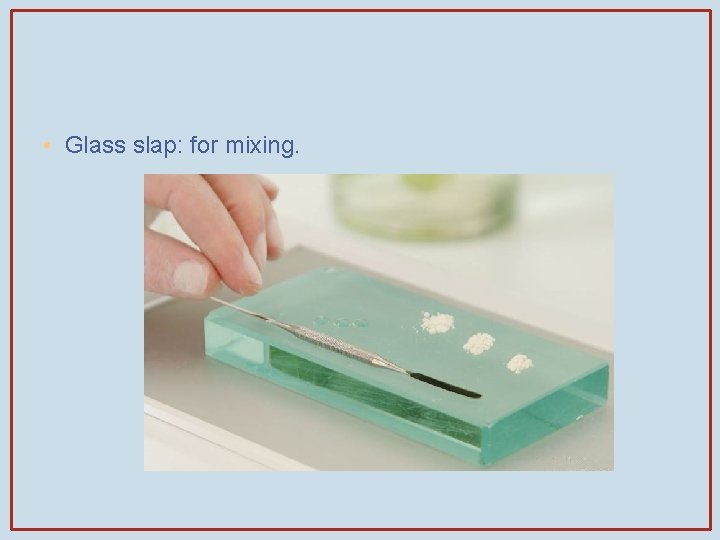
• Glass slap: for mixing.
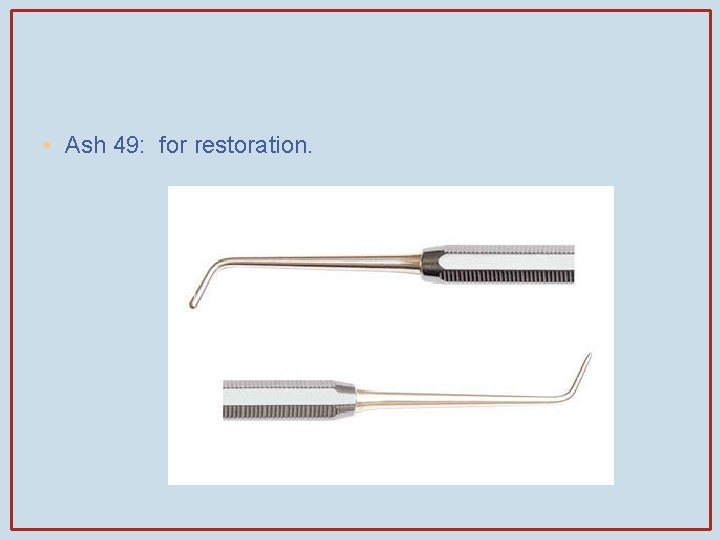
• Ash 49: for restoration.
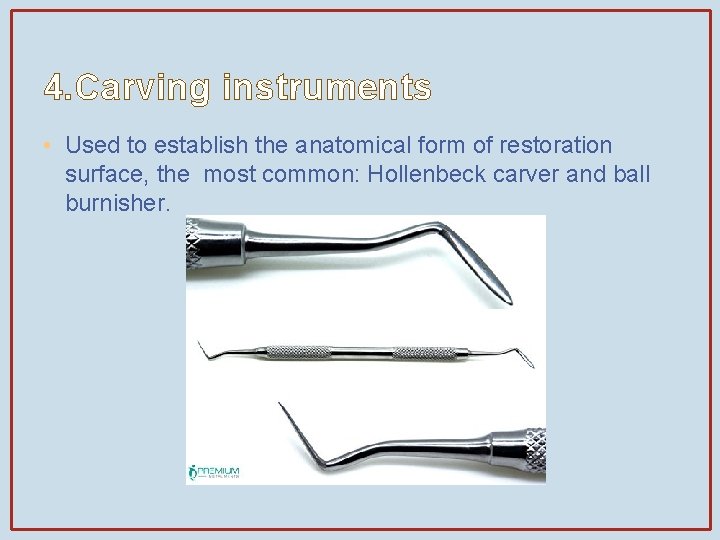
4. Carving instruments • Used to establish the anatomical form of restoration surface, the most common: Hollenbeck carver and ball burnisher.
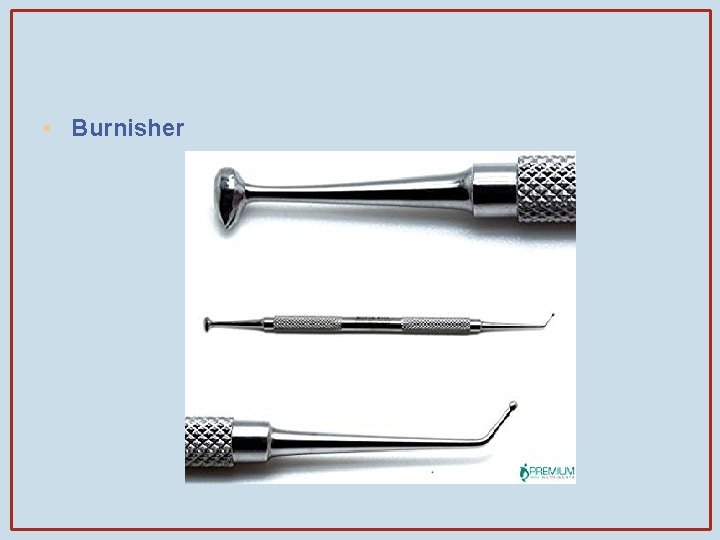
• Burnisher
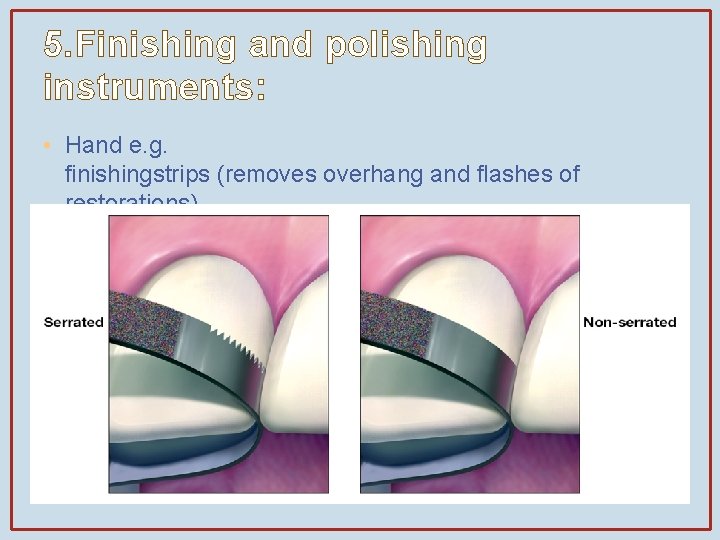
5. Finishing and polishing instruments: • Hand e. g. finishingstrips (removes overhang and flashes of restorations)
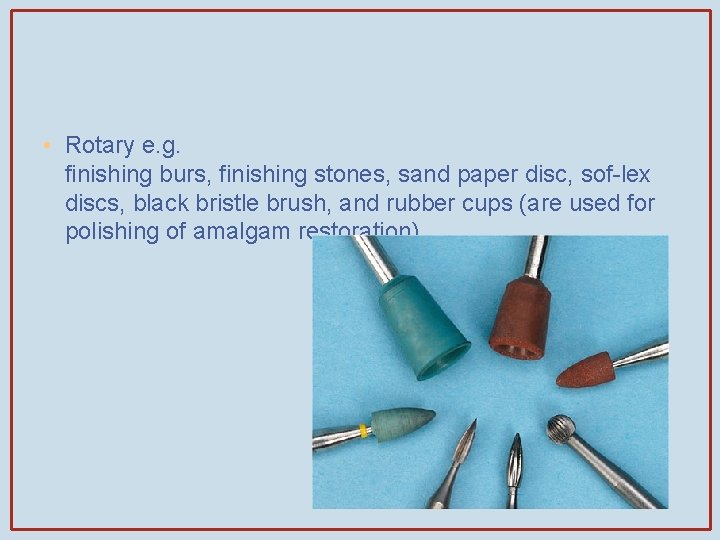
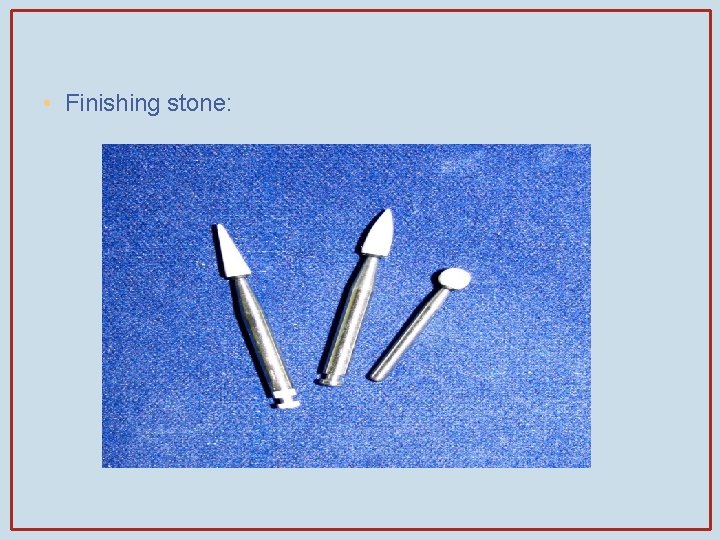
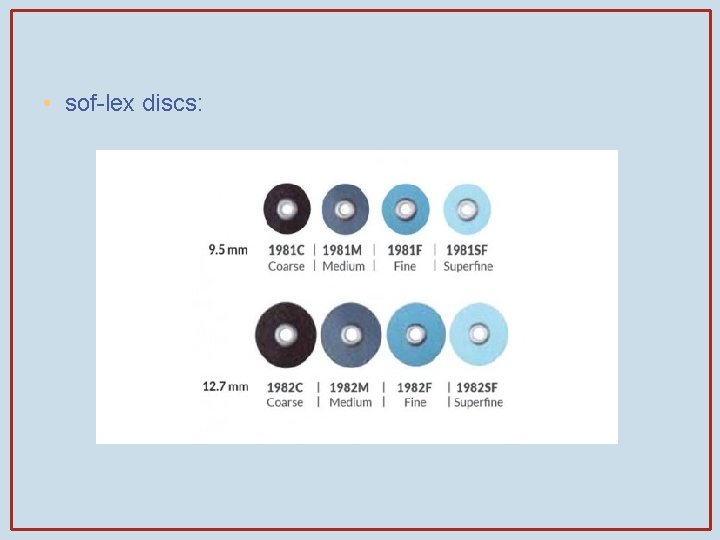
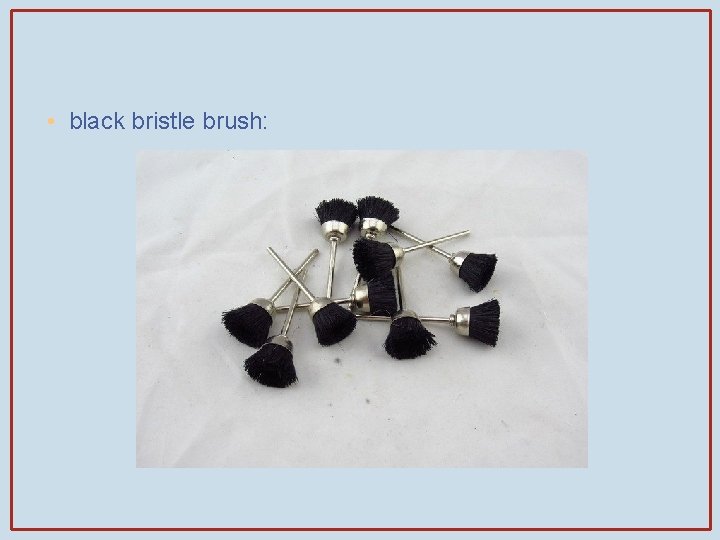
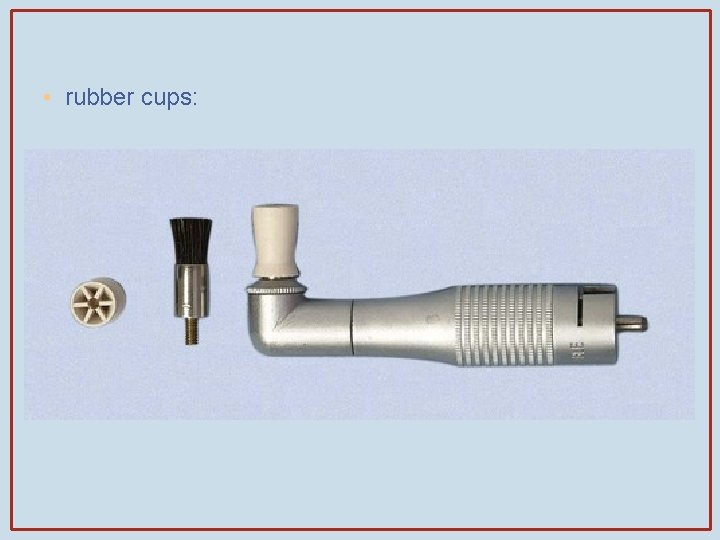
• Rotary e. g. finishing burs, finishing stones, sand paper disc, sof-lex discs, black bristle brush, and rubber cups (are used for polishing of amalgam restoration).
• Finishing stone:
• sand paper disc:
• sof-lex discs:
• black bristle brush:
• rubber cups:
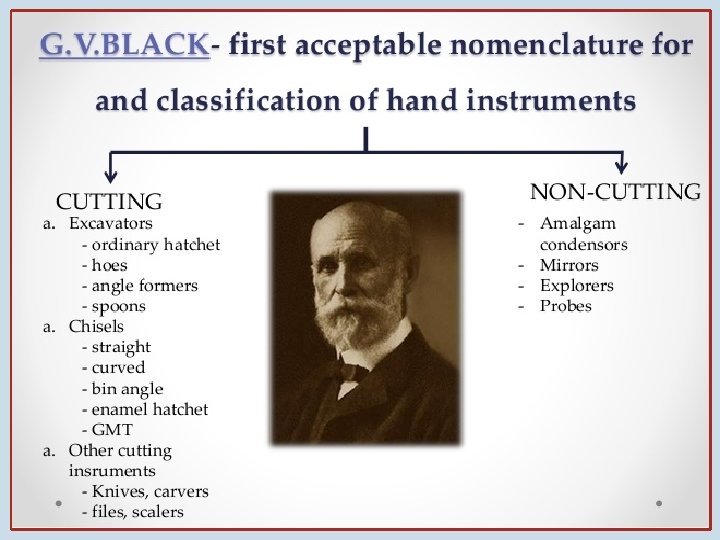
6. Cutting instruments • Used for cutting and finishing of tooth structure and restoratives • Hand rotary • -Hand cutting instruments: 2 families Chisels (push & pull) hatchet (right & left)
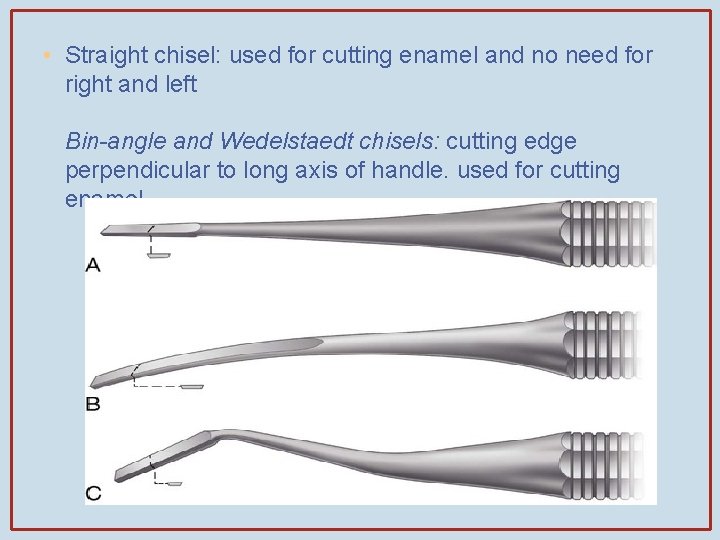
• Chisels • Straight - bevels the cavosurface margin and used in 3, 4 and 5 classifications of cavities on the maxillary. • Wedelstaedt - only used in the anterior for classes 3, 4 and 5 as well. • Bin Angle - this is held in a pen grasp and used for class 2 maxillary only.
• Straight chisel: used for cutting enamel and no need for right and left Bin-angle and Wedelstaedt chisels: cutting edge perpendicular to long axis of handle. used for cutting enamel.
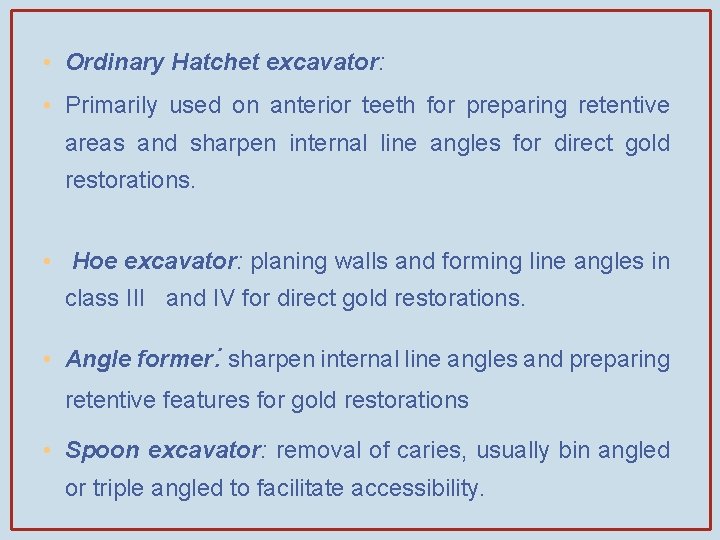
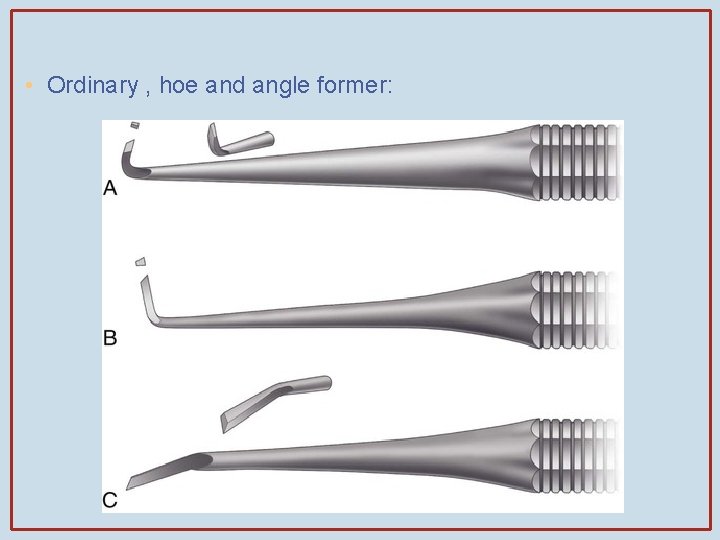
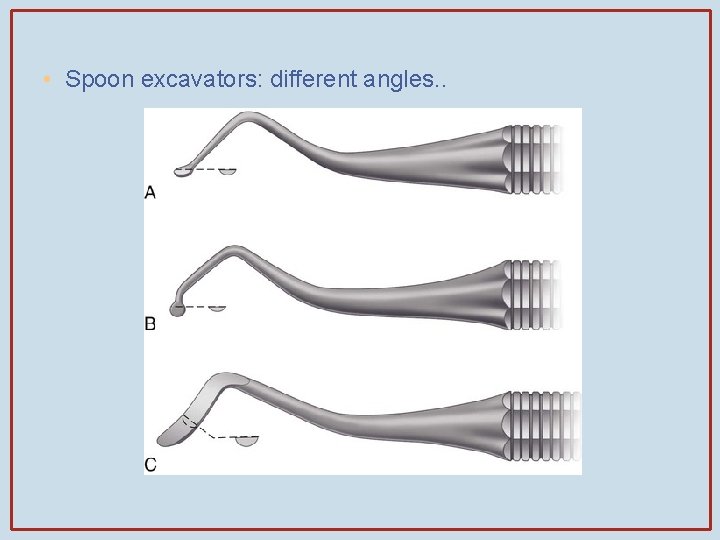
• Ordinary Hatchet excavator: • Primarily used on anterior teeth for preparing retentive areas and sharpen internal line angles for direct gold restorations. • Hoe excavator: planing walls and forming line angles in class III and IV for direct gold restorations. • Angle former: sharpen internal line angles and preparing retentive features for gold restorations • Spoon excavator: removal of caries, usually bin angled or triple angled to facilitate accessibility.
• Ordinary , hoe and angle former:
• Spoon excavators: different angles. .
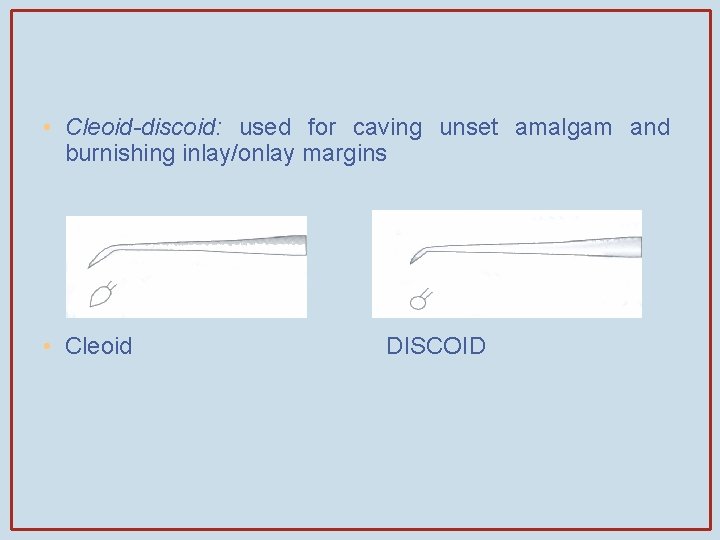
• Cleoid-discoid: used for caving unset amalgam and burnishing inlay/onlay margins • Cleoid DISCOID
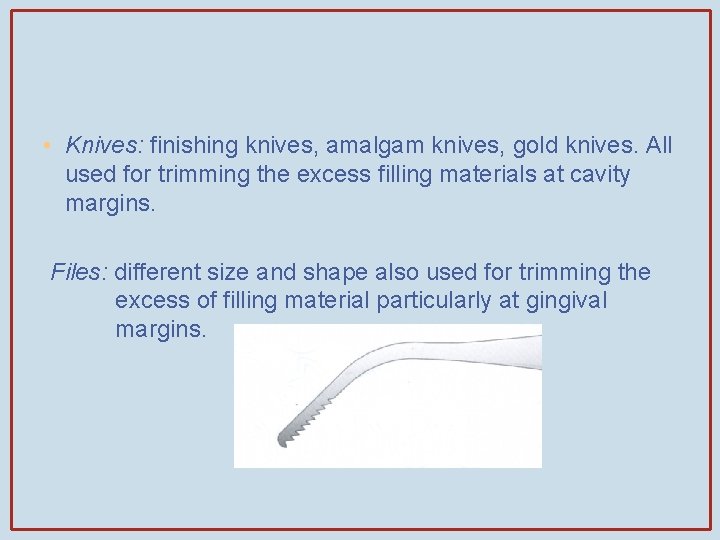
• Knives: finishing knives, amalgam knives, gold knives. All used for trimming the excess filling materials at cavity margins. Files: different size and shape also used for trimming the excess of filling material particularly at gingival margins.
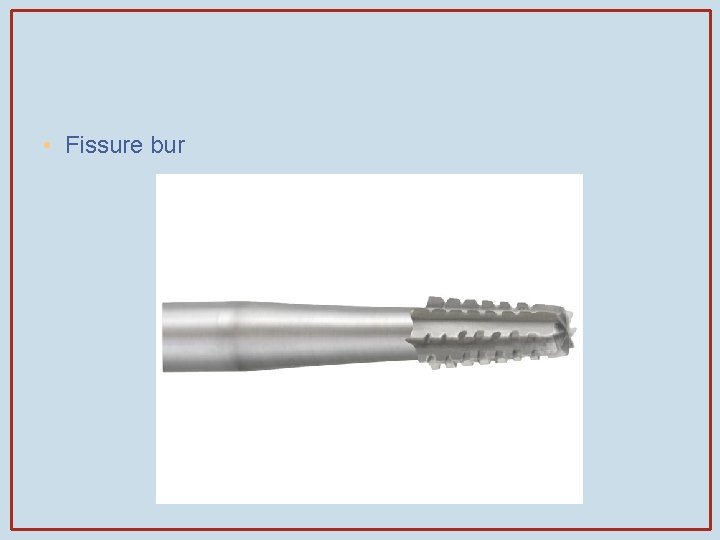
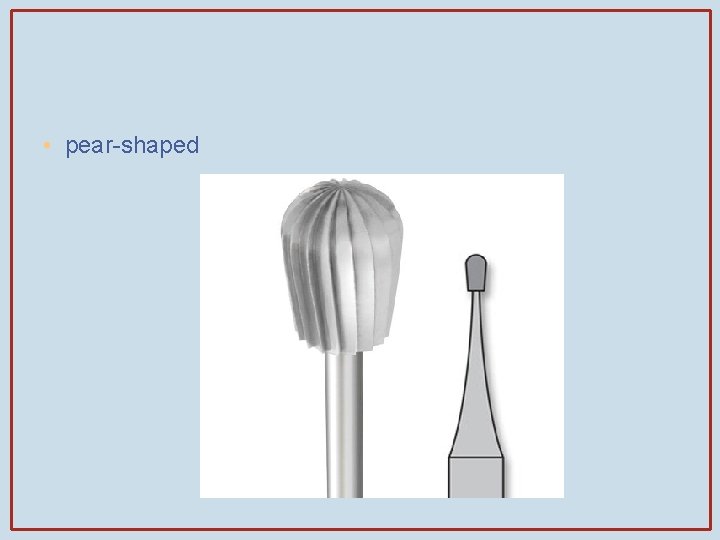
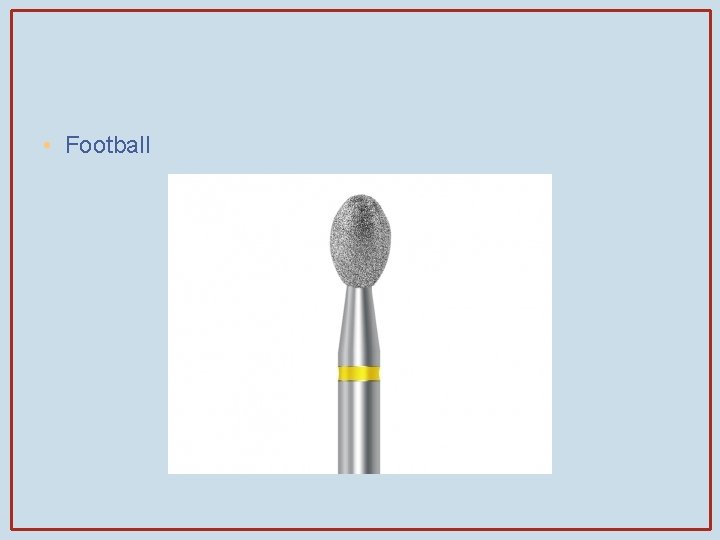
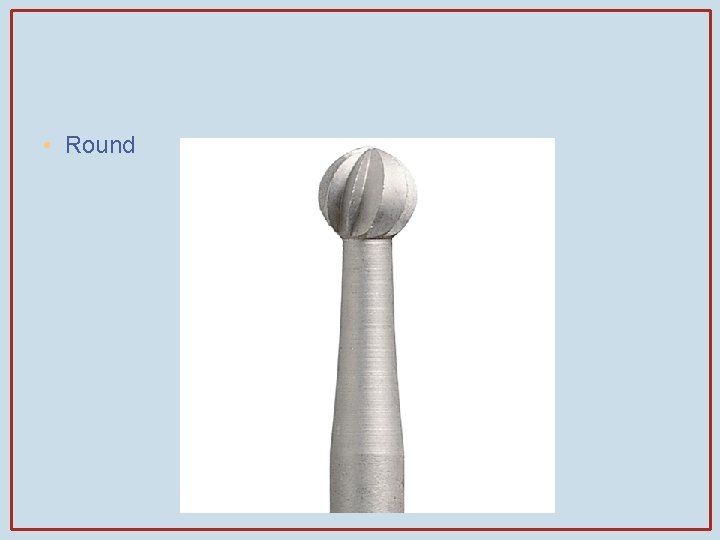
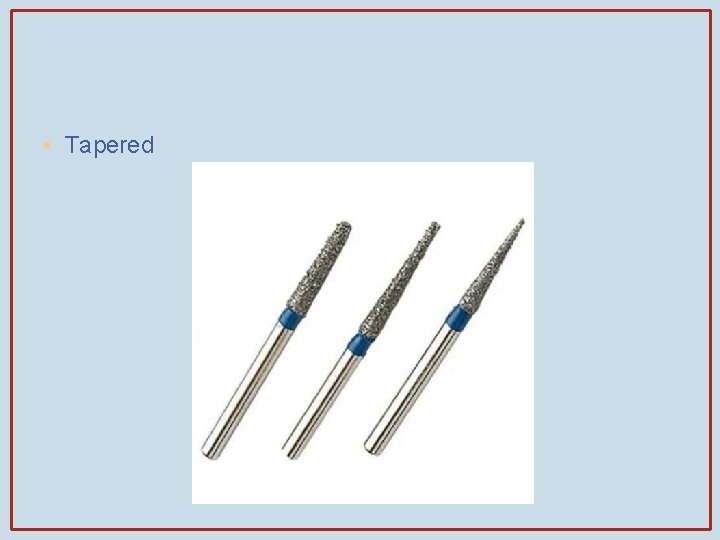
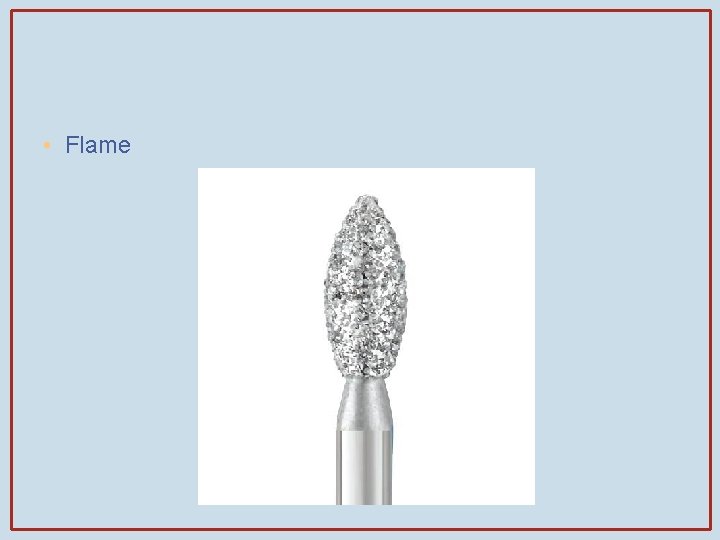
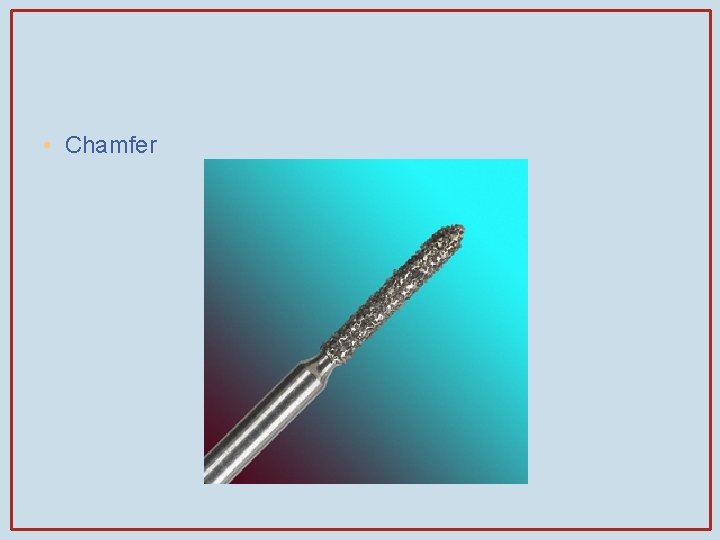
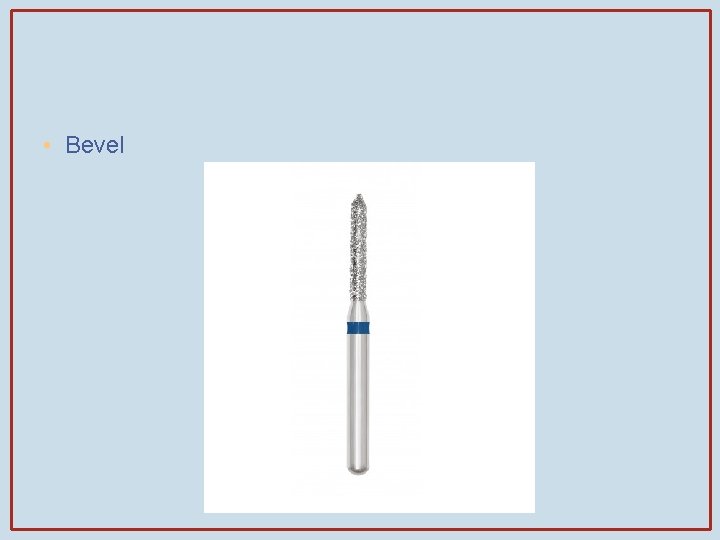
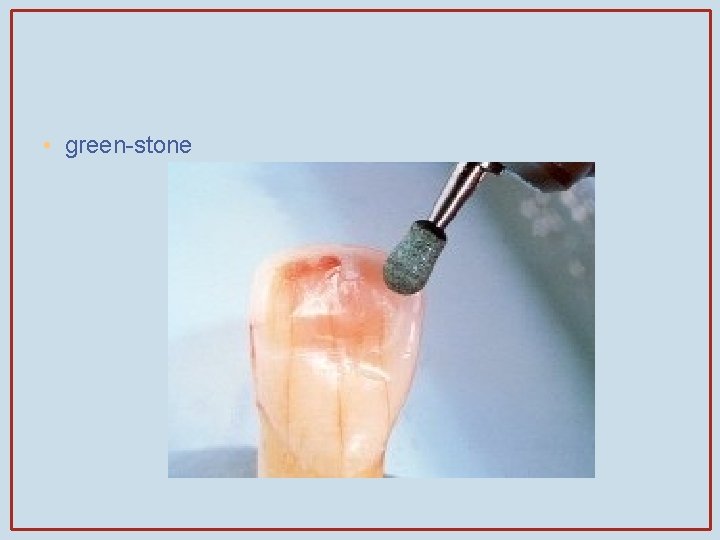
• -Rotary cutting instruments Operative burs: Flat fissure, pear-shaped, football, round, tapered, flame, chamfer, bevel, end cut, bud bur, steel, inverted cone, diamond, brown stone, and green-stone
• Fissure bur
• pear-shaped
• Football
• Round
• Tapered
• Flame
• Chamfer
• Bevel
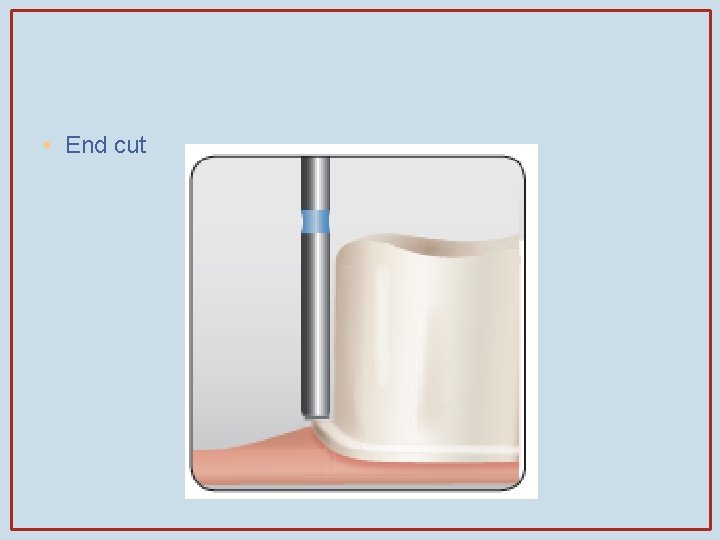
• End cut
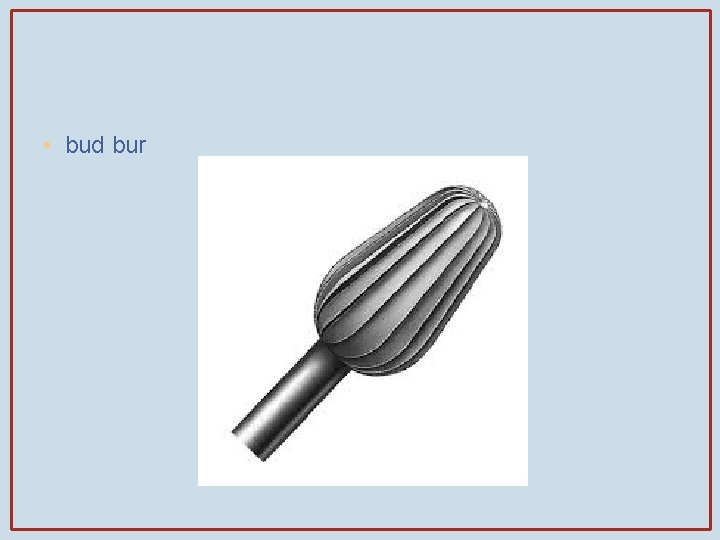
• bud bur
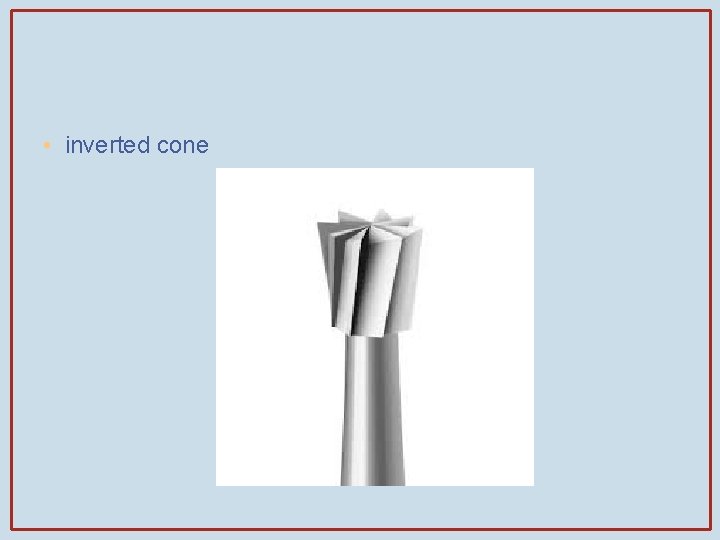
• inverted cone
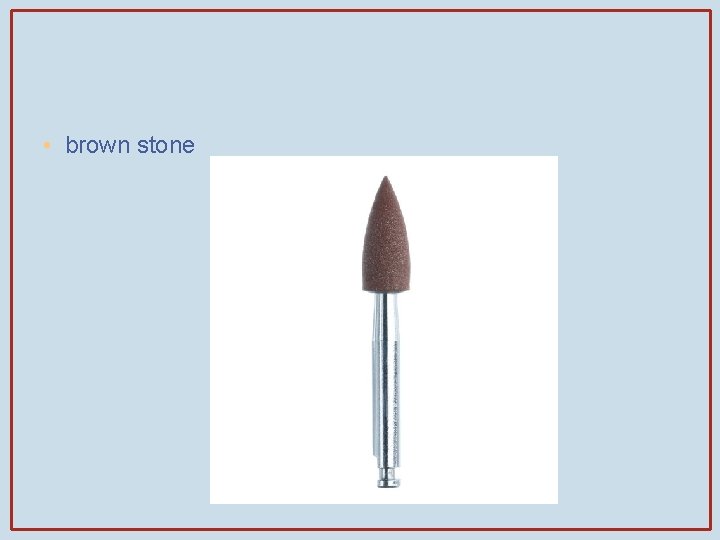
• brown stone
• green-stone
THANK YOU