
Conservation of Energy Changing Forms of Energy Energy

- Slides: 24
Conservation of Energy
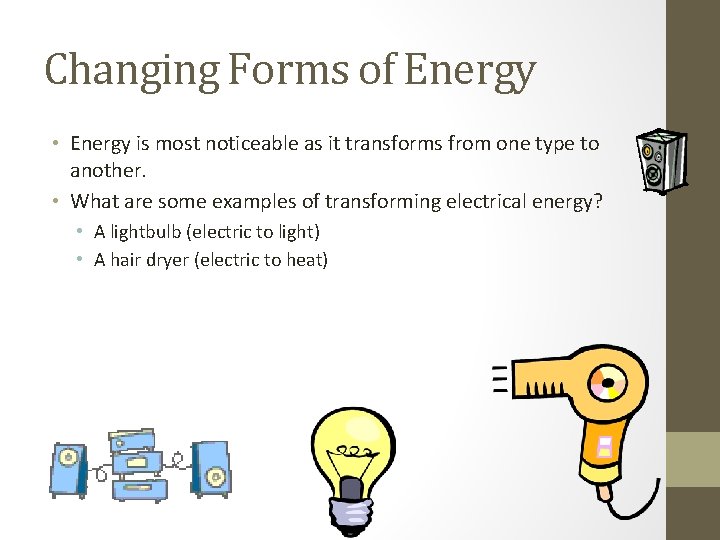
Changing Forms of Energy • Energy is most noticeable as it transforms from one type to another. • What are some examples of transforming electrical energy? • A lightbulb (electric to light) • A hair dryer (electric to heat)
Forms of Energy (Review) • • • Electrical Radiant (solar rays) Chemical (petrol) Nuclear Sound (vibrations in the air) Heat
Kinetic Energy
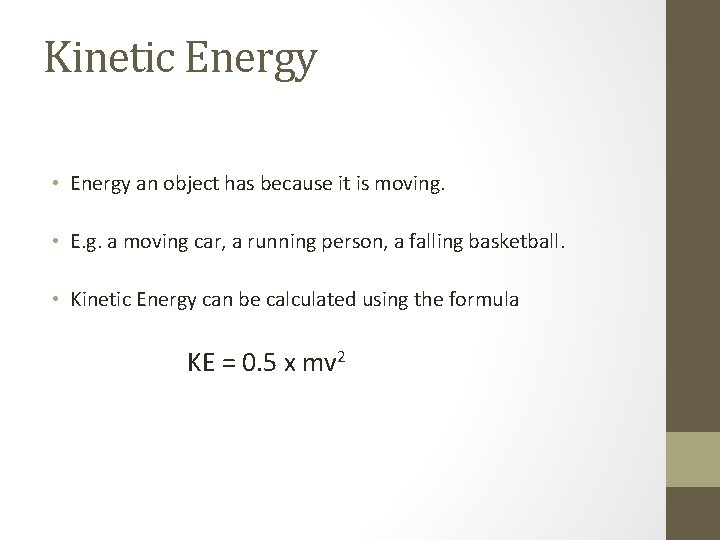
Kinetic Energy • Energy an object has because it is moving. • E. g. a moving car, a running person, a falling basketball. • Kinetic Energy can be calculated using the formula KE = 0. 5 x mv 2
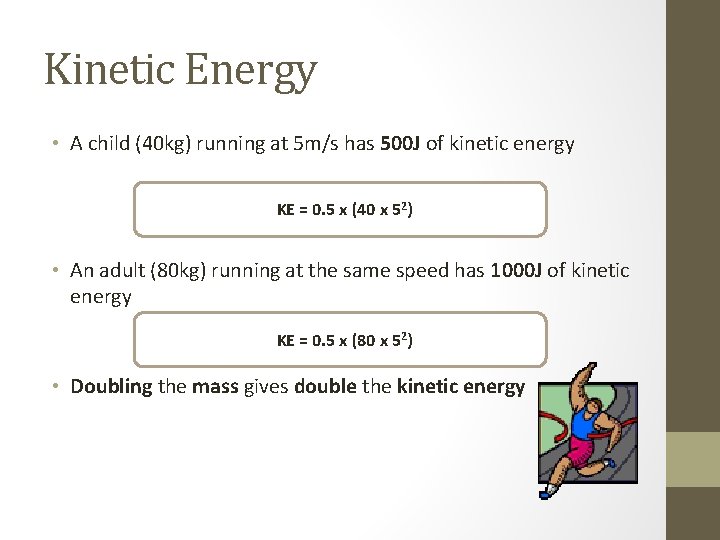
Kinetic Energy • A child (40 kg) running at 5 m/s has 500 J of kinetic energy KE = 0. 5 x (40 x 52) • An adult (80 kg) running at the same speed has 1000 J of kinetic energy KE = 0. 5 x (80 x 52) • Doubling the mass gives double the kinetic energy
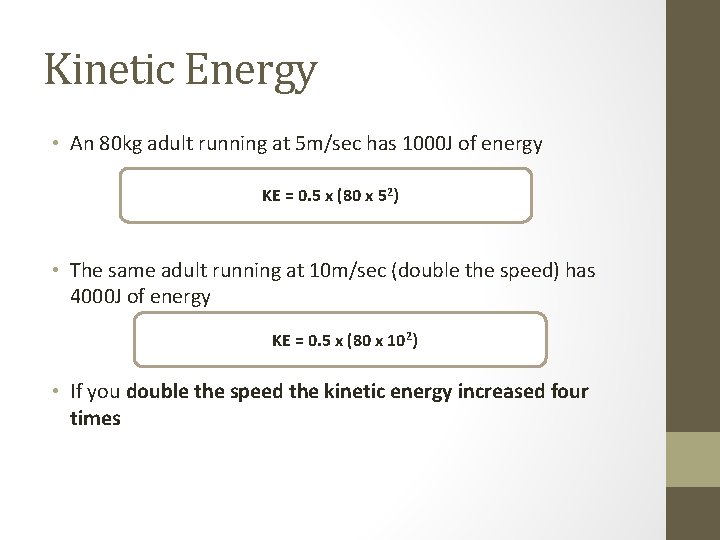
Kinetic Energy • An 80 kg adult running at 5 m/sec has 1000 J of energy KE = 0. 5 x (80 x 52) • The same adult running at 10 m/sec (double the speed) has 4000 J of energy KE = 0. 5 x (80 x 102) • If you double the speed the kinetic energy increased four times
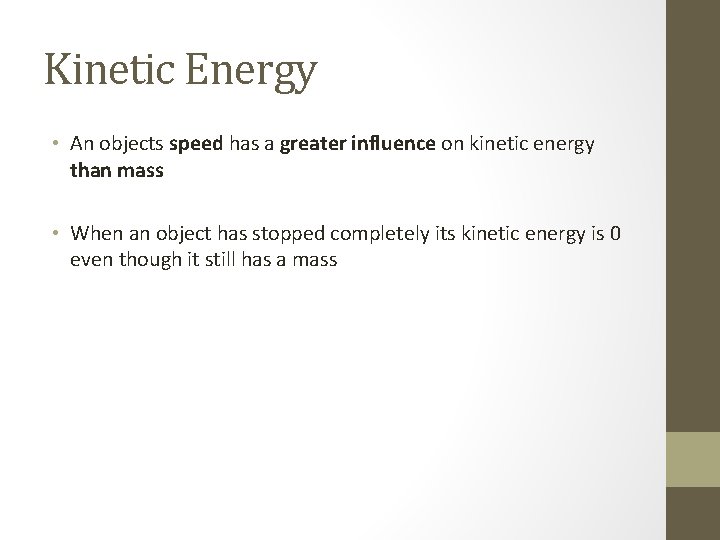
Kinetic Energy • An objects speed has a greater influence on kinetic energy than mass • When an object has stopped completely its kinetic energy is 0 even though it still has a mass
Potential Energy
Potential Energy Definition: Energy an object has because of its position 1. Examples a. Gravitational potential energy – potential for an object to move (fall) due to gravity E. g. a rock on the edge of a cliff b. Elastic Potential Energy - the potential in a stretched elastic band to snap back into position. c. Chemical Potential Energy – Energy stored in chemicals. Like petrol and batteries.
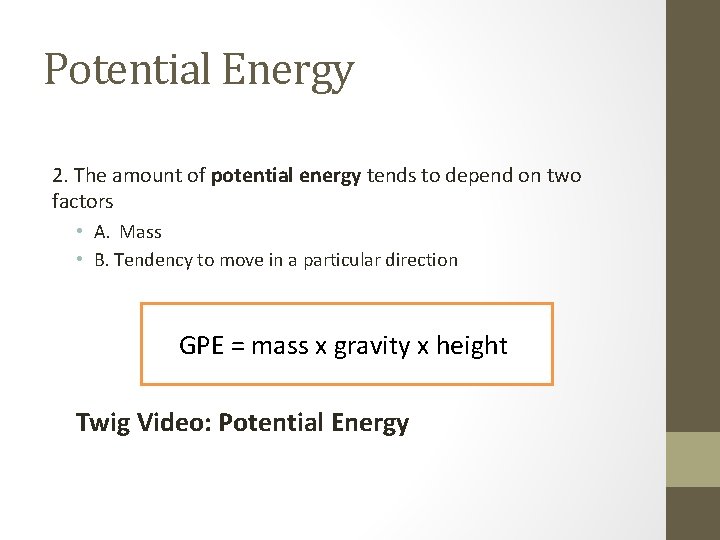
Potential Energy 2. The amount of potential energy tends to depend on two factors • A. Mass • B. Tendency to move in a particular direction GPE = mass x gravity x height Twig Video: Potential Energy
Elastic Potential Energy • E. g. bungee jumper • When a person stands at the edge of the bridge he has a lot of Potential Energy • When he jumps he has Kinetic Energy • When the rope is fully stretched it has the potential to return the person upwards due to Elastic Potential Energy.
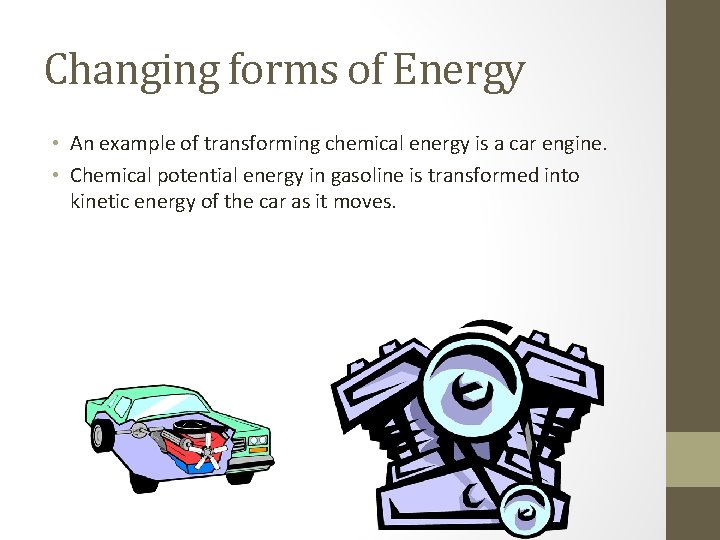
Changing forms of Energy • An example of transforming chemical energy is a car engine. • Chemical potential energy in gasoline is transformed into kinetic energy of the car as it moves.
KE and PE • In many situations, there is a conversion between potential and kinetic energy. • The total amount of potential and kinetic energy in a system is called the mechanical energy • Mechanical energy = PE + KE
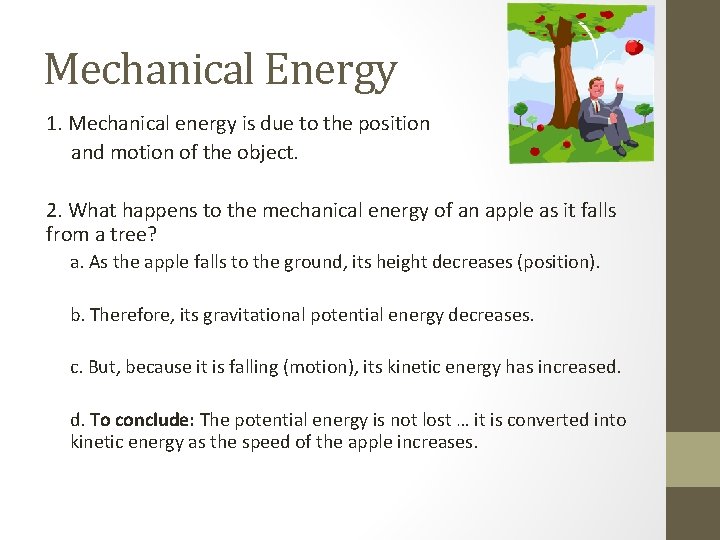
Mechanical Energy 1. Mechanical energy is due to the position and motion of the object. 2. What happens to the mechanical energy of an apple as it falls from a tree? a. As the apple falls to the ground, its height decreases (position). b. Therefore, its gravitational potential energy decreases. c. But, because it is falling (motion), its kinetic energy has increased. d. To conclude: The potential energy is not lost … it is converted into kinetic energy as the speed of the apple increases.
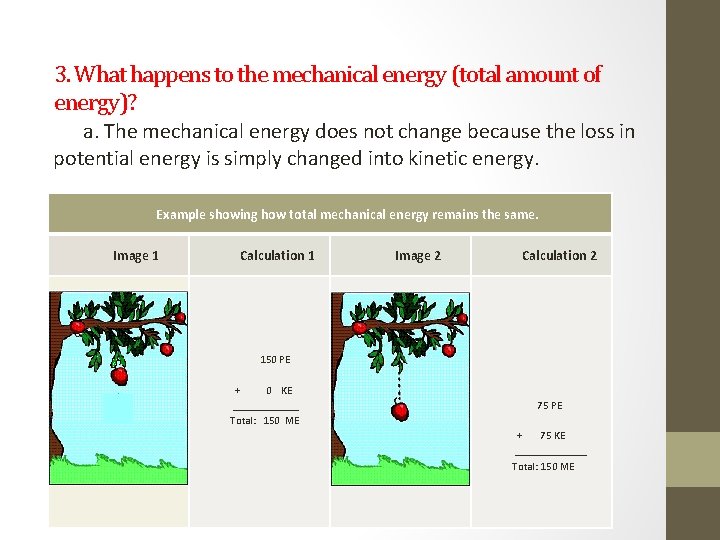
3. What happens to the mechanical energy (total amount of energy)? a. The mechanical energy does not change because the loss in potential energy is simply changed into kinetic energy. Example showing how total mechanical energy remains the same. • The energy in the system remains constant!! Image 1 Calculation 1 Image 2 Calculation 2 150 PE + 0 KE ______ Total: 150 ME 75 PE + 75 KE _______ Total: 150 ME
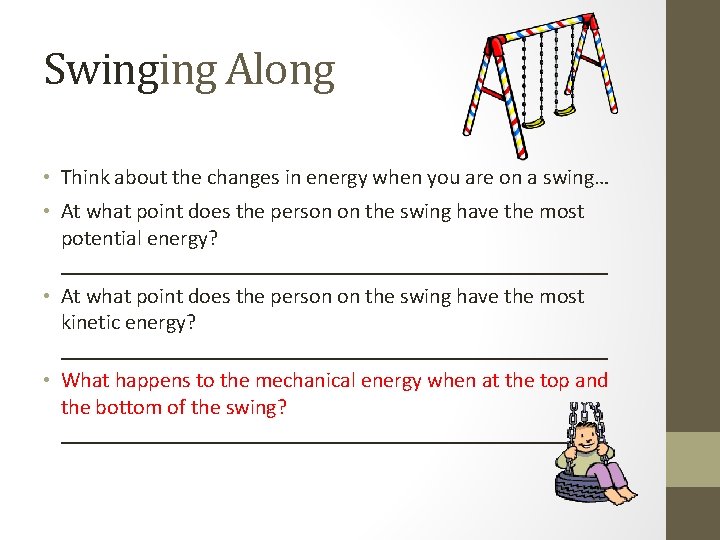
Swinging Along • Think about the changes in energy when you are on a swing… • At what point does the person on the swing have the most potential energy? _________________________ • At what point does the person on the swing have the most kinetic energy? _________________________ • What happens to the mechanical energy when at the top and the bottom of the swing? _________________________
The Law of Conservation of Energy Twig Video: Law of Thermodynamics 1. The Law of Conservation of Energy states that energy cannot be created or destroyed. 2. The big picture… the total energy in the universe remains constant.
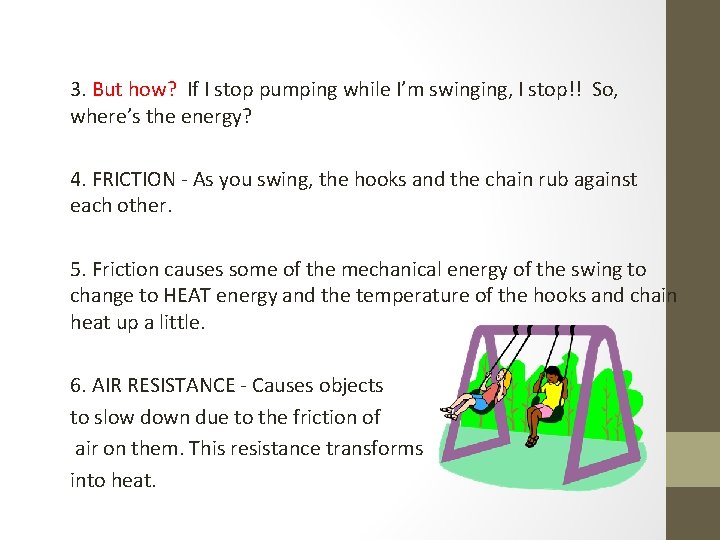
3. But how? If I stop pumping while I’m swinging, I stop!! So, where’s the energy? 4. FRICTION - As you swing, the hooks and the chain rub against each other. 5. Friction causes some of the mechanical energy of the swing to change to HEAT energy and the temperature of the hooks and chain heat up a little. 6. AIR RESISTANCE - Causes objects to slow down due to the friction of air on them. This resistance transforms into heat.
Quick Quiz 1. What is the ‘conservation of energy’ definition? 2. What energies combine to create mechanical energy? 3. The higher an object is in relation to the ground increases what? 4. If an apple has a potential energy of 85 and a kinetic energy of 15. . . what is it’s mechanical energy? 5. What two types of energy transfers occur when swinging that causes you to slow.
Answers 1. 2. 3. 4. 5. Energy is neither created or destroyed. It simply changes forms. Kinetic Energy + Potential Energy Increases it’s potential energy Mechanical Energy = 100 Friction of chain on ring and body with the air.
Conservation of Energy • Energy is transformed… not destroyed!!
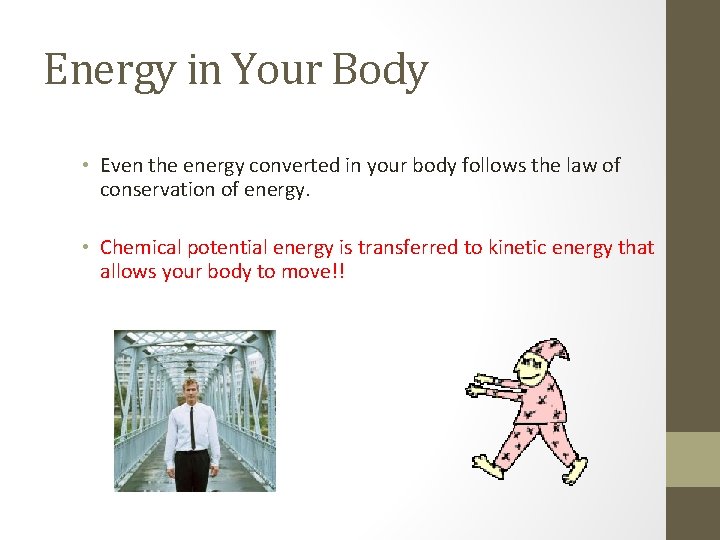
Energy in Your Body • Even the energy converted in your body follows the law of conservation of energy. • Chemical potential energy is transferred to kinetic energy that allows your body to move!!
The End