
CONSERVATION OF ENERGY AP Physics WHEN A BALL

CONSERVATION OF ENERGY AP Physics
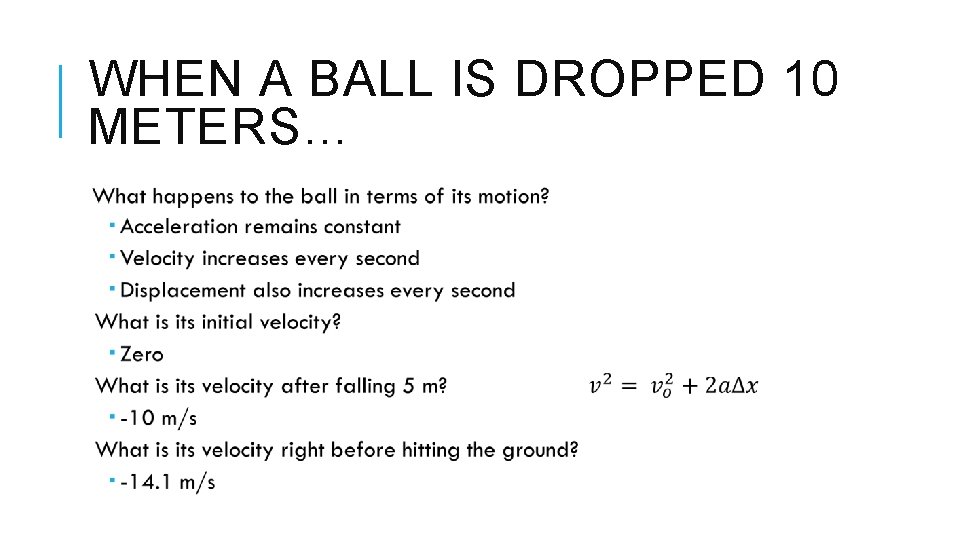
WHEN A BALL IS DROPPED 10 METERS…
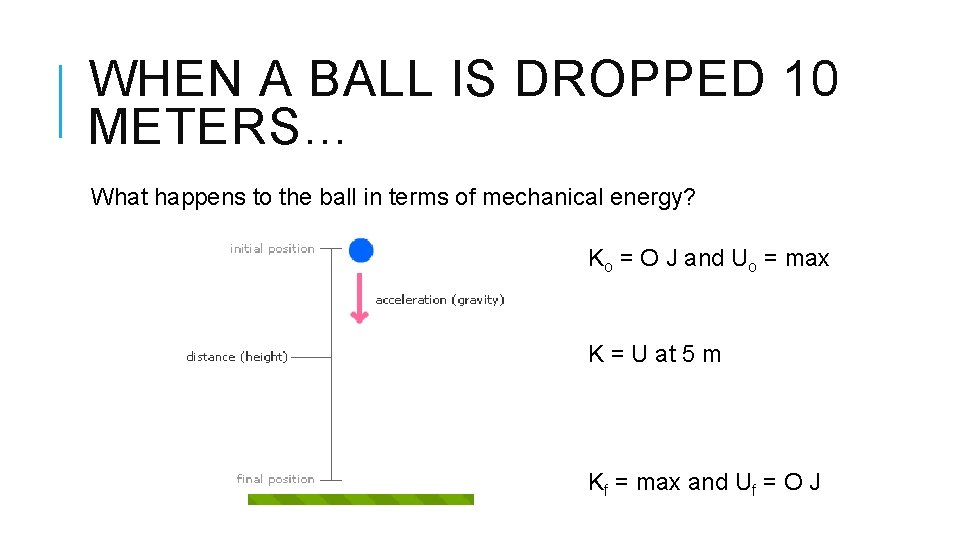
WHEN A BALL IS DROPPED 10 METERS… What happens to the ball in terms of mechanical energy? Ko = O J and Uo = max K = U at 5 m Kf = max and Uf = O J
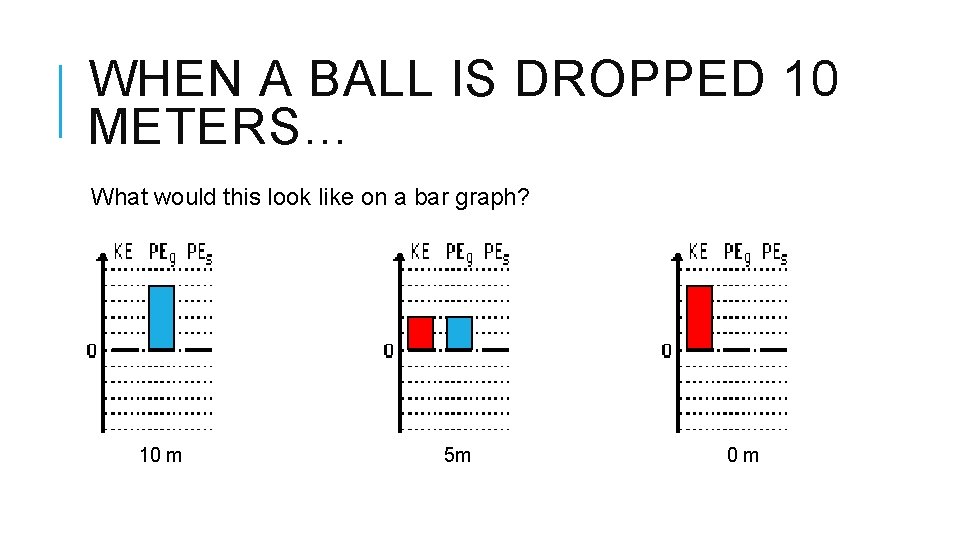
WHEN A BALL IS DROPPED 10 METERS… What would this look like on a bar graph? 10 m 5 m 0 m

WHEN A BALL IS DROPPED 10 METERS… What is its initial kinetic energy? Potential energy? K = 0 J U = 100 J Total Energy = 100 J What is its kinetic energy after falling 5 m? Potential Energy? K = 50 J U = 50 J Total Energy = 100 J What is its kinetic energy right before hitting the ground? Potential Energy? K = 100 J U = 0 J Total Energy = 100 J What is the relationship between the amount of kinetic energy and potential for the falling ball? As kinetic increases, potential decreases and vice versa. Total energy remains constant.
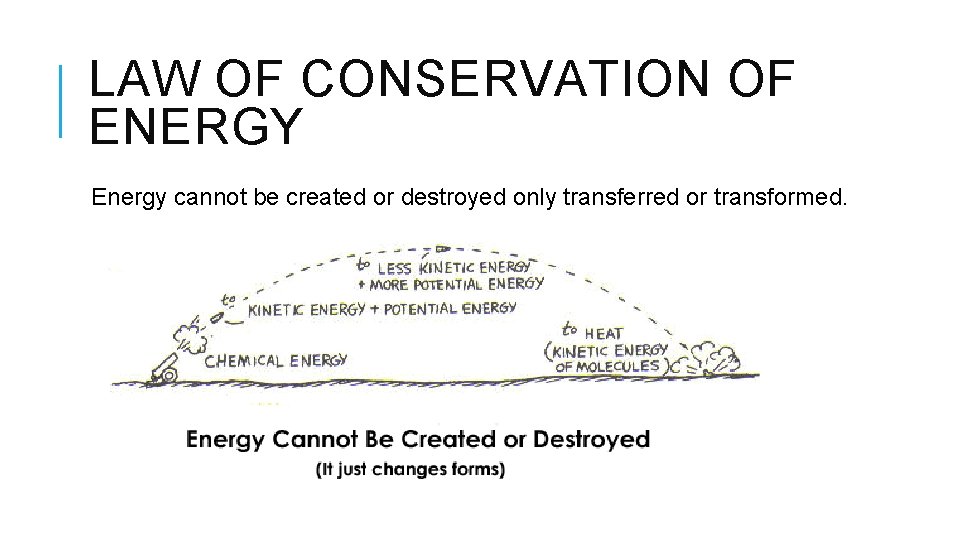
LAW OF CONSERVATION OF ENERGY Energy cannot be created or destroyed only transferred or transformed.
EXAMPLE 1 A 2 kg ball is dropped from 20 m. How fast will it be moving when it reaches the ground? v = -20 m/s
DEMONSTRATION The rolling ball that can violate the laws of the Universe!!! Initial Energy? Kinetic Final Energy? Zero Law Incorrect? NOOOO
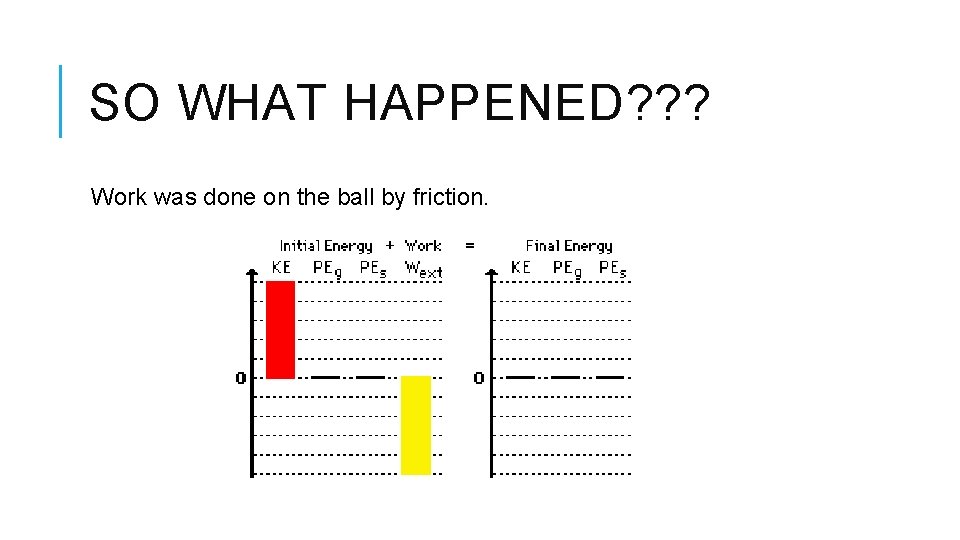
SO WHAT HAPPENED? ? ? Work was done on the ball by friction.

LAW OF CONSERVATION OF ENERGY FORMULA Ei + W = Ef Ki + Ui + W = Kf + Uf
EXAMPLE 2 A 10 kg box is moving at 5 m/s on a surface with a coefficient of friction of 0. 2. How far will the box move before coming to a stop? Δx = 6. 25 m
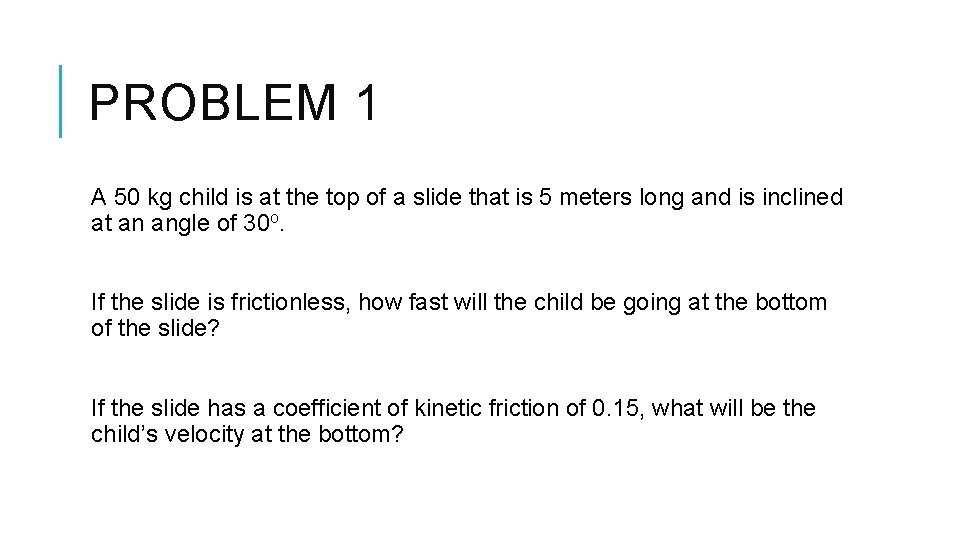
PROBLEM 1 A 50 kg child is at the top of a slide that is 5 meters long and is inclined at an angle of 30 o. If the slide is frictionless, how fast will the child be going at the bottom of the slide? If the slide has a coefficient of kinetic friction of 0. 15, what will be the child’s velocity at the bottom?
- Slides: 12