
Conservation of Charge 3 ways to transfer charge
- Slides: 15
Conservation of Charge 3 ways to transfer charge Conservation of Charge
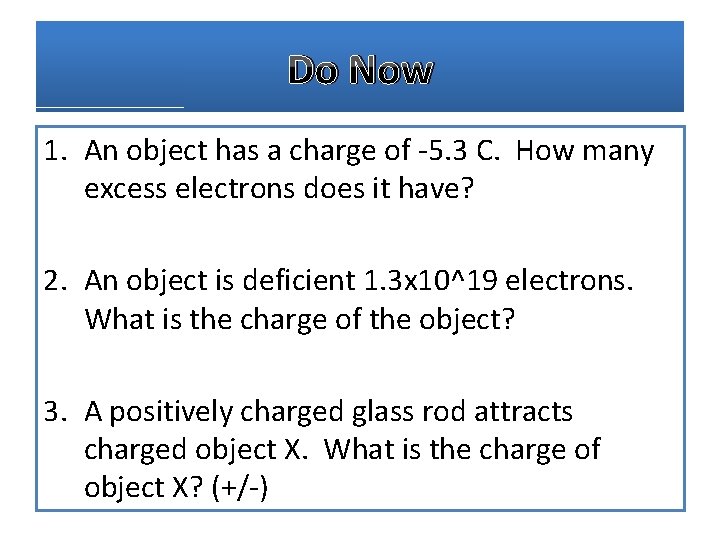
Do Now 1. An object has a charge of -5. 3 C. How many excess electrons does it have? 2. An object is deficient 1. 3 x 10^19 electrons. What is the charge of the object? 3. A positively charged glass rod attracts charged object X. What is the charge of object X? (+/-)
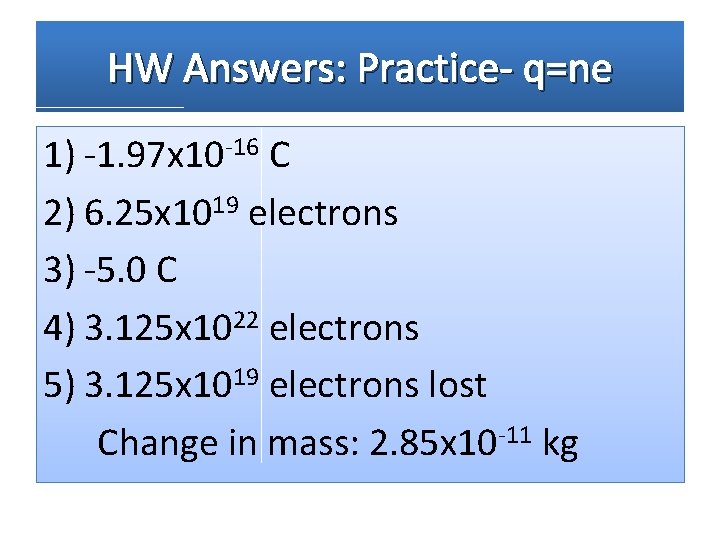
HW Answers: Practice- q=ne 1) -1. 97 x 10 -16 C 2) 6. 25 x 1019 electrons 3) -5. 0 C 4) 3. 125 x 1022 electrons 5) 3. 125 x 1019 electrons lost Change in mass: 2. 85 x 10 -11 kg
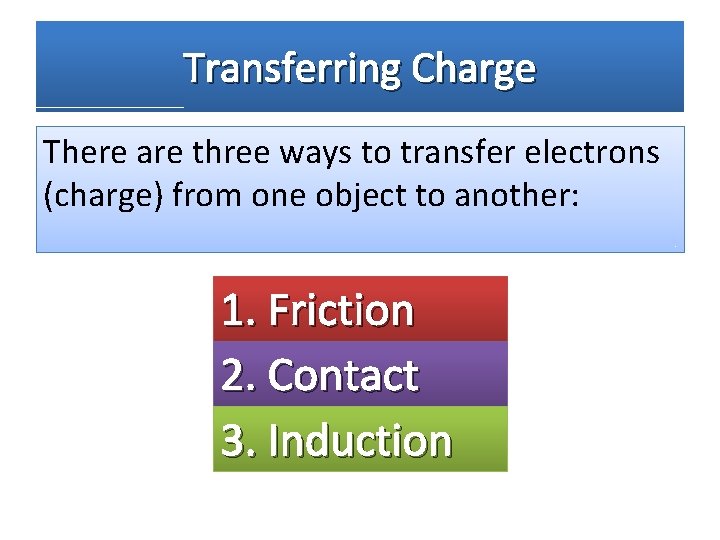
Transferring Charge There are three ways to transfer electrons (charge) from one object to another: 1. Friction 2. Contact 3. Induction
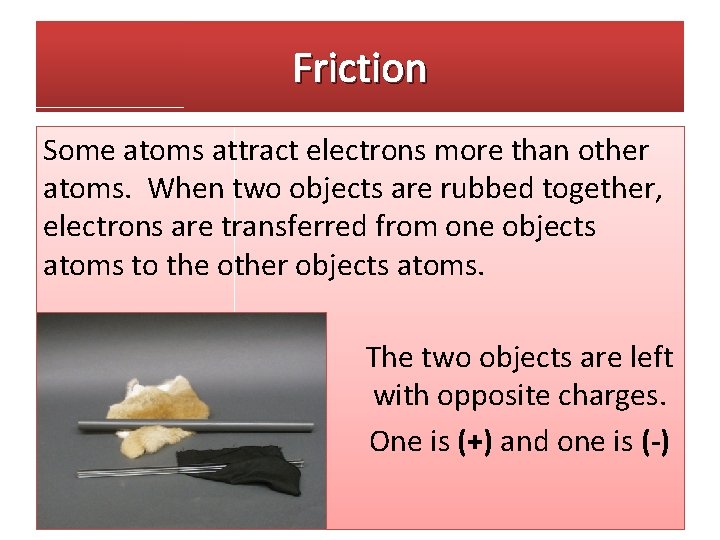
Friction Some atoms attract electrons more than other atoms. When two objects are rubbed together, electrons are transferred from one objects atoms to the other objects atoms. The two objects are left with opposite charges. One is (+) and one is (-)
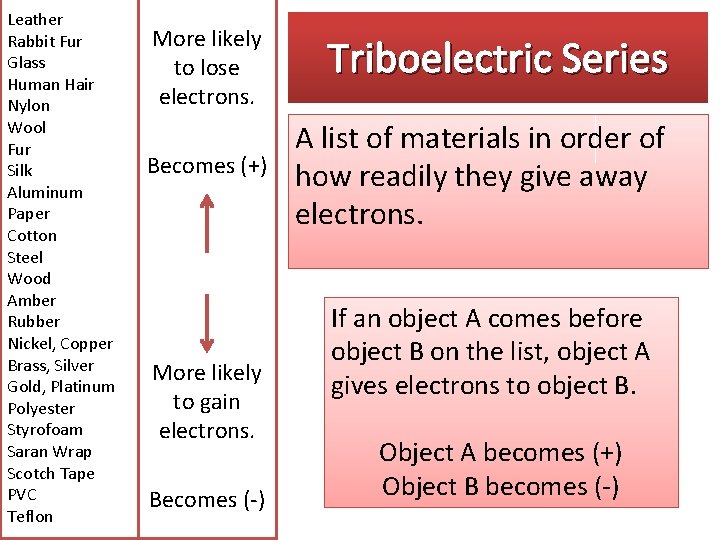
Leather Rabbit Fur Glass Human Hair Nylon Wool Fur Silk Aluminum Paper Cotton Steel Wood Amber Rubber Nickel, Copper Brass, Silver Gold, Platinum Polyester Styrofoam Saran Wrap Scotch Tape PVC Teflon More likely to lose electrons. Triboelectric Series Becomes (+) A list of materials in order of how readily they give away electrons. More likely to gain electrons. Becomes (-) If an object A comes before object B on the list, object A gives electrons to object B. Object A becomes (+) Object B becomes (-)
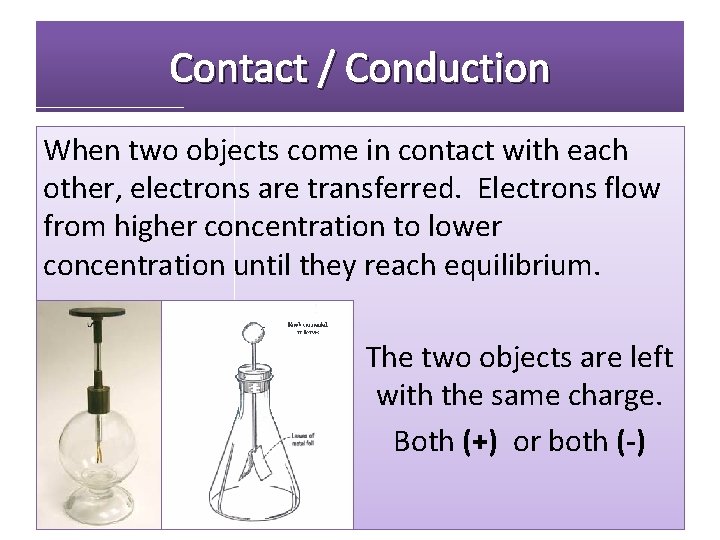
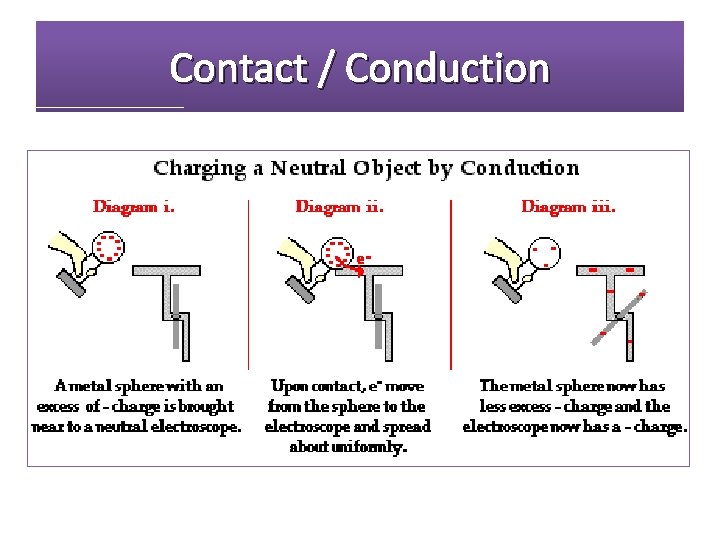
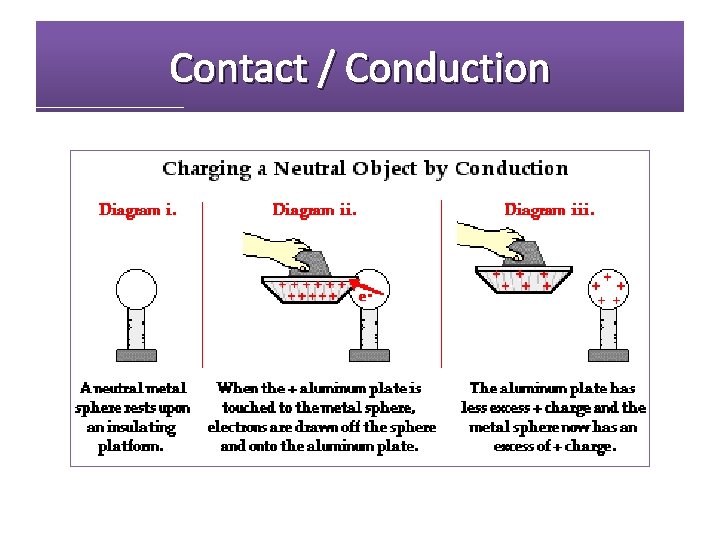
Contact / Conduction When two objects come in contact with each other, electrons are transferred. Electrons flow from higher concentration to lower concentration until they reach equilibrium. The two objects are left with the same charge. Both (+) or both (-)
Contact / Conduction
Contact / Conduction
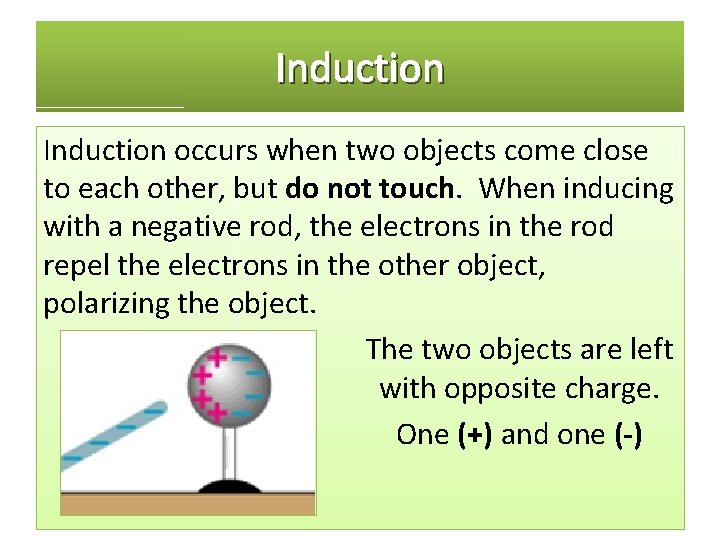
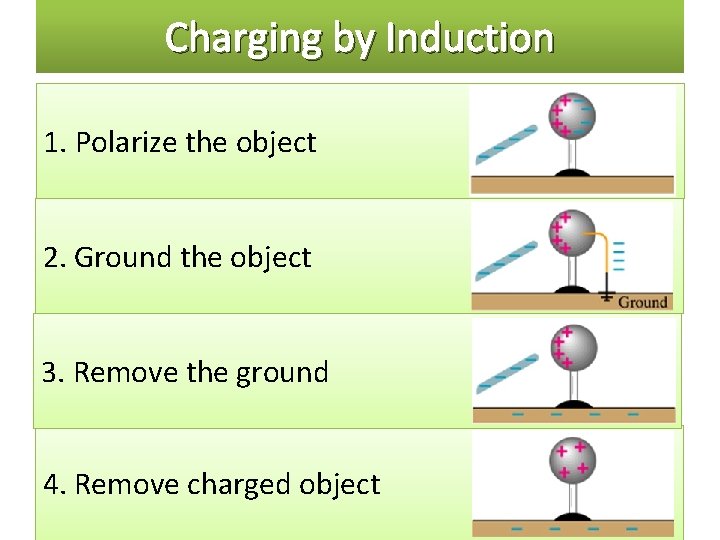
Induction occurs when two objects come close to each other, but do not touch. When inducing with a negative rod, the electrons in the rod repel the electrons in the other object, polarizing the object. The two objects are left with opposite charge. One (+) and one (-)
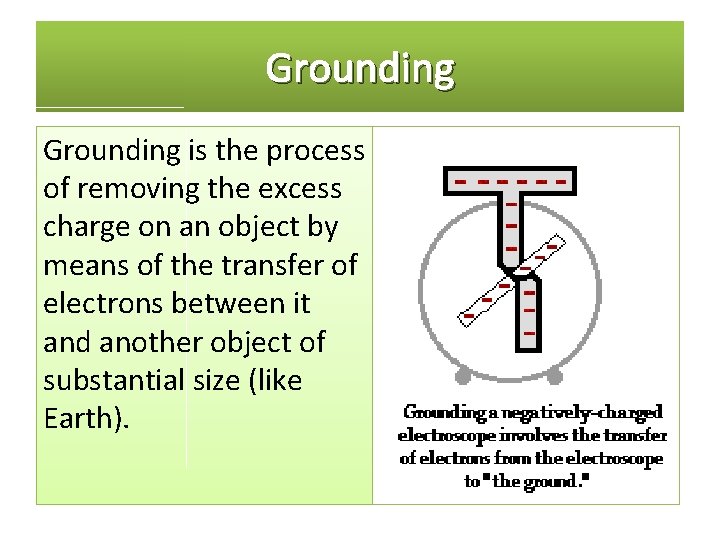
Grounding is the process of removing the excess charge on an object by means of the transfer of electrons between it and another object of substantial size (like Earth).
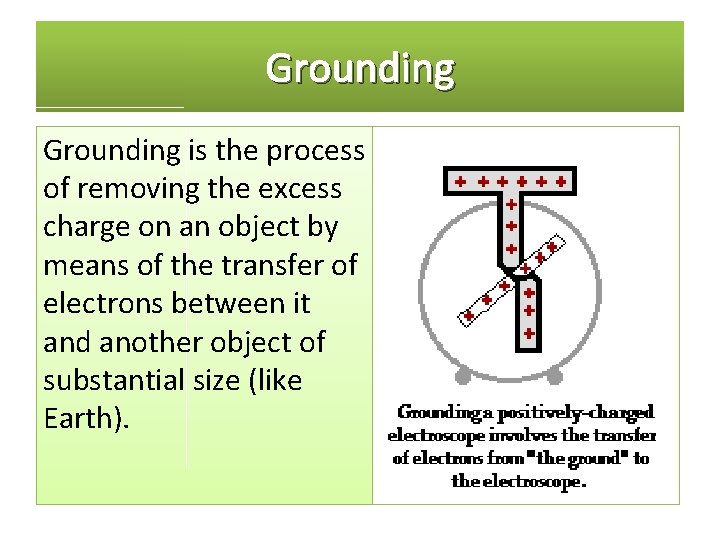
Grounding is the process of removing the excess charge on an object by means of the transfer of electrons between it and another object of substantial size (like Earth).
Charging by Induction 1. Polarize the object 2. Ground the object 3. Remove the ground 4. Remove charged object
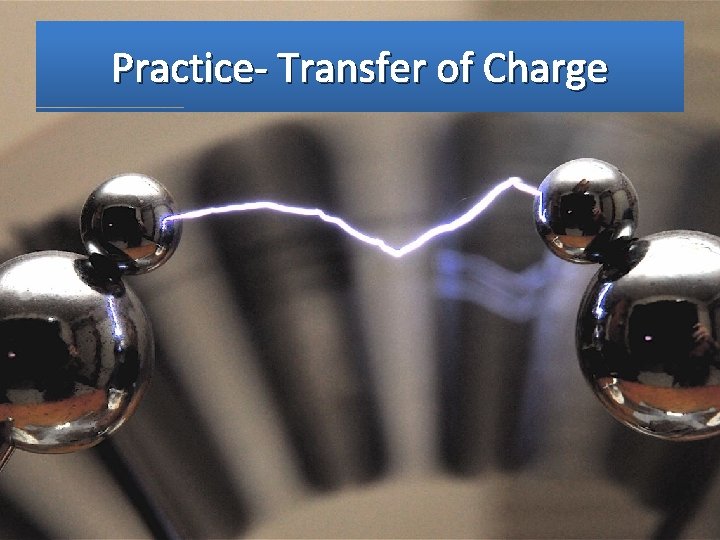
Practice- Transfer of Charge
http: //www. education. uoit. ca/lordec/ID_LORDEC/electroscope_lo. swf