
Conservation Action Planning Process CAP Framework Project Scope
- Slides: 23
Conservation Action Planning Process (CAP) Framework Project Scope & Targets
Conservation Action Planning Process (CAP) Framework Project Scope
Defining Project Scope • • Projects occur at many scales Map spatial area of Project Set overall project Goal Identify Project Team
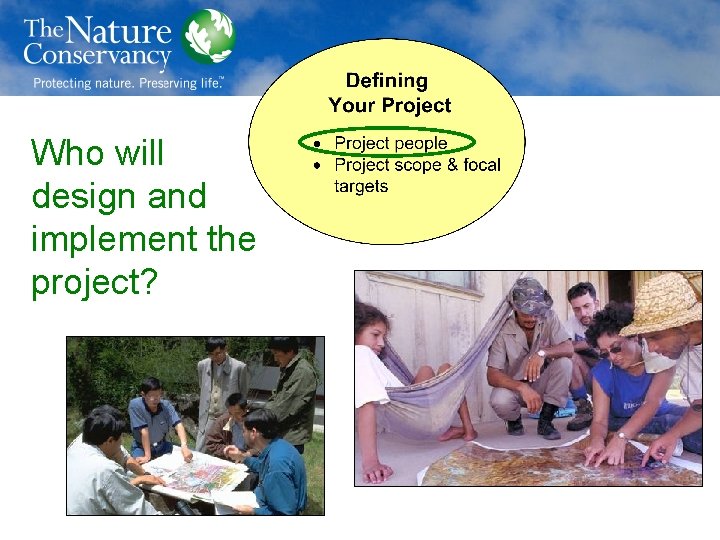
Who will design and implement the project?
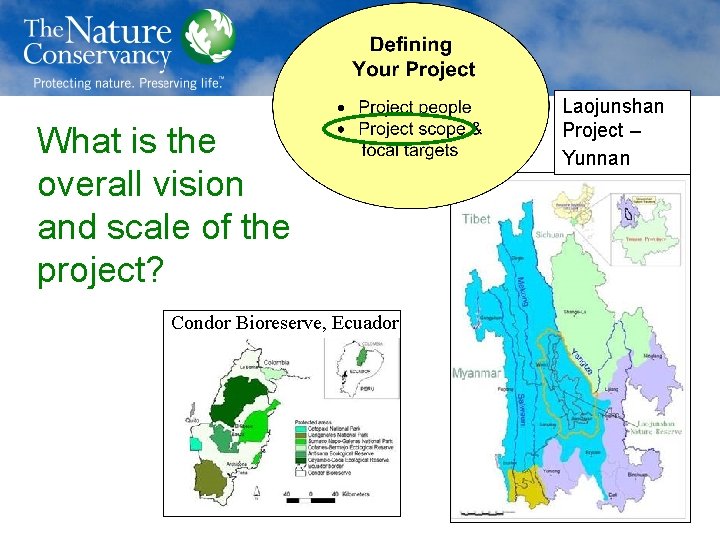
What is the overall vision and scale of the project? Condor Bioreserve, Ecuador Laojunshan Project – Yunnan
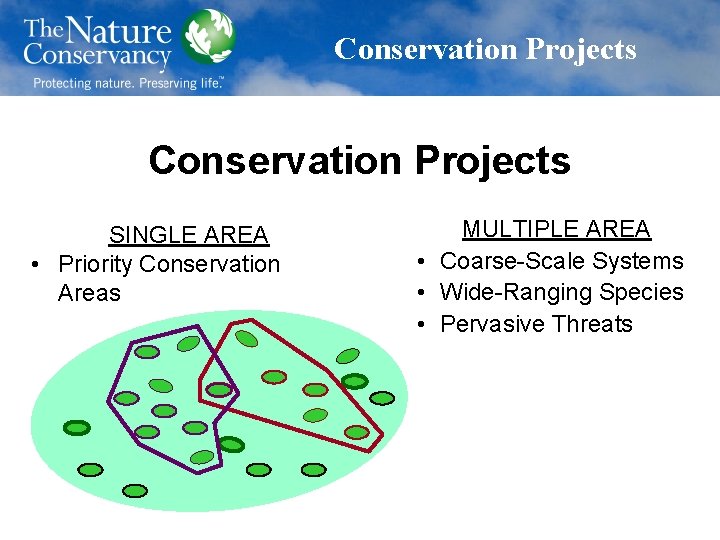
Conservation Projects SINGLE AREA • Priority Conservation Areas MULTIPLE AREA • Coarse-Scale Systems • Wide-Ranging Species • Pervasive Threats
Conservation Action Planning Process (CAP) Framework Conservation Targets
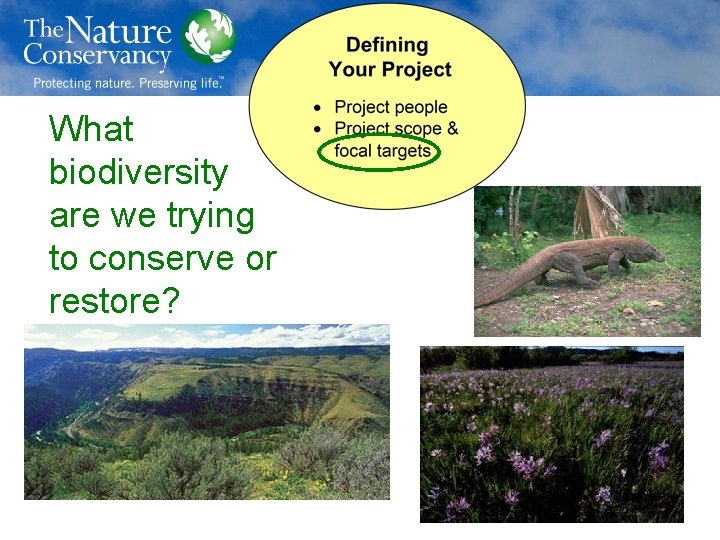
What biodiversity are we trying to conserve or restore?
Conservation Targets Focal Conservation Targets – The specific biodiversity features that a project team has chosen to concentrate on. • Your targets should represent the overall biodiversity of your project site. • Their conservation collectively will ensure the conservation of all native species within a functional landscape. • This, however, does not mean to restore or sustain “natural” conditions in each project’s landscape rather ecologically “functional” ones.
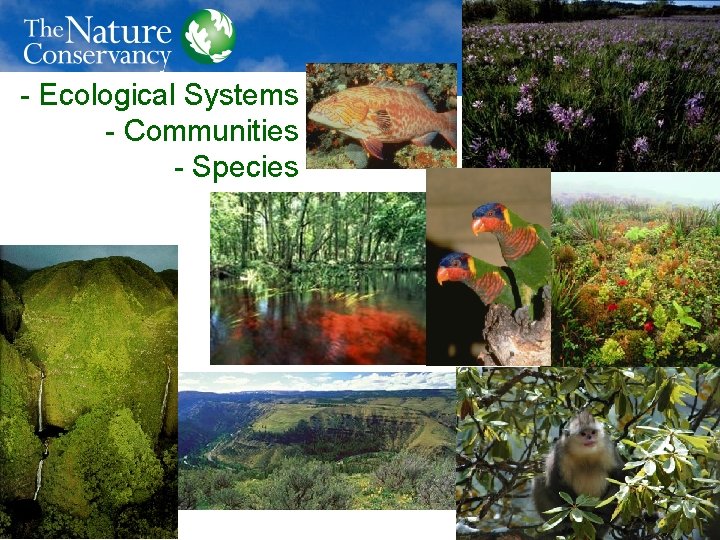
- Ecological Systems - Communities - Species
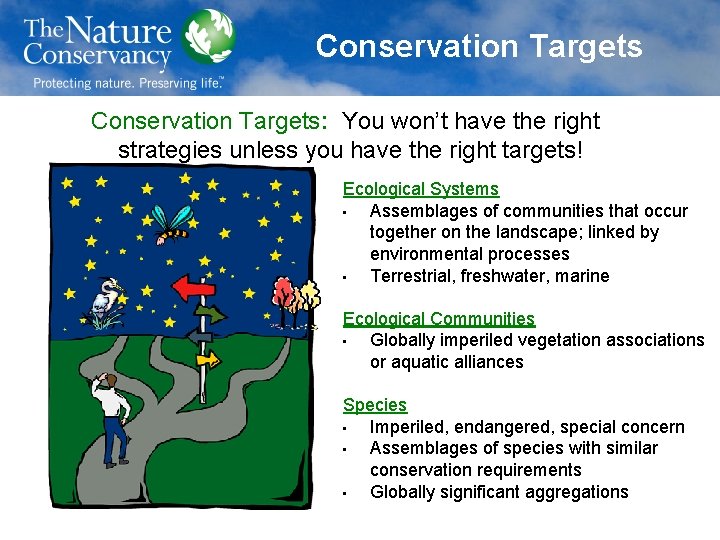
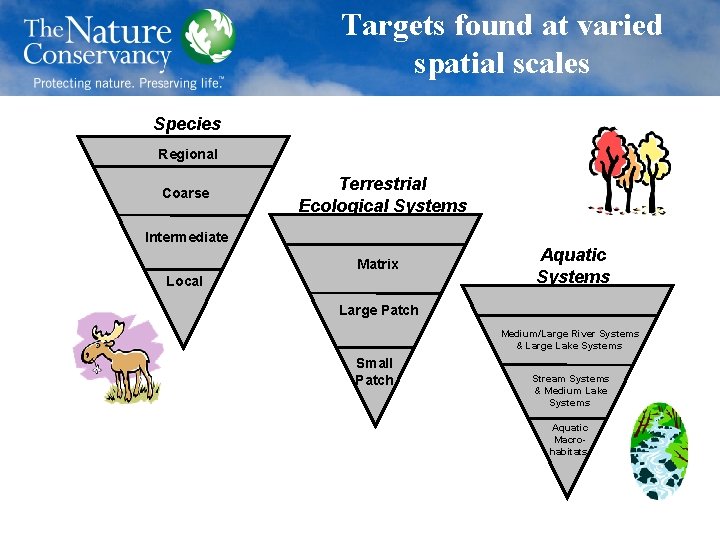
Conservation Targets: You won’t have the right strategies unless you have the right targets! Ecological Systems • Assemblages of communities that occur together on the landscape; linked by environmental processes • Terrestrial, freshwater, marine Ecological Communities • Globally imperiled vegetation associations or aquatic alliances Species • Imperiled, endangered, special concern • Assemblages of species with similar conservation requirements • Globally significant aggregations
Targets found at varied spatial scales Species Regional Coarse Terrestrial Ecological Systems Intermediate Matrix Local Aquatic Systems Large Patch Medium/Large River Systems & Large Lake Systems Small Patch Stream Systems & Medium Lake Systems Aquatic Macrohabitats
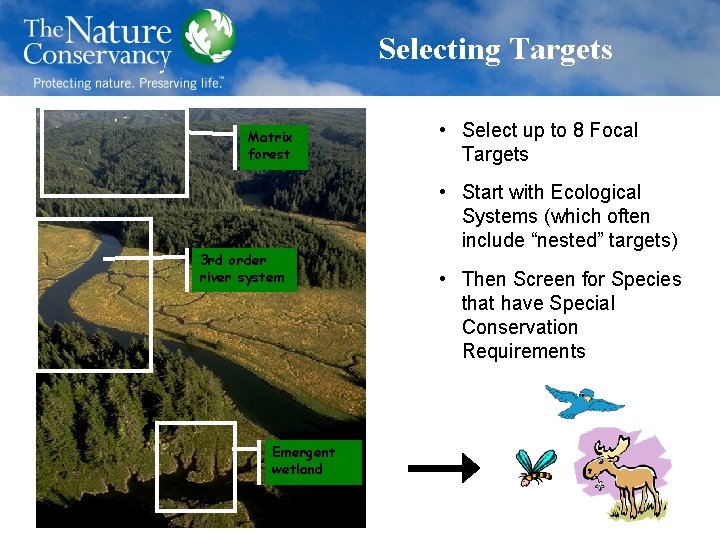
Selecting Targets Matrix forest 3 rd order river system Emergent wetland • Select up to 8 Focal Targets • Start with Ecological Systems (which often include “nested” targets) • Then Screen for Species that have Special Conservation Requirements
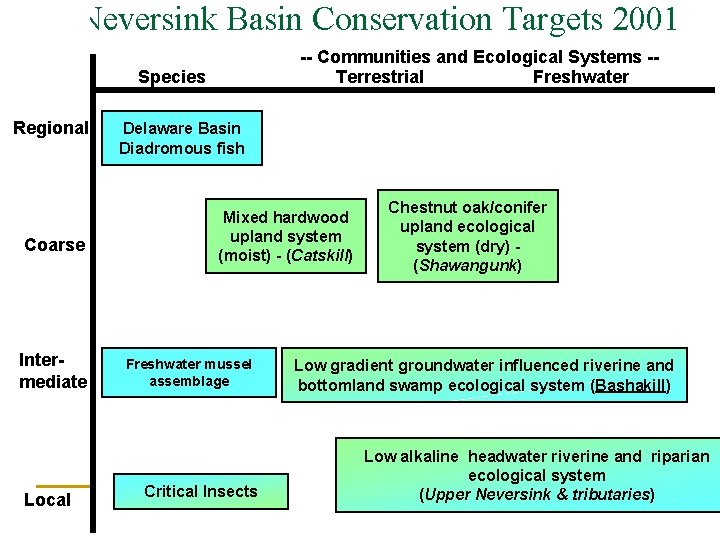
Neversink Basin Conservation Targets 2001 -- Communities and Ecological Systems -Terrestrial Freshwater Species Regional Coarse Intermediate Local Delaware Basin Diadromous fish Mixed hardwood upland system (moist) - (Catskill) Freshwater mussel assemblage Critical Insects Chestnut oak/conifer upland ecological system (dry) (Shawangunk) Low gradient groundwater influenced riverine and bottomland swamp ecological system (Bashakill) Low alkaline headwater riverine and riparian ecological system (Upper Neversink & tributaries)
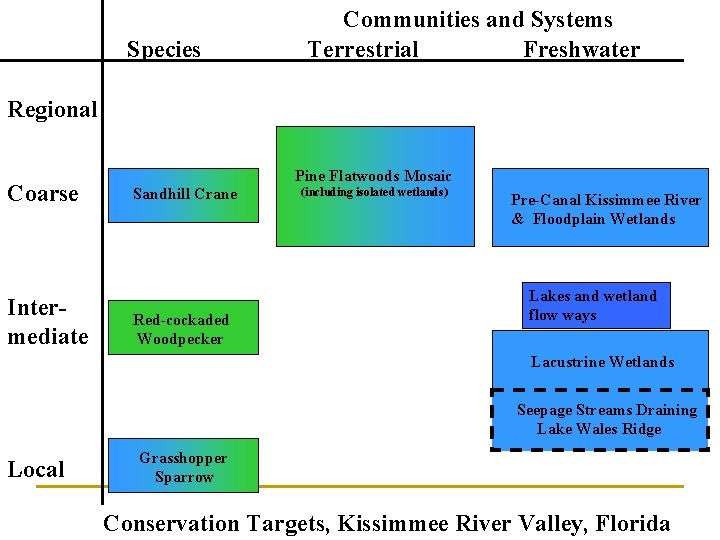
Species Communities and Systems Terrestrial Freshwater Regional Coarse Intermediate Pine Flatwoods Mosaic Sandhill Crane Red-cockaded Woodpecker (including isolated wetlands) Pre-Canal Kissimmee River & Floodplain Wetlands Lakes and wetland flow ways Lacustrine Wetlands Seepage Streams Draining Lake Wales Ridge Local Grasshopper Sparrow Conservation Targets, Kissimmee River Valley, Florida
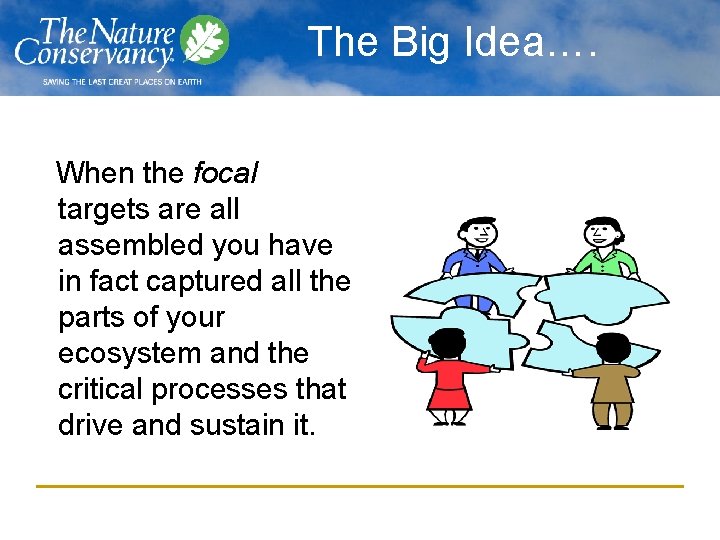
The Big Idea…. When the focal targets are all assembled you have in fact captured all the parts of your ecosystem and the critical processes that drive and sustain it.
Selecting Targets Lumping or Splitting Targets? “Lump” conservation targets if they meet all of the following tests: • Co-occur on the landscape • Require similar ecological processes • Have similar viability scores, or one target can serve as an indicator for the other • Have similar threats Therefore may ultimately require similar conservation strategies Examples – Mussel & host fish assemblages – Grasslands & grassland nesting birds – Matrix forest & embedded plant community
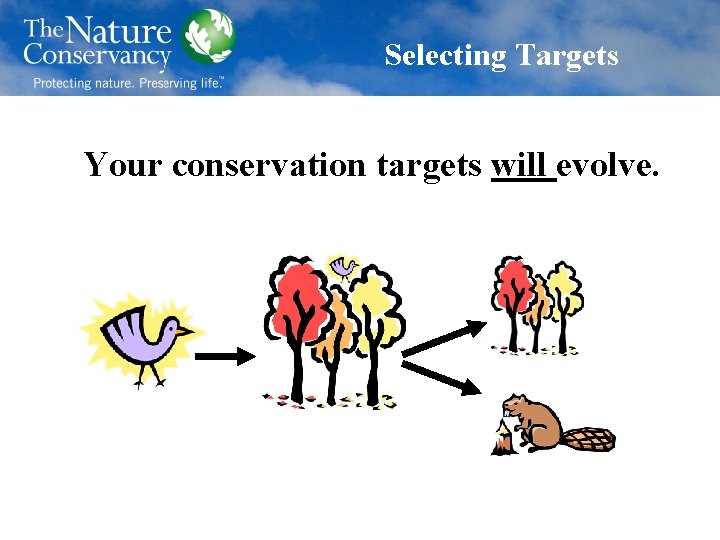
Selecting Targets Your conservation targets will evolve.
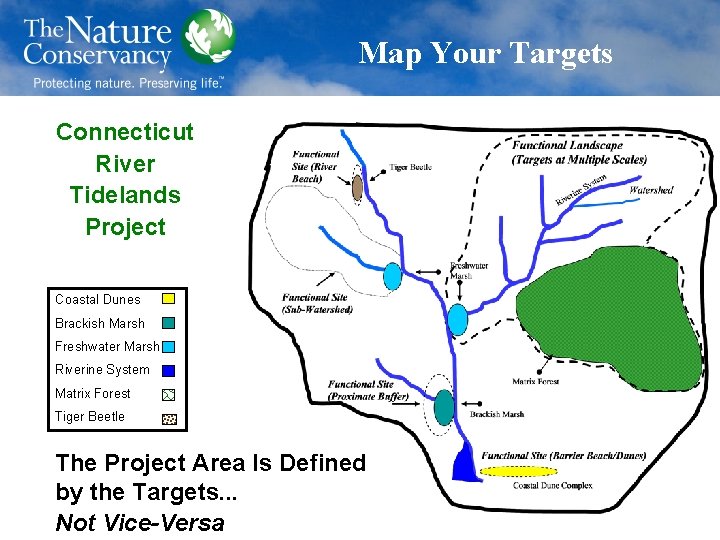
Map Your Targets Connecticut River Tidelands Project Coastal Dunes Brackish Marsh Freshwater Marsh Riverine System Matrix Forest Tiger Beetle The Project Area Is Defined by the Targets. . . Not Vice-Versa
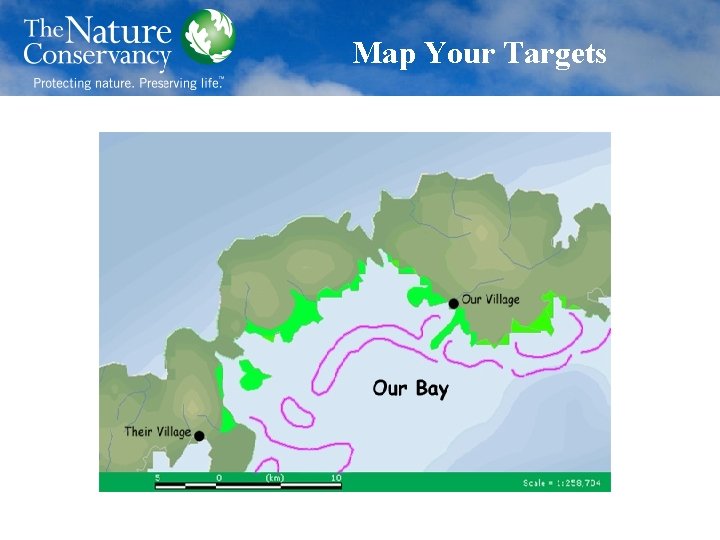
Map Your Targets
Breakout Group Instructions: Selecting Targets Task: Decide on 8 or fewer targets which would represent the native biodiversity of the project area? If time allows, experiment with a target matrix or draw a rough “cartoon” map, showing where these targets occur in your project area Coaches in-training will assist in the process Timing: 1 hour and 10 minutes (up to lunch)
Breakout Group Instructions: Selecting Targets Report back on: • Brief overview of project area (10 minutes maximum) • Your team’s list of 8 focal targets