
Consequences of Unsafe Road Use Behaviour Unit Surviving
Consequences of Unsafe Road. Use Behaviour Unit: Surviving Driving. Lesson 3
Complete Mind Map… Destruction of public property Death CONSEQUENCE S Car Damage Injury
First Aid Management The consequences of crashes can vary from minor damage and injury to major trauma leading to loss of life. First, decisive action can be crucial to saving someone’s life or reducing the extent of injury.
DANGER Ø Ensure the area is safe for yourself, others and the patient. Who is the most important person in any emergency situation? Bystander? You? Patient? YOU! Who is the next most important person? Bystander? You? Patient? BYSTANDER! Who is the person that we assist last once everyone else is safe from danger? Bystander? You? Patient? PATIENT!
RESPONSE Check for Response - If respond, keep comfortable. - No response continue DRSABCD C – Can you Hear Me? O – Open your eyes? W - What is your name? S – Squeeze my hand.
SEND for help Call triple zero (000) for an ambulance or ask another person to make the call 4 P’s you must give to an emergency service operator. Position – The location of the patient. Problem – What is the situation? People – How many patients are there? Progress – Where is the emergency response at? What have you done so far?
AIRWAYS Open mouth – If foreign material present place in recovery position and clear airways with fingers. It is important to clear the patient airways to allow oxygen will not get to the lungs during CPR. What are objects that could block a patients airways? What is the name of the grip to check the airways? If there any fluids in the patient’s airways we roll them into the …?
BREATHING Check for normal breathing; look, listen, feel. - Normal breathing place in recovery position, - No normal breathing start CPR Listen to sounds of air coming out of the patient’s mouth. Feel for breath on our cheek/ hand Look for the rise and fall of patients chest.
Compression Start CPR - 30 Chest Compressions: 2 Breaths Continue until help arrives or patient recovers. Compressions are done at the middle of the chest and we compress 1/3 of the depth of a chest for a compression. Aim to complete 5 cycles in two minutes. What are 3 reasons to stop CPR? What does CPR mean?
DEFIBRILLATION Apply defibrillator if available and follow voice prompts. A defibrillator gives and electric shock to the heart.
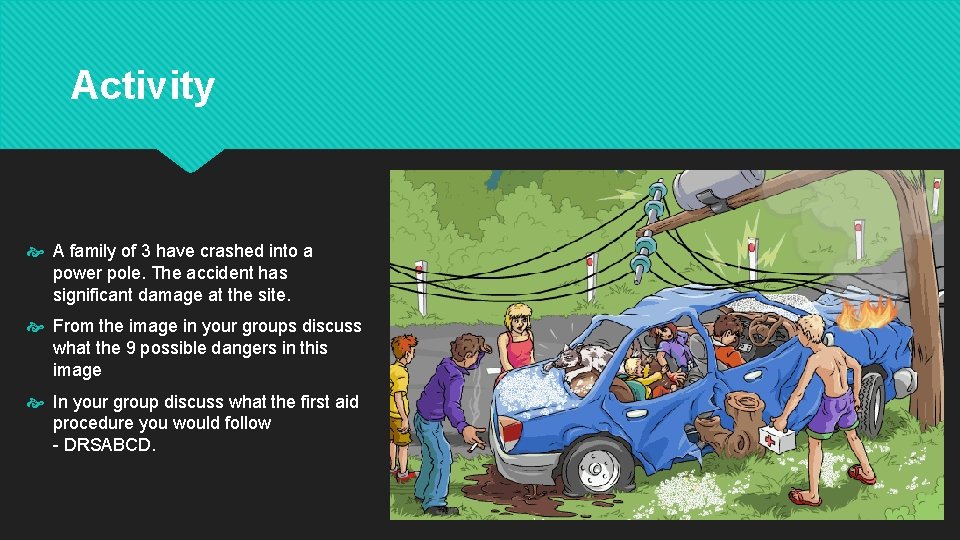
Activity A family of 3 have crashed into a power pole. The accident has significant damage at the site. From the image in your groups discuss what the 9 possible dangers in this image In your group discuss what the first aid procedure you would follow - DRSABCD.
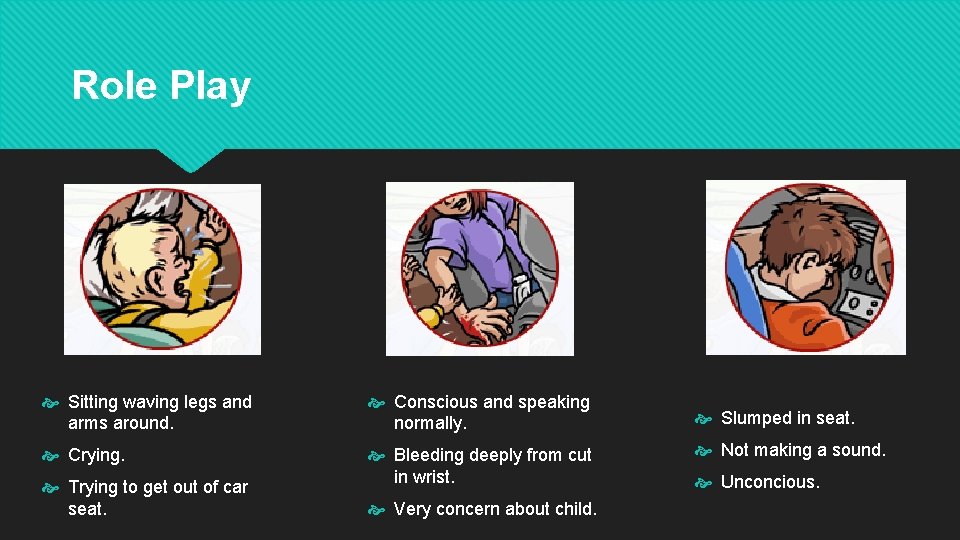
Role Play Sitting waving legs and arms around. Conscious and speaking normally. Crying. Bleeding deeply from cut in wrist. Trying to get out of car seat. Very concern about child. Slumped in seat. Not making a sound. Unconcious.
Skills and Attitudes that support safe road behaviour
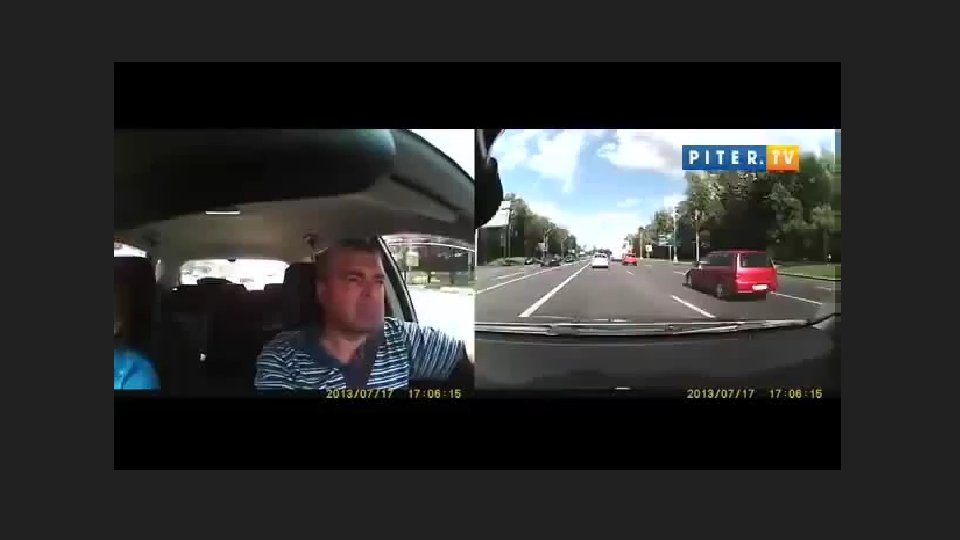
Hazard Perception A hazard is something that increases your risk of a crash. Having strong Hazard Perception skills helps you to recognise and react to hazards such as other vehicles, pedestrians and cyclists, where new drivers are more likely to crash. It allows you to observe the whole road scene and to respond safely to possible hazards. Examples of hazard perception include…. .
Road Sharing Road sharing involves taking into consideration sharing the road with other vehicles include motorcyclists, bicycles, pedestrians and other cars. Example of road sharing behaviours include;
Observation and Scanning means taking in the whole scene 360 degrees around your car. Effective scanning means constantly moving your eyes and/or your head when driving so that you can detect hazards that may arise ahead, to the sides and behind your vehicle. Research shows that new drivers are not good at scanning. They tend to focus on the road just ahead of their car. The good news is that new drivers get better at scanning with practice. Examples of observation and scanning include;
Tolerance Drivers who are in more control of their feelings have greater ability to regulate their emotions to ensure their behaviour is always in theirs and the other people on the roads best interest. Not having tolerance on the road can impair judgement, reduce focuses, impairs judgement which can lead to delayed responses and lead to “heavy foot” on the gas. Examples of ways increase tolerance on the road;
- Slides: 19