
CONSEQUENCES OF THE SUGAR REVOLUTION CARIBBEAN HISTORY FORM
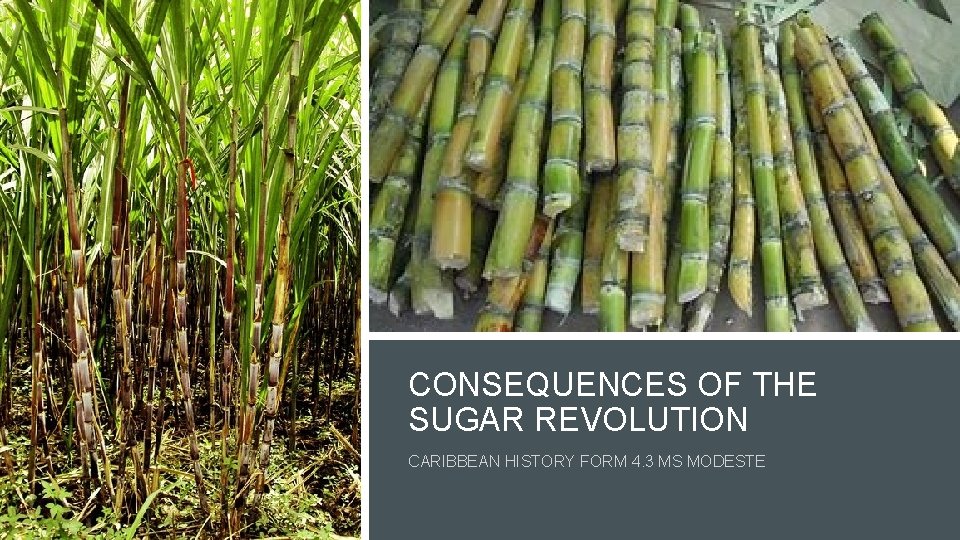
CONSEQUENCES OF THE SUGAR REVOLUTION CARIBBEAN HISTORY FORM 4. 3 MS MODESTE

THE SUGAR REVOLUTION A revolution is a sudden occurrence of events that drastically transforms a society, economy and government replacing it with something new. The Sugar Revolution accomplished all of these things and changed the life of the Caribbean and New World permanently.
RECAPPING FACTS ON THE SUGAR REVOLUTION The Sugar Revolution occurred in 1640 Barbados, then spread to the rest of the island Tobacco was the main export crop grown previously. The causes of the Sugar Revolution are often cited as: -assistance from Dutch (capital, equipment and expertise) -new taste in Europe that was looking for a substitute sweetener for tea to replace honey -the unprofitability of tobacco due to competition from Virginia tobacco-cjeaper and higher quality. -overproduction of tobacco which led to glut in market that drove prices down. The Sugar Revolution changed the Lesser Antilles completely.

ECONOMIC CONSEQUENCES- ECONOMIC DEALS WITH MONEY, TRADE, PROFITS, LAND Land Tobacco was grown on 2 -12 hectares. Sugar could only be grown on large estates. Landholding increased in size and plantations became less when consolidated. Sugar needed space for crop, factory, houses, woodlands. Minimum 60 hecatres. 120 -2000 hectares-2000. -Land prices skyrocketed x 30 in Bdos-£ 6 -25 - £ 80 Labour Africa became main supply of labour. Africans were kidnapped brought to WI. Africans chosen because they were: numerous and readily available, immune to tropical climate diseases, agri based people. Over 60 million were part of the Transatlantic Slave Trade from 1640 -1807. -Free labour meant exorbitant profits for planters (estate owners) Capital Planters got head start from Dutch. After planters would borrow extensively from banks in England established especially for them. Barclay’s Bank first bank offering loans to planters needing financing in West Indies. Monoculture Growing one crop-sugar: dangerous. Sugar brought huge profits. Focus.
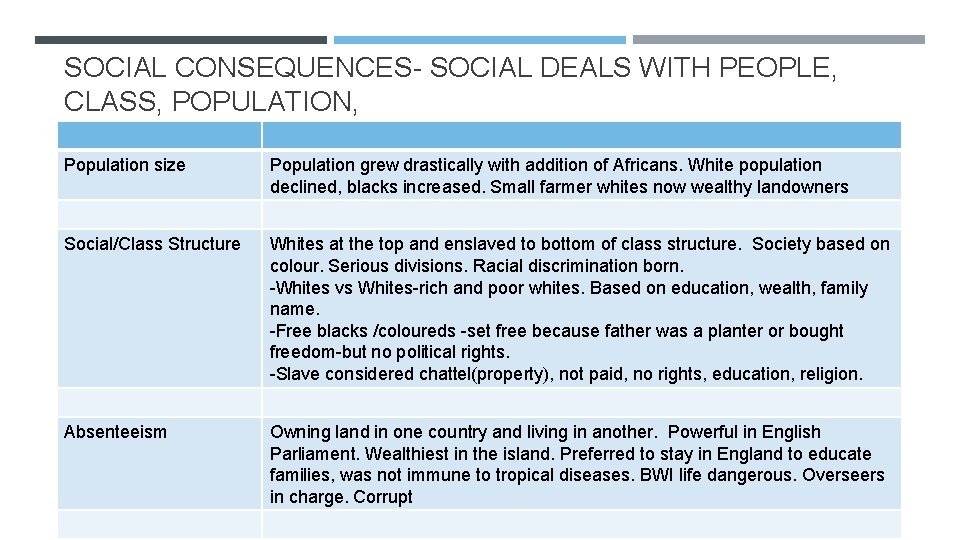
SOCIAL CONSEQUENCES- SOCIAL DEALS WITH PEOPLE, CLASS, POPULATION, Population size Population grew drastically with addition of Africans. White population declined, blacks increased. Small farmer whites now wealthy landowners Social/Class Structure Whites at the top and enslaved to bottom of class structure. Society based on colour. Serious divisions. Racial discrimination born. -Whites vs Whites-rich and poor whites. Based on education, wealth, family name. -Free blacks /coloureds -set free because father was a planter or bought freedom-but no political rights. -Slave considered chattel(property), not paid, no rights, education, religion. Absenteeism Owning land in one country and living in another. Powerful in English Parliament. Wealthiest in the island. Preferred to stay in England to educate families, was not immune to tropical diseases. BWI life dangerous. Overseers in charge. Corrupt
POLITICAL CONSEQUENCES- POLITICAL DEALS WITH GOVERNMENT Assembly run govts Planters dominated the island government called assemblies. They made all the decisions for the island. This can be described as an oligarchy where a few at the top make the decision for the majority at the bottom.
- Slides: 6