
Consequences of poverty on Early child health and
- Slides: 33
Consequences of poverty on Early child health and development Presentation of a rural community based program for prevention of children's diseases and Developmental disorders in Cambodia Dr. J. Bhoomikumar Program Director, Caritas-CCAMH drbhoomikumarj@gmail. com
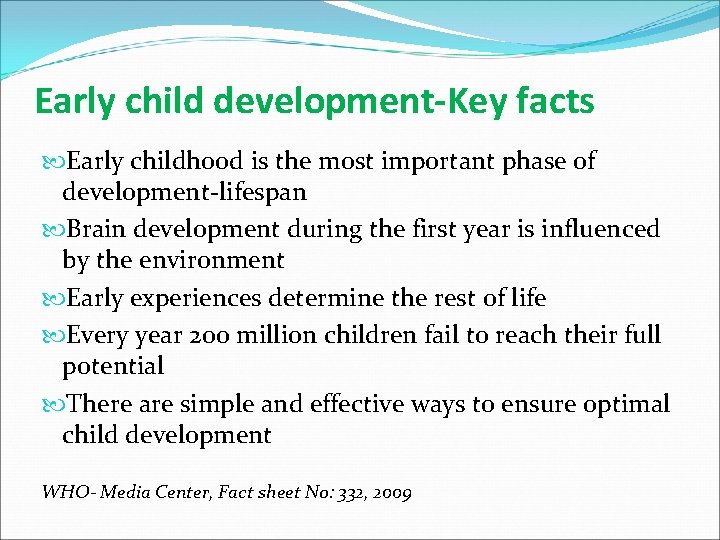
Early child development-Key facts Early childhood is the most important phase of development-lifespan Brain development during the first year is influenced by the environment Early experiences determine the rest of life Every year 200 million children fail to reach their full potential There are simple and effective ways to ensure optimal child development WHO- Media Center, Fact sheet No: 332, 2009
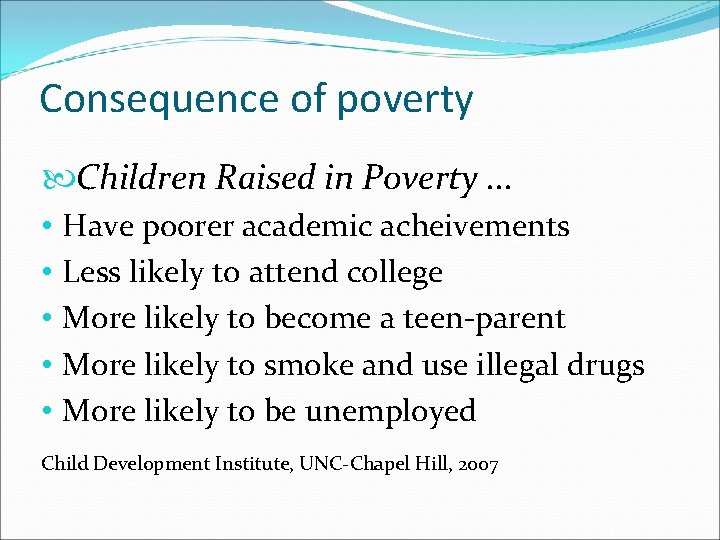
Consequence of poverty Children Raised in Poverty. . . • • • Have poorer academic acheivements Less likely to attend college More likely to become a teen-parent More likely to smoke and use illegal drugs More likely to be unemployed Child Development Institute, UNC-Chapel Hill, 2007
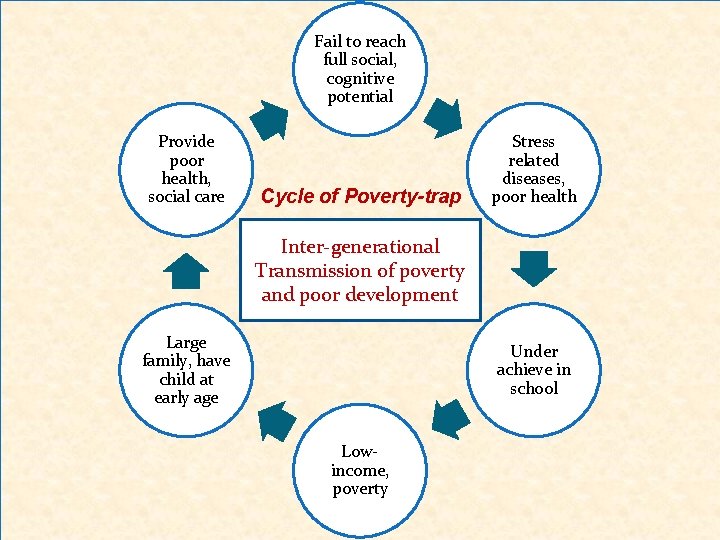
Fail to reach full social, cognitive potential Provide poor health, social care Cycle of Poverty-trap Stress related diseases, poor health Inter-generational Transmission of poverty and poor development Large family, have child at early age Under achieve in school Lowincome, poverty
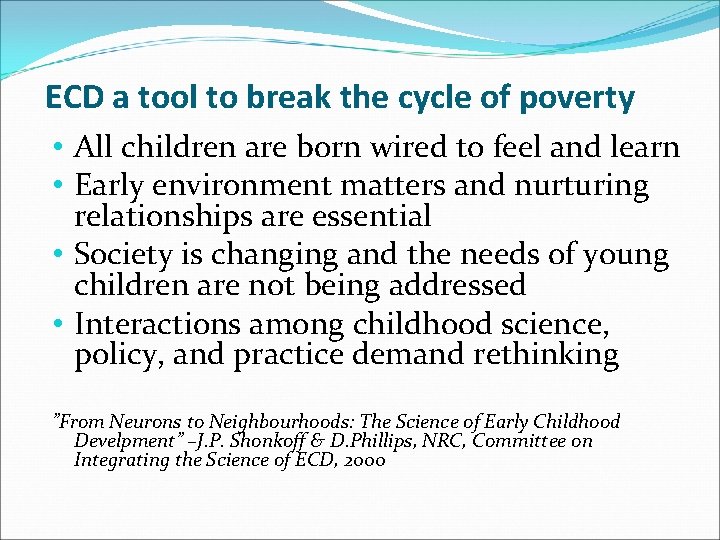
ECD a tool to break the cycle of poverty • All children are born wired to feel and learn • Early environment matters and nurturing relationships are essential • Society is changing and the needs of young children are not being addressed • Interactions among childhood science, policy, and practice demand rethinking ”From Neurons to Neighbourhoods: The Science of Early Childhood Develpment” –J. P. Shonkoff & D. Phillips, NRC, Committee on Integrating the Science of ECD, 2000
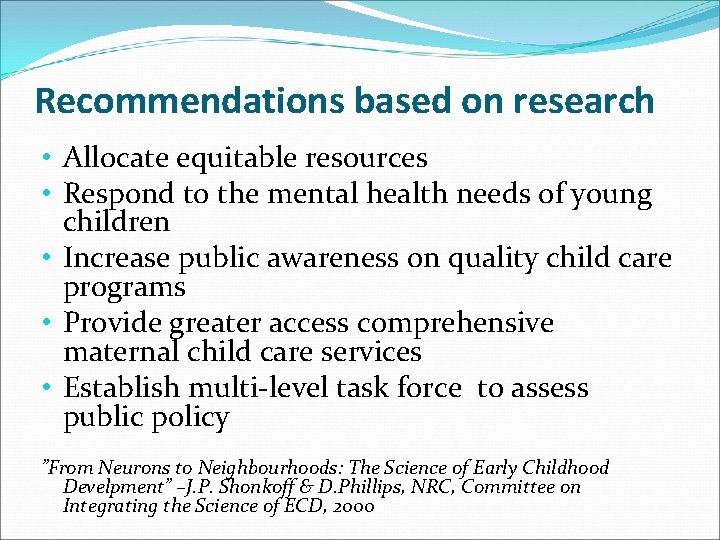
Recommendations based on research • Allocate equitable resources • Respond to the mental health needs of young children • Increase public awareness on quality child care programs • Provide greater access comprehensive maternal child care services • Establish multi-level task force to assess public policy ”From Neurons to Neighbourhoods: The Science of Early Childhood Develpment” –J. P. Shonkoff & D. Phillips, NRC, Committee on Integrating the Science of ECD, 2000
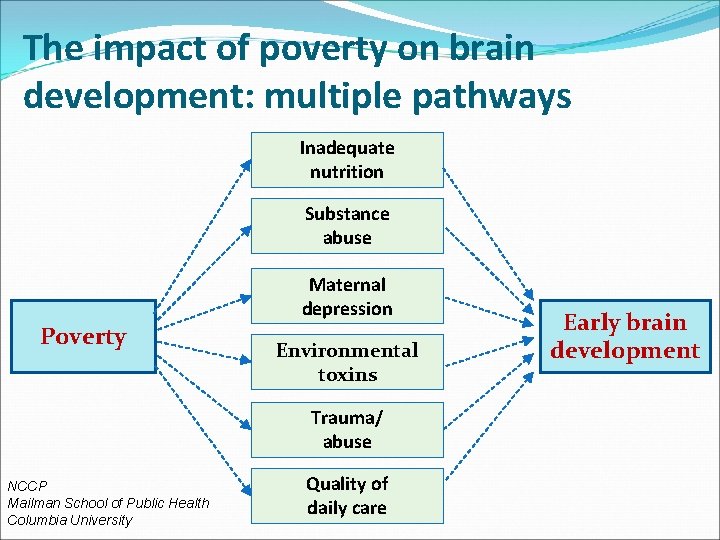
The impact of poverty on brain development: multiple pathways Inadequate nutrition Substance abuse Maternal depression Poverty Environmental toxins Trauma/ abuse NCCP Mailman School of Public Health Columbia University Quality of daily care Early brain development
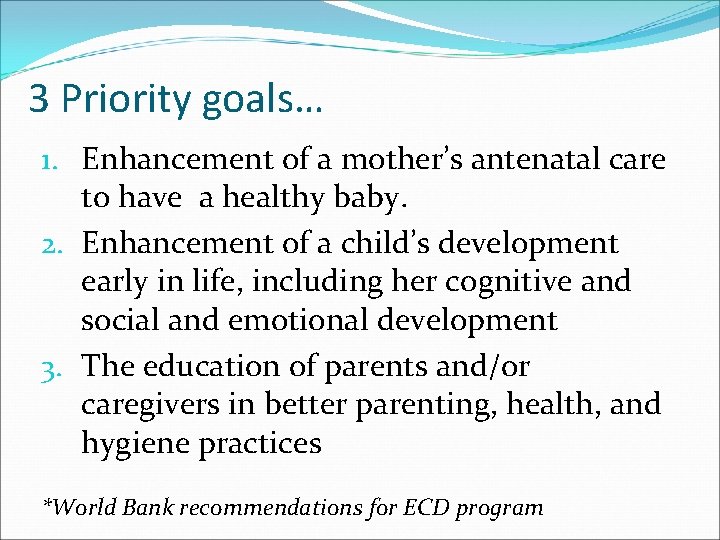
3 Priority goals… 1. Enhancement of a mother’s antenatal care to have a healthy baby. 2. Enhancement of a child’s development early in life, including her cognitive and social and emotional development 3. The education of parents and/or caregivers in better parenting, health, and hygiene practices *World Bank recommendations for ECD program
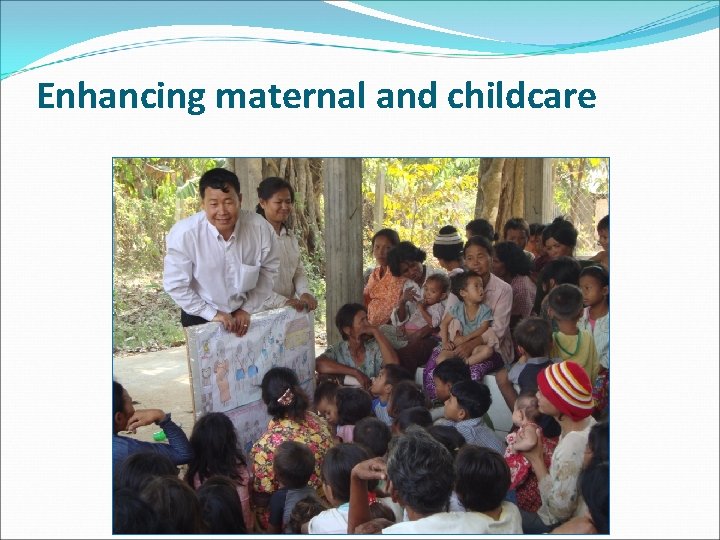
Enhancing maternal and childcare
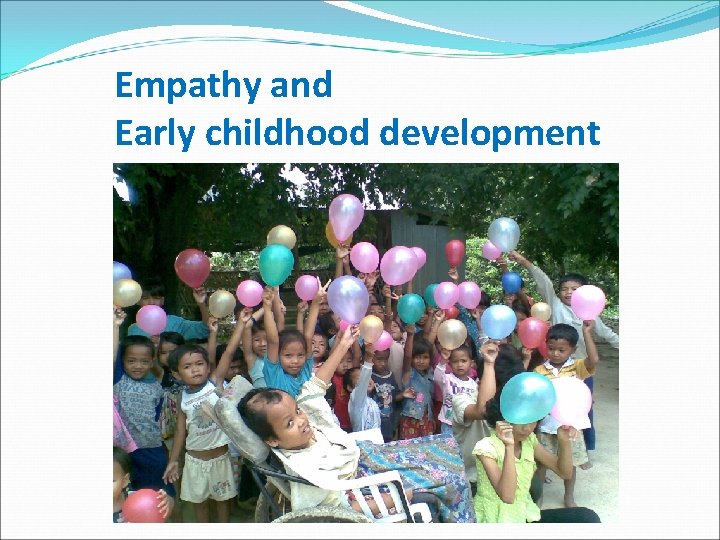
Empathy and Early childhood development
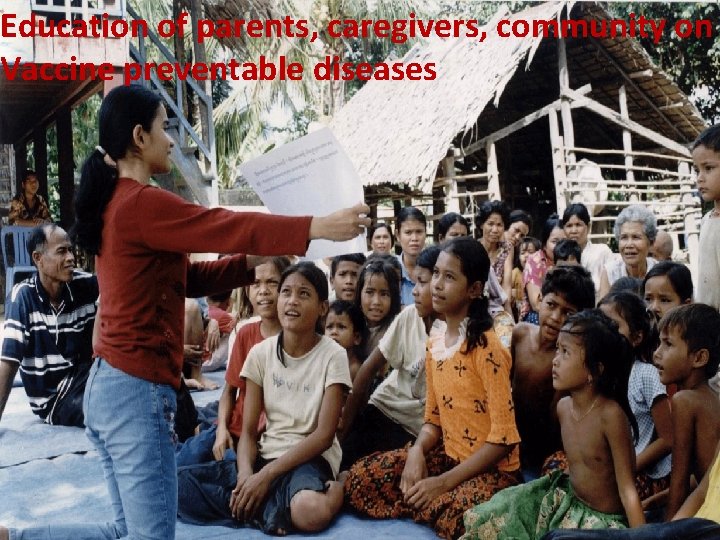
Education of parents, caregivers, community on Vaccine preventable diseases
Risk factors in developing countries Severe malnutrition resulting in stunting Inadequate stimulation or learning opportunities Iodine deficiency Iron deficiency anemia WHO- Media Center, Fact sheet No: 332, August 2009
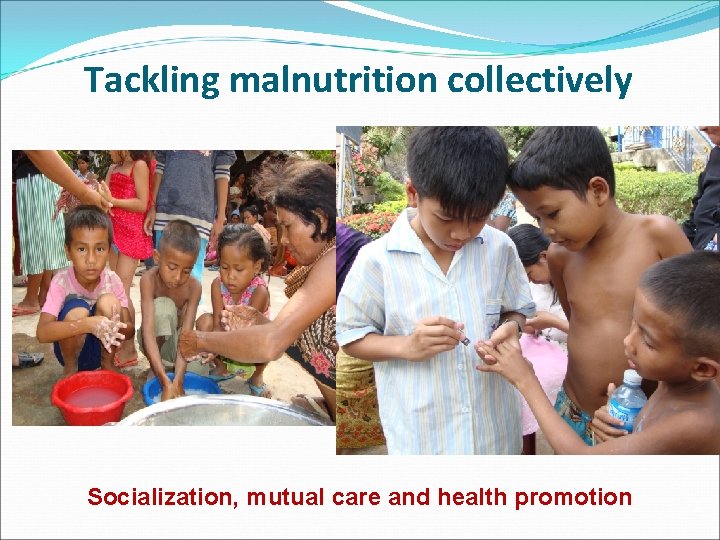
Tackling malnutrition collectively Socialization, mutual care and health promotion
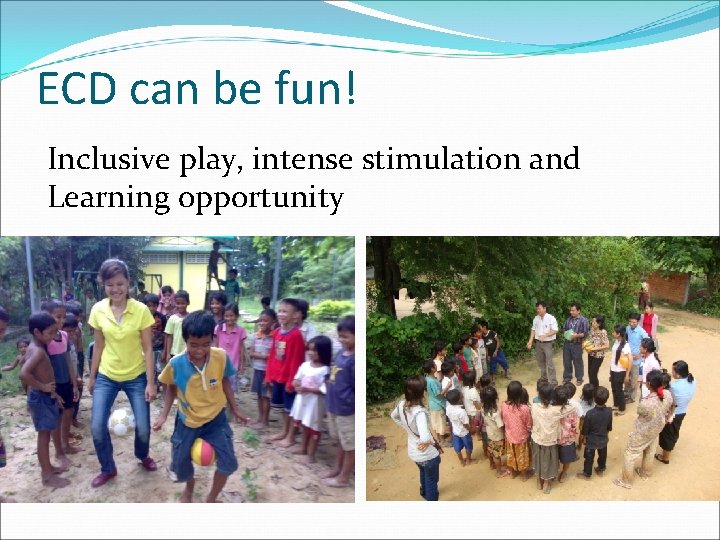
ECD can be fun! Inclusive play, intense stimulation and Learning opportunity
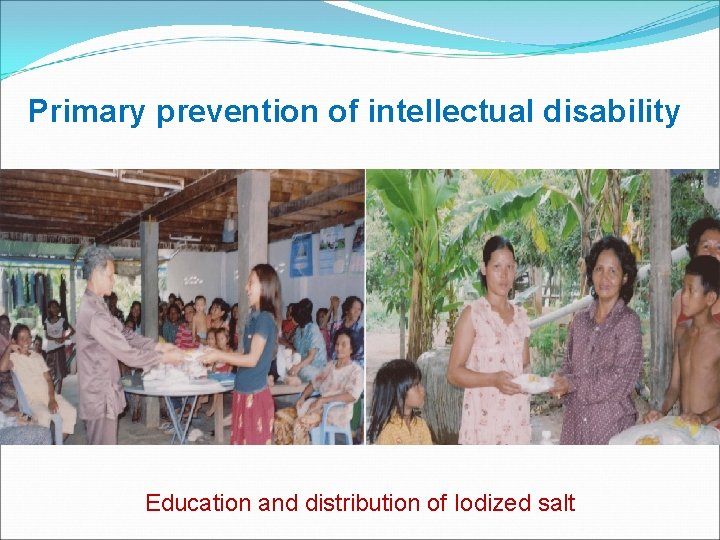
Primary prevention of intellectual disability Education and distribution of Iodized salt
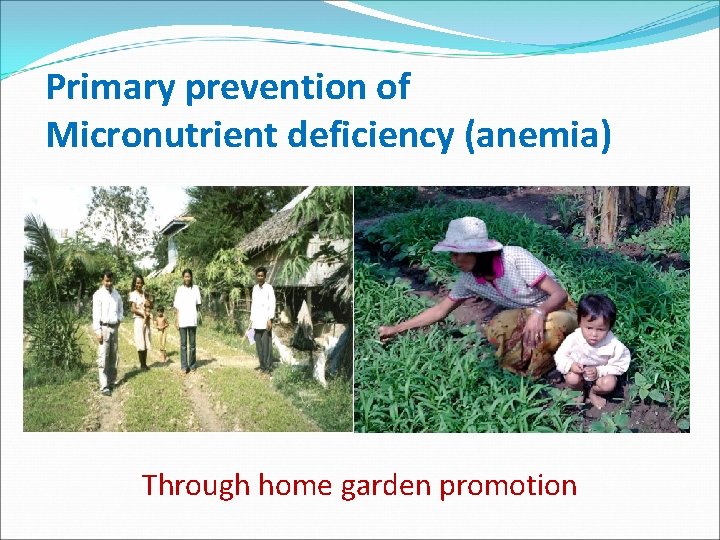
Primary prevention of Micronutrient deficiency (anemia) Through home garden promotion
ECD, learning experience and Community participation ECD is effective when… Targets young and disadvantaged children High quality and long lasting Integrated with family support, health, nutrition, or education systems and services Community participates promoting sense of ownership and ensuring sustainability WHO- Media Center, Fact sheet No: 332, 2009
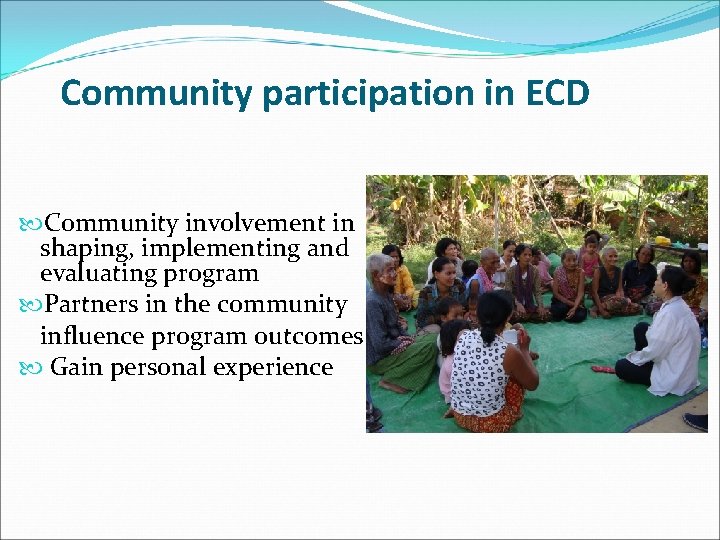
Community participation in ECD Community involvement in shaping, implementing and evaluating program Partners in the community influence program outcomes Gain personal experience
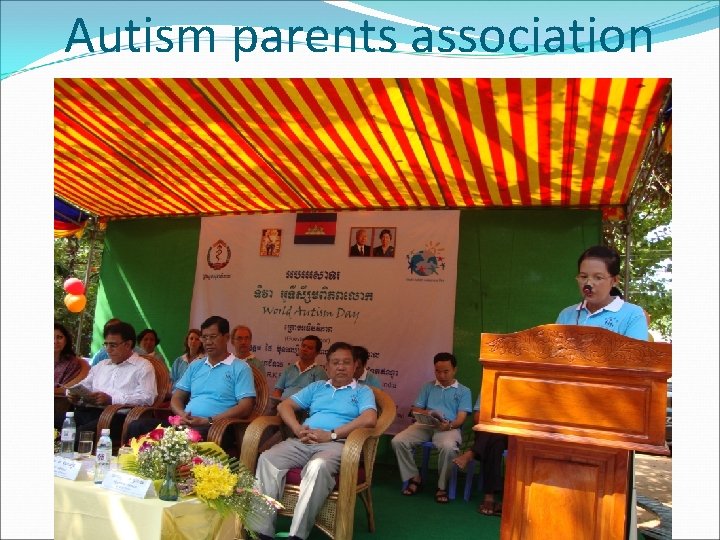
Autism parents association
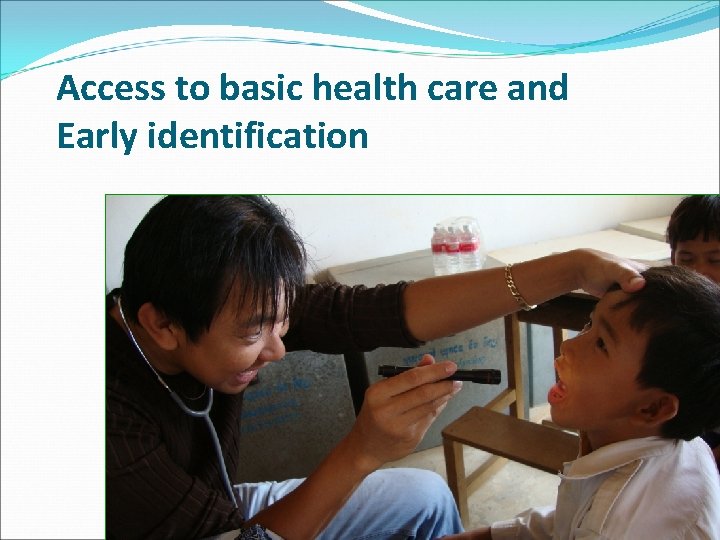
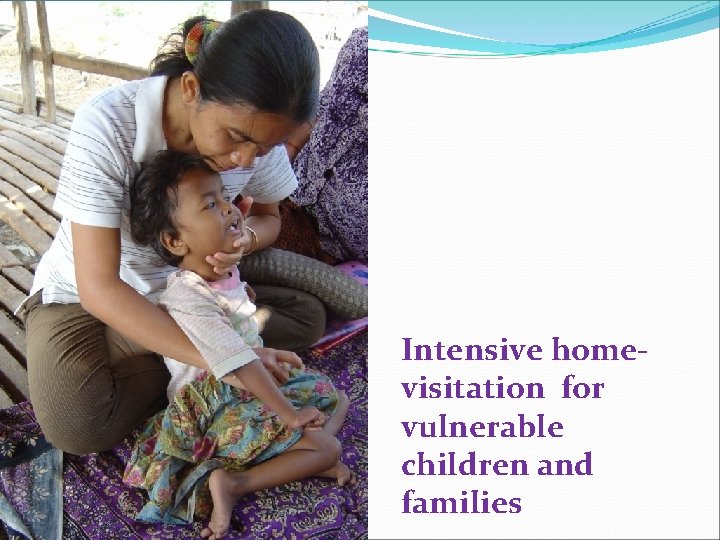
Effective ECD programs provide. . . • Access to basic medical care for chilren and pregnant women • Intensive home-visitation for vulnerable mothers • High-quality early education programs • Direct support to families experiencing distress • Intensive services for children experiencing toxic-stress • Work-based income supplements for poor families • Policies to reduce the level of neurotoxins in the environment ” A Science-based Framework for Early Childhood Policy: Using Evidence to Improve Outcomes in Learning, Behavior and Health for Vulnerable Children”NSCDC, Harvard University, 2007
Access to basic health care and Early identification
Intensive homevisitation for vulnerable children and families
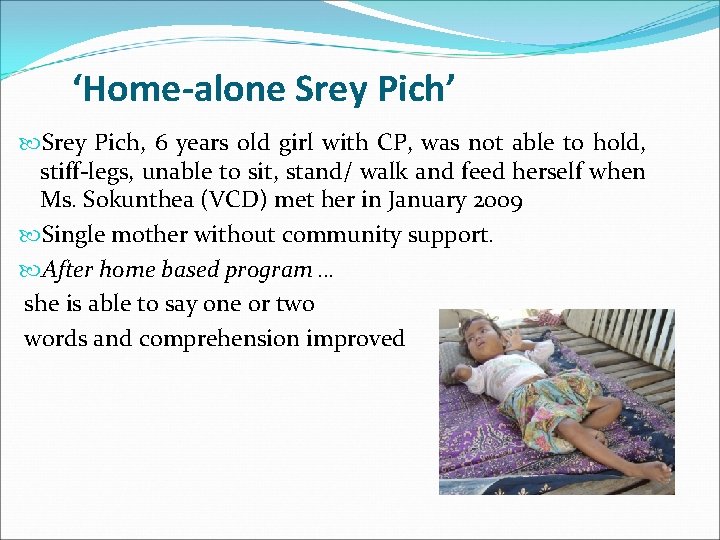
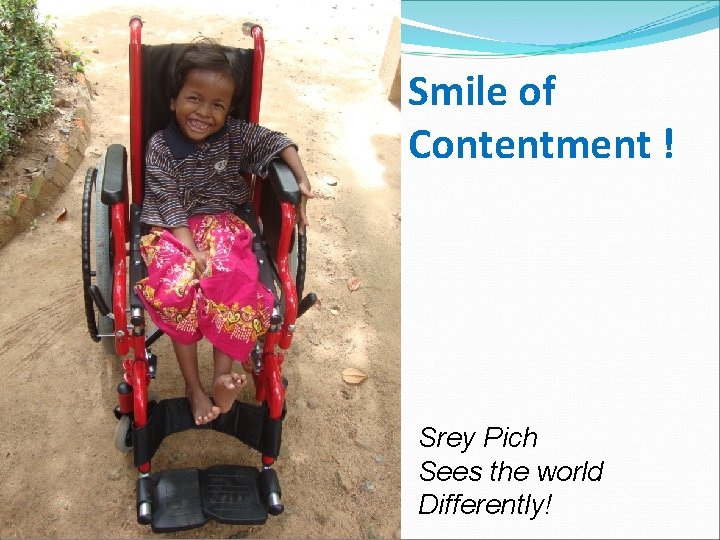
‘Home-alone Srey Pich’ Srey Pich, 6 years old girl with CP, was not able to hold, stiff-legs, unable to sit, stand/ walk and feed herself when Ms. Sokunthea (VCD) met her in January 2009 Single mother without community support. After home based program … she is able to say one or two words and comprehension improved
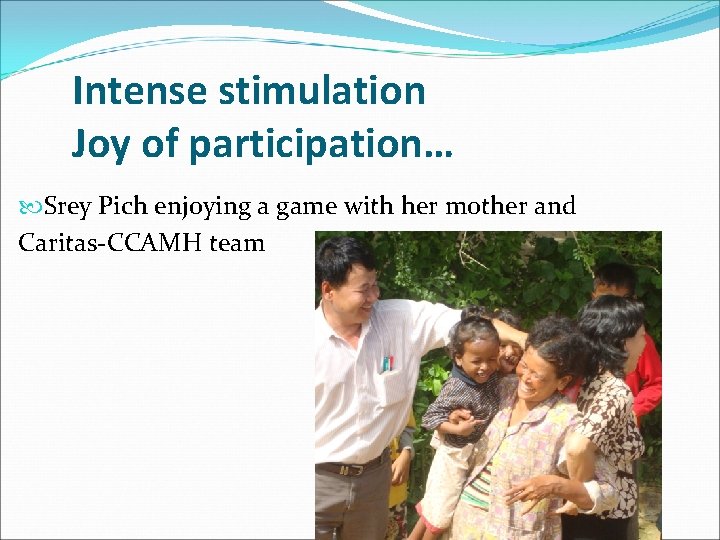
Intense stimulation Joy of participation… Srey Pich enjoying a game with her mother and Caritas-CCAMH team
Smile of Contentment ! Srey Pich Sees the world Differently!
Community volunteers cornerstone of ECD VCD are trusted sources of information for families on: How to communicate with infants and children Ways to stimulate children for better growth How to handle common development problems such as sleep, feeding and discipline Ways to reduce common childhood injuries WHO- Media Center, Fact sheet No: 332, 2009
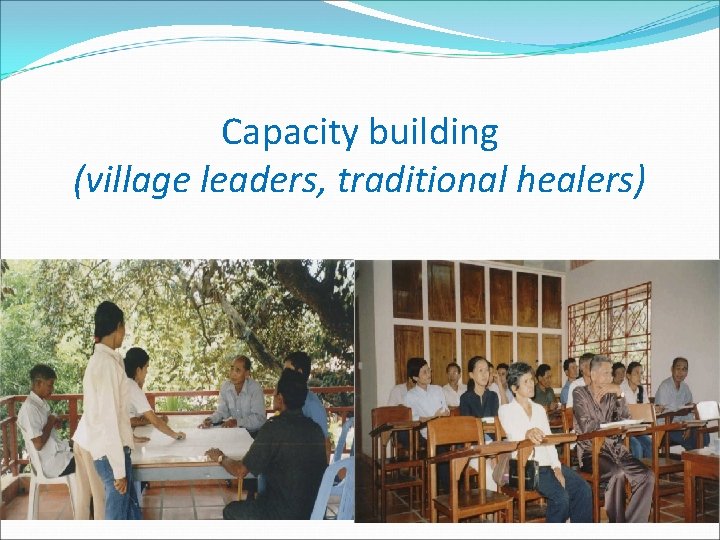
Capacity building (village leaders, traditional healers)
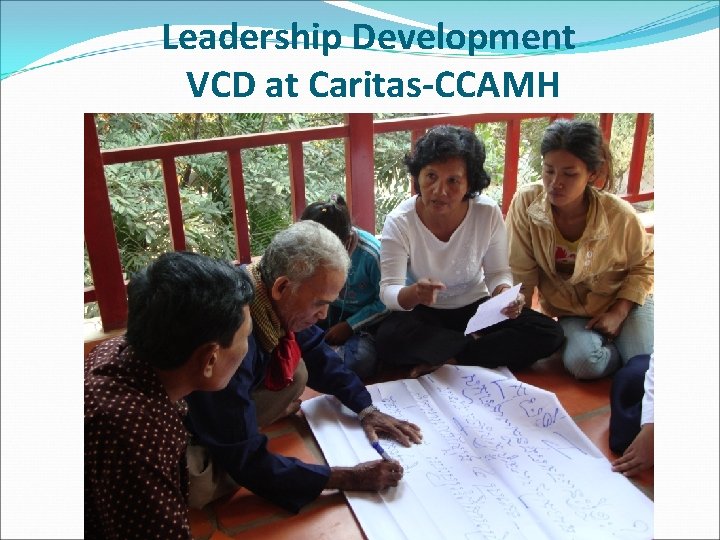
Leadership Development VCD at Caritas-CCAMH
ECD-inoculation against poverty! Challenges/ Opportunities Focusing on time-poor mothers Stable environment for traumatized children Context-specific ECD program, based on PAR Under-resourced ECD programs are unlikely to achieve lasting benefits ECD initiatives integrated with national policies in education, health and welfare More rigorous monitoring and evaluation of ECD programs Chronic Poverty Research Center, Save the Children, U. K
Summing up… • No single approach/model of delivery can be a magic bullet • Incorporate basic concept of neuro-science and childdevelpoment • Scaling-up/ replicating effective programs • Develop new innovative intervention strategies • Ongoing, constructive evaluation and continuous program improvement
Summing up… Cost and other benefits of ECD: Research-evidence, societal-saving of $9 for every $1 invested Less grade repetition and need for special education services Decreased welfare dependency and crime Increased earnings and employment Family stability, improved national economy
Summing up… ECD incorporates the principles of Equity Children rights Integration of services, A life course approach and Community participation WHO- Media Center, Fact sheet No: 332, 2009
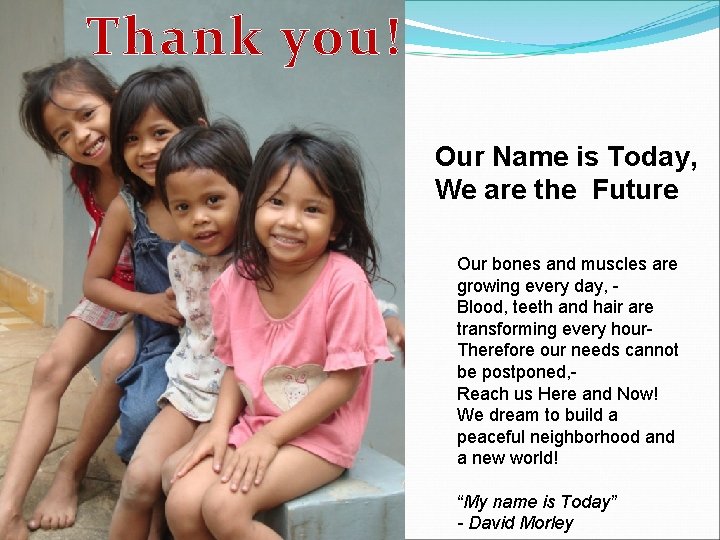
Thank you! Our Name is Today, We are the Future Our bones and muscles are growing every day, Blood, teeth and hair are transforming every hour. Therefore our needs cannot be postponed, Reach us Here and Now! We dream to build a peaceful neighborhood and a new world! “My name is Today” - David Morley