
Consensus Introduction to Byzantine Fault Tolerance Problems Jiasun
Consensus Introduction to Byzantine Fault Tolerance Problems Jiasun Li
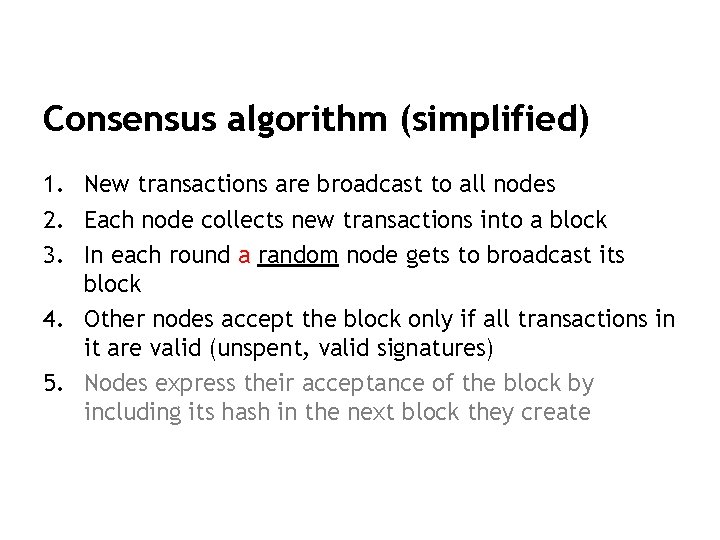
Consensus algorithm (simplified) 1. New transactions are broadcast to all nodes 2. Each node collects new transactions into a block 3. In each round a random node gets to broadcast its block 4. Other nodes accept the block only if all transactions in it are valid (unspent, valid signatures) 5. Nodes express their acceptance of the block by including its hash in the next block they create

Consensus protocols Byzantine generals Problem Two generals problem Agreement/broadcasting problem; State-machine replication Nakamoto consensus p. BFT Hot. Stuff (Libra-BFT) Tendermint, etc.
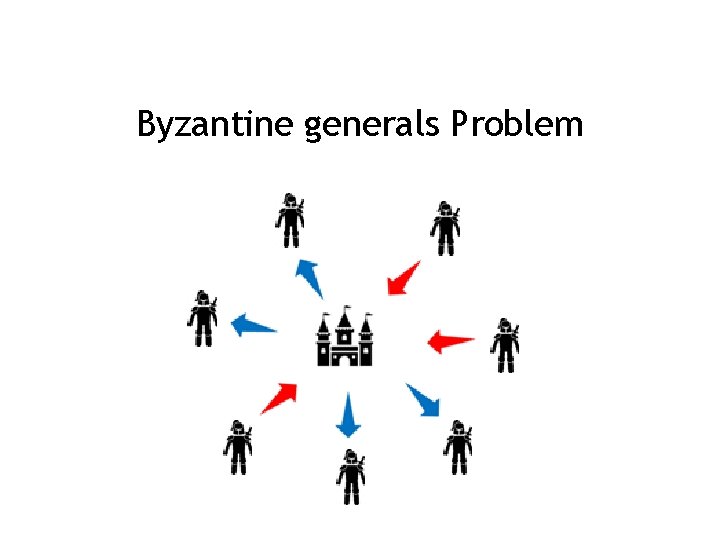
Byzantine generals Problem

Two generals problem
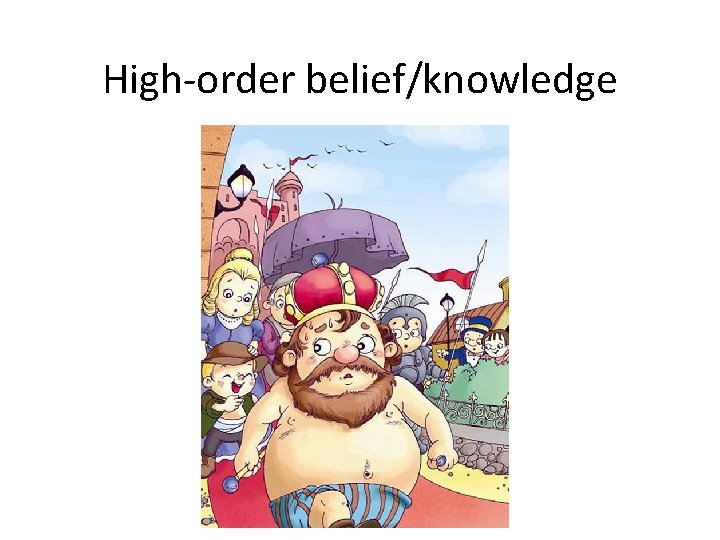
High-order belief/knowledge
High-order belief/knowledge
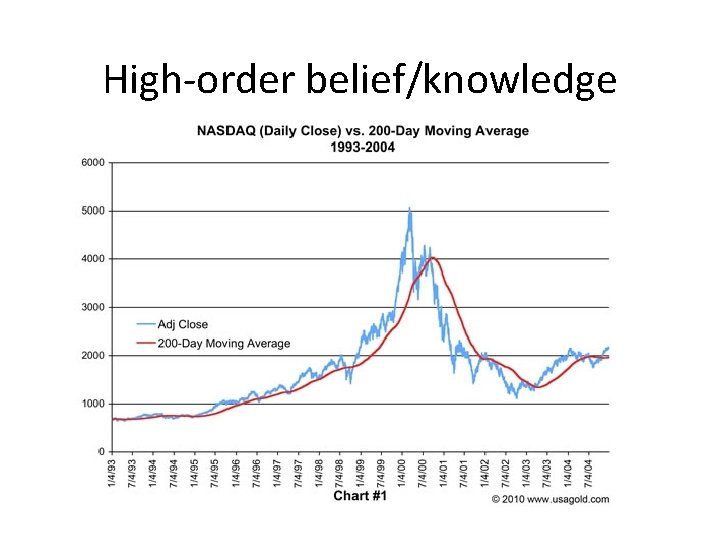
High-order belief/knowledge
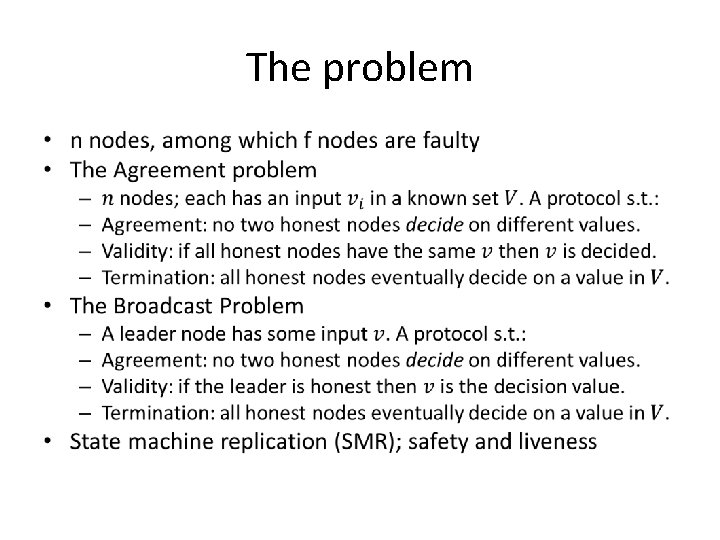
The problem •
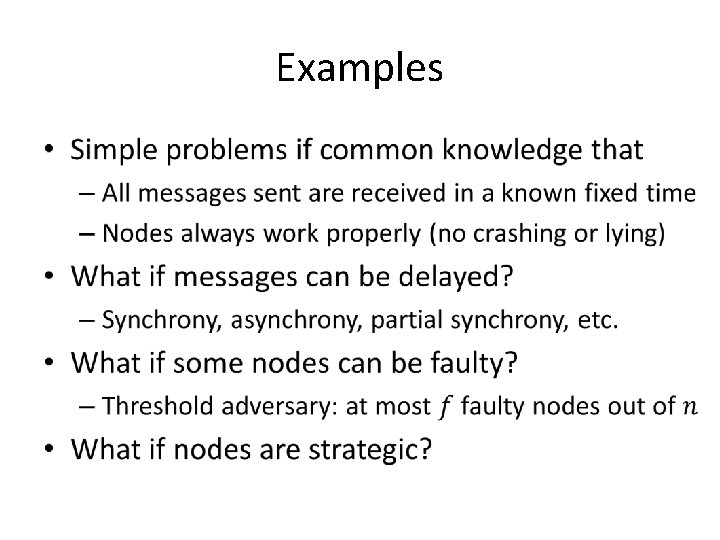
Examples •
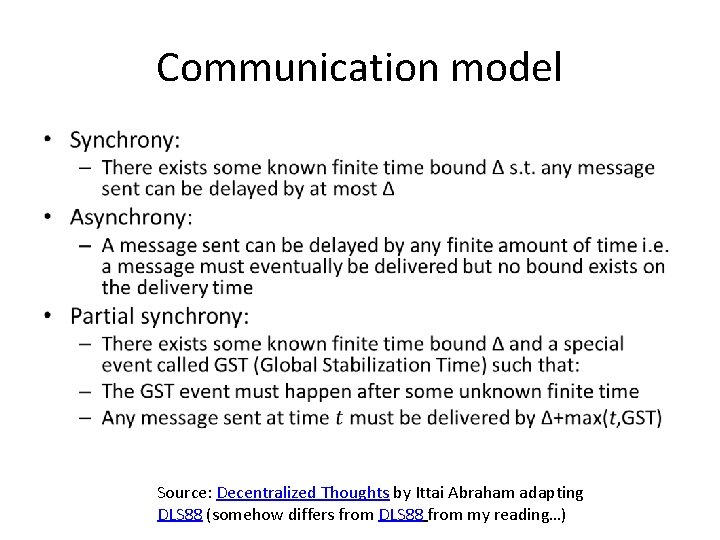
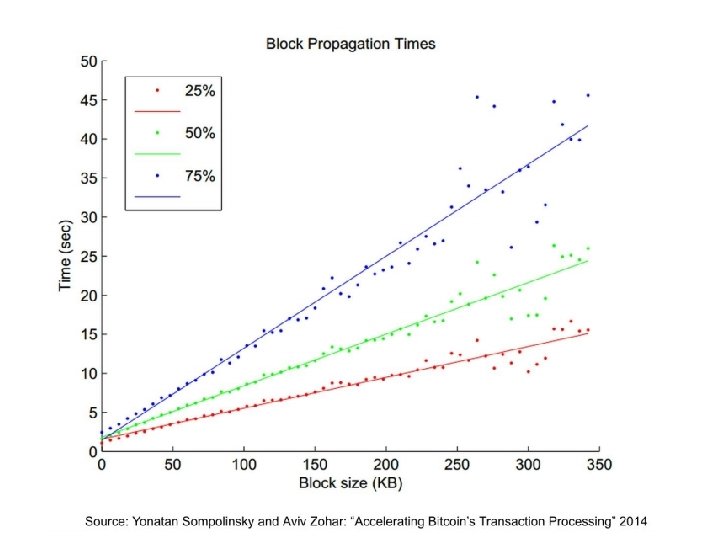
Communication model • Source: Decentralized Thoughts by Ittai Abraham adapting DLS 88 (somehow differs from DLS 88 from my reading…)
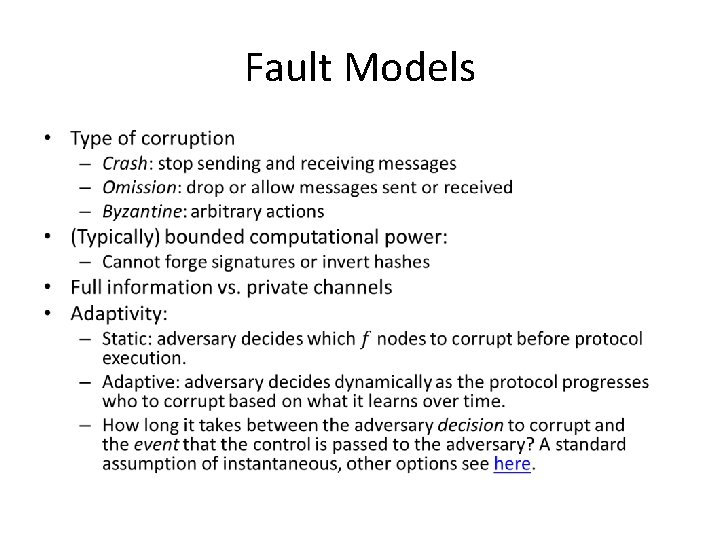
Fault Models •
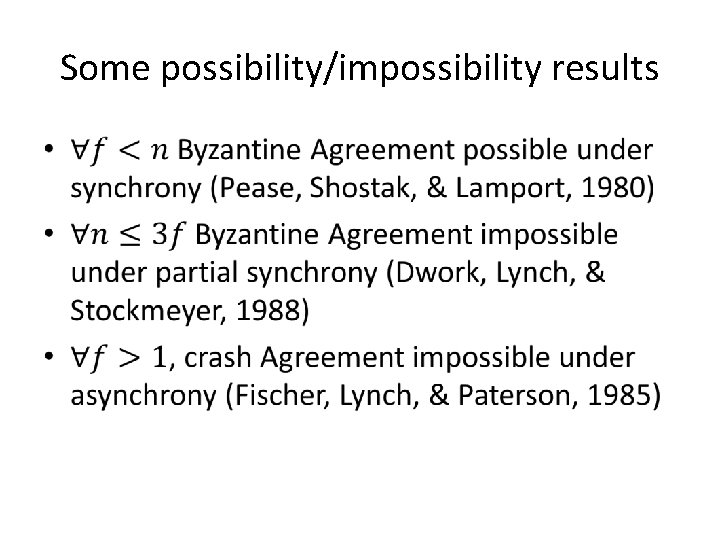
Some possibility/impossibility results •
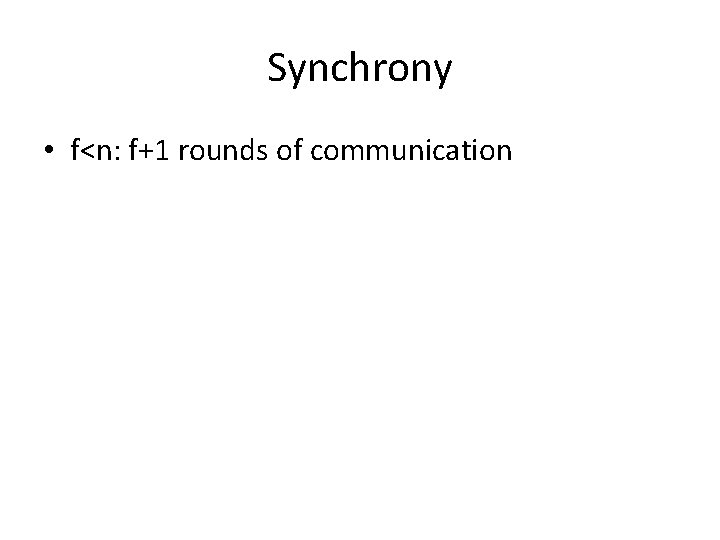
Synchrony • f<n: f+1 rounds of communication
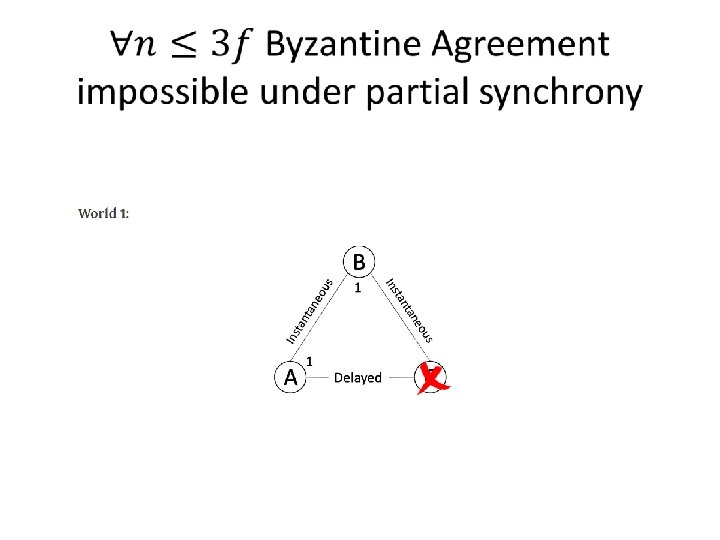
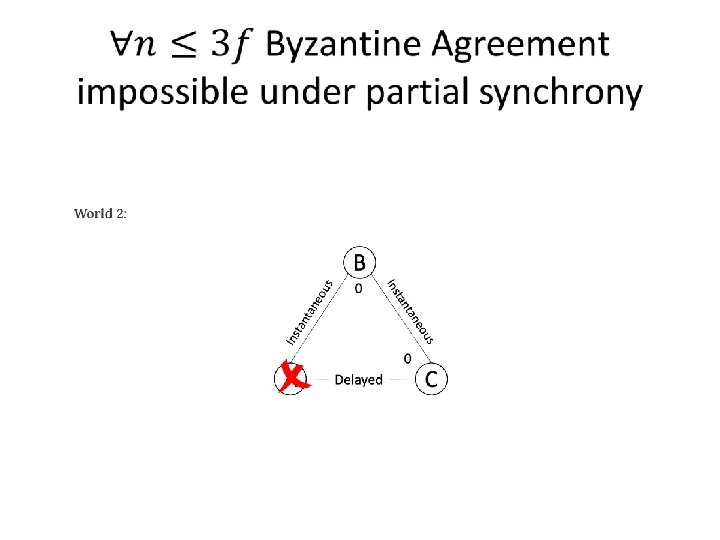
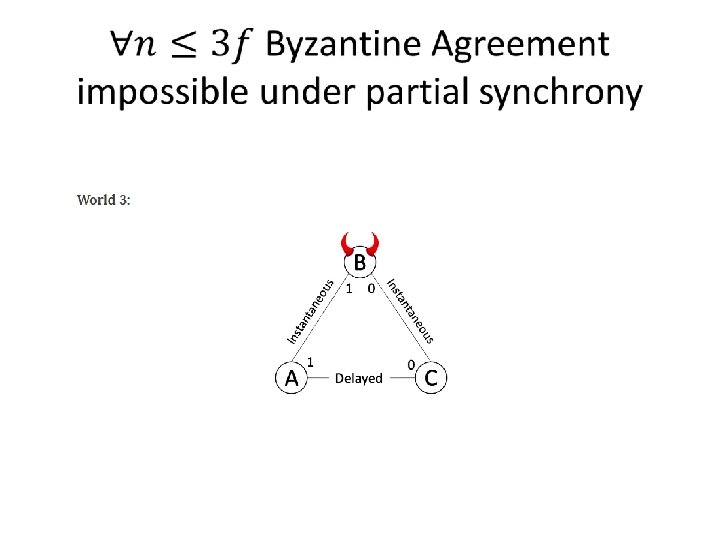
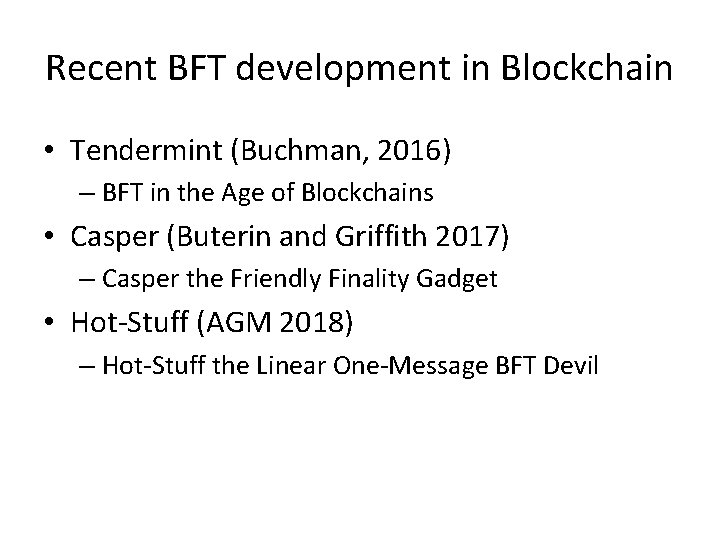
Recent BFT development in Blockchain • Tendermint (Buchman, 2016) – BFT in the Age of Blockchains • Casper (Buterin and Griffith 2017) – Casper the Friendly Finality Gadget • Hot-Stuff (AGM 2018) – Hot-Stuff the Linear One-Message BFT Devil
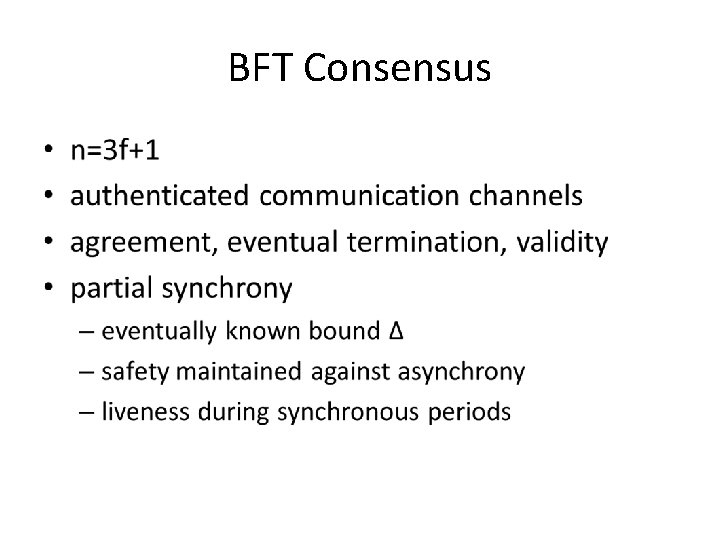
BFT Consensus •
Libra-BFT • Adaption of Hot. Stuff • My understanding: marrying BFT and NC
Libra • A “stablecoin” solution – Like Maker. DAO, Tether, GUSD, USDC, etc. • (so far) a permissioned system with 21 nodes
- Slides: 22