
Consensus and Conformity AMERICA IN THE 1950 S



- Slides: 20
Consensus and Conformity? AMERICA IN THE 1950 S
The 1950 s: Questions (Some) Essential To what extent was the decade of the 1950 s one of widespread consensus and conformity? What factors contributed to the growth of suburbia? What resulted from it? To what extent were the seeds of political and cultural rebellion sewn in the 1950 s? Who benefitted from 1950 s-era prosperity? How did it change America?
Post-War Economic Boom and the Consumer Culture GNP more than doubled betw. 1945 and 1960 Per capita income also doubled during that time. The growing middle class had more and more purchasing power, which fueled a burgeoning culture of consumerism. WHY the unprecedented growth? -- pent-up demand from war years -- GI Bill’s housing and education benefits -- Strong unions -- manufacturing sector benefitted from WWII
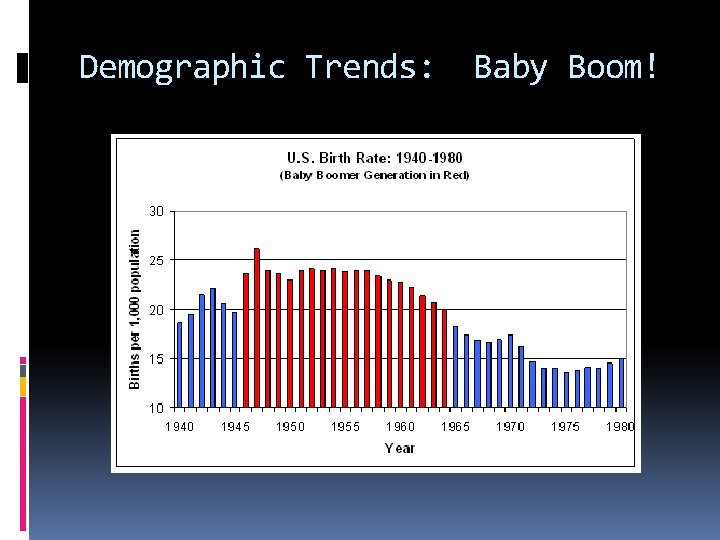
Demographic Trends: Baby Boom!
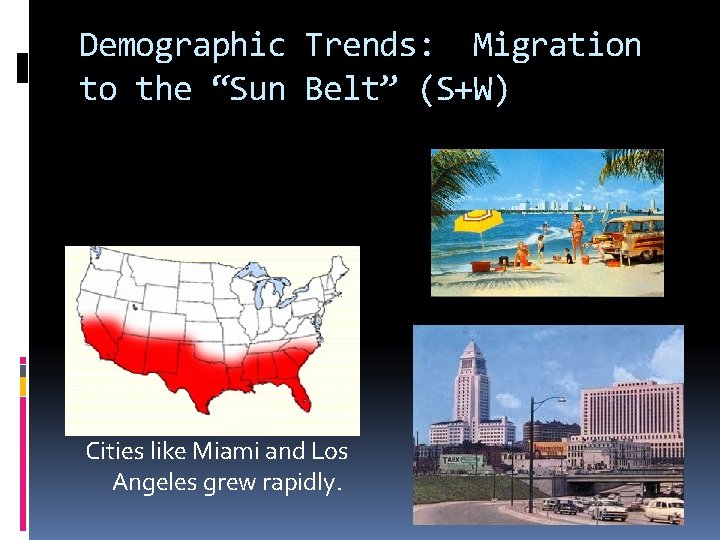
Demographic Trends: Migration to the “Sun Belt” (S+W) Cities like Miami and Los Angeles grew rapidly.
Religious Revival Evangelical Christianity grew and prospered as the Cold War gripped America.
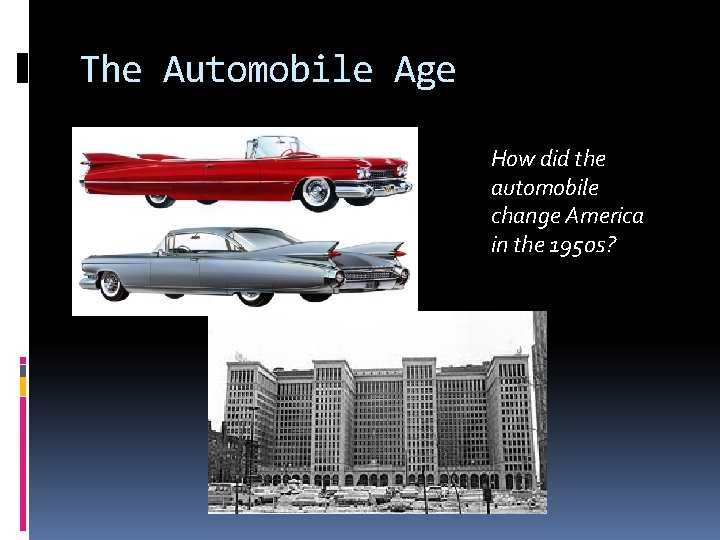
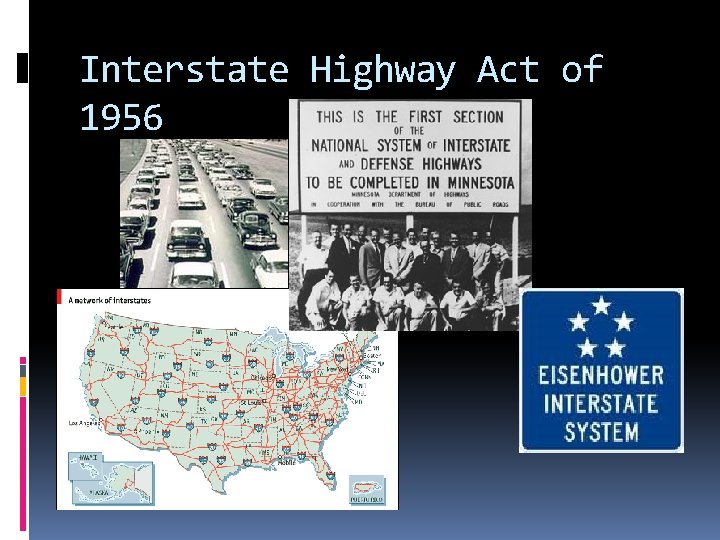
The Automobile Age How did the automobile change America in the 1950 s?
Interstate Highway Act of 1956
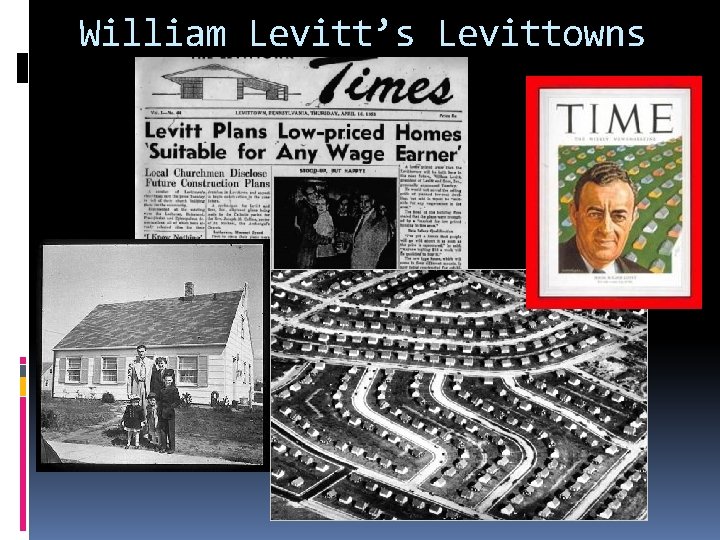
William Levitt’s Levittowns
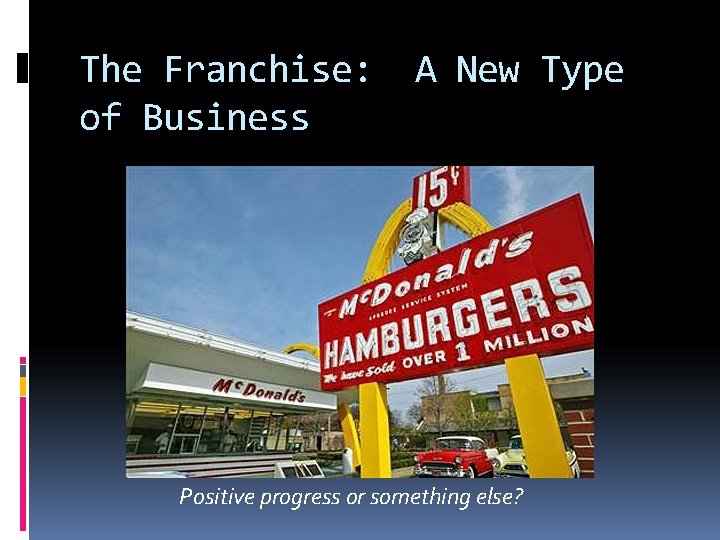
The Franchise: of Business A New Type Positive progress or something else?
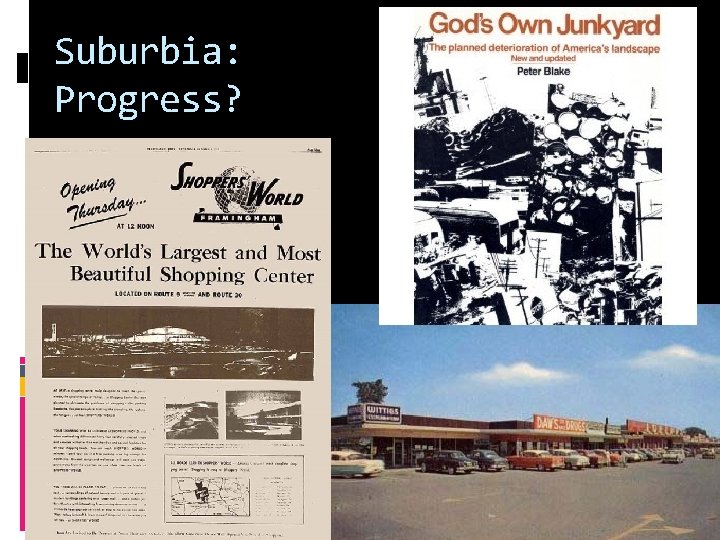
Suburbia: Progress?
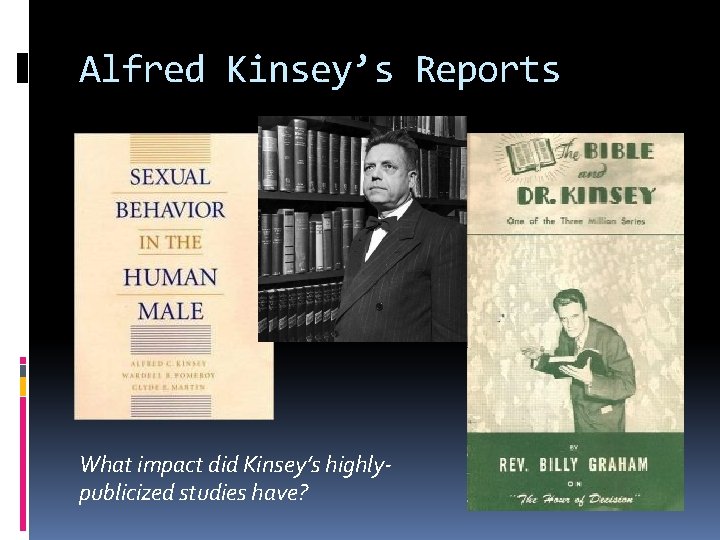
Alfred Kinsey’s Reports What impact did Kinsey’s highlypublicized studies have?
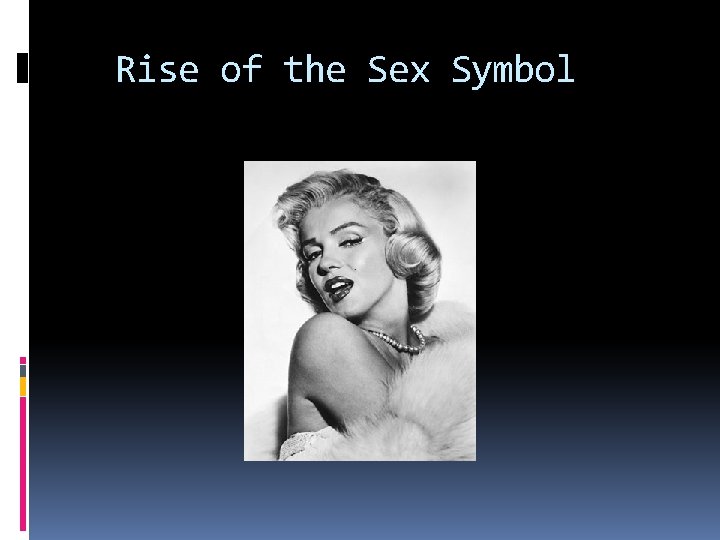
Rise of the Sex Symbol
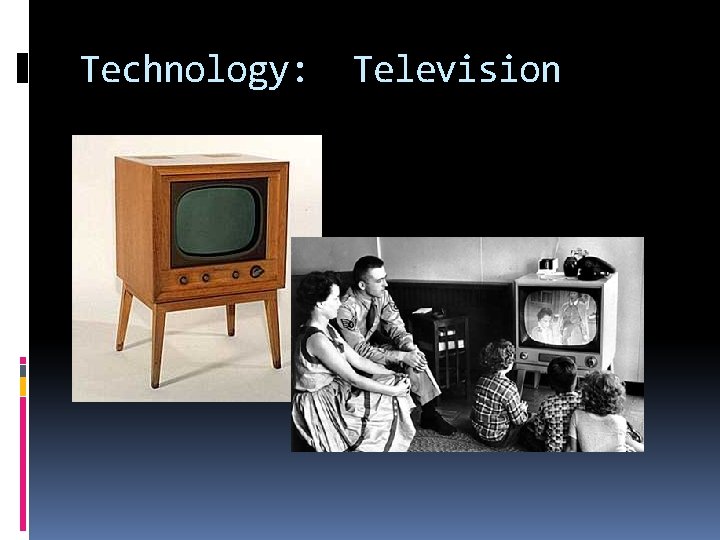
Technology: Television
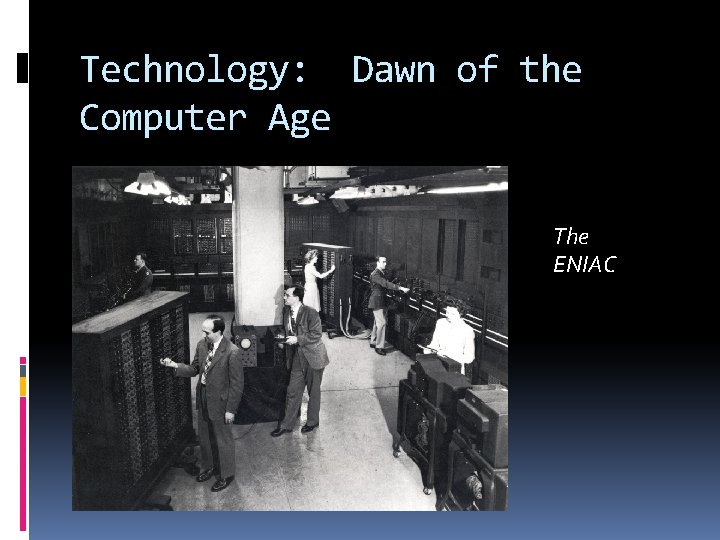
Technology: Dawn of the Computer Age The ENIAC
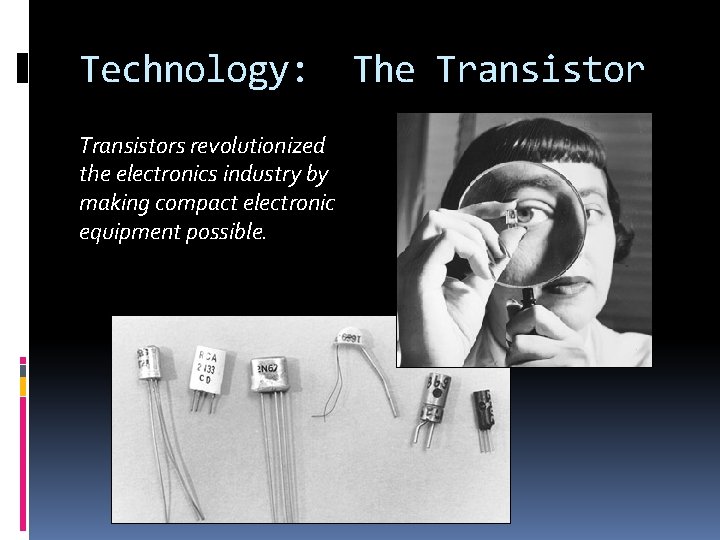
Technology: Transistors revolutionized the electronics industry by making compact electronic equipment possible. The Transistor
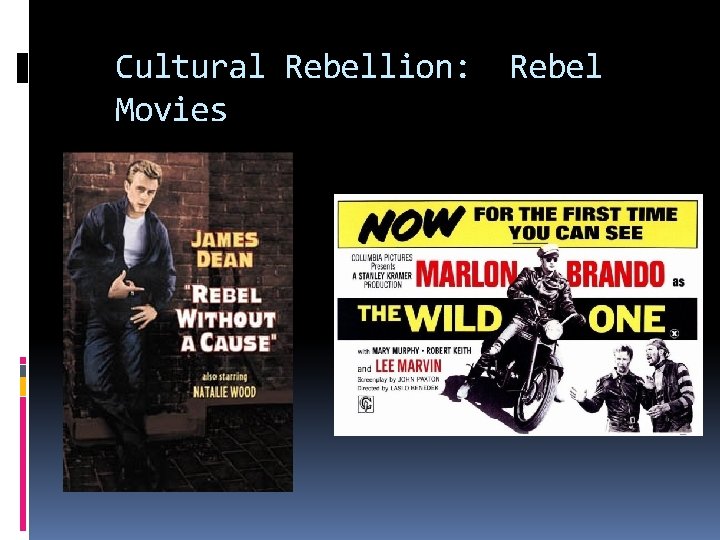
Cultural Rebellion: Movies Rebel
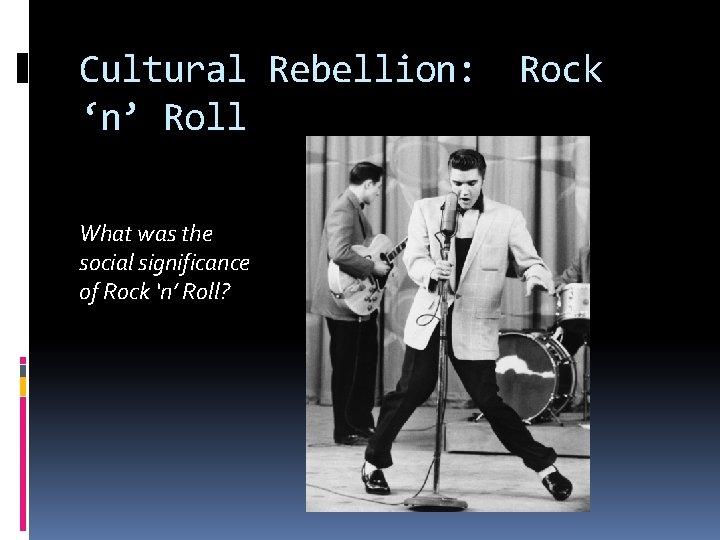
Cultural Rebellion: ‘n’ Roll What was the social significance of Rock ‘n’ Roll? Rock
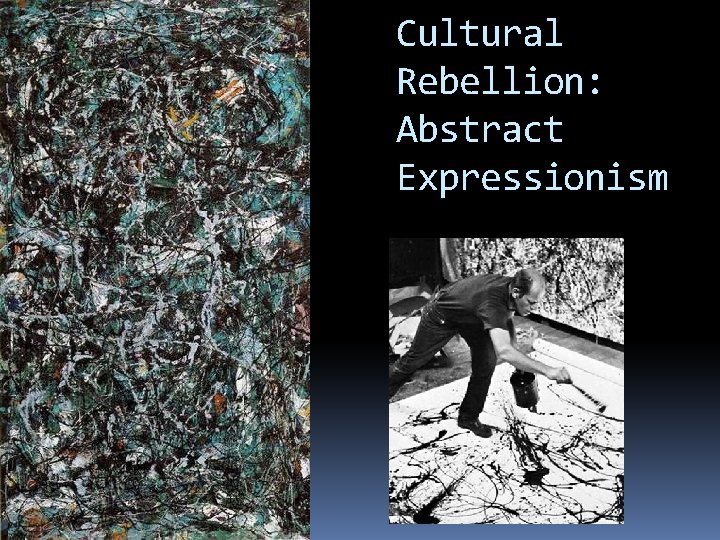
Cultural Rebellion: Abstract Expressionism
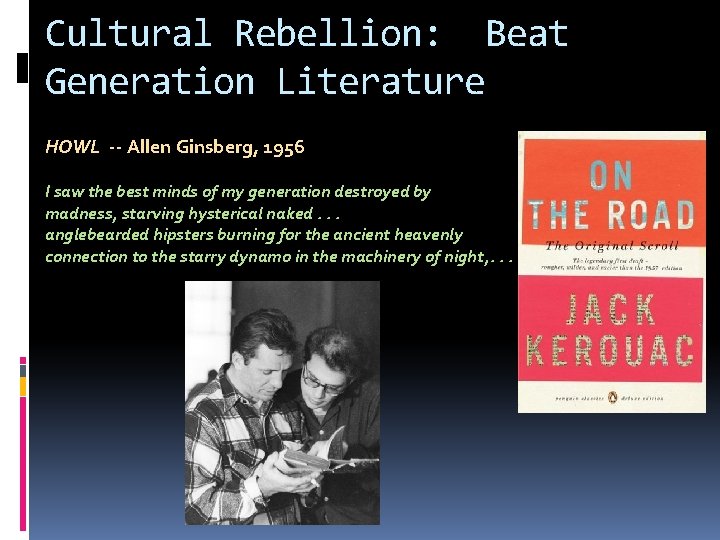
Cultural Rebellion: Beat Generation Literature HOWL -- Allen Ginsberg, 1956 I saw the best minds of my generation destroyed by madness, starving hysterical naked. . . anglebearded hipsters burning for the ancient heavenly connection to the starry dynamo in the machinery of night, . . .