
Conscription During World War I How Canada handled
- Slides: 14
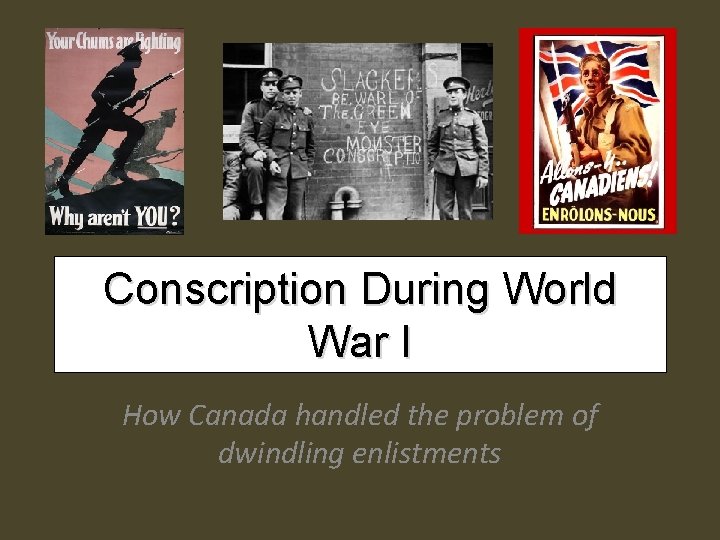
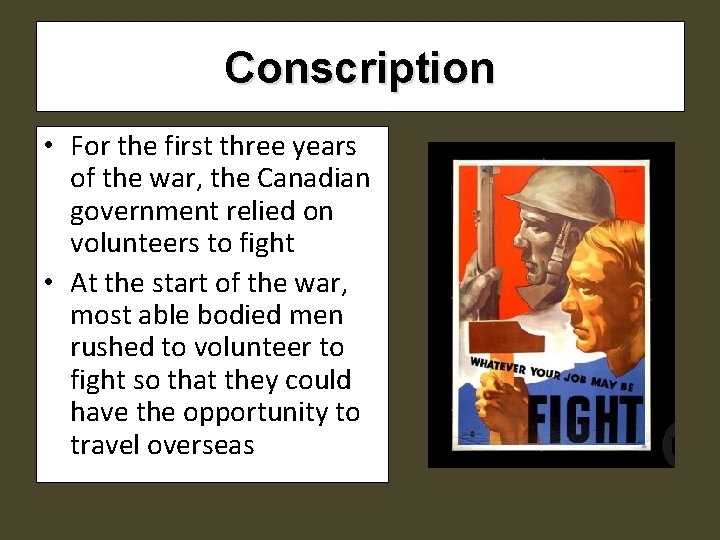
Conscription During World War I How Canada handled the problem of dwindling enlistments
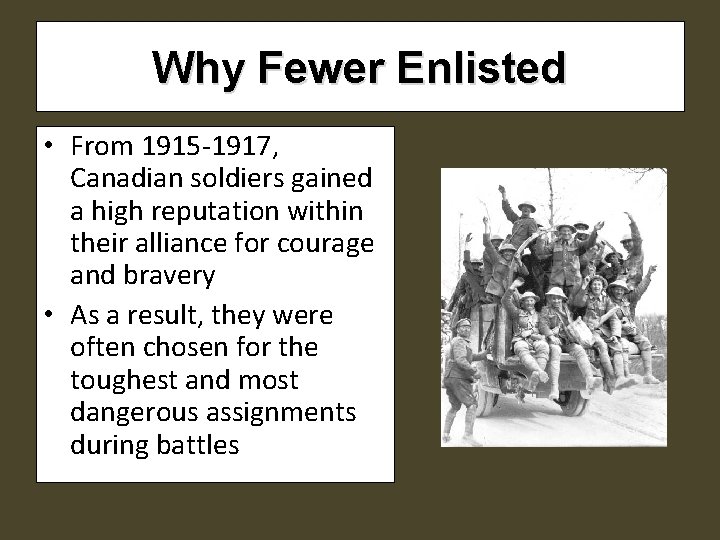
Conscription • For the first three years of the war, the Canadian government relied on volunteers to fight • At the start of the war, most able bodied men rushed to volunteer to fight so that they could have the opportunity to travel overseas
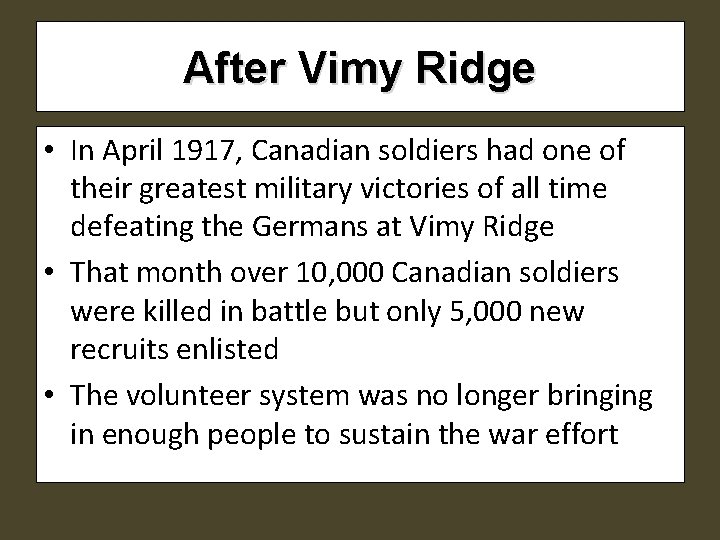
Why Fewer Enlisted • From 1915 -1917, Canadian soldiers gained a high reputation within their alliance for courage and bravery • As a result, they were often chosen for the toughest and most dangerous assignments during battles
After Vimy Ridge • In April 1917, Canadian soldiers had one of their greatest military victories of all time defeating the Germans at Vimy Ridge • That month over 10, 000 Canadian soldiers were killed in battle but only 5, 000 new recruits enlisted • The volunteer system was no longer bringing in enough people to sustain the war effort
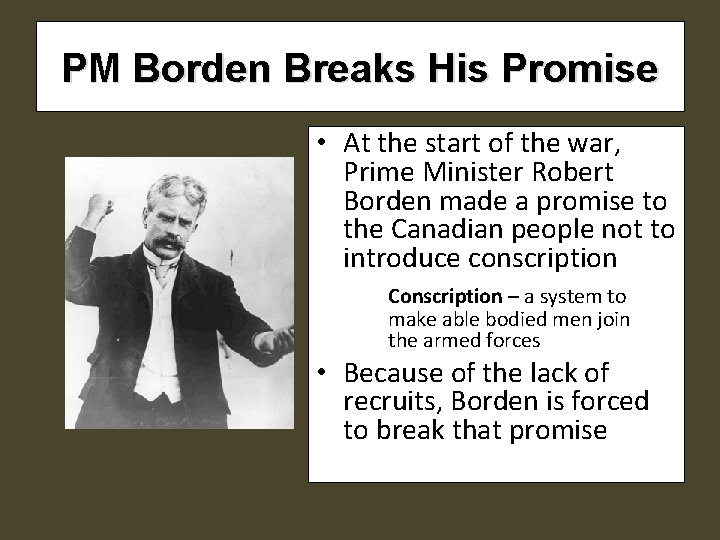
PM Borden Breaks His Promise • At the start of the war, Prime Minister Robert Borden made a promise to the Canadian people not to introduce conscription Conscription – a system to make able bodied men join the armed forces • Because of the lack of recruits, Borden is forced to break that promise
Borden’s Plan • In order to break his promise, Prime Minister Borden calls an election on the issue of conscription • If he wins the election, he can prove that conscription is the ‘will of the Canadian people’ • The election becomes one of the fiercest and angriest in the history of Canada
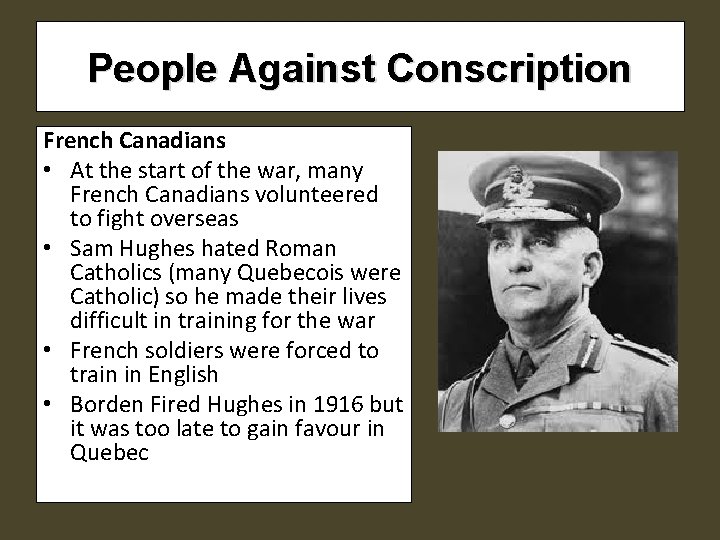
People Against Conscription French Canadians • At the start of the war, many French Canadians volunteered to fight overseas • Sam Hughes hated Roman Catholics (many Quebecois were Catholic) so he made their lives difficult in training for the war • French soldiers were forced to train in English • Borden Fired Hughes in 1916 but it was too late to gain favour in Quebec
People Against Conscription French Canadians • French Canadians did not have the same ties to Europe and did not see it as their duty to protect Britain • Most felt that it should be up to the individual person whether or not they decided to go to war
People Against Conscription Western Canadians • Most people who settled in Western Canada came to Canada to escape from the European wars • In some of their homelands, the governments could force men into the army • They thought they had escaped that in Canada
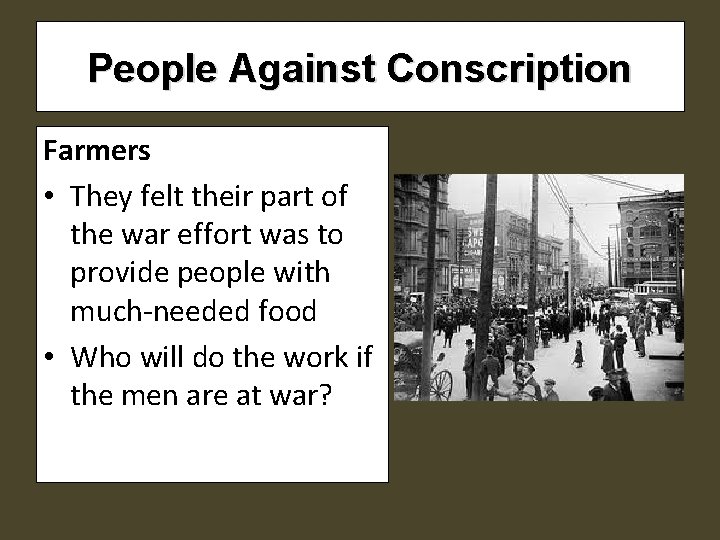
People Against Conscription Farmers • They felt their part of the war effort was to provide people with much-needed food • Who will do the work if the men are at war?
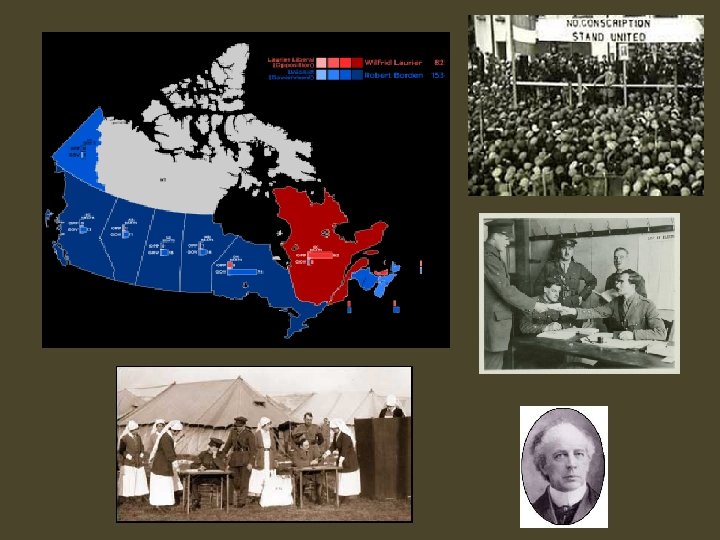
What The Government Did • Prime Minister Borden asked the Leader of the Opposition Wilfred Laurier to form a coalition or union government to present a unified front on conscription • Laurier could not do this because even though he supported the war effort, he was against conscription • Several Liberals joined the Conservatives to form the Unionist Party in favour of conscription
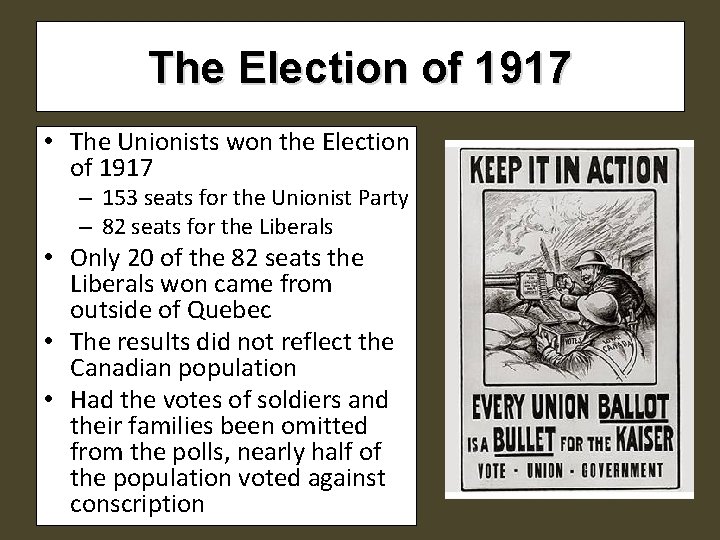
The Election of 1917 • The Unionists won the Election of 1917 – 153 seats for the Unionist Party – 82 seats for the Liberals • Only 20 of the 82 seats the Liberals won came from outside of Quebec • The results did not reflect the Canadian population • Had the votes of soldiers and their families been omitted from the polls, nearly half of the population voted against conscription
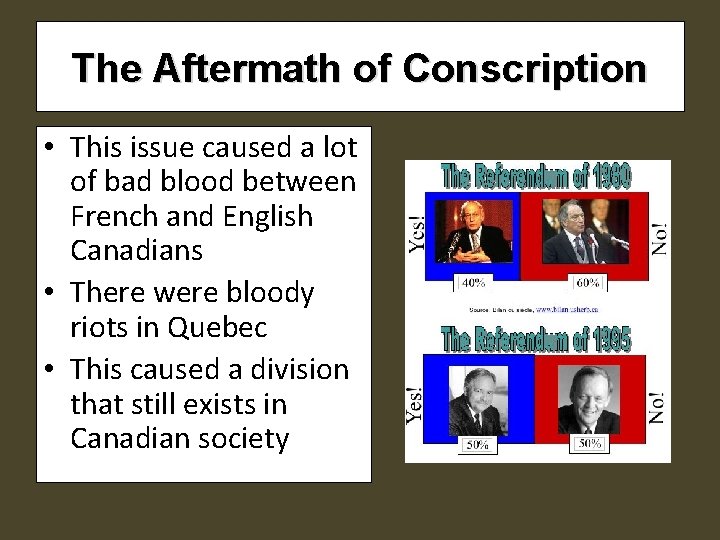
The Aftermath of Conscription • This issue caused a lot of bad blood between French and English Canadians • There were bloody riots in Quebec • This caused a division that still exists in Canadian society