
Consciousness Unit 2 B Objective 1 What do
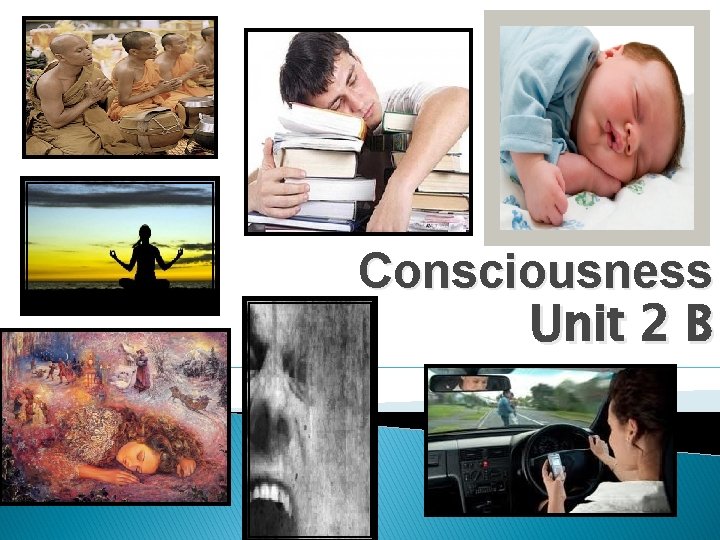
Consciousness Unit 2 B
Objective 1: What do we mean by consciousness & how does selective attention direct our perception? � Consciousness: ◦ our awareness of ourselves and our environment. � Cognitive neuroscience: ◦ studies the connections between brain activity & mental processes
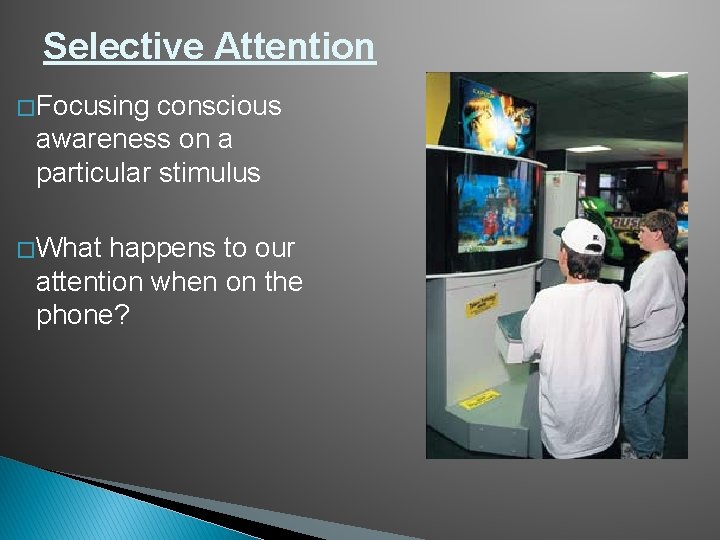
Selective Attention � Focusing conscious awareness on a particular stimulus � What happens to our attention when on the phone?
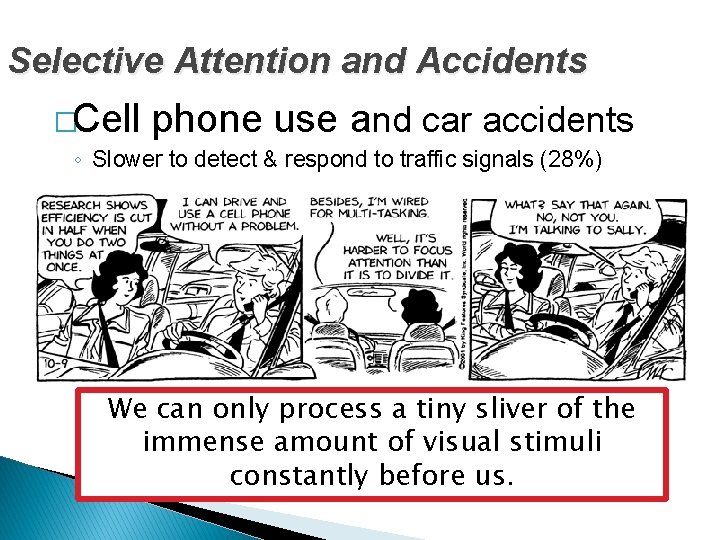
Selective Attention and Accidents �Cell phone use and car accidents ◦ Slower to detect & respond to traffic signals (28%) We can only process a tiny sliver of the immense amount of visual stimuli constantly before us.
Who Dunnit? http: //www. youtube. com/watch? v=ub. NF 9 QNEQLA How many changes can you detect? http: //www. youtube. com/watch? v=v. JG 698 U 2 Mvo

Selective Attention �Inattentional blindness ◦ failing to see visible objects when our attention is directed elsewhere
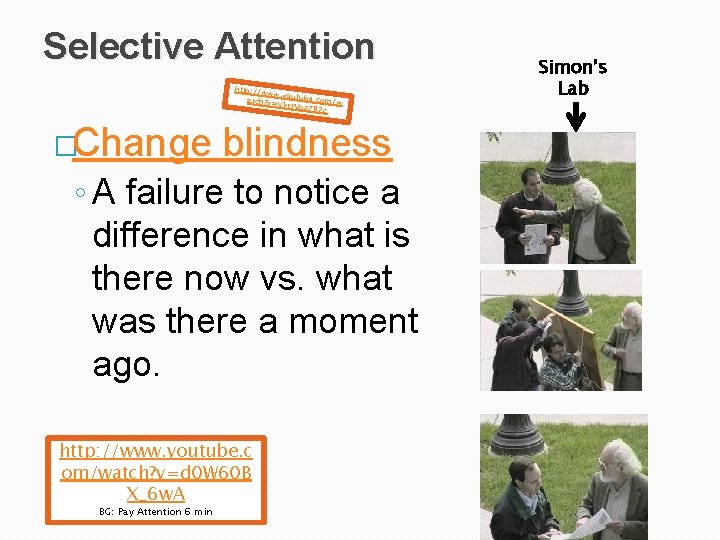
Selective Attention http: //w ww. youtu be. com/ atch? v=V w krr. Voz. ZR 2 c �Change blindness ◦ A failure to notice a difference in what is there now vs. what was there a moment ago. http: //www. youtube. c om/watch? v=d 0 W 60 B X_6 w. A BG: Pay Attention 6 min Simon’s Lab
Objective 2: What is the circadian rhythm & what are the stages of our sleep cycle?

Morningness-Eveningness Questionnaire �#s 1, 2, 10, 18 – use number below where you checked time.

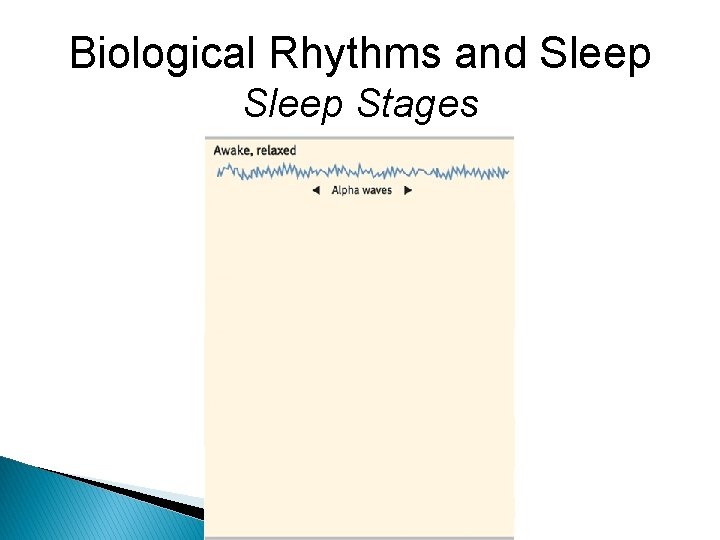
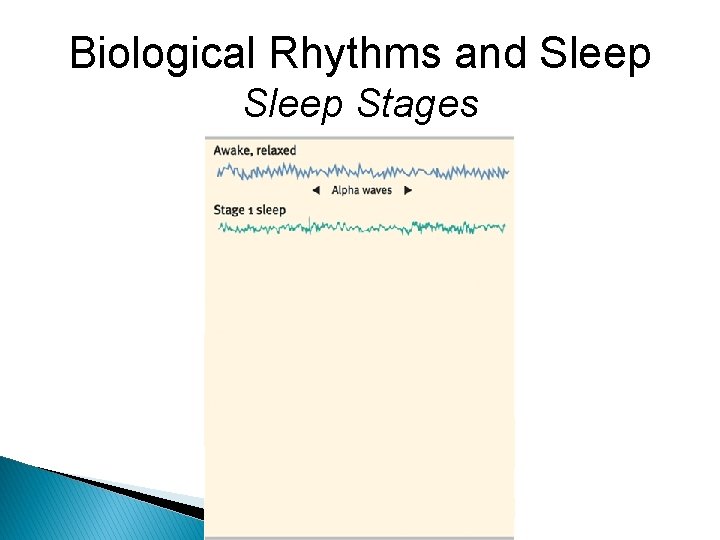
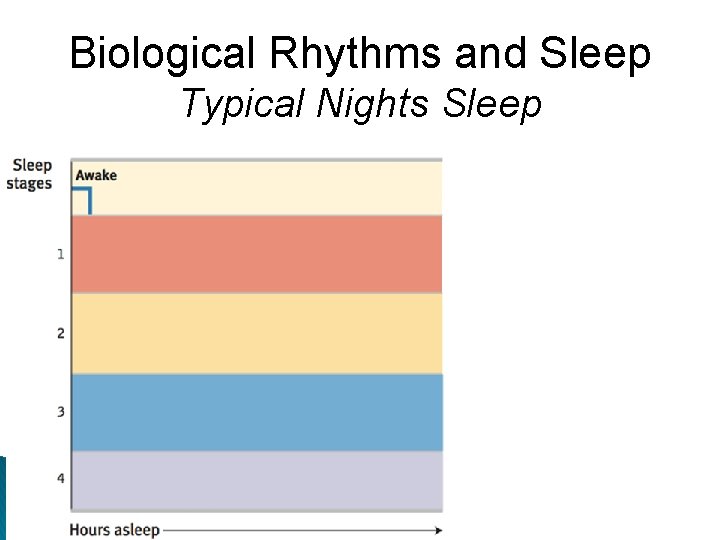
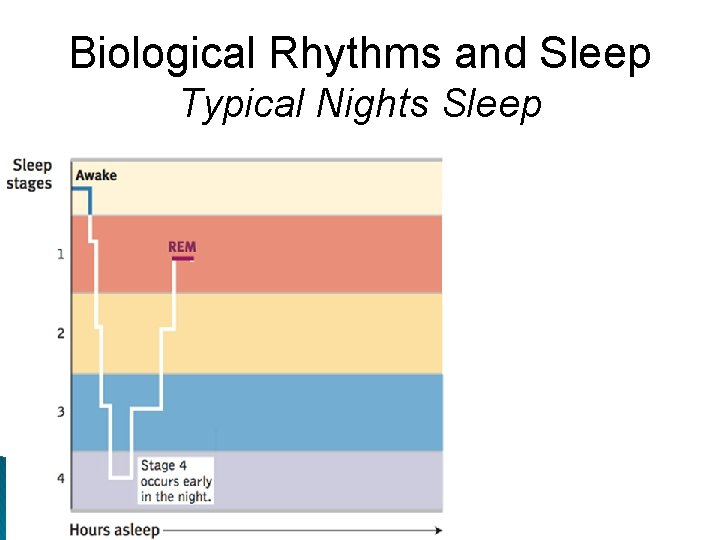
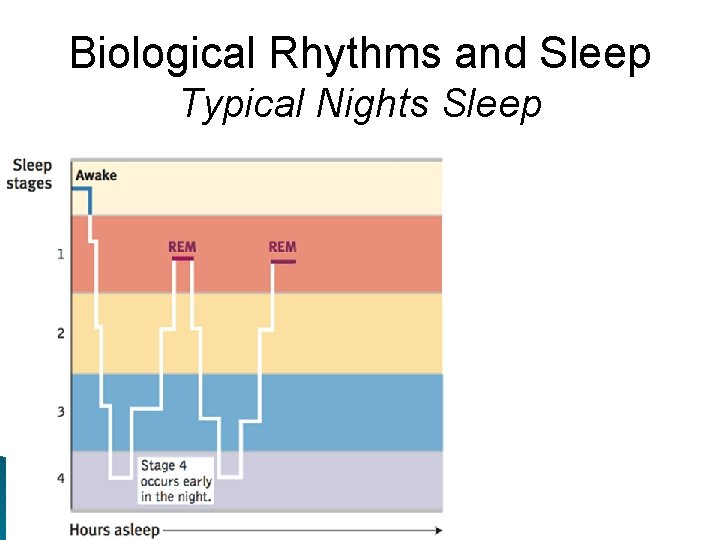
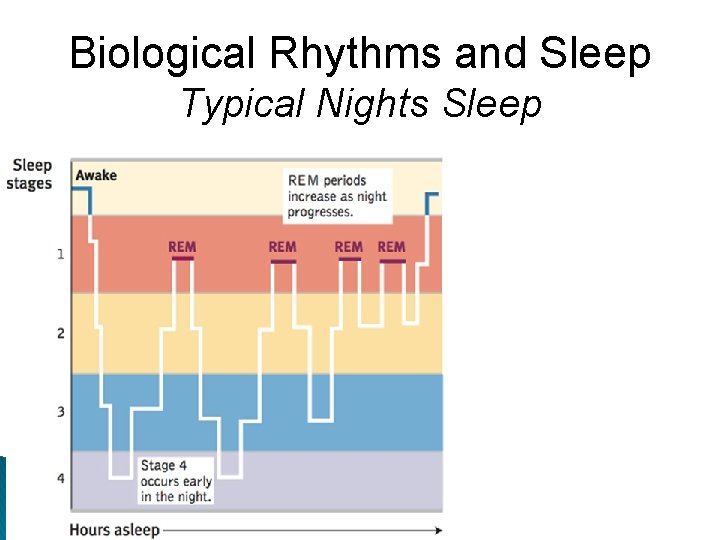
Objective 2 Sleep stages… ◦ Awake �Alpha waves �Awake but relaxed ◦ Stage 1 �Transition � 1 -7 minutes �Light sleep �Hypnagogic sensations �Easy to awaken �Aroused from stage 1 report they were awake
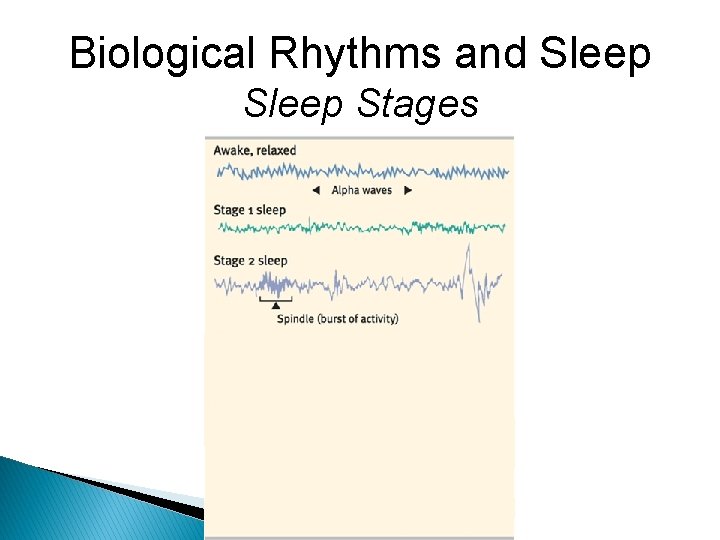
Sleep Stages Stage 2 ◦ Onset of true sleep ◦ Sleep spindles �High frequency bursts of brain activity ◦ Muscle tension, heart rate, respiration, temp start to decline ◦ Some delta waves Stage 3 ◦ Continue to show more delta waves � Stage 4 � Delta waves ◦ REM sleep
Stage 4 ◦ ◦ ◦ Delta sleep High amplitude very low frequency (delta) Deepest stage of sleep; most difficult to wake Sleepwalking & talking present Night terrors in children If awaken, don’t remember
Biological Rhythms and Sleep Stages
Biological Rhythms and Sleep Stages
Biological Rhythms and Sleep Stages
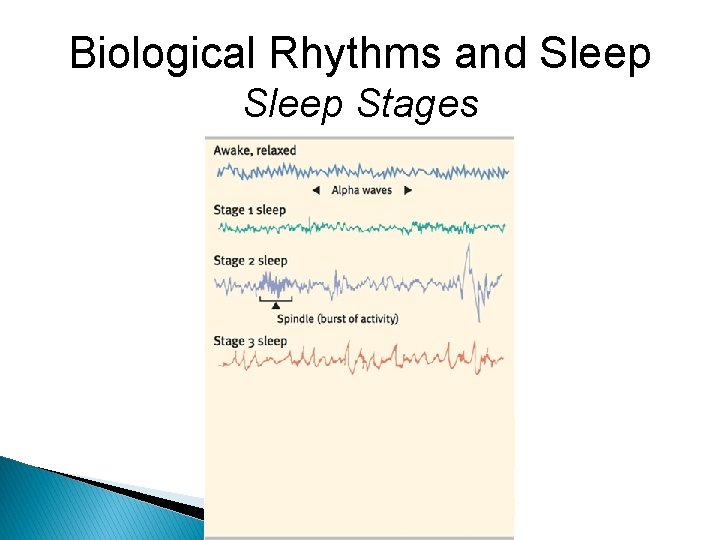
Biological Rhythms and Sleep Stages
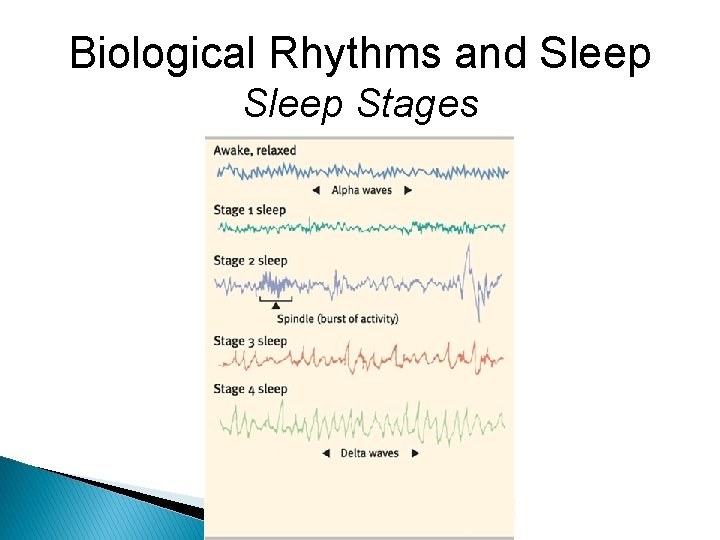
Biological Rhythms and Sleep Stages
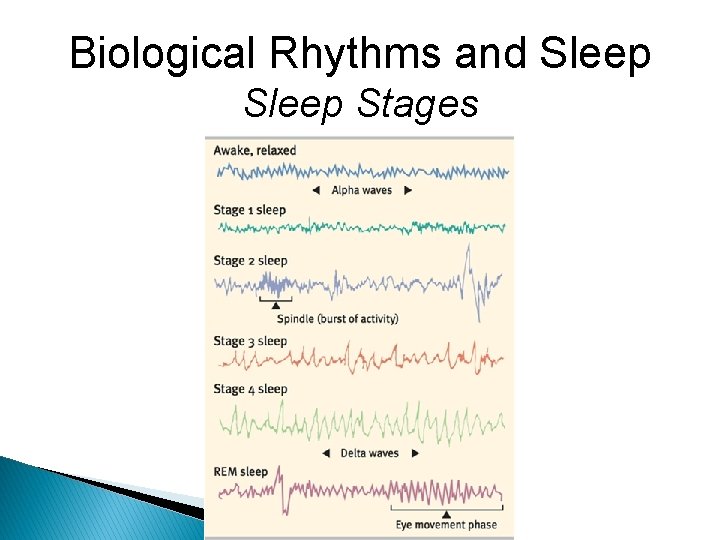
Biological Rhythms and Sleep Stages
REM � Dreams = 20% of sleep time � Eyes move rapidly back & forth � Paradoxical sleep ◦ Brain active body not � Heart rate & blood pressure increase � Lose muscle tension & movement
Biological Rhythms and Sleep Typical Nights Sleep
Biological Rhythms and Sleep Typical Nights Sleep
Biological Rhythms and Sleep Typical Nights Sleep
Biological Rhythms and Sleep Typical Nights Sleep
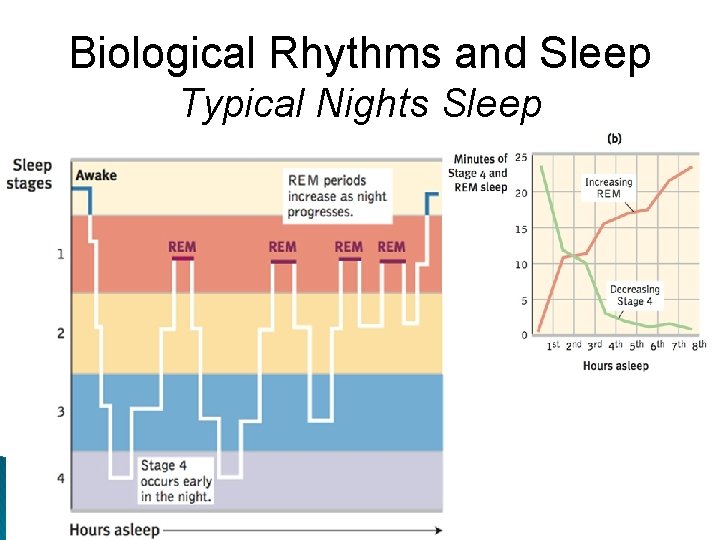
Biological Rhythms and Sleep Typical Nights Sleep
Why Do We Sleep? Objective 3: How do our sleep patterns differ? What 4 theories describe our need for sleep? �Genetic Forces ◦ age related differences in avg. sleeping time depend upon differences among individuals �Cultural Forces ◦ Those in more modernized cultures sleep less

�Circadian rhythm ◦ Internal biological clock ◦ Body rhythms change �temperature, alertness �occurs on a 24 hr cycle �age & experience can alter your circadian rhythm
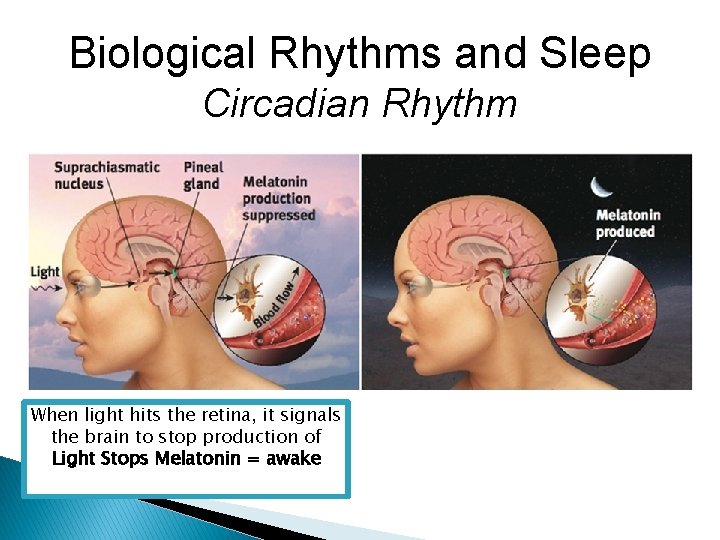
Biological Rhythms and Sleep Circadian Rhythm When light hits the retina, it signals the brain to stop production of Light Stops Melatonin = awake
Four Sleep Theories 1. Sleep protects -evolutionary? § Animals sleep patterns fit its place in nature § elephant vs bats § most need to graze/least ability to hide 2. Sleep helps us recover - repair brain tissue 3. Sleep helps memory & creative thinking § proof? 4. Sleep releases growth hormones § Stage 4 – deep sleep § As we age we spend less time in deep sleep (stage 4)

Objective 4: How does sleep loss affect us & what are the major sleep disorders?
Why Do We Sleep? The Effects of Sleep Loss
Why Do We Sleep? The Effects of Sleep Loss
Why Do We Sleep? The Effects of Sleep Loss
Why Do We Sleep? The Effects of Sleep Loss
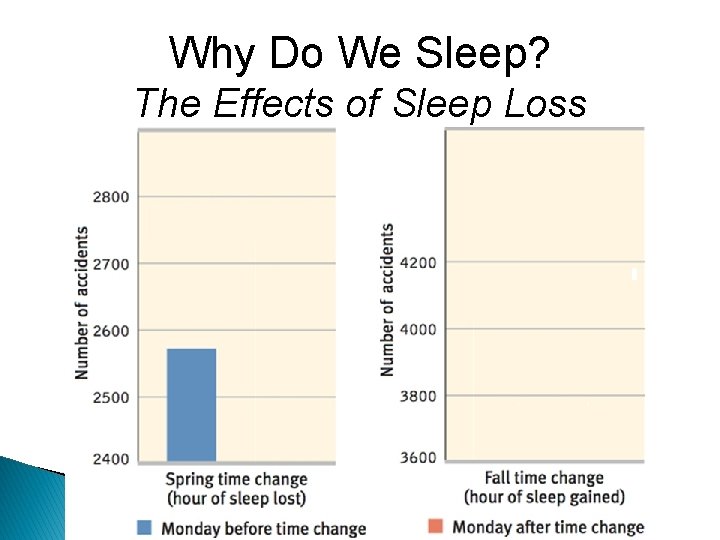
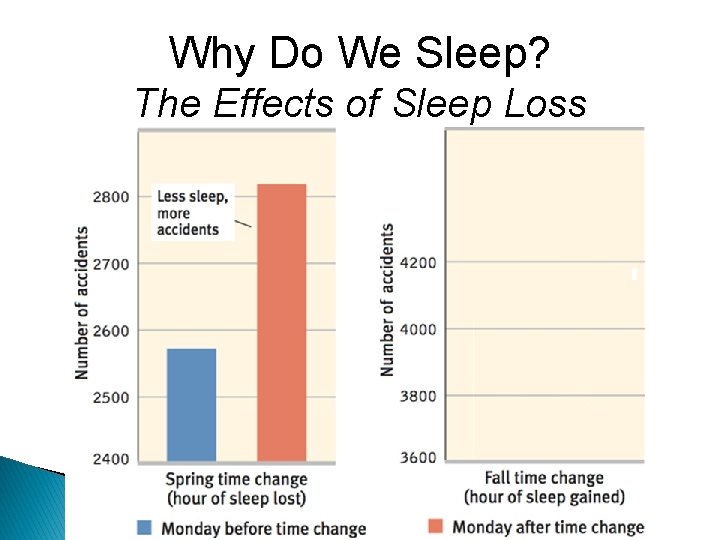
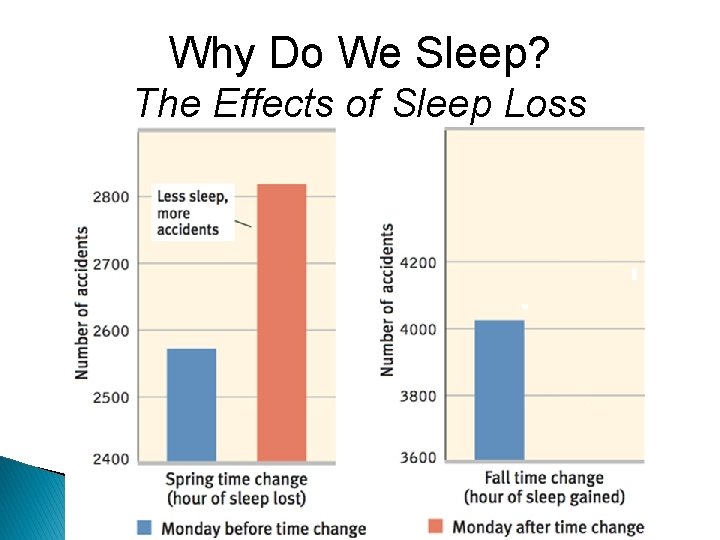
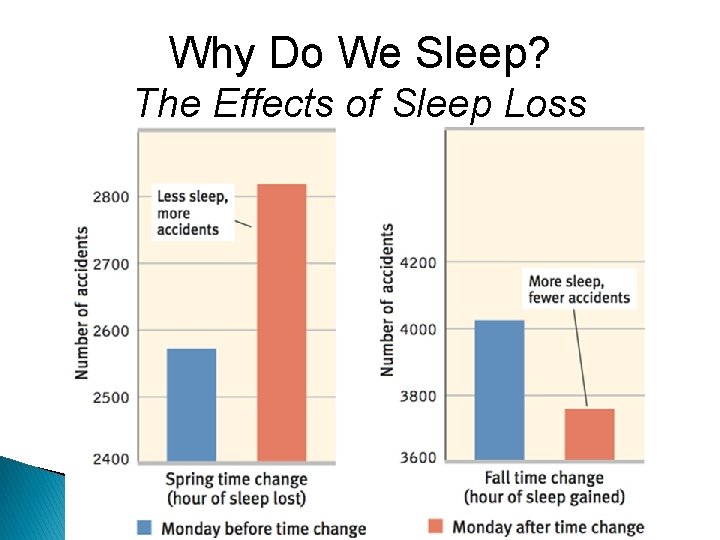
◦ Weight Gain (ghrelin) ◦ Stress (cortisol) ◦ Insomnia ◦ Narcolepsy http: //www. youtube. com/watch? v=X 0 h 2 nle. WTw. I ◦ Sleep apnea ◦ Night terrors ◦ http: //www. youtube. com/watch? v=zdw. Yg. GXQ 5 mo
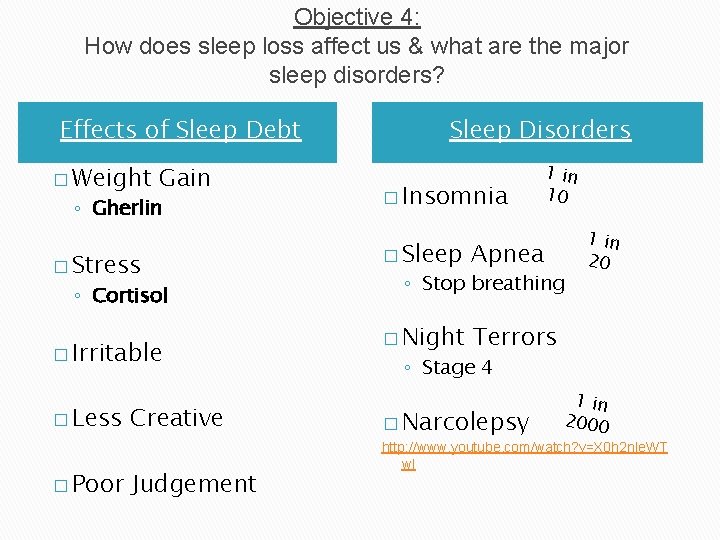
Objective 4: How does sleep loss affect us & what are the major sleep disorders? Effects of Sleep Debt � Weight Gain ◦ Gherlin � Stress ◦ Cortisol � Irritable � Less � Poor Creative Judgement Sleep Disorders � Insomnia 1 in 10 � Sleep Apnea � Night Terrors ◦ Stop breathing 1 in 20 ◦ Stage 4 � Narcolepsy 1 in 2000 http: //www. youtube. com/watch? v=X 0 h 2 nle. WT w. I

http: //www. youtube. com/watch? v=7 G Gzc 3 x 9 WJU Objective 5: What do we dream about & what are the five theories of dreaming?
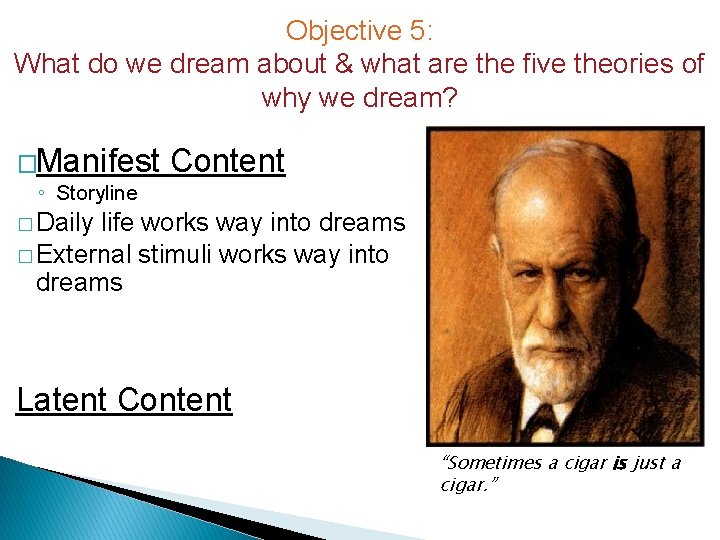
Objective 5: What do we dream about & what are the five theories of why we dream? �Manifest ◦ Storyline Content � Daily life works way into dreams � External stimuli works way into dreams Latent Content “Sometimes a cigar is just a cigar. ”
Objective 5… Theories of Dreaming � To satisfy our own wishes � To file away memories � To develop/preserve neural pathways � To make sense of neural static ◦ Freud; psychic safety valve; ◦ Manifest Content / Latent Content ◦ Information processing ◦ Fix the day’s experiences in our minds ◦ Babies = Lots of REM ◦ Limbic system active during REM (i. e. amygdala) while Activ frontal lobe less active atio � To reflect cognitive development ◦ Brain maturation Synth esis T n heory
- Slides: 38