
Consciousness and the Two Track Mind Modules 7




- Slides: 69
Consciousness and the Two. Track Mind Modules 7, 8, 9
Syllabus Exam 2 7, 8, 9 Consciousness 17, 18, 19 Sensation & Percep
Syllabus Exam 3 28, 29, 30, 31 Intelligence 10, 11, 12 Nature/Nurture 45, 46, 47 Personality
Chapter Topics 1. Defining Consciousness Dual-track mind 2. Sleep and Dreams 3. Drugs and Consciousness
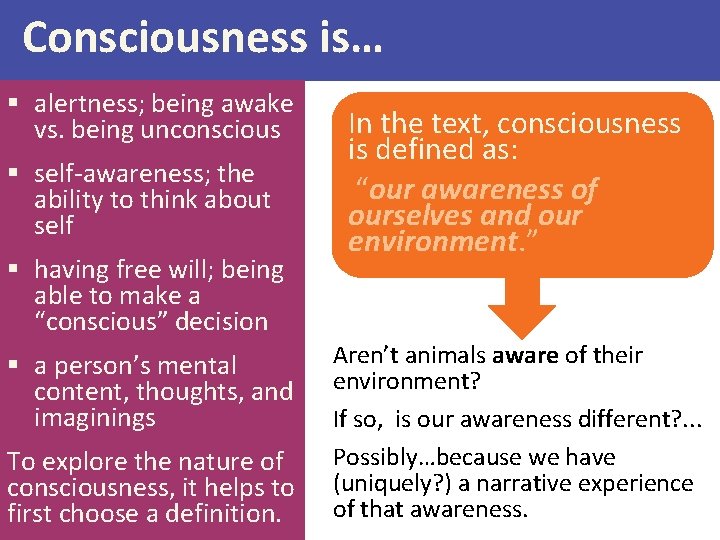
Consciousness is… § alertness; being awake vs. being unconscious § self-awareness; the ability to think about self § having free will; being able to make a “conscious” decision § a person’s mental content, thoughts, and imaginings To explore the nature of consciousness, it helps to first choose a definition. In the text, consciousness is defined as: “our awareness of ourselves and our environment. ” Aren’t animals aware of their environment? If so, is our awareness different? . . . Possibly…because we have (uniquely? ) a narrative experience of that awareness.
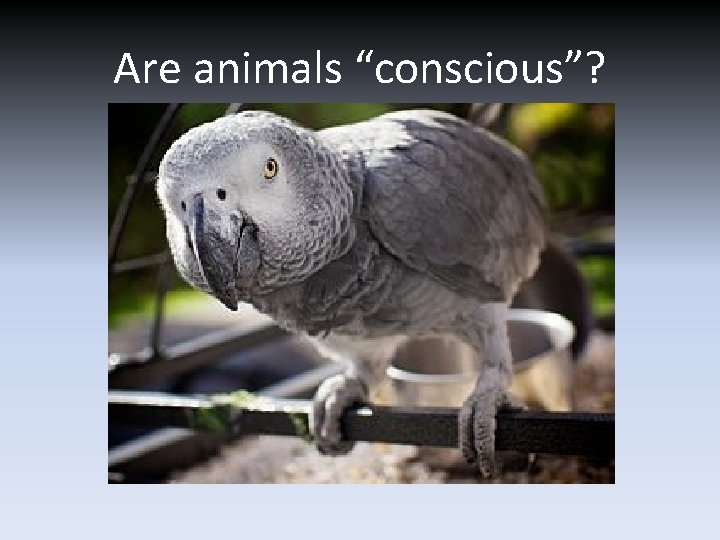
Are animals “conscious”?
2012 Cambridge Declaration on Consciousness “Convergent evidence indicates that nonhuman animals have the neuroanatomical, neurochemical and neurophysiologial substrates of conscious states, along with the capacity to exhibit intentional behaviours. ”
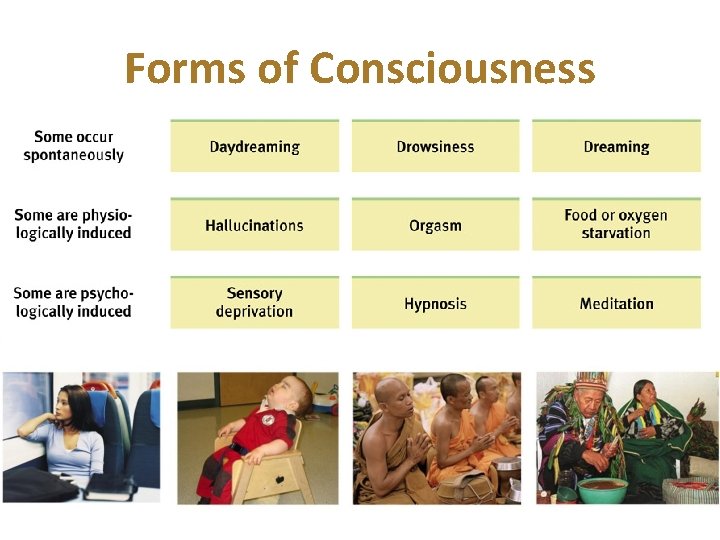
Forms of Consciousness
https: //www. youtube. com/watch? v=Iv 0 yu. Da 7 P 9 E
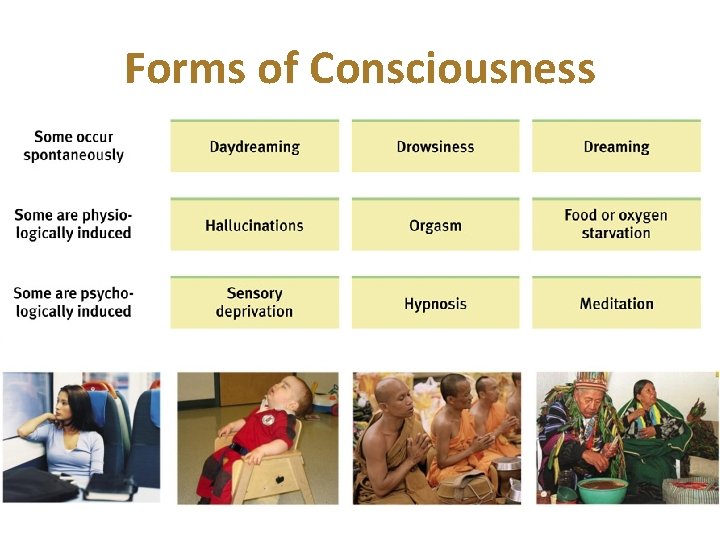
Forms of Consciousness
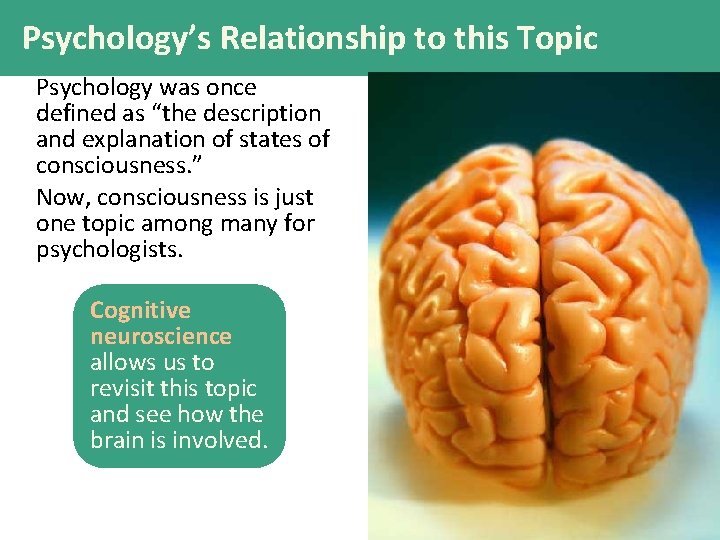
Psychology’s Relationship to this Topic Psychology was once defined as “the description and explanation of states of consciousness. ” Now, consciousness is just one topic among many for psychologists. Cognitive neuroscience allows us to revisit this topic and see how the brain is involved.
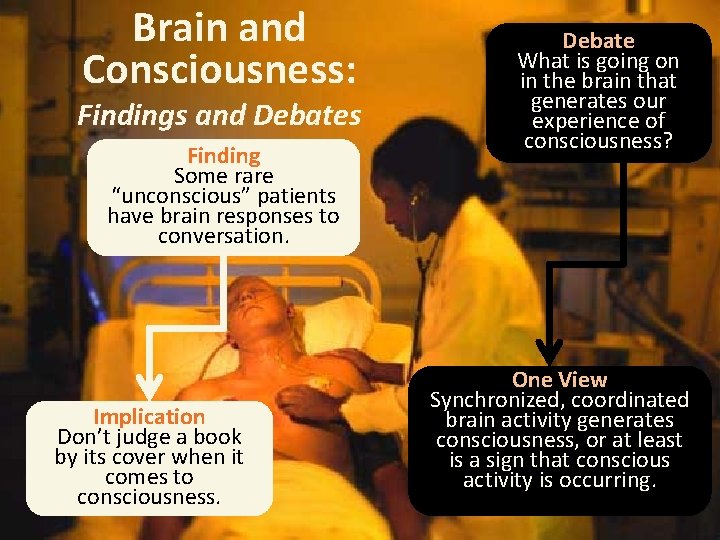
Brain and Consciousness: Findings and Debates Finding Some rare “unconscious” patients have brain responses to conversation. Implication Don’t judge a book by its cover when it comes to consciousness. Debate What is going on in the brain that generates our experience of consciousness? One View Synchronized, coordinated brain activity generates consciousness, or at least is a sign that conscious activity is occurring.
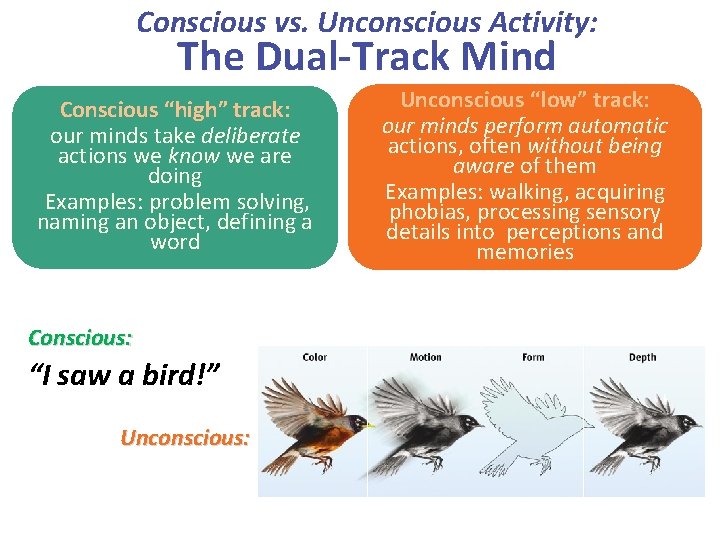
Conscious vs. Unconscious Activity: The Dual-Track Mind Conscious “high” track: our minds take deliberate actions we know we are doing Examples: problem solving, naming an object, defining a word Conscious: “I saw a bird!” Unconscious: Unconscious “low” track: our minds perform automatic actions, often without being aware of them Examples: walking, acquiring phobias, processing sensory details into perceptions and memories
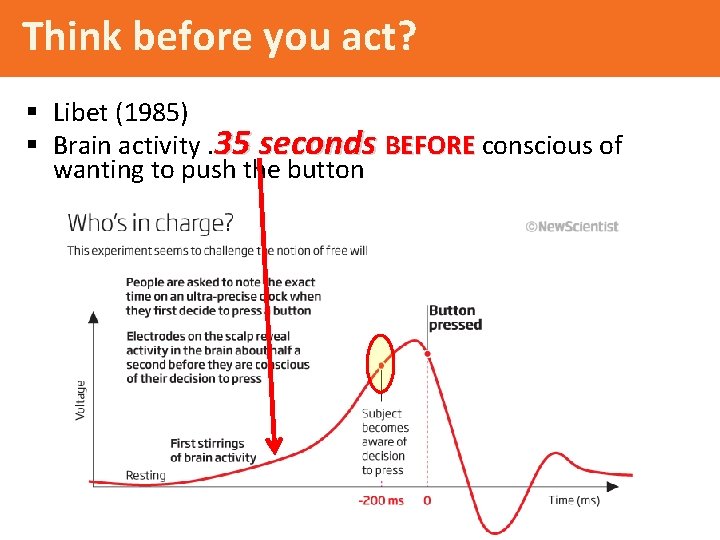
Think before you act? § Libet (1985) § Brain activity. 35 seconds BEFORE conscious of wanting to push the button
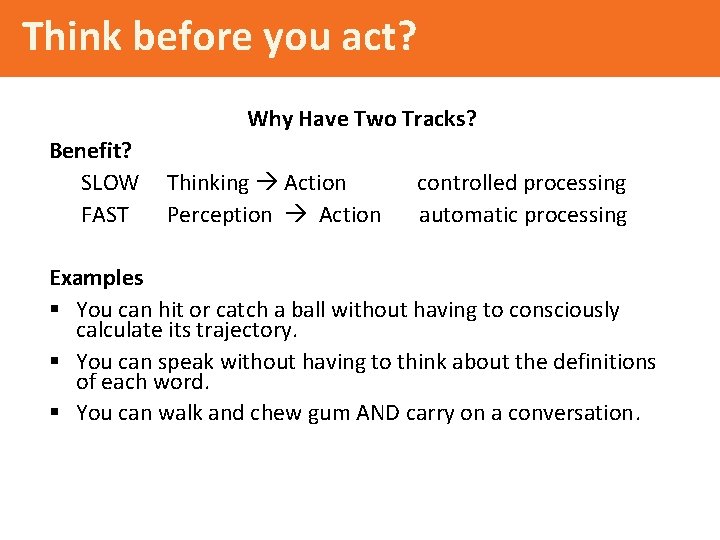
Think before you act? Why Have Two Tracks? Benefit? SLOW FAST Thinking Action Perception Action controlled processing automatic processing Examples § You can hit or catch a ball without having to consciously calculate its trajectory. § You can speak without having to think about the definitions of each word. § You can walk and chew gum AND carry on a conversation.
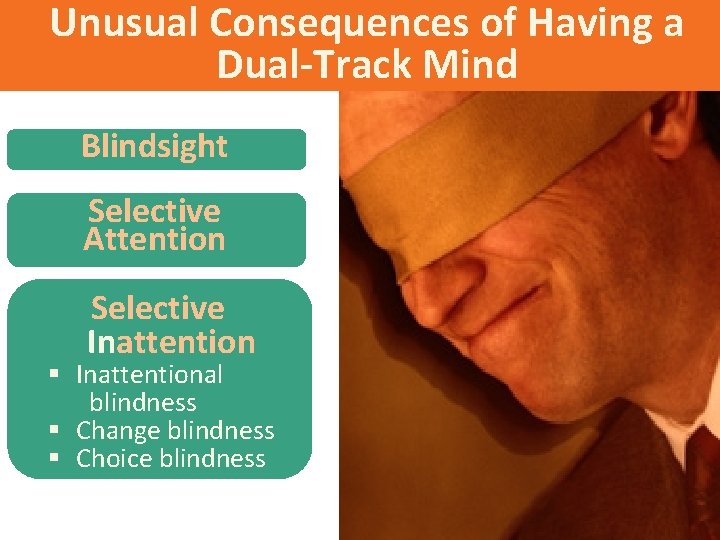
Unusual Consequences of Having a Dual-Track Mind Blindsight Selective Attention Selective Inattention § Inattentional blindness § Change blindness § Choice blindness
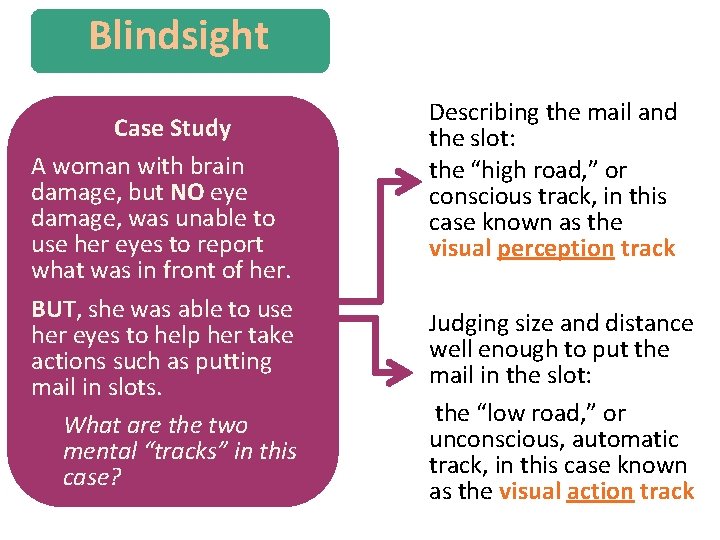
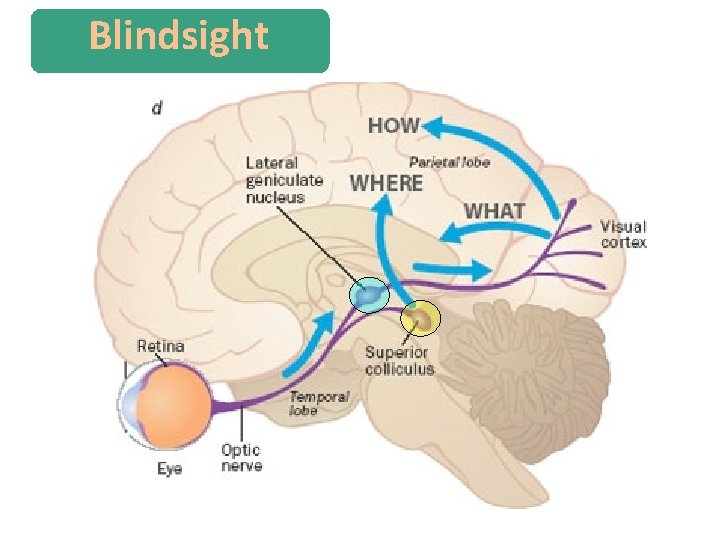
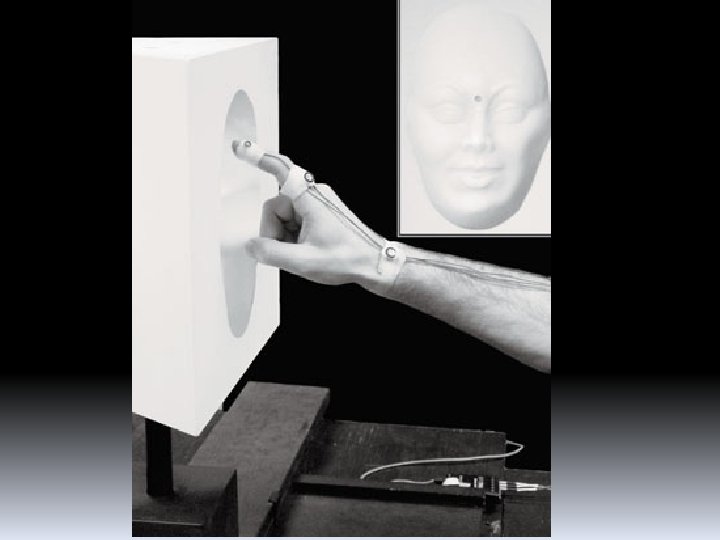
Blindsight Case Study A woman with brain damage, but NO eye damage, was unable to use her eyes to report what was in front of her. BUT, she was able to use her eyes to help her take actions such as putting mail in slots. What are the two mental “tracks” in this case? Describing the mail and the slot: the “high road, ” or conscious track, in this case known as the visual perception track Judging size and distance well enough to put the mail in the slot: the “low road, ” or unconscious, automatic track, in this case known as the visual action track
Blindsight
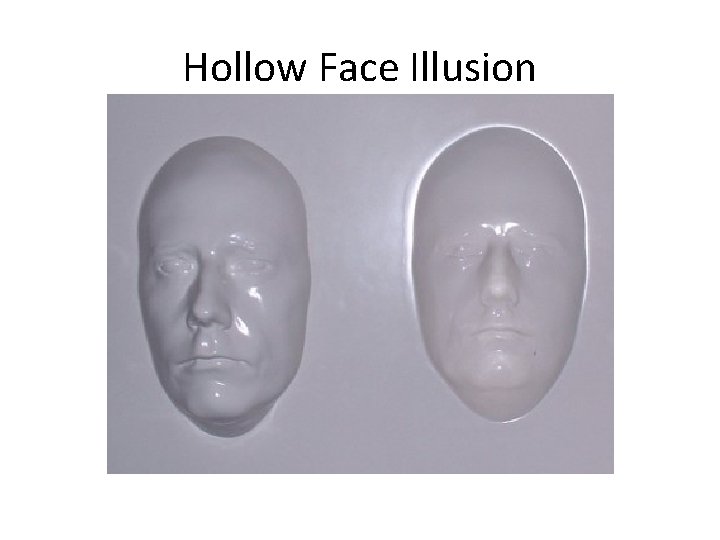
Hollow Face Illusion
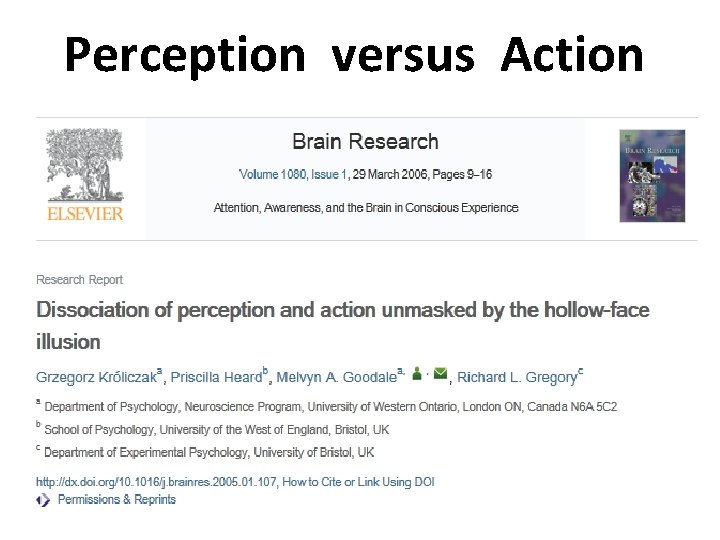
Perception versus Action
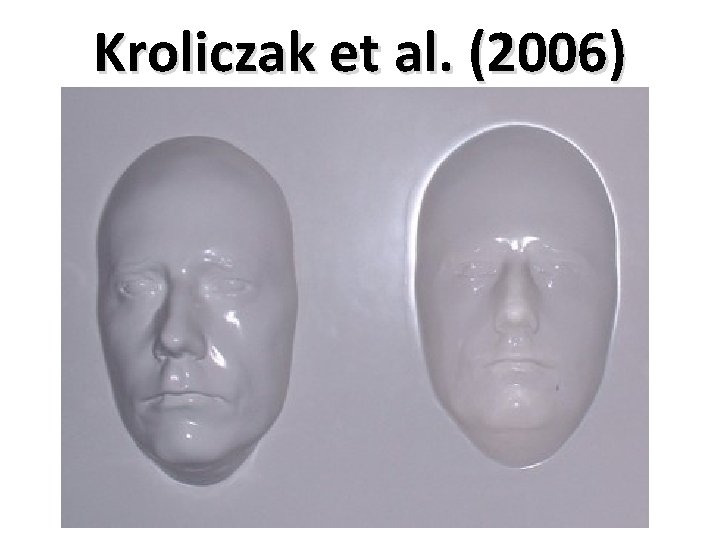
Kroliczak et al. (2006)
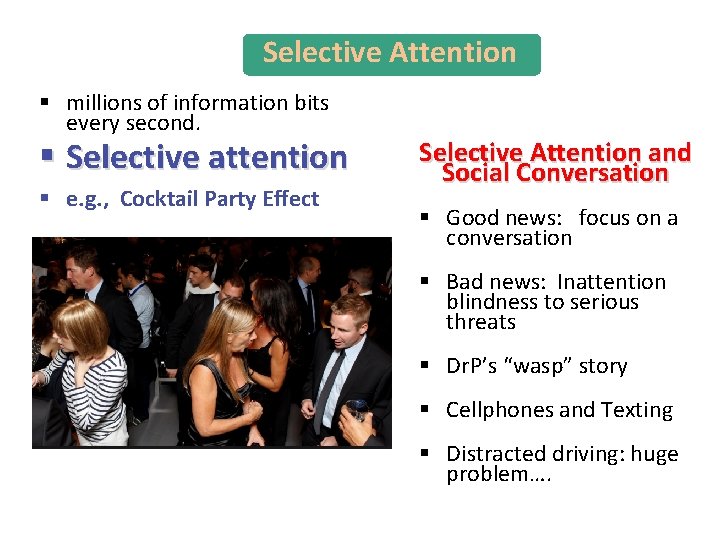
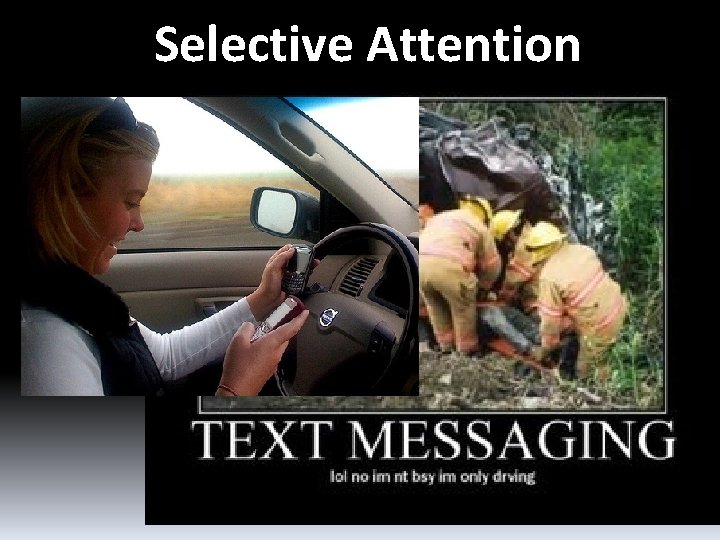
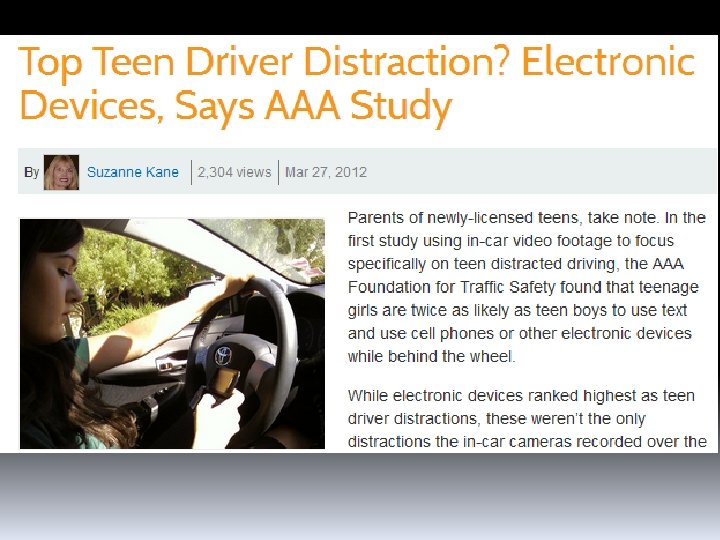
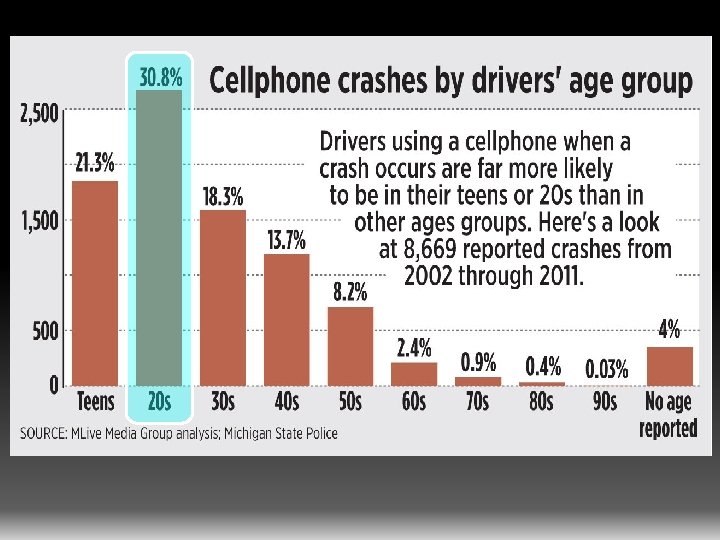
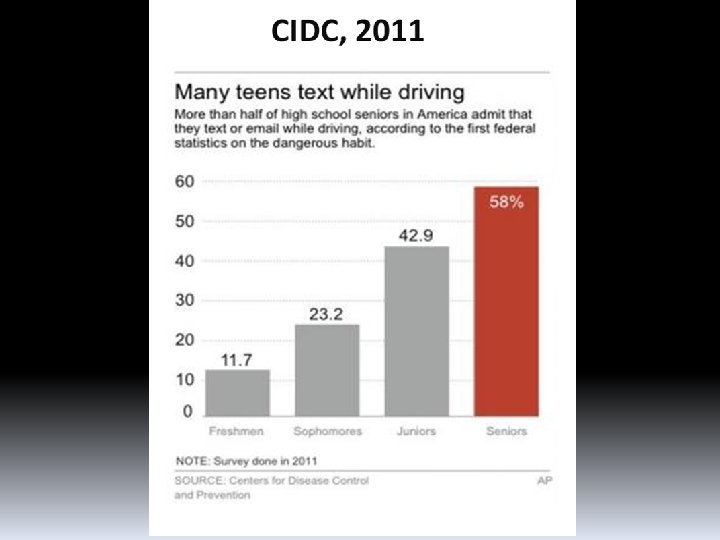
Selective Attention § millions of information bits every second. § Selective attention § e. g. , Cocktail Party Effect Selective Attention and Social Conversation § Good news: focus on a conversation § Bad news: Inattention blindness to serious threats § Dr. P’s “wasp” story § Cellphones and Texting § Distracted driving: huge problem….
Selective Attention
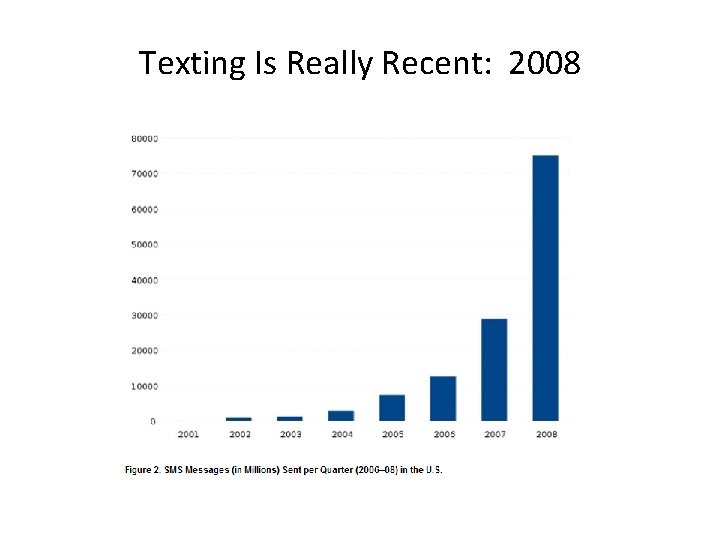
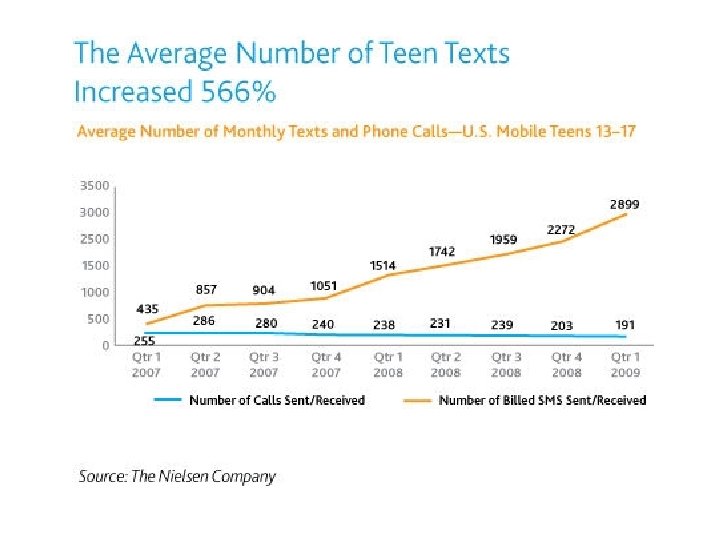
Texting Is Really Recent: 2008
Texting instantly became Huge
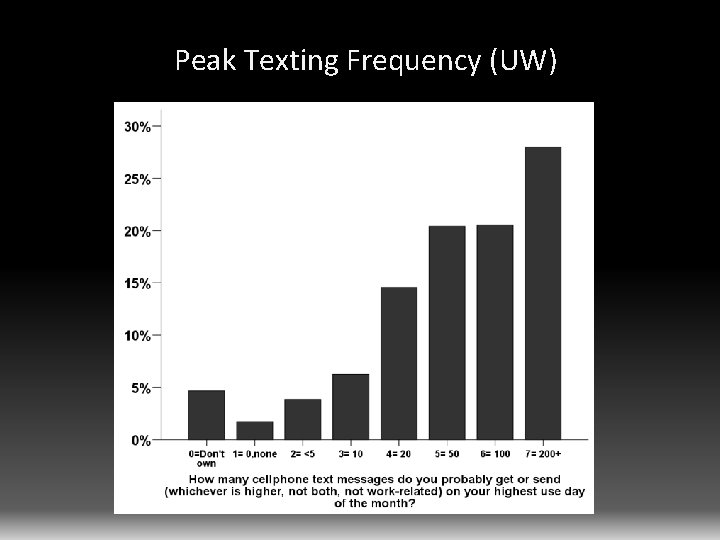
Peak Texting Frequency (UW)
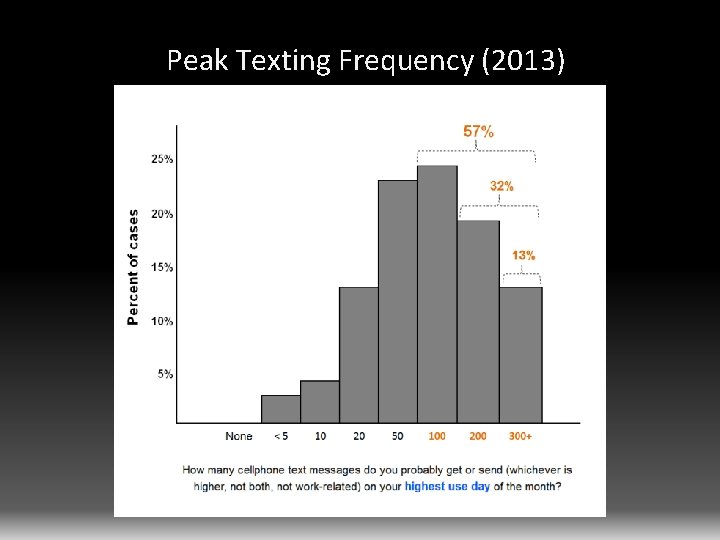
Peak Texting Frequency (2013)
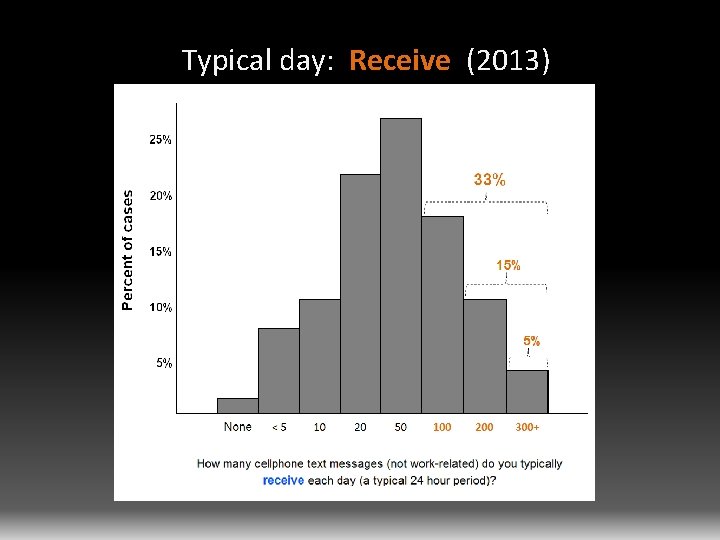
Typical day: Receive (2013)
Texting While Driving
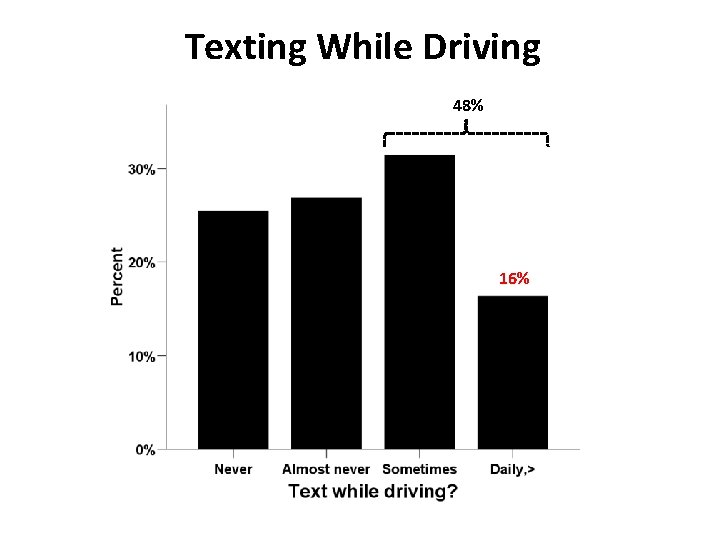
Texting While Driving 48% 16%
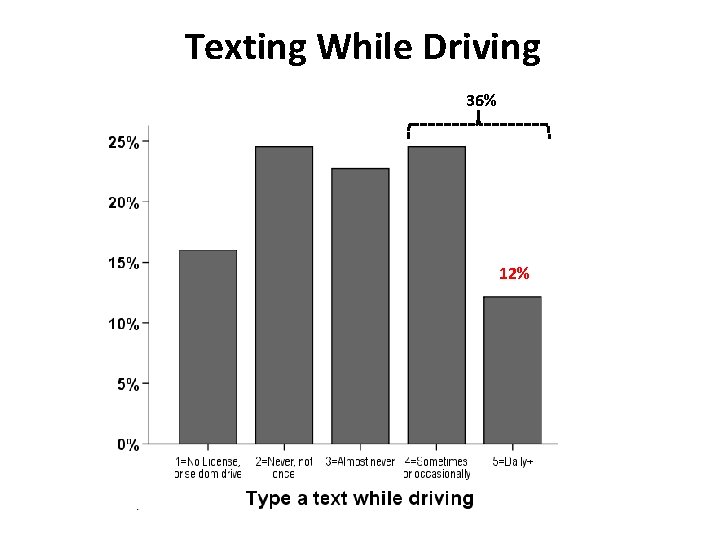
Texting While Driving 36% 12%
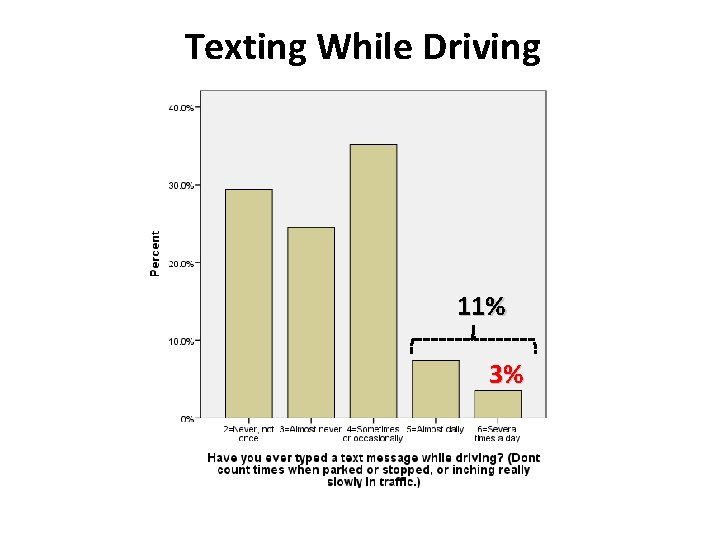
Texting While Driving 11% 3%
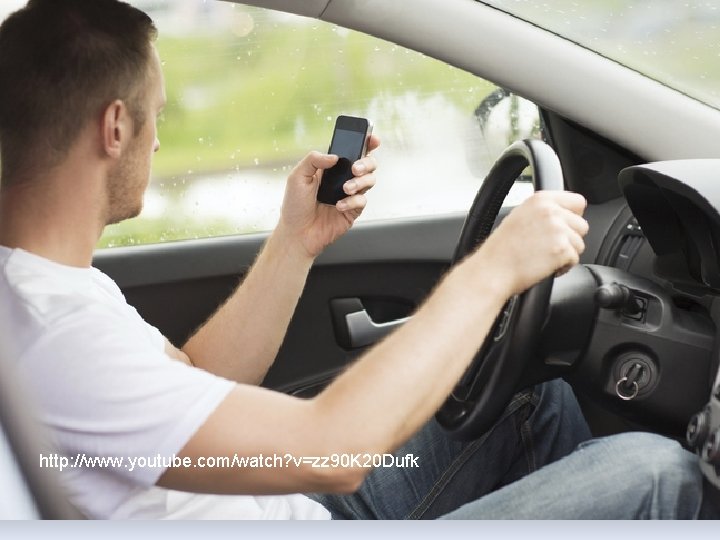
Texting While Driving http: //www. youtube. com/watch? v=zz 90 K 20 Dufk
New Manitoba Fine for cellphone while driving: $ 700.
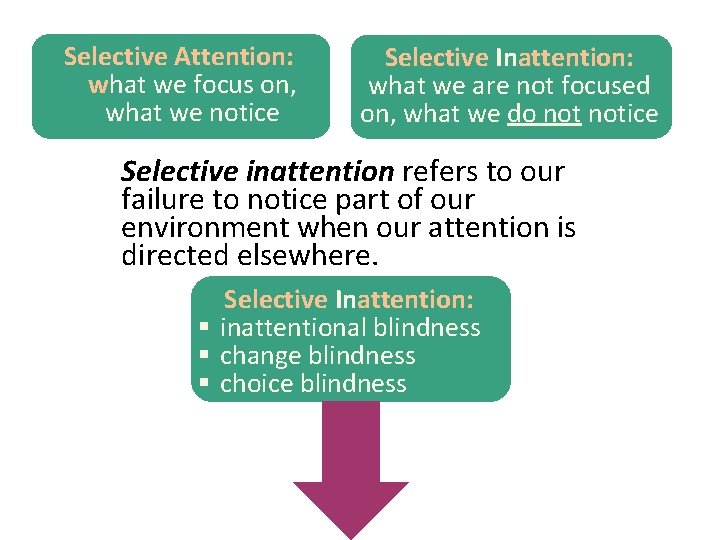
Selective Attention: what we focus on, what we notice Selective Inattention: what we are not focused on, what we do notice Selective inattention refers to our failure to notice part of our environment when our attention is directed elsewhere. Selective Inattention: § inattentional blindness § change blindness § choice blindness
http: //www. youtube. com/ watch? v=v. JG 698 U 2 Mvo
http: //www. youtube. com/ watch? v=Vkrr. Voz. ZR 2 c
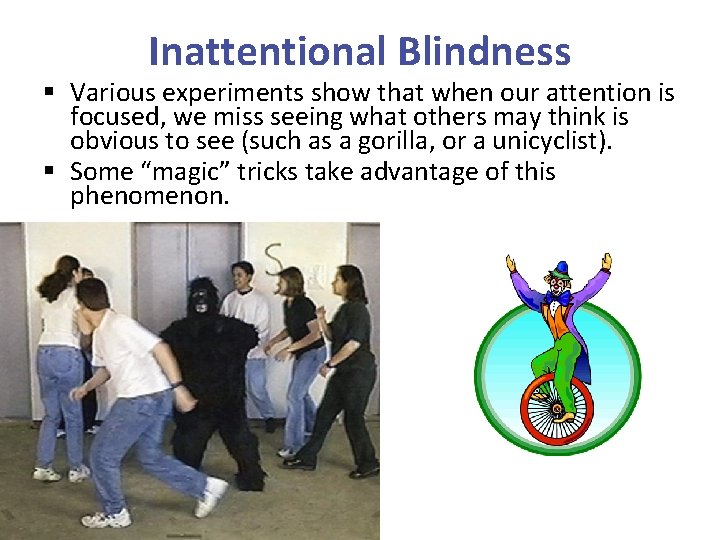
Inattentional Blindness § Various experiments show that when our attention is focused, we miss seeing what others may think is obvious to see (such as a gorilla, or a unicyclist). § Some “magic” tricks take advantage of this phenomenon.
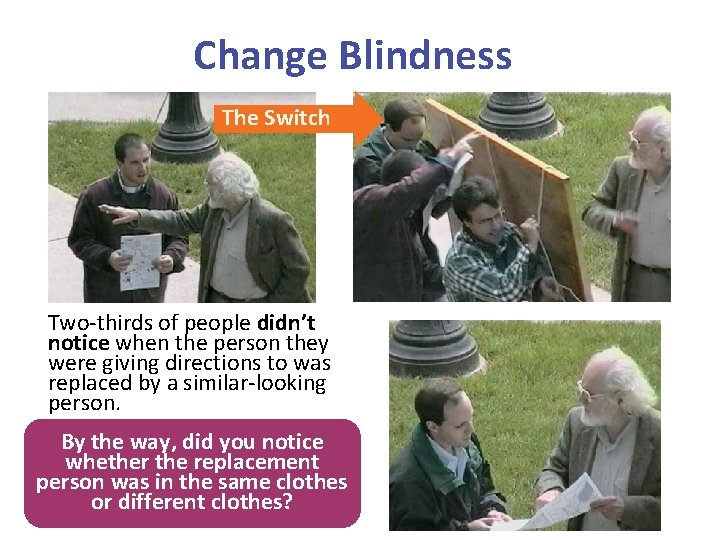
Change Blindness The Switch Two-thirds of people didn’t notice when the person they were giving directions to was replaced by a similar-looking person. By the way, did you notice whether the replacement person was in the same clothes or different clothes?
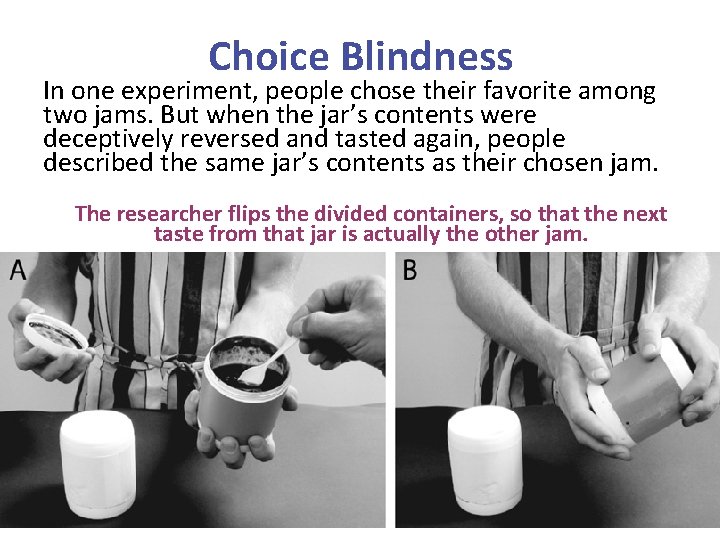
Choice Blindness In one experiment, people chose their favorite among two jams. But when the jar’s contents were deceptively reversed and tasted again, people described the same jar’s contents as their chosen jam. The researcher flips the divided containers, so that the next taste from that jar is actually the other jam.
And now, to SLEEP-perchance, to Dream
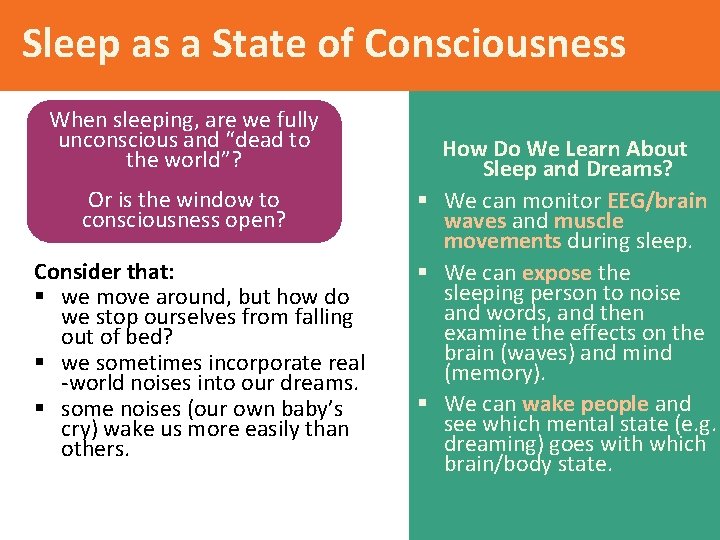
Sleep as a State of Consciousness When sleeping, are we fully unconscious and “dead to the world”? Or is the window to consciousness open? Consider that: § we move around, but how do we stop ourselves from falling out of bed? § we sometimes incorporate real -world noises into our dreams. § some noises (our own baby’s cry) wake us more easily than others. How Do We Learn About Sleep and Dreams? § We can monitor EEG/brain waves and muscle movements during sleep. § We can expose the sleeping person to noise and words, and then examine the effects on the brain (waves) and mind (memory). § We can wake people and see which mental state (e. g. dreaming) goes with which brain/body state.
Sleep and Biological Rhythms § 24 hour biological “clock” § 90 minute sleep cycle
Understanding Biological Rhythms n Biological rhythms =A periodic, more or less regular fluctuation in a biological system; may or may not have psychological implications n Entrainment =Biological rhythms are synchronized with external events such as changes in clock time, temperature, and
n Circadian Rhythms =Occur about every 24 hours =Example: The sleep-wake cycle n Infradian Rhythms =Occur less often than once a day =Examples: birds migrating, bears hibernating n Ultradian Rhythms = greater than 1/day, e. g. , about every 90 min
Circadian Rhythms n "Circa" (around), "-dias" (day) =Human cycle=24 -25 hours =Controlled by: "biological clocks" Suprachiasmic Nucleus (in hypothal. ) Light--Optic Nerve--SCN-->hormones Adapts body to environment cycles
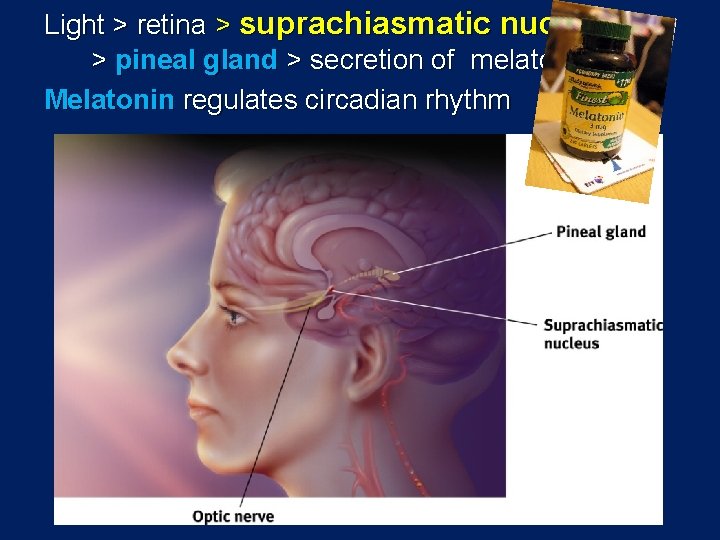
Light > retina > suprachiasmatic nucleus > pineal gland > secretion of melatonin Melatonin regulates circadian rhythm 51
52
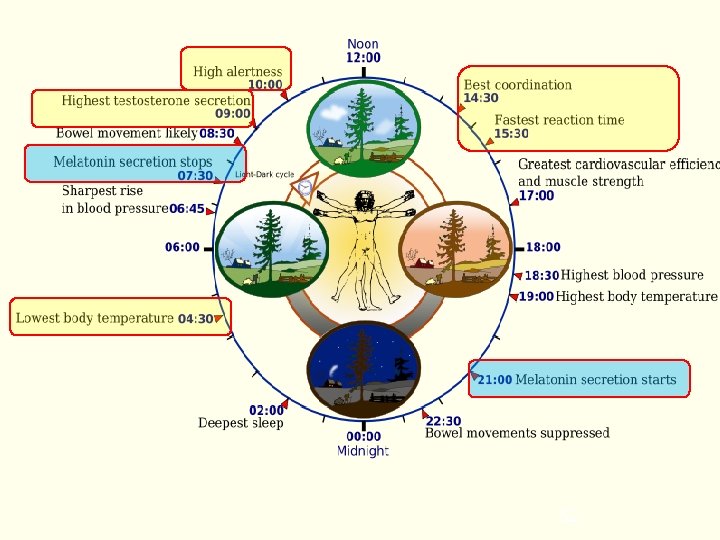
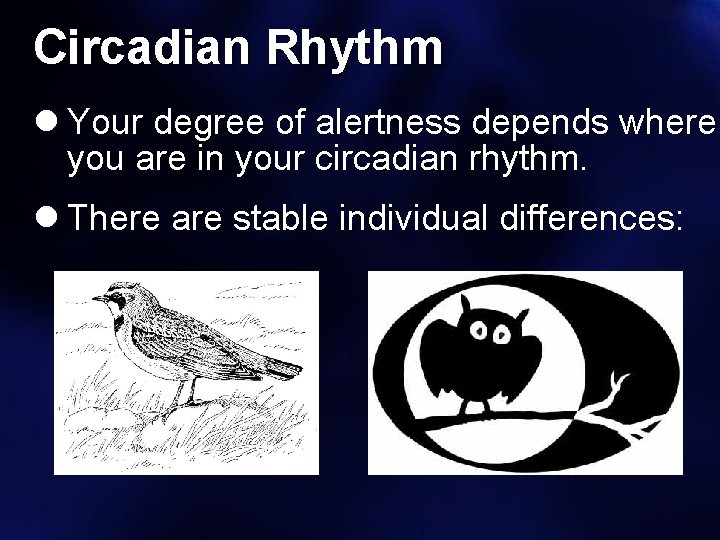
Circadian Rhythm Your degree of alertness depends where you are in your circadian rhythm. There are stable individual differences:
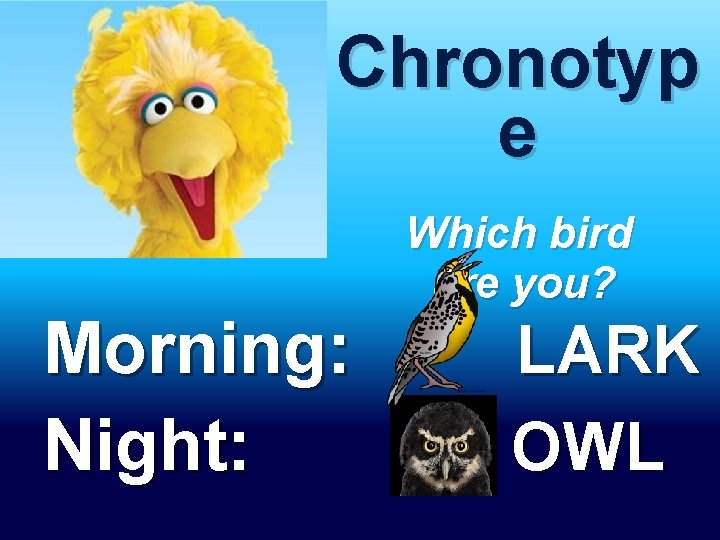
Chronotyp e Morning: Night: Which bird are you? LARK OWL
Morningness-Eveningness =Alertness is correlated with temperature =temperature average peak/trough: Highest at 8 pm, Lowest at 6 am Individual differences =Lark (morning) vs Owl (evening) =very stable over time =changes with age
Morningness-Eveningness Questionnaire = -0. 50 correlation with daily body temp peak =Watts (1982): match improves relationship quality =Monk & Leng (1986): test time matching improves mental
Cunia et al. (2014)
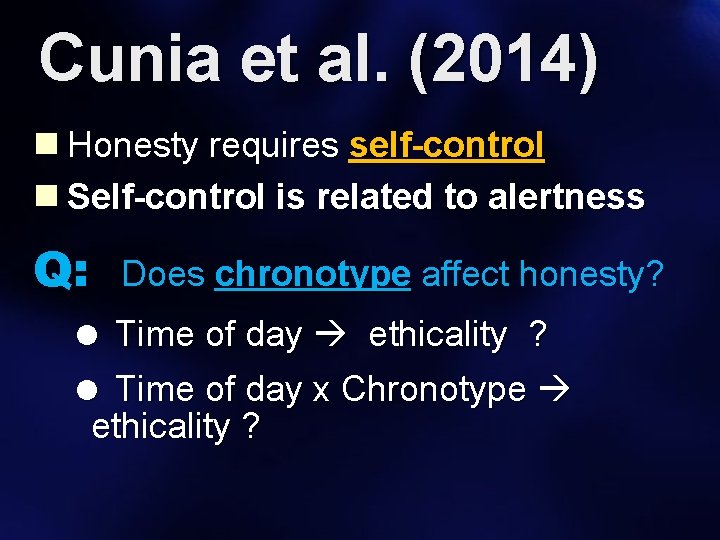
Cunia et al. (2014) n Honesty requires self-control n Self-control is related to alertness Q: Does chronotype affect honesty? = Time of day ethicality ? = Time of day x Chronotype ethicality ?
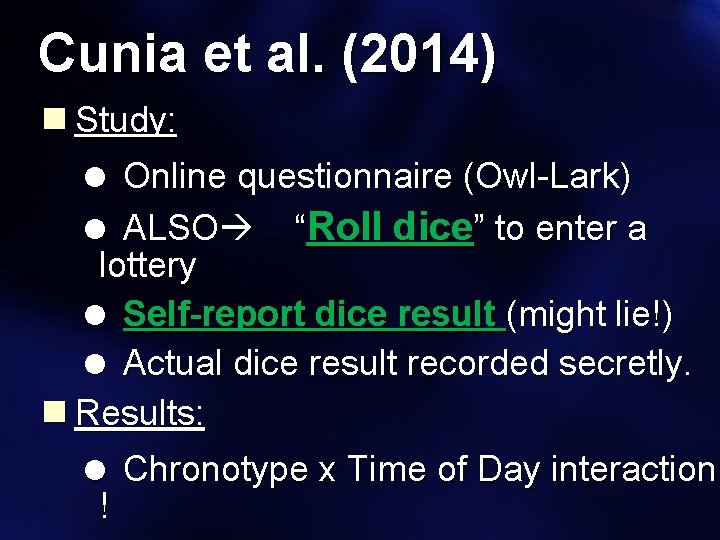
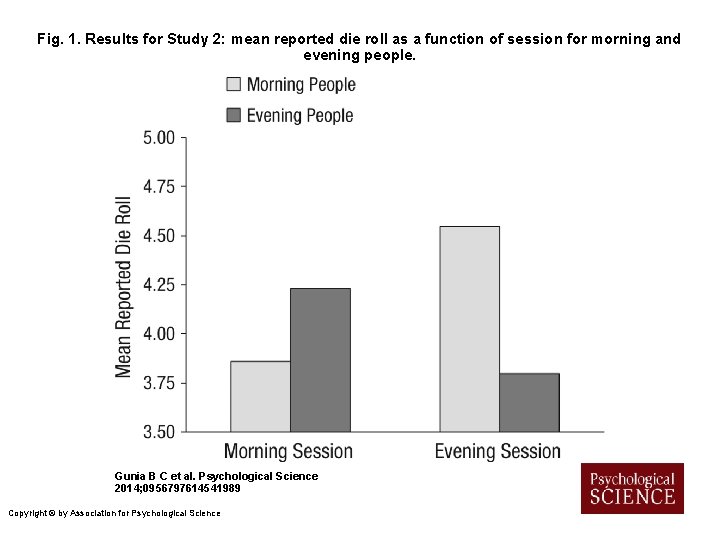
Cunia et al. (2014) n Study: = Online questionnaire (Owl-Lark) = ALSO “Roll dice” to enter a lottery = Self-report dice result (might lie!) = Actual dice result recorded secretly. n Results: = Chronotype x Time of Day interaction !
Fig. 1. Results for Study 2: mean reported die roll as a function of session for morning and evening people. Gunia B C et al. Psychological Science 2014; 0956797614541989 Copyright © by Association for Psychological Science
Menstrual Cycles and Mood n Does the menstrual cycle influence women’s mood at certain times? n Yes, physical symptoms are common n No, emotional symptoms are rare =Irritability and depression =Fewer than 5% of women =Premenstrual dysphoric disorder
=Cause? Leading theory= Serotonin drop =From changes in progesterone, estrogen, and testosterone changes in late luteal phase =Variants in the estrogen receptor alpha gene that are associated with PMDD =Variants in COMT gene (mood regulator) =Abnormal sensitivity to their own natural hormone changes.
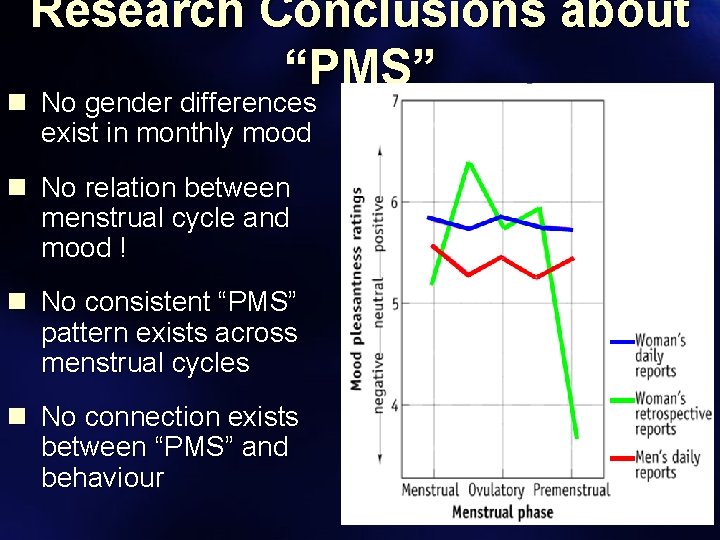
Research Conclusions about “PMS” n No gender differences exist in monthly mood n No relation between menstrual cycle and mood ! n No consistent “PMS” pattern exists across menstrual cycles n No connection exists between “PMS” and behaviour
Why is PMS overestimated? =Selective attention: Notice depression or irritability when occurs premenstrually but overlook times when moods are absent =Selective attribution: prementrual irritability to mentruation but attribute it to other things at other times. =Normative beliefs about PMS “Confirmation
Seasonal Affective Disorder (SAD) n Depression that is seasonal (winter) n Fatigue as winter approaches n Depression onset in winter n Spring… symptoms go away Cause ? Hyper-reactive circadian regulation of serotonin =Darkness Melatonin =Melatonin lowers serotonin =Low serotonin depression
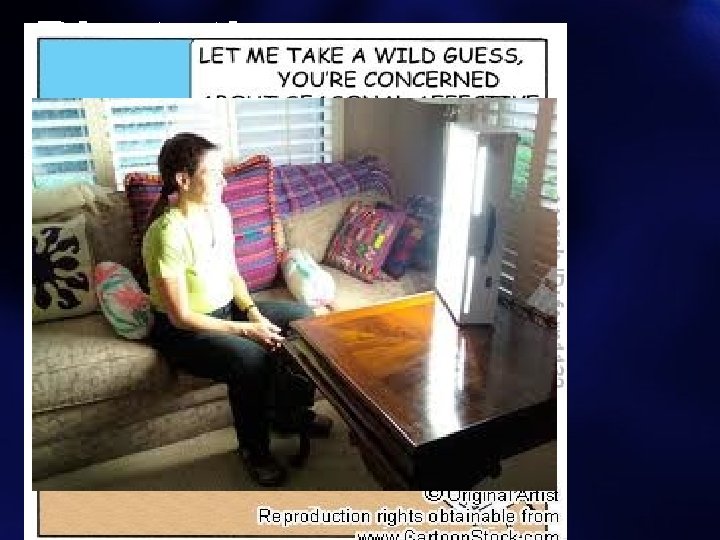
SAD Treatment = Time outdoors = Brighter illumination in home & workplaces = Exercise, (particularly outdoors) = Fruits and vegetables = Light therapy (phototherapy) = Anti-depressants = Cognitive therapy
Phototherapy
Night Work, Sleeping, & Health = Jet Lag stressful, cortisol is elevated = Rotating night shifts are much worse than constant night shift = As study of railroad engineers found 60% had dozed off at the controls during night trips. = 20 -30% of traffic accidents per/year
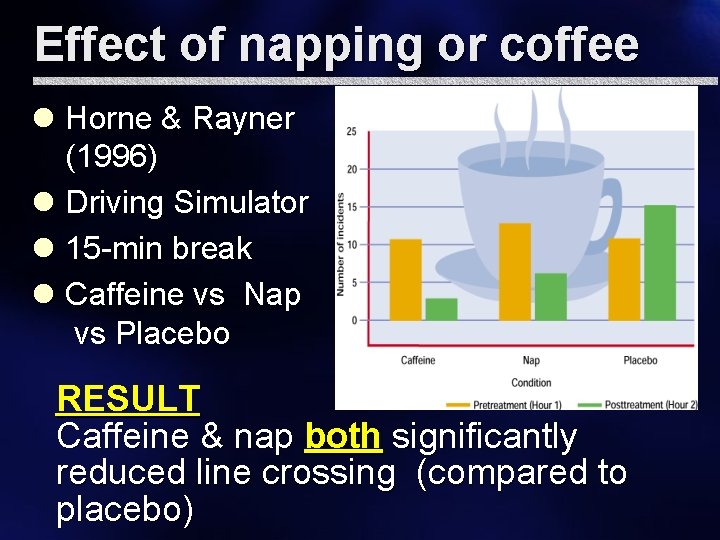
Effect of napping or coffee Horne & Rayner (1996) Driving Simulator 15 -min break Caffeine vs Nap vs Placebo RESULT Caffeine & nap both significantly reduced line crossing (compared to placebo)