
Conquering Refractory Ventricular Fibrillation in the Prehospital Emergency
Conquering Refractory Ventricular Fibrillation in the Prehospital & Emergency Department Setting Andrew J. Bowman Acute Care Nurse Practitioner Paramedic

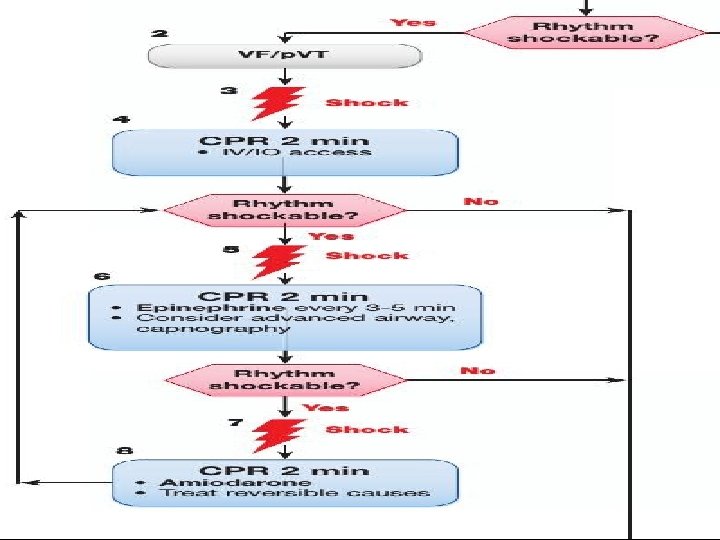
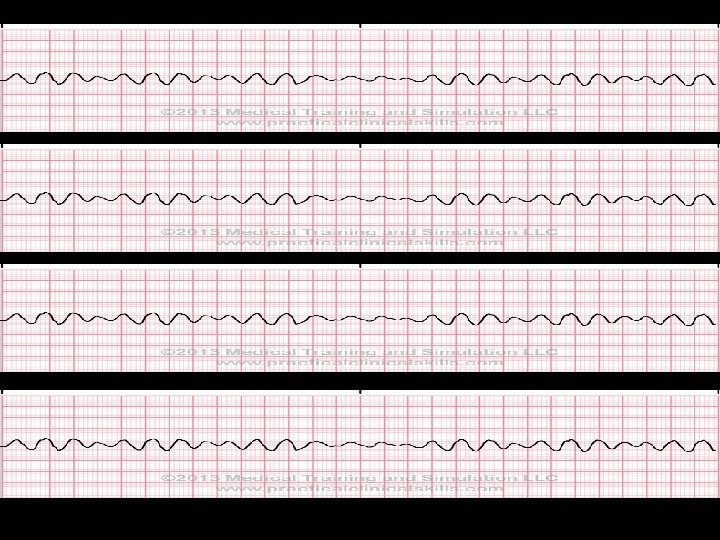

Strategies for Refractory VF Strategies Effect High performance CPR Optimize blood flow Defibrillation Optimize Defibrillation Vasopressors ? Epinephrine Antiarrhythmics ALPS Study Fix the Ischemia ECMO Definitive Treatment for Ischemic VF Keep alive until fix ischemia
“for the person with a heart and brain too good to die. ”
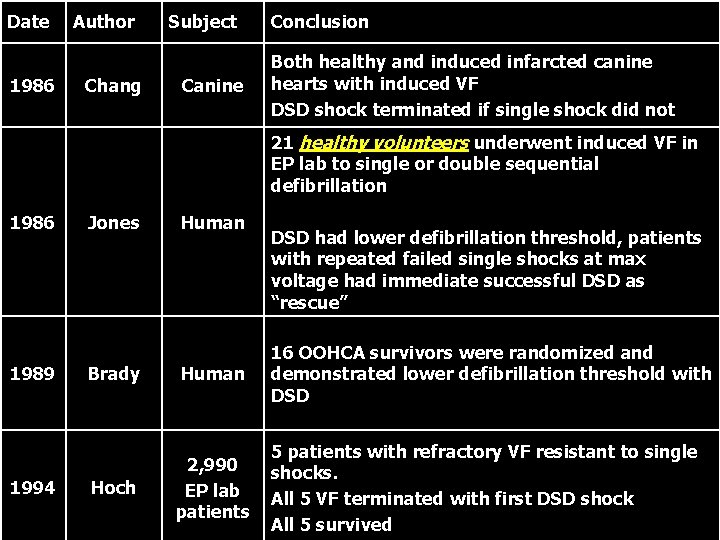
Date 1986 Author Chang Subject Canine Conclusion Both healthy and induced infarcted canine hearts with induced VF DSD shock terminated if single shock did not 21 healthy volunteers underwent induced VF in EP lab to single or double sequential defibrillation 1986 1989 1994 Jones Human DSD had lower defibrillation threshold, patients with repeated failed single shocks at max voltage had immediate successful DSD as “rescue” Brady Human 16 OOHCA survivors were randomized and demonstrated lower defibrillation threshold with DSD Hoch 2, 990 EP lab patients 5 patients with refractory VF resistant to single shocks. All 5 VF terminated with first DSD shock All 5 survived
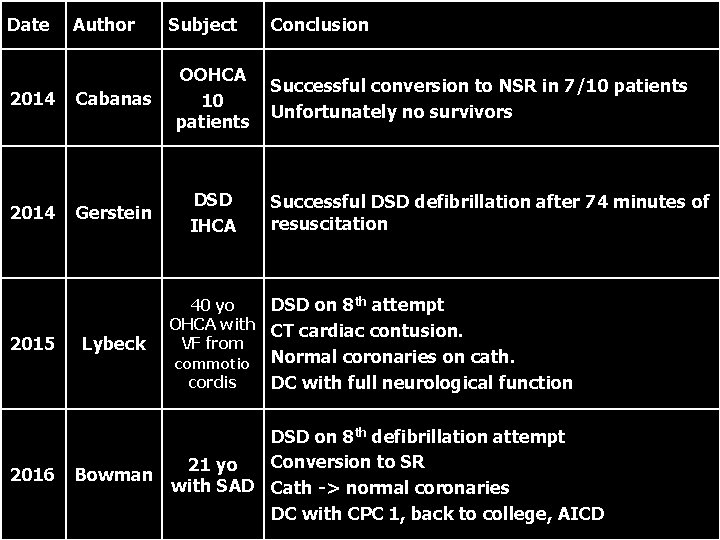
Date Author Subject 2014 Cabanas OOHCA 10 patients 2014 Gerstein DSD IHCA 2015 Lybeck Bowman Successful conversion to NSR in 7/10 patients Unfortunately no survivors Successful DSD defibrillation after 74 minutes of resuscitation 40 yo DSD on 8 th attempt OHCA with CT cardiac contusion. VF from commotio cordis 2016 Conclusion Normal coronaries on cath. DC with full neurological function DSD on 8 th defibrillation attempt Conversion to SR 21 yo with SAD Cath -> normal coronaries DC with CPC 1, back to college, AICD
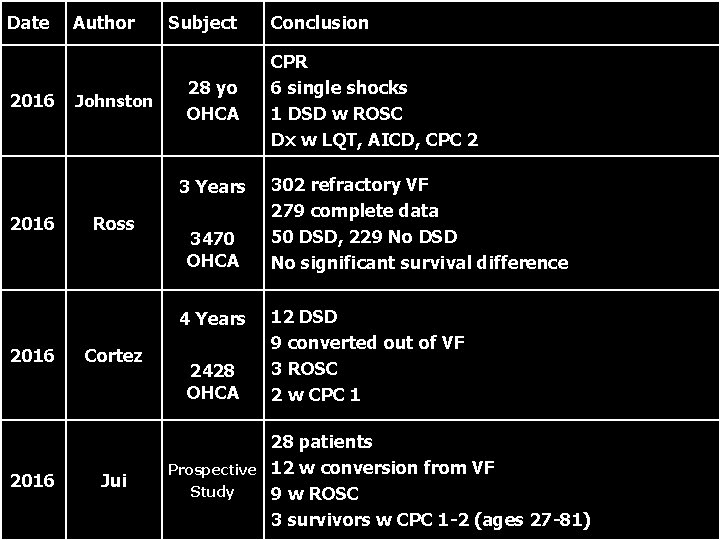
Date 2016 Author Johnston Subject 28 yo OHCA 3 Years 2016 Ross 3470 OHCA 4 Years 2016 Cortez Jui 2428 OHCA Conclusion CPR 6 single shocks 1 DSD w ROSC Dx w LQT, AICD, CPC 2 302 refractory VF 279 complete data 50 DSD, 229 No DSD No significant survival difference 12 DSD 9 converted out of VF 3 ROSC 2 w CPC 1 28 patients Prospective 12 w conversion from VF Study 9 w ROSC 3 survivors w CPC 1 -2 (ages 27 -81)
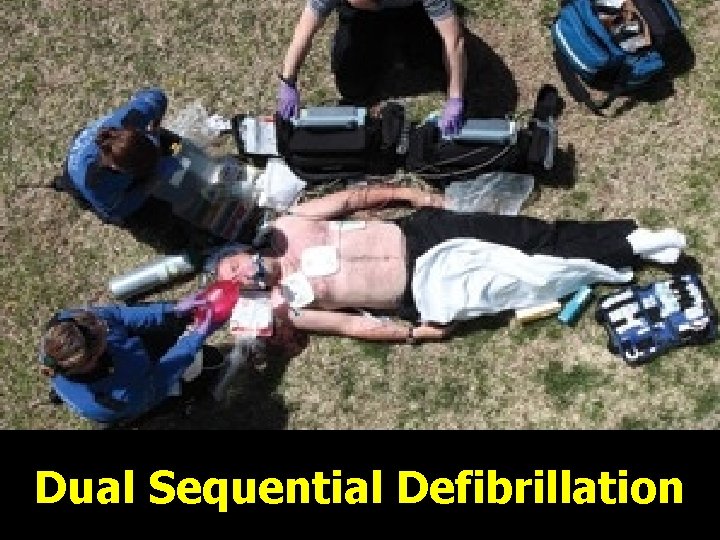
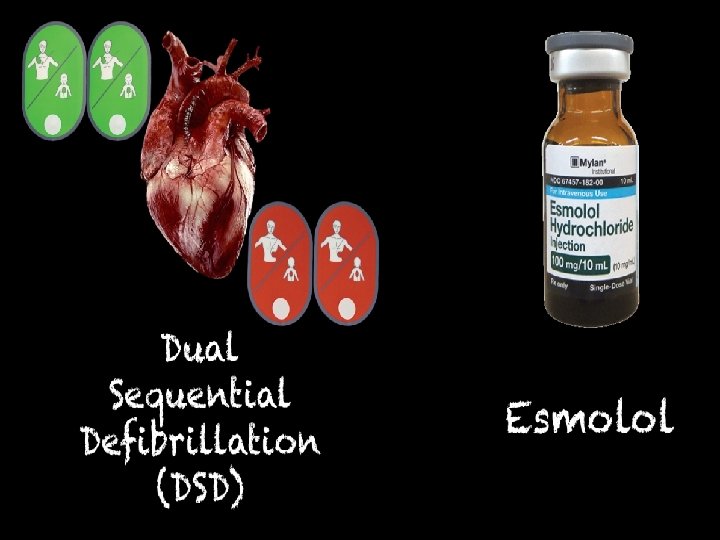
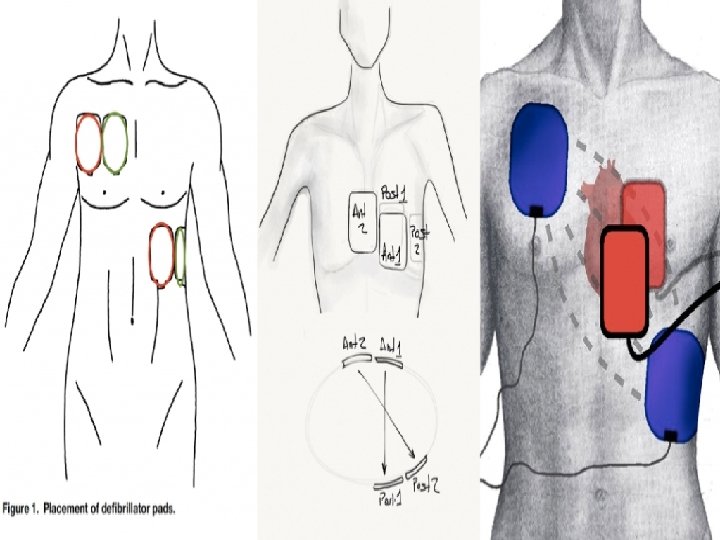
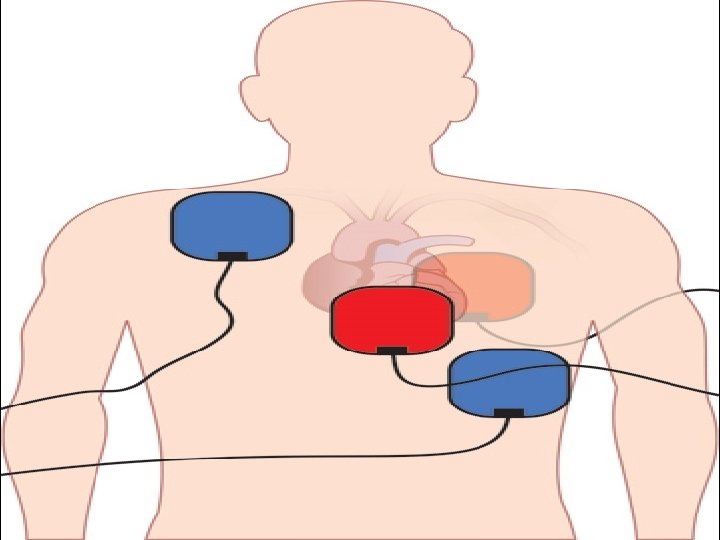
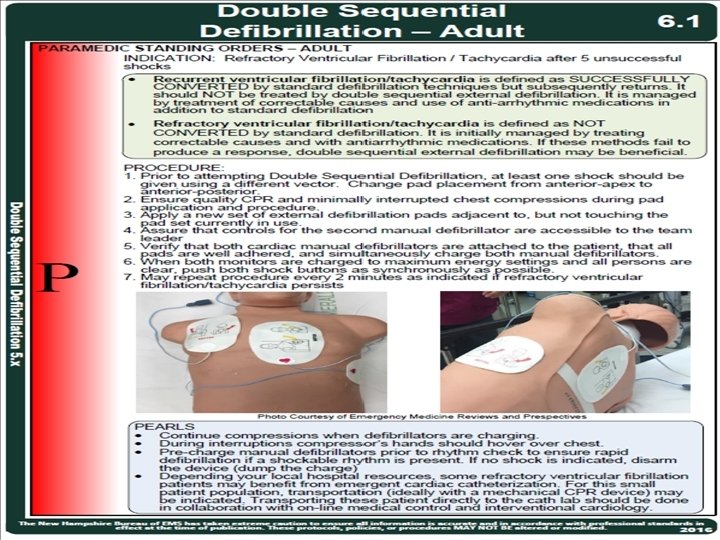
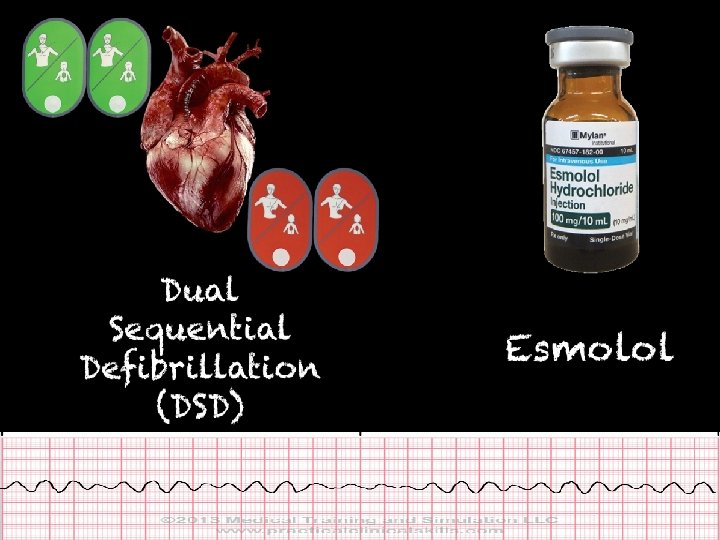
Dual Sequential Defibrillation
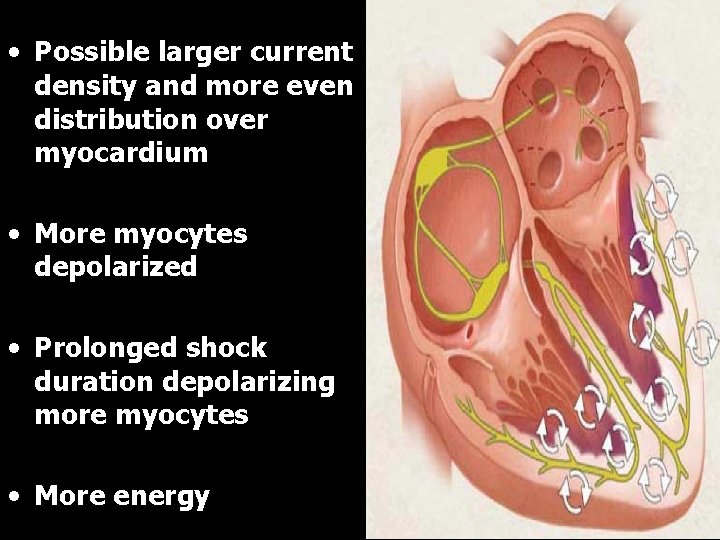
• Possible larger current density and more even distribution over myocardium • More myocytes depolarized • Prolonged shock duration depolarizing more myocytes • More energy
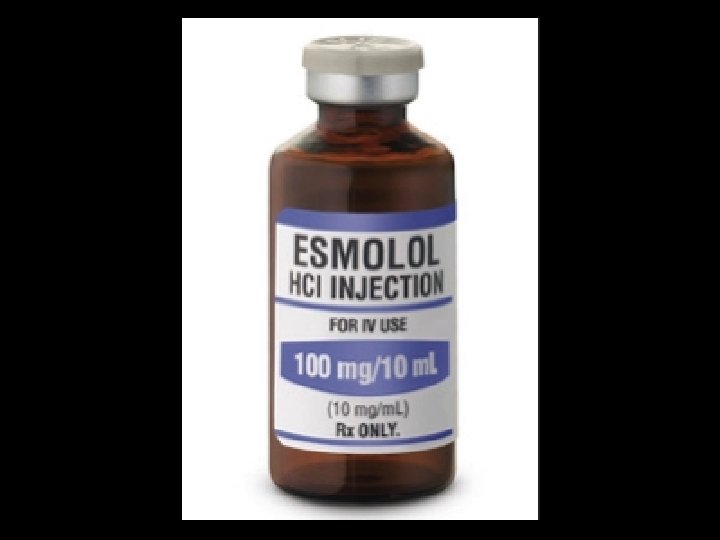
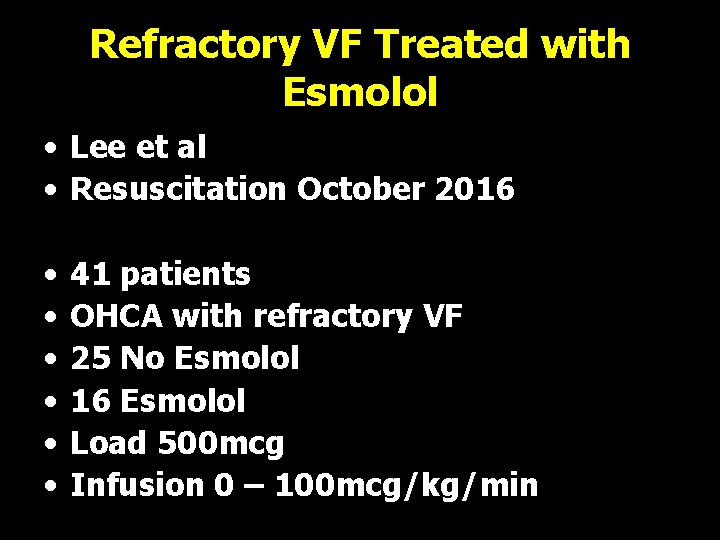
Refractory VF Treated with Esmolol • Lee et al • Resuscitation October 2016 • • • 41 patients OHCA with refractory VF 25 No Esmolol 16 Esmolol Load 500 mcg Infusion 0 – 100 mcg/kg/min
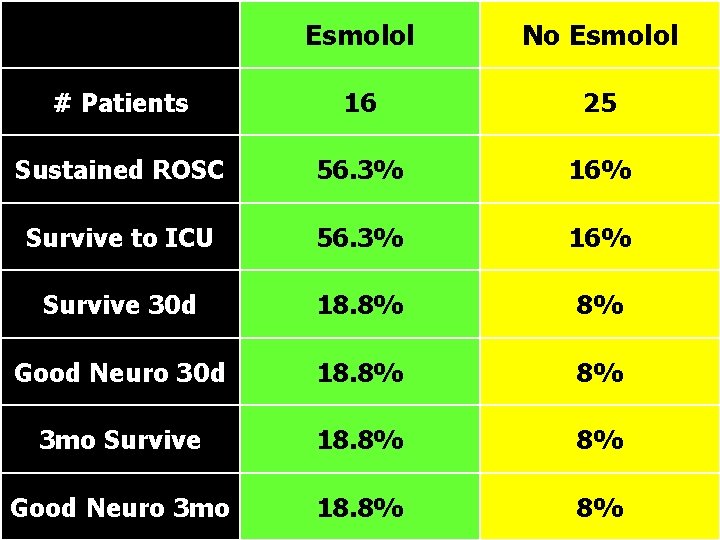
Esmolol No Esmolol # Patients 16 25 Sustained ROSC 56. 3% 16% Survive to ICU 56. 3% 16% Survive 30 d 18. 8% 8% Good Neuro 30 d 18. 8% 8% 3 mo Survive 18. 8% 8% Good Neuro 3 mo 18. 8% 8%
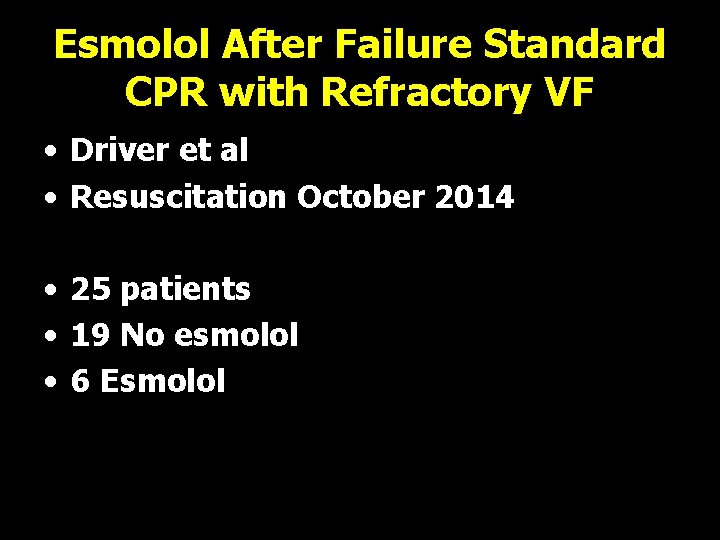
Esmolol After Failure Standard CPR with Refractory VF • Driver et al • Resuscitation October 2014 • 25 patients • 19 No esmolol • 6 Esmolol
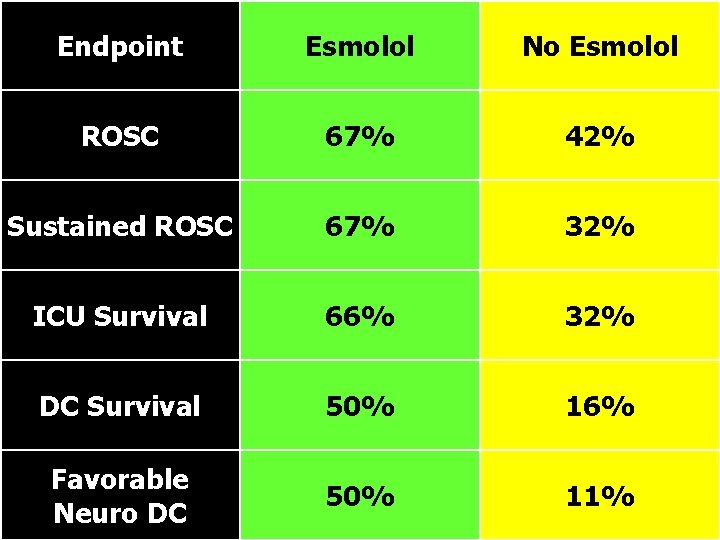
Endpoint Esmolol No Esmolol ROSC 67% 42% Sustained ROSC 67% 32% ICU Survival 66% 32% DC Survival 50% 16% Favorable Neuro DC 50% 11%
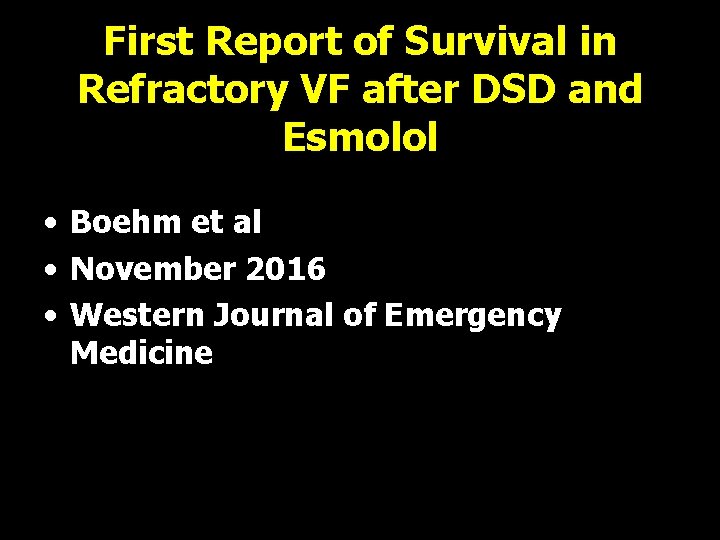
First Report of Survival in Refractory VF after DSD and Esmolol • Boehm et al • November 2016 • Western Journal of Emergency Medicine
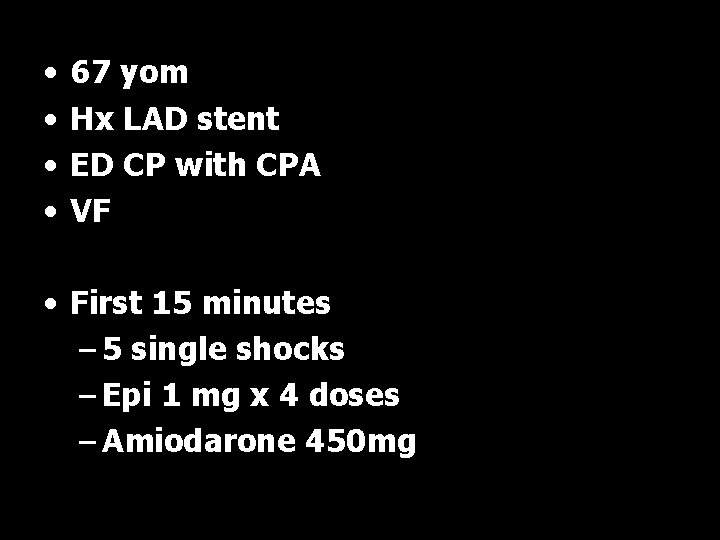
• • 67 yom Hx LAD stent ED CP with CPA VF • First 15 minutes – 5 single shocks – Epi 1 mg x 4 doses – Amiodarone 450 mg
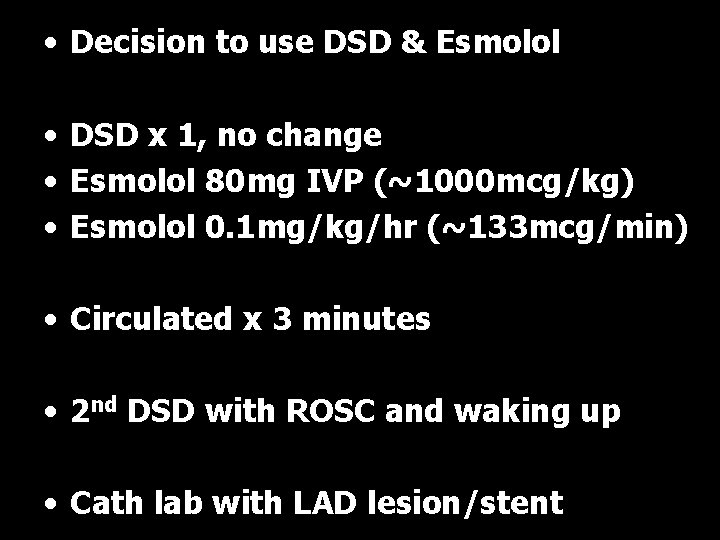
• Decision to use DSD & Esmolol • DSD x 1, no change • Esmolol 80 mg IVP (~1000 mcg/kg) • Esmolol 0. 1 mg/kg/hr (~133 mcg/min) • Circulated x 3 minutes • 2 nd DSD with ROSC and waking up • Cath lab with LAD lesion/stent
- Slides: 27