
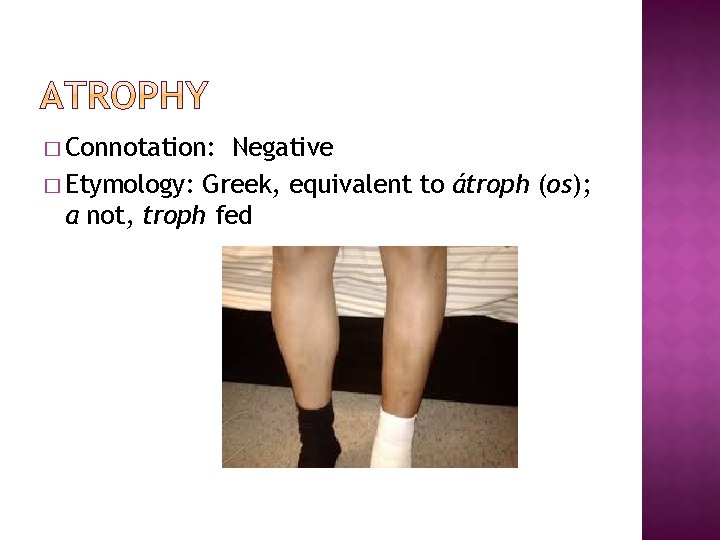
Connotation Negative Etymology Greek equivalent to troph os

- Slides: 21
� Connotation: Negative � Etymology: Greek, equivalent to átroph (os); a not, troph fed
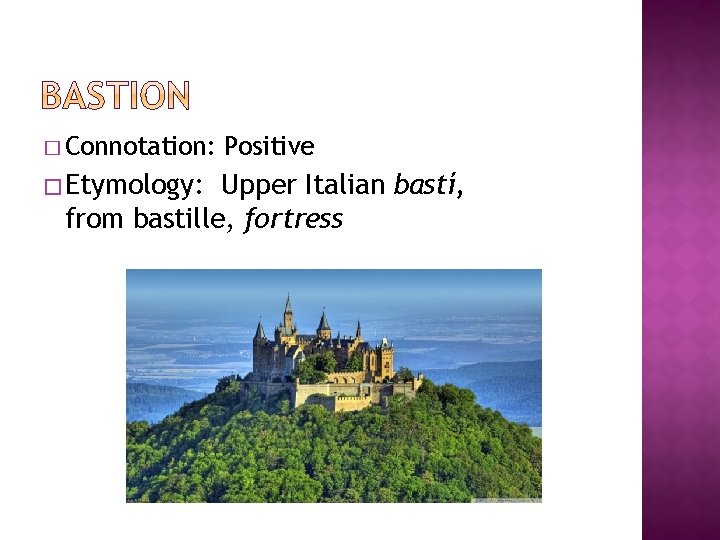
� Connotation: � Etymology: Positive Upper Italian bastí, from bastille, fortress
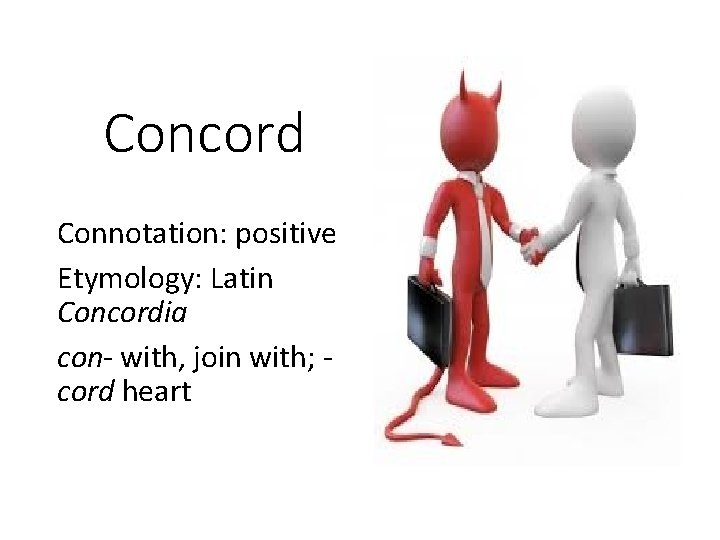
Concord Connotation: positive Etymology: Latin Concordia con- with, join with; cord heart
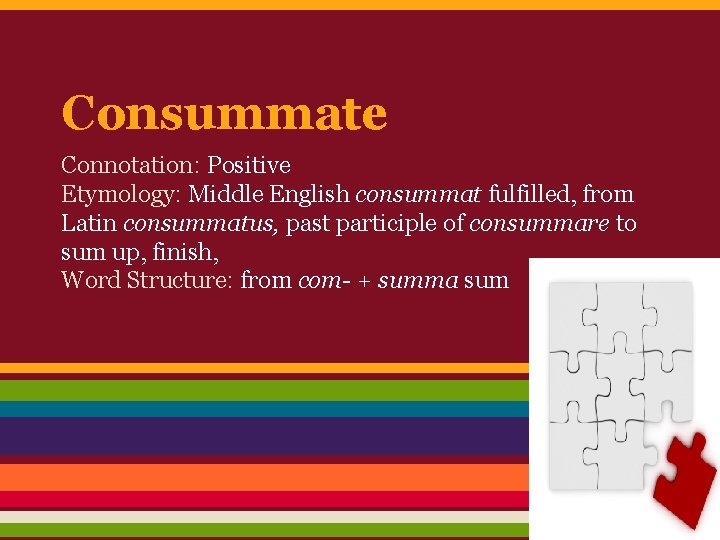
Consummate Connotation: Positive Etymology: Middle English consummat fulfilled, from Latin consummatus, past participle of consummare to sum up, finish, Word Structure: from com- + summa sum
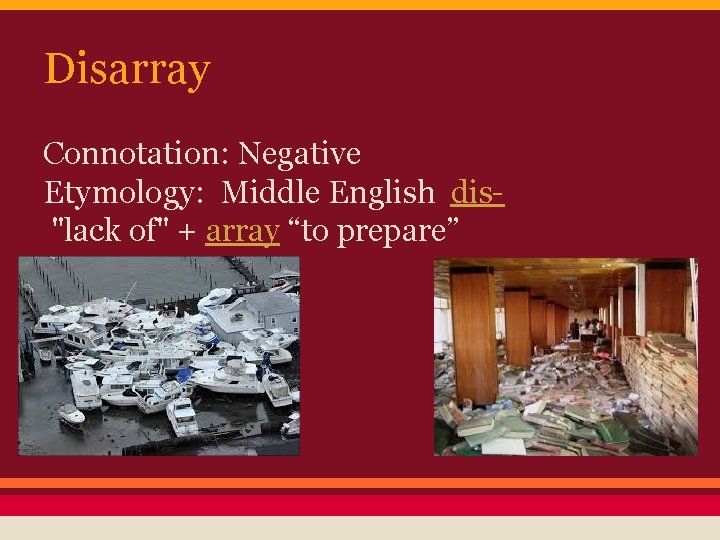
Disarray Connotation: Negative Etymology: Middle English dis "lack of" + array “to prepare”
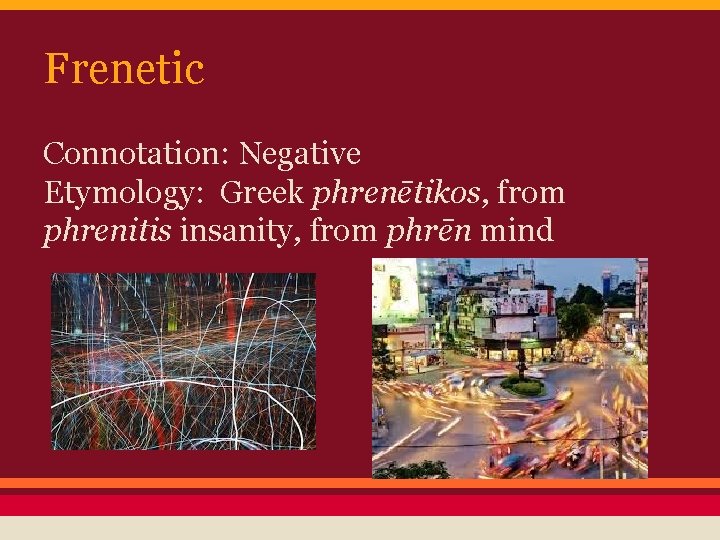
Frenetic Connotation: Negative Etymology: Greek phrenētikos, from phrenitis insanity, from phrēn mind
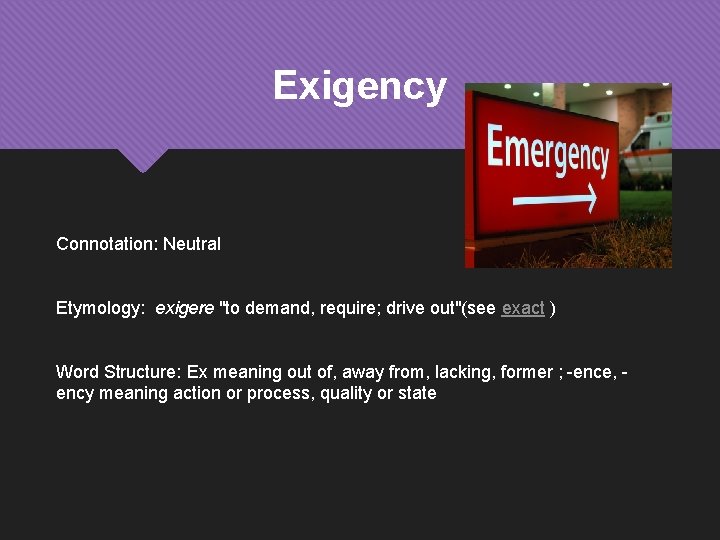
Exigency Connotation: Neutral Etymology: exigere "to demand, require; drive out"(see exact ) Word Structure: Ex meaning out of, away from, lacking, former ; -ence, ency meaning action or process, quality or state
Flotsam � Connotation: Neutral � Etymology: Anglo-French floteson, derivative of floter to float
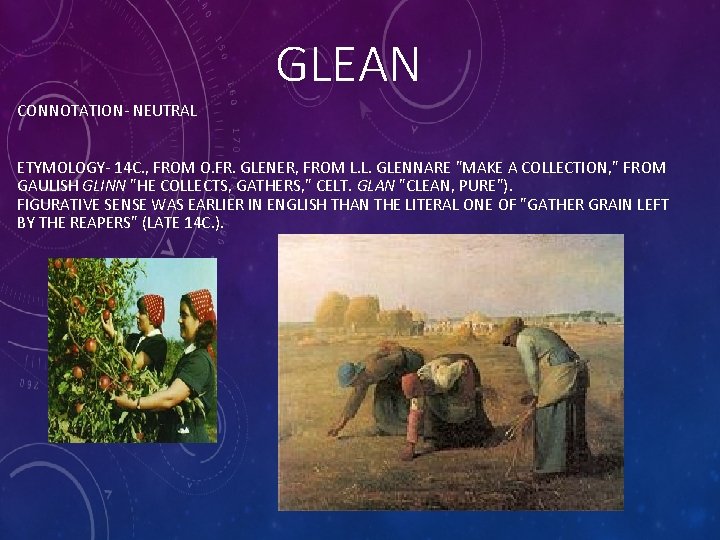
GLEAN CONNOTATION- NEUTRAL ETYMOLOGY- 14 C. , FROM O. FR. GLENER, FROM L. L. GLENNARE "MAKE A COLLECTION, " FROM GAULISH GLINN "HE COLLECTS, GATHERS, " CELT. GLAN "CLEAN, PURE"). FIGURATIVE SENSE WAS EARLIER IN ENGLISH THAN THE LITERAL ONE OF "GATHER GRAIN LEFT BY THE REAPERS" (LATE 14 C. ).
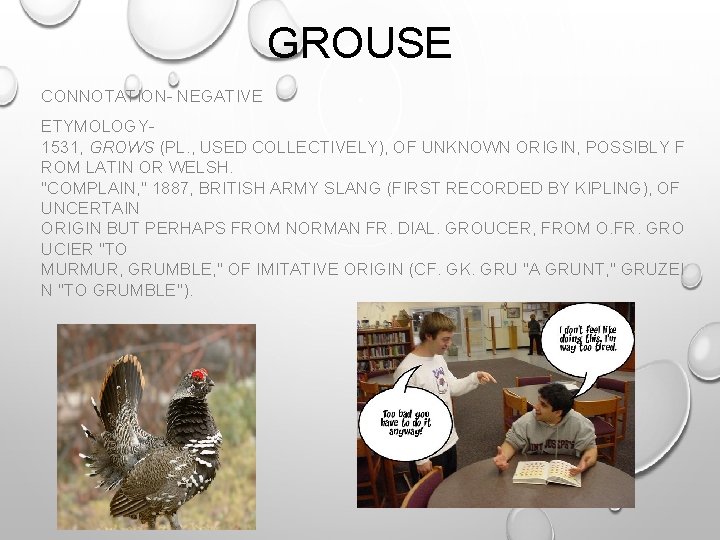
GROUSE CONNOTATION- NEGATIVE ETYMOLOGY 1531, GROWS (PL. , USED COLLECTIVELY), OF UNKNOWN ORIGIN, POSSIBLY F ROM LATIN OR WELSH. "COMPLAIN, " 1887, BRITISH ARMY SLANG (FIRST RECORDED BY KIPLING), OF UNCERTAIN ORIGIN BUT PERHAPS FROM NORMAN FR. DIAL. GROUCER, FROM O. FR. GRO UCIER "TO MURMUR, GRUMBLE, " OF IMITATIVE ORIGIN (CF. GK. GRU "A GRUNT, " GRUZEI N "TO GRUMBLE").
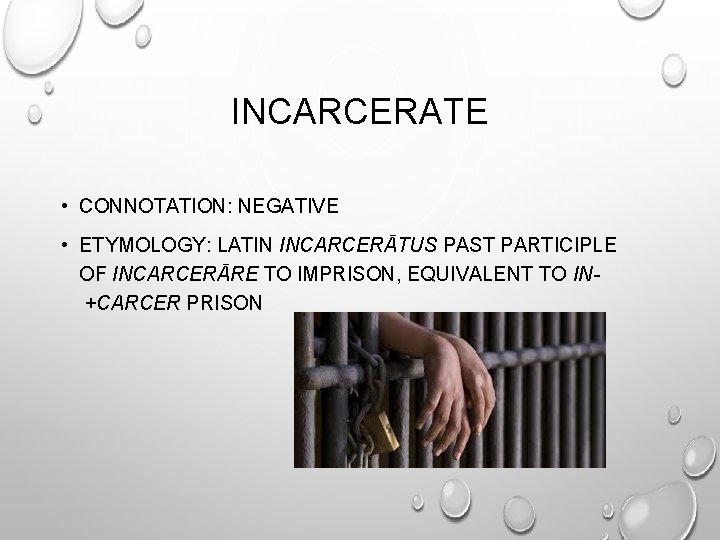
INCARCERATE • CONNOTATION: NEGATIVE • ETYMOLOGY: LATIN INCARCERĀTUS PAST PARTICIPLE OF INCARCERĀRE TO IMPRISON, EQUIVALENT TO IN +CARCER PRISON
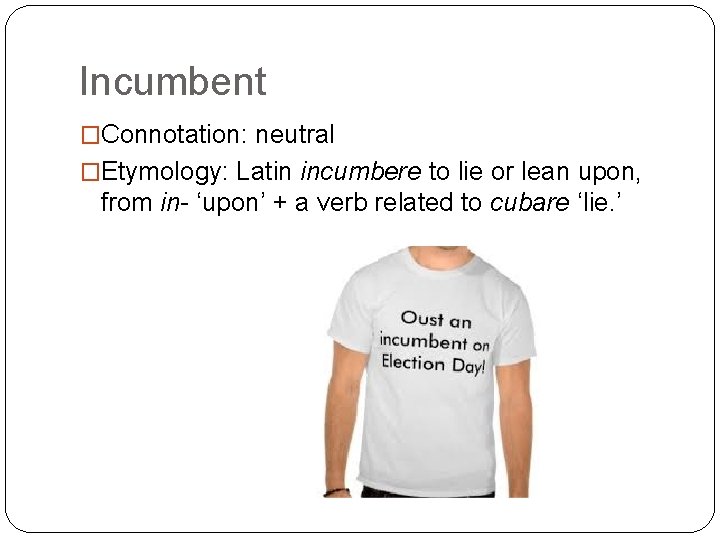
Incumbent �Connotation: neutral �Etymology: Latin incumbere to lie or lean upon, from in- ‘upon’ + a verb related to cubare ‘lie. ’
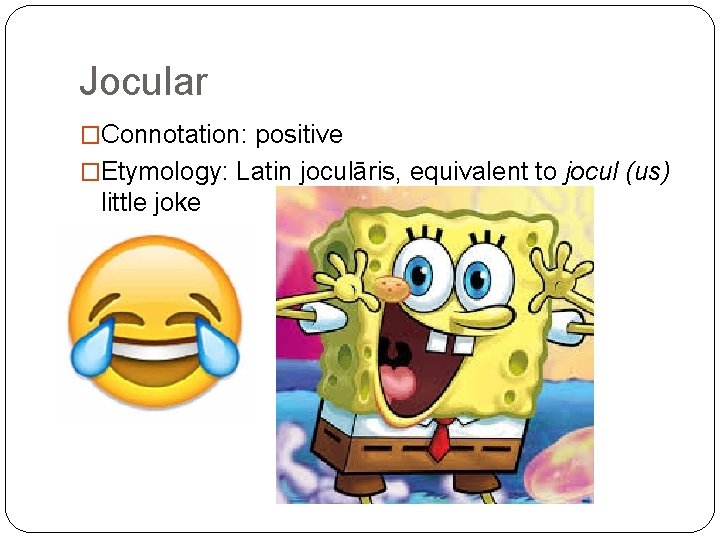
Jocular �Connotation: positive �Etymology: Latin joculāris, equivalent to jocul (us) little joke
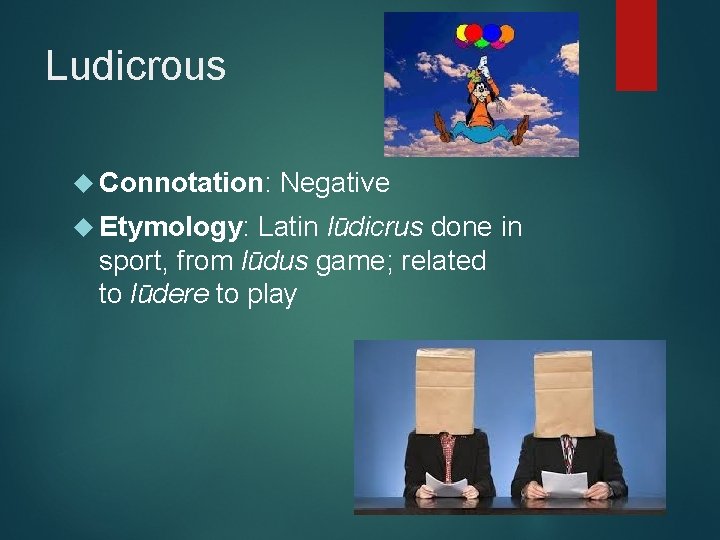
Ludicrous Connotation: Negative Etymology: Latin lūdicrus done in sport, from lūdus game; related to lūdere to play
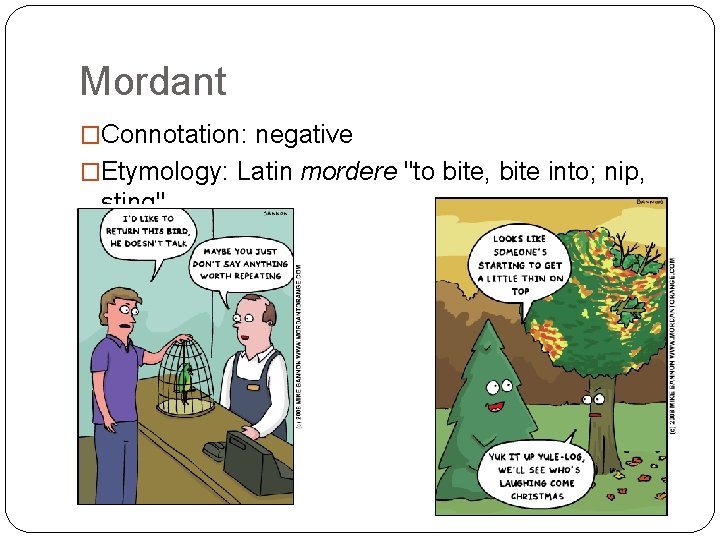
Mordant �Connotation: negative �Etymology: Latin mordere "to bite, bite into; nip, sting"
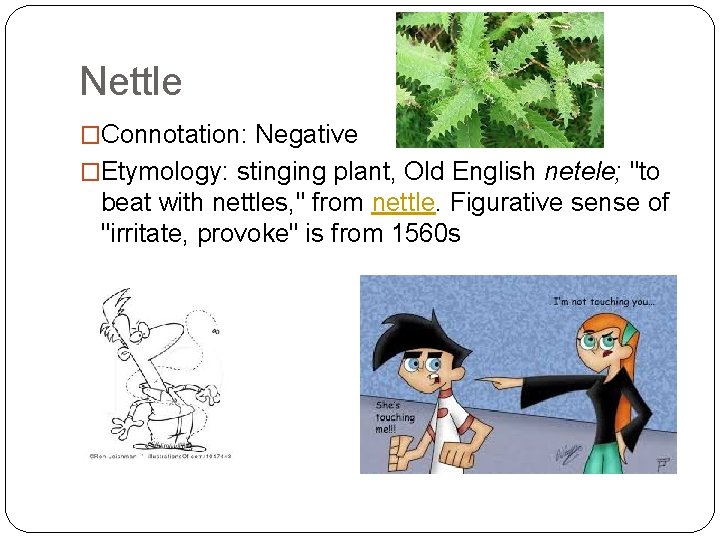
Nettle �Connotation: Negative �Etymology: stinging plant, Old English netele; "to beat with nettles, " from nettle. Figurative sense of "irritate, provoke" is from 1560 s
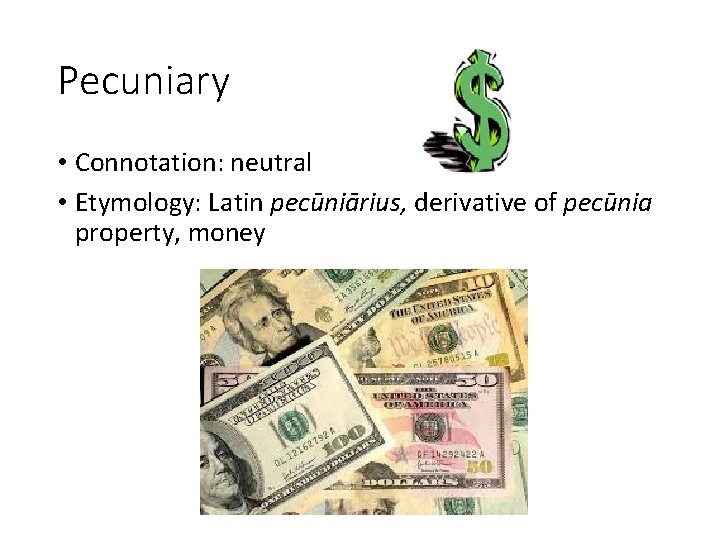
Pecuniary • Connotation: neutral • Etymology: Latin pecūniārius, derivative of pecūnia property, money
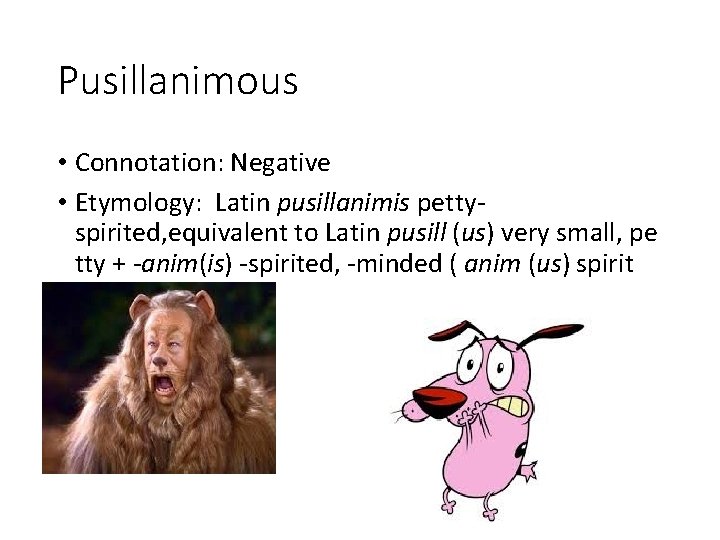
Pusillanimous • Connotation: Negative • Etymology: Latin pusillanimis pettyspirited, equivalent to Latin pusill (us) very small, pe tty + -anim(is) -spirited, -minded ( anim (us) spirit
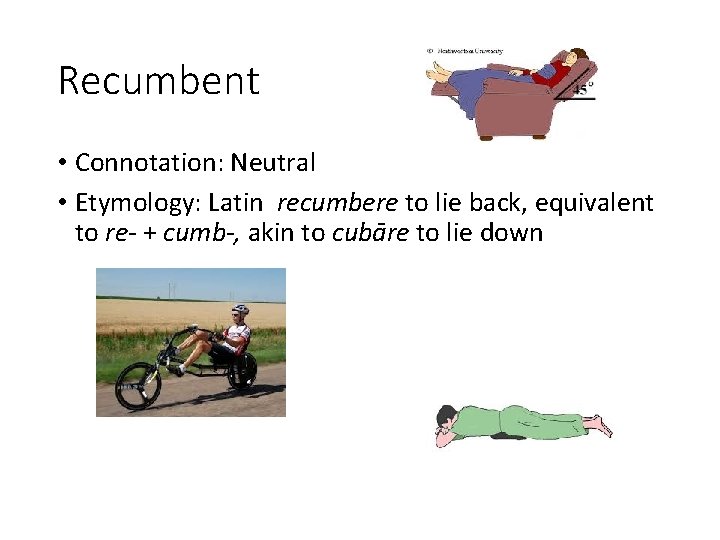
Recumbent • Connotation: Neutral • Etymology: Latin recumbere to lie back, equivalent to re- + cumb-, akin to cubāre to lie down
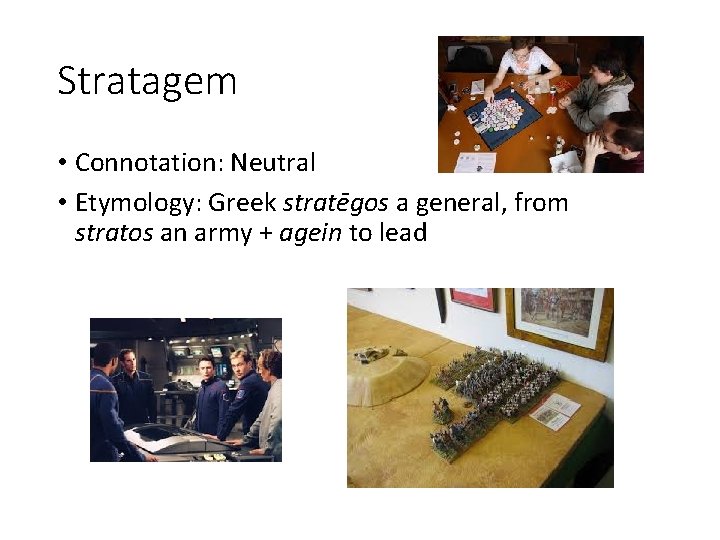
Stratagem • Connotation: Neutral • Etymology: Greek stratēgos a general, from stratos an army + agein to lead