
Connotation and Denotation Is there more to a


- Slides: 31
Connotation and Denotation Is there more to a word than how it is defined in the dictionary? Yes, there is more. In fact, every word has at least two definitions: connotative and denotative So, what’s the difference?
Denotation This is the “dictionary definition” of a word. Find the denotation of the following words: Tyrant. Erosion. Exponential. Online Dictionary
Connotation Many words have multiple meanings or can be implied to mean something other than the definition we find in the dictionary. Connotation is the emotional and imaginative association surrounding a word
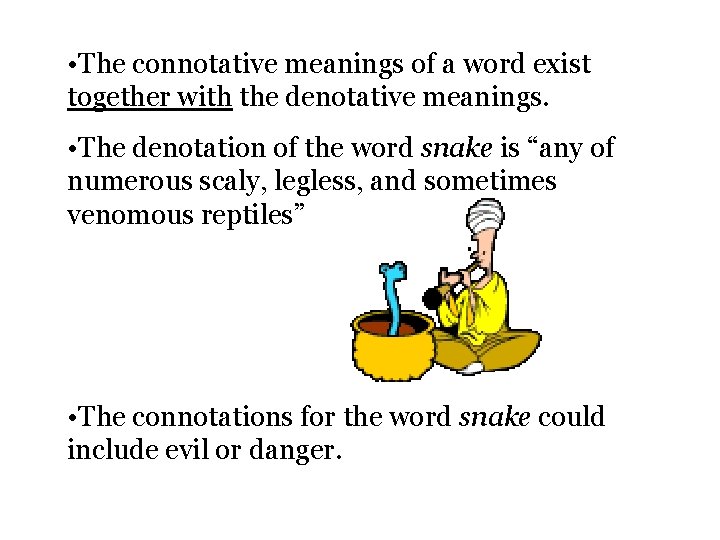
• The connotative meanings of a word exist together with the denotative meanings. • The denotation of the word snake is “any of numerous scaly, legless, and sometimes venomous reptiles” • The connotations for the word snake could include evil or danger.
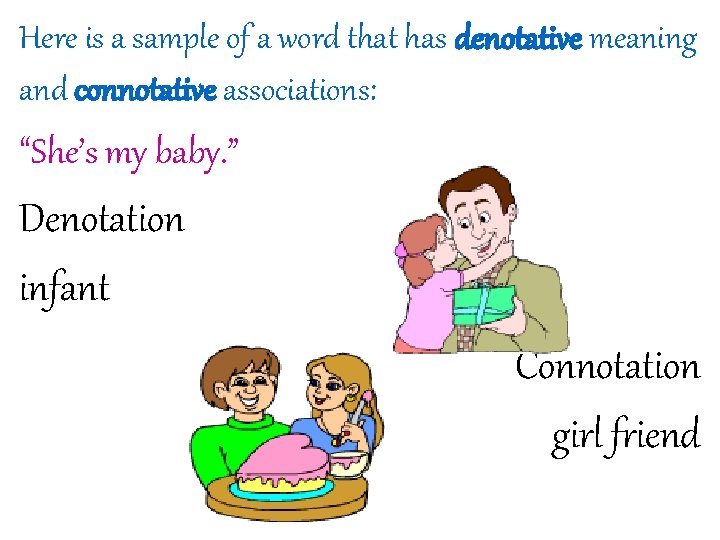
Here is a sample of a word that has denotative meaning and connotative associations: “She’s my baby. ” Denotation infant Connotation girl friend
The denotative definition is based on literal the____definition of a word. The connotative definition is figurative or emotional the____________ meaning of a word.
Your turn to analyze word choices. For each of the following sentences, explain why the word or words in bold are not good choices for the sentence. For example, it might not be a good time to use the denotation of a word because it’s too scientific.
#1 • Trip and journey are both words whose denotation means to travel, right? • What is the connotation of each? (Hint: What would you pack for a trip? What would you pack for a journey? )
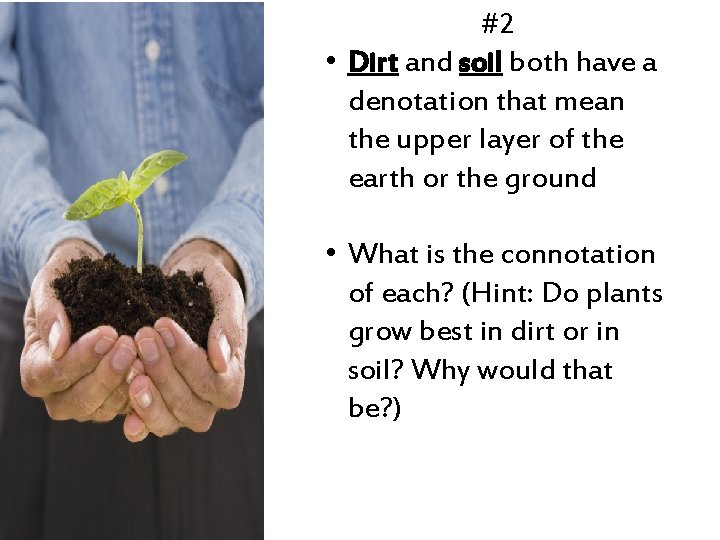
#2 • Dirt and soil both have a denotation that mean the upper layer of the earth or the ground • What is the connotation of each? (Hint: Do plants grow best in dirt or in soil? Why would that be? )
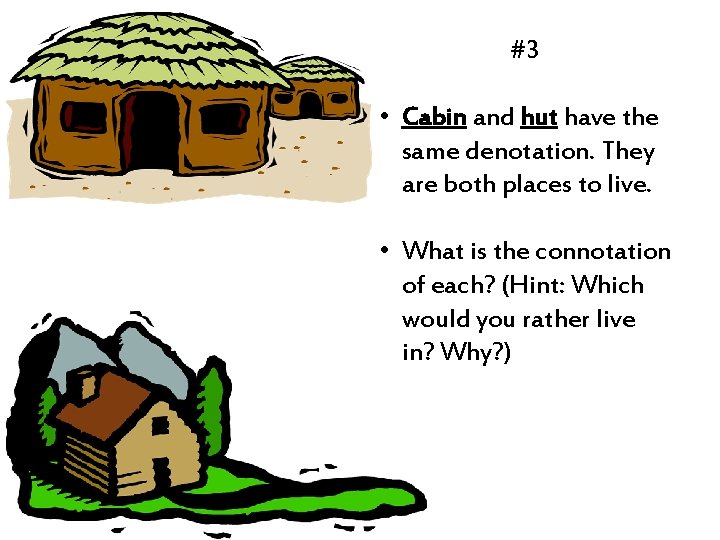
#3 • Cabin and hut have the same denotation. They are both places to live. • What is the connotation of each? (Hint: Which would you rather live in? Why? )
#4 • Explain why the words in italics are not good choices for these next two sentences, even though their denotation is correct. • Shawn wrote letters to his female parent while he was overseas. (Why doesn’t this sound good? )
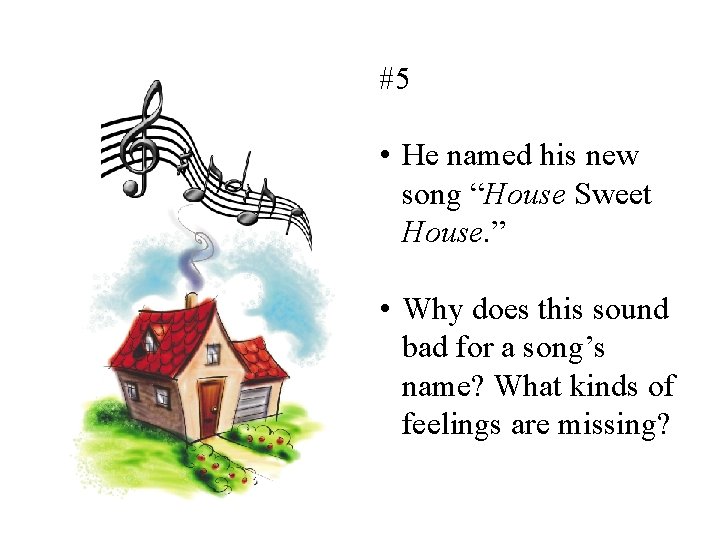
#5 • He named his new song “House Sweet House. ” • Why does this sound bad for a song’s name? What kinds of feelings are missing?
Good writers choose their words for the effects they have upon their readers. Word choice is also a clue to the writer’s attitude toward his/her subject – tone.
They think about the denotation of a word – its dictionary meaning and the connotation – the implied meanings and associations when choosing words.
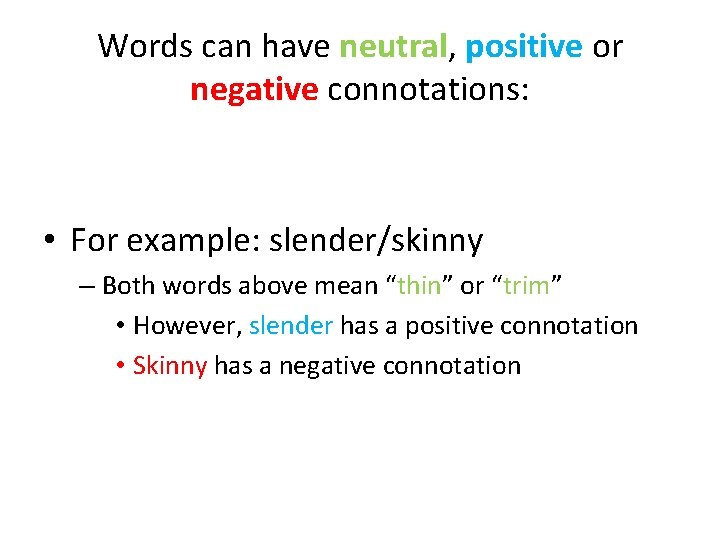
Words can have neutral, positive or negative connotations: • For example: slender/skinny – Both words above mean “thin” or “trim” • However, slender has a positive connotation • Skinny has a negative connotation
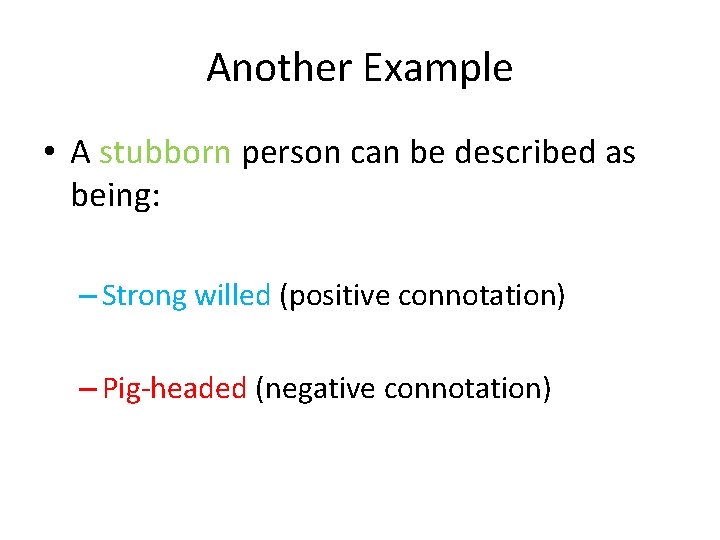
Another Example • A stubborn person can be described as being: – Strong willed (positive connotation) – Pig-headed (negative connotation)
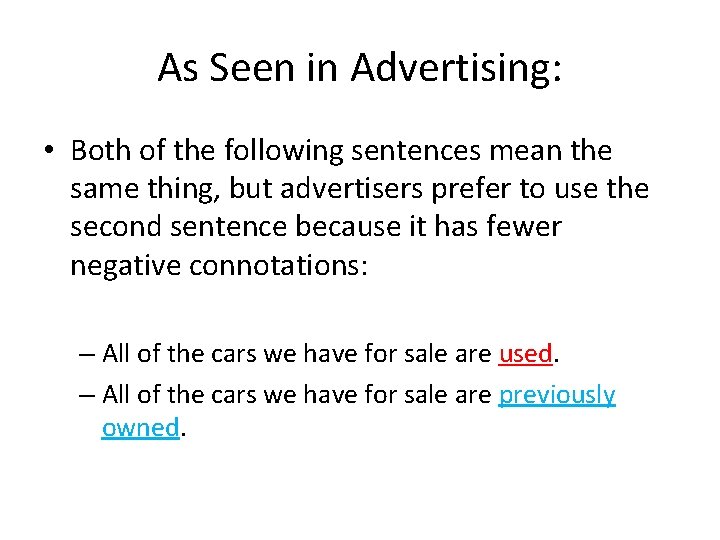
As Seen in Advertising: • Both of the following sentences mean the same thing, but advertisers prefer to use the second sentence because it has fewer negative connotations: – All of the cars we have for sale are used. – All of the cars we have for sale are previously owned.
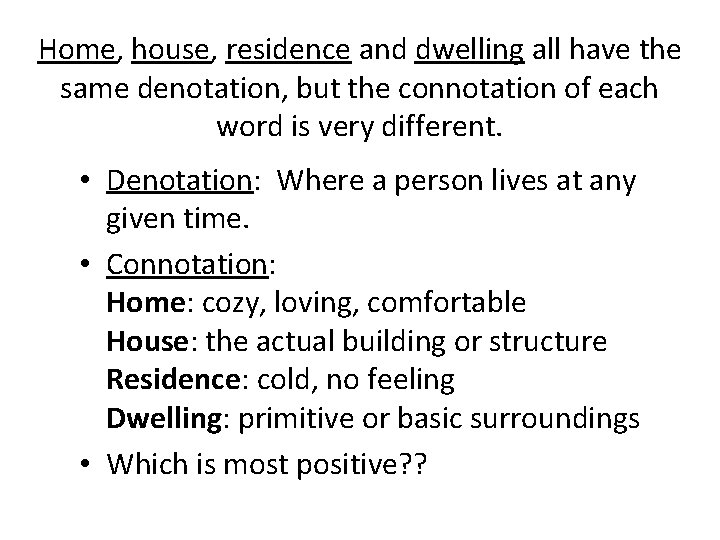
Home, house, residence and dwelling all have the same denotation, but the connotation of each word is very different. • Denotation: Where a person lives at any given time. • Connotation: Home: cozy, loving, comfortable House: the actual building or structure Residence: cold, no feeling Dwelling: primitive or basic surroundings • Which is most positive? ?
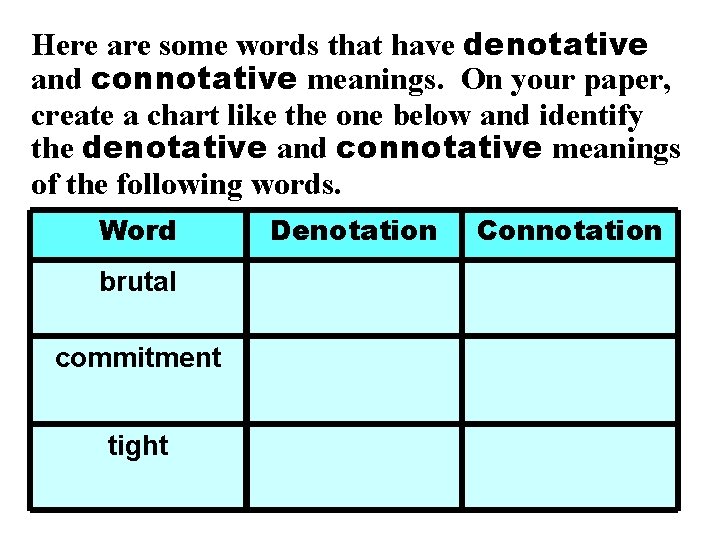
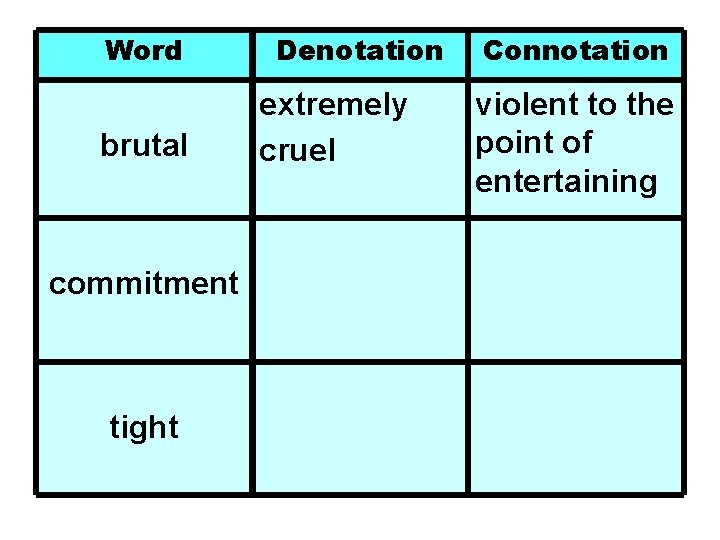
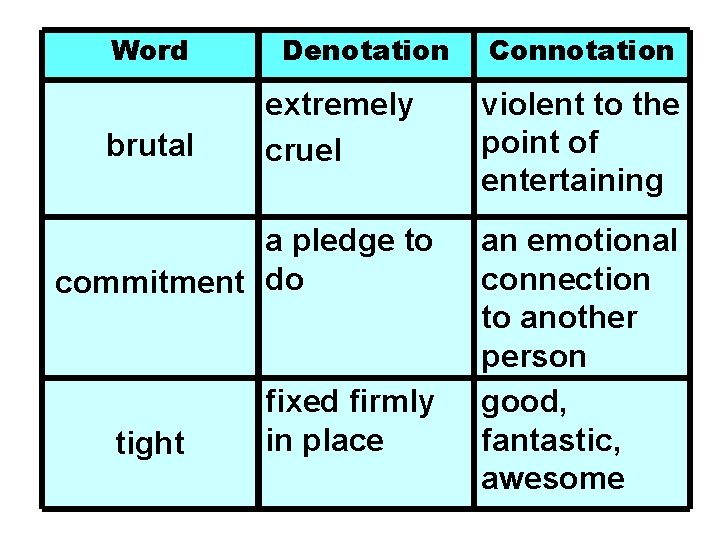
Here are some words that have denotative and connotative meanings. On your paper, create a chart like the one below and identify the denotative and connotative meanings of the following words. Word brutal commitment tight Denotation Connotation
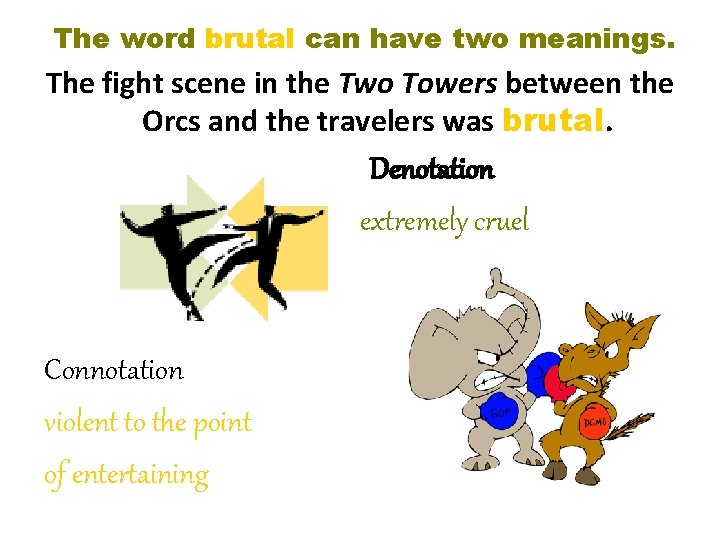
The word brutal can have two meanings. The fight scene in the Two Towers between the Orcs and the travelers was brutal. Denotation extremely cruel Connotation violent to the point of entertaining
Word brutal commitment tight Denotation extremely cruel Connotation violent to the point of entertaining
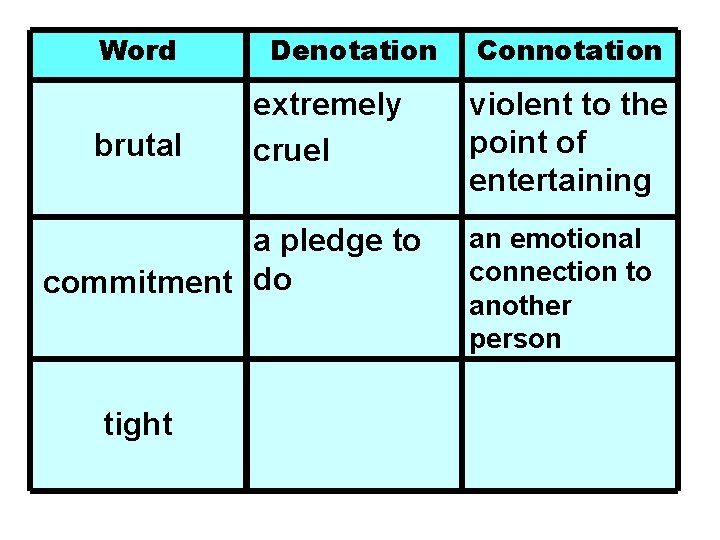
The word commitment can have two meanings. The couple has a commitment to each other. Denotation a pledge to do Connotation an emotional connection to another person
Word brutal Denotation extremely cruel a pledge to commitment do tight Connotation violent to the point of entertaining an emotional connection to another person
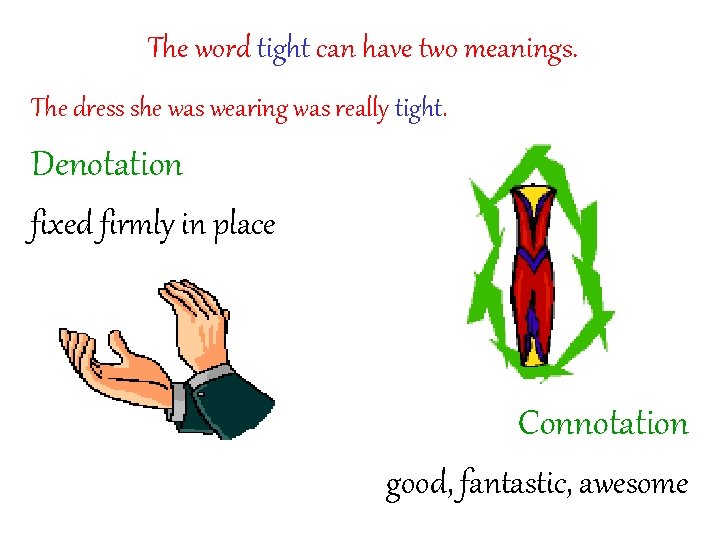
The word tight can have two meanings. The dress she was wearing was really tight. Denotation fixed firmly in place Connotation good, fantastic, awesome
Word brutal Denotation extremely cruel a pledge to commitment do tight fixed firmly in place Connotation violent to the point of entertaining an emotional connection to another person good, fantastic, awesome
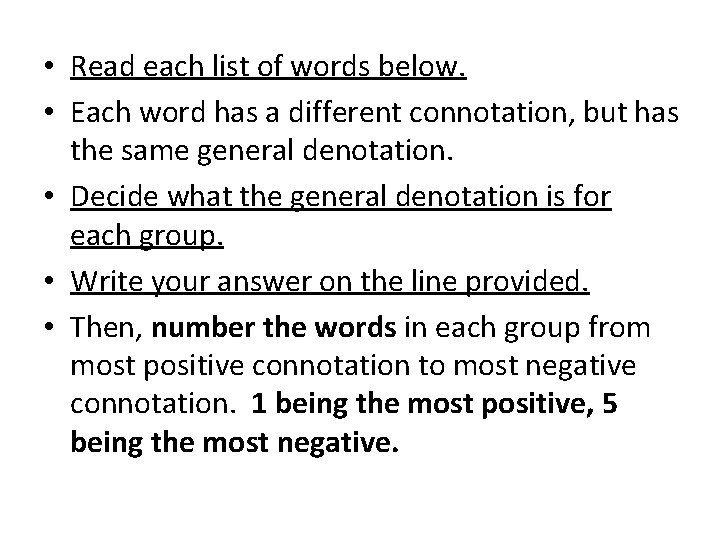
• Read each list of words below. • Each word has a different connotation, but has the same general denotation. • Decide what the general denotation is for each group. • Write your answer on the line provided. • Then, number the words in each group from most positive connotation to most negative connotation. 1 being the most positive, 5 being the most negative.
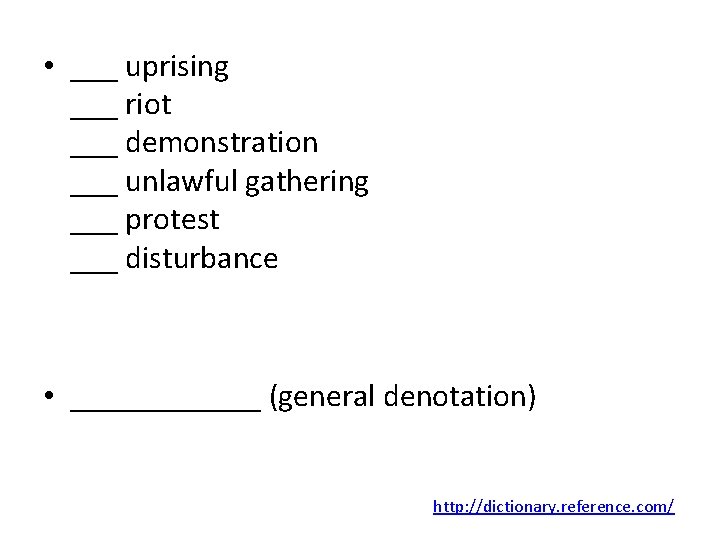
• ___ uprising ___ riot ___ demonstration ___ unlawful gathering ___ protest ___ disturbance • ______ (general denotation) http: //dictionary. reference. com/
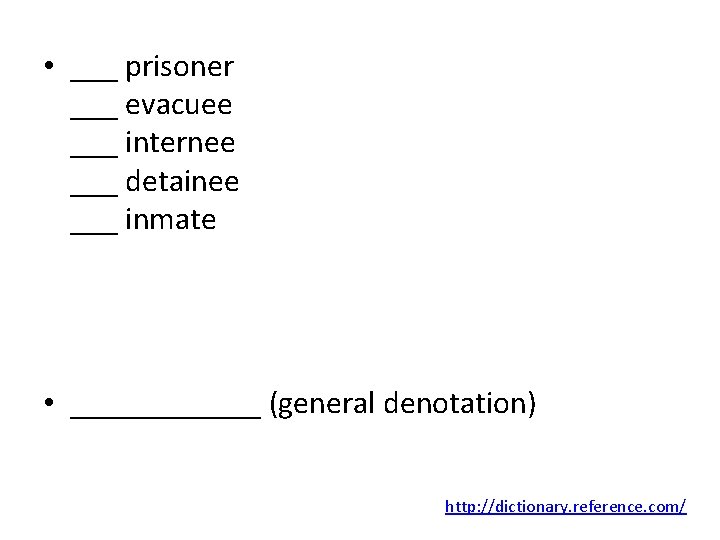
• ___ prisoner ___ evacuee ___ internee ___ detainee ___ inmate • ______ (general denotation) http: //dictionary. reference. com/
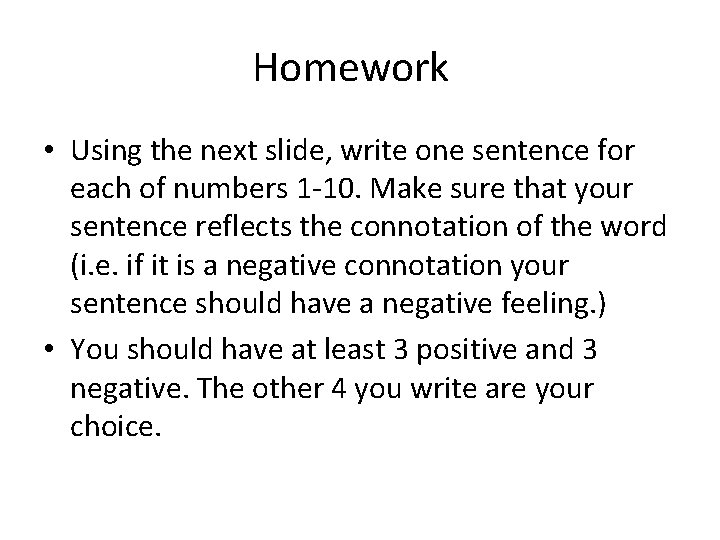
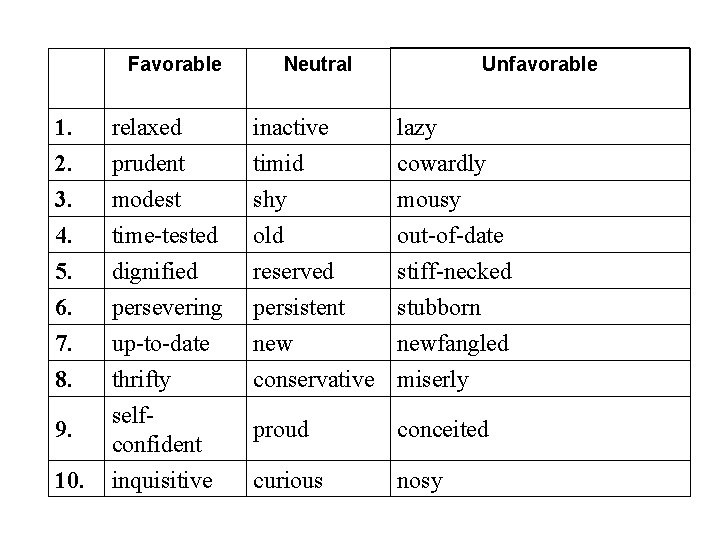
Homework • Using the next slide, write one sentence for each of numbers 1 -10. Make sure that your sentence reflects the connotation of the word (i. e. if it is a negative connotation your sentence should have a negative feeling. ) • You should have at least 3 positive and 3 negative. The other 4 you write are your choice.
Favorable Neutral Unfavorable 1. 2. relaxed prudent inactive timid lazy cowardly 3. 4. 5. 6. 7. 8. modest time-tested dignified persevering up-to-date thrifty selfconfident shy old reserved persistent new conservative mousy out-of-date stiff-necked stubborn newfangled miserly proud conceited inquisitive curious nosy 9. 10.