
Connectives that express cause and effect contrast and
- Slides: 12
Connectives that express cause and effect, contrast and condition By yuli marlina
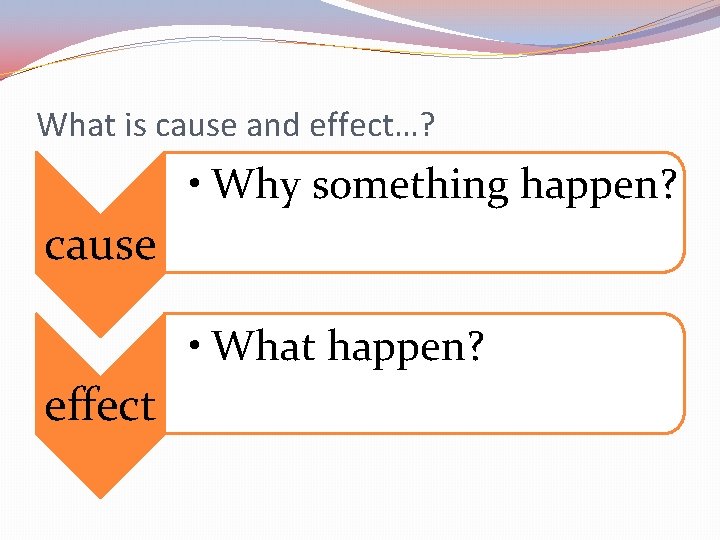
What is cause and effect…? • Why something happen? cause • What happen? effect
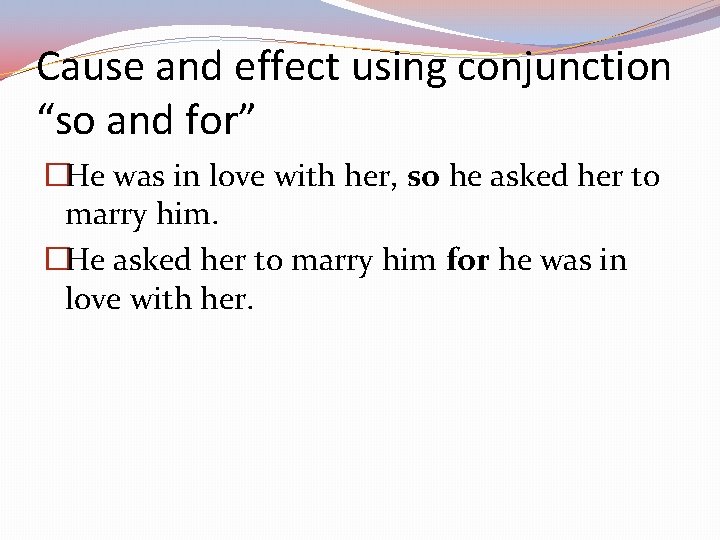
Cause and effect using conjunction “so and for” �He was in love with her, so he asked her to marry him. �He asked her to marry him for he was in love with her.
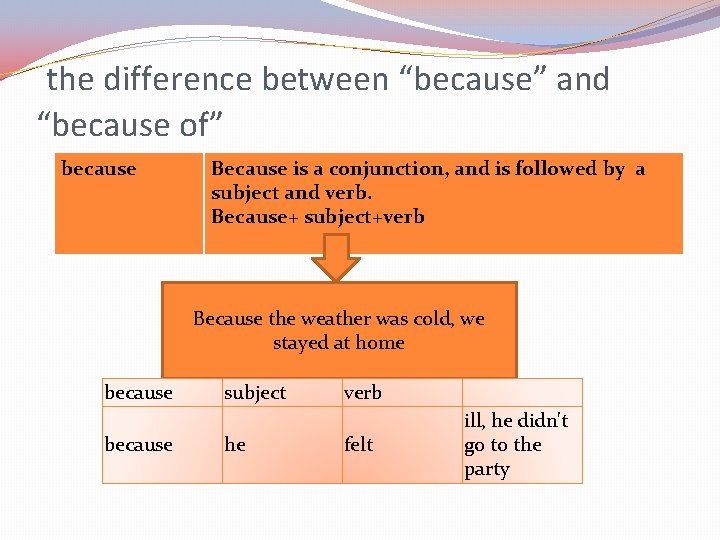
the difference between “because” and “because of” because Because is a conjunction, and is followed by a subject and verb. Because+ subject+verb Because the weather was cold, we stayed at home because subject he verb felt ill, he didn't go to the party
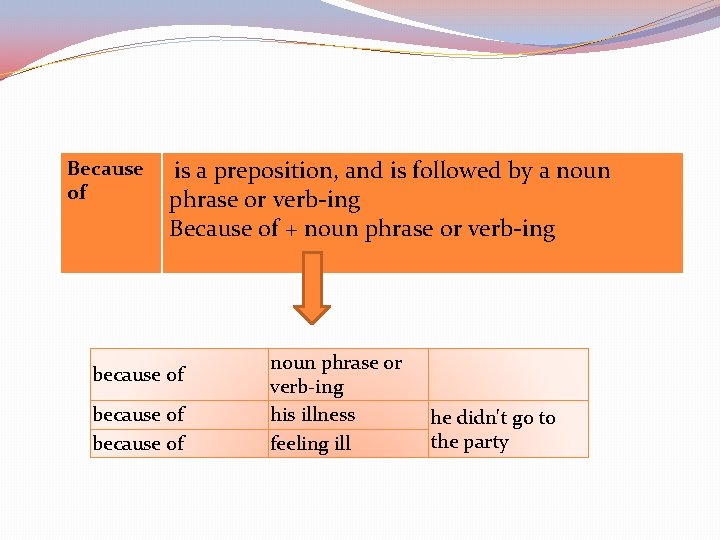
Because of is a preposition, and is followed by a noun phrase or verb-ing Because of + noun phrase or verb-ing because of noun phrase or verb-ing his illness feeling ill he didn't go to the party
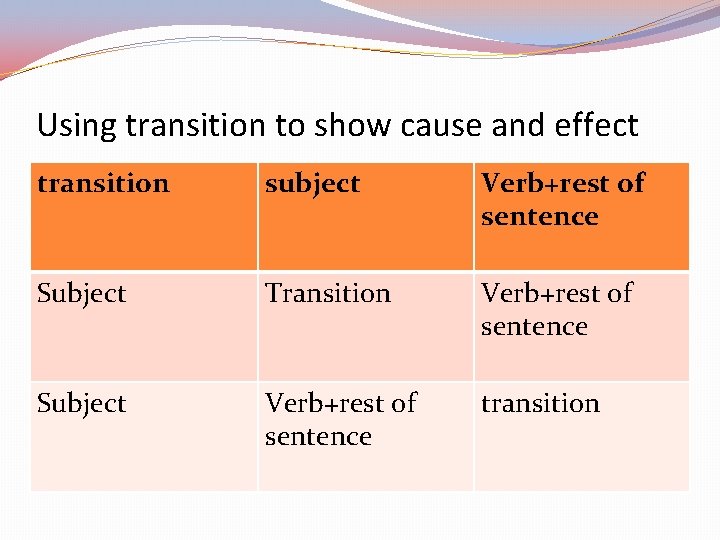
Using transition to show cause and effect transition subject Verb+rest of sentence Subject Transition Verb+rest of sentence Subject Verb+rest of sentence transition
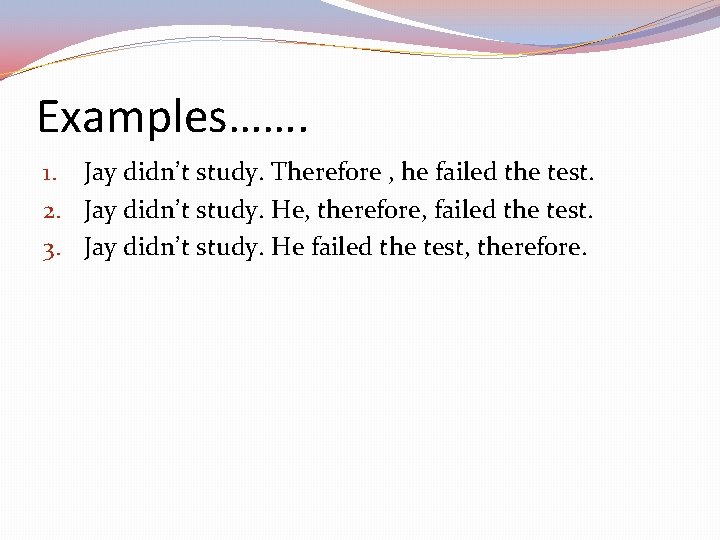
Examples……. 1. Jay didn’t study. Therefore , he failed the test. 2. Jay didn’t study. He, therefore, failed the test. 3. Jay didn’t study. He failed the test, therefore.
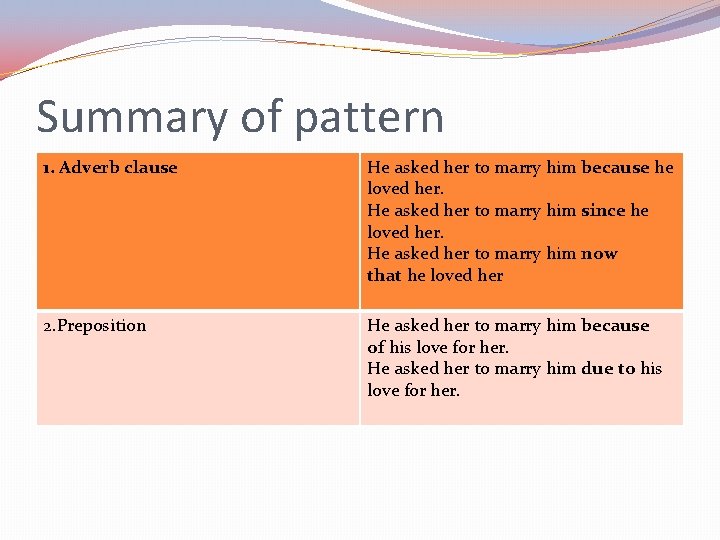
Summary of pattern 1. Adverb clause He asked her to marry him because he loved her. He asked her to marry him since he loved her. He asked her to marry him now that he loved her 2. Preposition He asked her to marry him because of his love for her. He asked her to marry him due to his love for her.
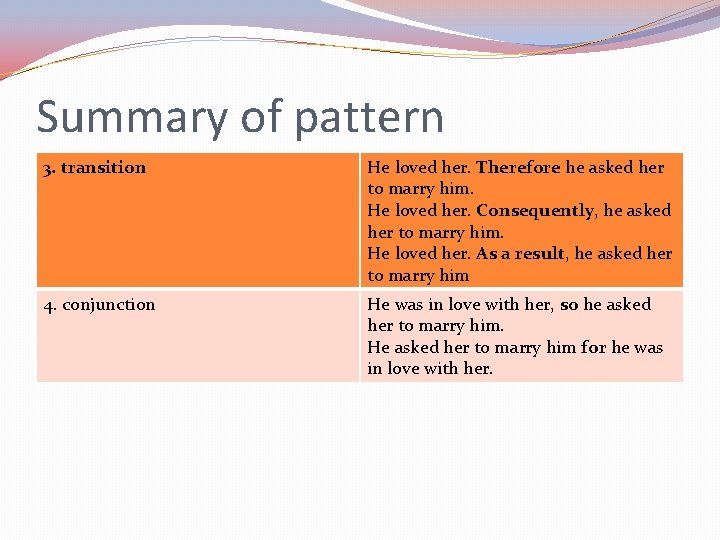
Summary of pattern 3. transition He loved her. Therefore he asked her to marry him. He loved her. Consequently, he asked her to marry him. He loved her. As a result, he asked her to marry him 4. conjunction He was in love with her, so he asked her to marry him. He asked her to marry him for he was in love with her.
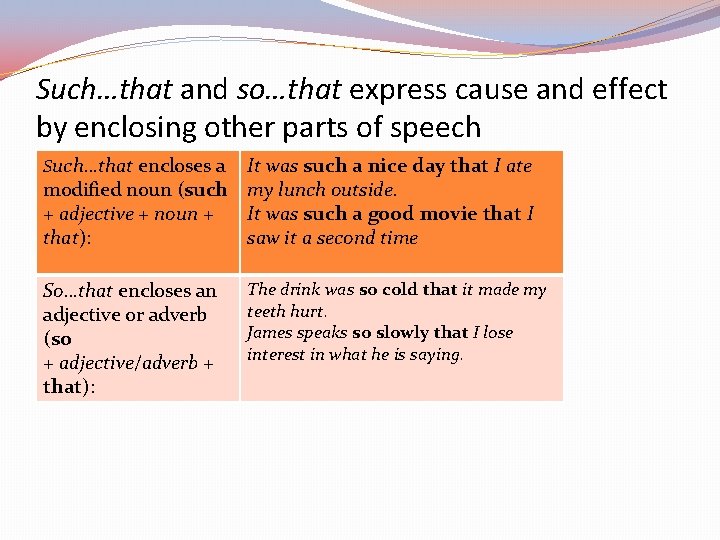
Such…that and so…that express cause and effect by enclosing other parts of speech Such…that encloses a It was such a nice day that I ate modified noun (such my lunch outside. + adjective + noun + It was such a good movie that I that): saw it a second time So…that encloses an adjective or adverb (so + adjective/adverb + that): The drink was so cold that it made my teeth hurt. James speaks so slowly that I lose interest in what he is saying.
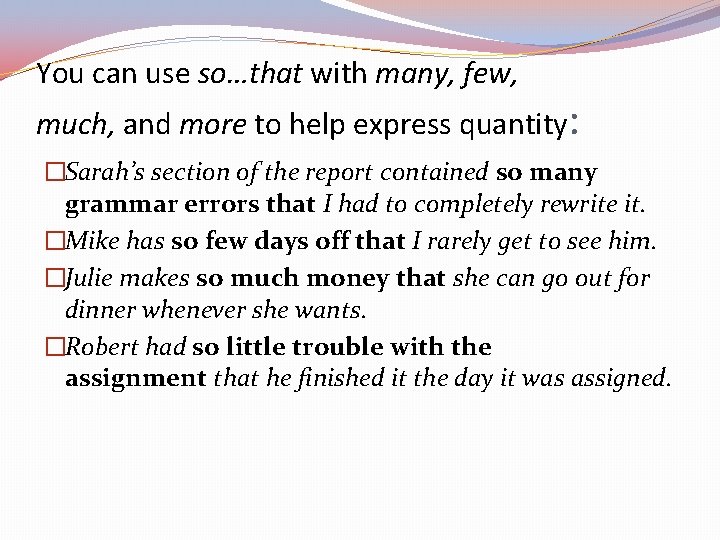
You can use so…that with many, few, much, and more to help express quantity: �Sarah’s section of the report contained so many grammar errors that I had to completely rewrite it. �Mike has so few days off that I rarely get to see him. �Julie makes so much money that she can go out for dinner whenever she wants. �Robert had so little trouble with the assignment that he finished it the day it was assigned.
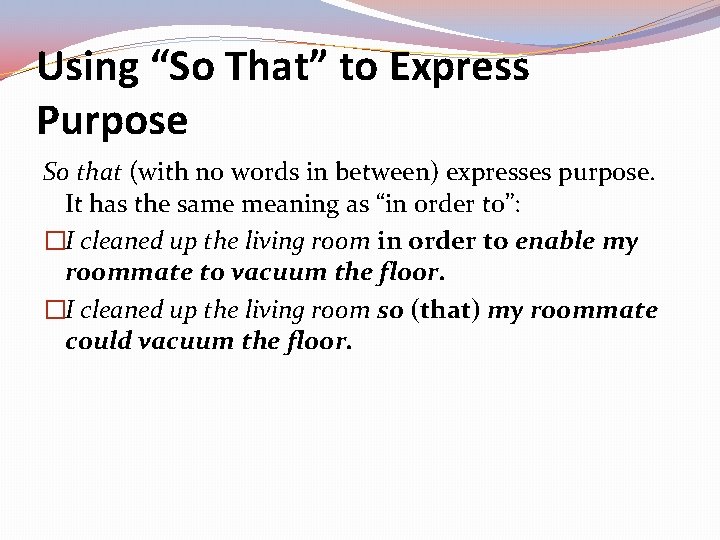
Using “So That” to Express Purpose So that (with no words in between) expresses purpose. It has the same meaning as “in order to”: �I cleaned up the living room in order to enable my roommate to vacuum the floor. �I cleaned up the living room so (that) my roommate could vacuum the floor.