
connective tissue Dr Zahiri Whats the main role


- Slides: 49
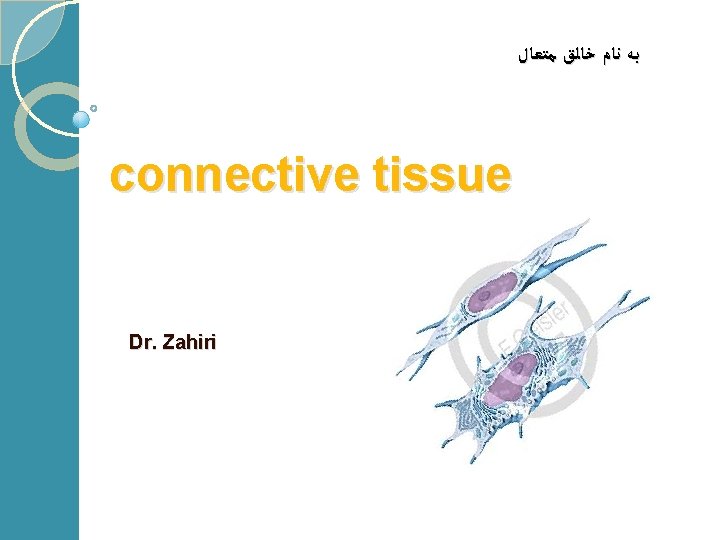
ﺑﻪ ﻧﺎﻡ ﺧﺎﻟﻖ ﻣﺘﻌﺎﻝ connective tissue Dr. Zahiri
What's the main role of connective tissue? o o o o Mechanical support Material that connects and binds cells into tissues Binds tissues to each other Protection and Defense Serving as a medium for exchange Storage (water, ions, minerals, Growth factor) Energy supply
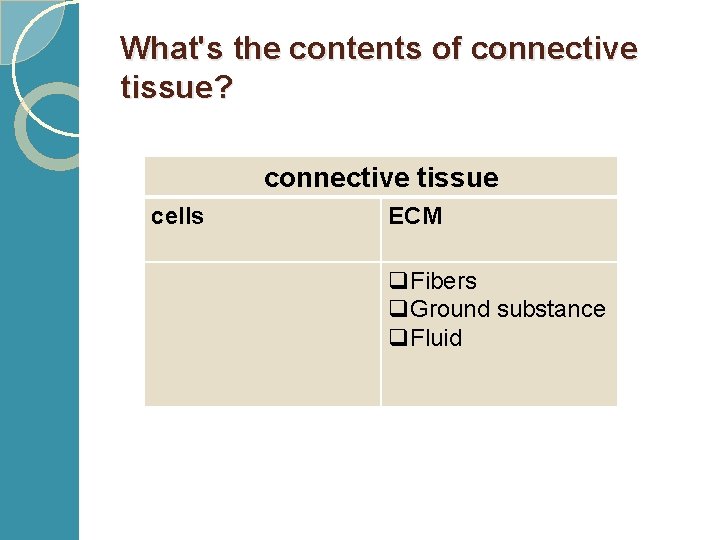
What's the contents of connective tissue? connective tissue cells ECM q. Fibers q. Ground substance q. Fluid
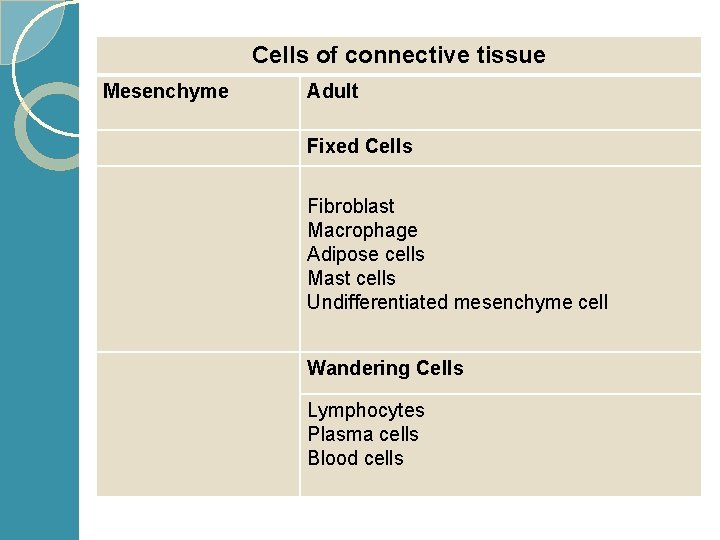
Cells of connective tissue The cells Mesenchyme Adult Fixed Cells Fibroblast Macrophage Adipose cells Mast cells Undifferentiated mesenchyme cell Wandering Cells Lymphocytes Plasma cells Blood cells
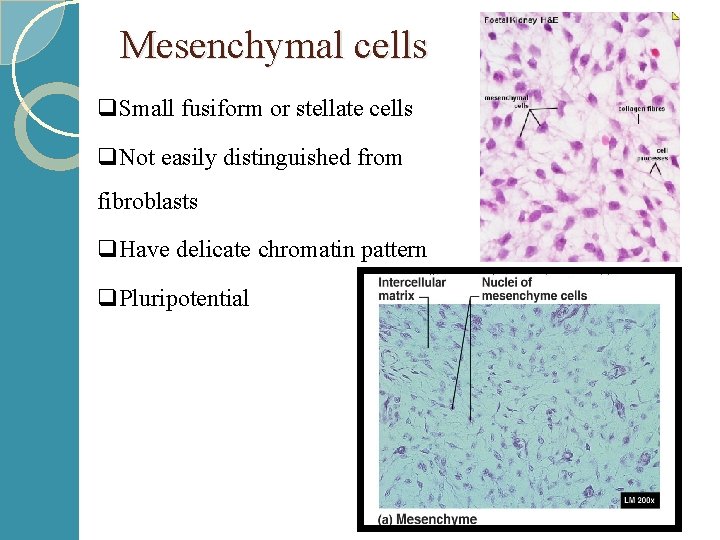
Mesenchymal cells q. Small fusiform or stellate cells q. Not easily distinguished from fibroblasts q. Have delicate chromatin pattern q. Pluripotential
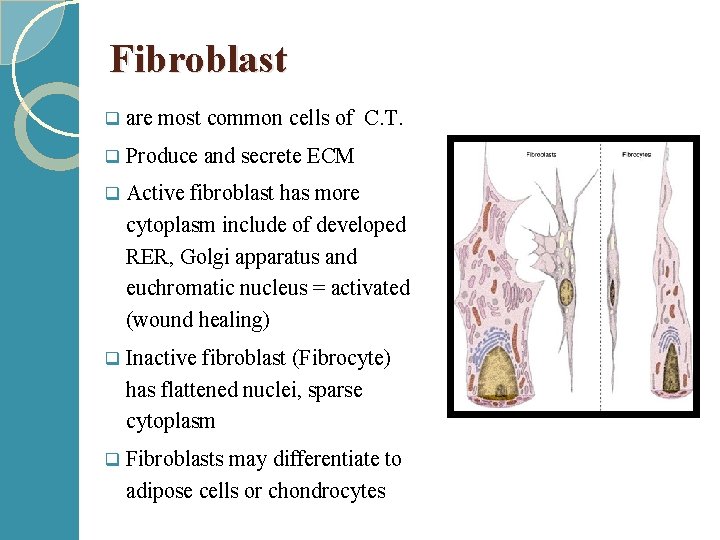
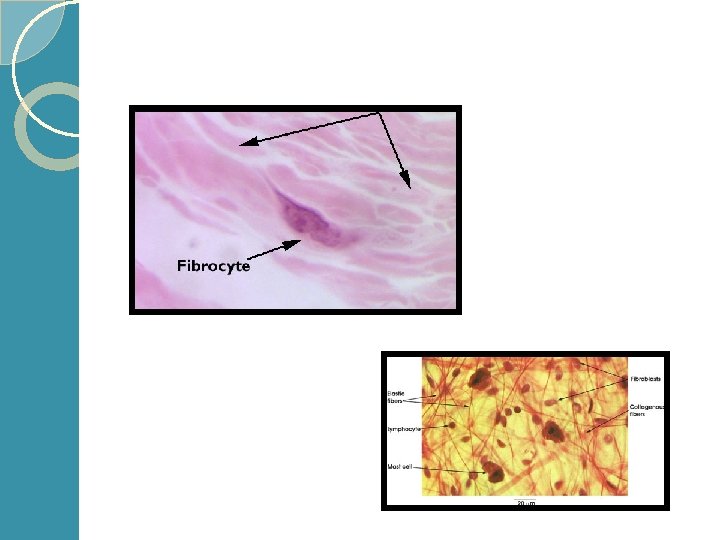
Fibroblast q are most common cells of C. T. q Produce and secrete ECM q Active fibroblast has more cytoplasm include of developed RER, Golgi apparatus and euchromatic nucleus = activated (wound healing) q Inactive fibroblast (Fibrocyte) has flattened nuclei, sparse cytoplasm q Fibroblasts may differentiate to adipose cells or chondrocytes
wound healing q Myofibroblast : • are modified fibroblasts • They have bundle of actin similar to smooth muscle cells • Abundant in wound healing ( wound contraction) q Activated Fibrocyte = fibroblast
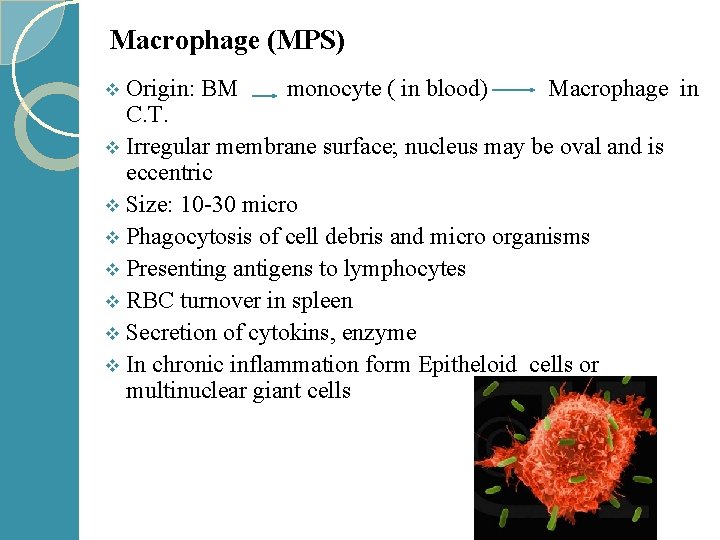
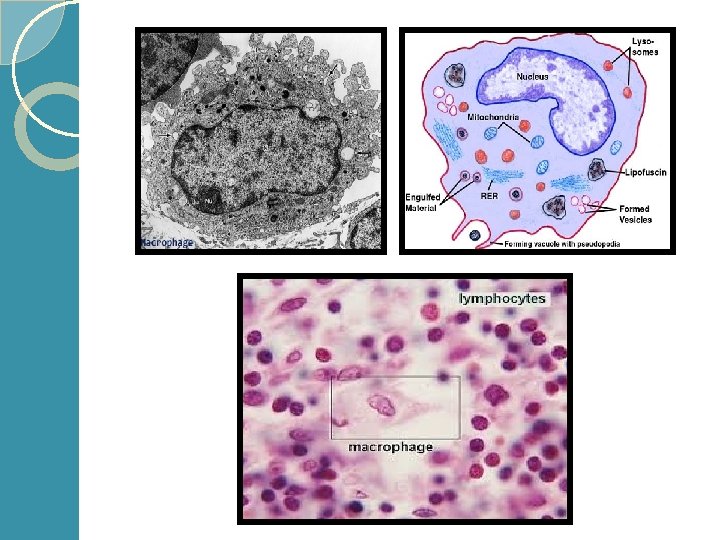
Macrophage (MPS) Origin: BM monocyte ( in blood) Macrophage in C. T. v Irregular membrane surface; nucleus may be oval and is eccentric v Size: 10 -30 micro v Phagocytosis of cell debris and micro organisms v Presenting antigens to lymphocytes v RBC turnover in spleen v Secretion of cytokins, enzyme v In chronic inflammation form Epitheloid cells or multinuclear giant cells v
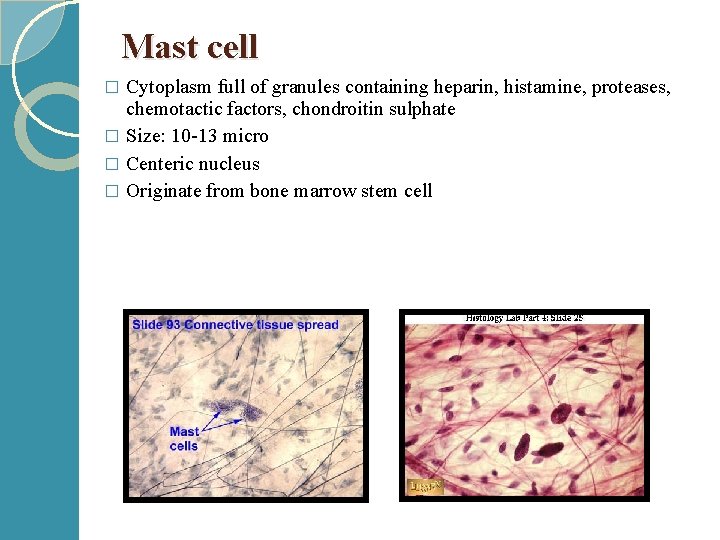
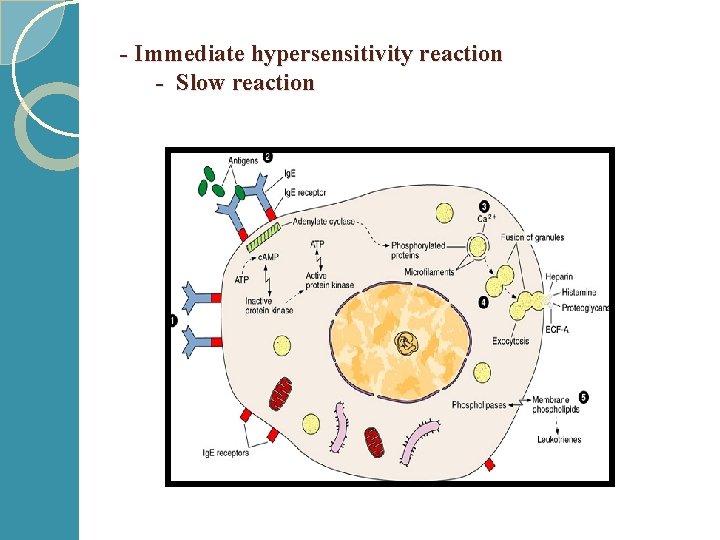
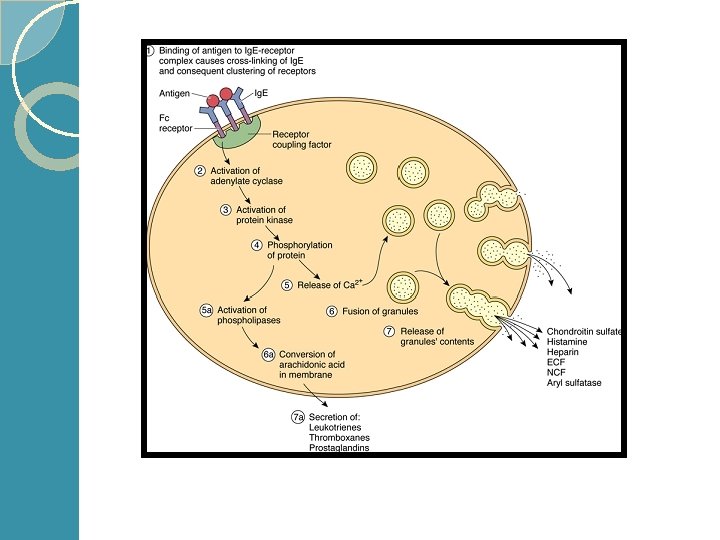
Mast cell Cytoplasm full of granules containing heparin, histamine, proteases, chemotactic factors, chondroitin sulphate � Size: 10 -13 micro � Centeric nucleus � Originate from bone marrow stem cell �
- Immediate hypersensitivity reaction - Slow reaction
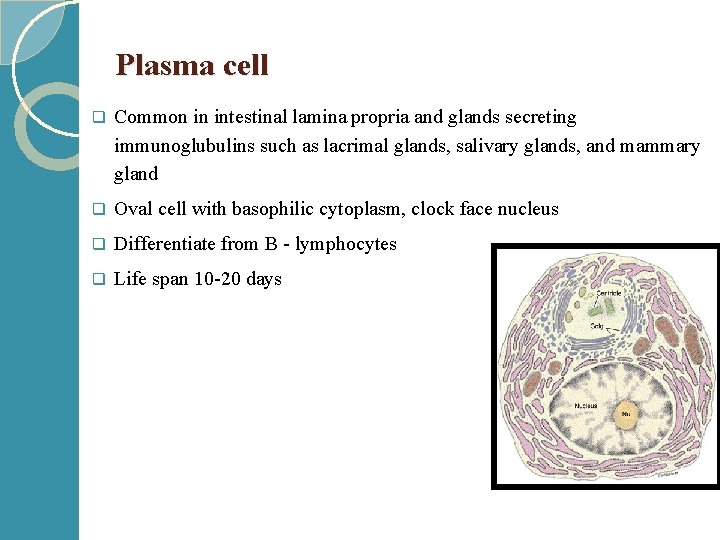
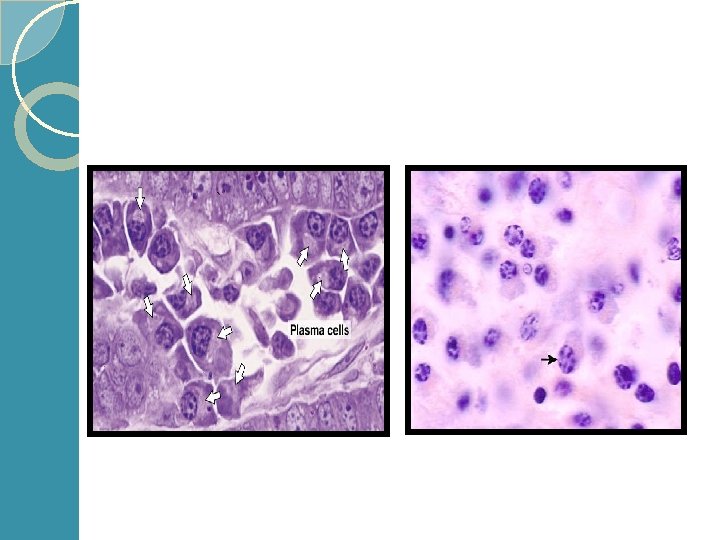
Plasma cell q Common in intestinal lamina propria and glands secreting immunoglubulins such as lacrimal glands, salivary glands, and mammary gland q Oval cell with basophilic cytoplasm, clock face nucleus q Differentiate from B - lymphocytes q Life span 10 -20 days
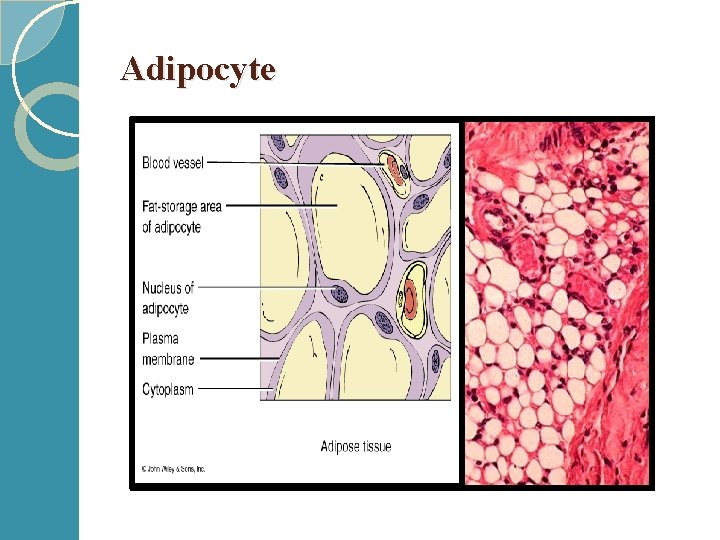
Adipocyte
Others Neutrophils q Eosinophils q Basophils q Lymphocytes - small, heterochromatic nucleus q
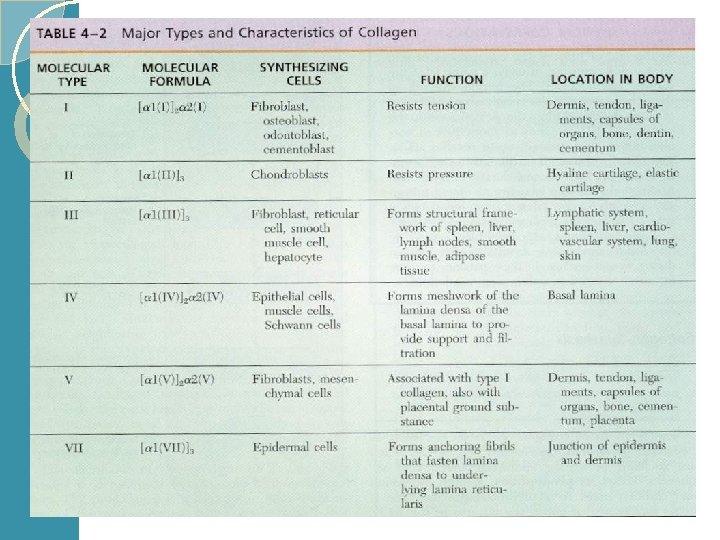
Fibers q Collagen fibers q Elastic fibers q Reticular fibers
Collagen fibers �Staining (Eosin - pink; Mallory’s - blue; Masson’s – green) �Physical feature
Chemical components �prolin �lysin �Hdroxy prolin �Hydroxy lysin
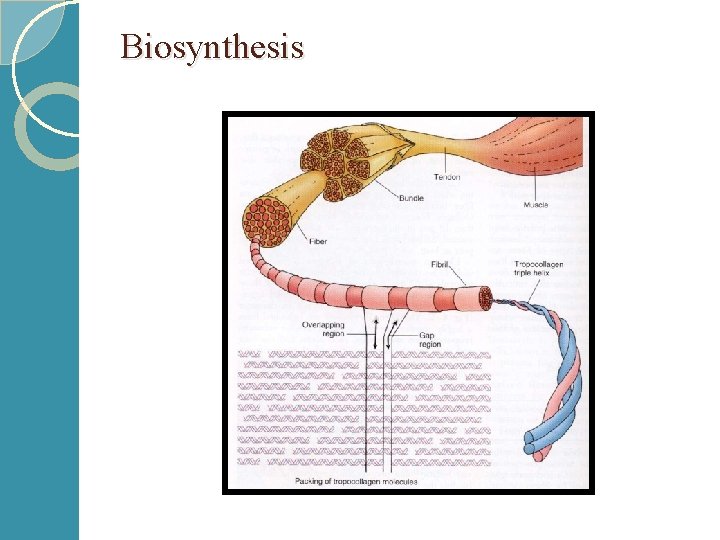
Biosynthesis
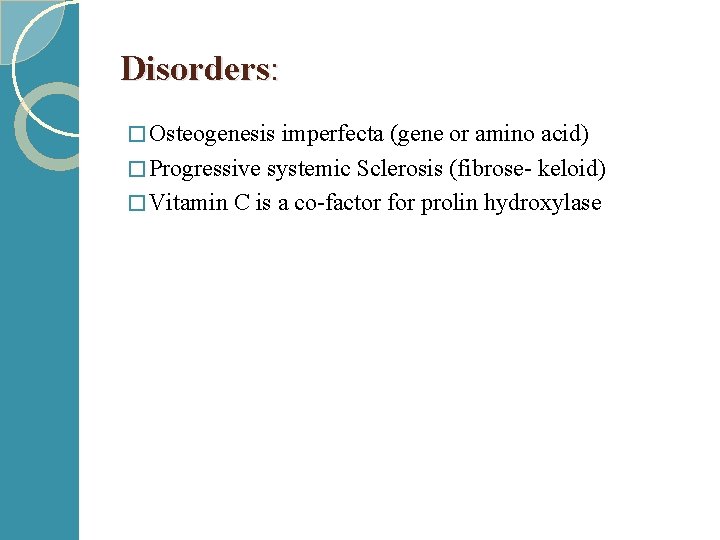
Disorders: � Osteogenesis imperfecta (gene or amino acid) � Progressive systemic Sclerosis (fibrose- keloid) � Vitamin C is a co-factor for prolin hydroxylase
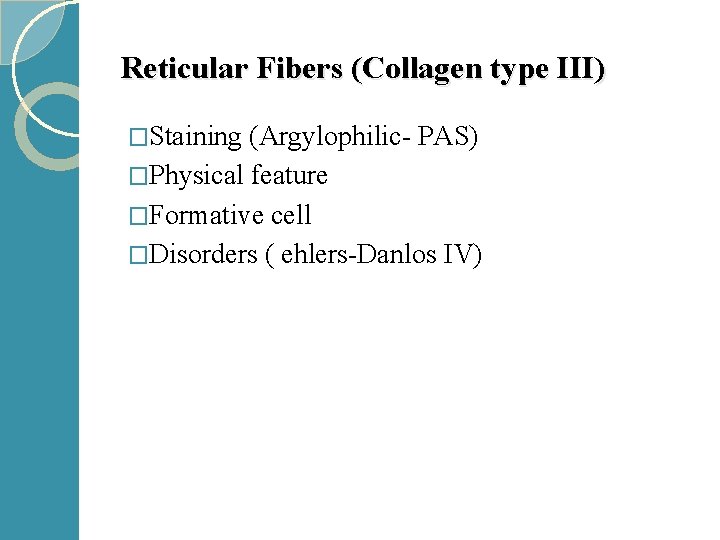
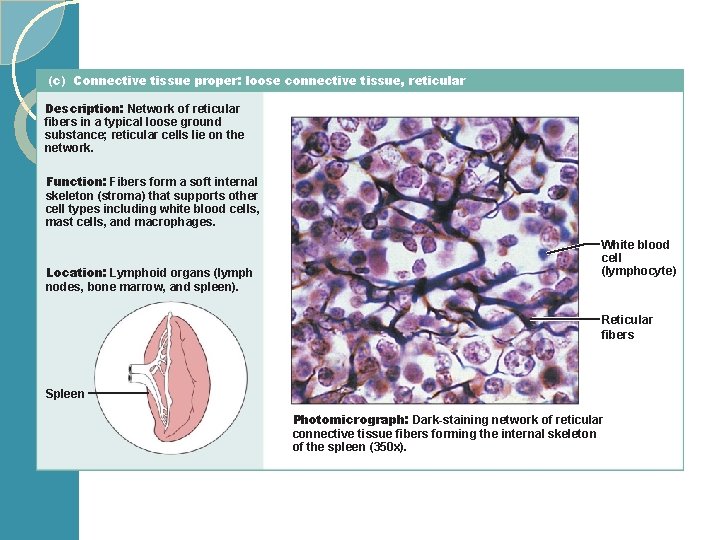
Reticular Fibers (Collagen type III) �Staining (Argylophilic- PAS) �Physical feature �Formative cell �Disorders ( ehlers-Danlos IV)
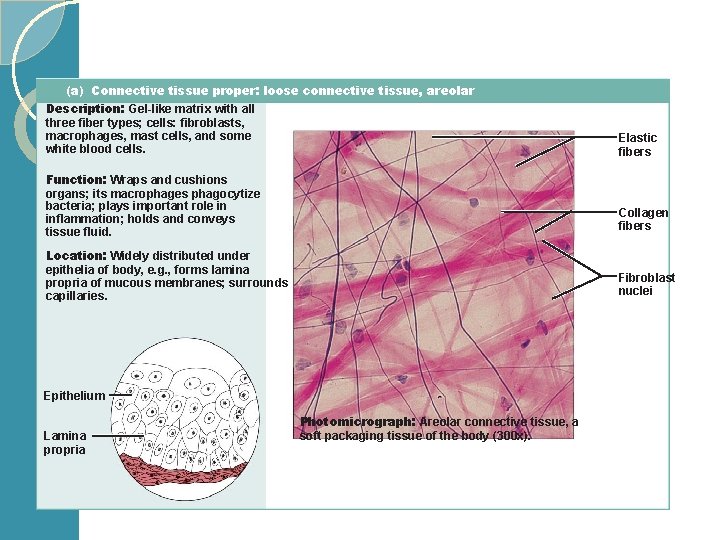
(a) Connective tissue proper: loose connective tissue, areolar Description: Gel-like matrix with all three fiber types; cells: fibroblasts, macrophages, mast cells, and some white blood cells. Elastic fibers Function: Wraps and cushions organs; its macrophages phagocytize bacteria; plays important role in inflammation; holds and conveys tissue fluid. Collagen fibers Location: Widely distributed under epithelia of body, e. g. , forms lamina propria of mucous membranes; surrounds capillaries. Fibroblast nuclei Epithelium Lamina propria Photomicrograph: Areolar connective tissue, a soft packaging tissue of the body (300 x).
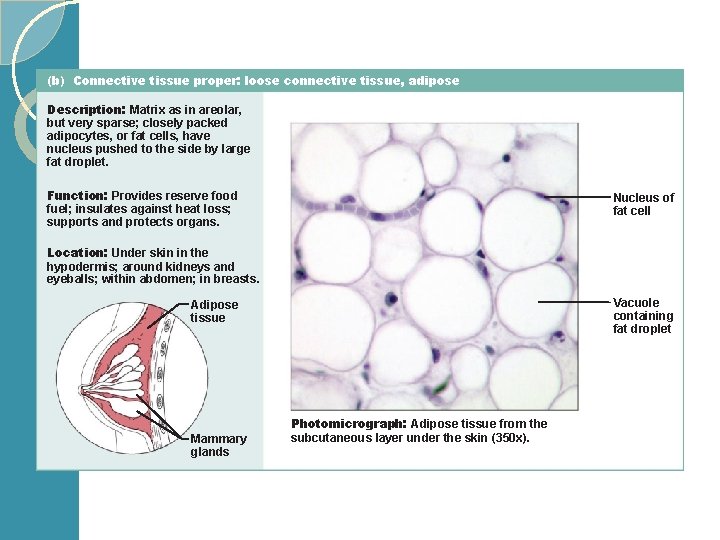
(b) Connective tissue proper: loose connective tissue, adipose Description: Matrix as in areolar, but very sparse; closely packed adipocytes, or fat cells, have nucleus pushed to the side by large fat droplet. Function: Provides reserve food fuel; insulates against heat loss; supports and protects organs. Nucleus of fat cell Location: Under skin in the hypodermis; around kidneys and eyeballs; within abdomen; in breasts. Vacuole containing fat droplet Adipose tissue Mammary glands Photomicrograph: Adipose tissue from the subcutaneous layer under the skin (350 x).
(c) Connective tissue proper: loose connective tissue, reticular Description: Network of reticular fibers in a typical loose ground substance; reticular cells lie on the network. Function: Fibers form a soft internal skeleton (stroma) that supports other cell types including white blood cells, mast cells, and macrophages. Location: Lymphoid organs (lymph nodes, bone marrow, and spleen). White blood cell (lymphocyte) Reticular fibers Spleen Photomicrograph: Dark-staining network of reticular connective tissue fibers forming the internal skeleton of the spleen (350 x).
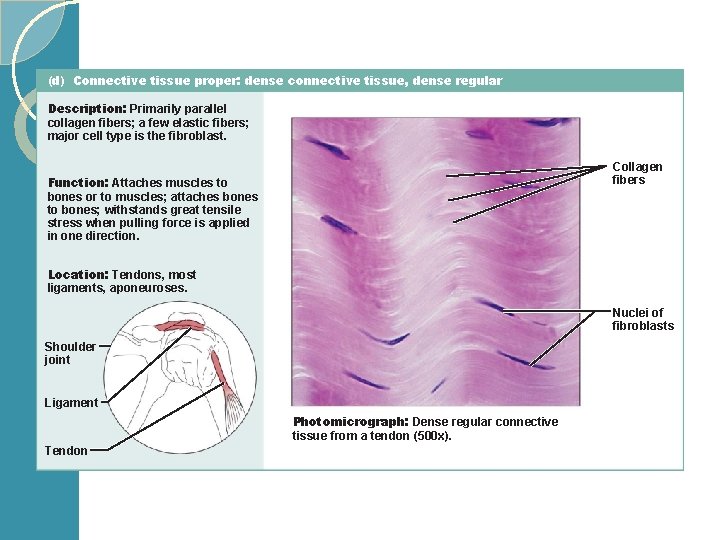
(d) Connective tissue proper: dense connective tissue, dense regular Description: Primarily parallel collagen fibers; a few elastic fibers; major cell type is the fibroblast. Collagen fibers Function: Attaches muscles to bones or to muscles; attaches bones to bones; withstands great tensile stress when pulling force is applied in one direction. Location: Tendons, most ligaments, aponeuroses. Nuclei of fibroblasts Shoulder joint Ligament Photomicrograph: Dense regular connective tissue from a tendon (500 x). Tendon
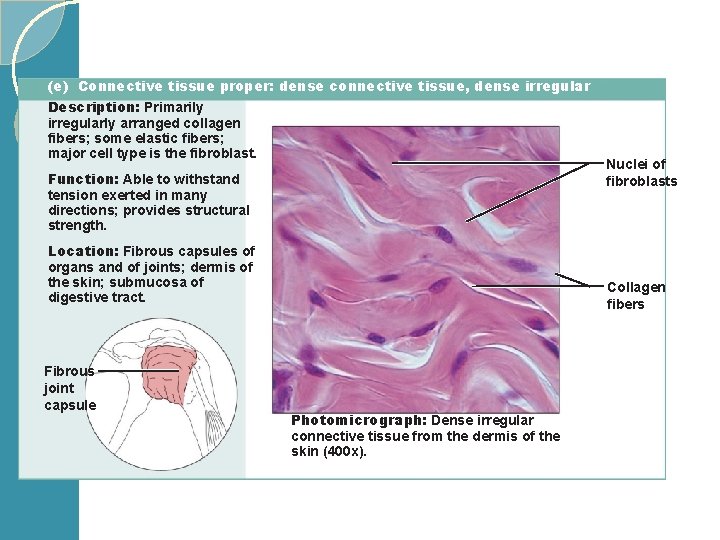
(e) Connective tissue proper: dense connective tissue, dense irregular Description: Primarily irregularly arranged collagen fibers; some elastic fibers; major cell type is the fibroblast. Function: Able to withstand tension exerted in many directions; provides structural strength. Location: Fibrous capsules of organs and of joints; dermis of the skin; submucosa of digestive tract. Fibrous joint capsule Nuclei of fibroblasts Collagen fibers Photomicrograph: Dense irregular connective tissue from the dermis of the skin (400 x).
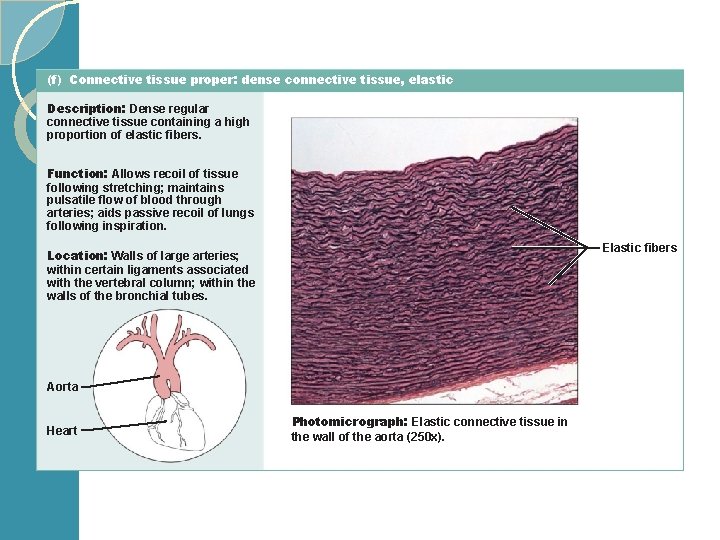
(f) Connective tissue proper: dense connective tissue, elastic Description: Dense regular connective tissue containing a high proportion of elastic fibers. Function: Allows recoil of tissue following stretching; maintains pulsatile flow of blood through arteries; aids passive recoil of lungs following inspiration. Elastic fibers Location: Walls of large arteries; within certain ligaments associated with the vertebral column; within the walls of the bronchial tubes. Aorta Heart Photomicrograph: Elastic connective tissue in the wall of the aorta (250 x).
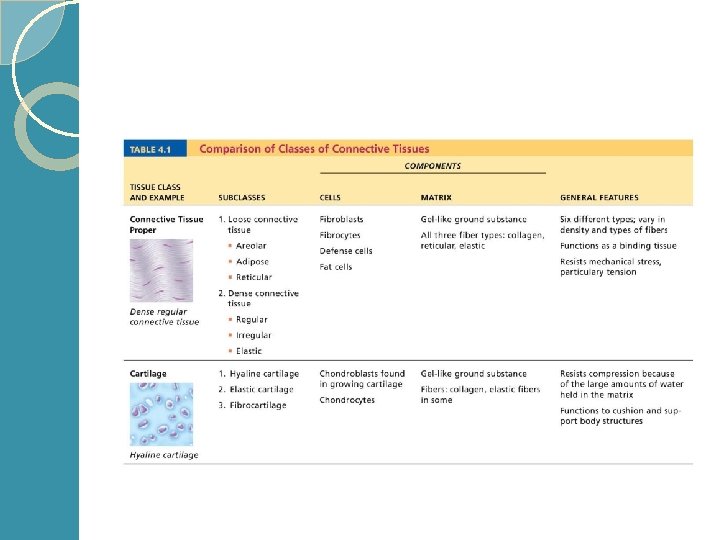
Classification of connective tissue �Emberyonic (mesenchyme) �Adult ( Loose- Dense) �Dense( Regular- Irregular)
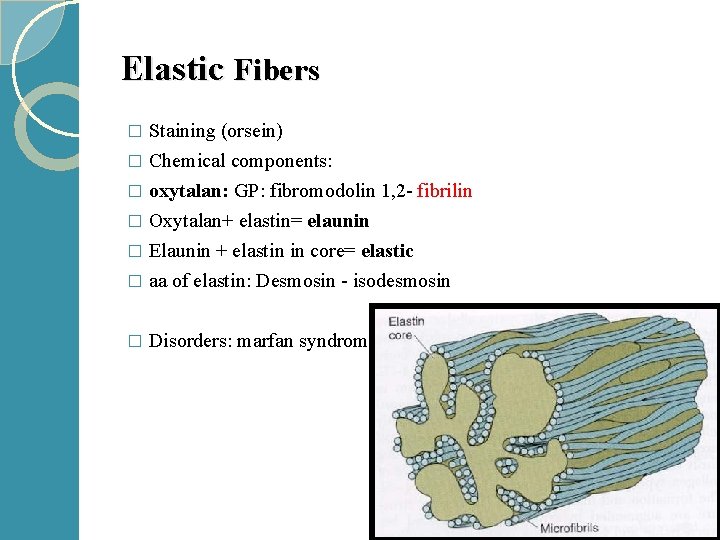
Elastic Fibers Staining (orsein) � Chemical components: � oxytalan: GP: fibromodolin 1, 2 - fibrilin � Oxytalan+ elastin= elaunin � Elaunin + elastin in core= elastic � aa of elastin: Desmosin - isodesmosin � � Disorders: marfan syndrom
Ground Substance • • • An amorphous gel-like material it is not visible on slides, because it is removed during the preparation process composed of Glycosaminoglycans (GAG), Proteoglycans and multi adhesive Glycoproteins o function
Glycosaminoglycans (GAGs) or mucopolysaccharides q GAGs are negatively charged, long, rod-like chains of repeating disaccharides (Amino sugar + uronic acid) that have the capability of binding large quantities of water(hydrophilic) q GAGs consist of Hyaluronic acid, Dermatan sulfate, Chondroitin sulfate, Keratan sulfate, Heparan sulfate
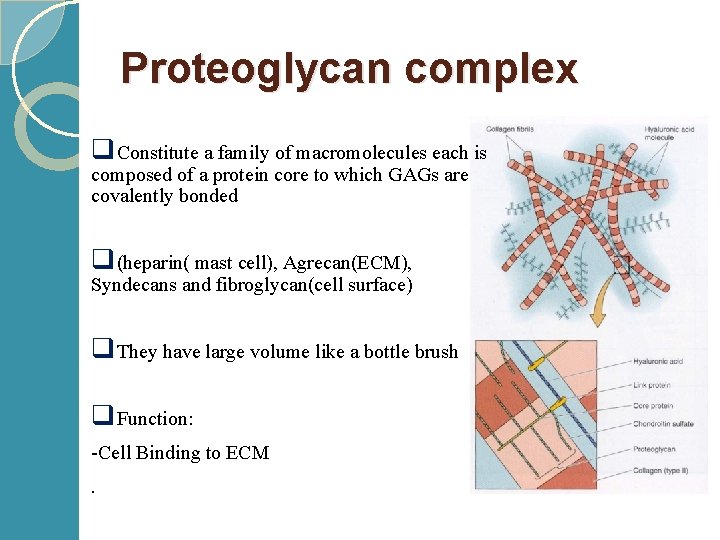
Proteoglycan complex q. Constitute a family of macromolecules each is composed of a protein core to which GAGs are covalently bonded q(heparin( mast cell), Agrecan(ECM), Syndecans and fibroglycan(cell surface) q. They have large volume like a bottle brush q. Function: -Cell Binding to ECM.
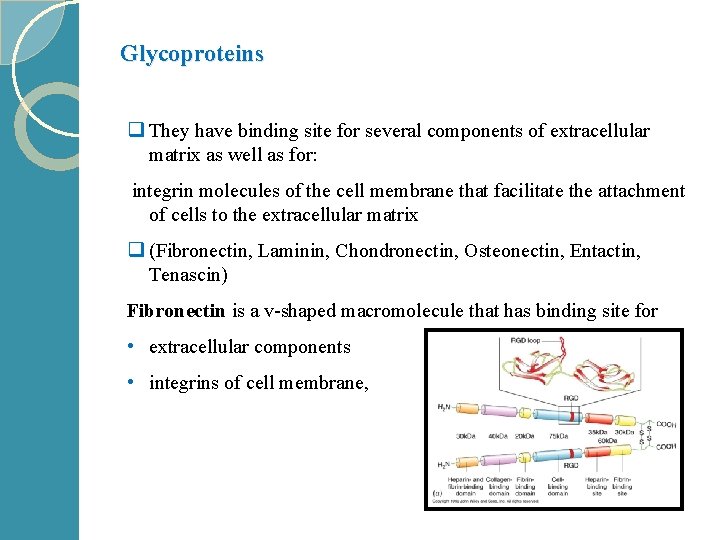
Glycoproteins q They have binding site for several components of extracellular matrix as well as for: integrin molecules of the cell membrane that facilitate the attachment of cells to the extracellular matrix q (Fibronectin, Laminin, Chondronectin, Osteonectin, Entactin, Tenascin) Fibronectin is a v-shaped macromolecule that has binding site for • extracellular components • integrins of cell membrane,
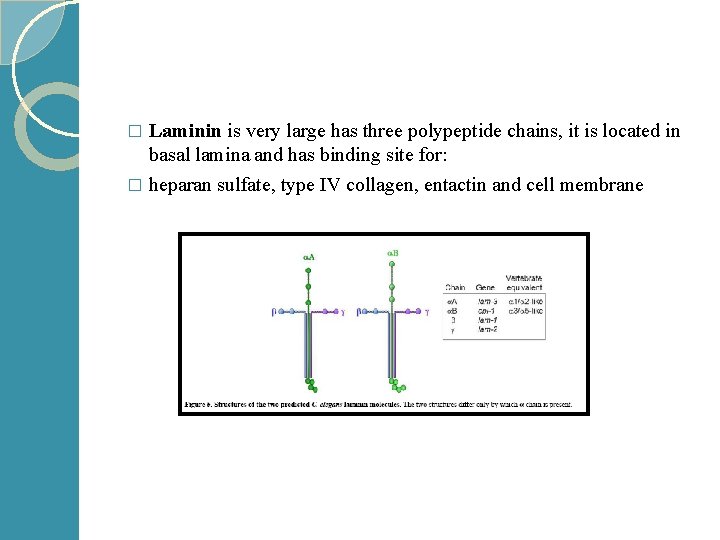
Laminin is very large has three polypeptide chains, it is located in basal lamina and has binding site for: � heparan sulfate, type IV collagen, entactin and cell membrane �
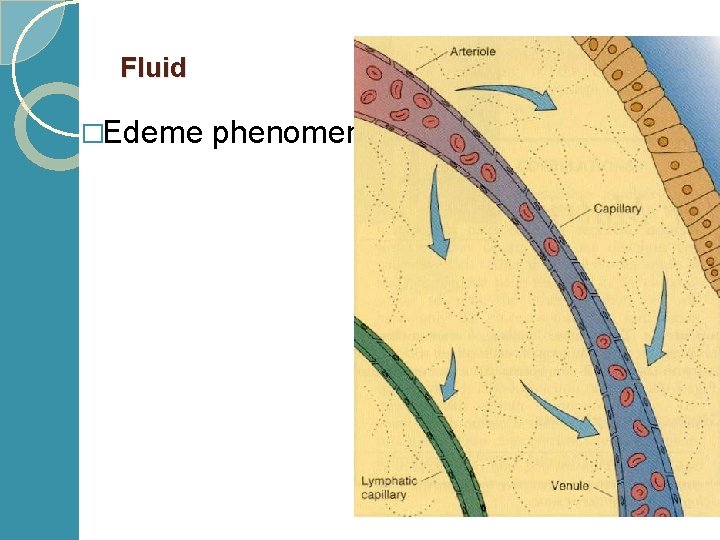
Fluid �Edeme phenomen
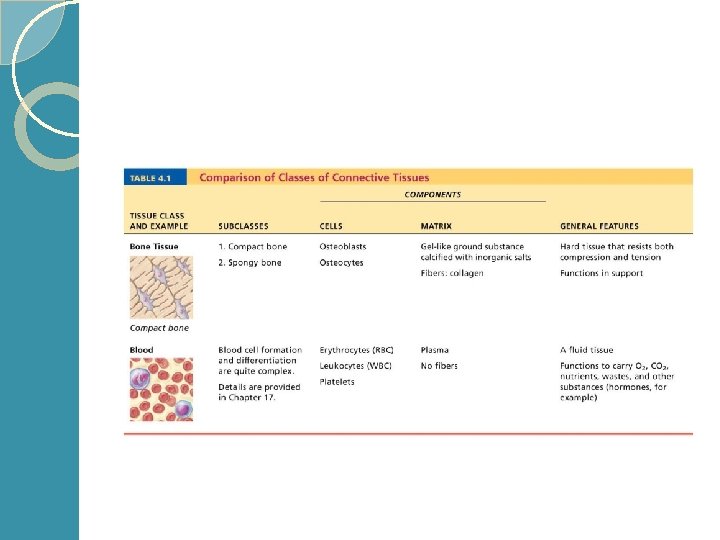
Specific connective tissue �Adipose tissue �Bone and cartilage �Blood
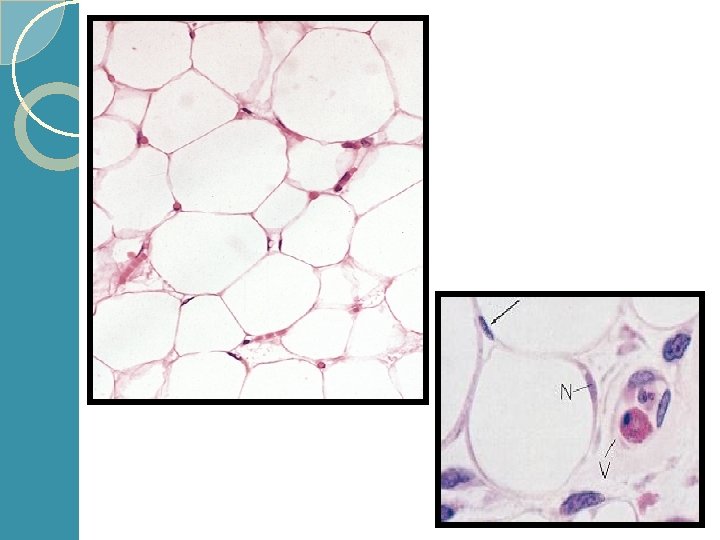
Adipose tissue (Fatty tissue) 2 A kind of connective tissue with many adipocytes 2 Forms one of the largest “organs” of body 1 15 -20% of body weight in men 1 20 -25% of body weight in women 2 Over 2 times as much stored energy as glycogen 2 Subcutaneous adipose shapes body 2 Shock absorber in soles of feet and palms 2 Thermal insulation 2 Fills space between organs
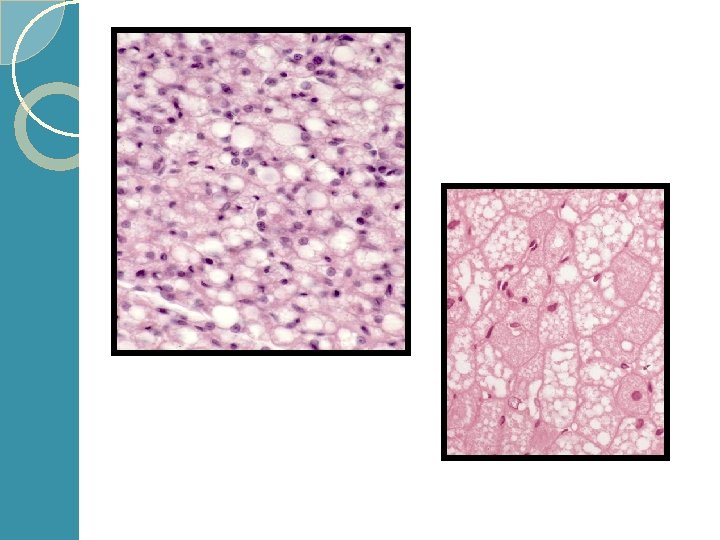
Two Types of Adipose Tissue q. Yellow, White or unilocular àcells with one large fat droplet in cytoplasm q. Brown or multilocular àcells with numerous smaller lipid droplets in cytoplasm and many mitochondria
Unilocular Adipose Tissue × White to dark yellow depending on diet × Most common form in adults × Cells 50 -150 mm diameter × Nuclei eccentric and flattened × Lipid droplet has no membrane × Heavily vascularized × Cell number constant after early postnatal period
Multilocular Adipose Tissue /multiple droplets /vascularization and many mitochondria, /Central nucleus /Has a lobular organization like glands /Production of body heat by many mitochondria /In human neonate, produces heat