
CONNECTION BEFORE CORRECTION WHY ATTACHMENT MATTERS MEGHAN HAYS
CONNECTION BEFORE CORRECTION WHY ATTACHMENT MATTERS MEGHAN HAYS DAVIS, MAS, IMH-E (II)
UNDER PRESSURE • How To Be A Parent: Make sure your children's academic, emotional, psychological, mental, spiritual, physical, nutritional, and social needs are met while being careful not to overstimulate, understimulate, improperly medicate, helicopter, or neglect them in a screen-free, processed foods-free, GMO-free, negative energy-free, plastic-free, body positive, socially conscious, egalitarian but also authoritative, nurturing but fostering of independence, gentle but not overly permissive, pesticide-free two-story, multilingual home preferably in a cul-de-sac with a backyard and 1. 5 siblings spaced at least two year apart for proper development also don't forget the coconut oil. • How To Be A Parent In Literally Every Generation Before Ours: Feed them sometimes. Bunmi Laditan
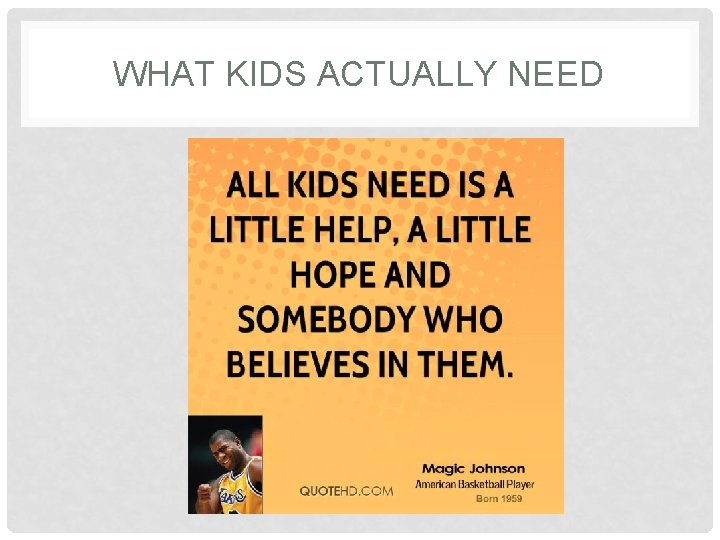
WHAT KIDS ACTUALLY NEED
TOPICS TODAY • Importance of attachment • Types of attachment • Discipline vs punishment • Time outs
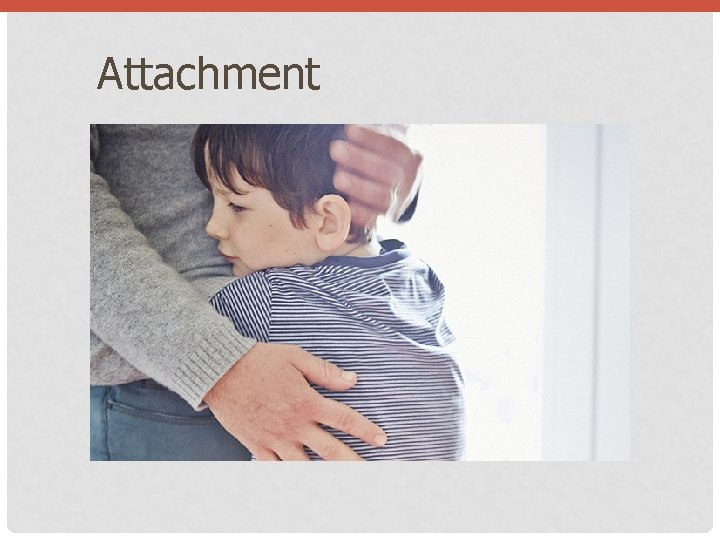
Attachment
ATTACHMENT BUILDING Babies are hard wired to connect and form strong, emotional connections with primary caregivers Attachments set the foundation for all future development, relationships and mental health
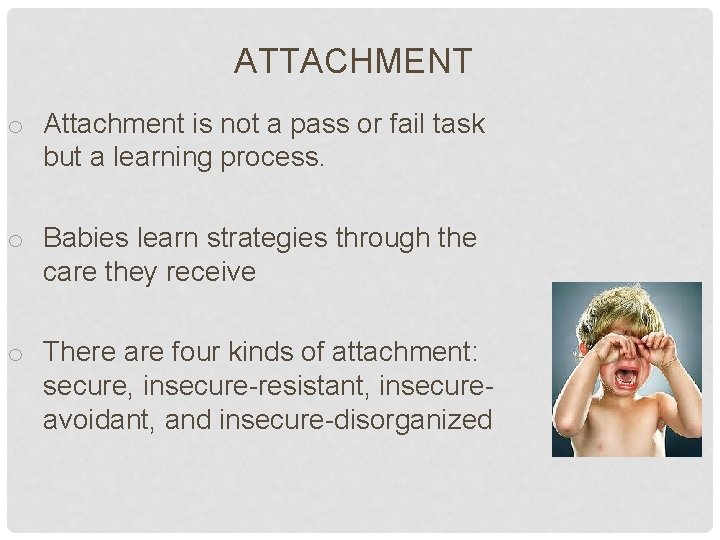
ATTACHMENT o Attachment is not a pass or fail task but a learning process. o Babies learn strategies through the care they receive o There are four kinds of attachment: secure, insecure-resistant, insecureavoidant, and insecure-disorganized
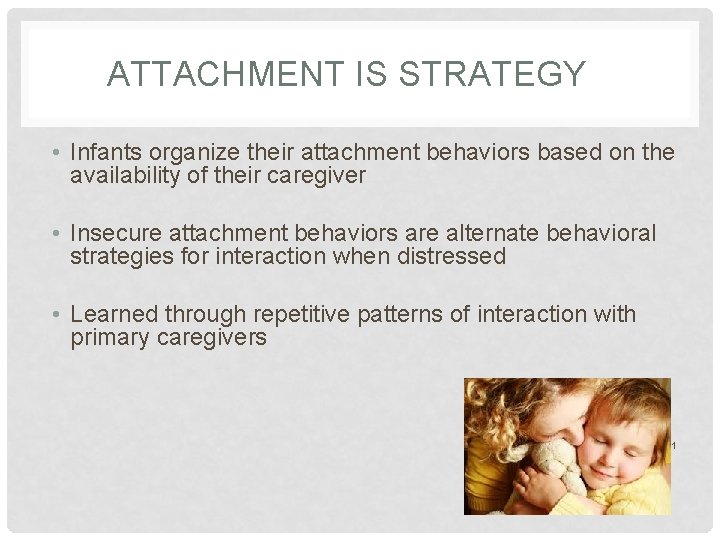
ATTACHMENT IS STRATEGY • Infants organize their attachment behaviors based on the availability of their caregiver • Insecure attachment behaviors are alternate behavioral strategies for interaction when distressed • Learned through repetitive patterns of interaction with primary caregivers • Mary Dozier 2001

ATTACHMENT All children, whether maltreated or not have formed some type of attachment. The window for focused attachment formation is about 7 to 12 months Disruption in care, inadequate care, threatening or scary care effect how children adapt

STILL FACE EXPERIMENT • https: //youtu. be/apz. XGEb. Zht 0

THE ATTACHMENT DANCE Caregiver state of mind leads the dance of attachment
SAFE BASE • Safe haven from which to move out into the world • Through the attachment give and take children develop empathy, self awareness, impulse control, internal motivation • These qualities are often missing for children with trauma histories • Attachment is the foundation from which children organize their experiences, world views and understanding of self and others
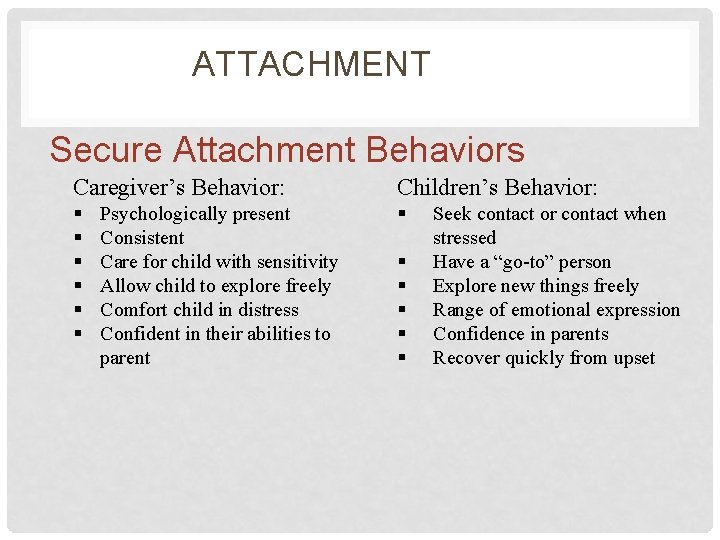
ATTACHMENT Secure Attachment Behaviors Caregiver’s Behavior: Children’s Behavior: § § § § Psychologically present Consistent Care for child with sensitivity Allow child to explore freely Comfort child in distress Confident in their abilities to parent § § § Seek contact or contact when stressed Have a “go-to” person Explore new things freely Range of emotional expression Confidence in parents Recover quickly from upset
SECURE ATTACHMENT • Children are shown to be: • Better problem solvers as toddlers • More independent and confident as preschoolers • More competent personal-social behaviors with peers in school ages
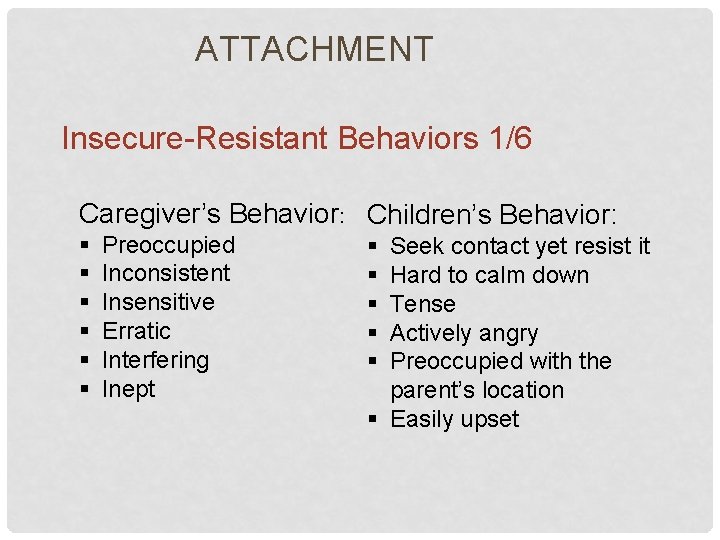
ATTACHMENT Insecure-Resistant Behaviors 1/6 Caregiver’s Behavior: Children’s Behavior: § § § Preoccupied Inconsistent Insensitive Erratic Interfering Inept § § § Seek contact yet resist it Hard to calm down Tense Actively angry Preoccupied with the parent’s location § Easily upset
RESISTANT • Children are shown to be: • Come to have a confused sense of self with parent due to inconsistent repairs in rupture • Needy of assistance from teachers • Higher rates of anxiety • Long for closeness yet uncertain of reliability
ATTACHMENT Insecure-Avoidant Behaviors 1/5 of pop Caregiver Behavior: § § § Rejecting Unavailable Unable to comfort Dismissing Indifferent Child Behavior: § § § Hostile tone Lack of facial expression Avoids contact Withdraws Ignores parent when distressed § Little interaction with parent § Precocious autonomy
AVOIDANT • Children are shown to be: • Will be seen as controlling by peers • Tendency to not ask for help from teachers or adults • Difficulty understanding his internal emotional world • Difficulty expressing his own emotions
ATTACHMENT Insecure-Disorganized Behaviors Caregiver Behavior: §Frightening §Threatening §Inconsistent §Treat the child as if they are frightening §Abusive §“terrifyingly absent” Child Behavior: §Moving away from a parent while distressed §Out of context behaviors §May appear “in a fog” or detached §Fearful §Stereotypies §Freezing or stilling §May attempt to control the parent
DISORGANIZED ATTACHMENT • Studies have shown that 80% of children who have been abused have a disorganized attachment to their parent. • High risk for: • • Disassociation as infants: no eye contact, glazed over Aggressive behaviors with peers, poor self regulation Disruptive behaviors in school Internalizing behaviors Dissociative symptoms throughout the lifetime Later psychosis Substance abuse Generational disorganized attachment patterns
MAKING SENSE OF YOUR OWN ATTACHMENTS • Parents do not simply recreate their own attachments • How you’ve made sense of your own childhood experiences is the best predictor of how your child will attach to you
TRAUMA AFFECTS BEHAVIOR • Many of our children have toxic levels of stress in their history or current situation • Adverse Childhood Experiences, trauma, wire the brain • Stress-system overload can significantly diminish a child’s lifelong ability to learn and engage in typical social interactions.
Attachment Behaviors in Children with Trauma • When seeking comfort from caregivers secure infants will approach, crying, seeking contact and maintaining contact. • Caregivers s must recognize and reinterpret the lack of these behaviors and provide nurturance anyways. This can be uncomfortable. • Reflect on the child’s strategy for coping. Think about the why.
BUILDING AN EMOTIONALLY SAFE ENVIRONMENT • Stay Calm- the more one reacts (yell, punish, separate) the more this intensifies feelings of diminished self-worth and compounds the feelings that adults can not be trusted. • Children with trauma will continue to act in ways to emotionally separate himself from you. It feels ‘safer’ then to be put into a situation where he can be emotionally hurt again • Help guide vs. isolate. Isolation does not support helping regulate a child; it can tell the child they are not worthy.
PUNISHMENT AND DISCIPLINE • Punishment-pain or discomfort inducing to deter the behavior. Makes children pay for misbehavior through removal of toys, separation, grounding • Discipline-teaching a child to self govern behavior. Requires the child be allowed to feel his emotions, label them and experience the unpleasant consequences of his choices • EMPATHY IS THE DIFFERENCE
EMPATHY BUILDING • Upset is not a problem to be solved but a connection to be made • https: //youtu. be/1 Evwgu 369 Jw
WHY NOT PUNISHMENT? • Builds resentment • Shifts focus from child’s behavior to the parent’s behavior • Lose the opportunity to build empathy, insight and problem solving skills • Fails to teach the child skills • Punishment is the opposite of accountability No Drama Discipline Segal, Bryson 2014
HOW IS DISCIPLINE DIFFERENT? • Solution focused, cause and effect • Builds knowledge and skills to regulate their own behavior • Builds responsibility and accountability • Strengthens executive functioning making them more successful in life Rebecca Eanes, Positive Parenting
BUILDING PROBLEM SOLVERS • Simply asking “How can you make this right? • Linking consequences to behavior • Connected parental responses • Teach cause and effect • Continue connections
THE GREAT TIME OUT DEBATE • Are time outs punishment or discipline? • What are optimal conditions for time out to be used? • What is the caregiver’s role in time outs?
TIME OUTS • Time-outs were initially designed to help children calm down so they can reflect on and change their behavior as part of a larger parenting strategy. Research supports the efficacy of time-outs when executed correctly. • If parents use them appropriately-infrequently, calmly, with lots of support and connection and positive support • However, time-outs are often used in a reactive and punitive manner that leaves children feeling more reactive and dysregulated.
WHY DO WE STILL USE TIME OUTS? • We want time outs to give children the opportunity to calm down so that they can move from chaos to cooperation. • Often times parents use punitively to punish for misbehavior • Parents are often in a place of anger or dysregulation themselves • Why do we do them?
THE EXPECTATION GAP • Compliance rates • 56% of parents believe children have impulse control before age three • 36% of parents believe children have impulse control before age • 43% of parents think children have the ability to share and take turns before age 2 • Brain research shows these skills develops between 3. 5 and 4 Zerotothree. org
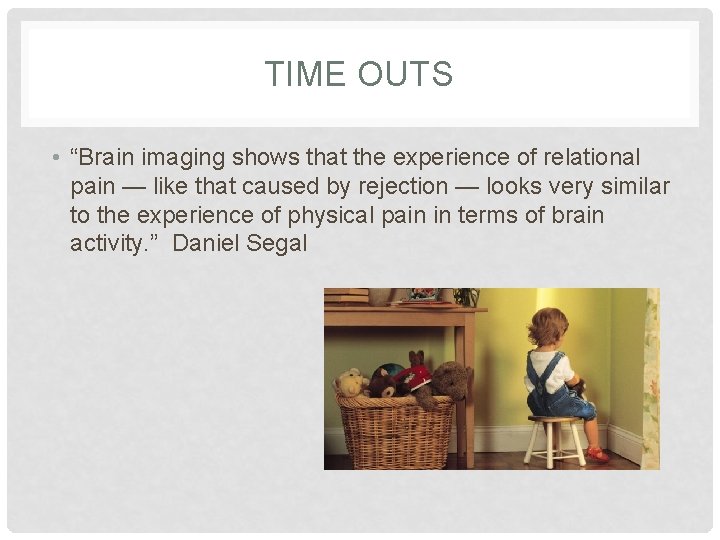
TIME OUTS • “Brain imaging shows that the experience of relational pain — like that caused by rejection — looks very similar to the experience of physical pain in terms of brain activity. ” Daniel Segal
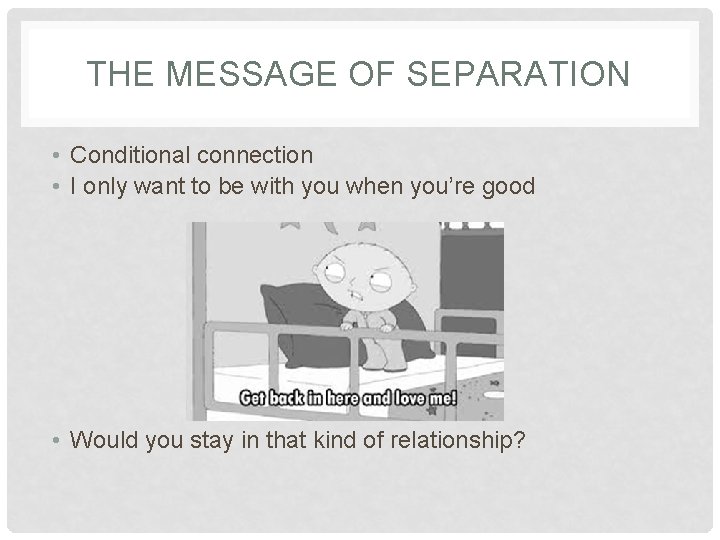
THE MESSAGE OF SEPARATION • Conditional connection • I only want to be with you when you’re good • Would you stay in that kind of relationship?
SECURE ATTACHMENT • • • Psychologically present Consistent Sensitive to their needs Comfort child in distress Confident in our abilities to parent 4 S’s • Seen- sensing inner feelings, thoughts and meanings behind behaviors • Safe- protecting from harm • Soothed-parents helps child regulate and organize feelings • Secure-developing a clear, resilient sense of self
RESOURCES �The Emotional Life of a Toddler by Alicia Lieberman �From Neurons to Neighborhoods edited by Jack Shonkoff and Deborah Philips �The Whole Brain Child Daniel Segal �Zerotothree. org �National Childhood Traumatic Stress Network www. nctsn. org �Center on the developing Child at Harvard www. developingchild. harvard. edu Meghan Hays Davis, 602 -410 -6223 mhaysdavis@gmail. com
- Slides: 37